7 Signs Your Pennsylvania Cucumber Plants Are Struggling And How To Save The Harvest
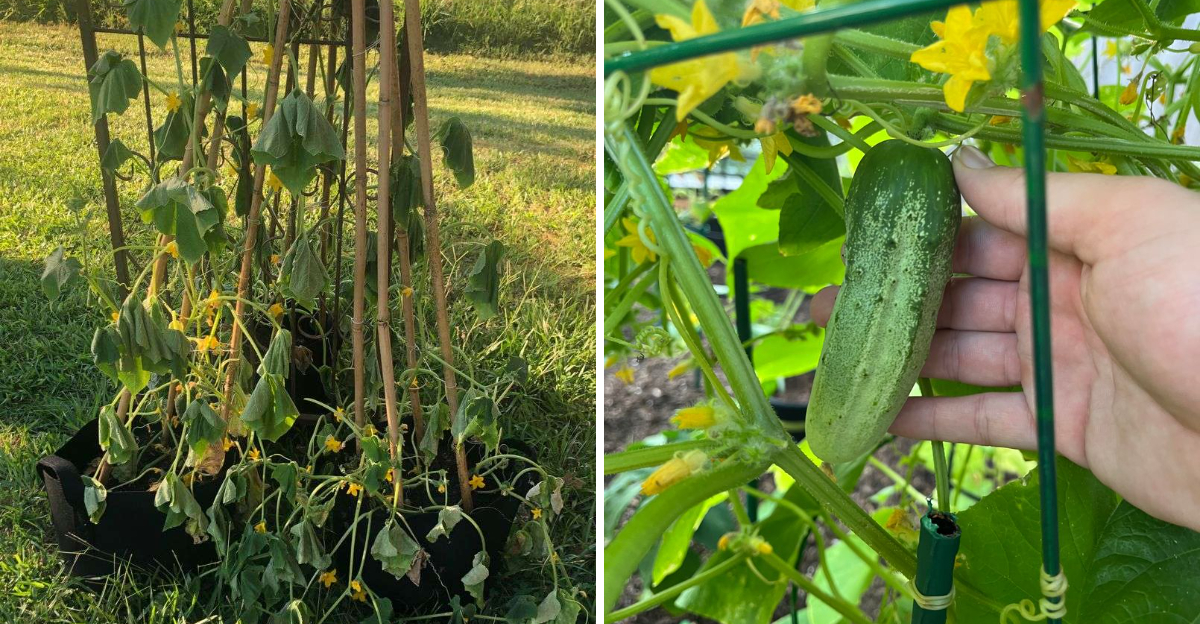
Pennsylvania cucumber plants send signals before they give up on the season.
The signals are specific. A particular kind of wilt that does not recover by morning. Leaves turning yellow. Flowers opening and closing without ever setting fruit.
Many Pennsylvania gardeners see these signs and reach for a general solution. More water. More fertilizer. A different spray.
The problem is that each of these signals points toward a different fix, and applying the wrong one does not help and sometimes makes things worse.
Pennsylvania’s climate adds its own layer of complexity. Humid summers that favor fungal disease. Heat stretches that damage pollen. Cool nights in certain regions that slow everything down at exactly the wrong moment.
The plants are communicating clearly. The challenge is knowing the language.
Have you been watching your Pennsylvania cucumber vines struggle without knowing exactly what they were trying to tell you? Then, these signs are worth learning before the season gets away.
1. Watch Leaves Wilt During Afternoon Heat
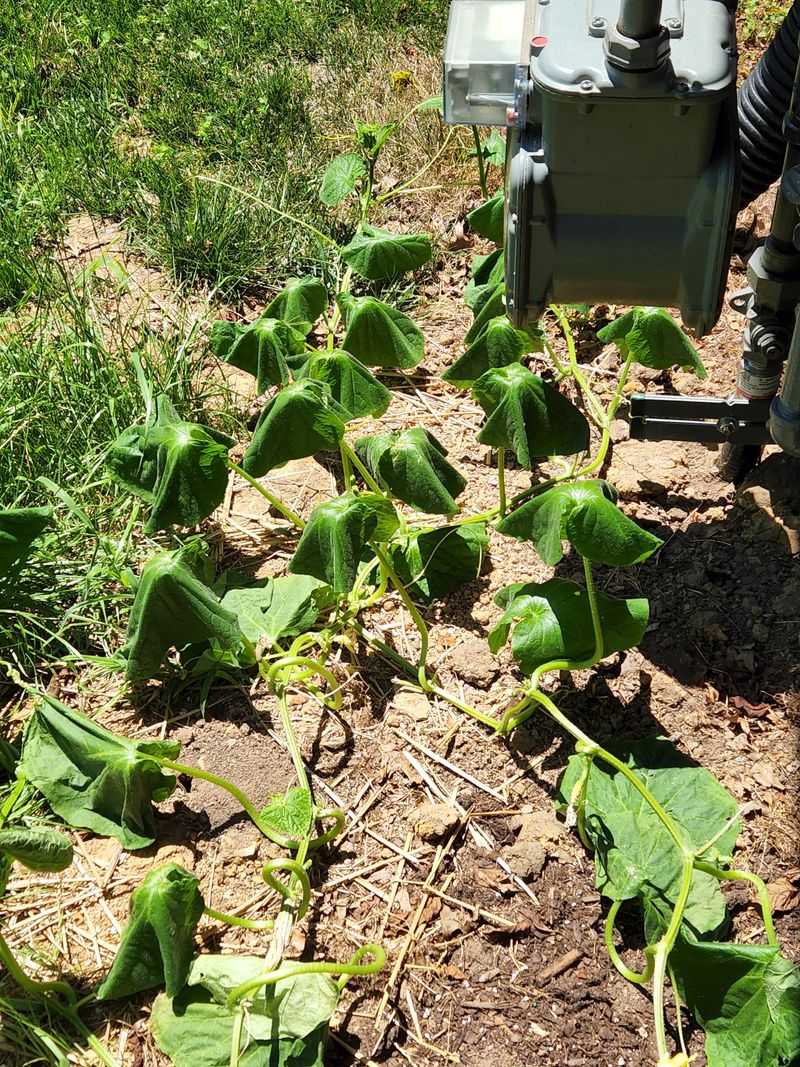
A cucumber vine drooping on a hot Pennsylvania afternoon is not automatically a problem.
Temperatures above ninety degrees push plants to lose water through their leaves faster than roots can replace it, and temporary midday wilting is a normal response to that pressure.
The plant is managing heat, not failing.
The meaningful signal is morning wilt. A vine that is still drooping after an overnight cool-down is telling a different story. Root function is compromised, recovery is not happening, and something beyond heat is involved.
Bacterial wilt is worth investigating when morning wilt appears. This disease, spread by cucumber beetles, causes wilting that does not respond to watering at any time of day.
A quick field test helps identify it. Cut a wilted stem near the base and press the cut ends together, then pull them apart slowly.
Thin, sticky threads stretching between the two pieces indicate bacterial wilt rather than heat stress or drought.
Monitoring cucumber beetles closely through the season reduces bacterial wilt risk considerably since they are the primary carriers.
Keeping plants consistently watered during heat stretches reduces heat stress wilting before it develops into the kind of repeated daily wilting that weakens vines progressively through July and August.
Watering in the early morning gives roots a full moisture supply before peak afternoon heat arrives.
Shade cloth rated at thirty to forty percent protects plants during the hottest weeks without blocking the light needed for fruit production.
Morning wilt is the vine asking for help. Afternoon wilt is just the vine doing its job.
2. Notice Yellowing Before Vines Stall
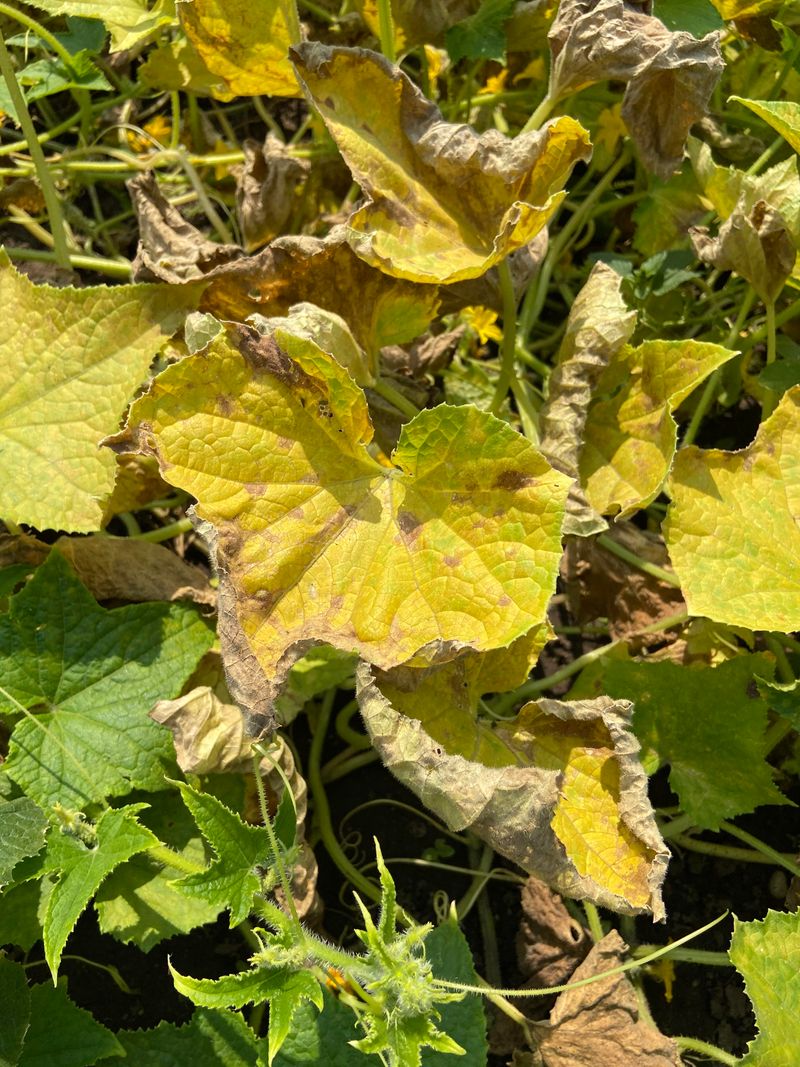
Yellow leaves on a Pennsylvania cucumber vine are one of the most common distress signals in the summer garden, and they are also one of the most misread.
The color change looks the same from a distance regardless of cause. Up close, the pattern tells a completely different story depending on what is actually happening.
Overwatering produces a dull, uniform yellow that starts on older lower leaves, particularly after a stretch of heavy Pennsylvania summer rain.
Your Pennsylvania Garden Changes Every Week. Your Plan Should Too.
Gardening in Pennsylvania changes quickly throughout the season. Every Friday you’ll receive a simple weekly plan showing exactly what to plant, prune, fertilize, harvest, and protect so you never miss the right timing.
Waterlogged soil cuts off oxygen to roots and shuts down nutrient uptake. Checking the soil two inches down before the next watering session reveals whether the problem is too much water rather than too little.
Nitrogen deficiency produces a similar lower-leaf yellowing but in plants that are clearly not sitting in wet soil. A side dressing of balanced vegetable fertilizer or compost corrects mild deficiency cases within a week or two.
Magnesium deficiency creates yellow patches between the leaf veins while the veins themselves remain green. That specific pattern is the diagnostic clue that separates it from other causes.
Cucumber mosaic virus produces irregular yellow mottling alongside stunted growth. Aphids spread this virus, so managing aphid populations directly reduces exposure risk.
Angular leaf spot, a bacterial disease common in Pennsylvania’s humid summers, creates water-soaked spots that transition to yellow before browning. Removing affected leaves promptly and avoiding garden work when foliage is wet slows the spread.
The color is the same. The pattern is the diagnosis.
3. Spot Misshapen Or Bitter Cucumbers
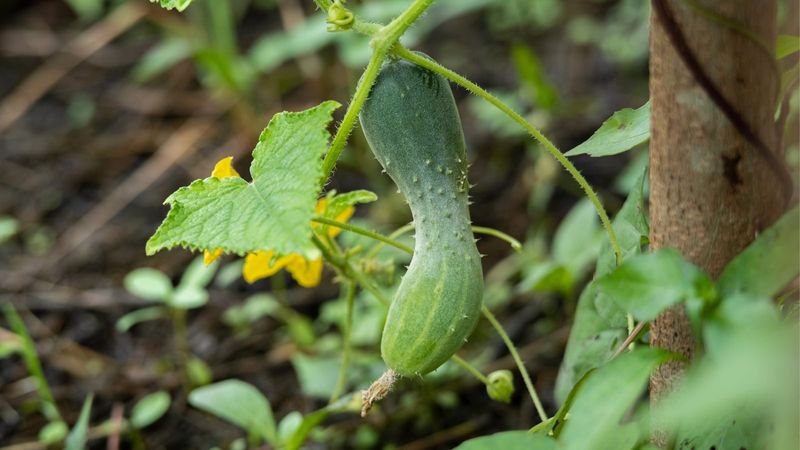
Pulling a cucumber off the vine and finding something that looks like it lost an argument with gravity is frustrating.
Misshapen fruit is not random bad luck. It is the plant recording exactly what conditions it experienced during the weeks the fruit was developing, and the shape describes the problem fairly specifically.
Uneven watering is the most common cause. When moisture supply fluctuates, fruit cells develop at different rates.
A cucumber that dries out mid-development and then receives a sudden heavy soak swells unevenly, producing the bulges, curves, and pinched ends that make a harvest confusing to look at.
Consistent soil moisture is the direct fix for this particular distortion pattern.
Heat above ninety degrees during the pollination window disrupts the process enough to produce poor fruit set and irregular shapes.
Cucumbers pollinate most successfully between sixty-five and eighty-five degrees. Pennsylvania’s peak summer heat pushes outside that range regularly.
A second succession planting in late June extends the harvest into the cooler temperatures of fall when fruit development proceeds more evenly.
Bitter cucumbers result from cucurbitacin, a compound that increases under heat stress, inconsistent moisture, and delayed harvest.
Picking at the right size, six to eight inches for slicing types, prevents bitterness and tells the plant to keep producing rather than shifting into seed maturation mode.
Check vines every two days during peak production. A cucumber left on the vine two days too long is not just bitter. It is a signal to the plant that the season is wrapping up.
4. Check Flowers That Never Set Fruit
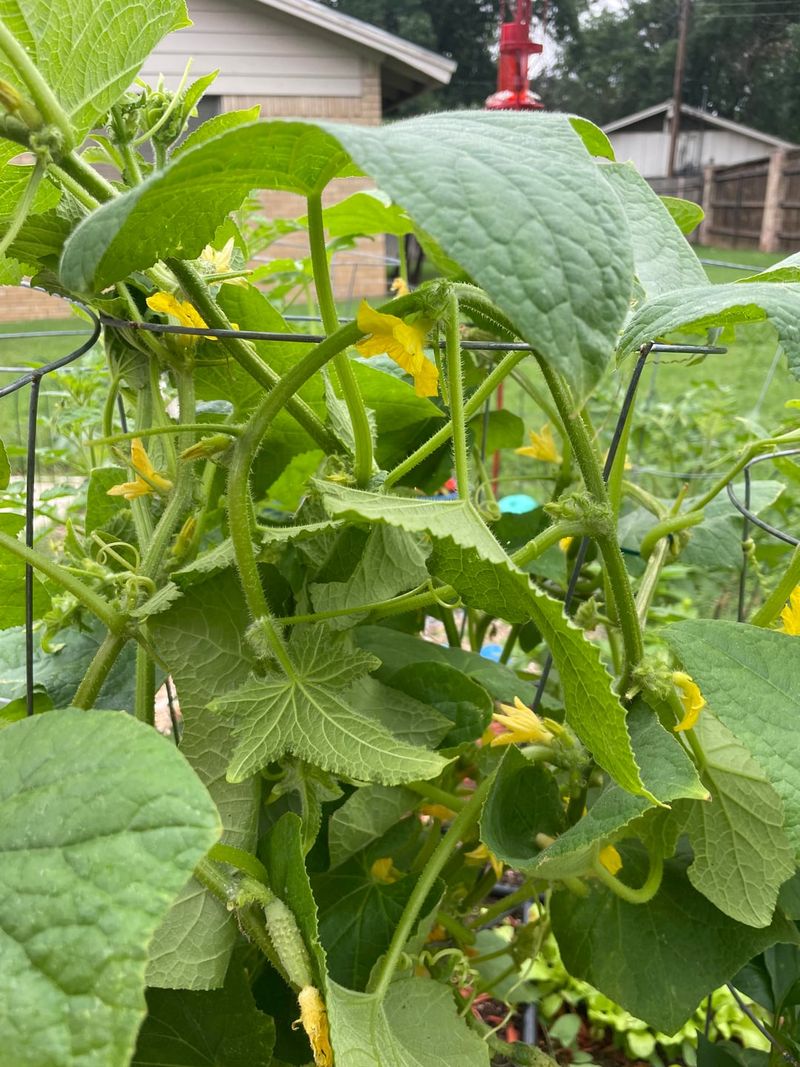
A cucumber vine covered in flowers with nothing developing behind them sends most Pennsylvania gardeners immediately into troubleshooting mode.
The first and most important piece of information is that this pattern is often completely normal, and understanding why prevents a lot of unnecessary intervention.
Cucumber plants produce male and female flowers separately, and they do not arrive at the same time. Male flowers appear one to two weeks before female flowers, sometimes longer.
Those first cheerful yellow blooms are entirely male, and male flowers cannot produce fruit regardless of how many bees visit them. The plant is not broken. The female flowers simply have not arrived yet.
Female flowers are identifiable by the tiny miniature cucumber shape sitting directly behind the petals at the base of the bloom.
Male flowers sit on a plain, thin stem with no swelling. Both are necessary for fruit production. The timing gap between them is normal biology.
When female flowers appear and still fail to set fruit, pollination is the more likely issue.
Bees are the primary pollinators for cucumbers, and their activity can be reduced by nearby pesticide use, cold rainy weather, or genuinely low local pollinator populations.
Hand pollination fills that gap reliably. A small clean paintbrush or cotton swab collects pollen from the center of a male flower.
That pollen gets transferred directly to the center of an open female flower in the morning when both are freshest.
Planting marigolds and basil nearby keeps bee traffic consistently higher through the full season.
5. Water Deep And Keep Soil Even
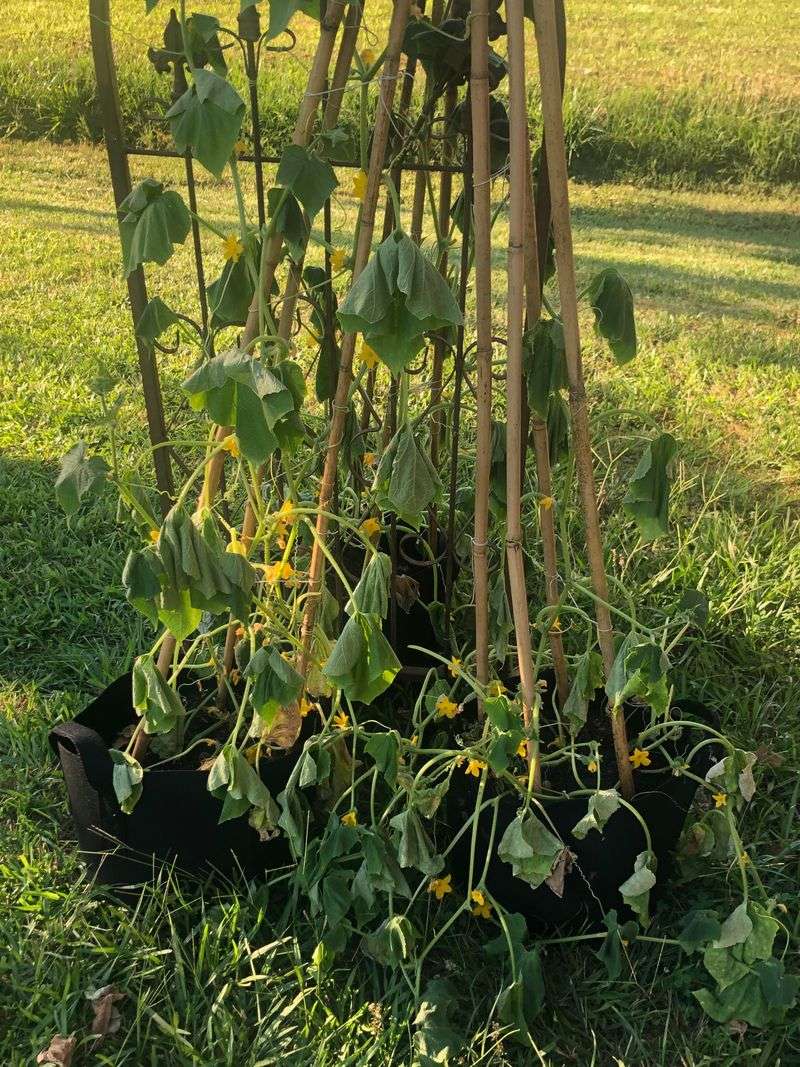
Cucumbers are roughly ninety-six percent water, and that composition makes consistent soil moisture the foundation of everything else that goes right or wrong in a Pennsylvania cucumber garden.
Shallow, frequent watering produces shallow roots. Shallow roots sit in the soil zone that heats up fastest and dries out first during Pennsylvania July and August stretches.
Deep watering pushes roots downward into cooler, more stable soil where moisture lasts longer between irrigation sessions.
Aiming for about one inch of water per week, increasing during peak heat, and delivering it slowly at the base of the plant rather than overhead produces the kind of root system that handles stress without shutting down production.
Wet foliage in Pennsylvania’s humid summers is an open invitation for powdery mildew and downy mildew, both of which are extremely common and spread quickly once established.
Drip irrigation and soaker hoses deliver moisture directly to the root zone without the foliage contact that overhead watering produces. Hand watering with a wand directed at the soil surface accomplishes the same goal.
Checking soil moisture before every watering session prevents both underwatering and overwatering. Two inches down near the plant base is the useful measurement. Dry at that depth means water now. Still moist means wait another day.
Inconsistent watering causes misshapen fruit, blossom drop, weakened pest resistance, and reduced overall production. Consistent watering prevents all of those things simultaneously.
That is a lot of return for one straightforward habit.
6. Mulch Roots Before Heat Builds
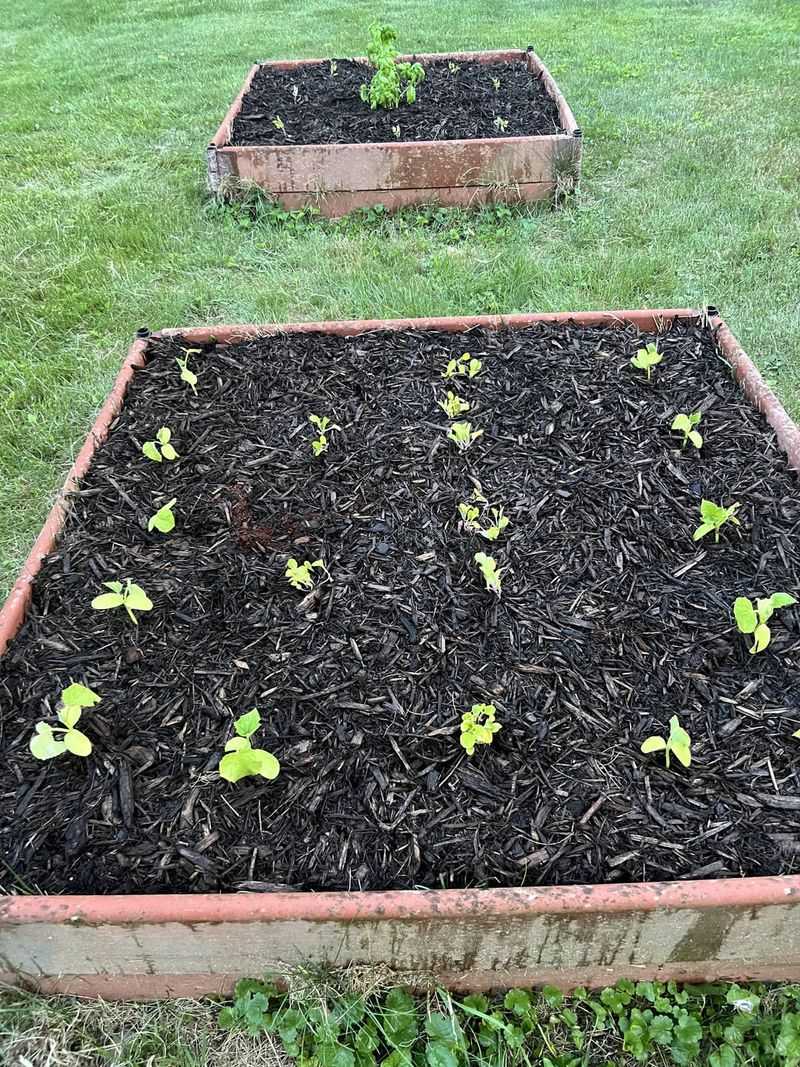
A thick layer of mulch around cucumber plants before Pennsylvania summer heat peaks is one of those garden investments that pays back continuously through the rest of the season.
Without mulch, bare soil heats to temperatures that stress cucumber roots and reduce water absorption even when irrigation is consistent.
A two to three inch layer of straw, shredded leaves, or wood chips keeps soil temperature measurably cooler by shielding the surface from direct sun exposure throughout the day.
The moisture retention benefit compounds that protection. Unmulched soil loses water quickly through evaporation, particularly on sunny or windy days.
Mulched beds hold moisture significantly longer, giving roots steady access between watering sessions and directly reducing the fluctuations that produce misshapen fruit and blossom drop.
Weed suppression adds a third benefit without any additional effort. Weeds compete directly with cucumbers for water, nutrients, and space.
Mulch blocks most weed seeds from germinating, reducing that competition passively through the entire growing season.
Applying mulch in late May or early June in most parts of Pennsylvania gives it time to establish before the hottest weeks arrive.
Keeping the mulch a few inches back from the main stem prevents moisture accumulation against the base where it can create problems over time.
Refreshing the layer mid-season when it thins out maintains the full protection benefit through harvest.
Mulch is doing several jobs simultaneously for the price of one afternoon of effort.
7. Harvest Fruit While Still Tender
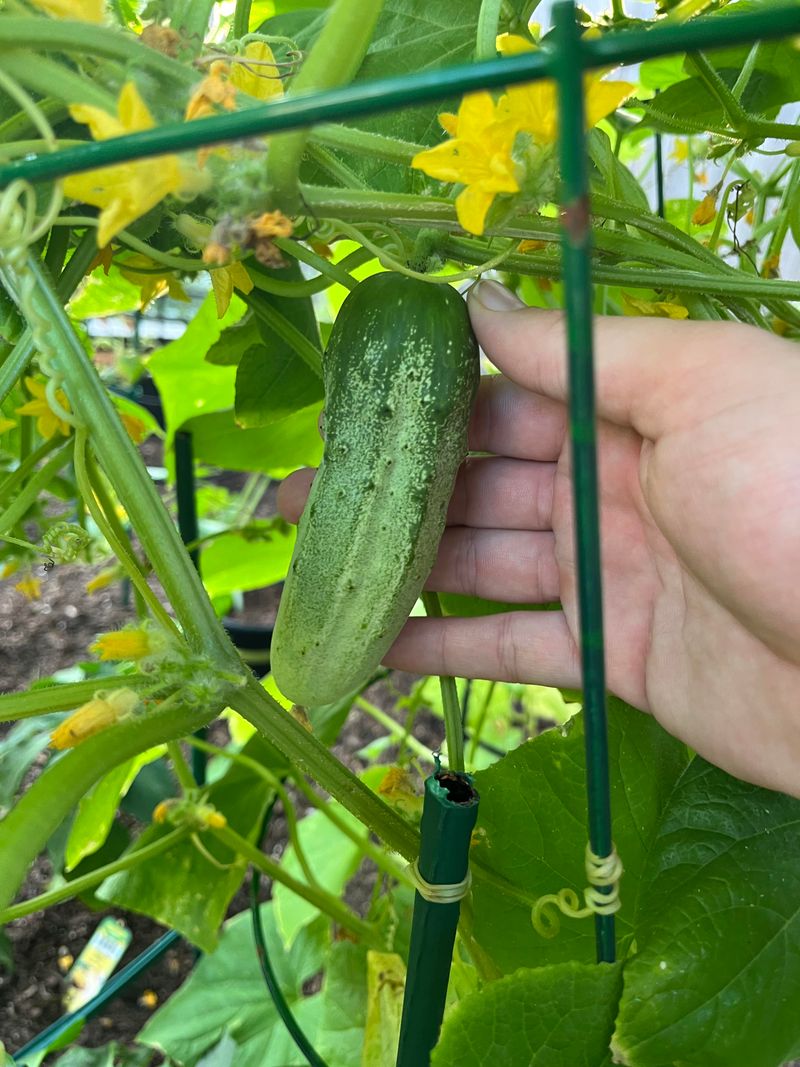
Harvest timing is one of the most underused tools available to a Pennsylvania cucumber gardener, and the consequences of getting it wrong show up in two directions simultaneously.
Fruit quality drops. Plant production slows. Both happen for the same reason.
When a cucumber is left on the vine past its productive window, the plant interprets it as approaching seed maturity.
The biological signal that follows is to slow down new fruit production since the reproductive goal appears close to complete.
That single overlooked cucumber sitting on the vine a few days too long costs multiple future cucumbers that the plant would have produced under different conditions.
Slicing cucumbers deliver peak flavor and texture at six to eight inches. Pickling types should come off at two to four inches for the crispest results.
A yellow tinge at the blossom end indicates the fruit has passed its window and will taste bitter and feel seedy regardless of how it is prepared.
Checking vines every one to two days during peak July and August production catches cucumbers at the right moment.
The growth rate during warm stretches is faster than most gardeners expect, and a fruit that looked ideal yesterday can be past its prime by tomorrow morning.
Cutting the stem with clean shears rather than pulling protects the vine from the kind of damage that slows subsequent production. Morning harvesting captures fruit at its coolest and crispest after overnight temperatures.
Regular harvesting from a healthy vine through the season produces considerably more total cucumbers than occasional harvesting from the same vine. The plant is keeping score whether the gardener is or not.