Burning Bush Is Now Illegal In Pennsylvania (Here Is What To Plant Instead)
Burning bush has been one of the most recognizable shrubs in Pennsylvania landscapes for decades, and the fiery red foliage it produces every fall is the kind of seasonal display that made it easy to understand why so many homeowners planted it without a second thought.
That familiarity did not protect it from scrutiny, and the ecological damage burning bush causes beyond the garden eventually caught up with its popularity.
Pennsylvania classified burning bush as an invasive species, and new sales of the plant are now banned in the state. For homeowners who have it growing in their yards, the question that follows is a practical one: what goes in its place?
The good news is that Pennsylvania has native shrubs capable of delivering the same kind of bold fall color, the same structural presence in a border, and the same reliability through the seasons, without the invasive spread that made burning bush a problem in the first place.
The alternatives are not a compromise. Several of them are genuinely better choices for a Pennsylvania landscape in every measurable way.
1. Red Chokeberry (Aronia Arbutifolia)
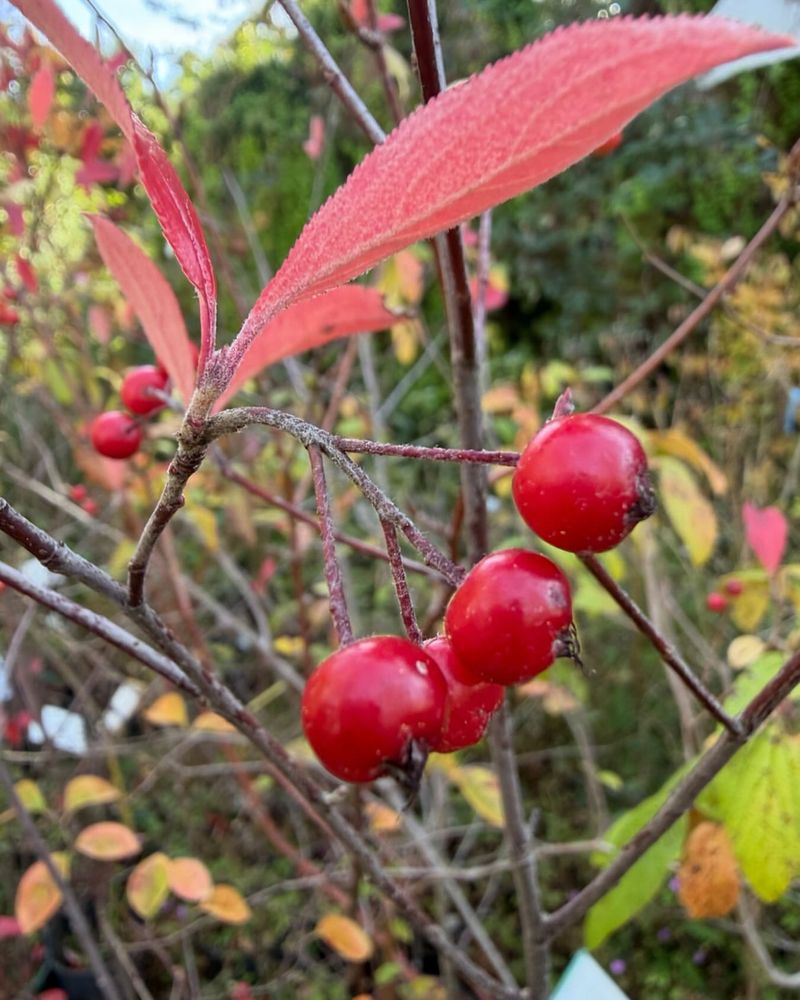
Few native shrubs can match the seasonal drama of Red Chokeberry. In spring, it bursts into clusters of dainty white flowers that attract early pollinators.
Come fall, the show really begins, with leaves turning a blazing red-orange while bright red berries weigh down the branches.
Red Chokeberry grows upright and can reach about six to ten feet tall. It works beautifully as a hedge, a privacy screen, or a naturalized border planting.
The berries are not the tastiest for humans, but birds absolutely love them. Cedar waxwings, robins, and mockingbirds will flock to your yard once these berries ripen.
One of the best things about this shrub is how tough it is. Red Chokeberry handles wet, poorly drained soil that would cause other plants to struggle.
It also tolerates full sun and partial shade, making it flexible for all kinds of yard conditions. You can plant it near rain gardens, low-lying areas, or along stream banks without worry. Pruning is simple. Just trim it back after flowering if it starts to spread more than you want.
It does sucker at the base, which means it can slowly spread into a nice colony over time. If you prefer a neat, contained look, just remove the suckers each season.
Red Chokeberry is widely available at Pennsylvania native plant nurseries. Look for the cultivar ‘Brilliantissima,’ which is especially known for its rich fall color and heavy berry production. It is a fantastic replacement for burning bush that truly delivers on every level.
2. Spicebush (Lindera Benzoin)
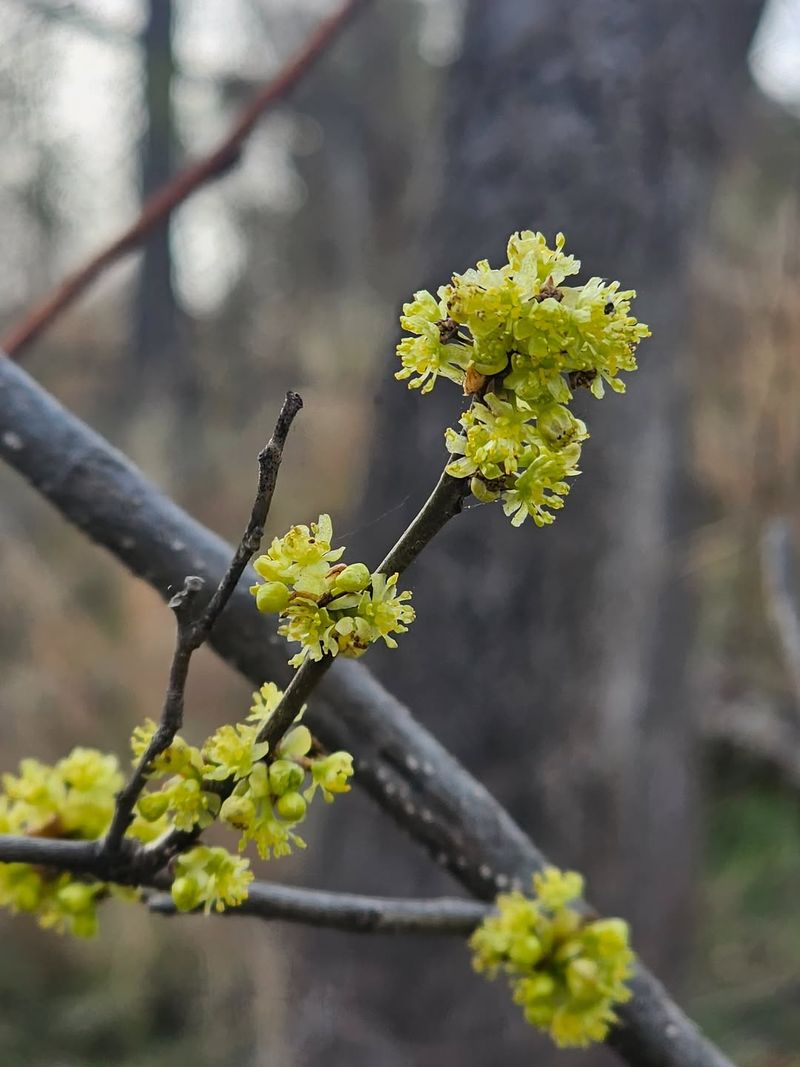
Scratch a leaf of Spicebush and you will instantly smell something amazing, a warm, spicy scent that is part cinnamon, part allspice. That alone makes this native shrub worth planting. But Spicebush brings a lot more to the table than just its fragrance.
Every spring, before the leaves even open, tiny clusters of bright yellow flowers cover the bare branches. It is one of the earliest flowering shrubs in Pennsylvania, which makes it a critical food source for early-emerging pollinators like native bees and spicebush swallowtail butterflies.
Your Pennsylvania Garden Changes Every Week. Your Plan Should Too.
Gardening in Pennsylvania changes quickly throughout the season. Every Friday you’ll receive a simple weekly plan showing exactly what to plant, prune, fertilize, harvest, and protect so you never miss the right timing.
The spicebush swallowtail actually depends on this plant as its primary host for caterpillar development, so planting it helps support the full butterfly life cycle.
Spicebush grows naturally in woodland understories, which means it thrives in partial to full shade. If you have a shady spot where other shrubs struggle, this one will feel right at home.
It grows six to twelve feet tall and creates a lush, dense screen that offers excellent privacy and wildlife habitat.
In fall, female plants produce glossy red berries that are a favorite of migrating birds, including thrushes and vireos. The berries are also high in fat, which gives birds the energy boost they need for long migrations.
To get berries, plant at least one male and one female shrub near each other. Spicebush is low-maintenance and rarely bothered by pests or disease.
It fits naturally into rain gardens, woodland edges, and shaded borders. For a fragrant, wildlife-friendly alternative to burning bush, Spicebush is hard to beat.
3. Winterberry (Ilex Verticillata)
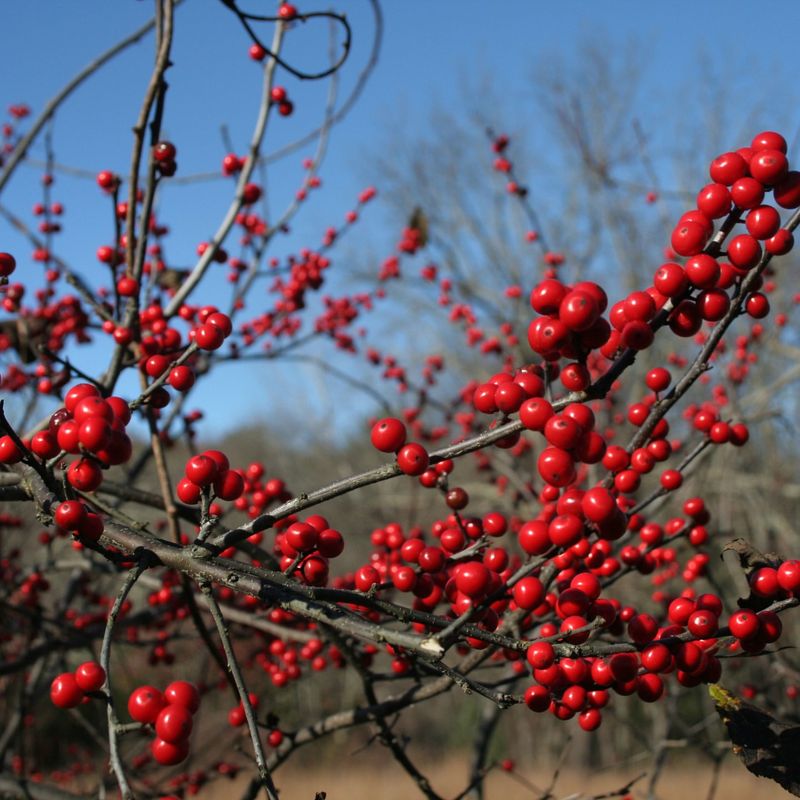
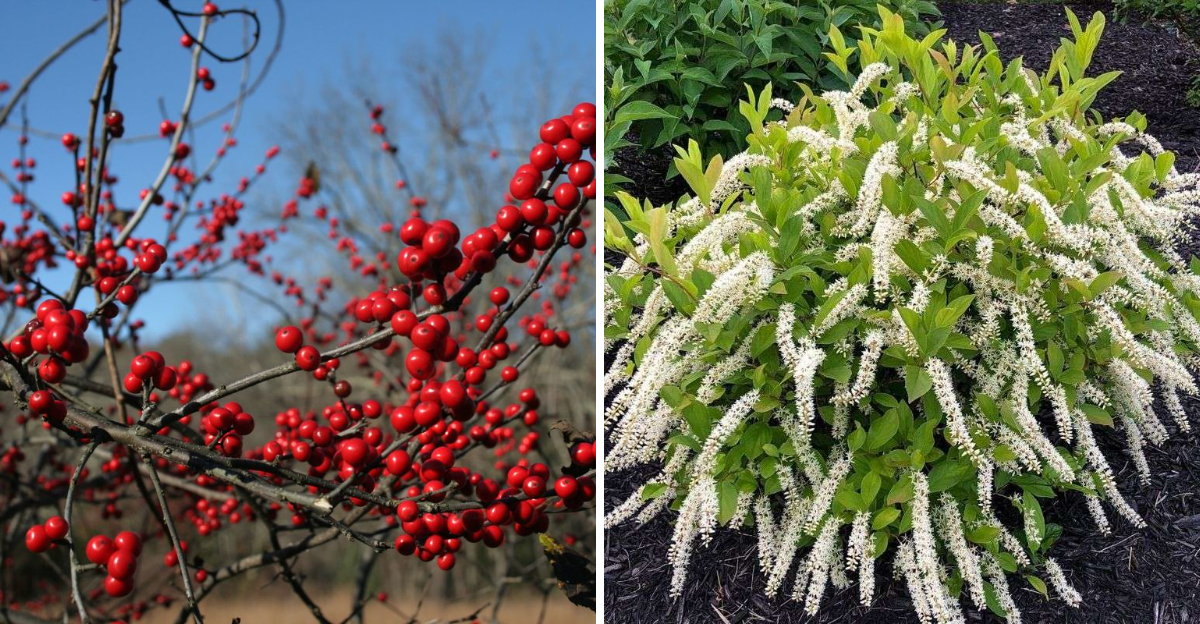
Imagine stepping outside on a cold January morning and seeing a shrub absolutely loaded with hundreds of bright red berries glowing against the snow.
That is exactly what Winterberry delivers, and it is one of the most jaw-dropping sights a Pennsylvania garden can offer in the winter.
Winterberry is a native deciduous holly that drops its leaves in fall, leaving behind those stunning red berries on full display. The berries cling to the branches from late fall all the way through winter, often lasting until early spring.
Birds like bluebirds, robins, and cedar waxwings rely on these berries as a critical late-season food source when other options are scarce.
Growing six to ten feet tall, Winterberry thrives in wet and moist soils, making it a perfect choice for low-lying areas, rain gardens, or spots near ponds and streams. It handles full sun to partial shade without complaint.
Like other hollies, you will need a male pollinator plant nearby to get the berry-producing female to fruit. One male can pollinate several females within a range of about forty feet.
The cultivar ‘Winter Red’ is a popular choice for its exceptionally heavy berry production. ‘Sparkleberry’ is another standout, growing a bit taller and producing berries that last deep into winter. Both are widely available at Pennsylvania native plant nurseries.
Winterberry requires very little care once established. It rarely needs pruning and is naturally resistant to most pests.
For pure winter drama and wildlife value, few shrubs come close to what Winterberry brings to the yard.
4. Inkberry Holly (Ilex Glabra)
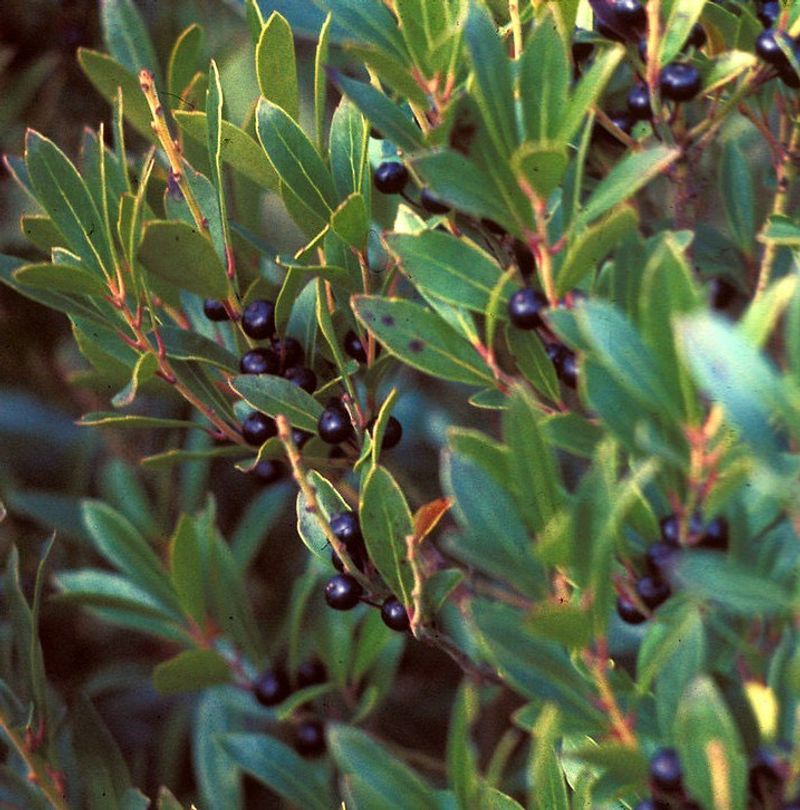
Not every yard needs a showstopper. Sometimes what you really want is a dependable, good-looking shrub that keeps its leaves all year, holds its shape, and just works.
Inkberry Holly is exactly that kind of plant, a quiet workhorse that earns its place in any Pennsylvania landscape.
Unlike most hollies, Inkberry is evergreen, meaning it keeps its glossy green leaves through even the harshest Pennsylvania winters.
The foliage stays a rich, deep green from January through December, giving your yard structure and color during the months when most other plants look bare and lifeless.
Small black berries appear in late summer and persist through winter, providing a steady food source for birds like bluebirds, tree swallows, and yellow-rumped warblers.
Inkberry grows naturally in wet and boggy areas, so it handles poorly drained soil with ease. It also does well in average garden conditions and tolerates both full sun and heavy shade.
That kind of flexibility makes it incredibly useful for tricky spots in the yard where other shrubs would struggle. It typically grows four to eight feet tall, though compact cultivars like ‘Shamrock’ and ‘Compacta’ stay much smaller if you need a low border plant.
One thing to keep in mind is that Inkberry spreads by suckering, which can help fill in a hedge naturally over time. If you prefer a tidy edge, simply remove the new suckers each spring.
It requires minimal pruning otherwise and is rarely troubled by pests or disease. For a year-round evergreen hedge that supports wildlife and thrives in challenging conditions, Inkberry Holly is a smart and reliable choice.
5. American Holly (Ilex Opaca)
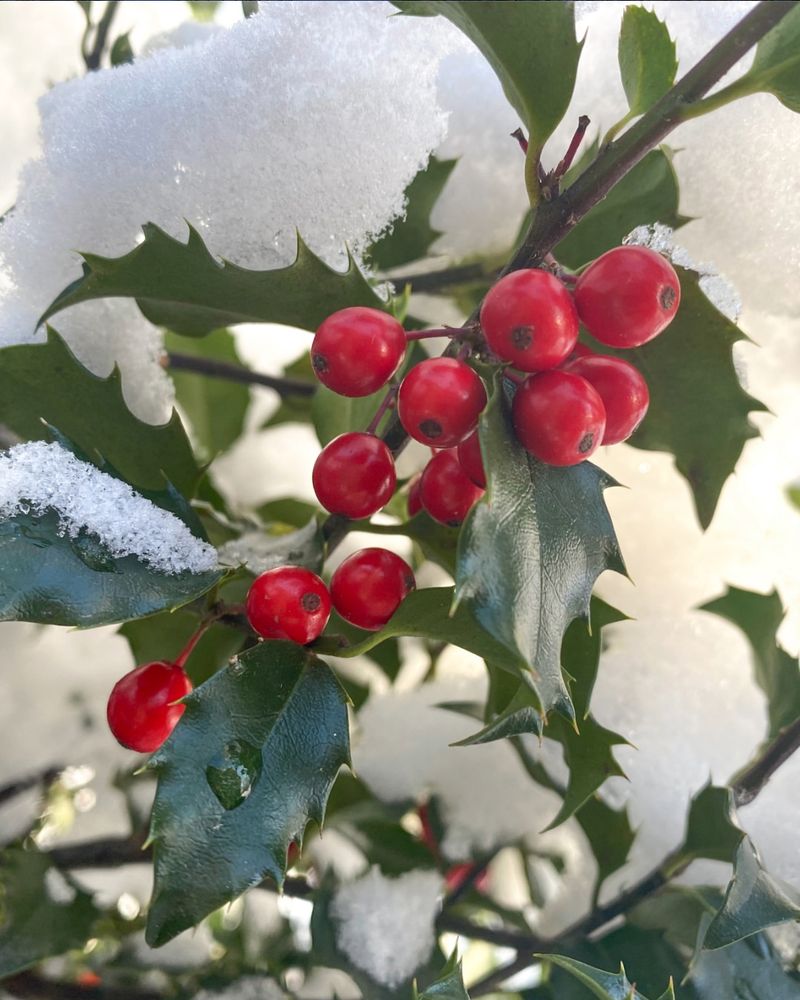
There is something almost magical about American Holly in winter. The deep green, spiny leaves stay bold and bright while everything else around it fades to gray and brown.
Add clusters of vivid red berries and you have a plant that looks like it was designed specifically for the holiday season, because in a way, it was. American Holly is the classic holiday plant, and it has been growing wild in Pennsylvania for thousands of years.
American Holly can grow quite large, eventually reaching twenty to forty feet as a tree, but it can also be kept shrub-sized with regular pruning. It is an excellent choice for a tall, dense evergreen privacy screen or windbreak.
The thick, spiny leaves make it nearly impenetrable, which also makes it great nesting cover for birds. More than forty species of birds are known to eat the berries, including American robins, mockingbirds, and hermit thrushes.
Like other hollies, you will need both a male and female plant to get berry production. Plant them within about fifty feet of each other and let the bees do the work.
The cultivar ‘Canary’ produces yellow berries if you want something a little different, while ‘Jersey Princess’ is a reliable choice for heavy red berry production in Pennsylvania’s climate.
American Holly prefers moist, well-drained, slightly acidic soil and grows best in full sun to partial shade. Once established, it is drought-tolerant and very long-lived. Some specimens in the wild are over a hundred years old.
For a bold, wildlife-rich, and truly timeless native shrub, American Holly is a worthy centerpiece for any Pennsylvania yard.
6. Ninebark (Physocarpus Opulifolius)
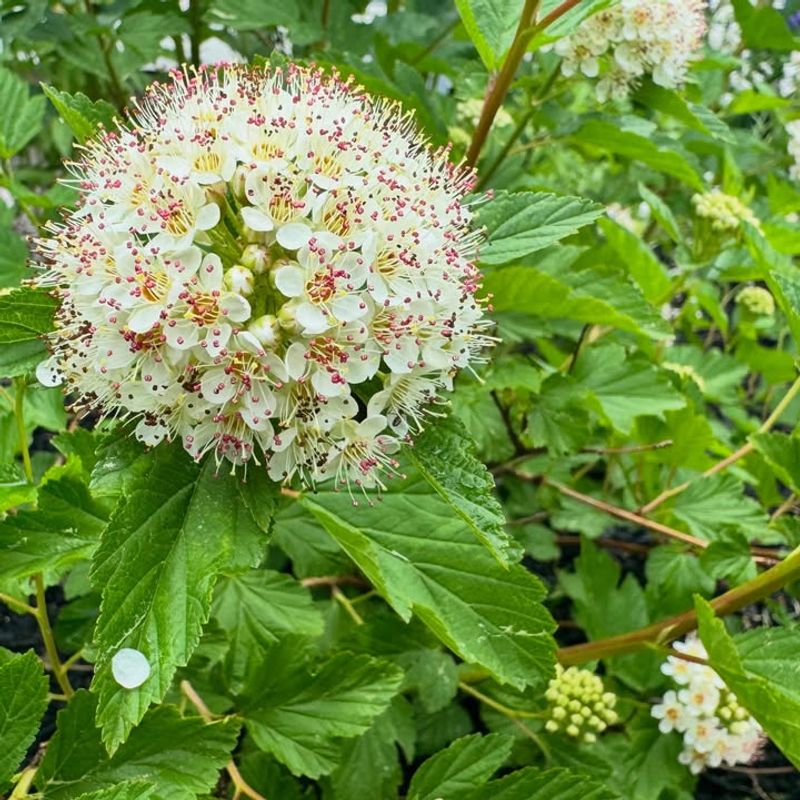
Ninebark has a secret. Look closely at the older stems and you will notice the bark peeling away in thin, papery layers to reveal cinnamon-brown wood underneath.
That peeling texture gives the shrub year-round visual interest, even in the middle of winter when there are no leaves or flowers in sight. It is one of those plants that garden designers love for its multi-season appeal.
In late spring and early summer, Ninebark puts on a spectacular flowering show. Rounded clusters of small white or pinkish-white flowers cover the arching branches and attract a wide range of pollinators, including native bees, beetles, and butterflies.
After flowering, reddish seed capsules form and provide food for birds through the fall. The foliage turns golden-yellow in autumn, adding yet another layer of seasonal color.
Ninebark is one of the most heat- and drought-tolerant native shrubs you can plant in Pennsylvania. Once established, it can handle dry summers, poor soils, and full sun without missing a beat.
It grows five to ten feet tall and wide, making it a great choice for naturalized hedgerows, erosion control on slopes, or large mixed borders.
There are some fantastic cultivars to choose from. ‘Diablo’ has deep burgundy-purple foliage that stays dark all season. ‘Coppertina’ offers bronze-orange leaves with a warm glow. ‘Little Devil’ is a compact version that works well in smaller spaces.
All of these are native-origin cultivars that maintain the ecological benefits of the straight species.
Ninebark is tough, beautiful, and incredibly easy to grow. It is one of the best burning bush replacements available for Pennsylvania gardeners looking for low-effort, high-reward results.
7. Sweetspire (Itea Virginica)
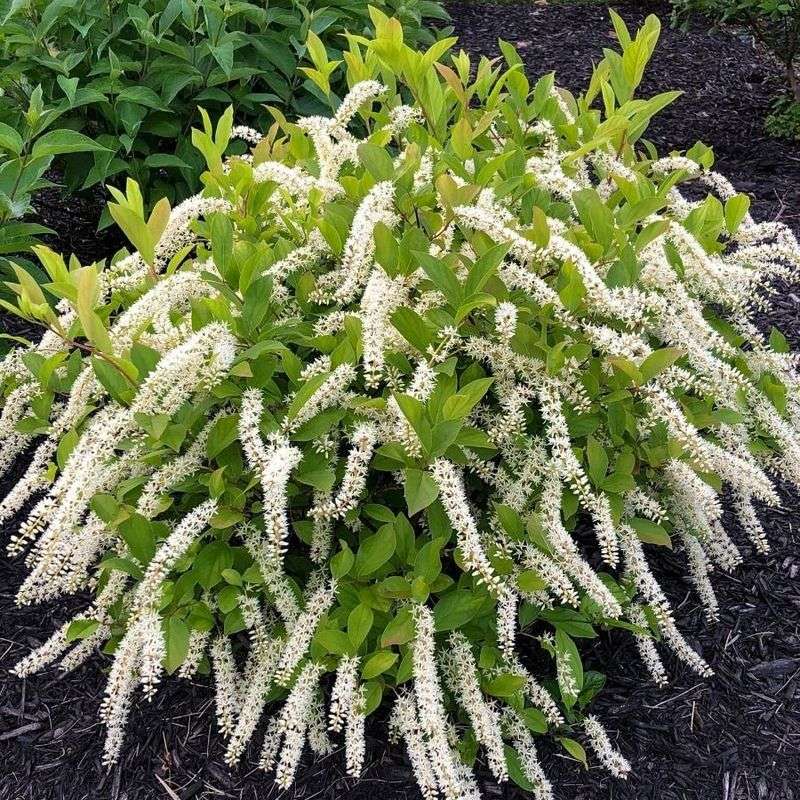
Walk past a Sweetspire in bloom and you will stop in your tracks. Long, drooping clusters of tiny white flowers hang from the branches like soft, fragrant bottle brushes, filling the air with a sweet, honey-like scent.
It is one of the most underused native shrubs in Pennsylvania, and once you grow it, you will wonder why it took you so long to discover it.
Virginia Sweetspire blooms in late spring to early summer, right when many other shrubs have finished flowering.
That timing makes it especially valuable for pollinators like bumblebees, sweat bees, and various butterfly species that need late-season nectar sources. The blooms last several weeks, giving pollinators a long window of access to the flowers.
Come fall, the foliage transforms into a stunning mix of orange, red, and deep burgundy. The color display rivals many of the showiest fall shrubs, including burning bush itself.
The leaves also hold on longer than most deciduous shrubs, extending the fall color season well into November in many parts of Pennsylvania.
Sweetspire grows three to five feet tall and spreads slowly through suckers to form a dense, low-growing colony. It thrives in moist to wet soils and tolerates both full sun and partial shade.
It is an ideal choice for rain gardens, stream banks, shaded borders, and low-maintenance naturalized areas.
The cultivar ‘Henry’s Garnet’ is the most popular selection, known for its extra-long flower clusters and brilliant fall color. It is widely available and well-suited to Pennsylvania’s climate.
For a fragrant, pollinator-friendly, and visually stunning native shrub, Sweetspire earns a top spot in any Pennsylvania garden.