Florida’s Brutal Summer Doesn’t Slow These Native Plants Down
Florida summers sort plants into two categories fast. The ones that handle it and the ones that do not.
By July most yards have made that division pretty obvious. Struggling plants start dropping leaves, fading out, or refusing to do anything until October arrives and the heat finally backs off.
Native Florida plants rewrite that story in a lot of yards. Not all of them, but a specific group has spent thousands of years developing a relationship with this climate.
No imported ornamental can replicate that in a single season. These are not just survivors.
Surviving and performing are two different things. The plants on this list keep growing, blooming, and looking good through heat that sends everything else into shutdown mode.
Florida summer is not a problem these natives need to work around. It is simply the environment they were built for.
1. Partridge Pea Keeps Blooming Where Summer Feels Harsh
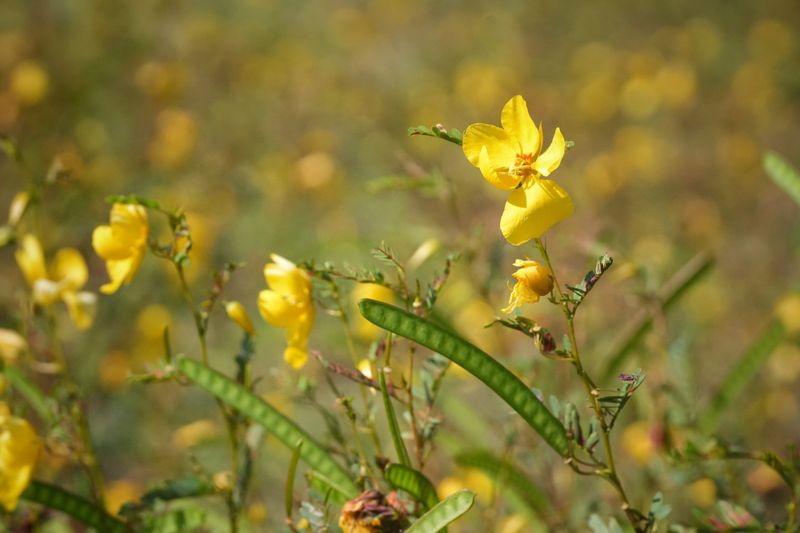
A hot, open, sandy bed in full summer sun might seem like a tough spot to grow anything worth noticing. Partridge pea, known scientifically as Chamaecrista fasciculata, sees that challenge differently.
This native annual wildflower thrives in exactly those conditions, producing cheerful yellow blooms from summer into fall when many other plants have slowed down.
The flowers are small but eye-catching, with a warm golden color that draws in native bees, including specialist bees that depend on this genus. Beyond pollinators, the seeds are valuable to birds and small wildlife.
That makes it a productive addition to naturalistic plantings, open meadow-style beds, and sunny wildlife borders. It also fixes nitrogen in sandy soil, which is a quiet but useful bonus in nutrient-poor sites.
Partridge pea does reseed, sometimes generously, so it works best where a casual, natural look is welcome. It is not a tidy bedding plant, and it will not suit clipped formal borders or small, polished foundation beds.
Give it room to spread and reseed in open areas where its informal habit fits the design. Establishment watering helps during dry stretches in the first season.
After that, it handles heat and dry spells with ease when the site offers full sun and sharp drainage. For a sunny meadow patch or a rough naturalistic edge, it earns its place every summer.
2. Seaside Goldenrod Handles Heat With Coastal Confidence
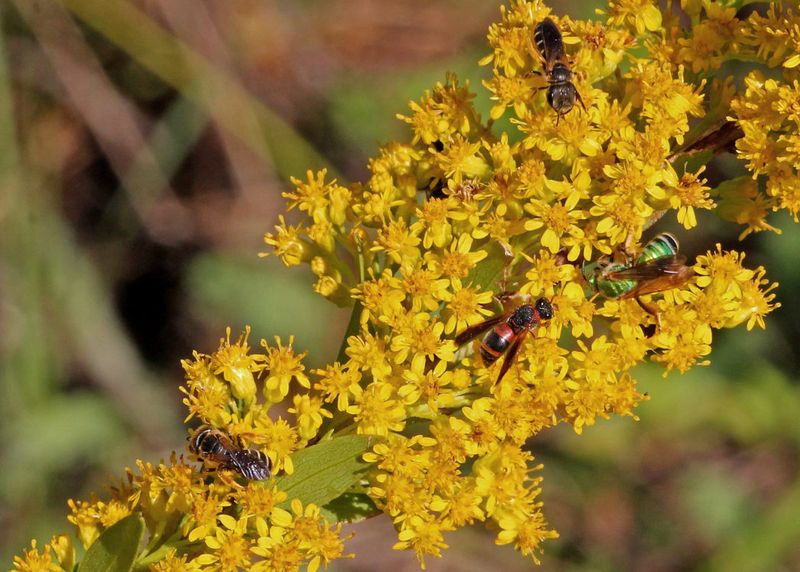
Along coastal strips and sunny salt-influenced borders, finding a plant that blooms boldly in late summer and fall is not always easy. Seaside goldenrod, Solidago sempervirens, fills that gap with confidence.
Its tall plumes of golden yellow flowers light up the landscape right when many other plants are winding down for the season.
According to the Florida Wildflower Foundation, this native goldenrod is found in coastal areas throughout the state, tolerating salt air and sandy, well-drained soils.
It draws in a wide range of pollinators, including native bees, butterflies, and wasps, making it a strong performer in wildlife plantings and sunny coastal gardens.
The blooms also provide late-season nectar that many pollinators rely on before fall arrives.
Your Florida Garden Changes Every Week. Your Plan Should Too.
Gardening in Florida changes quickly throughout the season. Every Friday you’ll receive a simple weekly plan showing exactly what to plant, prune, fertilize, harvest, and protect so you never miss the right timing.
Seaside goldenrod grows tall, often reaching four to six feet at maturity, so placement matters. It fits best in the back of a sunny border, along a coastal edge, or in a naturalistic planting where its full height and spread are welcome.
It can spread by rhizomes over time, so give it space and plan accordingly. It is not suited to small, tidy beds where a compact, polished look is the goal.
Water during establishment, then let it settle into its site. Once established in the right coastal or sunny inland spot, it handles summer heat and salt exposure with steady, reliable performance.
3. Scarlet Hibiscus Brings Drama To Wet Summer Spots
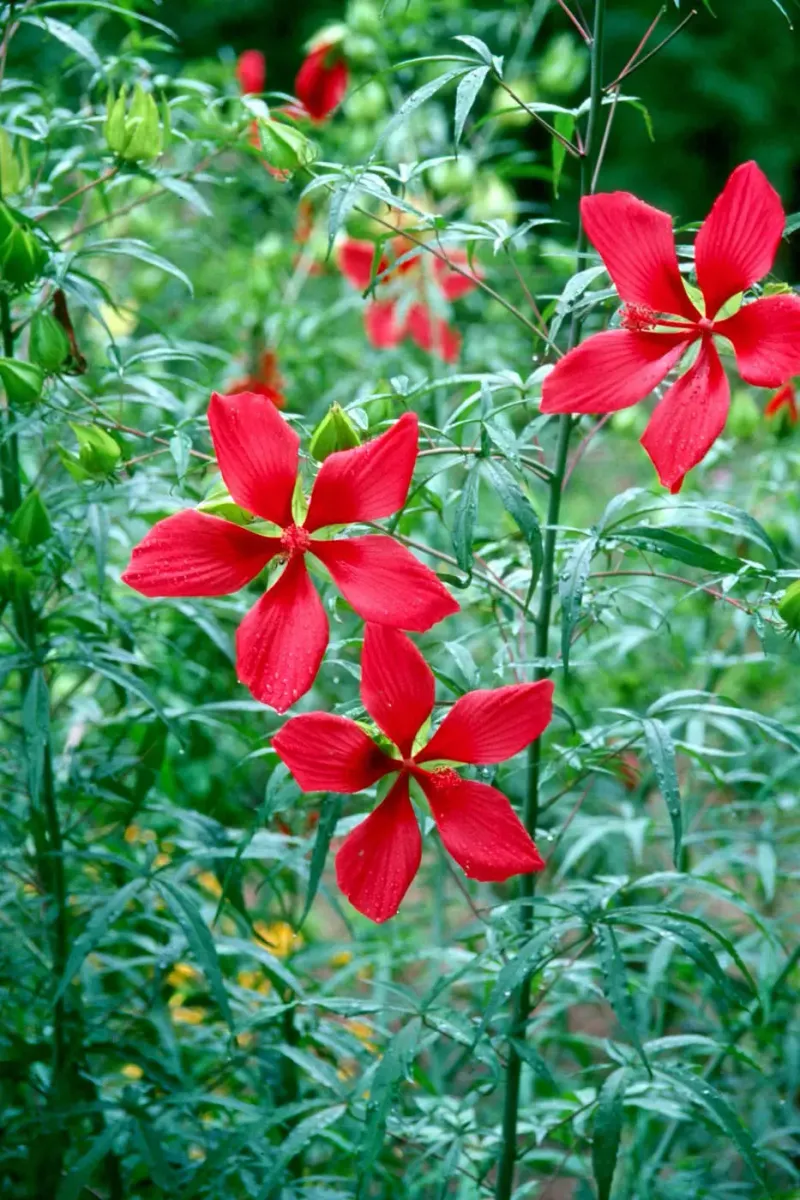
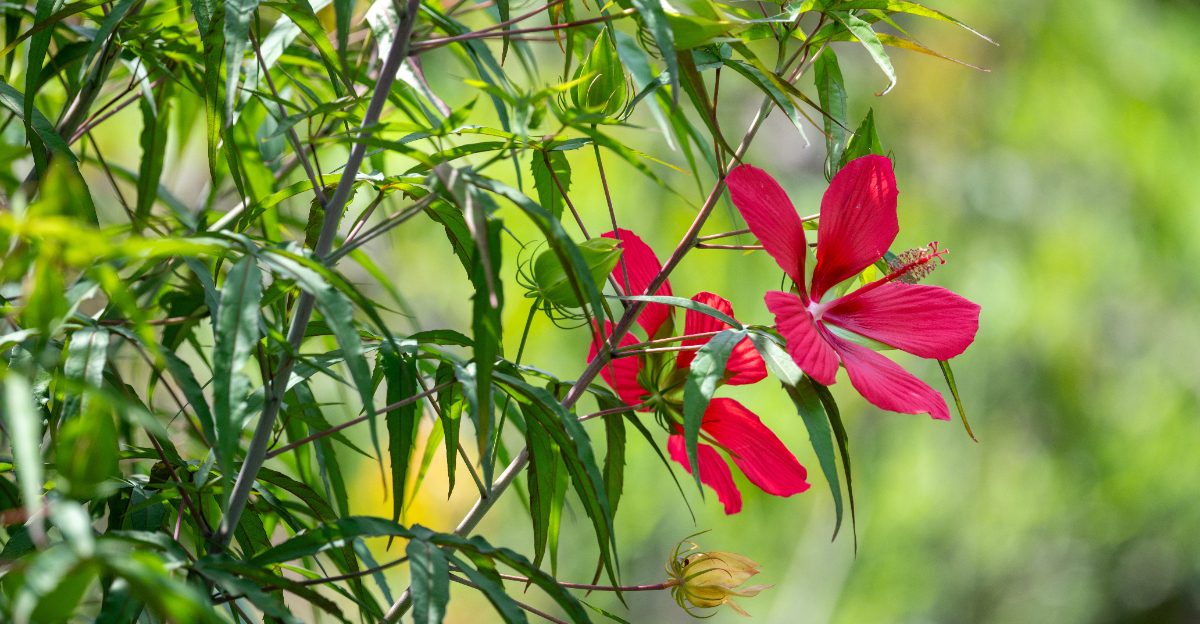
Some plants know exactly where they belong, and scarlet hibiscus, Hibiscus coccineus, belongs at the wet edge. Along pond margins, rain garden low points, roadside ditches, and moist naturalistic borders, this native hibiscus thrives.
It puts on one of the most dramatic summer shows in the state. The flowers are a deep, saturated red with a bold star shape that stops people mid-step.
Plants can reach six to eight feet tall in the right conditions, creating a striking vertical presence in the summer garden. Hummingbirds visit the blooms regularly, and native bees also work the flowers throughout the season.
According to UF/IFAS, scarlet hibiscus is native to wet habitats in this state and performs best in moist to wet soils with full sun. It is a plant built for those soggy low spots where drainage is poor and many drought-tolerant plants would struggle.
It is not suited to dry, sandy beds unless reliable moisture is available. Placing it in a well-drained upland site without supplemental water will stress the plant and limit its performance.
It may also go dormant seasonally and return from the root crown, so leave the base intact through winter. Give it room in a large bed or a wet wildlife planting where its height and bold texture can shine.
Mulch helps retain moisture around the root zone during dry stretches between summer rains.
4. Saltbush Holds Its Own In Hot Exposed Yards
Not every yard has ideal conditions. Some spots are hot, exposed, salty, and windy, places where most ornamental shrubs look miserable by midsummer.
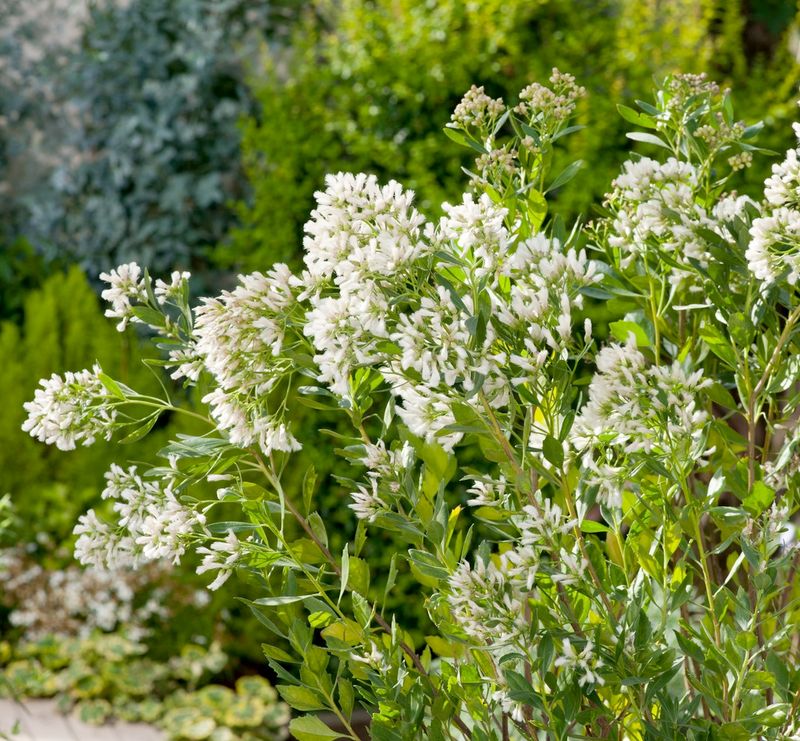
Groundsel tree, also called saltbush and known scientifically as Baccharis halimifolia, is a native shrub that handles those tough sites without complaint.
It is a workhorse plant for rough edges, coastal buffers, and naturalistic screens where a tougher look is acceptable and even welcome.
According to UF/IFAS, this shrub is native to coastal and inland areas of the state and tolerates salt air, wet soils, and poor drainage better than many other shrubs.
In late summer and fall, female plants produce fluffy white seed heads that attract birds and add seasonal interest to the landscape.
The late-season flowers also support pollinators before cooler weather arrives.
Saltbush can grow large, reaching six to twelve feet tall and wide in good conditions, so it is not a plant for small, tidy foundation beds or compact formal landscapes.
It suits naturalistic screens, coastal property edges, wildlife corridors, and rough transition zones where a large, informal shrub makes sense.
Male and female plants are separate, so plant a mix if seed heads and bird value are a priority. Prune after flowering if size control is needed, but understand that heavy pruning changes its natural form.
Give it space, full sun, and a site where its tough character is an asset rather than a problem.
5. Spotted Beebalm Turns Dry Heat Into Pollinator Color
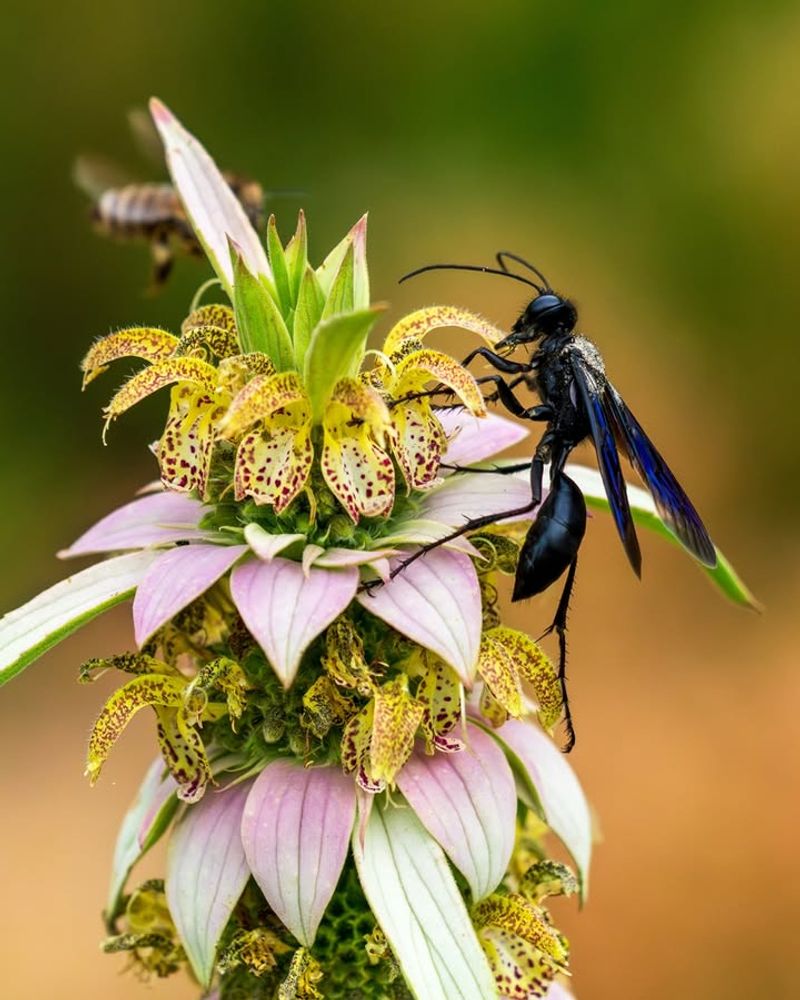
A dry, sunny pollinator patch in sandy soil can be one of the most productive spots in a summer garden when the right plants are in it. Spotted beebalm, Monarda punctata, is one of those right plants.
Its stacked, spotted flowers and colorful bracts create a layered, almost sculptural look. That look draws in bees, butterflies, and other beneficial insects from mid-summer onward.
The aromatic foliage is part of what makes this plant so appealing to pollinators. Bumblebees and native bees are especially drawn to the tubular flowers, and the blooming period can extend well into fall in suitable conditions.
According to the Wildflower Foundation, spotted beebalm is native to this state and thrives in dry, sandy, well-drained soils with full sun. It is a natural fit for meadow-style plantings, open pollinator beds, and naturalistic borders where drainage is sharp.
The overall look is informal and wildflower-style, which suits naturalistic designs but may not suit tidy, clipped beds. It can reseed in good conditions, so be prepared for seedlings to appear nearby in following seasons.
Poor drainage or shady conditions will reduce its performance significantly, so site selection matters. Avoid heavy clay or consistently moist soils.
Water during establishment to help roots settle, then ease back as the plant adjusts. Once it finds its footing in a dry sunny spot, it brings reliable color and pollinator action through the hottest part of the year.
6. Railroad Vine Runs Through Summer Sand With Ease
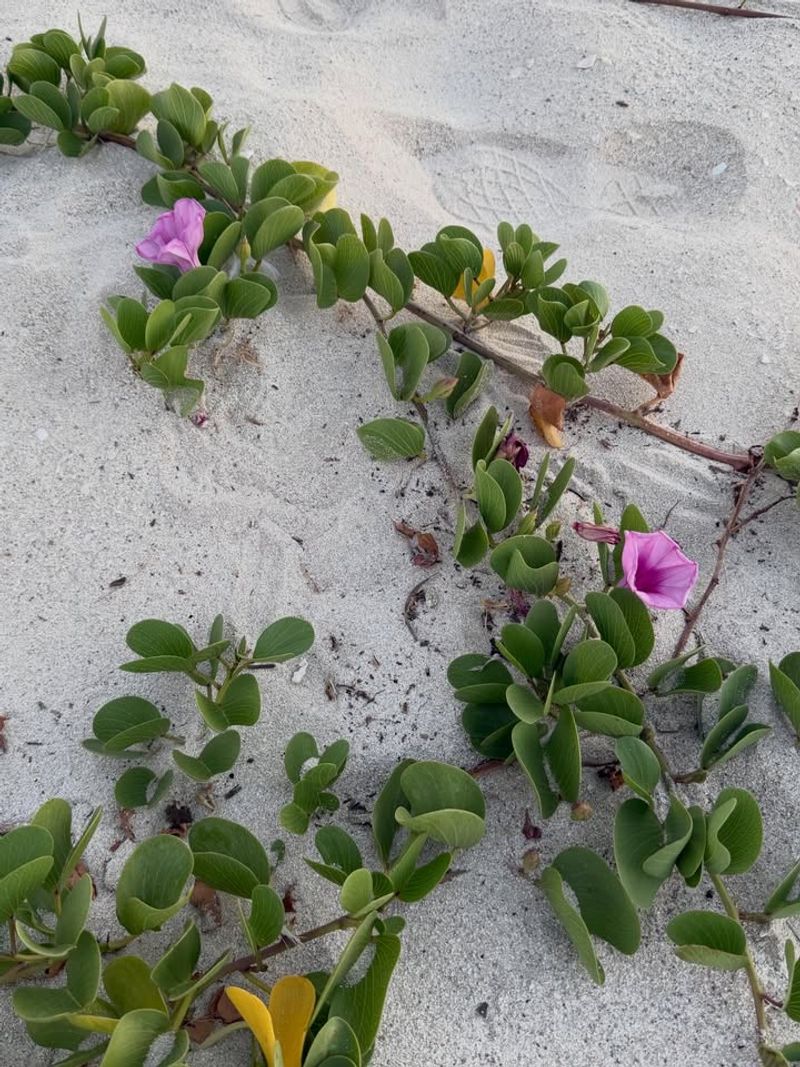
Few plants are as well-suited to life on a sun-baked sandy coastal edge as railroad vine, Ipomoea pes-caprae subsp. brasiliensis.
Long trailing stems stretch across open sand, anchoring themselves as they go, while purple morning-glory-style flowers bloom cheerfully in the summer heat.
It is a plant that seems to run toward the sun rather than away from it.
According to UF/IFAS and the Florida Native Plant Society, railroad vine is native to coastal areas of the state. It also plays a role in stabilizing sandy dune and beach environments.
It handles salt air, reflected heat, and shifting sand better than nearly any other plant in its habitat. The flowers are a soft lavender-purple with a deeper center, and they open fresh each morning throughout the warm season.
Railroad vine is not a plant for small, tidy beds, shaded yards, or typical inland foundation plantings. It needs open space, full sun, and sandy or well-drained coastal soil to perform as intended.
In the wrong site, it will not thrive, and it will not look right. Its value is in coastal landscapes, dune-adjacent plantings, and beach-edge properties.
Those are sites where a tough, spreading, salt-tolerant ground cover is exactly what is needed. Do not expect it to behave like a compact ornamental.
Let it run, let it bloom, and let it do the stabilizing work it was built for along this state’s coastal edges.
7. Tickseed Sunflower Brightens Wet Edges In Peak Heat
Wet, sunny low spots can be tricky to plant well. Too wet for most wildflowers, too sunny for shade lovers, these edges often sit empty or fill with weeds.
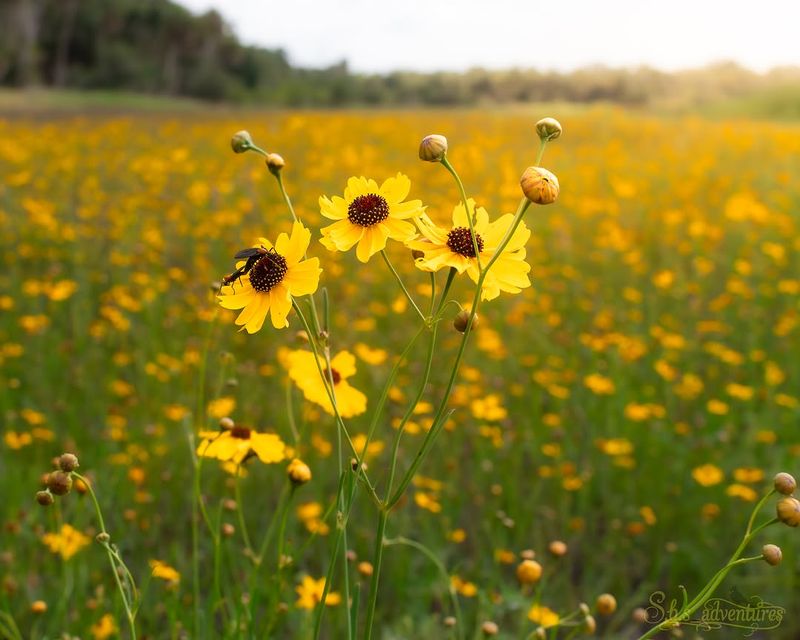
Tickseed sunflower, Bidens aristosa, is a native annual or biennial wildflower that fits those moist, bright conditions. It brings a burst of golden yellow color right through peak summer heat and into fall.
The flowers are cheerful, daisy-like, and loaded with pollen and nectar that attract native bees, butterflies, and other beneficial insects. According to the Florida Wildflower Foundation, Bidens aristosa is appropriate for wet, sunny sites in the state.
It performs well along wet edges, ditches, rain gardens, and seasonal wet areas with full sun. It has a naturalistic, meadow-style presence that suits informal wildlife plantings and low-maintenance wet borders.
Species choice matters when working with Bidens, since not all species in this genus are native or suited to the same conditions. Verify the species before purchasing, and choose plants from reputable native nurseries.
Bidens aristosa can reseed generously, which is a benefit in a naturalistic planting but may require editing in a more managed bed. It is not suited to dry upland sites or shady conditions.
Pair it with other wet-site natives like scarlet hibiscus for a layered, wildlife-friendly planting. The result stays active and colorful through the longest, hottest stretch of the growing season.
8. Florida Rosemary Shrugs Off Heat In Dry Sandy Beds
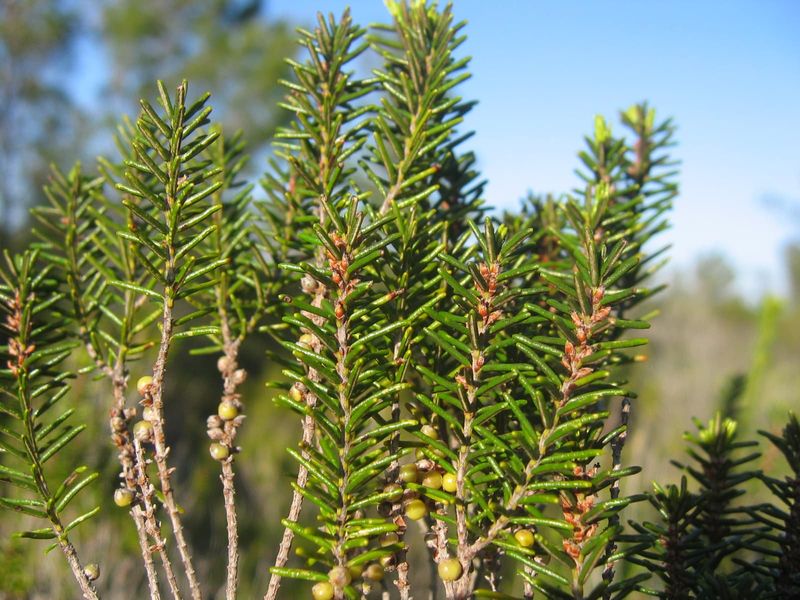
Dry, white, nutrient-poor sand that bakes in full sun all day is not most plants’ idea of a good home. Florida rosemary, Ceratiola ericoides, was built for exactly that kind of site.
This fine-textured evergreen shrub is a defining plant of Florida scrub habitats, one of the most threatened ecosystems in the state. It carries that tough, drought-adapted character into the right garden setting.
The needle-like foliage gives it a soft, airy texture that looks distinctive in a dry native planting or scrub-style garden. According to UF/IFAS and the Native Plant Society, it is native to scrub and sandhill habitats.
It is also highly drought-tolerant after establishment in the right conditions. It does not need fertilizer, irrigation once established in a well-matched site, or rich amended soil.
In fact, rich or moist soil is likely to cause problems rather than help it.
One important note: Florida rosemary is not the culinary herb used in cooking. It is not edible, and it should not be confused with culinary rosemary, which is Salvia rosmarinus, a non-native Mediterranean herb.
These are completely different plants. Florida rosemary needs sharp drainage, dry sandy conditions, and full sun to perform well.
It will not tolerate clay, poor drainage, or heavily irrigated beds. For a dry scrub-style planting, a sandy naturalistic border, or a hot open site in the right region, it is a striking and low-input choice once properly established.
9. Make Every Native Plant Count With The Right Site Match
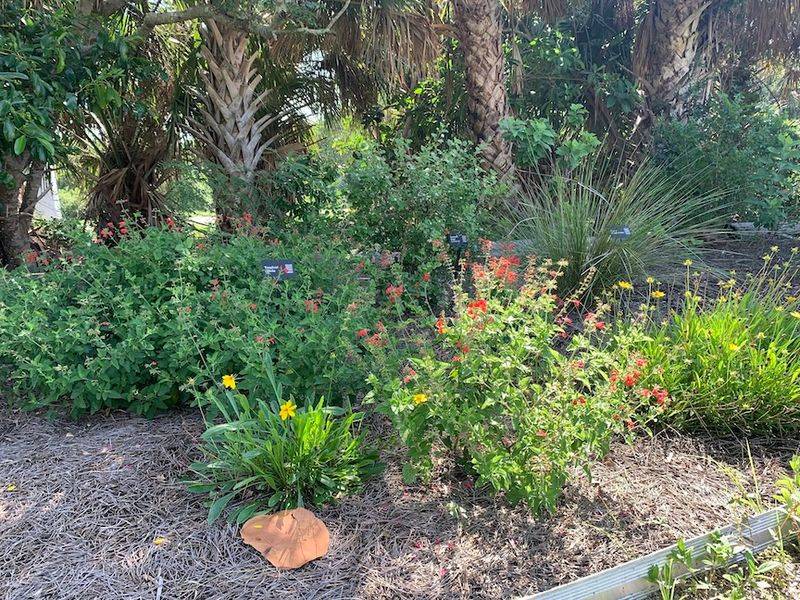
Choosing native plants is only half the work. Matching them to the right site is what actually determines whether they coast through summer or struggle through it.
Every plant on this list has specific needs, and understanding those needs before planting saves time, money, and frustration. A wet-site plant placed in dry sand will underperform.
A dry scrub plant placed in irrigated clay will face constant stress.
Start by observing your yard through a full summer season before planting. Notice where water pools after rain, where the soil dries out fastest, where salt wind hits hardest, and where the sun stays longest.
Match those observations to the plants that were built for those exact conditions. Establishment watering is still necessary for every plant on this list, even the most drought-adapted ones.
Water consistently during the first season, then ease back as roots develop and the plant settles in.
Use mulch to moderate soil temperature and slow moisture loss around new plantings. Give each plant enough space to reach its mature size without crowding.
Buy from reputable native nurseries that can confirm species, provenance, and regional suitability. Native plants support local wildlife, pollinators, birds, and the broader ecosystem in ways that non-native ornamentals simply cannot replicate.
When the site match is right and establishment care is solid, these native plants do not just survive summer in this state. They show up, bloom, and carry the garden through its toughest months with real, lasting value.