These Pennsylvania Invasive Plants Destroy Native Wildlife Habitat Faster Than Any Other Threat
Pennsylvania’s native wildlife depends on a specific network of plants that have developed alongside local animals, insects, and birds over thousands of years.
When invasive plants move into that network, the damage to habitat happens faster and reaches further than most people realize, and it is not always visible in the dramatic way that development or pollution tends to be.
Invasive plants work quietly and persistently, replacing native vegetation with species that local wildlife cannot use in the same way, disrupting the food webs that entire animal populations depend on, and altering soil chemistry, light availability, and water retention in ways that compound over time.
Pennsylvania has a specific group of invasive plants that ecologists identify as the most destructive to native habitat, and several of them are already widespread across the state.
Understanding which ones cause the most damage and why gives a clearer picture of why their removal and replacement is treated as a genuine conservation priority.
1. Oriental Bittersweet
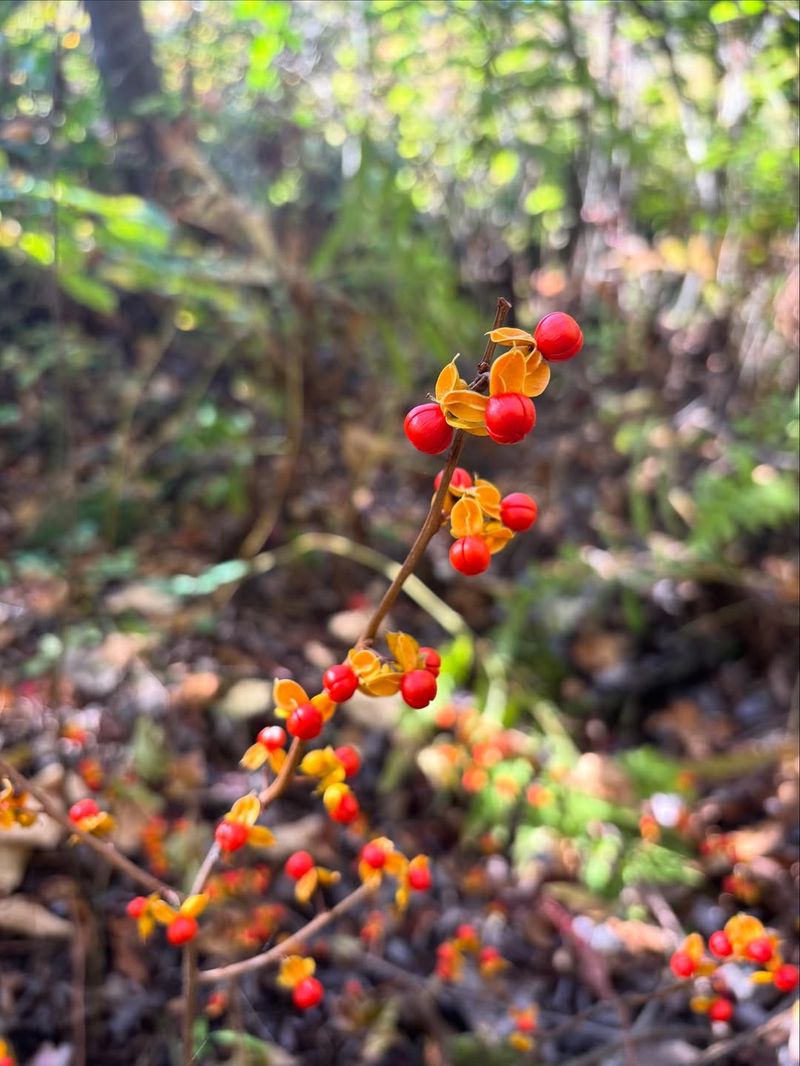
There is something almost deceptive about Oriental Bittersweet. Its bright orange and red berries look cheerful and festive, especially in autumn, which is exactly why people used to bring it indoors for decorations.
That innocent-looking holiday wreath tradition helped spread one of Pennsylvania’s most destructive invasive plants across the entire state.
Oriental Bittersweet is a twining vine that wraps tightly around tree trunks and branches. As the vine grows thicker, it squeezes the tree like a slow-moving grip, cutting off the flow of water and nutrients through the bark.
Mature trees that have stood for decades can be completely overtaken and weakened by this relentless vine.
Beyond strangling trees, Oriental Bittersweet crowds out native plants that wildlife depends on for nesting and foraging.
Native bittersweet, a closely related plant that birds and small mammals rely on, is being pushed out of Pennsylvania’s forests almost entirely because Oriental Bittersweet outcompetes it at every turn.
Identification is an important tool in fighting this vine. Oriental Bittersweet produces berries all along its stems, while native American bittersweet only produces berries at the tips.
That small difference is easy to spot once you know what to look for, and it can help you make the right removal decisions.
Removing Oriental Bittersweet requires cutting the vine at the base and removing as much of the root system as possible. Leaving roots behind allows the plant to regrow quickly.
Planting native alternatives like American bittersweet or native grape vines afterward helps restore habitat and prevents new invasive plants from moving into the cleared space.
2. Japanese Honeysuckle
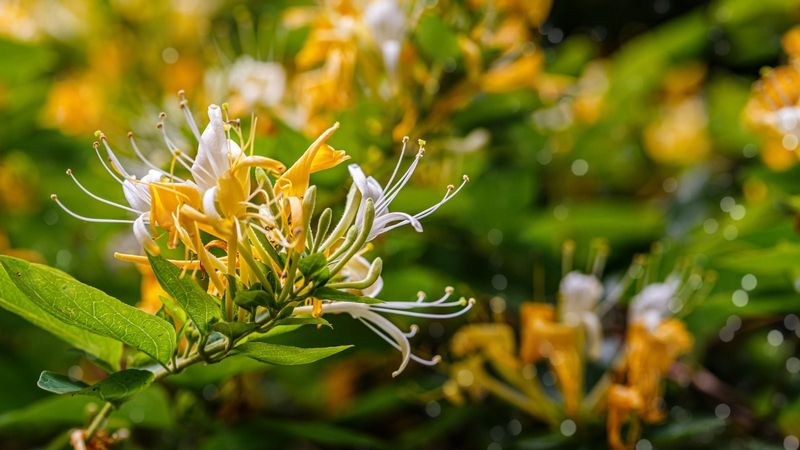
Picture a vine so aggressive it can wrap around an entire tree and block out the sun before you even notice it spreading. Japanese Honeysuckle is exactly that kind of plant.
Originally brought to the United States from Asia in the early 1800s as an ornamental ground cover, it quickly escaped gardens and spread across Pennsylvania like wildfire.
This vine grows incredibly fast, sometimes adding several feet of length in a single growing season. It twists and climbs over native shrubs, small trees, and ground plants, forming thick, tangled mats that block sunlight from reaching anything underneath.
Your Pennsylvania Garden Changes Every Week. Your Plan Should Too.
Gardening in Pennsylvania changes quickly throughout the season. Every Friday you’ll receive a simple weekly plan showing exactly what to plant, prune, fertilize, harvest, and protect so you never miss the right timing.
Native plants that depend on sunlight simply cannot survive beneath those heavy layers of honeysuckle growth.
Wildlife feels the impact almost immediately. Native birds rely on specific native plants for nesting materials, insects, and berries.
When honeysuckle takes over, those resources disappear. Some birds do eat honeysuckle berries, but that actually makes the problem worse because they spread the seeds even farther across the landscape.
Controlling Japanese Honeysuckle takes real effort and patience. Pulling young vines by hand works well for small infestations, especially when the soil is moist.
For larger areas, cutting vines repeatedly throughout the growing season weakens them over time. Removing this plant before it flowers prevents new seeds from spreading to nearby areas.
Replacing honeysuckle with native alternatives like trumpet honeysuckle or Virginia creeper gives wildlife the resources they actually need. Native vines support pollinators, provide proper nesting cover, and produce berries that birds have evolved to eat.
Every patch of Japanese Honeysuckle removed is a real win for Pennsylvania’s native ecosystems.
3. Burning Bush
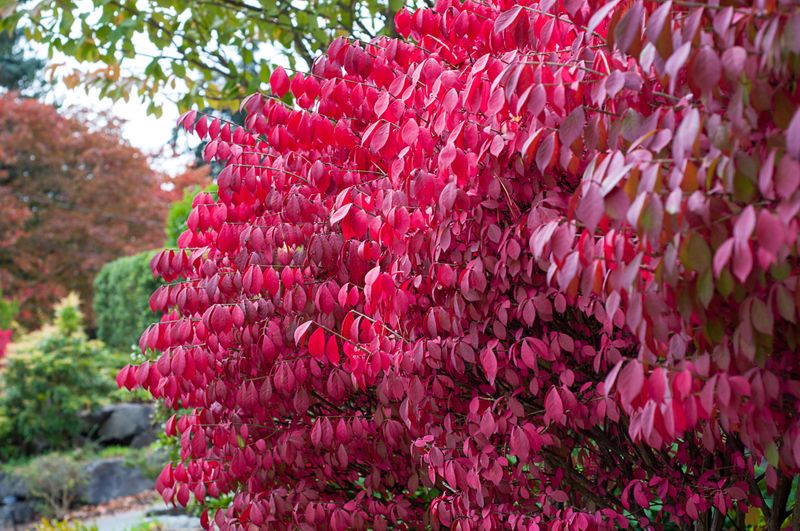
Walk through any Pennsylvania garden center in autumn and you will almost certainly spot Burning Bush. Its electric red fall color makes it one of the most popular ornamental shrubs sold across the state.
Homeowners love the dramatic seasonal display, but what happens after those leaves fall is a serious problem for native wildlife habitat.
Burning Bush produces enormous quantities of seeds, and birds eagerly eat the small red berries. Every berry a bird consumes gets carried somewhere new, dropping seeds in forests, meadows, and along stream banks far from any garden.
Those seeds sprout quickly and grow into dense thickets that block sunlight and crowd out native shrubs and wildflowers.
Native plants that once filled Pennsylvania’s forest edges, like native viburnums, dogwoods, and spicebush, struggle to compete with Burning Bush.
Those native shrubs provide critical food and shelter for songbirds, pollinators, and small mammals throughout the year.
When Burning Bush takes their place, the food web that supports local wildlife begins to unravel.
Fortunately, many beautiful native alternatives can replace Burning Bush in home landscapes without causing harm. Native highbush blueberry offers stunning fall color and produces berries that birds and people both enjoy.
Winterberry holly brings bright red berries to winter landscapes while supporting dozens of native bird species through the cold months.
Removing existing Burning Bush plants before they set seed each year is one of the most effective ways to slow their spread. Cutting shrubs down and treating the stumps prevents regrowth.
Swapping them out for native alternatives transforms a garden from a habitat hazard into a genuine sanctuary for Pennsylvania’s native wildlife.
4. Norway Maple
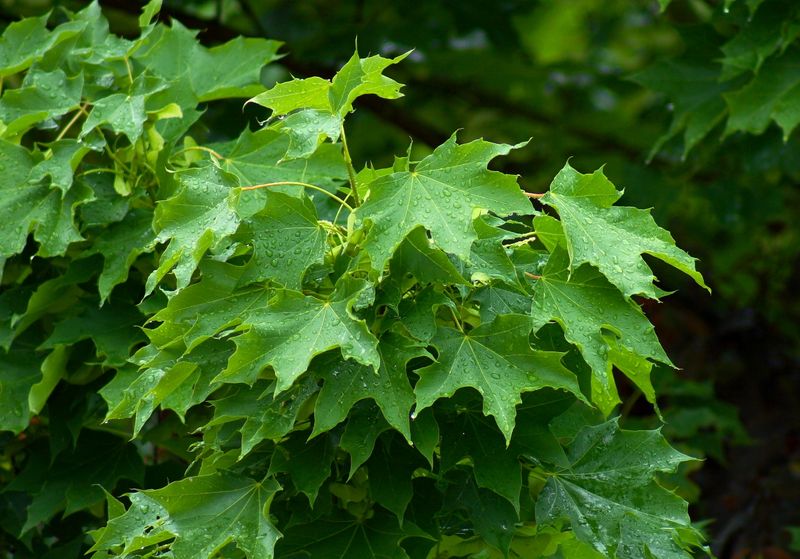
At first glance, Norway Maple looks a lot like Pennsylvania’s beloved native sugar maple. Both trees have similar leaf shapes and grow to impressive heights.
But Norway Maple carries a hidden advantage that makes it a serious threat to native forests: it tolerates deep shade, poor soil, drought, and air pollution far better than most native trees can manage.
That toughness sounds admirable until you see what it means for native ecosystems. Norway Maple grows rapidly and produces a dense canopy that blocks almost all sunlight from reaching the forest floor.
Beneath a stand of Norway Maples, native wildflowers, ferns, and tree seedlings simply cannot get enough light to establish themselves and grow.
The seeds are another part of the problem. Each Norway Maple tree produces thousands of winged seeds every year, and those seeds germinate at very high rates.
They spread into natural areas, parks, and forests, where they quickly outnumber native seedlings and take over the understory layer that birds and pollinators depend on most.
Native sugar maples, red maples, and other understory trees support hundreds of species of insects, which in turn feed nesting birds and small mammals.
Research from entomologist Doug Tallamy has shown that native oaks and maples support far more caterpillar species than non-native trees like Norway Maple. Fewer caterpillars means fewer birds successfully raising young.
Removing Norway Maples from natural areas and replacing them with native sugar maples or red maples restores that critical food chain. Even planting native maples in yards and neighborhoods makes a real difference.
Small actions add up quickly when enough people make the switch from ornamental non-natives to ecologically valuable native trees.
5. Bradford Pear
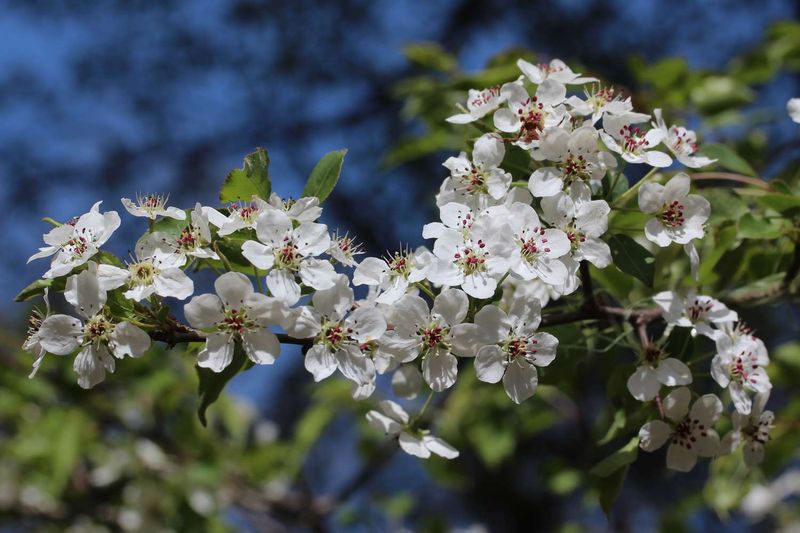
Every spring, roadsides across Pennsylvania burst into clouds of white blooms, and many of those pretty trees are Bradford Pears. For decades, landscapers and homeowners planted them everywhere because they grew fast, flowered beautifully, and seemed low-maintenance.
What nobody fully anticipated was how quickly this ornamental tree would escape cultivation and become a genuine ecological nightmare.
Bradford Pear was originally bred to be sterile, meaning it could not produce viable seeds on its own.
The problem is that when different varieties of Callery Pear cross-pollinate with each other, which happens constantly as more trees get planted, they produce abundant fruit. Birds eat those small pears and spread the seeds widely across the landscape.
The seedlings that sprout from bird-dropped seeds are not the tidy, ornamental Bradford Pear from the nursery. They grow into wild, thorny thickets with branches sharp enough to injure people and animals.
These thickets spread rapidly across old fields, forest edges, and roadsides, forming dense walls of vegetation that push out native trees, shrubs, and wildflowers.
Native trees like serviceberry, redbud, and wild plum offer comparable spring beauty without the ecological baggage. Serviceberry, in particular, produces berries that over 35 species of birds actively seek out during migration.
Replacing Bradford Pears with these natives transforms a yard into a real stopover habitat for traveling songbirds.
Pennsylvania has moved toward restricting the sale of Callery Pear varieties, which is a meaningful step forward. Homeowners can help by removing existing Bradford Pears and replacing them with native flowering trees.
Each replacement creates habitat, supports pollinators, and helps restore the natural balance that Pennsylvania’s wildlife truly depends on.
6. Purple Loosestrife
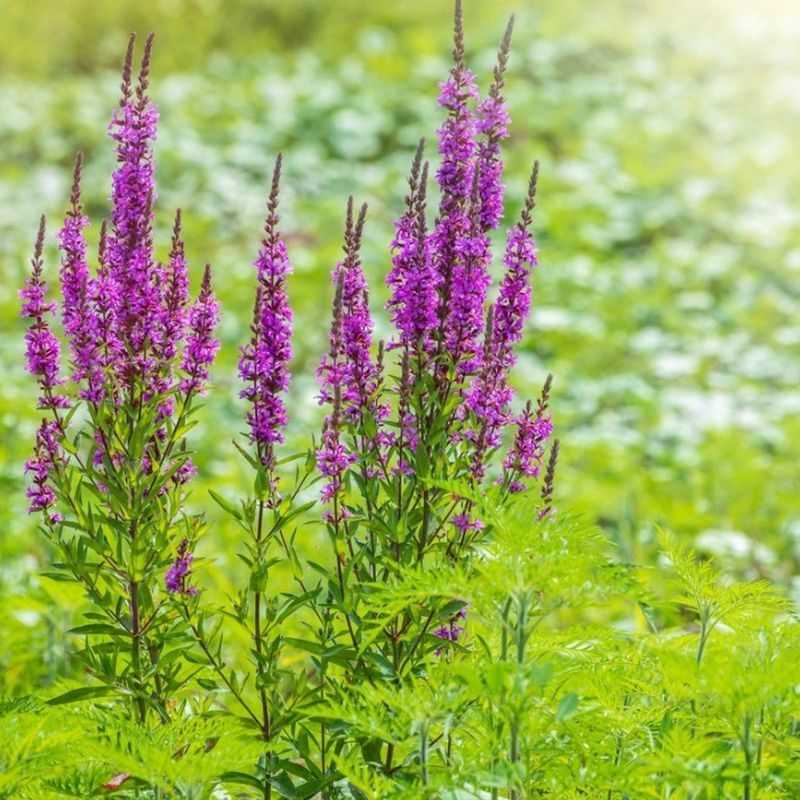
Standing at the edge of a Pennsylvania marsh covered in tall, magenta flower spikes, Purple Loosestrife looks almost magical. The color is genuinely stunning, which made it a popular garden plant for centuries.
European settlers brought it to North America intentionally, and it has been causing ecological problems ever since it escaped into natural wetlands.
Purple Loosestrife is a wetland specialist, and it is extraordinarily good at what it does. A single mature plant can produce up to two million seeds per year.
Those seeds spread easily through water, wind, and mud stuck to boots and equipment. Once established in a wetland, Purple Loosestrife forms stands so thick that almost nothing else can grow alongside it.
Wetlands are among the most biologically rich habitats on Earth, supporting frogs, salamanders, turtles, waterfowl, shorebirds, and countless insects.
Native wetland plants like cattails, sedges, and native rushes provide food and nesting cover that these animals have evolved alongside over thousands of years.
Purple Loosestrife simply does not provide the same ecological value, leaving wetland wildlife without the resources they need.
Biological control has shown real promise in managing Purple Loosestrife. Researchers have introduced specific beetles from Europe that feed almost exclusively on this plant, helping reduce populations in some Pennsylvania wetlands without harming native species.
This approach works best as part of a larger wetland restoration effort. Hand-pulling young plants before they flower prevents seed production and is very effective for small infestations.
Replanting disturbed areas with native wetland species like blue flag iris, swamp milkweed, and native sedges speeds up recovery and helps native wildlife return to restored wetland areas faster.