Native Arizona Trees More Property Owners Are Turning To Instead Of Eucalyptus
Choosing a tree is one of those decisions that can shape a yard for decades. A good tree provides shade, adds character, and helps a landscape feel more established over time.
That is why homeowners often spend extra time researching their options before bringing one home.
Eucalyptus earned its popularity because it grows quickly and creates a mature look in a relatively short period. For years, it was a familiar sight in landscapes that needed height, shade, and visual impact.
But priorities change, and so do landscaping preferences.
Native trees are getting more attention in Arizona yards for several reasons. They already belong in the local environment and are naturally adapted to the conditions around them.
Some provide impressive shade, while others bring seasonal color or support local wildlife.
Several native species are now becoming popular alternatives for property owners looking beyond eucalyptus when planning their landscapes.
1. Desert Willow Brings Seasonal Blooms Without Massive Roots
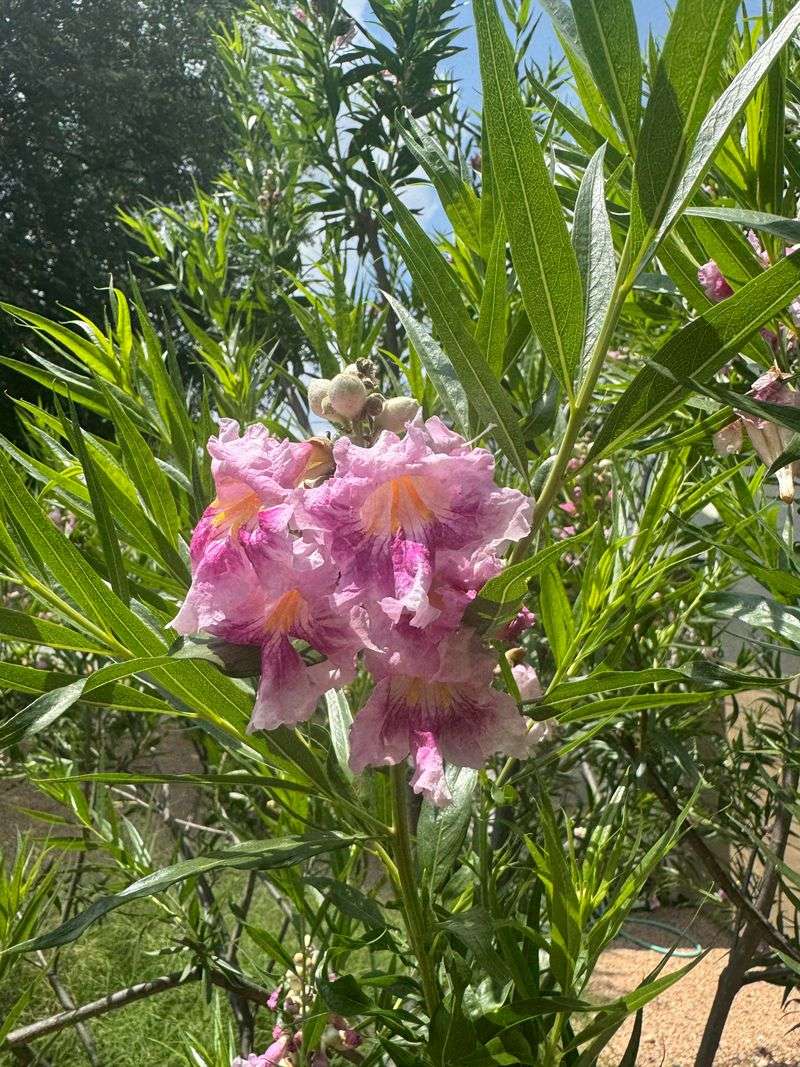
Few native trees put on a flower show quite like the Desert Willow. From late spring through early fall, it bursts into pink, lavender, and white trumpet blooms that attract hummingbirds and pollinators without much effort from you.
Unlike eucalyptus, its root system stays relatively shallow and non-invasive.
Homeowners near patios, driveways, or underground irrigation lines can plant it without losing sleep over future damage.
It handles drought well once established, typically needing only occasional deep watering during the hottest months. Young trees may need more attention in the first two seasons, but patience pays off quickly.
Mature Desert Willows reach about 15 to 25 feet tall, making them a solid mid-size option. That size fits comfortably in suburban yards without overwhelming a space.
One thing worth knowing: it drops its long, narrow leaves in winter and can look bare during cold snaps. If you want year-round green, pair it with an evergreen shrub nearby.
Seed pods hang on the branches through winter and add some visual interest even without foliage.
Birds occasionally pick at them too, adding unexpected wildlife value to your yard.
Its colorful blooms can appear in waves throughout the warm season, giving the tree a much longer flowering period than many other desert-adapted trees.
Even when it is not in bloom, the tree’s graceful branching habit adds texture and movement to the landscape.
2. Ironwood Stays Adapted To Extreme Desert Conditions
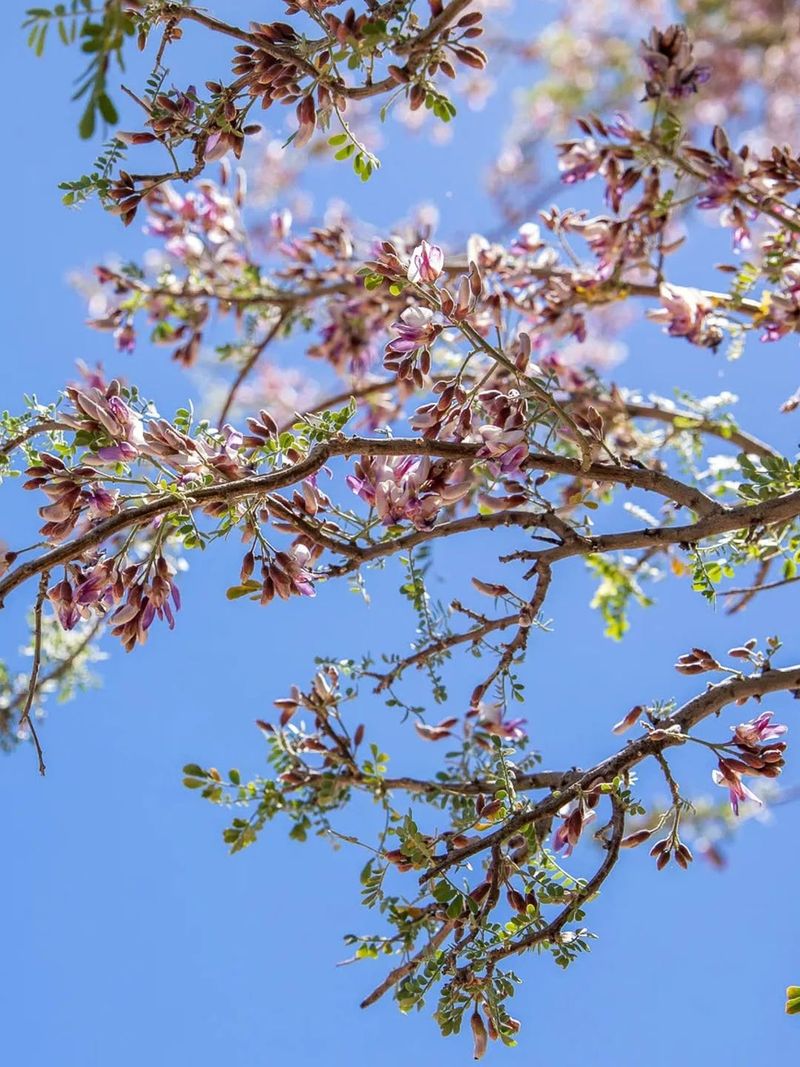
Ironwood is one of the toughest trees in the Sonoran Desert, and it earns that reputation every single summer. It survives scorching heat, rocky soil, and extended dry periods without complaint.
Its silvery-green canopy stays on the tree year-round in most locations, making it one of the few native evergreen options available to desert property owners.
That consistent coverage means shade when you actually need it most.
Purple blooms appear briefly in late spring, usually lasting just a few weeks. They are subtle but genuinely beautiful, and pollinators flock to them while they last.
Growth is slow, so expect patience. Ironwood adds only a few inches per year, but trees planted now become remarkable landmarks decades down the road.
Your Arizona Garden Changes Every Week. Your Plan Should Too.
Gardening in Arizona changes quickly throughout the season. Every Friday you’ll receive a simple weekly plan showing exactly what to plant, prune, fertilize, harvest, and protect so you never miss the right timing.
Some specimens in the wild are estimated to be over 800 years old.
Root systems run deep rather than wide, which reduces the risk of surface damage around walkways or structures. That growth pattern makes placement near hardscaping much more manageable than eucalyptus ever was.
Wildlife value is exceptional. Cactus wrens, doves, and small mammals use Ironwood for shelter and food.
Planting one is essentially adding a small ecosystem anchor to your property.
Soil quality matters less here than with most trees. Ironwood handles poor, alkaline, and sandy soils without much fuss.
3. Arizona Sycamore Creates A Larger Canopy Near Water Sources
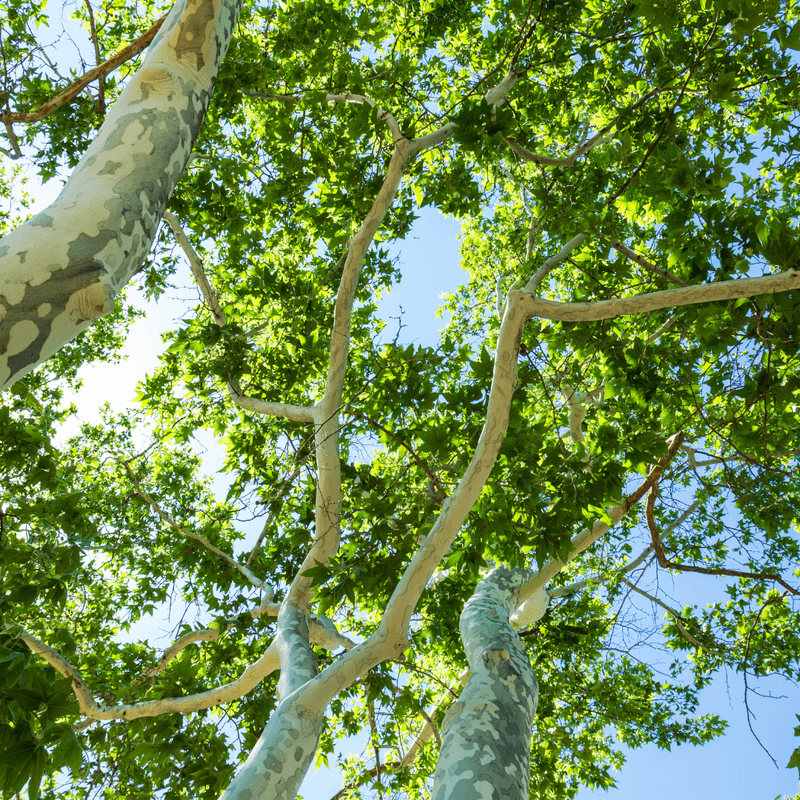
Want serious shade? Arizona Sycamore delivers a canopy that can stretch 40 to 70 feet wide under the right conditions.
It is one of the largest native shade trees available for low-elevation desert properties near natural water sources.
Mottled white and cream bark peels naturally throughout the year, giving the trunk a striking patchwork appearance.
Even in winter when leaves are gone, the tree remains visually impressive.
It grows best along riparian corridors, seasonal creek beds, or properties with access to supplemental irrigation. Without reliable moisture, growth slows considerably, so placement matters more here than with drought-adapted alternatives.
Large deciduous leaves provide dense summer shade and then drop in autumn, allowing winter sun to warm patios and outdoor spaces naturally. That seasonal shift is genuinely useful in desert climates where winter warmth is welcome.
Birds absolutely love this tree. Cavity-nesting species, raptors, and songbirds all use Sycamore for nesting, perching, and foraging.
A mature specimen can support dozens of species throughout the year.
Root systems are vigorous near water, so avoid planting directly over underground utilities or close to foundations. Give it room, and it rewards you generously with shade, wildlife, and visual presence.
Compared to eucalyptus, the debris is seasonal and manageable rather than constant and messy year-round.
Many homeowners appreciate the cooling effect that develops beneath the canopy during summer.
4. Netleaf Hackberry Supports Birds With Seasonal Fruit
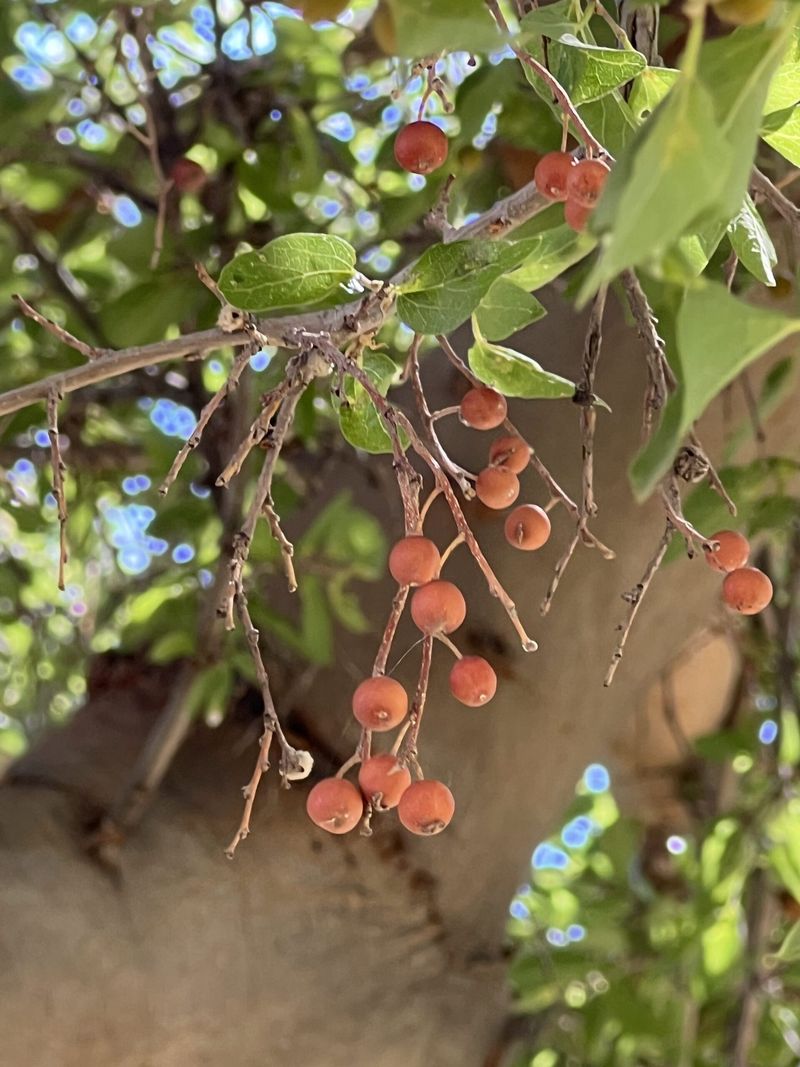
Birds know something most property owners do not: Netleaf Hackberry is one of the best fruit-producing native trees in the desert Southwest.
Small orange to reddish-purple berries ripen in late summer and fall, drawing in thrushes, waxwings, and mockingbirds by the dozen.
It handles rocky, shallow, and alkaline soils without complaint.
Properties with difficult ground conditions that defeat other trees often see Hackberry thrive without amendment or special treatment.
Mature trees reach 20 to 30 feet with a rounded, spreading form. The canopy is not the densest available, but it filters sunlight effectively and offers meaningful shade during peak afternoon heat.
Leaves have a distinctive rough, sandpapery texture and stay on the tree well into late fall. Color change is subtle but adds a warm yellow tone before leaves drop for winter.
Drought tolerance is strong once roots establish, though young trees benefit from regular deep watering during the first two summers.
After that, natural rainfall handles most of the work in typical desert conditions.
One practical advantage over eucalyptus: Hackberry does not produce the thick, oily leaf litter that clogs gutters and drainage channels. Cleanup is minimal by comparison.
Wildlife value extends beyond birds. Several native butterfly species use Hackberry as a larval host plant, meaning your yard becomes part of a broader ecological network simply by planting one.
5. Arizona Walnut Produces Dense Summer Shade
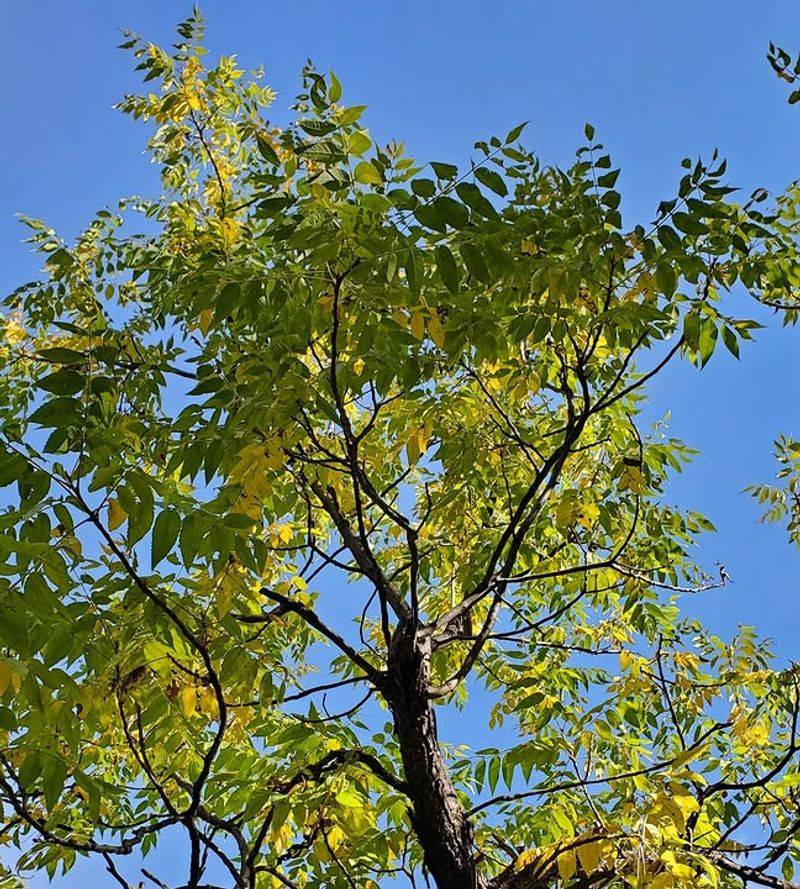
Shade does not get much denser than what an Arizona Walnut produces at full maturity. Compound leaves with multiple leaflets overlap to create a thick, cooling canopy that drops afternoon temperatures noticeably underneath.
It grows at mid to higher elevations, performing best between roughly 4,000 and 7,000 feet. Properties in Tucson foothills, Prescott, or similar transition zones often see excellent results with proper placement and initial watering support.
Small walnuts ripen in fall and attract wildlife including squirrels, jays, and several woodpecker species.
The nuts are edible but have very thick shells compared to commercial varieties, so expect wildlife to benefit more than your kitchen.
Moderate drought tolerance develops after two to three years of establishment. Young trees need consistent irrigation, especially during summer heat.
Skipping water during the first season can seriously set back root development.
Autumn color is a genuine bonus. Leaves turn soft yellow before dropping, adding a seasonal warmth that most desert-adapted trees simply do not offer.
It is a small but satisfying visual reward each October.
Juglone, a natural compound released from roots and leaves, can inhibit the growth of some nearby plants. Research companion planting before placing sensitive species underneath or directly adjacent to the canopy.
Compared to eucalyptus, cleanup is seasonal and predictable. Fallen leaves break down quickly and can be composted rather than hauled away.
6. Western Soapberry Adds Seasonal Interest With Minimal Care
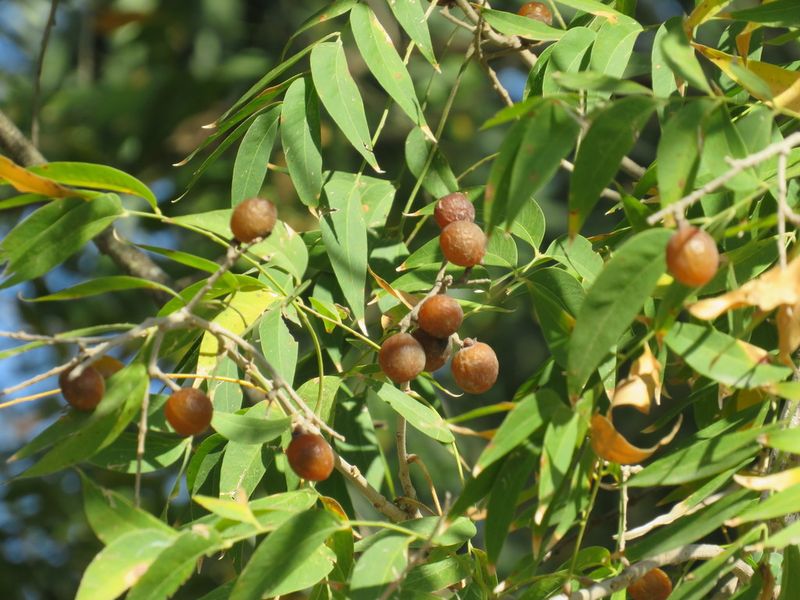
Not many native trees offer four distinct seasons of visual interest in the desert, but Western Soapberry pulls it off. Spring brings clusters of small white flowers.
Summer delivers golden-yellow translucent berries. Fall turns the foliage bright yellow.
Winter leaves behind an attractive bare silhouette.
Berries contain saponin, a natural soap compound that Indigenous communities historically used for washing. They are toxic if consumed in quantity, so placement away from areas where young children play unsupervised is a smart precaution.
Mature height typically falls between 20 and 40 feet depending on water availability and soil conditions. Canopy spread is proportional, offering useful shade without overwhelming smaller properties.
Drought tolerance is one of its strongest traits.
Once established, Western Soapberry handles long dry periods with minimal supplemental water. Occasional deep soaks during summer help maintain healthy growth but are not always strictly necessary.
Fall color stands out sharply in desert landscapes where yellow and gold tones are relatively rare among native species. Neighbors often notice it before they know what it is, which makes for an easy conversation starter.
Root systems behave well around structures and paving. Aggressive root problems associated with eucalyptus are simply not part of this tree’s profile.
Wildlife use is moderate but consistent. Berries persist into winter and provide food for birds after other fruit sources have been exhausted across the landscape.
7. Foothill Palo Verde Produces Shade With Very Little Water
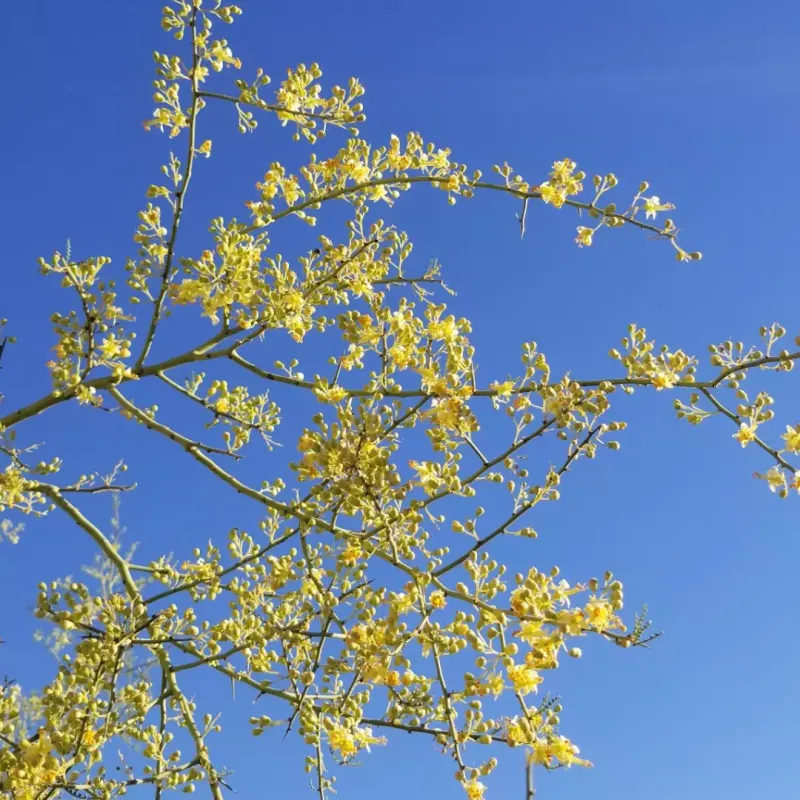
Green bark is not something you see on most trees, and that is exactly what makes Foothill Palo Verde unforgettable.
Chlorophyll in the bark allows photosynthesis even after leaves drop, making it one of the most water-efficient trees in the entire Sonoran Desert.
Brilliant yellow flowers blanket the canopy each spring, usually peaking in April or May. The display lasts only a few weeks, but it is dramatic enough that people often pull over just to look at a blooming specimen.
Shade output is lighter than a Sycamore or Walnut, but that filtered canopy suits desert gardens where plants underneath still need some direct sun.
Xeriscape gardens planted beneath Palo Verde often perform better than those in full, unfiltered exposure.
Established trees need almost no supplemental irrigation. Natural rainfall in most lower-elevation desert zones is sufficient for mature specimens.
That near-zero water demand is a major practical advantage over thirsty non-native alternatives.
Thorns are present on younger growth and should factor into placement decisions near walkways or play areas. Spines soften as the tree matures, but early years require some awareness.
Growth is moderate, reaching 15 to 30 feet over time. Branching structure is open and sculptural, giving the tree a strong visual presence even outside of bloom season.
Seed pods drop in summer and can be raked up or left as wildlife forage. Either way, cleanup effort is minimal compared to continuous eucalyptus leaf and bark litter.
8. Velvet Mesquite Delivers Filtered Shade Across The Landscape
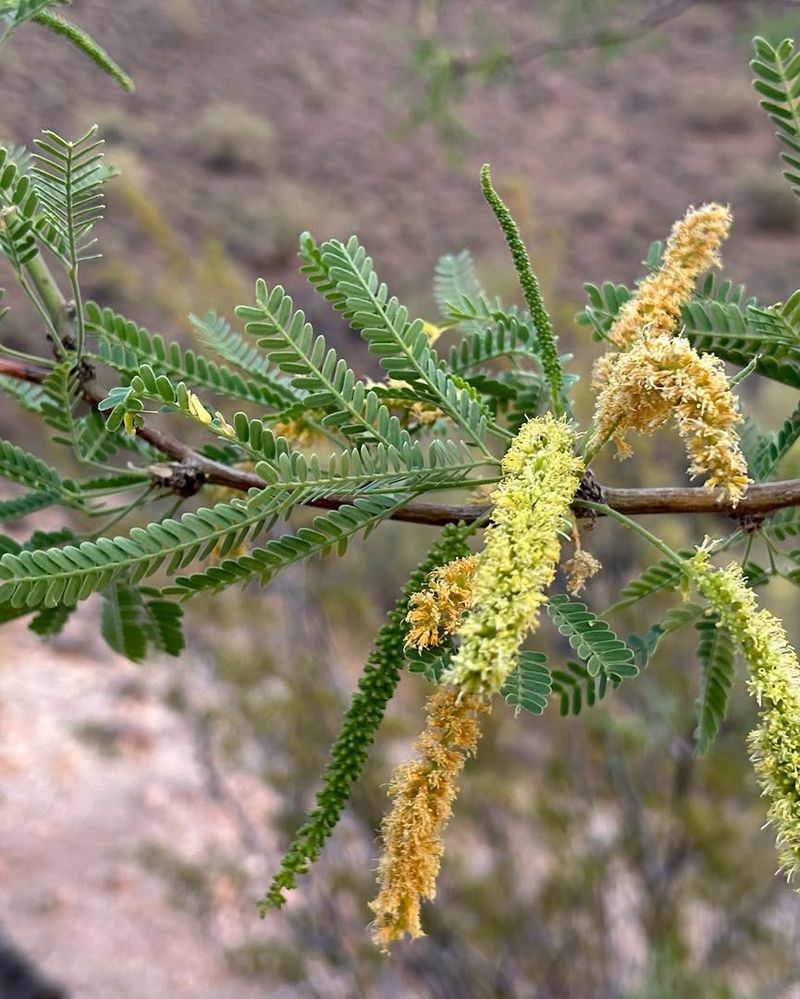
Velvet Mesquite has shaded desert communities for centuries, and it still earns its place in modern landscapes.
Feathery, fine-textured foliage creates dappled light rather than dense shade, which suits outdoor living spaces where airflow matters as much as coverage.
Nitrogen-fixing roots improve surrounding soil over time.
Plants growing beneath or near an established Mesquite often perform better than those planted in open ground without that natural soil benefit.
Long seed pods ripen in summer and were historically ground into flour by Indigenous communities across the region. Nutritional and cultural significance runs deep with this species.
Growth rate is moderate with regular water but slows considerably under dry conditions.
Established trees handle extended drought, though they may drop leaves temporarily during severe dry spells to conserve moisture.
Thorns are a real consideration. Young branches carry sharp spines that can surprise barefoot walkers or curious pets.
Planting away from high-traffic zones solves the problem without sacrificing the tree’s many benefits.
Canopy spread on mature specimens often exceeds 40 feet in favorable conditions. That coverage makes Velvet Mesquite one of the most generous shade producers among native desert trees at comparable water use.
Root systems run extremely deep, anchoring well in sandy or rocky soils. Surface root problems are far less common than with eucalyptus, making placement near structures more practical overall.