The Ohio Vegetable Garden Mistake That Invites Squash Vine Borers Every Year
Zucchini, summer squash, pumpkins: few things in an Ohio backyard garden feel more satisfying than watching those big, bold vines take off in early summer. And then squash vine borers show up and the whole situation changes almost overnight.
One day the plants look incredible and the next the vines are wilting and there is very little you can do about it at that point.
Sound painfully familiar? You are absolutely not alone.
What a lot of Ohio gardeners don’t realize is that one very common habit is quietly making this problem worse every single season.
Planting squash in the same bed year after year is basically setting the table for borers that spent the winter right there in that soil. Crop rotation won’t make vine borers disappear entirely, but it can make your garden a much harder target.
Worth trying? One hundred percent.
1. Planting Squash In The Same Bed
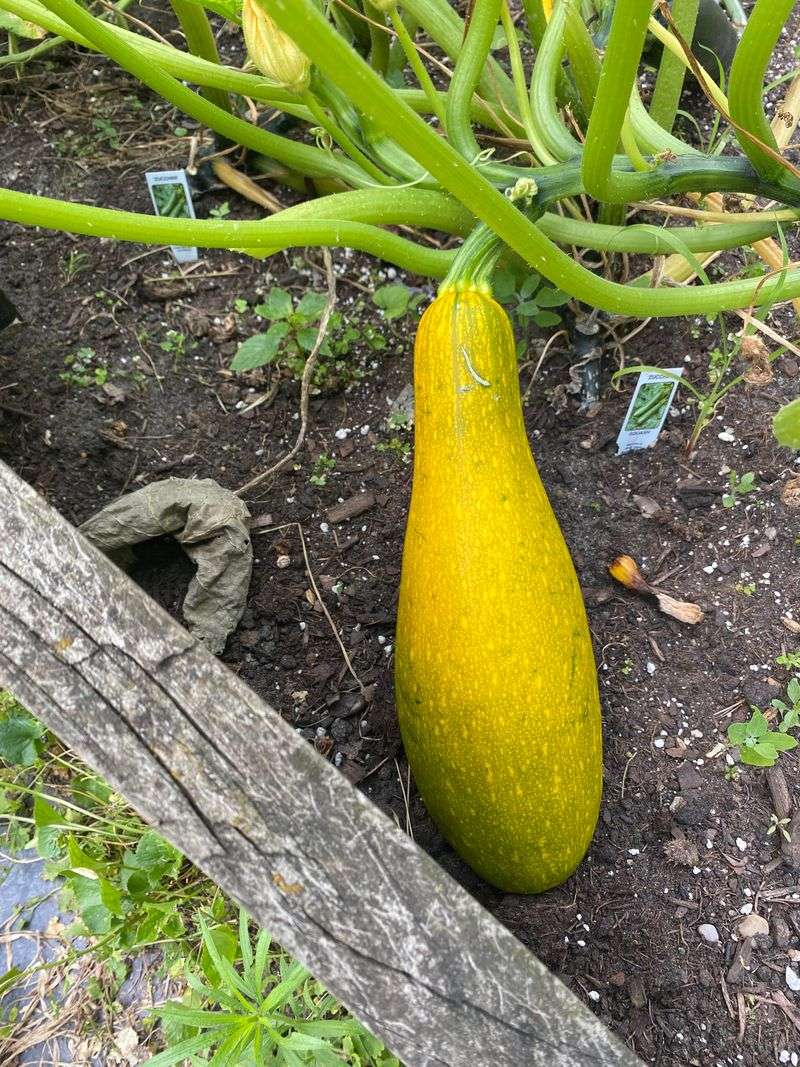
Zucchini hills planted in the same raised bed season after season can quietly set the stage for a frustrating summer.
When squash grows in the same spot every year, any squash vine borer pupae that developed in that soil the previous season are already right where the new plants will be.
That proximity gives emerging adult moths an easy target the moment your new seedlings go in.
Ohio vegetable gardens tend to be compact, which makes rotating crops feel challenging. Backyard gardeners often stick with what worked before, returning squash to the same corner bed out of habit or convenience.
Over time, that habit can build up pest pressure in one specific area of the garden.
Moving squash to a different bed does not guarantee a borer-free season because adult moths can travel from neighboring yards.
However, separating new plants from the spot where last year’s infested vines grew may reduce how quickly larvae find young stems.
Even shifting squash a few beds over in a small Ohio garden can be worth trying as part of a broader management approach.
2. Old Squash Beds Can Hold Pupae
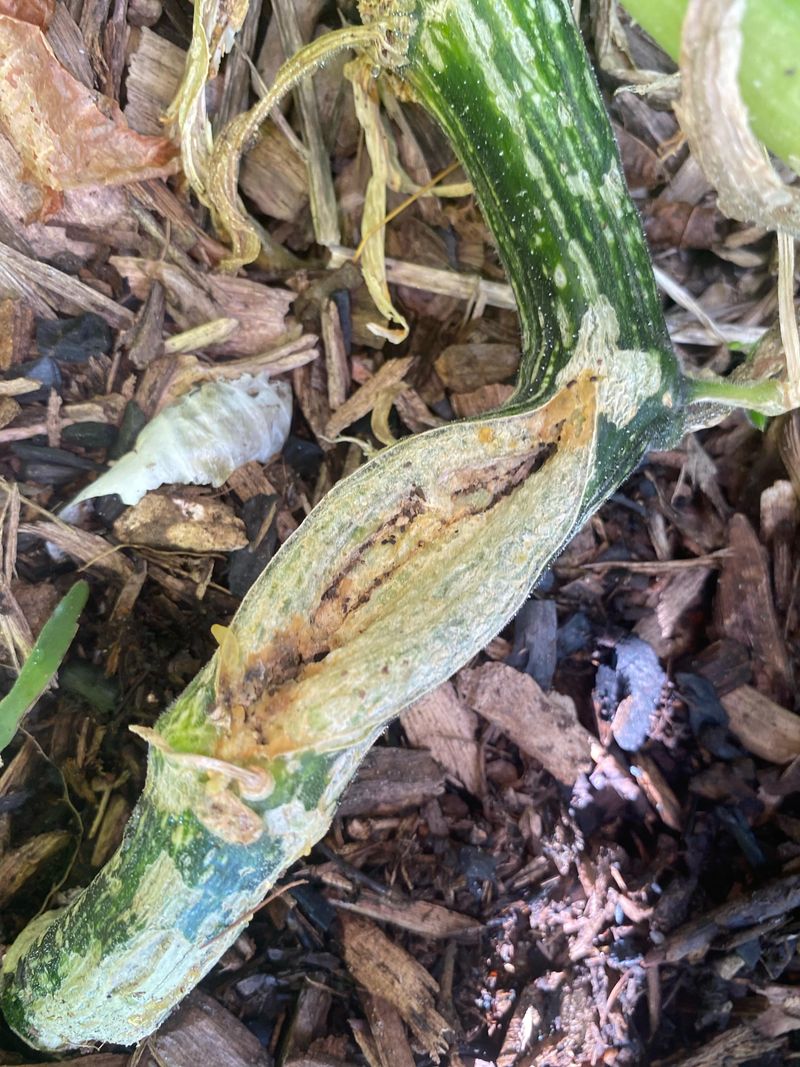
Just below the surface of an old squash bed, squash vine borer pupae can spend the winter quietly waiting for warmer weather.
Once temperatures rise in late spring and early summer, those pupae complete their development and adult moths emerge ready to find host plants.
In Ohio, that emergence often lines up closely with the time gardeners are setting out new squash transplants or watching direct-sown seeds sprout.
The soil in a previously infested bed holds more risk than a fresh planting area that has not grown cucurbits recently. Pupae typically rest within a few inches of the soil surface, which means they are not buried so deep that tilling alone will expose and disrupt all of them.
Light cultivation can help, but it is not a complete solution on its own.
Removing old squash vines at the end of the season rather than leaving them to decompose in place is a helpful step.
Pulling spent plants and disposing of them away from the garden reduces the number of larvae that have a chance to burrow into nearby soil and pupate.
Your Ohio Garden Changes Every Week. Your Plan Should Too.
Gardening in Ohio changes quickly throughout the season. Every Friday you’ll receive a simple weekly plan showing exactly what to plant, prune, fertilize, harvest, and protect so you never miss the right timing.
Combining vine removal with crop rotation gives Ohio gardeners a stronger starting position each spring.
3. Adult Moths Return In Early Summer
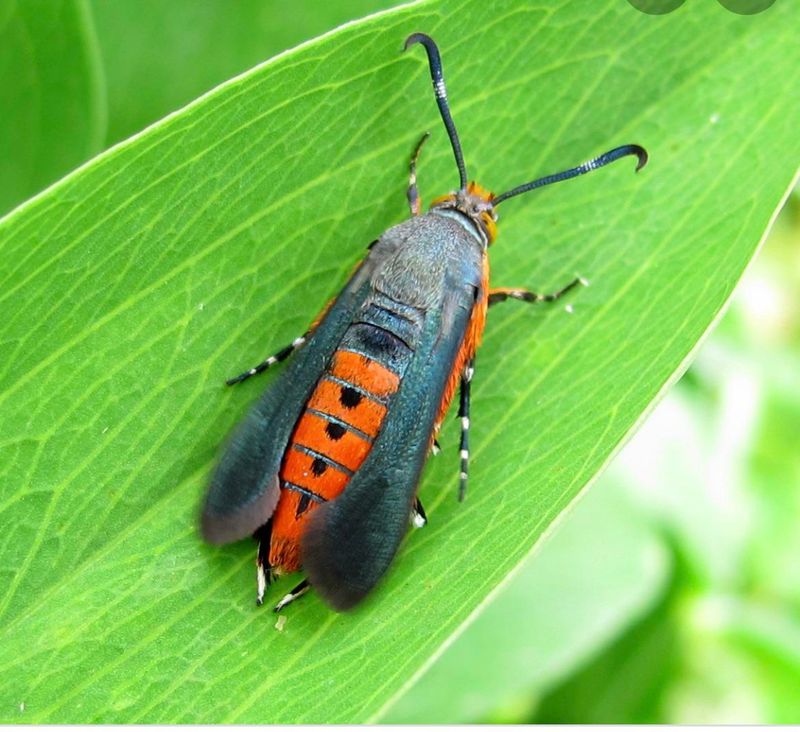
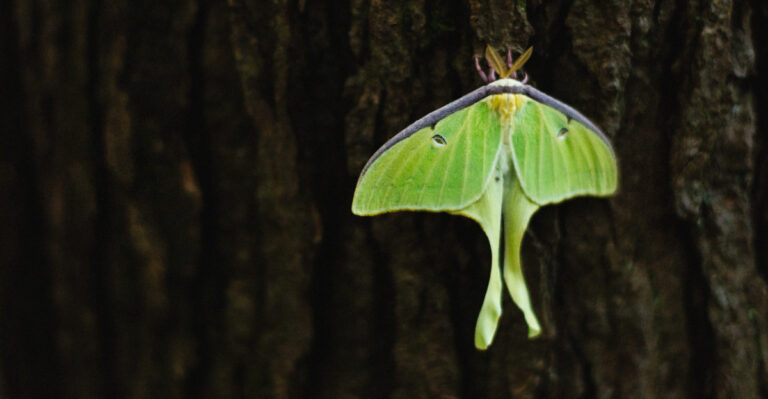
Squash vine borer adults look more like wasps than typical moths, with bright orange and black coloring that can catch a gardener off guard during an early morning garden check.
They are active during the day, which is unusual for moths, and they tend to be most visible on warm, sunny mornings in June and July across Ohio.
Females lay single reddish-brown eggs at the base of squash stems, often right where the stem meets the soil.
Timing matters a great deal when it comes to managing this pest. Adult moths typically begin appearing in Ohio around the time black-eyed Susans start blooming, which gives gardeners a rough seasonal cue to start watching more closely.
Once eggs hatch, larvae bore directly into stems and begin feeding from the inside, making them very difficult to reach with surface treatments.
Checking the base of squash stems a few times each week during June and early July can help catch eggs before they hatch. Small, flat, reddish eggs on the stem near the soil line are a clear sign that moths have been active in the garden.
Catching them early gives gardeners the best chance to take action before larvae get established inside the vine.
4. Young Stems Need Early Protection
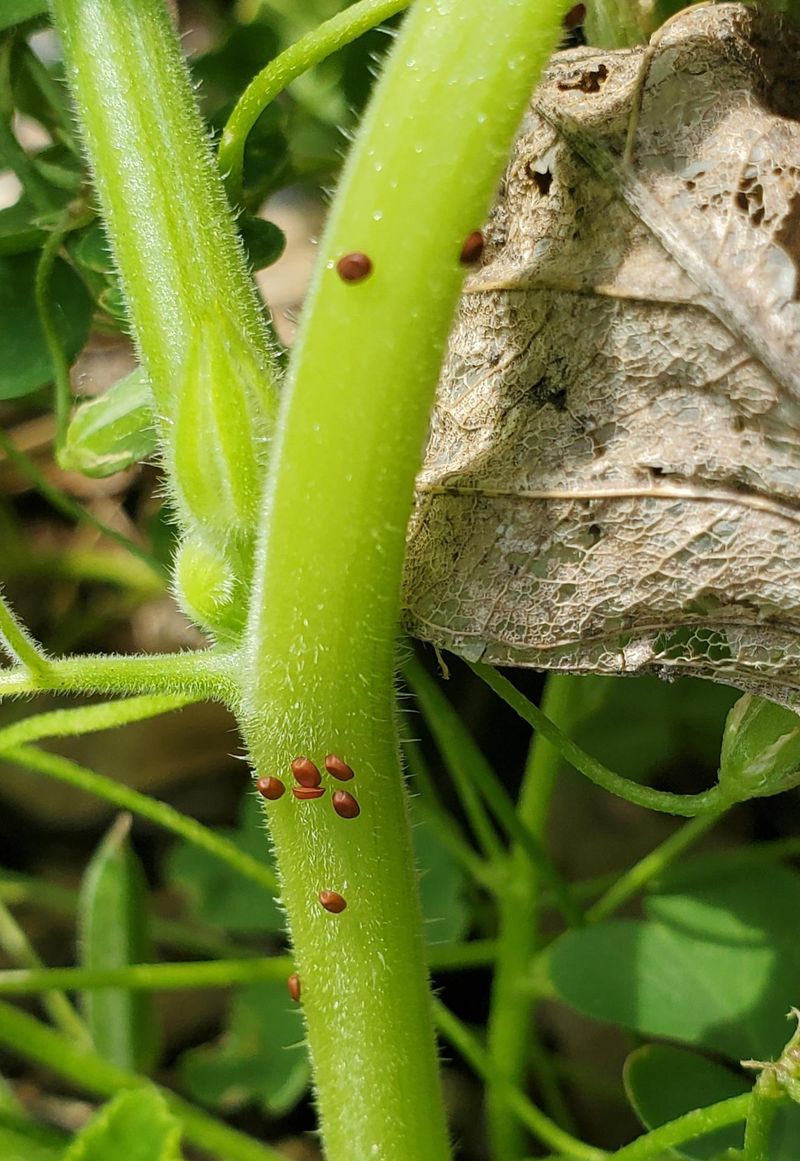
Soft, newly planted squash stems are exactly what female squash vine borer moths are looking for when they scout a garden in early summer.
Young plants that have not yet developed thick, fibrous stems are easier for larvae to penetrate after hatching, which is why early protection matters more than waiting until a problem appears.
Getting ahead of egg-laying is far more practical than trying to manage larvae once they are already inside a stem.
Some Ohio gardeners wrap the lower few inches of squash stems with lightweight fabric or foil to create a physical barrier against egg-laying. This approach requires attention and consistency, especially as plants grow quickly in warm summer weather.
Stems should be checked regularly so wrapping material does not restrict growth or trap moisture against the plant.
Healthy transplants set out at the right time for Ohio growing conditions tend to establish quickly and develop some natural stem thickness before peak moth activity.
Starting with strong plants and giving them good soil, consistent moisture, and adequate sun helps them grow through the most vulnerable early stage as quickly as possible.
A sturdy stem is not immune to borers, but a plant that gets established well has a better foundation to work from throughout the season.
5. Row Covers Help Before Bloom
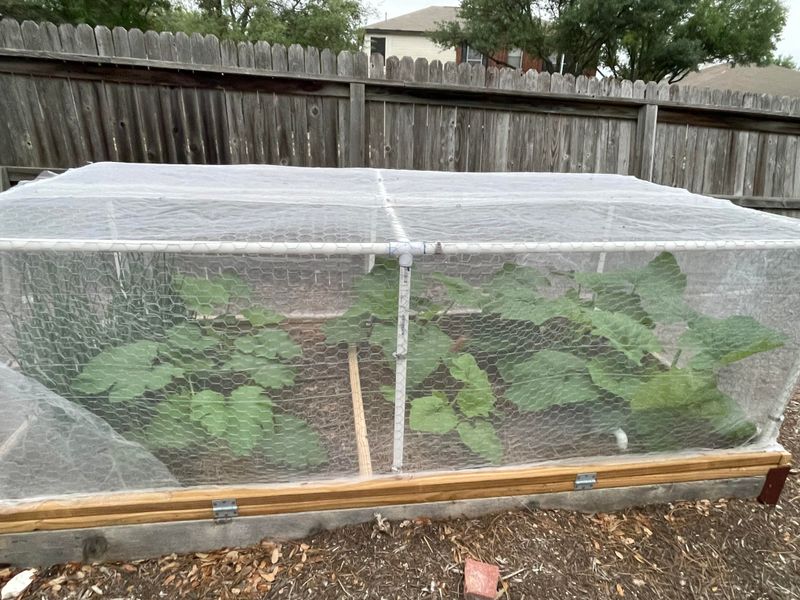
Floating row covers are one of the most practical physical barriers available to Ohio backyard gardeners dealing with squash vine borers.
When draped over young squash plants and anchored at the edges, row covers block adult moths from reaching stems to lay eggs.
The fabric lets in sunlight, air, and water while keeping the pest away during the most critical window of early summer.
The timing of when covers go on and come off is where many gardeners run into trouble. Covers need to be in place before adult moths become active in the garden, which in Ohio typically means having them ready by early to mid-June.
Waiting until you spot a moth or notice a problem is usually too late, since eggs may already be present on the stems.
Row covers must be removed once squash plants begin flowering so that pollinators can reach the blossoms. Without pollination, zucchini and summer squash will not set fruit.
If a gardener prefers to keep covers on longer, hand-pollinating flowers by transferring pollen from male to female blooms with a small brush or fingertip is an option worth trying.
Removing covers on calm mornings gives bees the best opportunity to find the open flowers before the heat of the day.
6. Wilting Leaves Need A Closer Look
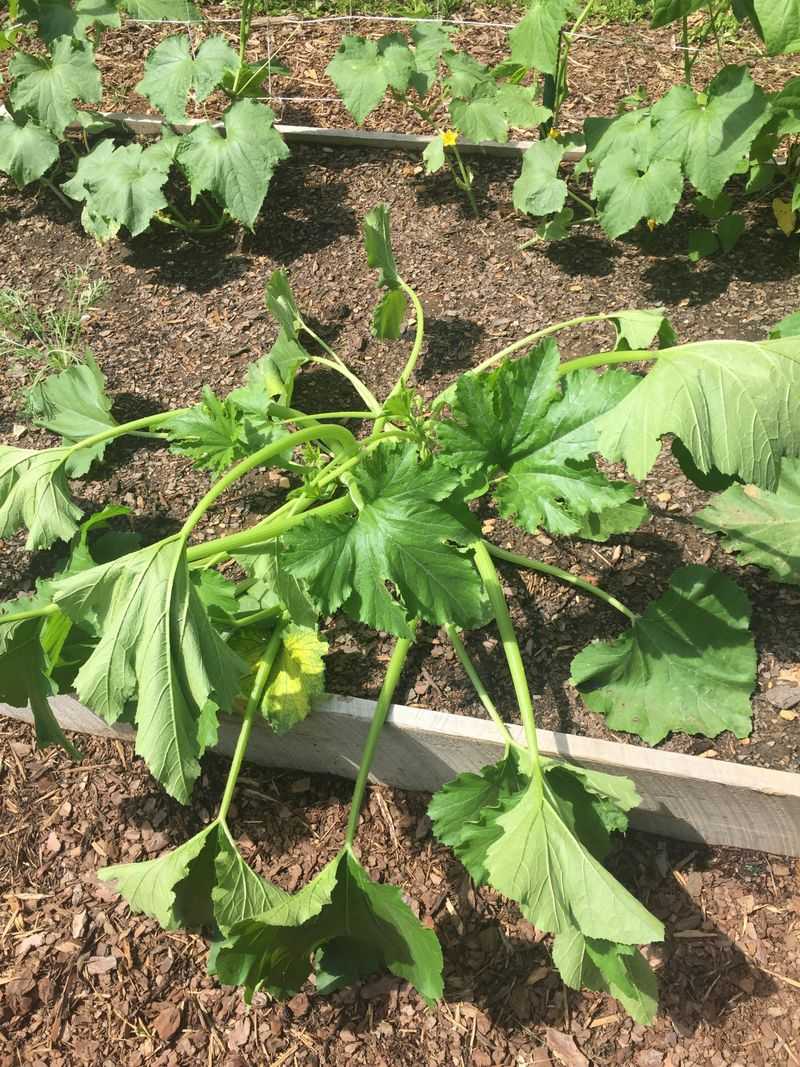
Wilting squash leaves on a warm Ohio summer morning can look like a watering problem at first glance. When you water and the plants do not recover, that is a sign worth investigating more carefully.
Squash vine borer larvae feeding inside the stem can cause the same drooping appearance as drought stress, which makes it easy to misread what the plant is actually experiencing.
Healthy-looking plants can go from vigorous to struggling within just a few days once larvae are actively feeding inside the main stem.
The damage happens out of sight, which is part of what makes this pest so disorienting for gardeners who thought everything looked fine just the week before.
A vine that wilts suddenly without obvious environmental cause deserves a close examination at the stem base.
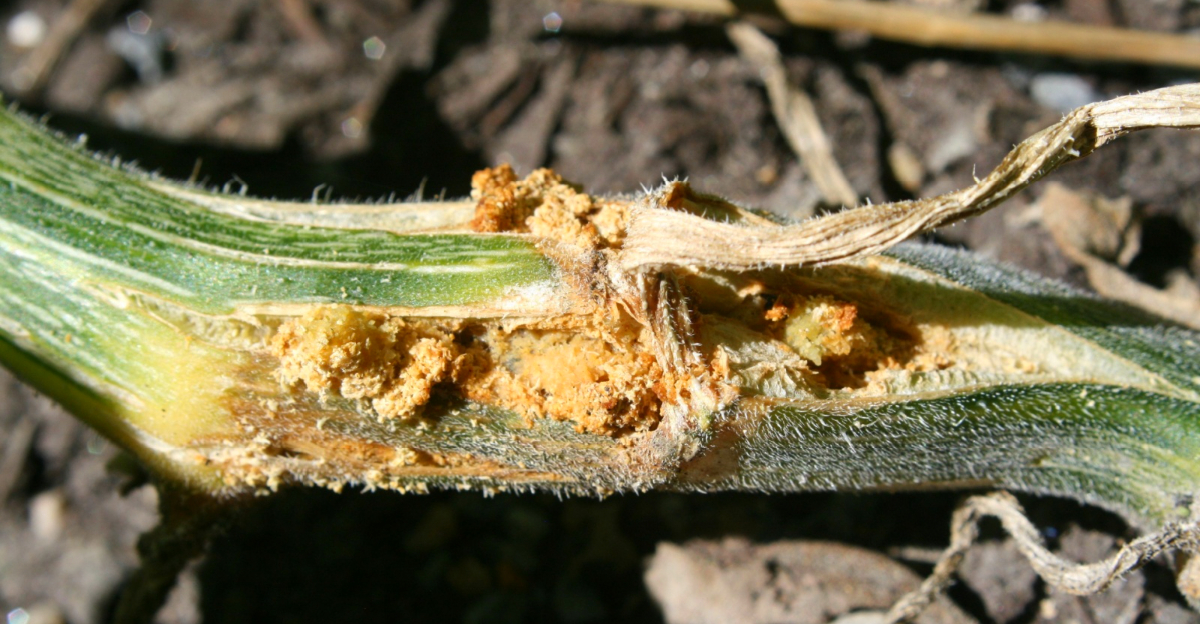
Gently pressing the lower stem near the soil line can sometimes reveal softness or hollow spots where larval feeding has occurred. Splitting the stem lengthwise with a clean knife may expose one or more larvae inside.
Some gardeners in Ohio have had success carefully removing larvae and then mounding moist soil over the damaged stem section to encourage new root growth above the injury, giving the plant a chance to continue producing.
7. Frass Around Stems Signals Trouble
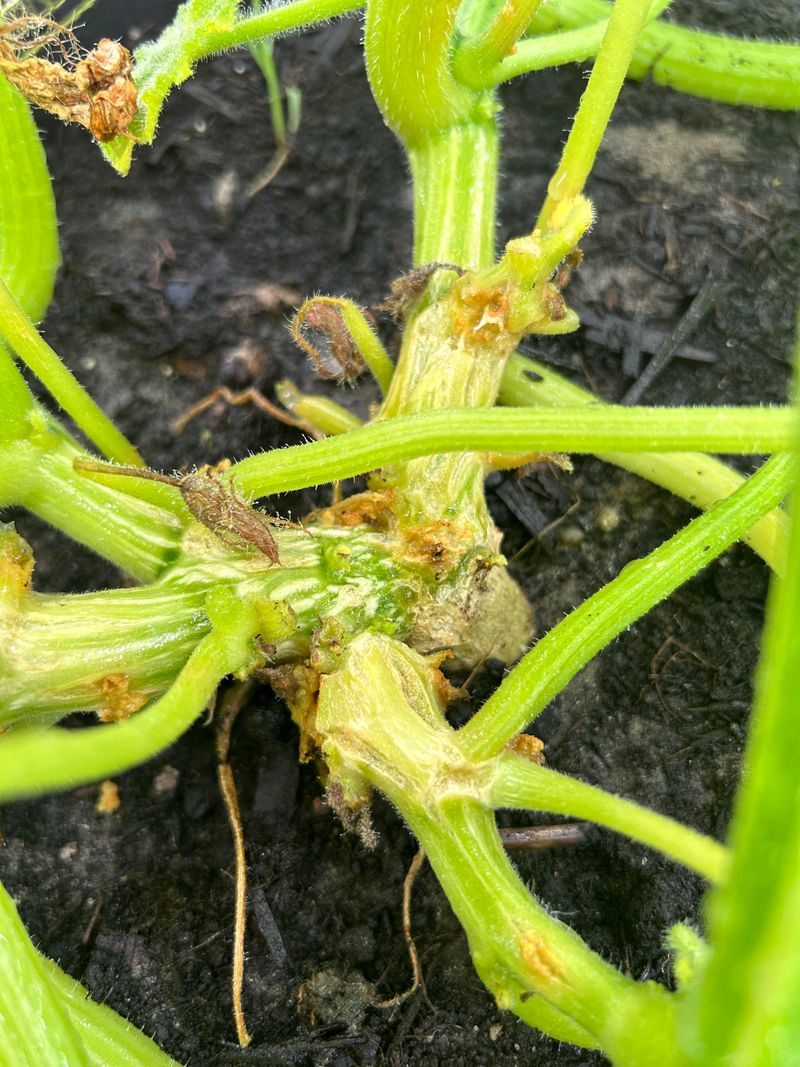
Sawdust-like material collecting around the base of a squash stem is one of the clearest signs that squash vine borer larvae are already at work inside the plant. That granular, greenish-yellow material is frass, which is the waste produced by feeding larvae.
Spotting it early, before the plant shows serious stress, gives a gardener a much better chance of responding before too much internal damage has occurred.
Frass tends to accumulate right at the entry point where a larva bored into the stem. Checking the lower stem and the soil around it closely a few times per week during June and July is a habit that pays off in Ohio gardens where borer pressure is common.
A quick visual scan during regular garden visits does not take long and can reveal a problem while options are still available.
Finding frass does not mean the plant is beyond help. Some Ohio gardeners carefully slit the stem at the frass entry point, remove the larva, and then cover the wound with moist soil to encourage rooting from the stem nodes above the cut.
The plant may recover and continue producing if the damage is caught before the stem is too severely hollowed. Acting promptly after spotting frass is more effective than waiting to see if the vine bounces back on its own.
8. Infested Vines Should Be Removed
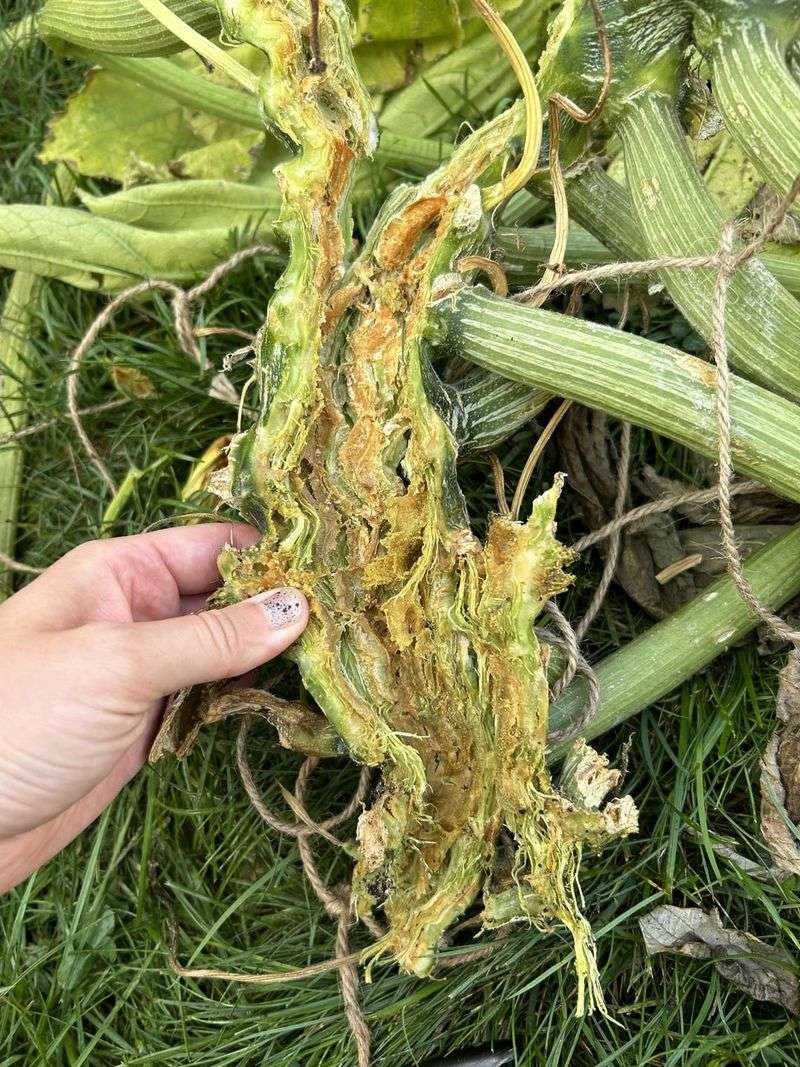
When a squash vine is heavily infested and no longer producing, leaving it in the garden creates a problem that extends into next season.
Larvae that finish feeding inside the stem will eventually exit and burrow into the nearby soil to pupate, which means an infested vine left in place is essentially stocking the garden bed with next year’s pest population.
Removing struggling vines before larvae have a chance to exit and enter the soil helps reduce that carryover.
Pulling infested plants and bagging them for disposal rather than composting them is the recommended approach.
Backyard compost piles do not consistently reach temperatures high enough to disrupt pupae, so adding infested material to a home compost bin can end up returning the problem to the garden.
Placing removed vines in a sealed yard waste bag and setting them out for collection is a more reliable option for Ohio gardeners.
Timing the removal matters. Checking vines regularly through July and into early August in Ohio allows gardeners to spot plants that are declining from borer activity and remove them before larvae complete their development inside the stem.
Keeping the garden clear of heavily damaged plants also reduces the visual clutter that can make it harder to spot new problems on healthier plants nearby.
9. Crop Rotation Lowers Repeat Pressure

Moving squash, zucchini, pumpkins, and other cucurbits to a different bed each season is one of the most straightforward ways to reduce repeat borer pressure in an Ohio vegetable garden.
When pupae overwinter in the soil where last year’s squash grew, rotating crops means the new plants are not sitting directly above that population the following spring.
The distance may not stop every moth from finding squash, but it can reduce how much early pressure the new planting faces.
A simple rotation plan for a small backyard garden might involve dividing the growing area into sections and cycling cucurbits through them on a two-to-three year schedule.
Even in raised beds, swapping what grows where each season is a habit that supports overall garden health beyond just borer management.
Keeping a simple sketch or note about where each crop grew the previous year makes planning the next season much easier.
Crop rotation works best as part of a broader approach that also includes early scouting, row covers during the pre-bloom stage, and prompt removal of infested plants.
No single practice removes all risk in an Ohio garden, but combining rotation with other management steps gives squash plants a better start.
Gardeners who make rotation a regular habit often find that managing squash vine borers becomes more predictable over time.