If These Birds Visit Your Ohio Garden, You’re Doing Everything Right
Bird feeders attract birds. That is not an achievement.
What takes real effort and real plant choices is earning the birds that do not need your feeder at all. That happens when a yard has quietly crossed a threshold most properties never reach.
Certain Ohio birds are picky in ways that work like a report card. They show up where the habitat is genuinely working and skip everything else without a second look.
No amount of expensive seed or fancy equipment substitutes for what they are actually looking for. If these birds are regulars in your Ohio garden, the work you have put in is showing up in the most honest way possible.
If they are not, this list tells you exactly what is still missing. Either way, these are the species worth watching for.
Their presence, or absence, says more about your garden than you might expect.
1. Welcome Cardinals As A Shrub Layer Victory
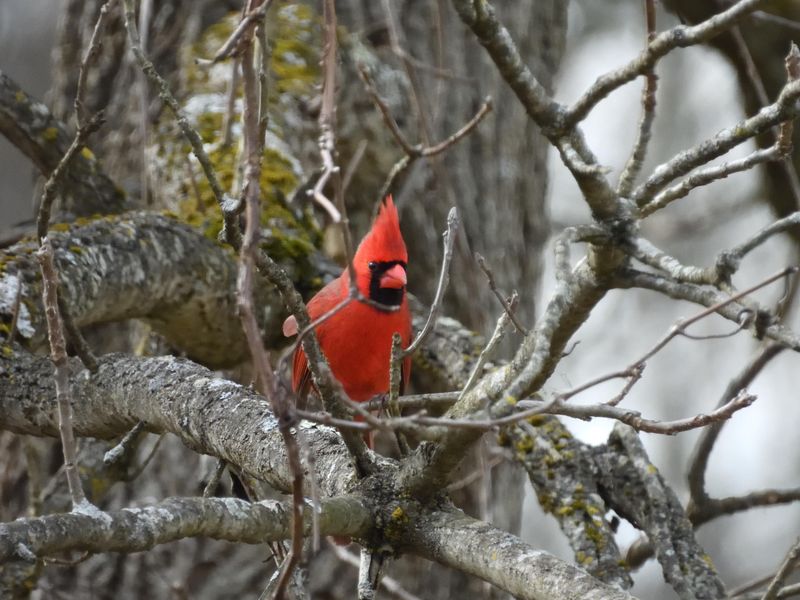
Few sights stop a gardener mid-stride like a male northern cardinal blazing red against a tangle of winter shrubs. That flash of color is more than pretty scenery.
According to Cornell Lab of Ornithology, cardinals favor dense shrubs, thickets, and woodland edges where they can forage and stay protected from predators.
Their presence in your yard can suggest that the garden offers more than open lawn. A layered shrub border, a patch of native viburnums, or even an untrimmed corner near the fence can all serve as useful cardinal habitat.
OSU Extension notes that native shrubs such as spicebush, elderberry, and dogwood provide both cover and food. Those shrubs support a variety of backyard birds, including cardinals.
Cardinals do not migrate, so they rely on your garden through every season. Planting native berry-producing shrubs and leaving some seed heads standing through winter can make the yard more welcoming year-round.
Dense evergreen shrubs can also offer shelter during cold Ohio nights.
One practical step is to resist the urge to clean every corner in fall. Leaving some leaf litter and low brush gives cardinals and other birds safe foraging ground.
A cardinal does not mean the garden is flawless, but it can be a good sign that your shrub layer is doing its job. That is a real win worth building on.
2. Let Goldfinches Prove Your Seed Heads Matter
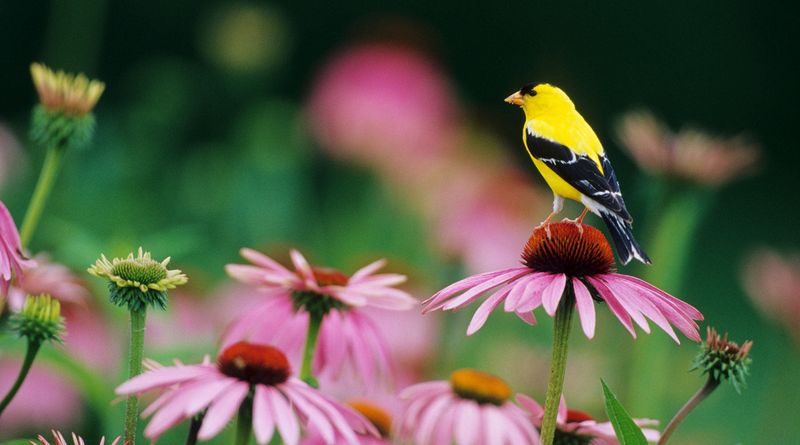
Leaving spent blooms standing through late summer can feel counterintuitive for tidy-minded gardeners, but American goldfinches make a strong case for loosening up.
Cornell Lab of Ornithology describes goldfinches as highly dependent on seeds from plants like coneflowers, sunflowers, asters, and native thistles.
A garden that keeps some of these seed heads standing can become a reliable food stop.
Goldfinches are one of the latest nesters among North American songbirds, often waiting until mid-to-late summer when plant fibers and seeds are most available.
Audubon guidance notes that they use plant down from thistles and similar plants in nest construction.
So a seed-rich garden may support them beyond just feeding.
The practical takeaway for gardeners is to delay fall cleanup where it is safe to do so. Coneflowers, black-eyed Susans, and native sunflowers all produce seeds that can attract goldfinches into autumn.
Your Ohio Garden Changes Every Week. Your Plan Should Too.
Gardening in Ohio changes quickly throughout the season. Every Friday you’ll receive a simple weekly plan showing exactly what to plant, prune, fertilize, harvest, and protect so you never miss the right timing.
Replacing a section of lawn with a native wildflower patch is one of the most effective ways to support these birds.
Goldfinches visiting your garden does not prove the space is chemical-free or entirely native, but it can suggest that seed-bearing plants are available and accessible.
Reducing unnecessary trimming and skipping the fall cutback in flower beds may be the simplest gardening change with the biggest bird payoff.
Their cheerful presence is a strong clue that your blooms are earning their keep.
3. See Chickadees As Tiny Habitat Inspectors
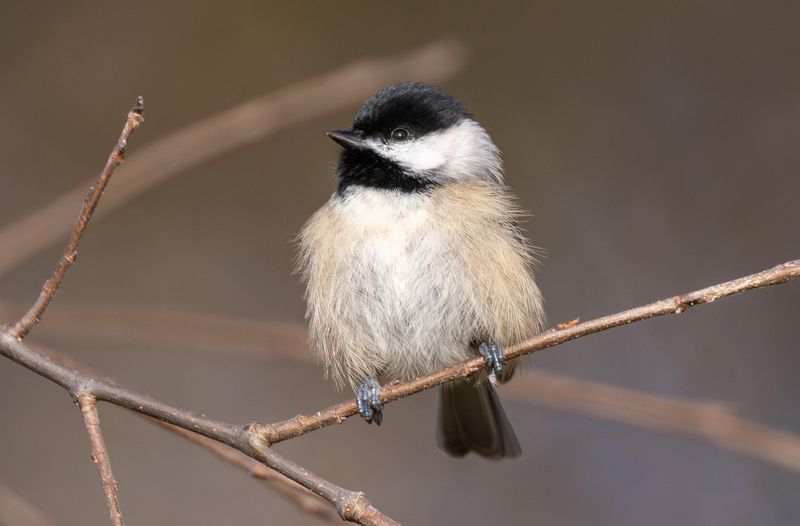
Watch a chickadee work a tree branch for even thirty seconds and it becomes clear these birds are thorough. They hang upside down, peer into bark crevices, and probe plant stems with impressive focus.
Cornell Lab of Ornithology explains that black-capped chickadees, common across much of Ohio, eat insects, insect eggs, seeds, and berries. They often glean food directly from bark and branches.
Their visits can suggest that the garden has layered habitat worth exploring. A yard with native trees, shrubs at varying heights, and some natural stem debris offers far more foraging opportunity than a flat, manicured lawn.
OSU Extension notes that native trees like oaks, cherries, and serviceberries support large numbers of caterpillars and insects. Chickadees rely on those insects, especially during nesting season.
Keeping a clean, shallow water source can also encourage chickadees to linger. They visit birdbaths and small water features regularly, especially during dry stretches or cold snaps when natural water sources freeze over.
One easy step is to leave some hollow stems and natural debris in garden beds where it does not create a hazard. Chickadees may investigate these areas for overwintering insects and larvae.
A chickadee darting through your shrubs and trees is not a formal stamp of approval. It can be a lively sign that the garden has more going on beneath the surface than you might notice at first glance.
4. Count Hummingbirds As Nectar Garden Approval
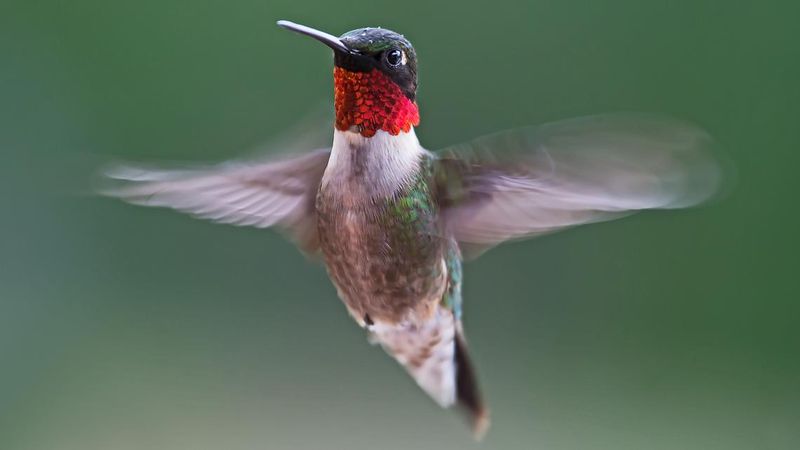
A ruby-throated hummingbird hovering at a bloom is one of the most electric moments a garden can offer. According to ODNR, the ruby-throated hummingbird is the only hummingbird species that regularly breeds in Ohio.
These birds typically arrive in the state in late April or May and depart by early October, following nectar sources along their migration route.
Cornell Lab of Ornithology notes that ruby-throated hummingbirds are strongly attracted to tubular, nectar-rich flowers. Native plants like cardinal flower, trumpet honeysuckle, bee balm, and wild columbine are well-supported choices for Ohio gardens.
Growing a succession of blooms from spring through early fall can help keep hummingbirds returning throughout the season.
If you use a feeder, Audubon guidance recommends a simple solution of one part white sugar to four parts water, with no red dye added. Feeders should be cleaned every few days, especially in warm weather, to prevent harmful mold and fermentation.
Hummingbirds also need safe perches near feeding areas, so keeping small shrubs or thin branches nearby can make the space more inviting.
Their visit does not mean every plant in the garden is perfectly chosen, but it can be a strong clue that nectar-rich blooms and some open flight space are present.
That combination takes real planning, and a hovering hummingbird is a genuinely rewarding sign that the effort is paying off.
5. Watch Bluebirds Reward Open Space Done Right
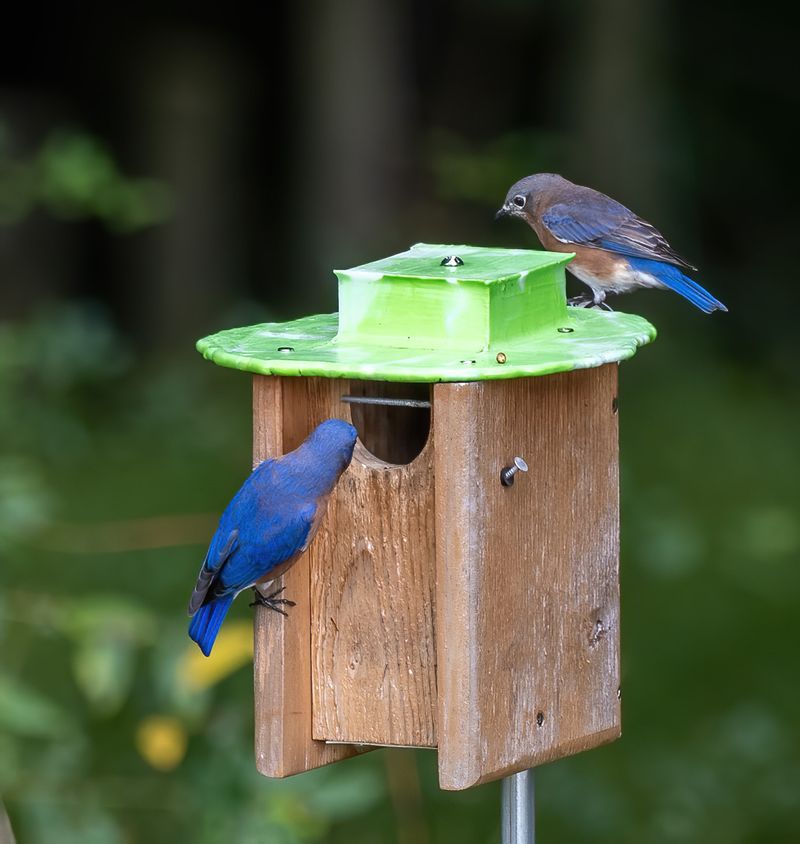
Eastern bluebirds have made a remarkable comeback across the Buckeye State, thanks in large part to nest box programs and better habitat awareness.
Cornell Lab of Ornithology describes them as birds of open areas with scattered trees, low vegetation, and available perches.
They hunt insects by watching from a perch and dropping to the ground, so open sight lines matter to them.
ODNR notes that bluebirds rely heavily on insects during warmer months and shift to berries and fruit in fall and winter.
A yard that avoids broad pesticide use and keeps some open ground near native plantings can offer the kind of foraging habitat bluebirds prefer.
Dense urban gardens with no open space are less likely to attract them regularly.
If you are considering a nest box, placement is important. The North American Bluebird Society recommends mounting boxes on smooth metal poles with baffles to deter predators.
It also recommends facing them toward open areas and monitoring boxes regularly through the season. Poorly managed nest boxes can create more problems than they solve.
Bluebirds are more likely to visit yards near meadows, open fields, or rural edges than heavily wooded or dense suburban landscapes.
Seeing one perched on a fence post or garden stake can suggest that the space offers the open structure and insect availability they need.
It is a sign worth noticing, even if the visit is brief or seasonal.
6. Treat Wrens As A Sign Of Cozy Cover
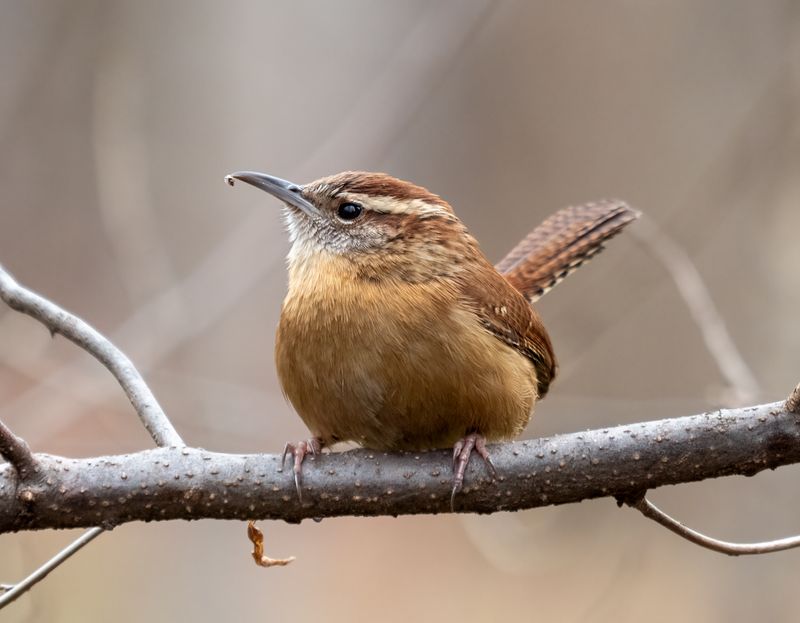
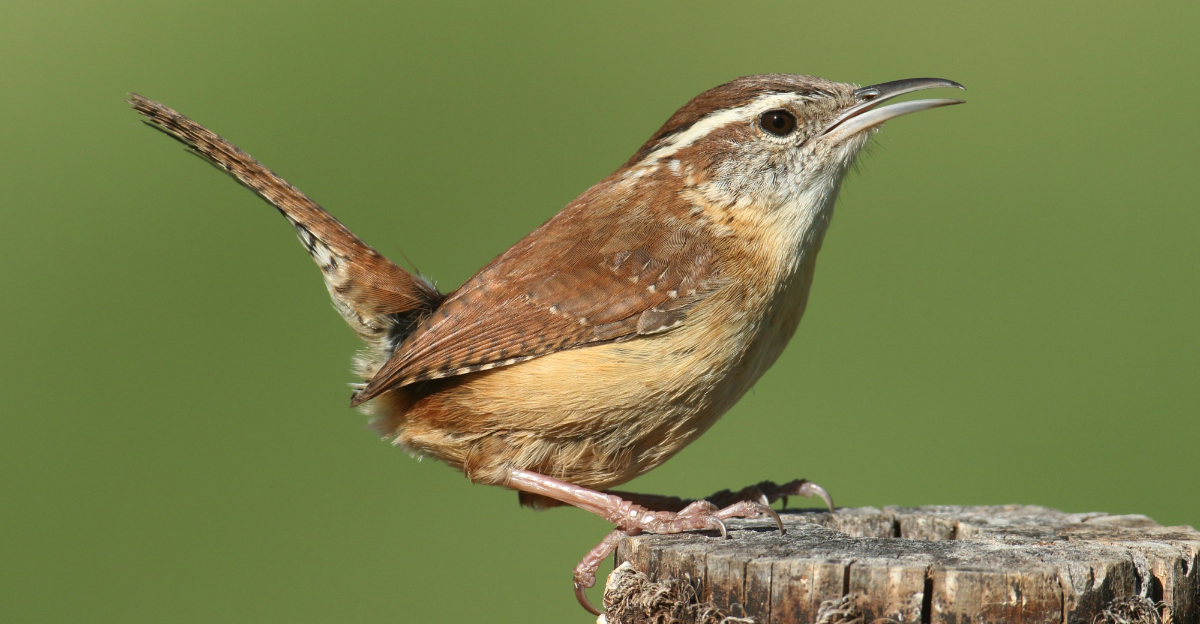
Something about a wren singing from deep inside a shrub feels like proof that the garden has real personality. Carolina wrens are year-round residents across much of Ohio.
They tend to favor brushy edges, dense vines, and tucked-away corners that offer both shelter and small insect prey. Cornell Lab of Ornithology notes they are cavity nesters that also use natural crevices, brush piles, and tangled vegetation.
House wrens are another common visitor during warmer months, arriving in spring and departing by fall. Audubon describes house wrens as highly adaptable birds that use shrubby habitat, woodland edges, and suburban gardens with good cover.
Both species can suggest the yard has layered structure rather than open, uniform lawn.
Wrens forage actively through low vegetation, leaf litter, and bark for insects and spiders. Keeping some natural debris in garden corners and maintaining shrubby borders can make these areas more useful to foraging wrens.
A brush pile tucked behind a shed or garden bed can serve as excellent low-cost habitat.
If you are thinking about a wren nest box, research placement carefully. House wrens can sometimes outcompete other cavity-nesting species, so box placement and monitoring matter.
A wren singing from your garden does not confirm a perfect yard. It can be a warm sign that the space has shelter, insects, and enough layered cover to feel like home to a very particular small bird.
7. Spot Woodpeckers Where Trees Still Work Hard
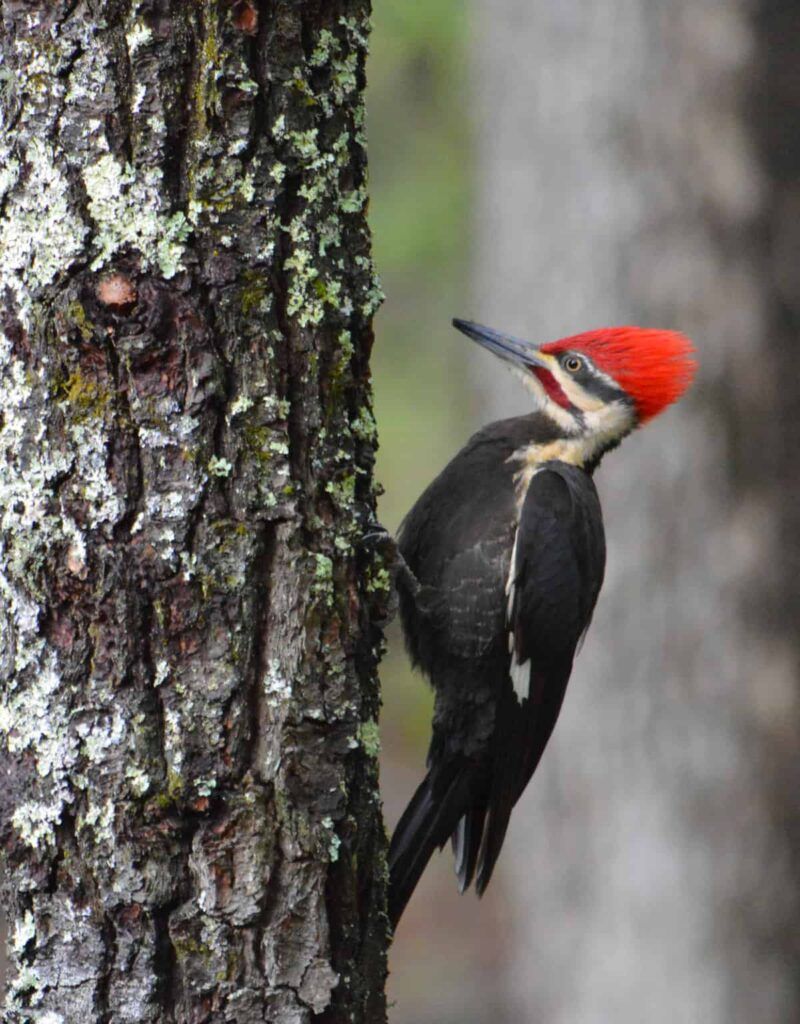
A woodpecker drumming on a tree trunk is one of the most satisfying sounds a garden can produce. It usually means there is something worth finding in that bark.
Cornell Lab of Ornithology explains that woodpeckers forage on trees and woody stems for insects, larvae, and beetle grubs. That makes mature trees and even standing deceased wood valuable habitat features.
Downy and hairy woodpeckers are among the most common woodpecker species seen in Ohio yards and gardens. ODNR also notes that red-bellied woodpeckers have expanded their range northward and are now regularly spotted across the state.
Each species uses trees slightly differently, but all benefit from native trees that support insect populations.
OSU Extension advises that native trees like oaks, hickories, and cherries support far greater insect diversity than non-native ornamentals. More insects in the bark means more reason for woodpeckers to visit.
Avoiding broad-spectrum insecticide applications around trees can help preserve this food source.
If a withered branch or small snag is structurally safe and not near a building or walkway, it may be worth leaving in place as habitat. For larger deceased trees or limbs near structures, consult a certified arborist before making any decisions.
A woodpecker working through your trees does not mean everything is perfect. It can be a solid sign that your woody plants are supporting a web of life you may not fully see.
8. Celebrate Catbirds In A Berry Rich Backyard
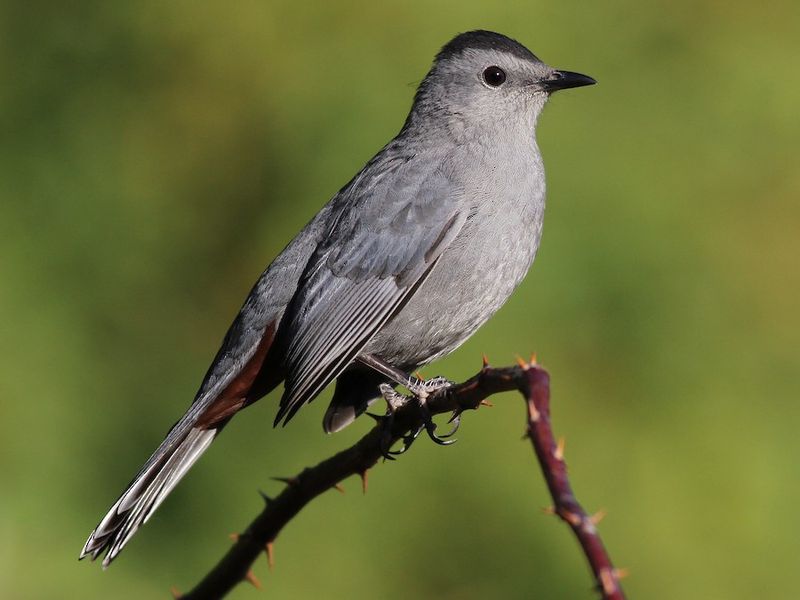
Hearing a catbird for the first time is a little disorienting. The mimicked calls and cat-like mewing seem to come from everywhere at once, woven into the shrubs like the garden itself is talking back.
Cornell Lab of Ornithology describes gray catbirds as birds of dense shrubs, thickets, and woodland edges, where they forage for insects and fruit close to the ground.
Catbirds are summer residents across Ohio, typically arriving in May and departing by October. Audubon notes they eat a wide range of berries and small fruits, including those from native shrubs like serviceberry, dogwood, elderberry, and spicebush.
A yard with fruiting shrubs layered among dense cover can be genuinely attractive to these birds.
Their presence can be a strong clue that the garden offers both food and shelter in meaningful combination. A single flowering shrub in an otherwise open lawn is unlikely to draw catbirds reliably.
But a yard with a shrubby border, some vines, and a few berry-producing natives woven together may be exactly what they are looking for.
Letting parts of the garden stay a little less formal can make a real difference. Catbirds are not impressed by clean lines.
They want layers, edges, and fruit. Seeing one weave through your shrubs at dusk is a fitting reward for every native plant added and every corner left a little wild.
It also rewards every season of choosing habitat over perfection. That is the best kind of garden report card.