These Are The Flowering Shrubs That Hit Their Stride When Florida Summer Is At Its Worst
Most Florida shrubs look their best in the mild months and spend summer in a kind of holding pattern, technically alive, not doing much worth noticing. July and August become the seasons you stop expecting anything from the yard and just wait for fall to arrive.
Some shrubs missed that memo entirely. A specific group of flowering shrubs treat Florida’s hottest, most humid stretch as a signal to perform rather than retreat.
More color, more presence, more of everything a garden needs precisely when everything else has backed off. These are not plants that merely tolerate summer.
They respond to it. The combination of heat, humidity, and relentless sun that exhausts most ornamentals is the exact condition these shrubs were built for.
A Florida yard that peaks in July instead of apologizing for it is a different kind of yard. The shrubs that make that possible are worth knowing before next summer arrives.
1. Firebush Turns Peak Summer Heat Into Hummingbird Color
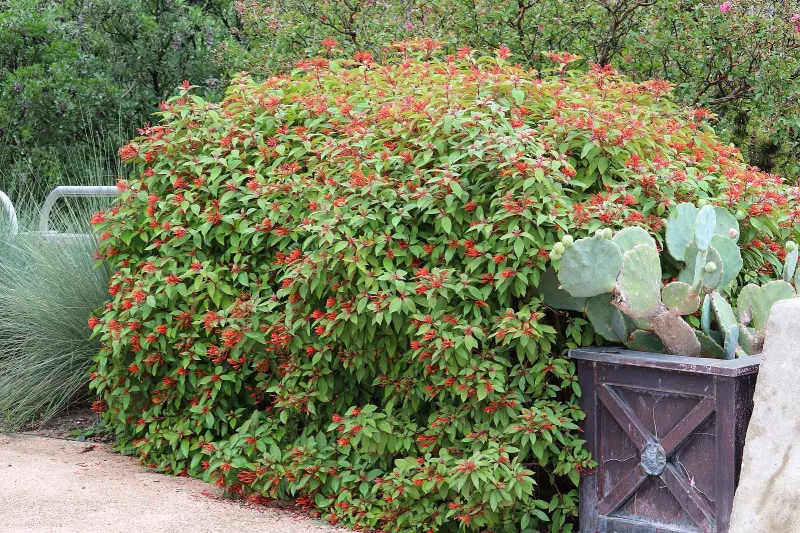
When hummingbirds start showing up at a garden in midsummer, there is a good chance firebush is nearby. Hamelia patens is a Florida native that genuinely thrives when summer heat builds, pushing out clusters of tubular orange-red flowers right through the rainy season.
Few shrubs offer that kind of consistent warm-season color without much fuss.
Firebush handles full sun with ease and grows quickly once established. It can reach six to ten feet tall and nearly as wide in warm southern and central regions, so give it room from the start.
The loose, arching form makes it a natural screen or backdrop plant, not a tight formal hedge. Butterflies and bees visit the flowers too, adding extra wildlife value to the summer yard.
Establishment watering matters during the first season. Once roots are settled, firebush handles dry spells reasonably well between rain events.
Mulch helps retain moisture and keeps root temperatures stable during heat peaks. In northern regions, it may freeze back to the ground in cold winters and behave more like a tender perennial, returning from roots when warmth comes back.
That is worth knowing before planting it as a permanent screen. Pruning after cold damage or after the growing season helps shape it and encourages fresh flowering stems.
It is one of the more rewarding native shrubs for summer pollinator gardens across warm regions of this state.
2. Scarlet Hibiscus Brings Bold Blooms To Wet Summer Spots
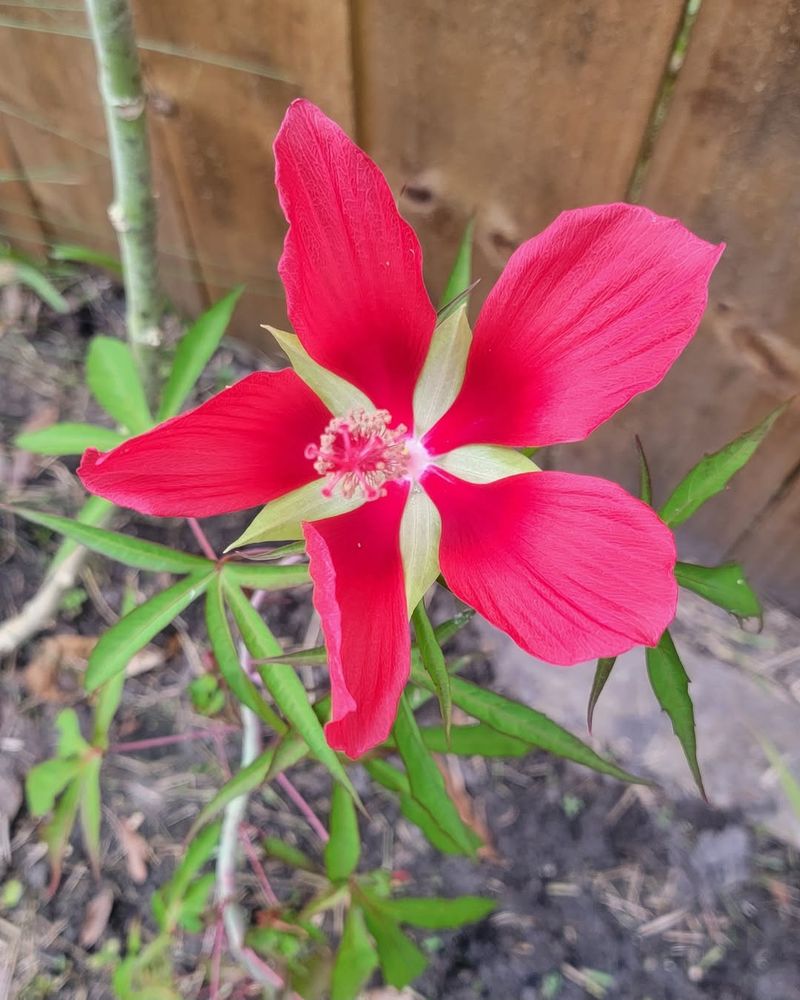
A low wet corner that floods every afternoon during rainy season can feel like a landscaping problem without a solution. Scarlet hibiscus, Hibiscus coccineus, turns that frustrating spot into something dramatic.
Native to wetlands and moist edges across this state, it rises four to eight feet tall by midsummer and opens enormous deep red flowers that stop people in their tracks.
Hummingbirds find the blooms quickly, and other pollinators follow. The flowers are large, deeply lobed, and a vivid scarlet that reads clearly from a distance.
Because this plant is native to wet habitats, it genuinely suits pond edges, rain gardens, swales, and consistently moist beds. Most other flowering shrubs would struggle or rot in those sites.
Your Florida Garden Changes Every Week. Your Plan Should Too.
Gardening in Florida changes quickly throughout the season. Every Friday you’ll receive a simple weekly plan showing exactly what to plant, prune, fertilize, harvest, and protect so you never miss the right timing.
Placing it in dry sandy soil without reliable moisture is a setup for poor performance.
Technically, scarlet hibiscus behaves more like an herbaceous perennial shrub in many settings. It may go dormant back to the ground in winter and return reliably from established roots when warmth returns.
That seasonal cycle is normal and worth expecting. Staking tall stems during strong summer storms can prevent wind damage before plants are fully established.
Spacing plants well allows air circulation, which helps reduce fungal issues in humid conditions. For gardeners dealing with a persistently wet area that needs summer color and wildlife value, this native plant earns its place with very little compromise.
3. Pineland Lantana Keeps Native Color Moving Through Heat
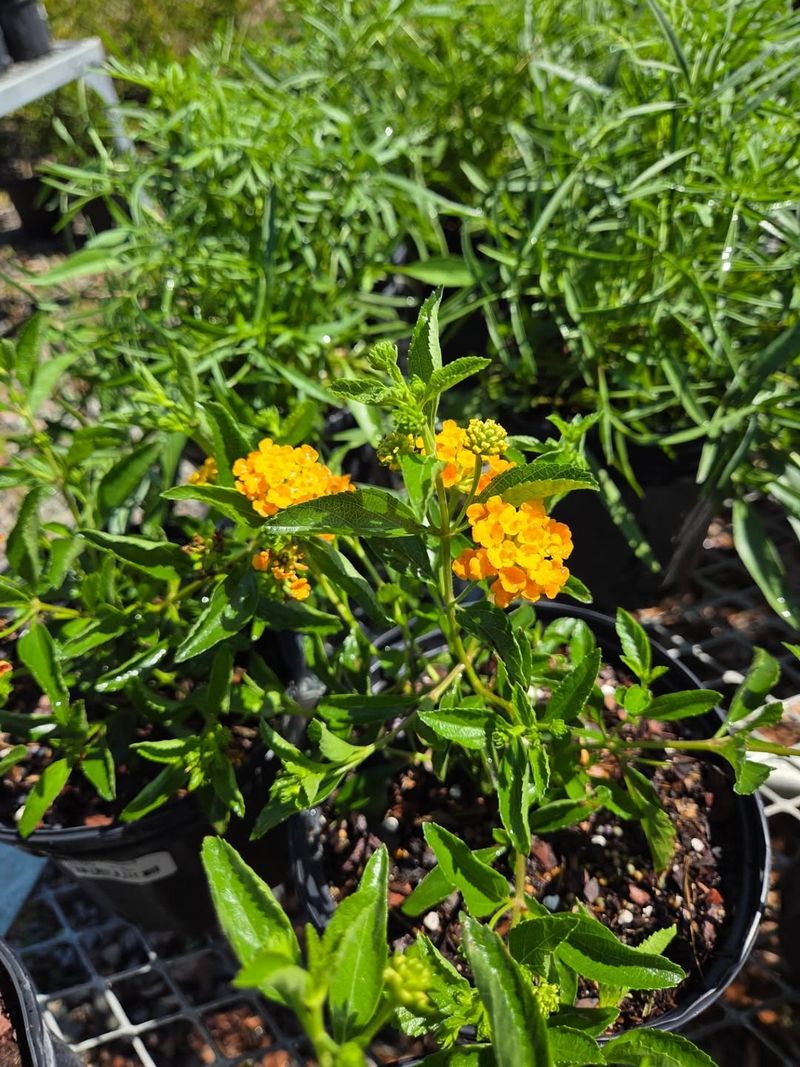
Not all lantanas are created equal, and that distinction matters a great deal in this state. Lantana depressa, known as pineland lantana, is a Florida native species with a naturally low, spreading shrubby habit that suits dry sunny sites in its native range.
It is not the same as the non-native lantana varieties sold widely at garden centers, some of which are listed as invasive in this state and should be avoided.
Pineland lantana produces small yellow flowers through warm months and draws butterflies reliably. Its lower profile, typically one to two feet tall with a wider spread, makes it useful along sunny edges.
It also works well in native pollinator plantings where ground-level color is needed. Sandy, well-drained soil suits it well.
This plant does not want consistently wet feet or heavy clay conditions.
Correct identification is essential before purchasing. Ask specifically for Lantana depressa and verify it with a reputable native plant nursery or your county Extension office.
Availability can be limited depending on the region, and not every nursery stocks the true native species. Substituting invasive non-native lantana because it is easier to find defeats the purpose entirely and can contribute to ecological problems in natural areas nearby.
When you find the right plant and place it in the right sunny dry spot, pineland lantana rewards you with season-long color. It also brings steady butterfly activity through the harshest summer weeks.
4. Tropical Hibiscus Powers Through Summer With Proper Water
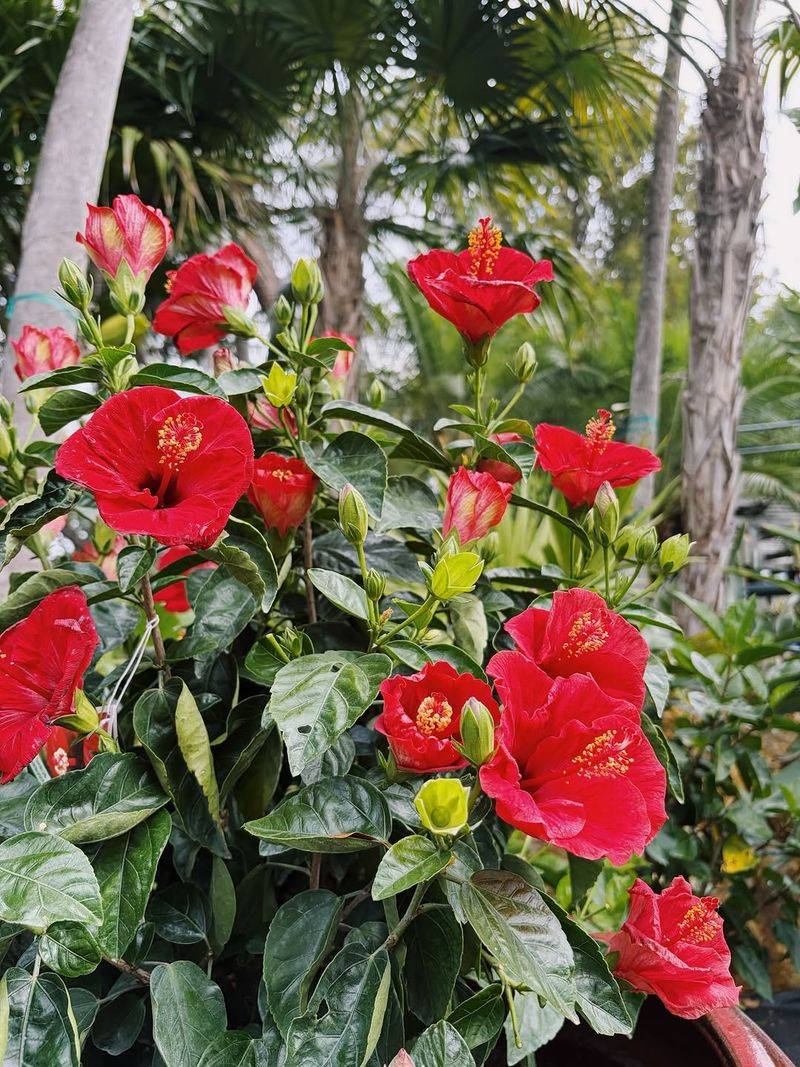
A patio that needs bold color through the hottest months of the year is exactly where tropical hibiscus earns its reputation. Hibiscus rosa-sinensis is not native to this state.
Still, it is one of the most reliable non-native flowering shrubs for warm regions when planted correctly and watered consistently.
The flowers are large, showy, and come in an almost overwhelming range of colors, from deep red to coral, yellow, peach, and bicolor blends.
Full sun placement is key. Tropical hibiscus needs at least six hours of direct sun daily to flower well.
It also needs steady moisture without soggy roots, so well-drained soil with regular watering works better than either drought stress or waterlogged conditions.
Container growing gives gardeners more control over moisture and allows the plant to be moved if cold weather threatens in northern regions.
Heat stress can cause bud drop during the most intense stretches of summer, especially when temperatures spike and moisture becomes inconsistent. Maintaining a regular watering schedule and mulching around the base helps buffer those extremes.
This shrub can reach six to ten feet tall in landscape settings, so spacing and pruning should account for mature size. In cooler northern regions, cold damage is a real possibility in winter, and recovery may take weeks in spring.
For warm southern and central yards with reliable water access, tropical hibiscus delivers impressive summer color season after season.
5. Beautyberry Flowers Quietly Before The Purple Fruit Show
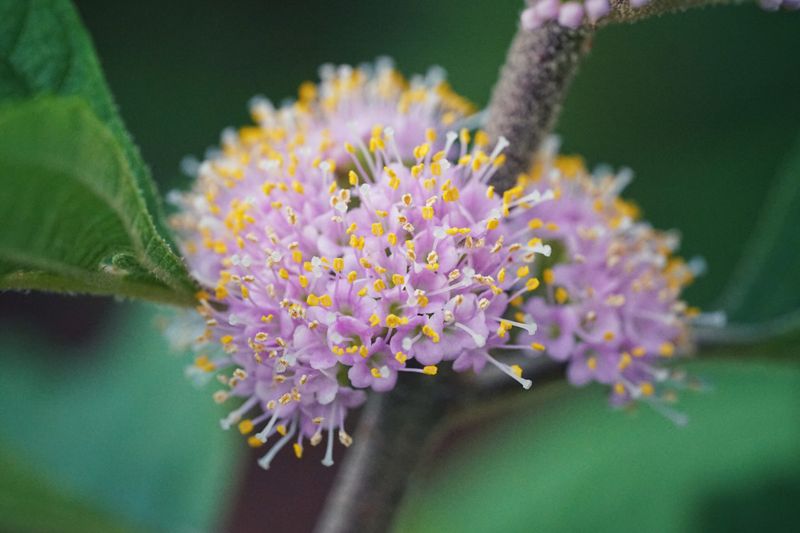
American beautyberry, Callicarpa americana, is the kind of native shrub that earns its place quietly. The summer flowers are small, soft pink-purple clusters that appear along the stems without fanfare.
They are not the reason most gardeners plant it, but they matter to native bees and other small pollinators working the summer garden.
The real spectacle comes later, when those flowers give way to vivid clusters of metallic purple berries that practically glow against the foliage.
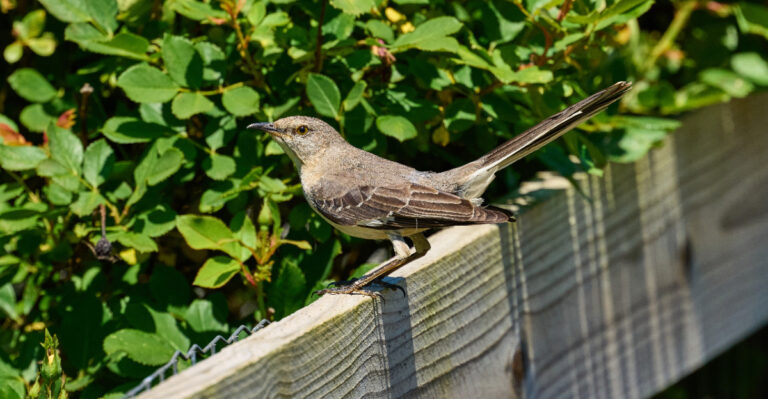
Birds find the berries quickly, and the plant becomes a busy wildlife stop through fall. Mockingbirds, catbirds, and other fruit-eating species visit reliably once the berries ripen.
The arching, loose form of beautyberry suits mixed native borders and woodland edges far better than formal hedgerows. It can reach six to nine feet tall and wide, so spacing matters when planning the planting.
Beautyberry grows well in partial shade to full sun and handles the heat and humidity of summer without much complaint. It is native across much of this state and adapts to a range of soil types.
However, it prefers some organic matter in the soil and consistent moisture during establishment. Hard pruning in late winter or early spring encourages vigorous new growth and better berry production.
Expecting it to look polished and tidy year-round will lead to disappointment. Treated as the relaxed, wildlife-friendly native shrub it is, beautyberry rewards patience every single season.
6. Spotted Beebalm Adds Shrubby Color To Dry Sunny Beds
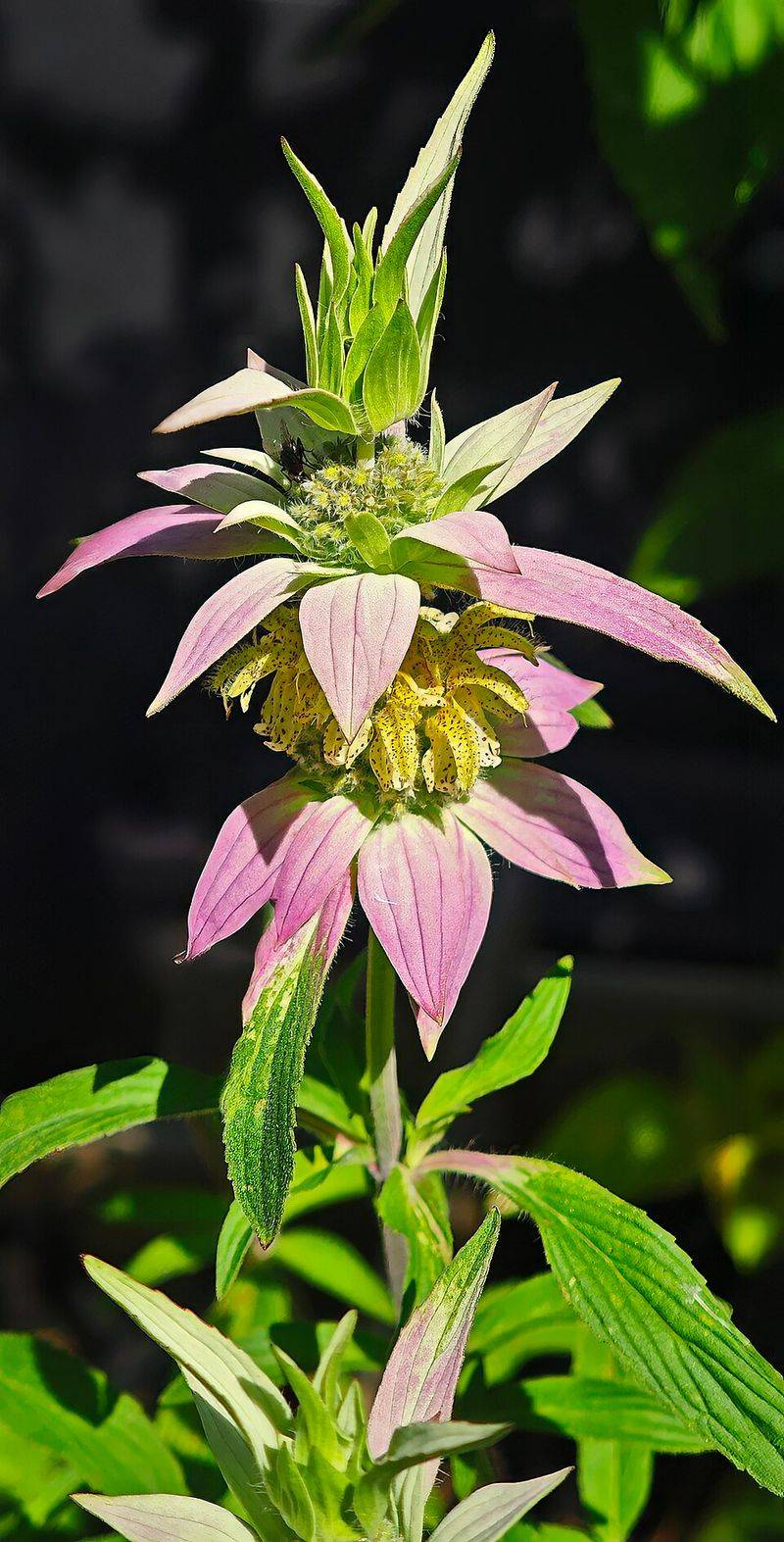
Sandy, dry, sun-baked beds that drain faster than you can water them are a real challenge in this state.
Spotted beebalm, Monarda punctata, is one of the few flowering plants that genuinely suits those conditions while adding something visually unusual to the summer garden.
The stacked bracts in shades of pink, lavender, and white surround small spotted tubular flowers. The layered, almost architectural arrangement looks unlike anything else in a native bed.
Bees absolutely love it. Native bees, bumblebees, and various butterfly species work the flowers steadily through the warm season.
The aromatic foliage adds another sensory layer to the planting. It is worth being clear that spotted beebalm is not a woody shrub.
It behaves more like a short-lived herbaceous perennial or biennial with a shrubby summer presence, and it reseeds to maintain a colony in suitable spots.
Naturalistic plantings and informal pollinator gardens suit it far better than clipped formal borders. Reseeding means it may spread modestly, which can be welcome or unwanted depending on the design.
Sandy, well-drained soil in full sun matches its native habitat. Consistently wet or poorly drained soil is not appropriate for this plant.
For gardeners building dry sunny pollinator beds in this state, spotted beebalm fills a real gap in the summer lineup. It brings color, wildlife value, and an interesting form that holds attention through the hottest weeks.
7. Marlberry Blooms In Warm Shade When Summer Feels Heavy
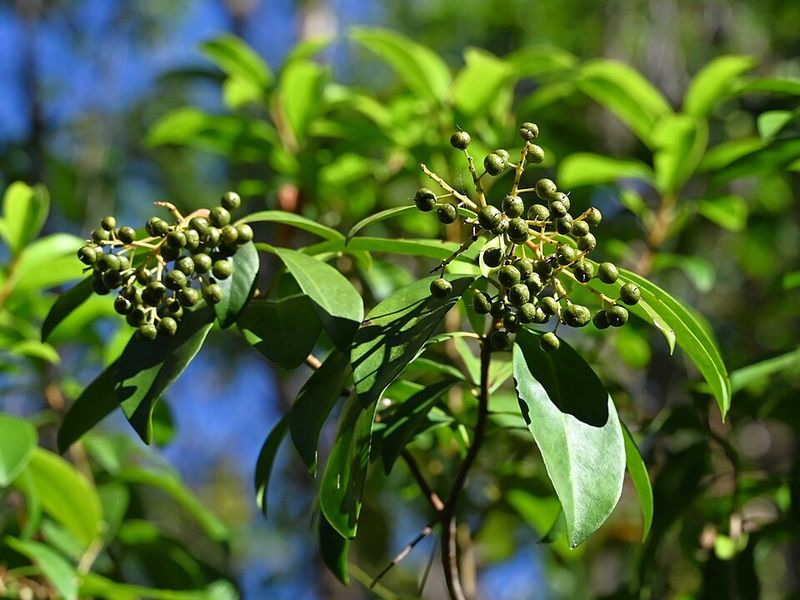
Shady corners under live oaks or along the edge of a tree canopy can feel impossible to fill with anything that actually blooms in summer. Marlberry, Ardisia escallonioides, is one of the few native shrubs that handles those warm, shaded conditions.
It still offers flowers, fruit, and glossy evergreen structure. It is native to southern regions and parts of central areas in this state, so regional fit matters before planting.
The flowers are small white to pale pink clusters that appear in warm months and carry a mild fragrance. After flowering, dark berries follow and attract birds, making marlberry a useful wildlife plant in shaded or partly shaded yards.
The glossy foliage stays attractive through summer even when humidity and heat are at their worst. That gives it real value as a structural evergreen in the understory layer.
Marlberry can reach ten to fifteen feet tall over time, functioning as a large shrub or small tree depending on how it is managed. It is not a compact hedge plant for tight formal spaces.
Matching it to the right light conditions is essential. Full sun placement in hot exposed sites does not suit this plant.
It performs best with filtered light, dappled shade, or morning sun with afternoon protection. Establishment watering during the first season sets it up well.
Once settled into a shaded site with reasonable moisture, marlberry contributes structure, seasonal flowers, fruit, and bird activity through the long summer season.
8. Buttonbush Turns Wet Summer Edges Into Pollinator Drama
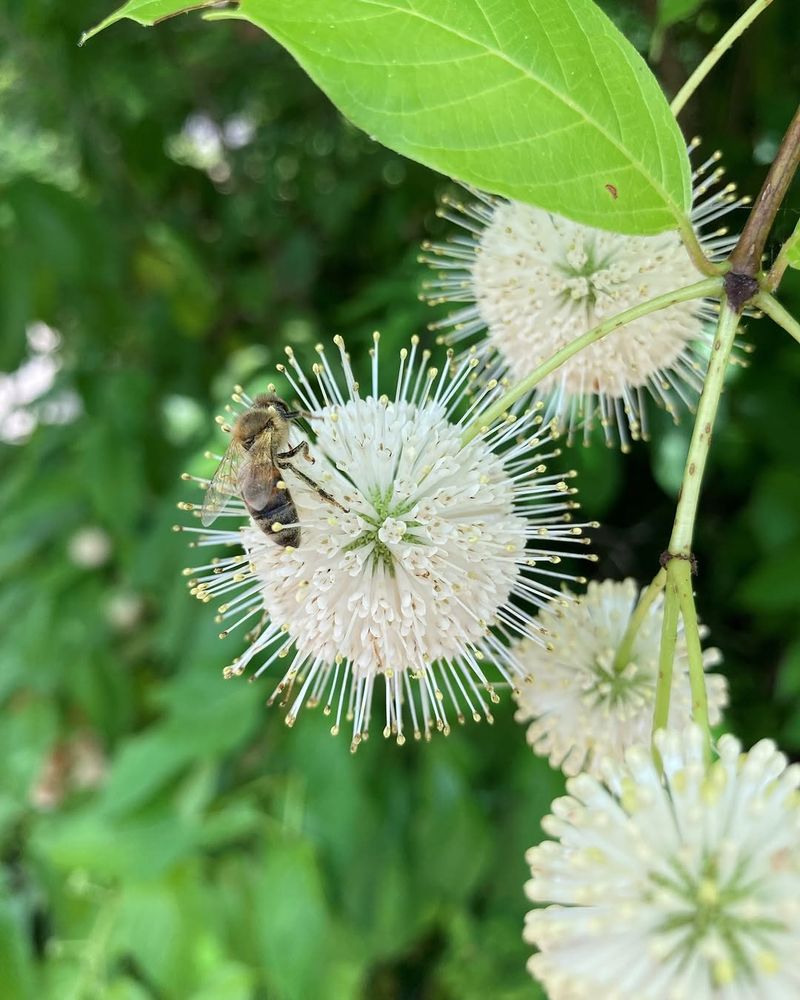
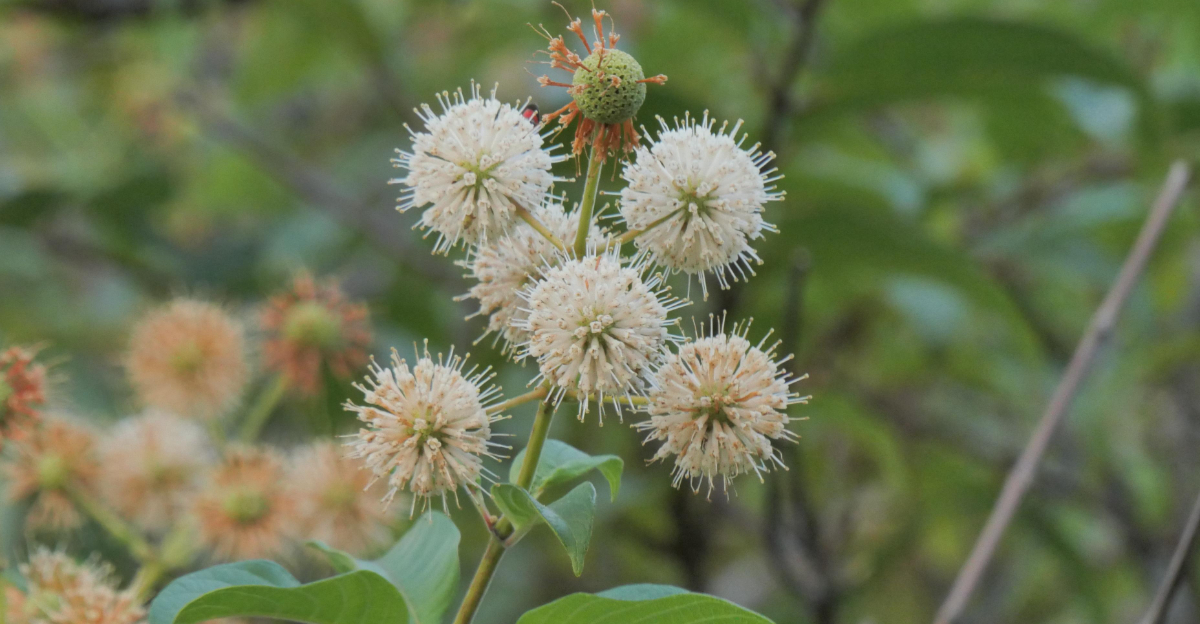
Round white flowers that look like small pincushions or golf balls covered in tiny florets are not something most gardeners expect from a native shrub. Buttonbush, Cephalanthus occidentalis, produces exactly that right through the peak of summer.
It performs when wet edges and swales are full of water and most other shrubs are nowhere near their prime. The visual effect is genuinely striking, especially when multiple plants are grouped along a pond margin or rain garden edge.
Pollinators respond to buttonbush with enthusiasm. Native bees, bumblebees, butterflies, and other beneficial insects work the flowers heavily.
Waterfowl and shorebirds use the plant for cover and food, and the seeds attract wildlife through late summer and fall.
For wet sites, swales, seasonal flood zones, and pond edges where drainage is poor or nonexistent, buttonbush fills a role that dry-loving shrubs simply cannot.
Placing buttonbush in dry sandy soil without reliable moisture will not produce good results. This plant is built for wet conditions, and trying to grow it in a well-drained bed misses the point entirely.
It can reach six to twelve feet tall with a similar spread, so spacing and pruning should account for mature size. Establishment in wet sites typically goes smoothly because the plant is already adapted to those conditions.
For gardeners dealing with a persistently wet area, buttonbush provides summer structure and pollinator value. It is one of the most ecologically useful native shrubs available in this state.