The Tree Spreading Across Nebraska Yards That Most Homeowners Overlook
Something uninvited is growing in Nebraska yards, and most homeowners walk right past it every day. It sprouts fast, smells terrible, and fights back hard when you try to remove it.
Most people mistake it for a harmless weed tree and ignore it until it is too late. By the time it catches your attention, it has already sent roots deep into your soil and dropped thousands of seeds into your neighbor’s yard.
It thrives in disturbed ground, fence lines, and forgotten corners. Brought to the U.S. in 1784, it has since become one of the most aggressive invaders in North America, and Nebraska is no exception.
If there is a bare patch of soil anywhere on your property, this tree will find it, and it will not leave without a fight.
The Invasive Tree Quietly Taking Over Nebraska Yards
You did not plant it, but it showed up anyway. Tree of Heaven, scientifically known as Ailanthus altissima, is spreading fast across Nebraska yards without anyone asking it to.
Originally from China, this tree arrived in the U.S. back in the 1700s as an ornamental plant. Settlers thought it was beautiful and tough, which it absolutely is, just not in a good way.
Today, it grows along roadsides, fence lines, and the edges of home gardens. It thrives in disturbed soil, cracked pavement, and even the gaps in sidewalks.
Most homeowners do not recognize it right away because it blends in with other leafy trees. By the time you notice it, the roots have already spread deep underground.
The tree spreading across Nebraska yards that most homeowners overlook is not just a nuisance. It is a genuine threat to your lawn, garden, and even your home’s foundation.
One mature tree can produce up to 300,000 seeds per year, which the wind carries surprising distances. A single ignored tree becomes a dozen within just a few growing seasons.
Knowing what you are dealing with is the first step toward protecting your yard. Once you spot it, you can act fast and take back your outdoor space.
Why Tree Of Heaven Spreads So Easily
Speed is this tree’s superpower. Tree of Heaven can grow three to six feet in a single season, outpacing almost every native tree species in the region.
Its seeds are lightweight and winged, designed by nature to travel far on the breeze. One strong windstorm can scatter thousands of seeds across neighboring yards in minutes.
But seeds are only part of the problem. The root system sprouts new shoots aggressively, even after the main trunk is cut down.
Cut it once, and three new stems can shoot up from the same root. Each new stem grows fast and competes hard for sunlight, water, and space.
The tree also releases chemicals into the surrounding soil that slow the growth of nearby plants. Scientists call this allelopathy, and it gives Tree of Heaven an unfair edge over everything else growing nearby.
Your Nebraska Garden Changes Every Week. Your Plan Should Too.
Gardening in Nebraska changes quickly throughout the season. Every Friday you’ll receive a simple weekly plan showing exactly what to plant, prune, fertilize, harvest, and protect so you never miss the right timing.
It tolerates drought, poor soil, pollution, and shade better than almost any other tree. That adaptability makes it nearly impossible to stop once it gets established.
Few native insects feed on it, which means it faces far less natural pressure than native trees that support local wildlife.
Understanding why it spreads so aggressively helps you stay one step ahead. If you spot even one small sapling, treating it early is far easier than battling a full grove later.
How To Identify Tree Of Heaven In Your Yard
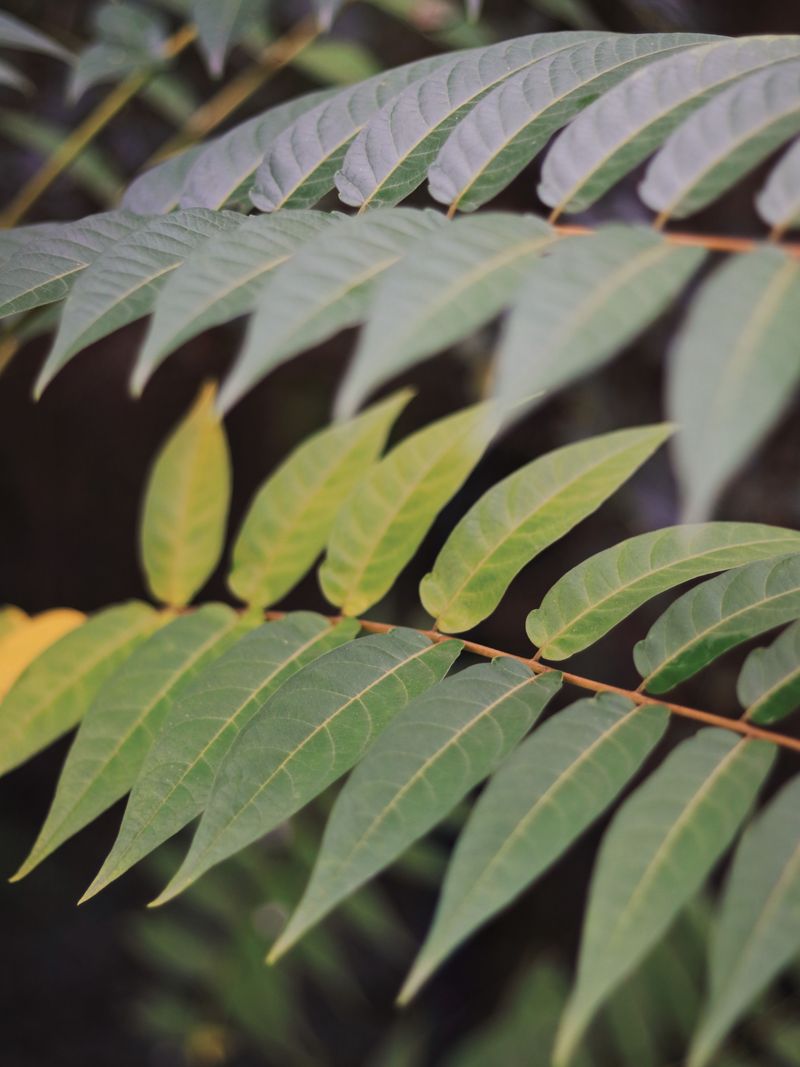
Smell it and you will never forget it. Tree of Heaven has a strong, unpleasant odor when you crush its leaves, often described as rotten peanut butter or burnt rubber.
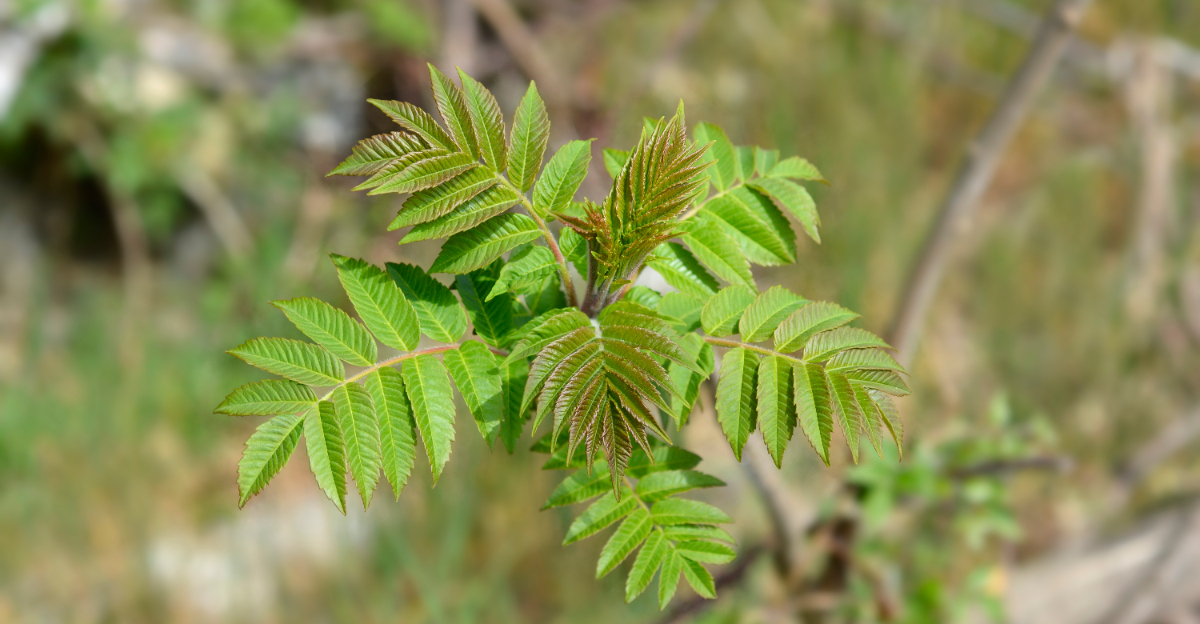
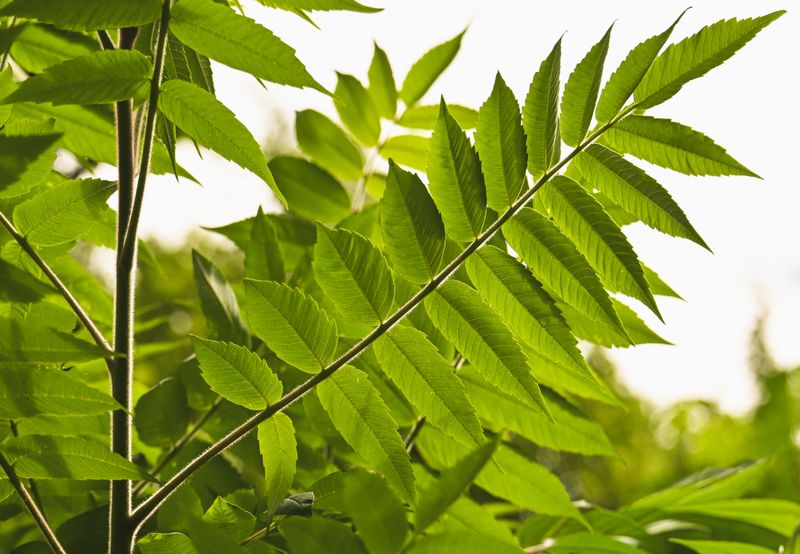
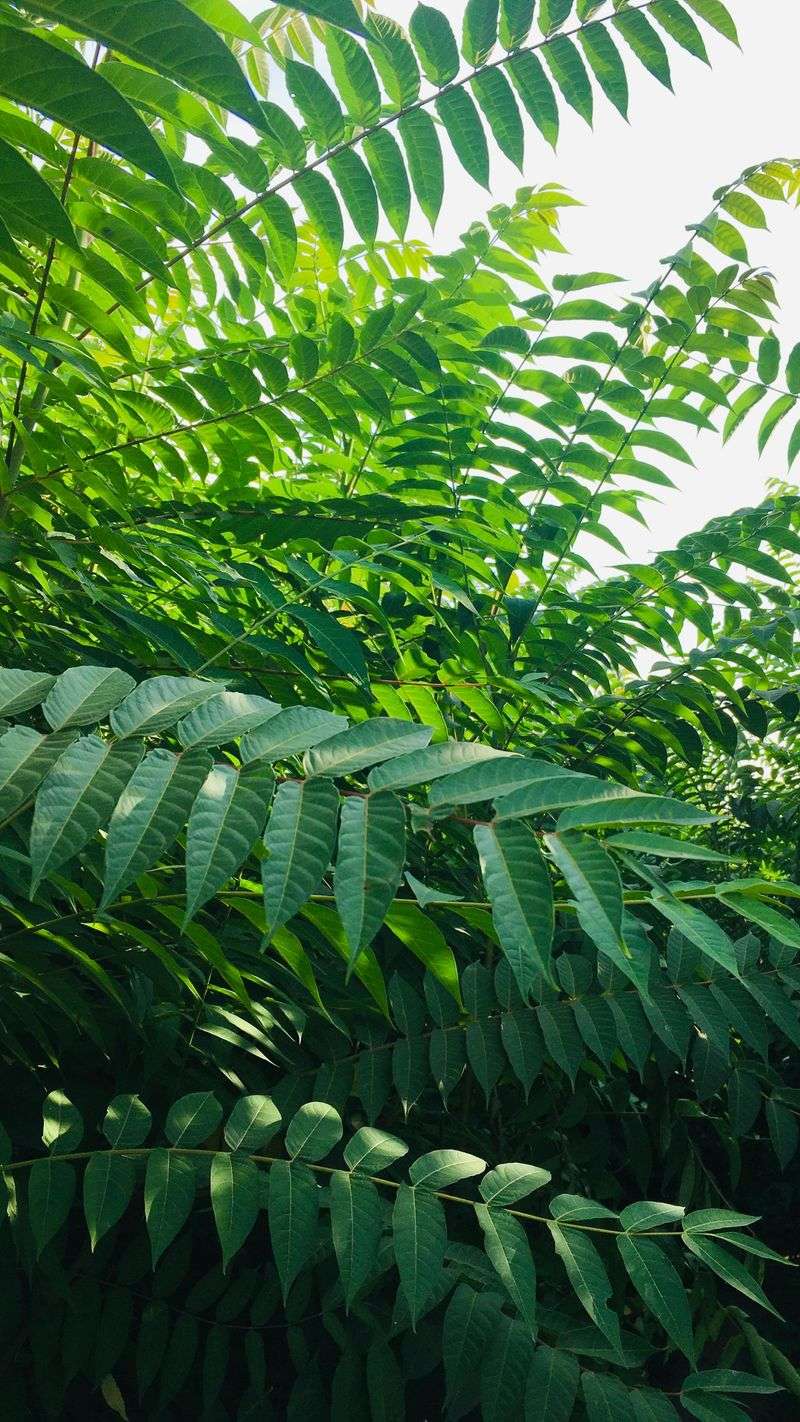
The leaves are long and feathery, made up of many smaller leaflets arranged along a central stem. Each full leaf can stretch anywhere from one to four feet long.
Look closely at the base of each leaflet and you will notice a small notch or bump near the bottom edge. That tiny gland is one of the most reliable identification clues for this species.
Young trees have smooth, light gray bark that looks almost polished. As the tree matures, the bark develops shallow ridges that resemble the skin of a cantaloupe.
In late summer, clusters of papery, twisted seeds appear at the branch tips. They look like little helicopter seeds and turn from green to reddish-brown as the season changes.
The tree also produces clusters of small yellowish-green flowers in early summer. Male trees have the strongest smell, which is a helpful clue during flowering season.
New sprouts often appear at the base of fences, along walls, or near driveways. They can look like harmless weeds at first, so checking leaf shape is important before pulling anything.
Once you know what to look for, spotting Tree of Heaven becomes second nature. Your yard will never look the same way again after you start scanning for it.
The Damage Tree Of Heaven Can Do To Your Property
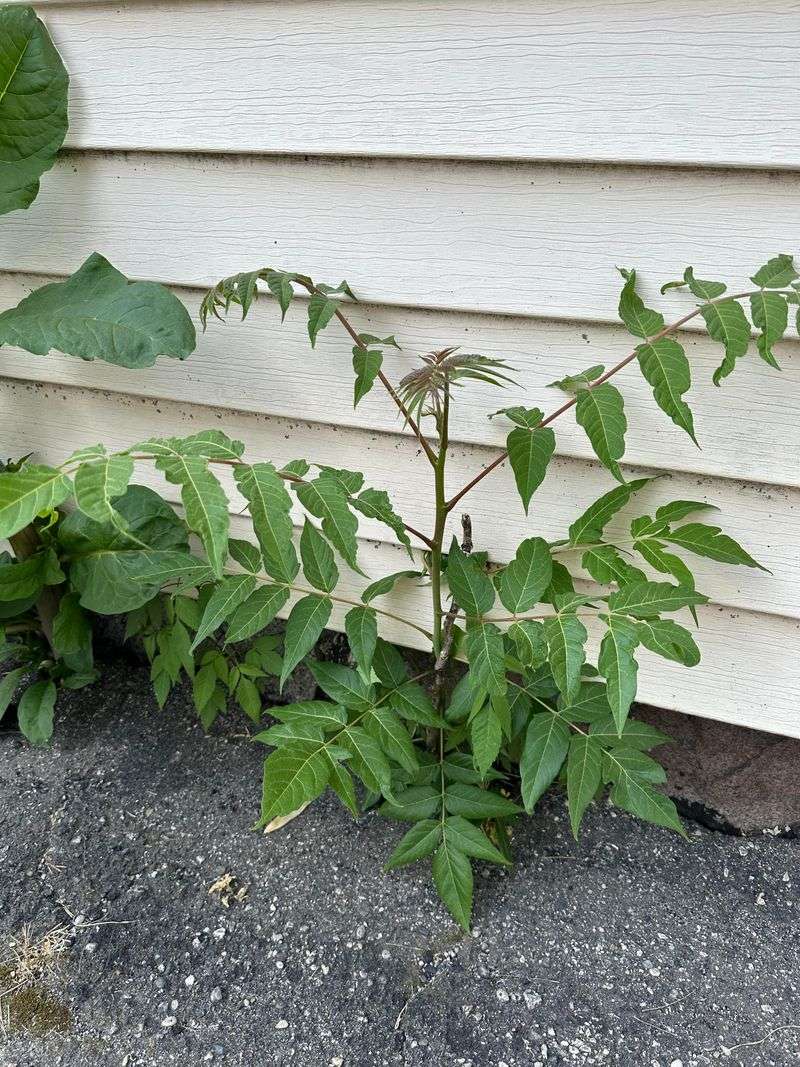
Do not let the pretty leaves fool you. Tree of Heaven has roots that are aggressive enough to crack sidewalks, lift driveways, and push through home foundations over time.
The root system spreads wide and shallow, seeking out any moisture source it can find. Sewer lines, irrigation pipes, and drainage systems are all vulnerable to root intrusion.
Homeowners have reported cracked basement walls and buckled patio stones traced back to a single tree growing nearby. The damage often shows up years after the tree was first noticed.
Beyond structural damage, Tree of Heaven also harms your garden ecosystem. Its allelopathic chemicals leach into the soil and suppress the growth of flowers, vegetables, and grass.
If you have a vegetable garden near one of these trees, you may notice poor germination or stunted plants without an obvious cause. The soil itself becomes less hospitable over time.
The tree also attracts the Spotted Lanternfly, an invasive pest that devastates fruit trees, grapes, and ornamental plants. That pest has not fully arrived in Nebraska yet, but Tree of Heaven is helping pave the way.
Fallen leaves decompose slowly and create a thick mat that blocks sunlight from reaching ground-level plants. Over several seasons, entire patches of lawn can thin out beneath a mature specimen.
The longer you wait to address it, the more expensive the consequences become. Acting now protects both your property value and your garden’s long-term health.
How To Remove Tree Of Heaven From Your Yard
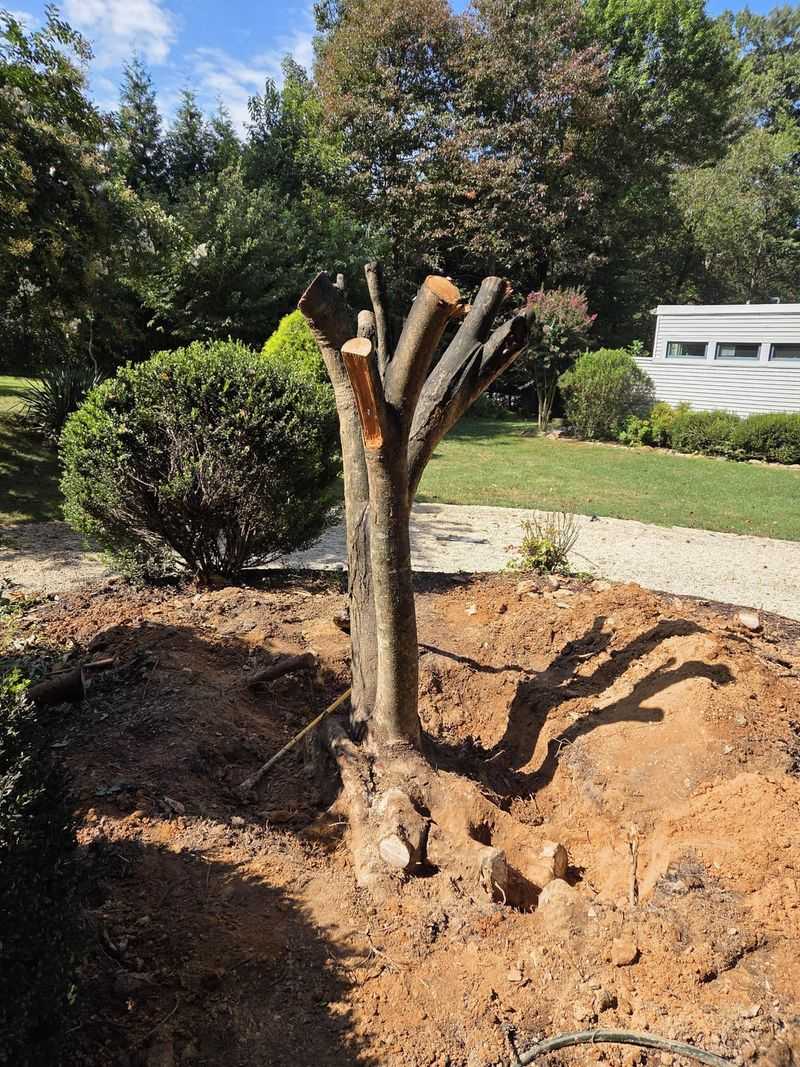
Getting rid of it is a commitment, not a one-time chore. Tree of Heaven fights back hard, so you need a consistent strategy that targets both the trunk and the root system.
For small saplings under three feet tall, hand-pulling works well if the soil is moist. Grab the stem as low as possible and pull slowly to remove as much root as you can.
The most effective approach is a basal bark treatment: apply an herbicide containing triclopyr directly to the lower 12 to 18 inches of the trunk without cutting it down first.
Timing matters a lot with this method. Applying the herbicide in mid to late summer gives the best results, when the tree is moving nutrients down toward the roots.
Foliar spraying works on young trees during the growing season, between late spring and early fall. Use a targeted herbicide spray on the leaves, avoiding any nearby plants you want to keep.
Never just mow or cut the tree repeatedly without herbicide treatment. That approach actually stimulates the roots and causes the tree to send up more shoots than before.
Check the treated area every few weeks throughout the season. New sprouts from the root system are common and need to be treated as soon as they appear.
Persistence is what wins this battle. Most homeowners see significant improvement after two full growing seasons of consistent treatment and monitoring.
Native Trees To Plant In Nebraska Instead
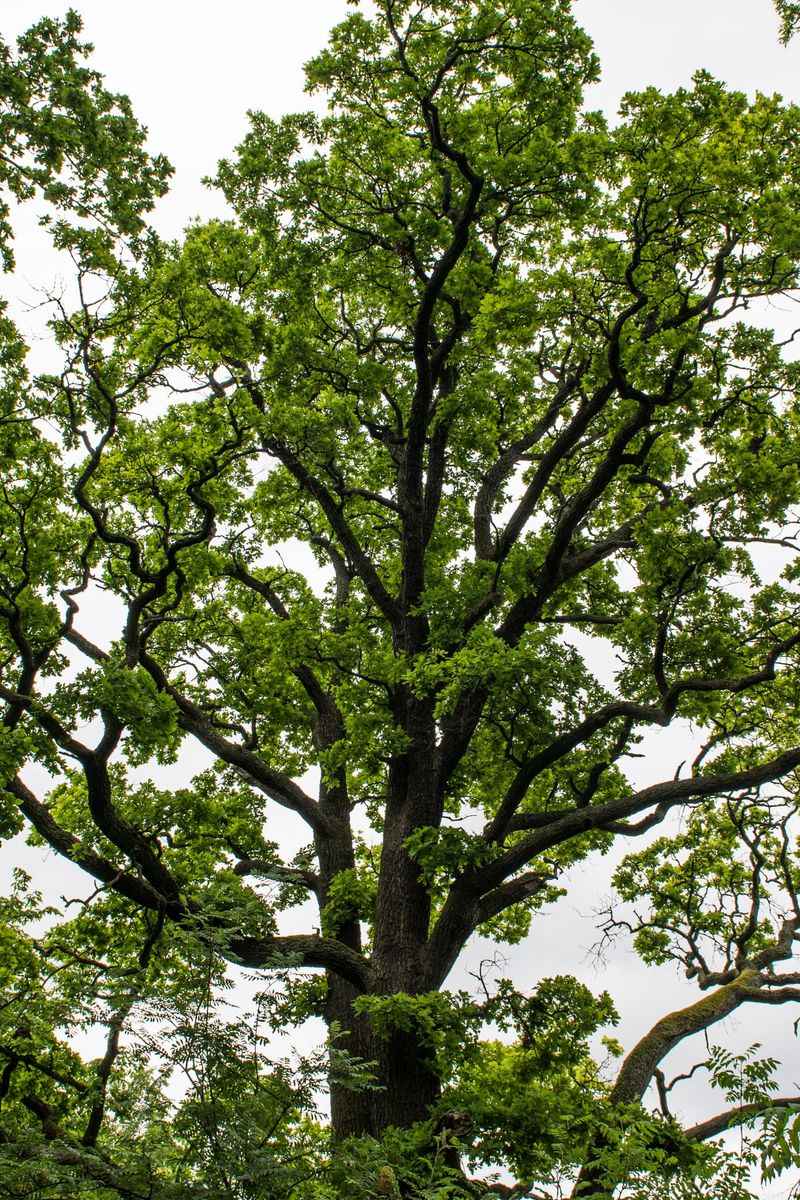
Pulling out an invasive tree leaves a gap worth filling with something better. Nebraska has a rich selection of native trees that support local wildlife, improve soil health, and look stunning year-round.
Bur Oak is one of the toughest and most rewarding choices for a home landscape. It handles drought, clay soil, and harsh winters without complaint, and it can live for hundreds of years.
Eastern Redbud brings a burst of pink and purple blooms every spring before the leaves even open. Birds love its seed pods, and pollinators flock to its flowers during the early warm season.
Chinkapin Oak is a tough and adaptable choice that handles Nebraska’s heavy soils and dry summers well. It grows steadily and supports a wide range of native wildlife.
Hackberry is an underrated gem that thrives in almost every soil type across the state. Cedar waxwings and robins devour its small berries, making it a fantastic choice for backyard birders.
American Linden produces fragrant summer flowers that attract bees and butterflies in impressive numbers. Its large heart-shaped leaves create dense, cooling shade that makes summer afternoons far more enjoyable.
Planting natives helps restore the local food web that invasive species disrupt. Every native tree you add is a direct investment in your yard’s long-term health and beauty.
Replacing Tree of Heaven with a native species is one of the most satisfying things a homeowner can do. Your yard, your neighbors, and local wildlife will all feel the difference.