Native Pennsylvania Plants That Fill Wet Soggy Spots Better Than Anything Else
Wet soggy spots are one of the most frustrating problem areas in a Pennsylvania yard, and most attempts to fix them with conventional plants end in the same predictable way.
Standard landscaping choices rot out, struggle to establish, or look miserable through the wet periods and stressed through the dry ones that follow.
Filling these areas with something that actually thrives in variable moisture conditions requires a different category of plant entirely, and Pennsylvania native plants adapted to wet environments are that category.
These are plants that evolved in the same kinds of wet depressions, low-lying edges, and seasonally saturated ground that makes up the most difficult corners of a Pennsylvania property.
They do not just tolerate the moisture. They use it, establishing deep root systems that handle both the wet periods and the occasional dry spells in between, and filling the space with a natural presence that turns a problem area into one of the more ecologically productive parts of the yard.
1. Swamp Milkweed
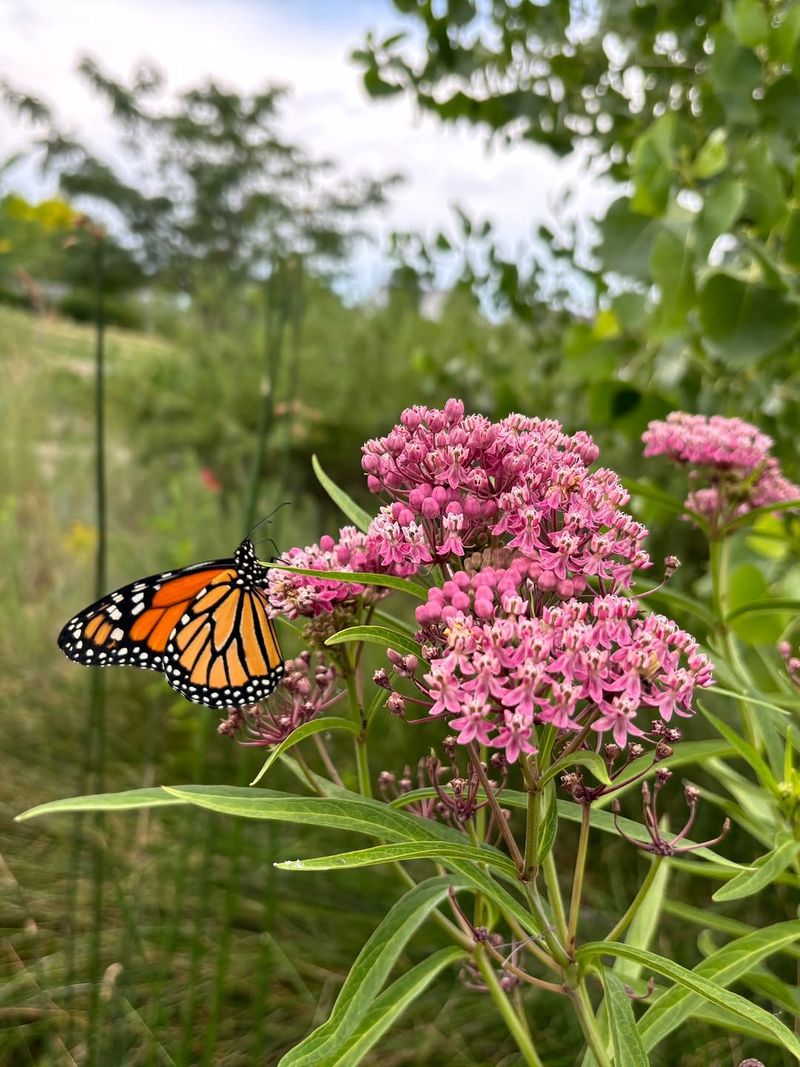
Few plants earn their place in a wet garden quite like Swamp Milkweed. While most milkweeds prefer dry or average soil, this one actually craves moisture, making it a rare and valuable find for soggy spots.
It is one of the best native plants you can grow in Pennsylvania if you want both beauty and wildlife value.
Swamp Milkweed grows two to four feet tall and produces tight clusters of soft pink flowers from mid to late summer.
The blooms smell faintly sweet and are absolutely irresistible to butterflies, especially monarch butterflies, which rely on milkweed as their only host plant for laying eggs. Bees, beetles, and other pollinators swarm the flowers from morning to evening.
Planting it is straightforward. It prefers full sun and consistently wet or moist soil, which makes it perfect for rain gardens, pond edges, or any low spot that collects water after a storm.
Once established, it spreads slowly through rhizomes and forms attractive clumps over time.
Did you know monarchs are in serious decline across North America? Planting Swamp Milkweed is one of the most impactful things a Pennsylvania gardener can do to support their recovery. Even a small patch makes a real difference.
In fall, the seed pods split open to release silky white seeds that drift on the breeze. The plant goes dormant in winter and returns reliably each spring.
It pairs beautifully with Blue Flag Iris and Joe-Pye Weed for a layered, naturalistic wet garden design that supports an entire ecosystem right in your backyard.
2. Cardinal Flower
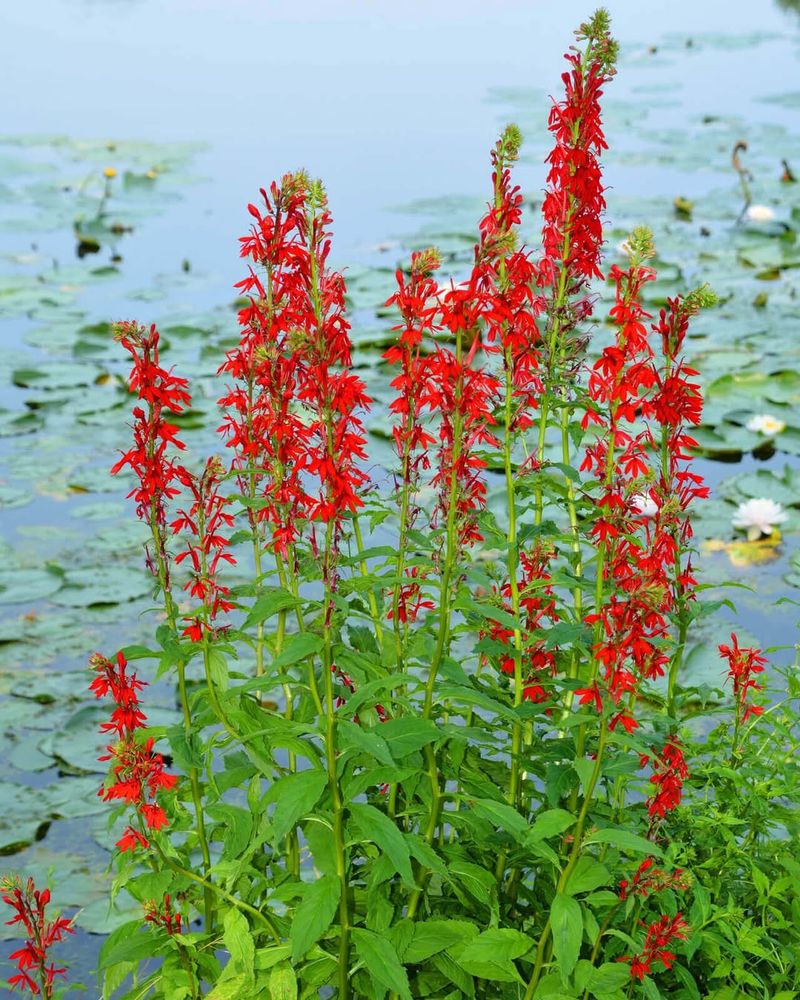
Imagine planting something so red, so vivid, that hummingbirds spot it from across the yard and come zooming in within days. That is exactly what happens when you grow Cardinal Flower.
The color is almost unreal, a deep scarlet that practically glows against green foliage in late summer when most other plants are fading.
Cardinal Flower is a Pennsylvania native that thrives in moist to wet soils and partial to full sun. It blooms from late July through September, sending up tall spikes covered in tubular red flowers that hummingbirds absolutely cannot resist.
Your Pennsylvania Garden Changes Every Week. Your Plan Should Too.
Gardening in Pennsylvania changes quickly throughout the season. Every Friday you’ll receive a simple weekly plan showing exactly what to plant, prune, fertilize, harvest, and protect so you never miss the right timing.
The plant grows two to four feet tall and looks stunning planted near water features, stream banks, or any low-lying garden area that stays consistently damp.
One thing to know: Cardinal Flower is a short-lived perennial. It usually lives two to three years, but it self-seeds reliably, so new plants pop up each season to replace the old ones.
Letting a few seedlings stay where they sprout keeps your patch going year after year without any extra effort.
It does best with some afternoon shade in hotter parts of Pennsylvania, though it can handle full sun if the soil stays moist enough. Mulching around the base helps keep roots cool and retains that critical moisture.
Beyond hummingbirds, Cardinal Flower also attracts swallowtail butterflies and native bees. Its bold vertical shape adds great structure to a wet border planting.
Pair it with Swamp Milkweed or Blue Vervain for a pollinator-packed display that looks professionally designed but requires almost no maintenance once established in the right spot.
3. Blue Flag Iris
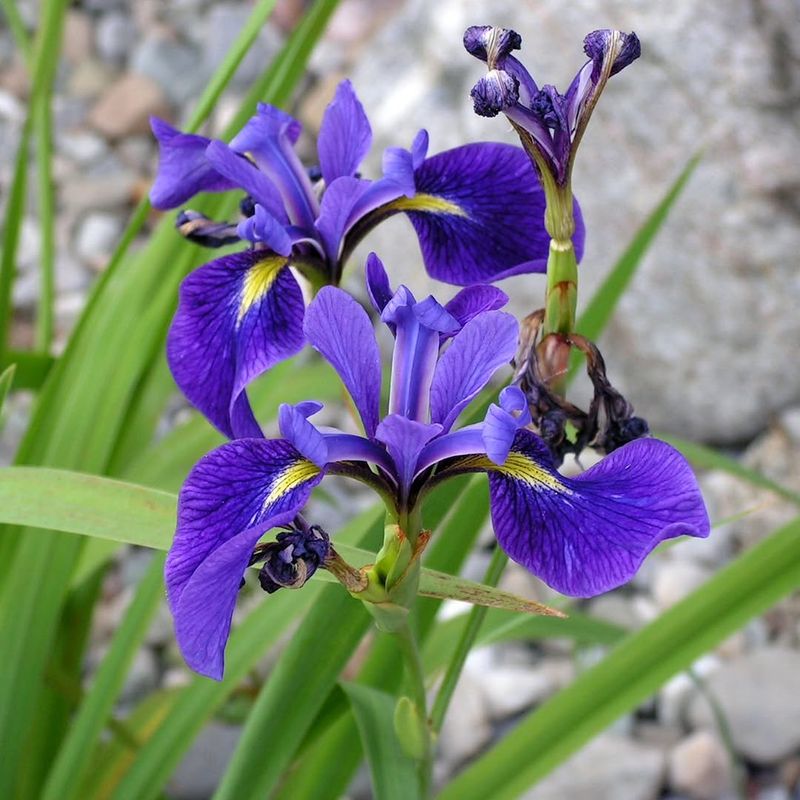
There is something almost magical about seeing Blue Flag Iris bloom at the edge of a pond in late May. The flowers are a rich blend of violet, purple, and blue with delicate yellow and white veining at the center of each petal.
It looks like something from a painting, yet it grows wild across Pennsylvania wetlands without any fuss at all.
Blue Flag Iris is one of the most visually dramatic native plants you can add to a wet area. It reaches two to three feet tall and produces multiple blooms per stem in late spring.
The sword-shaped leaves stay attractive all season long, even after the flowers fade, giving the planting structure and texture through summer and into fall.
It thrives in full sun to partial shade and loves standing water or saturated soil. Pond edges, drainage ditches, rain gardens, and soggy low spots are all perfect homes for this plant.
It can even grow with its roots submerged in shallow water up to a few inches deep, making it one of the most flexible native plants for wet conditions.
Pollinators love it too. Native bees, especially bumblebees, visit the flowers frequently for nectar and pollen.
The plant spreads by rhizomes, slowly forming dense clumps that help stabilize muddy banks and prevent erosion along water features.
A quick note for households with pets: all parts of the Iris are irritating if eaten, so plant it away from areas where dogs or curious animals roam. Otherwise, it is a low-maintenance, high-impact native that earns its space every single spring with a spectacular floral show.
4. Joe-Pye Weed
Back in colonial times, a Native American healer named Joe Pye reportedly used this plant to treat fevers and other ailments.
Whether the legend is fully accurate or not, one thing is certain: this tall, commanding native has been earning respect in the American landscape for centuries, and it deserves a spot in every wet Pennsylvania garden.
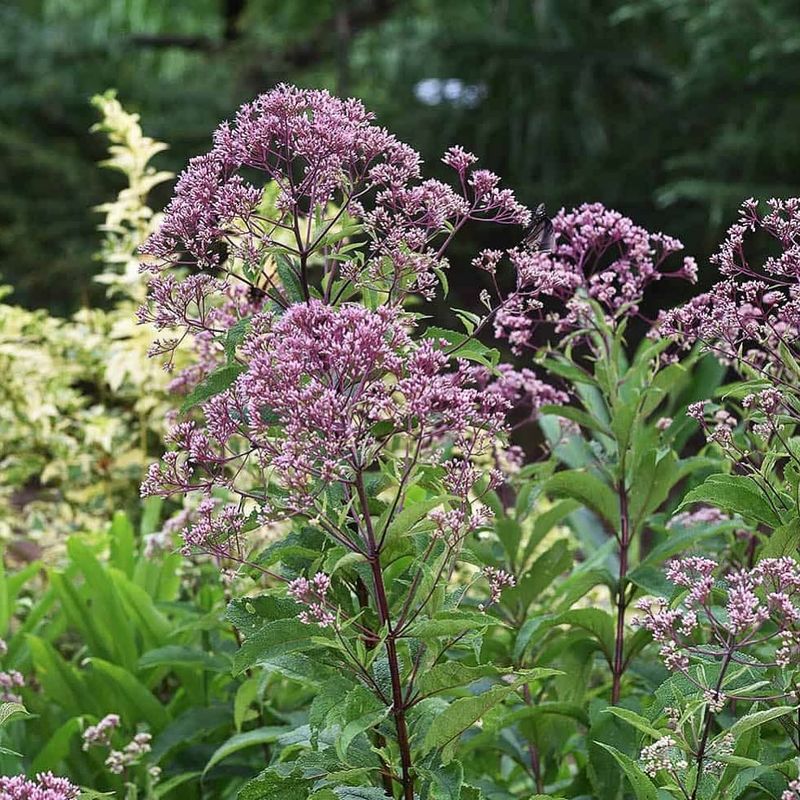
Joe-Pye Weed is a showstopper. It grows anywhere from four to seven feet tall, making it one of the tallest native perennials you can plant in a moist area.
In midsummer, the tops of the stems are crowned with large, domed clusters of dusty pink-purple flowers that butterflies swarm by the dozens. Swallowtails, fritillaries, and skippers are especially attracted to the blooms.
It prefers moist to wet soil and grows well in full sun to partial shade. Rain gardens, stream banks, and soggy back corners of the yard are ideal locations.
Once established, it is incredibly tough and long-lived, returning bigger and fuller each year without much help from you.
Because of its height, Joe-Pye Weed works best at the back of a planting bed or as a natural screen along a fence or property line. It pairs beautifully with shorter natives like Cardinal Flower and Swamp Milkweed, creating a layered look that mimics a natural meadow edge.
In fall, the flower heads turn to fluffy seed clusters that birds enjoy through winter. The dried stems also add quiet structure to the garden during the colder months, making Joe-Pye Weed a four-season asset in any wet Pennsylvania landscape.
5. Marsh Marigold
When the rest of the garden is still waking up from winter, Marsh Marigold is already putting on a show.
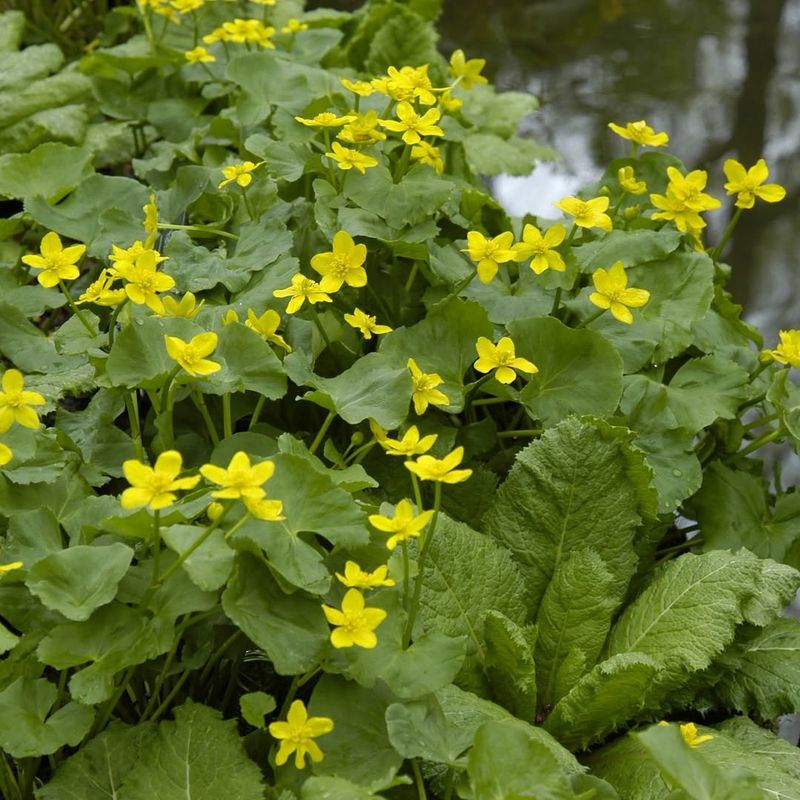
It is one of the earliest native plants to bloom in Pennsylvania, often bursting into bright yellow flowers as early as March or April, long before most other perennials even push up their first leaves. That early color is genuinely exciting after a long grey winter.
Marsh Marigold grows in clumps about one to two feet tall and wide. The flowers are a rich, glossy yellow that almost seems to glow in shady, wet areas.
The leaves are round and deep green, adding a lush, tropical look to moist garden spots even after the blooms fade in early summer. The plant goes dormant by midsummer, so pairing it with later-blooming plants fills the gap nicely.
It thrives in consistently wet or even flooded soil and does well in partial to full shade, which makes it one of the few native options for those tricky wet and shady corners of the yard.
Pond edges, drainage ditches, stream margins, and boggy garden patches are all excellent planting sites.
Marsh Marigold also has an interesting history. Indigenous communities across North America used parts of the plant medicinally, though it should never be eaten raw as it contains compounds that require cooking to neutralize safely.
For gardeners, the appeal is simple: it is tough, reliable, beautiful in early spring, and perfectly suited to wet conditions that most other plants cannot handle.
Plant it alongside Blue Flag Iris for a gorgeous spring combination that brings life to the soggiest corners of your property.
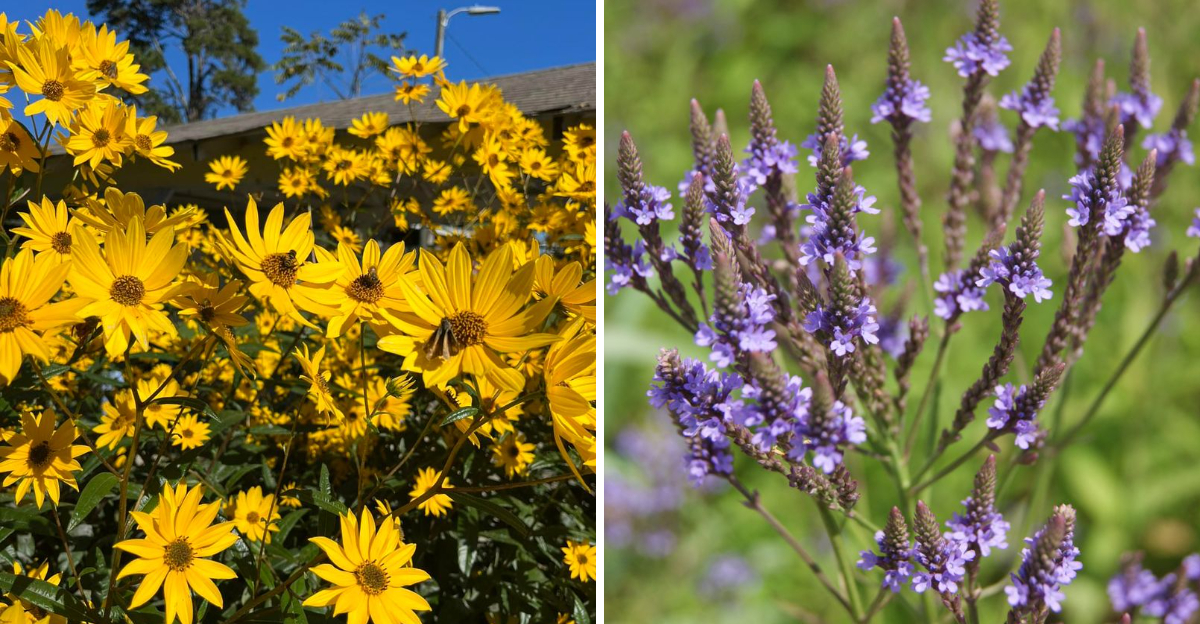
6. Swamp Sunflower
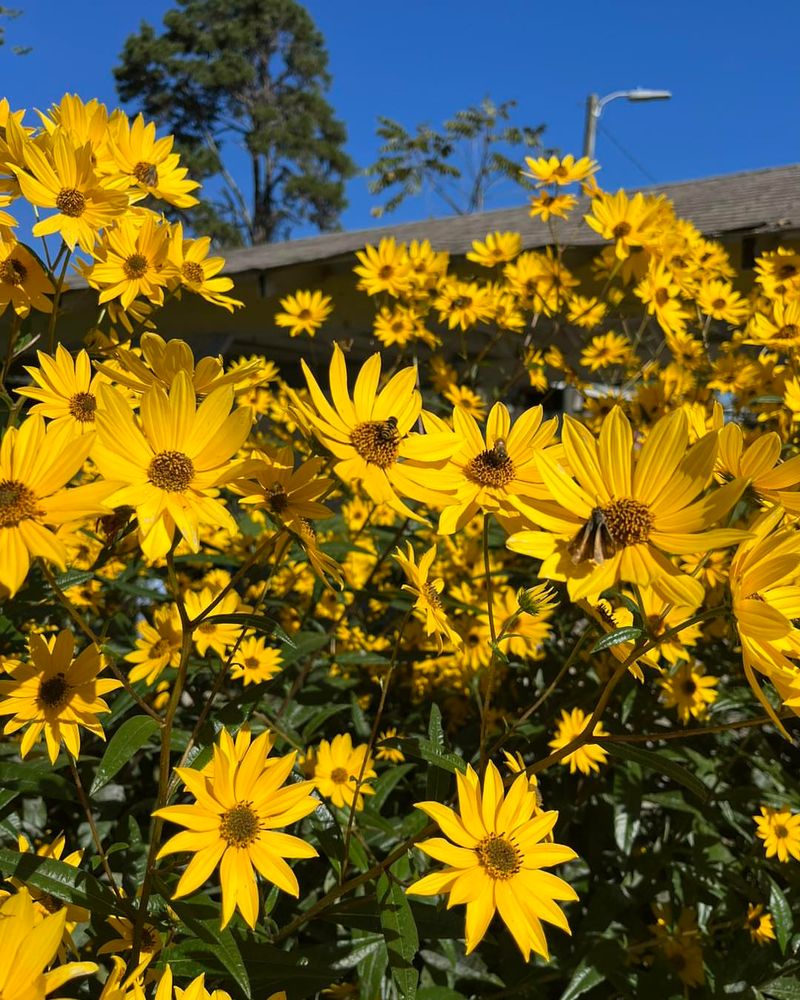
Most sunflowers want dry, well-drained soil, so finding one that actually prefers wet conditions feels like stumbling on a hidden gem. Swamp Sunflower is exactly that.
It brings all the cheerful energy of a classic sunflower to the soggiest corners of your yard, blooming in bold yellow waves just as the rest of the garden starts to wind down for the season.
Swamp Sunflower blooms from September into October, making it one of the latest-flowering native perennials in Pennsylvania.
At that time of year, its bright yellow daisy-like flowers are a critical food source for migrating butterflies and late-season pollinators stocking up before cold weather arrives.
The seeds that follow are eagerly eaten by goldfinches and other songbirds through fall and winter.
The plant grows tall, often reaching five to eight feet in height, which gives it a naturalized, wild look that works well along fence lines, at the back of a rain garden, or in any large wet area where you want bold visual impact.
It spreads vigorously by both seeds and rhizomes, so give it room to roam or divide clumps every few years to keep it in check.
Full sun brings out the best bloom production, though it tolerates some light afternoon shade. Wet to moist soil is ideal, and it handles brief flooding without complaint, which is more than most garden plants can claim.
Planting Swamp Sunflower alongside Joe-Pye Weed and Blue Vervain creates a stunning late-season display that keeps pollinators and birds visiting your yard well into autumn, long after neighboring gardens have gone quiet for the year.
7. Blue Vervain
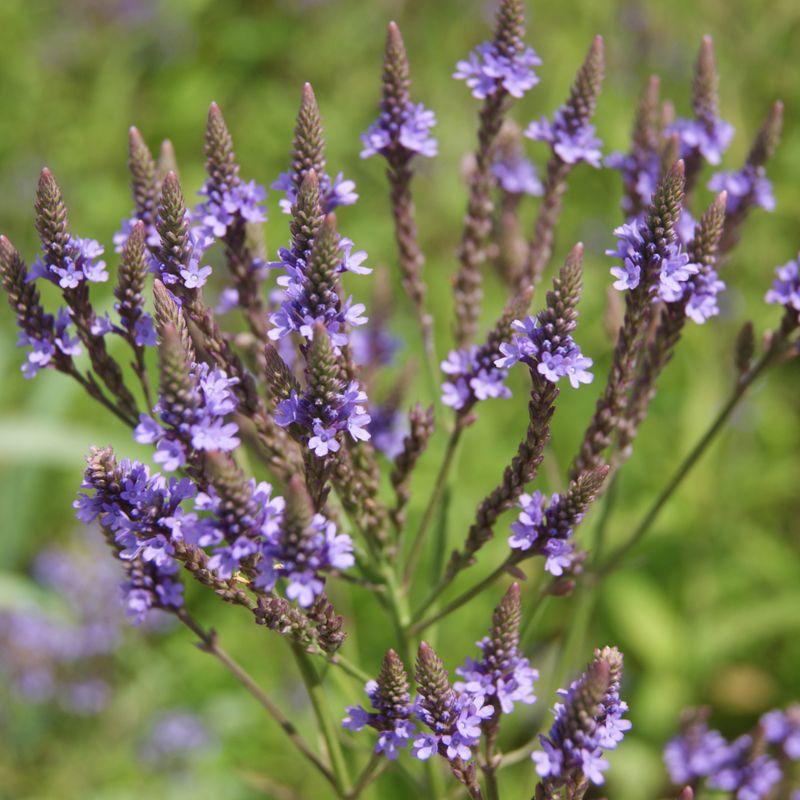
Blue Vervain has a personality all its own. The flowers open in a quirky, bottom-to-top pattern along multiple branching spikes, creating a candelabra-like effect that looks unlike almost anything else in a native plant garden.
It is not flashy in the way a Cardinal Flower is, but it has a wild, textured beauty that grows on you quickly and looks absolutely stunning in mass plantings.
Native across Pennsylvania, Blue Vervain thrives in moist to wet soils and full to partial sun. It grows three to five feet tall and blooms from July through September, filling that mid to late summer window when pollinators are at peak activity.
Bees of all kinds flock to the tiny blue-purple flowers, along with skippers, small butterflies, and beneficial wasps that help control garden pests naturally.
Beyond pollinators, Blue Vervain is a host plant for the Common Buckeye butterfly and the Verbena Moth, adding even more ecological value to an already impressive resume.
Birds, particularly swamp sparrows and cardinals, eat the seeds in fall and winter, so leaving the stems standing through the cold months benefits local wildlife.
It self-seeds readily, which means a small planting can expand into a lovely naturalized patch over a few seasons. If you prefer a tidier look, simply remove spent flower spikes before seeds mature. Otherwise, let it do its thing and enjoy the expanding colony.
Blue Vervain pairs especially well with Swamp Milkweed and Swamp Sunflower. Together they create a layered, season-long display of color and wildlife activity that makes a wet, once-problematic garden spot feel like the best part of the whole yard.