What Happens To Banana Plants After A Florida Heat (And What To Do)
Banana plants look built for Florida heat. Tropical, bold, the kind of plant that belongs in a climate like this.
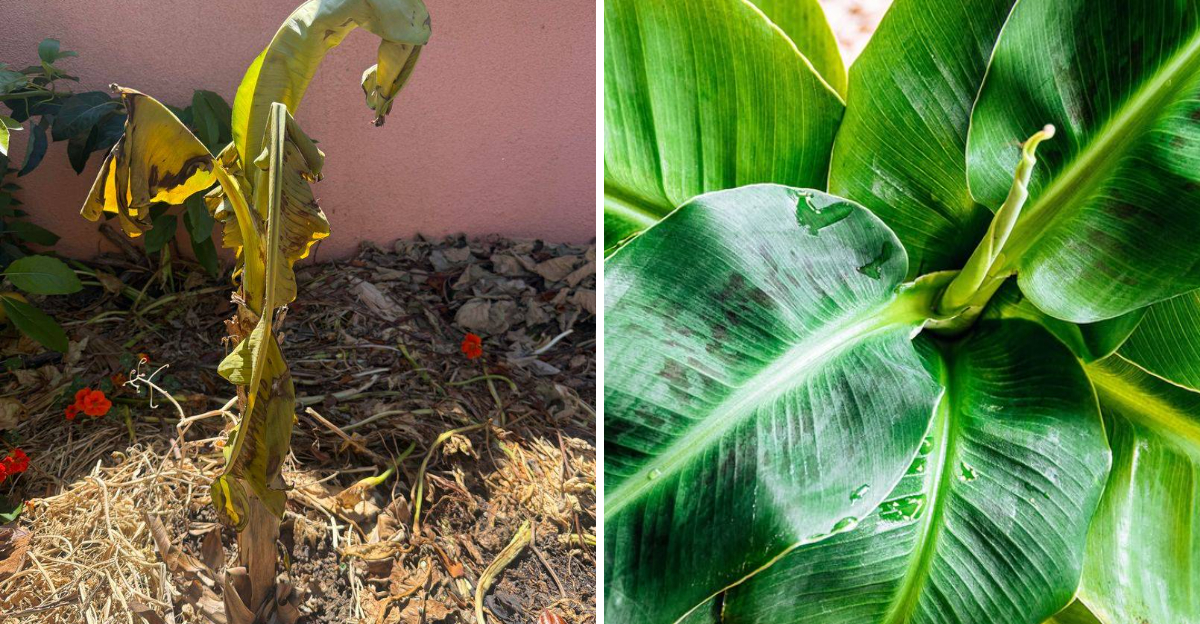
That appearance holds up through most of the year, but a sustained heat stretch has a way of exposing the limits even bananas have. Leaves scorch, edges brown, and a plant that looked unstoppable two weeks ago suddenly looks like it is asking for help.
Most Florida gardeners assume bananas can handle anything and do nothing. That instinct works fine in a mild summer.
In a serious heat stretch it costs the plant more than it needs to lose. Heat stress on banana plants follows a pattern.
The signs are readable once you know what to look for, and the response does not have to be complicated to make a real difference. What Florida heat actually does to a banana plant, and how to respond, is worth understanding before the next stretch arrives.
1. Banana Leaves Shred And Scorch Before The Plant Fails
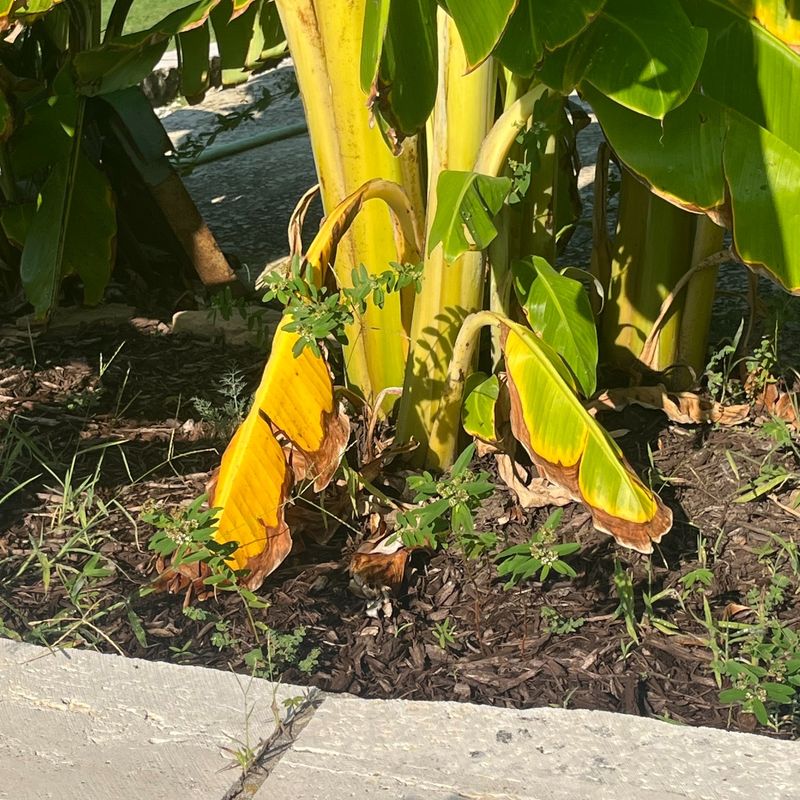
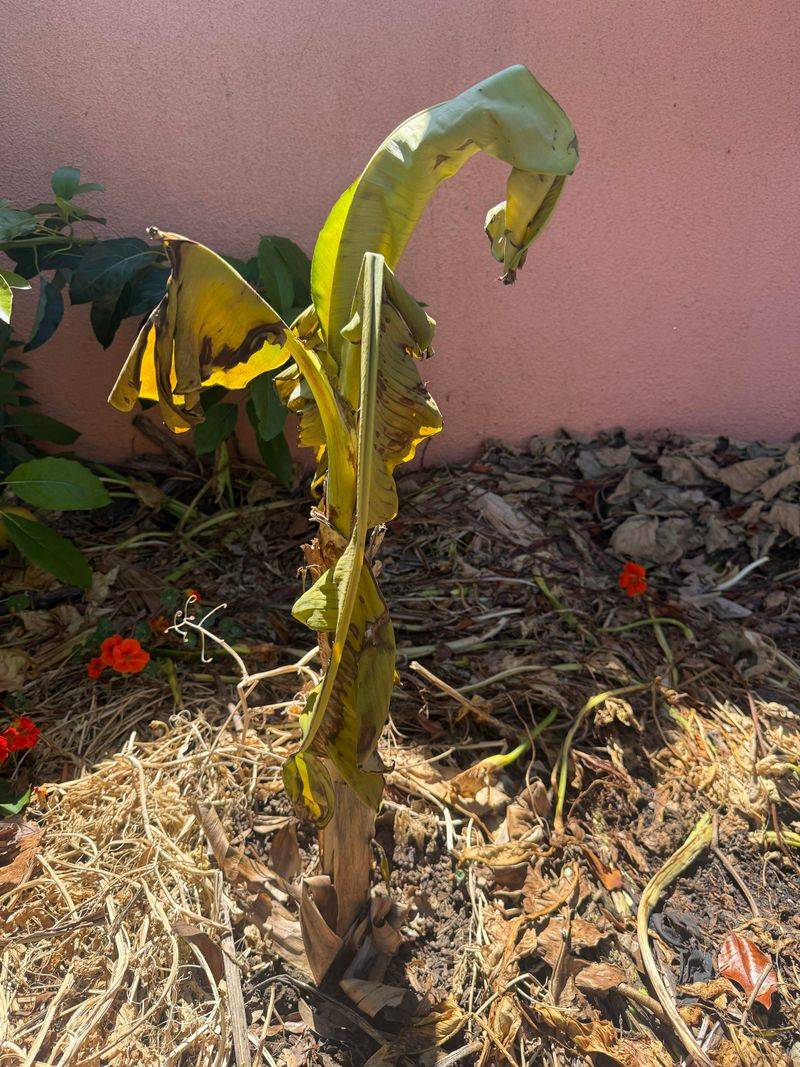
Shredded leaves hanging off a banana plant after a brutal hot week can feel like a disaster. However, the leaves are often telling a different story than the plant’s actual condition.
Banana leaves are enormous, and that size is a double-edged situation. Wide leaf surfaces move a lot of moisture into the air through transpiration.
When temperatures spike, dry winds blow, or reflected heat bounces off a nearby wall, those leaves lose water faster than the roots can replace it.
Scorching, browning edges, curling, and tearing are all visible responses to that moisture loss. Yellowing can also appear when the plant is under prolonged water stress.
Strong afternoon sun combined with sandy soil and low humidity creates conditions where even a healthy plant can look rough within a few days.
Damaged leaves will not green back up once they are scorched or dried. Trimming away fully brown or hanging leaves can improve airflow and reduce the weight pulling on the pseudostem.
However, do not strip every leaf in a panic. Partial leaves still contribute some photosynthesis and shade the pseudostem below.
The most reassuring fact is that leaf damage does not automatically mean the growing point is compromised. If the pseudostem still feels firm and the corm underground is healthy, new leaves can push through even after heavy surface damage.
2. Hot Soil Can Stress The Corm Below The Surface
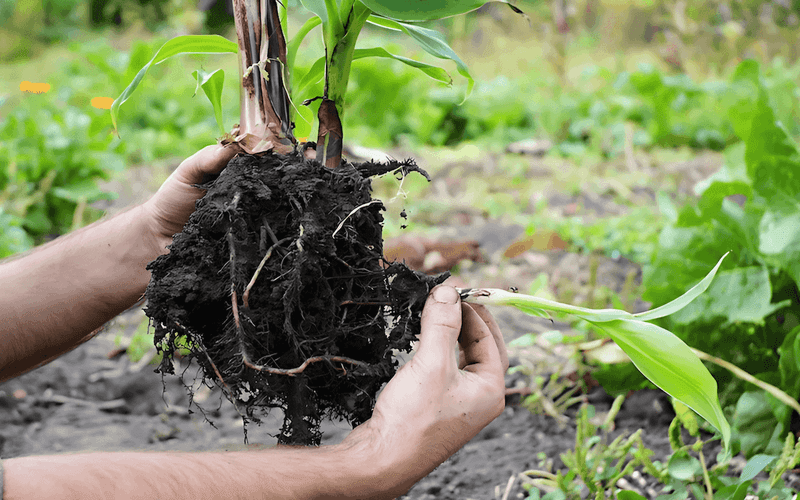
A drooping banana beside a sun-baked wall might not just be struggling because of what you can see above ground. Underneath the plant, the corm is the true engine of growth, and hot, dry soil can stress it in ways that do not show up immediately on the surface.
Banana plants grow from a fleshy underground corm that sends up the pseudostem and anchors the root system. In sandy soil, which is common across much of this state, moisture drains away quickly and the root zone can heat up significantly during long dry spells.
Containers and raised beds warm even faster than open ground, and roots near the edges of pots can reach temperatures that slow growth or cause damage.
Your Florida Garden Changes Every Week. Your Plan Should Too.
Gardening in Florida changes quickly throughout the season. Every Friday you’ll receive a simple weekly plan showing exactly what to plant, prune, fertilize, harvest, and protect so you never miss the right timing.
Bare soil around the base of a banana plant offers little insulation. Without a protective layer of organic material, the sun hits the soil directly and drives up temperatures in the shallow root zone where many feeder roots are active.
A thin or absent mulch layer makes this problem worse during peak summer heat.
Leaf scorch can be a symptom of corm stress, not just surface heat. Checking the soil a few inches down gives a clearer picture of what the root zone is actually experiencing.
The corm’s condition matters more than the appearance of a few scorched leaves when assessing whether a plant can push through.
3. Water Stress Shows Up Fast In Wide Banana Leaves
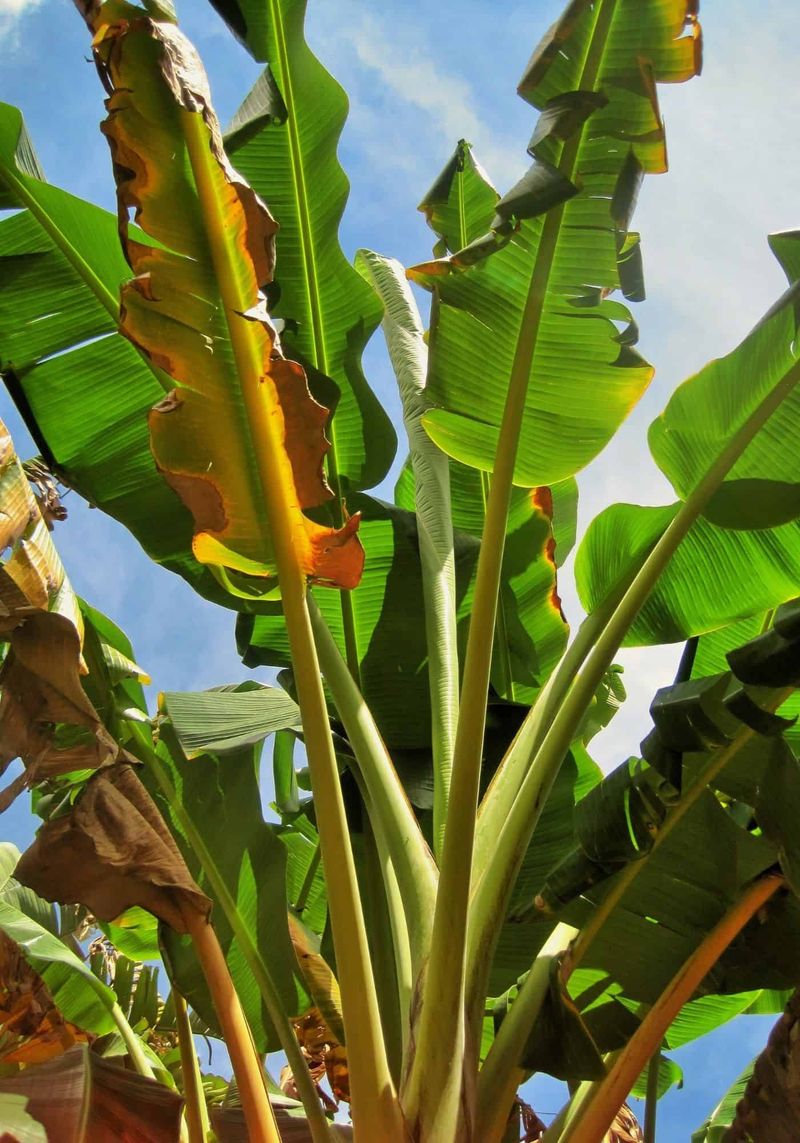
Few plants make water stress as visible as a banana. Those wide, paddle-shaped leaves are built for tropical growing conditions with reliable rainfall.
When moisture runs short, the plant signals it quickly with drooping, curling, and leaf edge browning.
Bananas need steady soil moisture during summer heat, but the solution is not simply watering more. Sandy soil drains fast, and a plant that looks dry may have actually received rain recently but lost that moisture within hours.
Checking soil moisture a few inches below the surface before watering helps avoid both drought stress and waterlogged roots. Waterlogged roots can create rot problems that are harder to fix than dryness.
Rainy-season weather in this state can be deceptive. Afternoon storms may deliver a burst of rain that runs off before soaking in, leaving the root zone drier than it appears.
Containers dry out even faster, and a banana in a pot on a sunny patio may need water more often than one planted in the ground.
Wilting during the hottest part of the afternoon does not always mean the plant is dangerously dry. Some wilting in peak afternoon heat is a normal short-term response.
Check the soil in the morning before temperatures climb. If the top few inches are dry, water slowly and deeply to encourage moisture to reach the root zone rather than running off the surface.
4. Mulch Helps Banana Roots Stay Cooler And Steadier
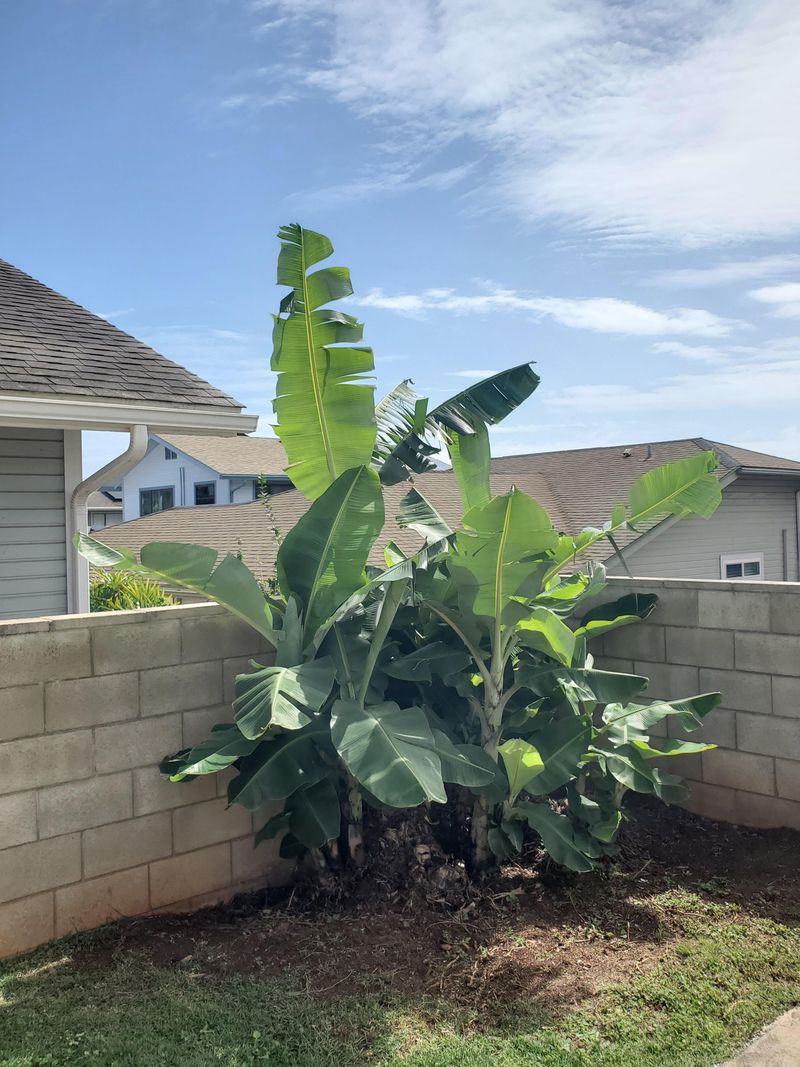
A dry sandy root zone around a banana plant is one of the most straightforward problems to address, and mulch is one of the most practical tools for doing it.
A moderate layer of organic mulch, roughly two to three inches, can reduce soil temperature swings and slow moisture evaporation.
It also creates a more stable environment for the shallow feeder roots that bananas rely on.
Wood chips, pine bark, and similar organic materials work well around banana clumps in home landscapes. As the material breaks down, it also contributes organic matter to sandy soil, which has naturally low water-holding capacity.
Refreshing mulch in bare spots before peak heat arrives gives the root zone better protection through the hottest months.
One mistake worth avoiding is piling mulch directly against the pseudostem. Wet mulch pressed against the base can trap moisture and encourage rot at the crown, which is a much more serious problem than a scorched leaf.
Keep mulch a few inches away from the pseudostem while still covering the root zone generously.
Mulch supports recovery and steady growth, but it will not fix a banana planted in an unsuitable spot or one already dealing with root rot or poor drainage. Think of it as a supportive tool rather than a solution on its own.
Combined with appropriate watering and a good planting site, mulch makes a real difference in how well bananas handle summer stress in Florida.
5. Do Not Cut The Pseudostem Too Soon
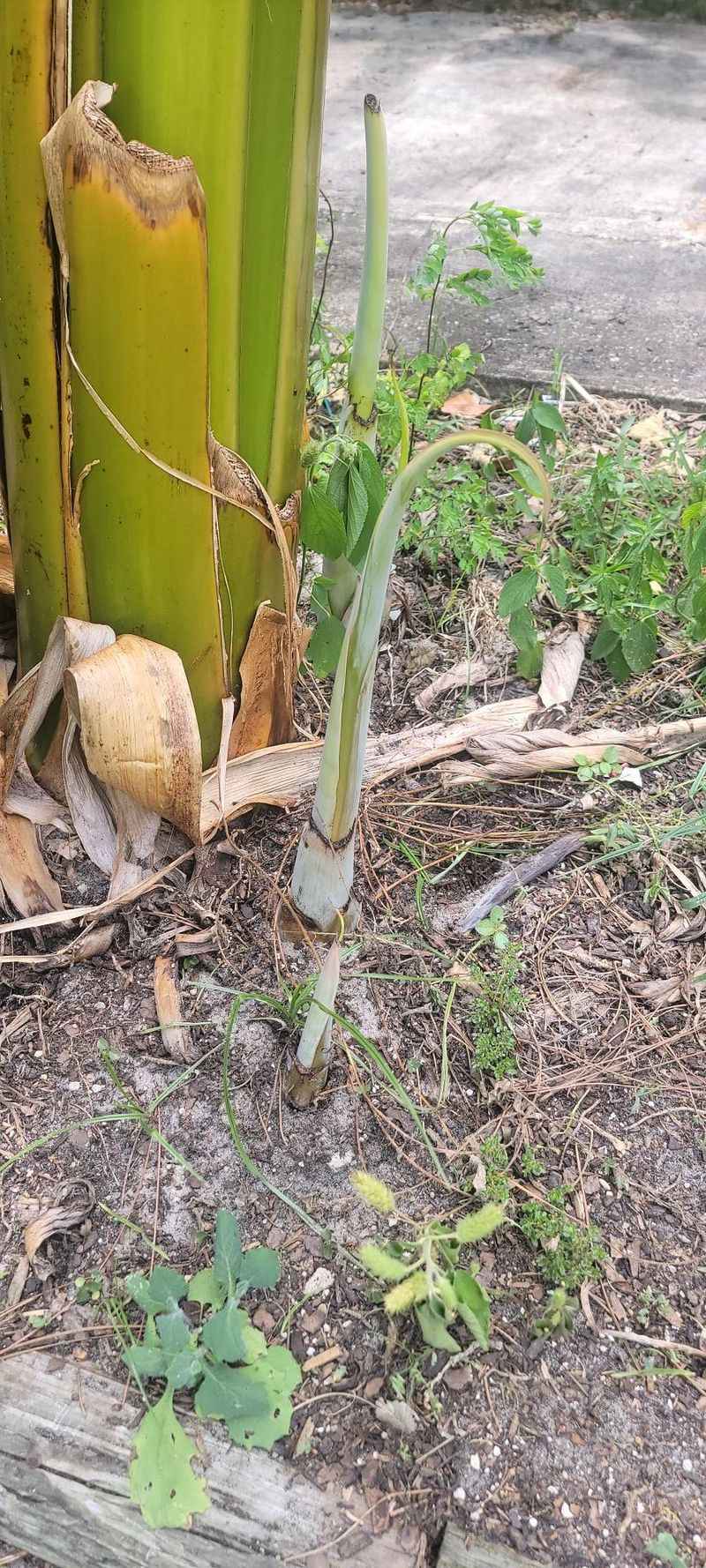
Reaching for pruning shears after a week of heat damage is a natural reaction, but cutting a still-firm pseudostem too early can do more harm than good. The pseudostem of a banana plant is not a trunk in the way a tree has one.
It is a tightly wrapped column of leaf bases that stores water and energy and supports the emergence of new leaves from the center.
Brown or tattered outer leaves can be trimmed away once they are fully withered and hanging badly. Removing them reduces weight, improves airflow, and makes it easier to monitor what is happening at the plant’s center.
However, cutting the pseudostem itself down to the ground should not be a first response to cosmetic leaf damage.
The key distinction is between surface damage and structural failure. A pseudostem that still feels firm and solid when you press it gently is still functional.
Green inner tissue visible at a cut edge is an encouraging sign. A pseudostem that has gone soft, is collapsing, or smells foul is a different situation entirely.
That tissue may need to be removed to prevent rot from spreading to the corm.
New growth emerges from the center of the pseudostem, so protecting that central growing point matters. Cutting too deep or too soon removes the very structure the plant needs to push out a new leaf spear and begin the recovery process.
6. Pause Fertilizer Until Growth Looks Stable Again
Grabbing a bag of fertilizer after noticing heat damage on a banana plant is a common instinct, but it is one of the more counterproductive moves at that moment.
Bananas are genuinely heavy feeders during active, healthy growth, and they respond well to regular feeding under the right conditions.
A plant under heat stress is not in those conditions.
Applying fertilizer to a plant with compromised roots, inadequate soil moisture, or poor drainage can make the situation worse. Fertilizer salts in dry soil can draw moisture away from roots rather than supporting them.
If drainage is poor and the root zone is already saturated from recent storms, adding fertilizer gives the plant something it cannot process. The plant is still struggling to manage basic functions.
Waiting until the plant shows signs of stability makes more sense. A banana that is hydrated, pushing fresh growth, and not showing signs of rot or severe wilting is in a position to use nutrients productively.
At that point, follow guidance from UF/IFAS Extension on fertilizer timing, rates, and formulations for bananas in home landscapes. That gives the best foundation for feeding decisions.
Rushing fertilizer as a rescue method can also contribute to nutrient runoff in sandy soil, which creates water quality concerns in addition to plant stress. Patience here is not passive.
Letting the plant stabilize before feeding is an active, informed choice that supports long-term recovery rather than short-term reaction.
7. Watch For Pests And Rot After Heat Stress
A banana plant weakened by heat stress becomes more vulnerable to secondary problems, and that window after extreme heat is when careful observation pays off.
Fungal issues, rot, and certain pests can move in more easily when a plant’s normal defenses are compromised.
Water stress, damaged tissue, or sudden heavy rain following a dry spell can all weaken those defenses.
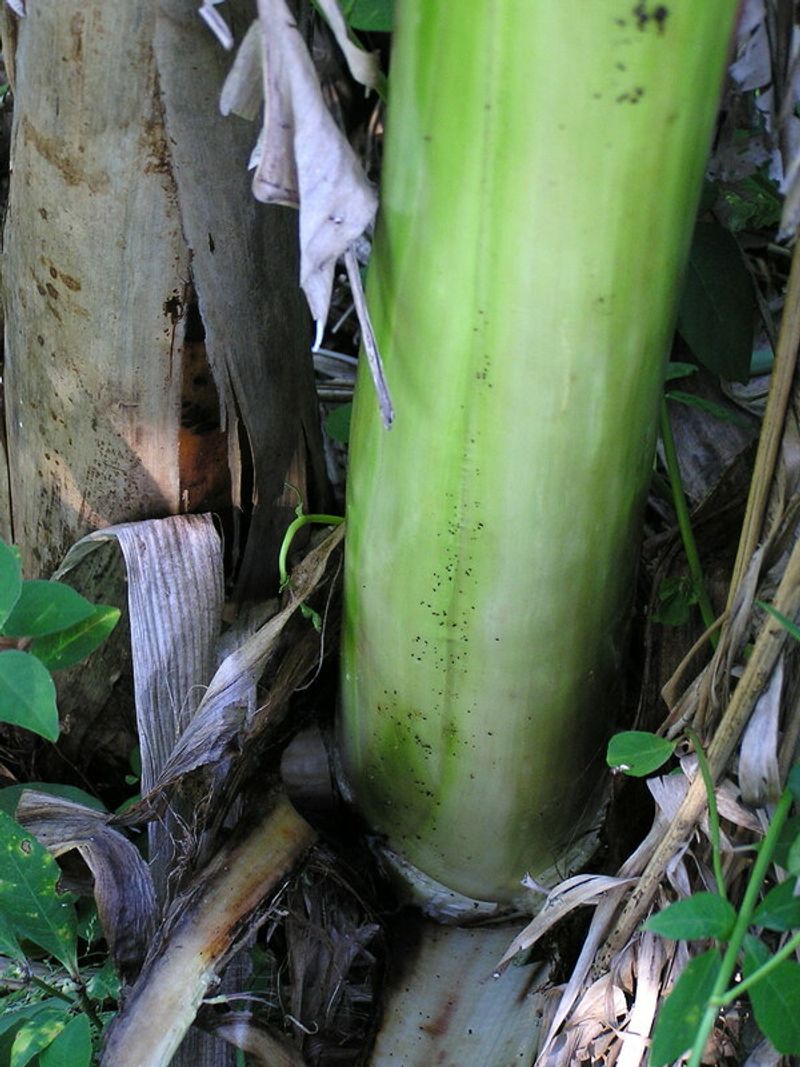
Checking the pseudostem base is one of the first things to do after a heat event. Soft, discolored, or mushy tissue at the crown or lower pseudostem can indicate rot that needs attention before it reaches the corm.
Leaf bases where moisture collects are also worth inspecting, especially after standing water or prolonged wet conditions follow a dry stretch.
Turning over leaves and looking at the undersides can reveal pest activity that is easier to manage when caught early. If something looks unusual on the plant or in the soil around the clump, do not move plant material or tools to other banana plants.
Wait until you have a clearer picture of what is happening. Spreading unidentified disease or pest pressure to healthy plants creates a larger problem.
Avoid applying broad pesticide or fungicide treatments without proper identification of the issue. Misidentified problems treated with the wrong product can harm beneficial organisms and delay real recovery.
County Extension offices can help identify specific pest or disease concerns and recommend appropriate responses based on confirmed findings rather than guesswork.
8. New Growth Tells You Whether The Plant Is Recovering
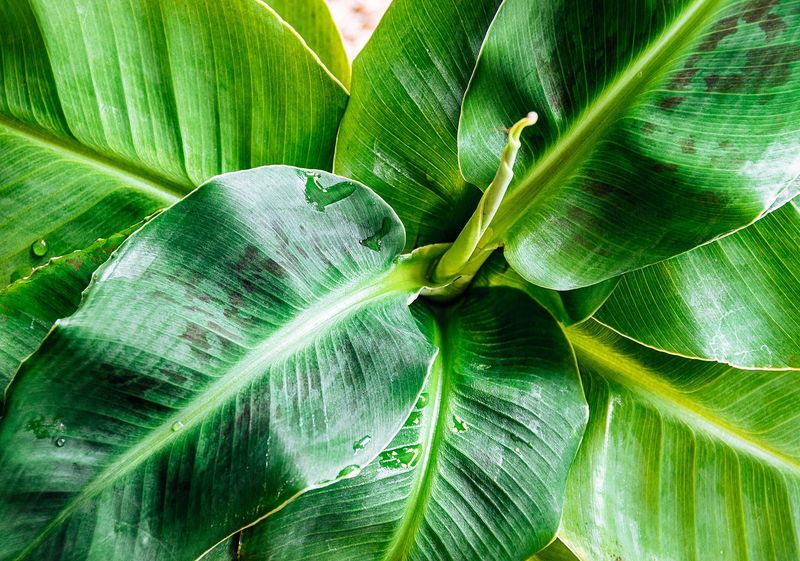
After days or weeks of watching a banana plant sit still with brown leaves, a new center leaf pushing up from the pseudostem is encouraging. It is one of the clearest recovery signs a Florida gardener can see.
That emerging spear, sometimes called the flag leaf, is a clear signal that the growing point at the heart of the pseudostem is still active. It also shows that the corm below has enough energy to support new growth.
Other positive signs include a pseudostem that remains firm when pressed and inner tissue that shows green when a small cut is made. New suckers emerging at the base of the clump are also a good sign.
Suckers indicate that the corm is producing new growth points, which is a healthy response in a recovering plant. Steady leaf production after the first new leaf emerges suggests the plant is moving back toward normal function.
Not every heat-stressed plant will reach this point. A pseudostem that has gone completely soft may not be able to recover.
The same is true for a foul-smelling corm, dark mushy tissue, or a plant that collapses repeatedly despite appropriate care. Being honest about those signs matters, both for the individual plant and for the health of other bananas nearby.
Recovery depends on cultivar, plant age, root health, corm condition, soil moisture, drainage quality, heat intensity, wind exposure, and follow-up care. Watching for new growth remains the most reliable indicator of where things actually stand.