7 Beautiful Flowers That Can Thrive In Your North Carolina Backyard For Over 20 Years
Perennial gardening is one of the most satisfying long-term investments a North Carolina homeowner can make in their outdoor space.
Unlike annuals, perennial plants return reliably each year, deepening their roots and growing more beautiful and established over time to create a completely different relationship with a garden.
North Carolina’s climate is genuinely well suited to a range of long-lived flowering perennials that reach their full potential over years and decades rather than months.
The seven flowers covered here are not just long-lived in ideal conditions. They are proven performers in the specific heat, humidity, and soil conditions that North Carolina gardens actually deliver across a full growing season.
1. Herbaceous Peonies
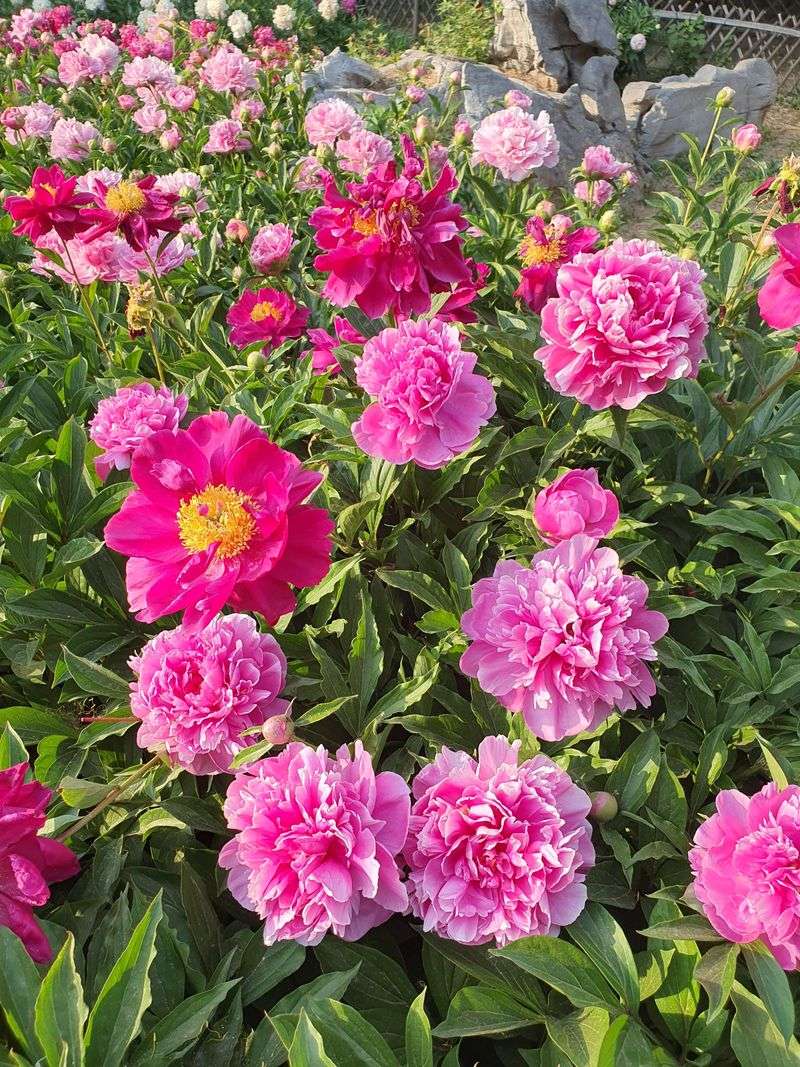
Few garden flowers carry the kind of legacy that herbaceous peonies do. There are gardeners in North Carolina who still tend clumps their grandparents planted, and those plants bloom just as beautifully today as they did back then.
That kind of staying power is rare, and it makes peonies one of the most rewarding choices you can make for a permanent garden bed.
Peonies thrive best in the cooler regions of North Carolina, particularly the Mountains and parts of the Piedmont, where winters are cold enough to meet their chill requirements.
In warmer areas closer to the coast, look for low-chill varieties that are bred to perform with less cold exposure.
Either way, choosing the right variety for your climate is the first step toward long-term success.
Proper planting makes a huge difference with peonies. Plant them in fertile, well-drained soil away from tree roots, and make sure the eyes, which are the small pink buds on the roots, sit no more than one to two inches below the soil surface.
Plant them too deep and they may never bloom well. Good air circulation around the plants also helps reduce common fungal issues that can affect the foliage in humid summers.
Patience is part of the deal with peonies. They can take two to three years to settle in and produce their best blooms.
Once established, though, they ask for very little. A light fertilizing in spring, some support for heavy flower heads, and cleanup in fall is really all they need.
The payoff, those enormous fragrant blooms every late spring, is absolutely worth the wait.
2. Daylilies
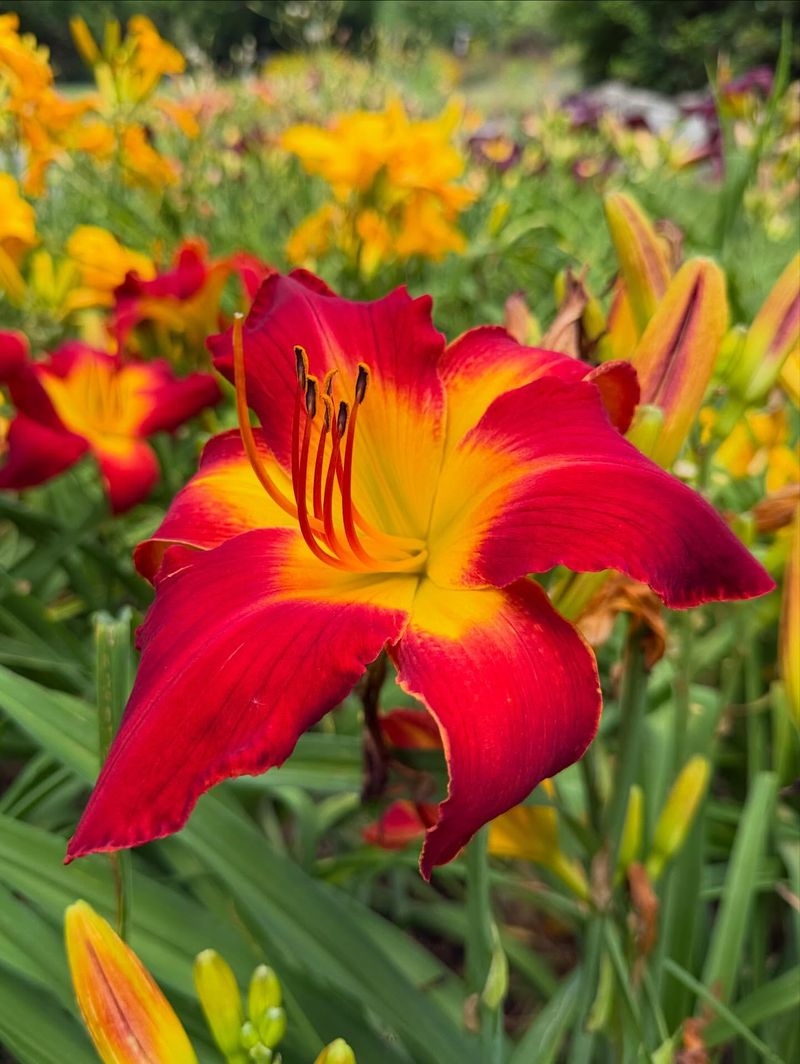
Daylilies have earned their reputation as one of the most forgiving flowers a gardener can grow. They tolerate heat, humidity, drought, clay soil, and neglect better than almost anything else in the perennial world.
Once a clump gets established in your yard, it tends to just keep going, spreading slowly and blooming reliably year after year without much fuss from you.
Each individual daylily flower lasts only a single day, which sounds like a downside until you see a mature clump in full swing.
A well-established plant produces dozens of buds on each stem, and a large clump can have many stems going at once.
Plant a mix of early, midseason, late, and reblooming varieties and you can stretch your daylily season from late spring all the way into early fall. That kind of extended color is hard to beat in a low-maintenance garden.
Your North Carolina Garden Changes Every Week. Your Plan Should Too.
Gardening in North Carolina changes quickly throughout the season. Every Friday you’ll receive a simple weekly plan showing exactly what to plant, prune, fertilize, harvest, and protect so you never miss the right timing.
Daylilies come in an enormous range of colors, from soft pastels to bold reds and deep purples, so finding ones that suit your style is easy and fun.
They grow well in full sun to light shade and adapt to many soil types as long as drainage is decent.
Dividing clumps every four to five years keeps them blooming at their peak and gives you more plants to spread around the yard.
Two things worth knowing before you plant: deer find daylilies quite tasty, so if deer pressure is high in your area, some protection may be needed.
Also, daylilies are toxic to cats, so households with outdoor cats should plant them in spots that are not easily accessible to pets.
3. Blue False Indigo
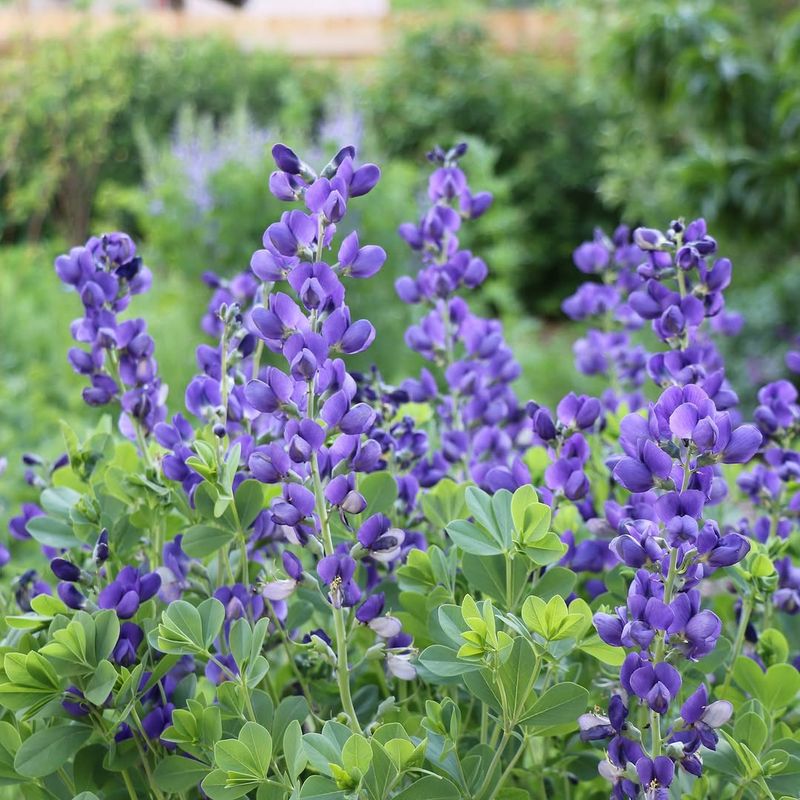
Blue false indigo, known botanically as Baptisia australis, is the kind of plant that rewards patience and punishes impatience. In its first couple of years, it grows slowly and modestly, giving little hint of what it will eventually become.
By year three or four, though, a well-placed Baptisia starts to reveal its true character, sending up bold spikes of deep blue-purple flowers in late spring that look stunning against its blue-green foliage.
What makes Baptisia such a long-term garden asset is its deep taproot. That root system anchors the plant firmly, pulls moisture from well below the surface, and allows the plant to handle drought conditions that would stress most other perennials.
Once established, blue false indigo is remarkably self-sufficient and rarely needs watering, fertilizing, or any significant attention. It even tolerates poor or dry soil, which makes it useful in spots where other plants struggle.
The trade-off for all that toughness is that Baptisia strongly dislikes being moved. Its taproot does not transplant well, and disturbing an established plant can set it back significantly or cause it to fail entirely.
Choosing the right permanent location before you plant is genuinely important here. Give it full sun to light shade, good drainage, and plenty of room to spread, because a mature clump can reach four feet wide or more.
After the flowers fade, Baptisia develops interesting inflated seed pods that rattle in the breeze and add texture to the late-season garden. Many gardeners leave the pods in place through fall for that extra visual interest.
It is native to much of eastern North America, which also makes it a wonderful choice for supporting local pollinators.
4. Lenten Roses
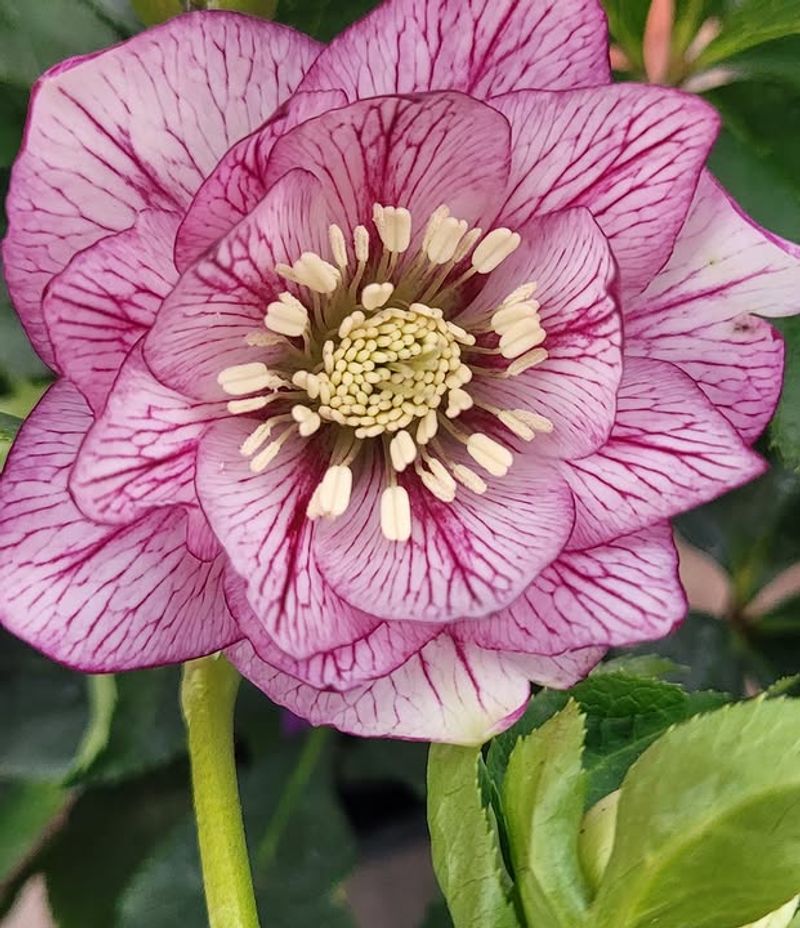
When most of the garden is still brown and quiet in late winter, Lenten roses are already putting on a show.
These tough, elegant plants push up their nodding flowers in February and March, sometimes even earlier, at a time when almost nothing else is blooming.
That alone makes them worth growing, but the fact that they can live for twenty years or more in the right spot makes them truly special.
Lenten roses, also called hellebores, are built for shade. They thrive under deciduous trees where they get bright winter light before the canopy fills in, then settle into comfortable dappled shade through the warmer months.
This makes them ideal for the kind of spots that stump many gardeners, those dry, shady areas under oaks or maples where grass refuses to grow. Rich, well-drained soil with good organic matter gives them the best possible start.
Once established, hellebores are remarkably low maintenance. They hold their evergreen foliage through all four seasons, providing structure and greenery in the garden even when nothing else is active.
Removing old or tattered leaves in late winter just before new growth emerges keeps the plants looking fresh and lets the flowers show off without competition.
They also self-seed freely over time, gradually filling a shaded bed with a colony of blooming plants.
One important note for households with children or pets: all parts of the hellebore plant are toxic if ingested. Planting them in a spot that is not easily accessible to curious kids or animals is a smart precaution.
With thoughtful placement, Lenten roses are one of the most rewarding long-term investments in any North Carolina shade garden.
5. Crinum Lilies
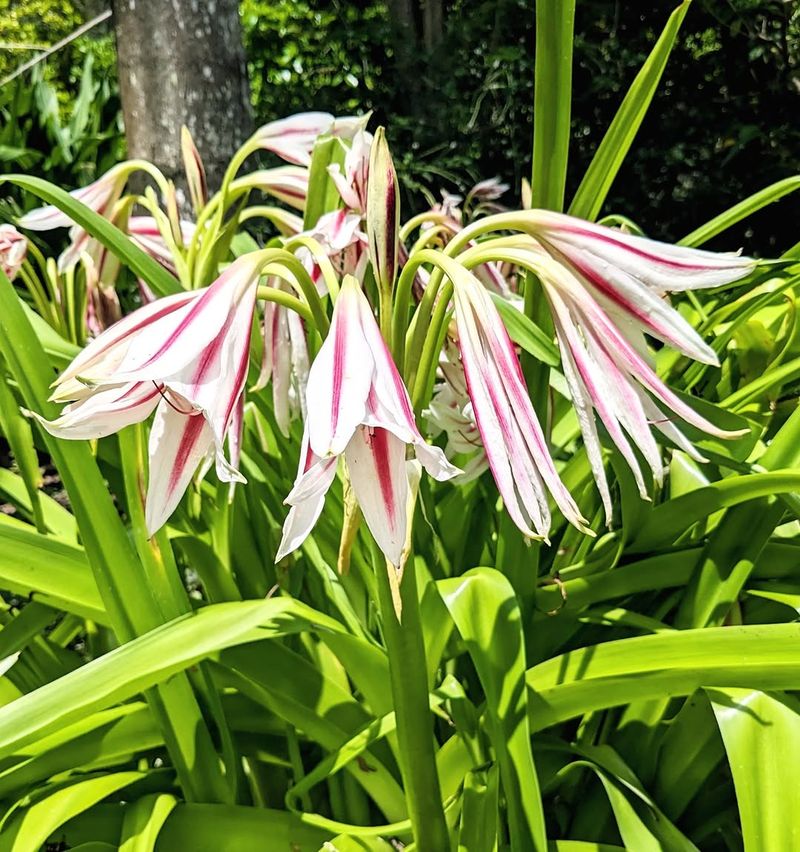
Crinum lilies carry a certain old-fashioned charm that is hard to find in modern garden plants.
Walk through older neighborhoods in the warmer parts of North Carolina and you will often spot them growing beside porches and along fence lines, sometimes in spots where the original gardener planted them generations ago.
That kind of staying power tells you something important about how tough and reliable these plants truly are.
These summer-flowering perennial bulbs produce large, strap-like leaves and tall stems topped with clusters of showy, fragrant flowers in shades of white, pink, and rose.
They bloom from midsummer into fall, filling the garden with color during the hottest, most challenging weeks of the growing season.
The bulbs are large and substantial, and once they settle into a spot they like, they tend to stay there and thrive for many years with minimal intervention.
Patience is genuinely necessary with crinums. Freshly planted bulbs can take a full season or two to establish before they bloom well, and they strongly dislike being disturbed or transplanted.
Choosing the right location from the start matters a great deal. Plant them in full sun to light shade with good drainage and give them room, because mature clumps can grow quite wide over time.
Crinum lilies are best suited to the warmer Piedmont and Coastal Plain regions of North Carolina, where winters are mild enough to let the bulbs stay in the ground year-round without stress.
In the colder mountain areas, extra mulching in late fall can provide helpful insulation. These are plants that reward patience and proper placement with decades of reliable, gorgeous summer blooms.
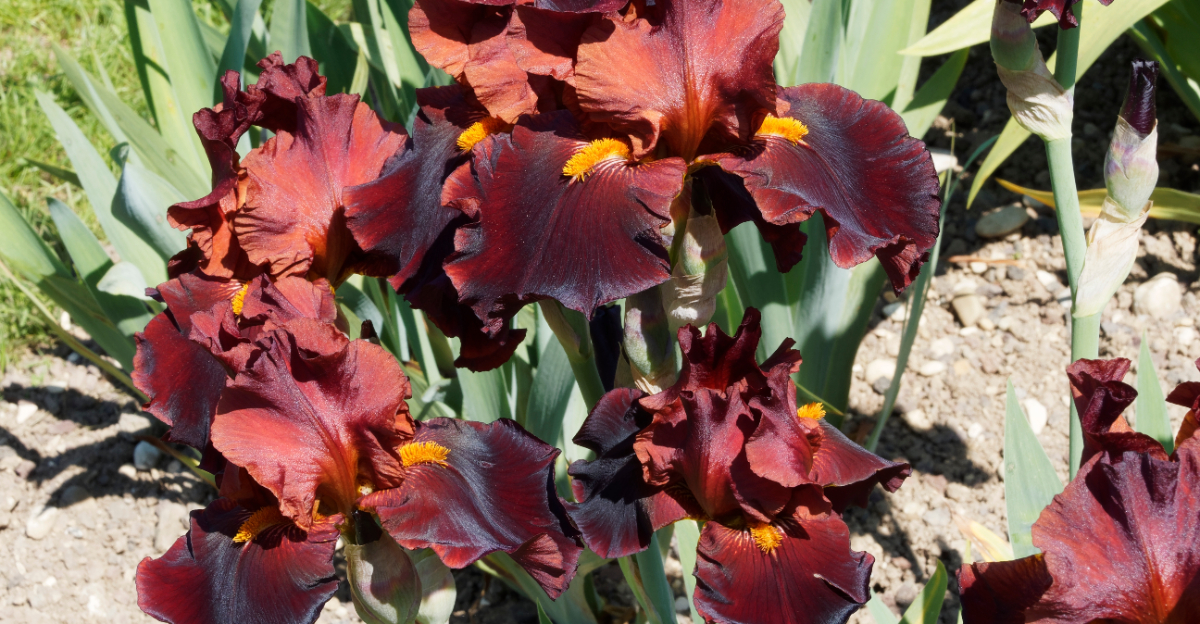
6. Bearded Irises
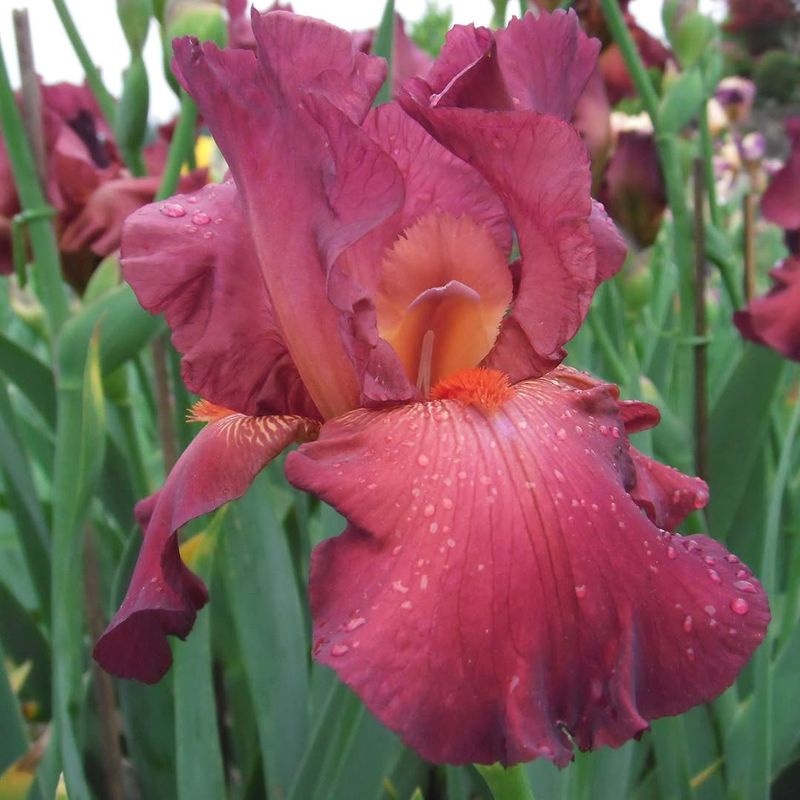
There is something almost theatrical about a bearded iris in full bloom. The ruffled petals, the rich colors, and that sweet, subtle fragrance make it one of the most dramatic spring flowers you can grow.
And when you plant them right and give them what they need, bearded irises can keep performing in your North Carolina garden for many years without ever needing to be replaced.
Sunshine and excellent drainage are the two things bearded irises absolutely cannot live without. They thrive in full sun and need soil that never stays wet for long.
The thick horizontal roots called rhizomes should be planted shallowly, with the tops sitting just at or slightly above the soil surface.
Many first-time growers make the mistake of burying the rhizomes too deeply, which leads to poor blooming and can contribute to rot, especially during North Carolina’s warm, humid summers.
Dividing crowded clumps every three to four years is one of the most important things you can do to keep bearded irises blooming strongly over the long term.
When clumps get too dense, flower production drops noticeably and the plants become more vulnerable to problems.
Late summer, after the foliage has had time to store energy, is the best time to dig, divide, and replant healthy sections with fresh spacing and good drainage.
North Carolina’s humidity can be a challenge for bearded irises, particularly in low-lying or poorly drained spots. Raised beds or sloped sites where water moves away quickly tend to produce the healthiest, longest-lived plants.
With the right site and a little seasonal attention, bearded irises can deliver that stunning spring display reliably for decades and become a true garden signature.
7. Adam’s Needle Yucca
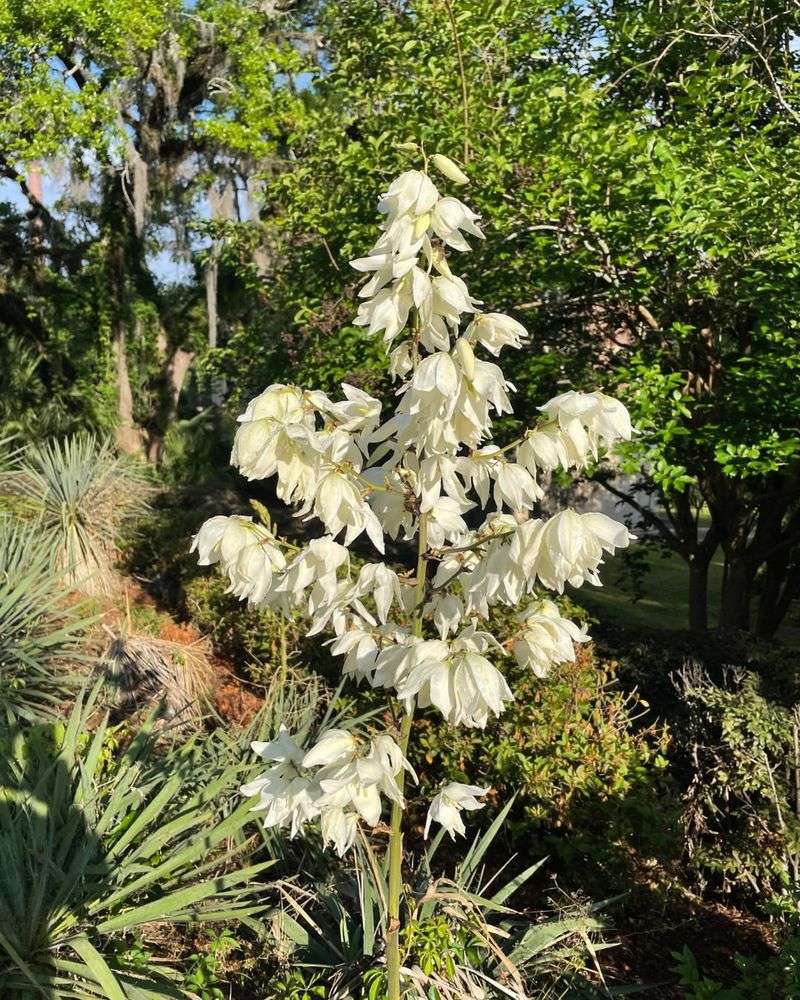
Bold, architectural, and completely unbothered by heat or drought, Adam’s needle yucca is the kind of plant that thrives where others give up.
Native to the southeastern United States, including much of North Carolina, this tough evergreen has been anchoring dry sunny spots in yards and roadsides for centuries.
Its dramatic presence and total self-reliance make it a standout choice for gardeners who want something long-lived with almost zero maintenance requirements.
Every few years, an established yucca sends up a spectacular flower stalk that can reach six to eight feet tall.
The stalk is covered with clusters of creamy white, bell-shaped flowers that bloom in late spring to early summer and attract hummingbirds and night-flying moths that serve as its natural pollinators.
The display is genuinely impressive and completely unexpected from a plant that asks for so little in return. After the stalk finishes, it can be removed at the base without harming the plant.
Adam’s needle yucca grows best in full sun with very well-drained soil. Sandy, rocky, or gravelly spots that would challenge most flowering plants are actually ideal for this species.
It handles drought, poor soil, and coastal conditions with ease, and it stays evergreen through North Carolina winters without any protection needed.
Over time, the original plant forms offsets around its base, gradually building a permanent clump that anchors the landscape beautifully. Placement is worth thinking through carefully before you plant.
The long, stiff leaves have sharp pointed tips that can be genuinely uncomfortable if they brush against bare skin, so keeping yucca away from walkways, play areas, and spots where people pass closely is a smart idea.
In the right location with plenty of space, though, Adam’s needle yucca is one of the most enduring and striking plants you can put in a North Carolina yard.