How To Keep Desert Roses Blooming Longer During Arizona Summer Heat
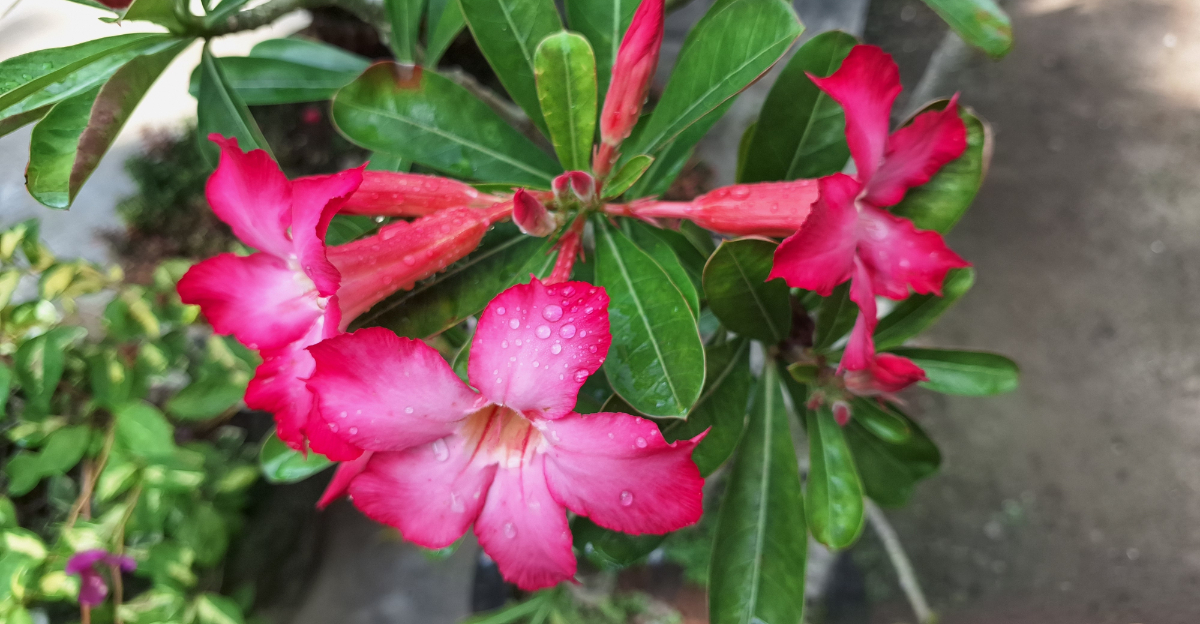
Summer can be tough on flowering plants. A plant that looked fantastic a few weeks ago may suddenly seem slower, with fewer blooms and less color than expected.
When temperatures stay high day after day, many gardeners start wondering if their plants are simply taking a break until cooler weather arrives.
Desert roses handle heat well, but extreme summer conditions can still affect blooming.
Even tough plants can respond differently when temperatures climb and sunlight becomes more intense. Small changes in care can sometimes have a noticeable impact on how long flowering continues.
Arizona gardeners know that summer can be demanding on almost everything growing outdoors. That is why many pay close attention to plants that continue putting on a colorful display through the hottest part of the season.
If your desert rose is one of the highlights of your landscape, a few simple adjustments may help keep those blooms coming for much longer.
1. Full Morning Sun Can Support Continued Blooming
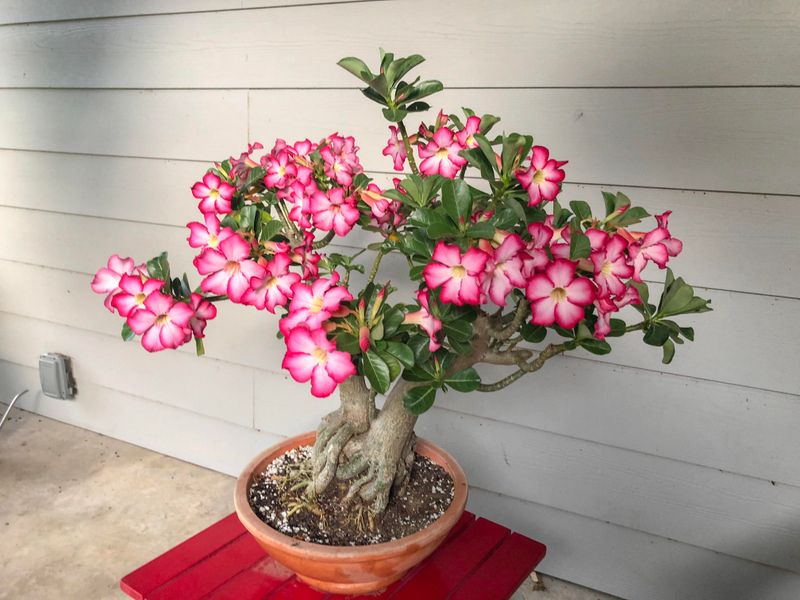
Morning light is where desert roses truly shine. Placing your plant where it gets direct sun from sunrise until around noon gives it the energy it needs to push out new blooms.
After that, letting it ease into shade protects it from the most intense heat of the day.
Sunlight drives the flowering cycle. Without enough of it, buds may form slowly or drop before they even open.
A spot with six to eight hours of morning sun is a solid target for most desert rose varieties.
East-facing spots in your yard tend to work really well. The plant gets strong light early and natural shade later.
Watch your plant closely during the first week in a new location. If leaves start looking washed out or bleached, it may be getting too much direct afternoon exposure.
Rotate potted plants every week or two so all sides get even light. Uneven sun leads to one-sided growth and fewer blooms on the shaded side.
Consistent morning exposure keeps the whole plant producing flowers steadily through the summer months in the desert Southwest.
2. Deep Watering Helps During Extended Heat
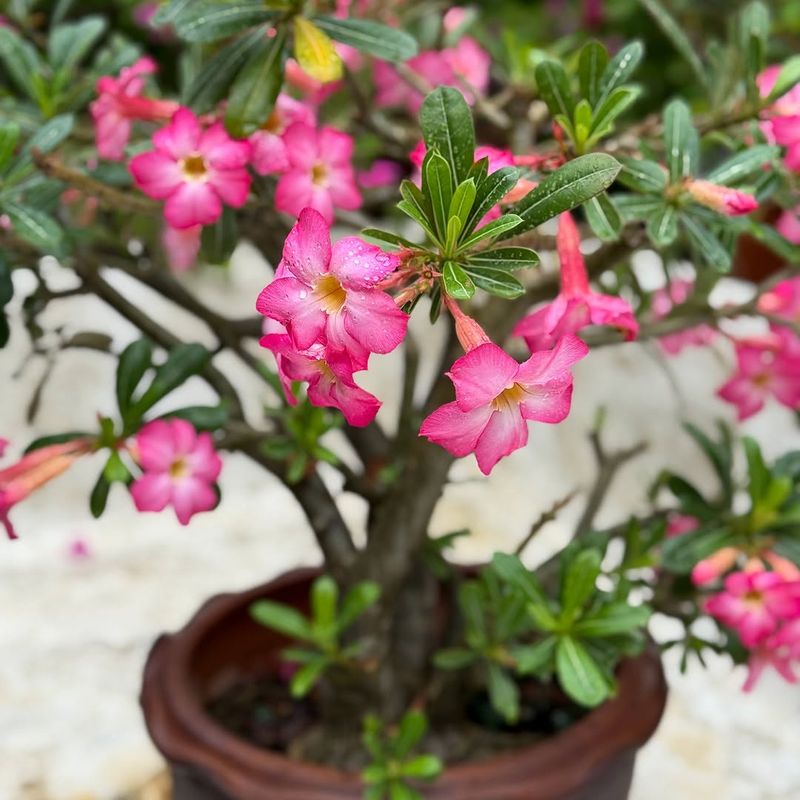
Shallow watering is one of the most common mistakes desert rose growers make. When you only wet the top inch of soil, roots stay close to the surface where heat is most intense.
Deep watering pushes moisture down where roots can actually use it.
During peak summer heat, water slowly and thoroughly until water drains from the bottom of the pot. Let it soak in before watering again.
Roots that reach deeper into the soil are more stable and better equipped to support active blooming.
A slow, steady stream works better than a quick pour. Give the water time to move through the soil rather than rushing off the surface.
Drip irrigation set at the base of the plant is a reliable option for consistent deep watering without overwatering.
Wilting leaves in the early morning, before the sun gets strong, are a sign the plant needs water soon. Wilting in the afternoon heat is normal and not always a red flag.
Your Arizona Garden Changes Every Week. Your Plan Should Too.
Gardening in Arizona changes quickly throughout the season. Every Friday you’ll receive a simple weekly plan showing exactly what to plant, prune, fertilize, harvest, and protect so you never miss the right timing.
Check the soil two inches down before deciding to water. If it still feels slightly damp, hold off another day.
Deep watering done right keeps blooms healthy and roots strong even when temperatures stay high for weeks at a stretch.
3. Fast Draining Soil Can Prevent Root Problems
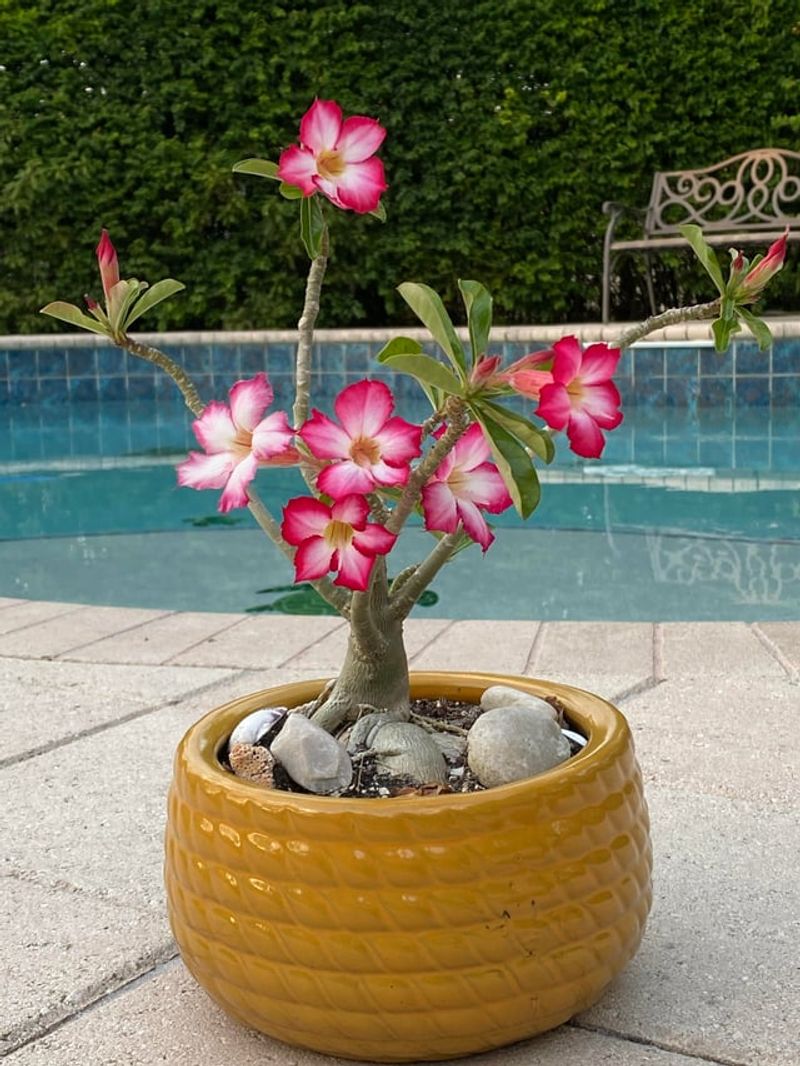
Soggy roots are a serious threat to desert roses. Even one episode of sitting in waterlogged soil can set back a healthy plant for weeks.
Fast-draining soil is not optional for these plants; it is the foundation of everything else you do.
A good mix for desert roses usually combines cactus potting soil with coarse perlite or coarse sand. Roughly half and half works well for most containers.
Avoid regular potting soil on its own. It holds too much moisture and compacts over time, which slows drainage significantly.
Terracotta pots help pull excess moisture away from roots faster than plastic or glazed ceramic. The porous walls allow air and moisture to move through, which keeps the root zone from staying wet too long after watering.
Check your drainage holes regularly. Roots can block them over time.
If water pools on the surface and drains slowly, it may be time to repot or refresh the soil mix. Good drainage also prevents salt buildup from fertilizers, which can stress roots and reduce flowering.
Refreshing the soil every one to two years keeps the texture loose and drainage fast. Healthy roots in well-draining soil give the plant the stable base it needs to keep producing blooms through the hottest months.
4. Spent Flowers Should Be Removed Regularly
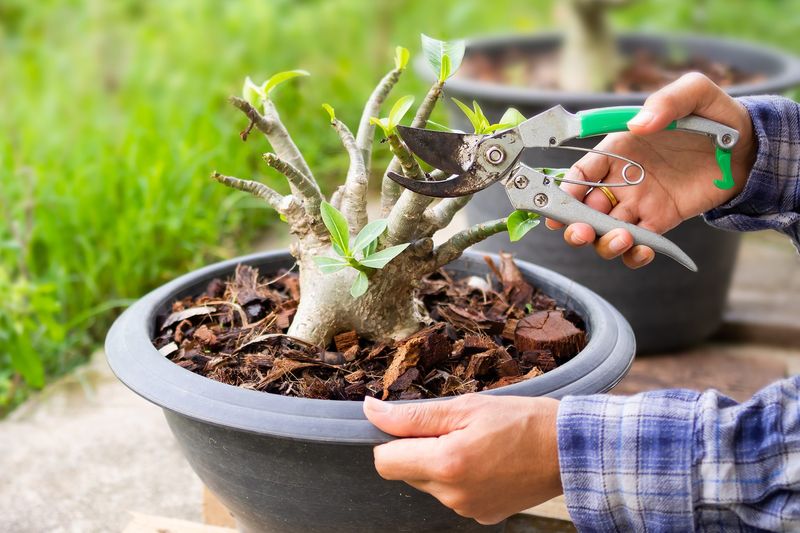
Leaving old blooms on the plant is basically asking it to stop flowering. Once a flower fades, the plant shifts its energy toward producing seeds instead of new buds.
Removing spent flowers redirects that energy right back into blooming.
Use clean, sharp scissors or pruning shears. Cut just below the base of the faded flower, removing the entire bloom and its stem down to the first set of healthy leaves.
Clean cuts heal faster and reduce the risk of infection entering the wound.
Make this a weekly habit during the blooming season. A quick walk around the plant every few days to snip off fading blooms keeps the cycle going.
Neglecting this for even two weeks can noticeably slow new flower production.
Watch for swollen seed pods forming behind the flower. If you spot them early and remove them before they develop, the plant stays in full bloom mode longer.
Seed pods are not harmful, but they do signal the plant to slow down flowering. In a hot desert climate where the blooming window can already feel short, keeping the plant focused on flowers rather than seeds makes a big difference.
Regular deadheading is one of the simplest and most effective tools for extending your desert rose bloom season all the way through summer.
5. Allow Soil To Dry Between Deep Waterings
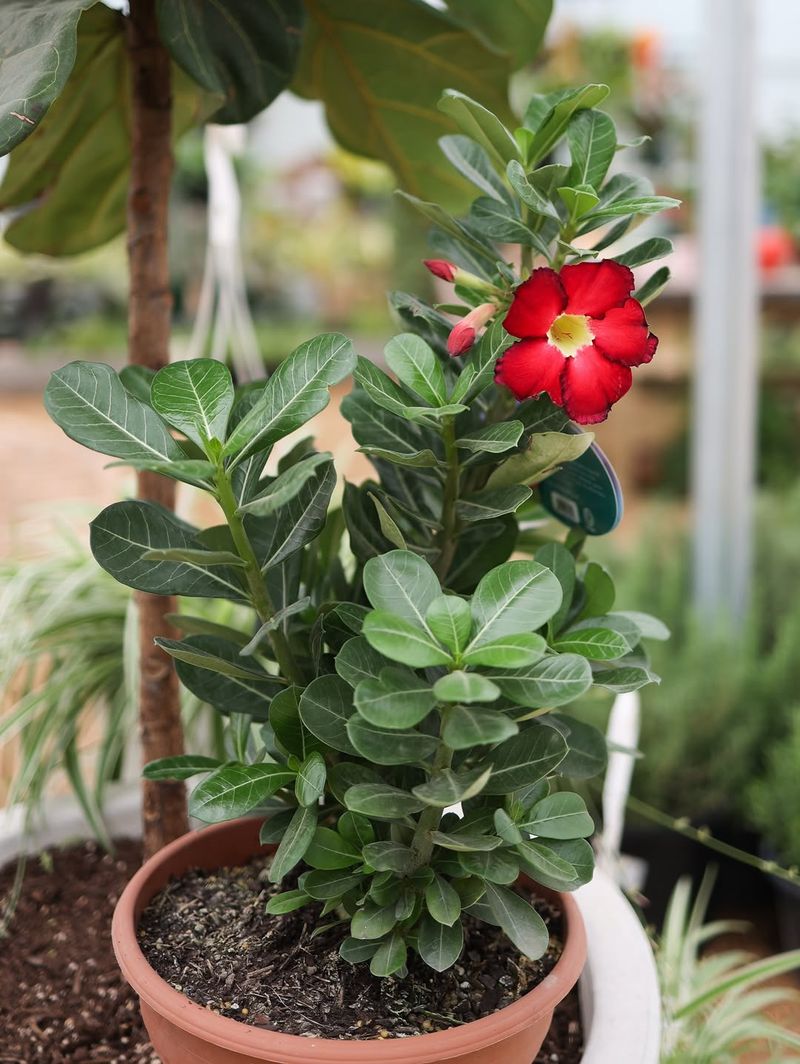
Overwatering is just as damaging as drought for desert roses. Roots need oxygen to stay healthy, and soil that stays wet all the time pushes oxygen out.
Letting the soil dry between waterings keeps roots breathing and the plant actively growing.
Wait until the top two inches of soil feel completely dry before watering again. In extreme summer heat, that might mean watering every three to five days.
In slightly cooler stretches, once a week may be enough. The schedule changes with the weather, so check the soil rather than following a fixed calendar.
Yellowing leaves that feel soft and mushy often point to too much water. Leaves that are dry and slightly crispy lean toward not enough.
Learning to read these signs takes a little practice but makes managing your plant much easier over time.
Pots in full sun dry out faster than those in partial shade. Larger pots hold moisture longer than small ones.
These variables matter when you are figuring out your watering rhythm. Keeping a simple log of when you water and what the soil felt like beforehand helps spot patterns quickly.
Desert roses are built for dry conditions. Respecting that natural preference by allowing proper dry periods between waterings leads to stronger roots, more consistent blooms, and a healthier plant overall.
6. Damaged Growth Can Be Trimmed As Needed
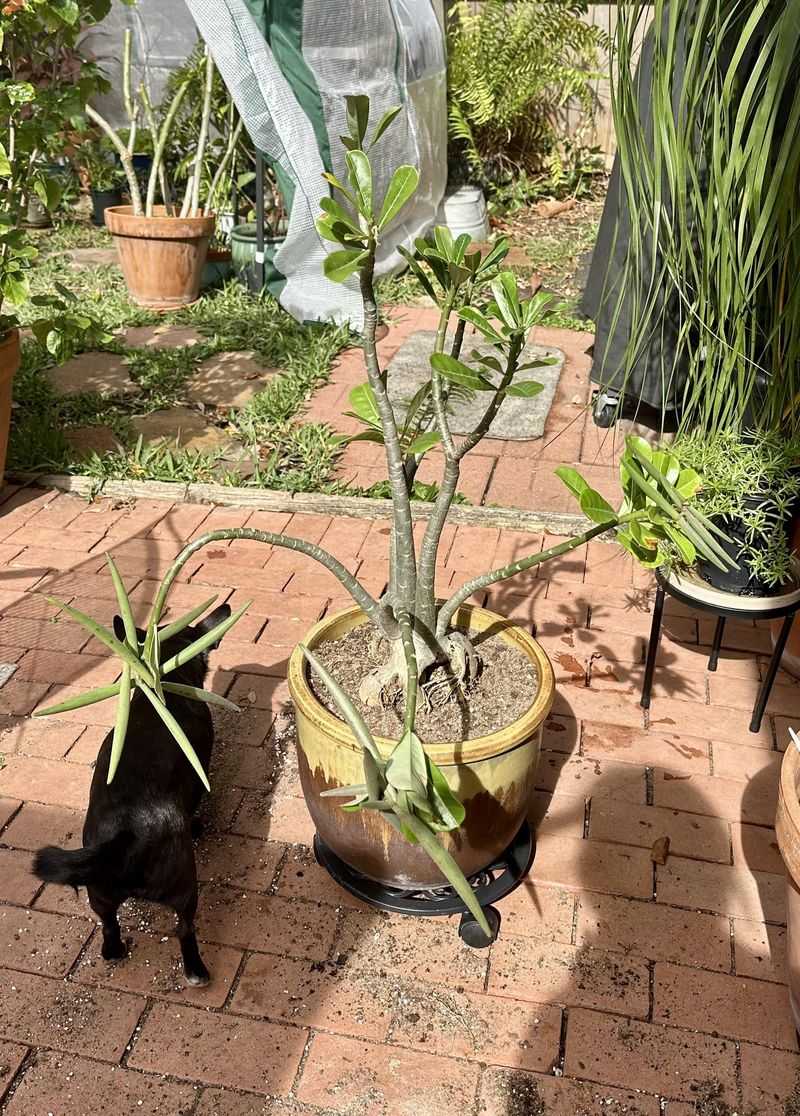
Crispy, brown, or shriveled stems are not doing the plant any favors. Leaving damaged growth in place wastes resources the plant could be using to produce new blooms.
Trimming it away is a straightforward way to help the plant redirect its energy.
Use clean, sharp pruning shears every time. Wipe the blades between cuts if you are working through multiple stems.
Dirty tools can spread problems from one part of the plant to another without you realizing it.
Cut damaged stems back to healthy tissue. Look for a clean, pale green interior when you make the cut.
Brown or hollow centers mean the damage goes further than it looks. Keep cutting back until you reach healthy growth, then stop.
Avoid heavy pruning during peak heat waves. Major cuts stress the plant at a time when it is already working hard to survive high temperatures.
Save significant shaping for cooler mornings or wait until the most intense heat passes. Light, targeted removal of clearly damaged growth is fine at any time.
After trimming, give the plant a deep watering to help it recover. New growth usually appears within a few weeks.
7. Afternoon Shade Can Reduce Heat Stress
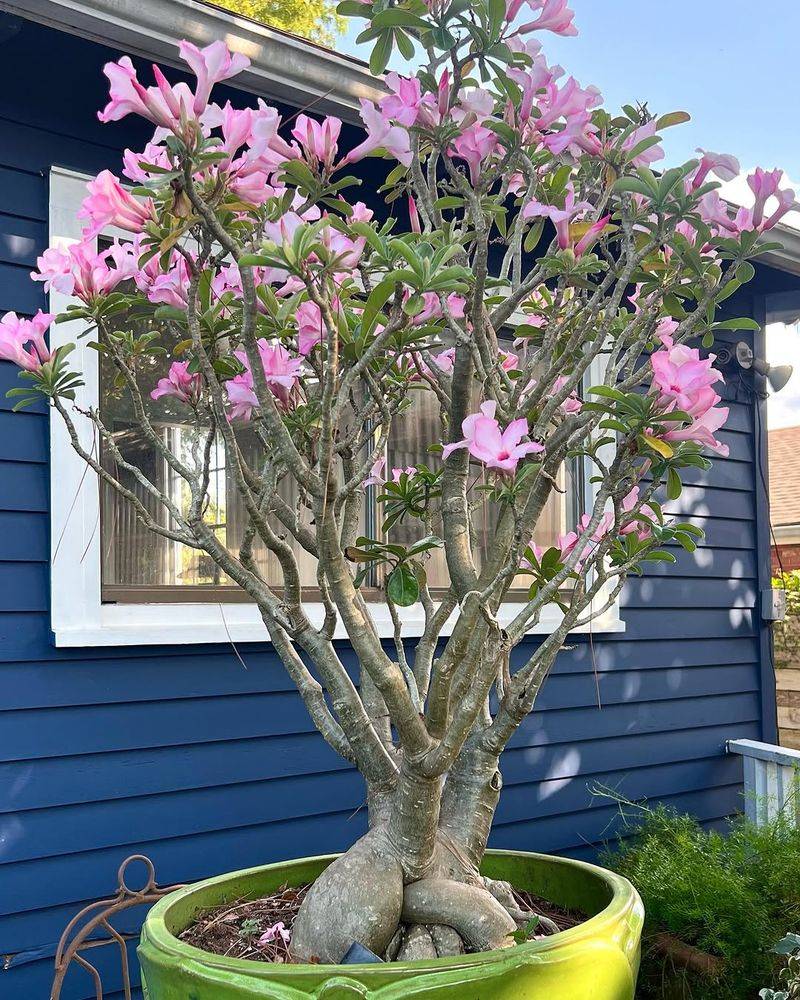
Afternoon sun in the desert Southwest is brutal. Temperatures between 2 p.m. and 5 p.m. can scorch even heat-tolerant plants.
Giving your desert rose some protection during these hours can mean the difference between a plant that keeps blooming and one that stalls out completely.
A shade cloth rated at 30 to 40 percent works well for potted plants. It cuts the harshest light without blocking the brightness the plant needs to stay healthy.
Solid shade from a wall or patio cover also works if the plant still gets strong morning sun first.
Potted desert roses have a big advantage here because you can move them. Rolling or carrying a pot into afternoon shade and back out for morning sun is a simple routine that pays off in more consistent blooming.
In-ground plants need a more permanent solution like a shade sail or nearby structure.
Watch for sunscald on leaves and petals. It shows up as bleached or papery patches, usually on the side facing west.
Moving the plant slightly or adding overhead protection usually stops the damage from spreading. Even a modest amount of afternoon shade can lower the soil temperature by several degrees.
Cooler roots stay more active, which supports steady bud development through the hottest stretches of the Arizona summer season.