7 Fast-Growing Evergreen Trees That Give North Carolina Yards Year-Round Privacy
Your backyard should belong to you. Not to the neighbor who just installed a two-story deck. Not to the road that runs six feet from your fence line. Not to whoever decided to build that new subdivision behind your property.
North Carolina actually gives you a serious advantage here: the climate is warm enough, wet enough, and long enough to grow some of the fastest, densest screening trees in the entire country.
The problem is that most people either pick the wrong tree, plant it in the wrong spot, or space everything too close and wonder why the screen never fills in properly.
Luckily, seven trees solve this problem better than anything else available in North Carolina yards.
Some grow five feet a year. Some handle soggy corners other trees refuse to touch. One smells like a Southern summer and blocks sightlines from the ground to above your roofline.
The right choice depends on your yard. Let’s figure out which one that is.
1. Green Giant Arborvitae Builds Quick Screening
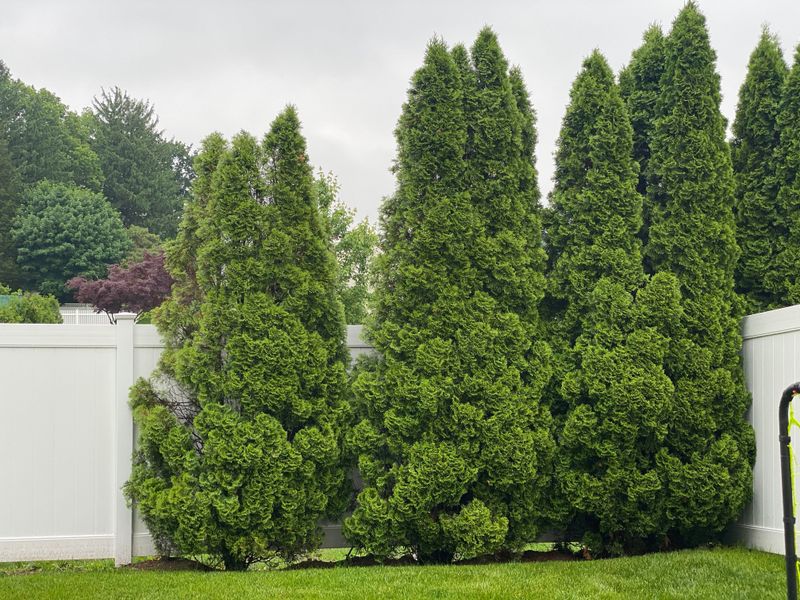
Your neighbor just installed a two-story deck, and now your backyard feels like a fishbowl. Green Giant Arborvitae is the tree most North Carolina homeowners reach for first, and that instinct is correct.
It grows three to five feet per year under good conditions, making it one of the fastest privacy solutions available in the region.
Mature Green Giants typically reach 50 to 60 feet tall and 12 to 20 feet wide. That mature width is where most homeowners go wrong.
Planting them five feet apart feels smart when they are small, but it creates a crowded, stressed row within a decade. Spacing at least 8 to 12 feet apart gives you a healthy, long-lasting screen instead of a future problem.
Green Giant thrives in full sun and adapts to a wide range of well-drained soils across North Carolina’s Piedmont and Coastal Plain.
It handles heat and humidity far better than Leyland cypress, which has become notorious for bagworm damage and canker issues in the Southeast.
Green Giant holds its rich, dark green color through winter without browning, which is not a small thing when January arrives and you still want coverage.
Water newly planted trees deeply and consistently through the first two growing seasons. Once established, they are surprisingly drought tolerant.
Avoid planting in low spots where water pools after rain. A well-spaced row of Green Giants creates a dense, layered wall of green that blocks sightlines from ground level to well above rooftop height.
For sheer speed and reliability, nothing on this list competes with it.
2. Eastern Red Cedar Gives Native Cover
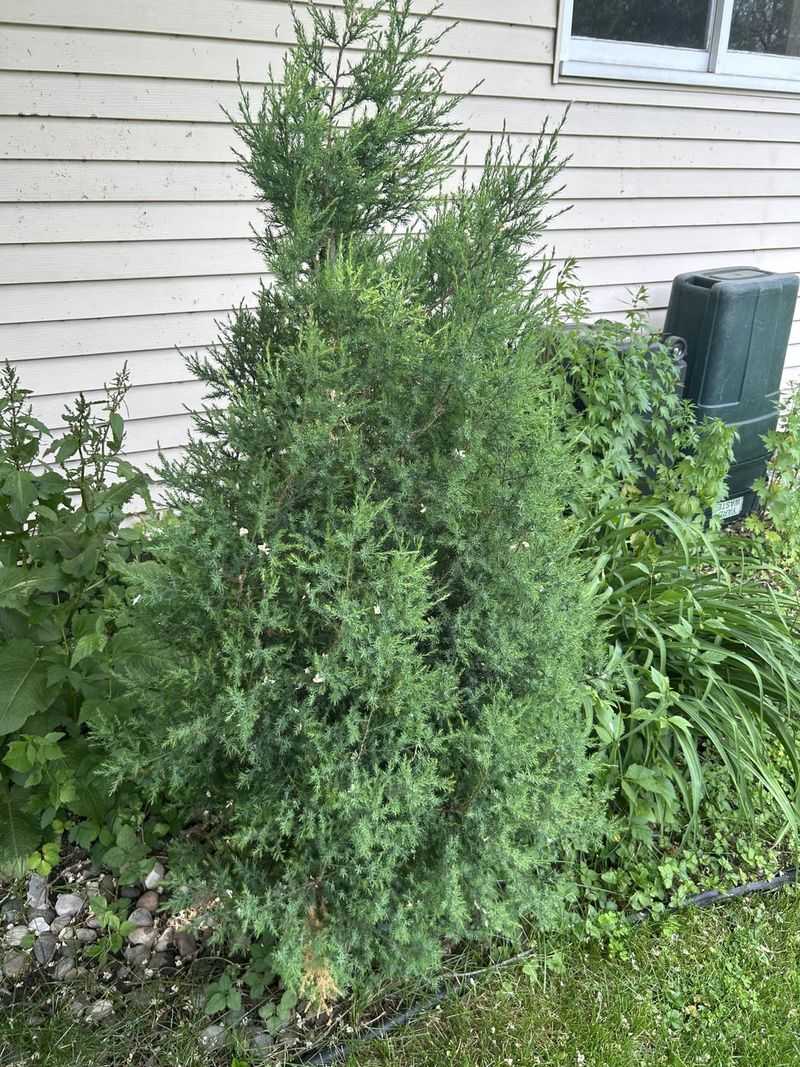
Long before nurseries started selling imported screening trees, Eastern Red Cedar was already doing the job across North Carolina’s fields and fence lines.
This native evergreen has been shaping windbreaks and property boundaries for centuries, and it remains one of the most rugged, low-maintenance options a homeowner can choose.
Eastern Red Cedar grows one to two feet per year and reaches 40 to 50 feet tall at maturity, with a spread of 8 to 20 feet depending on the cultivar and conditions.
Your North Carolina Garden Changes Every Week. Your Plan Should Too.
Gardening in North Carolina changes quickly throughout the season. Every Friday you’ll receive a simple weekly plan showing exactly what to plant, prune, fertilize, harvest, and protect so you never miss the right timing.
Its dense, dark green to blue-green foliage holds year-round, delivering reliable screening even through the coldest months.
The natural pyramidal shape requires very little pruning to maintain a tidy appearance, which is a genuinely underrated quality in a screening tree.
One of its biggest advantages is adaptability. Eastern Red Cedar tolerates poor, rocky, or clay-heavy soils that would stress most other trees.
It handles drought, wind, and full sun without complaint, making it a smart choice for exposed sites or difficult slopes.
Birds, including cedar waxwings and mockingbirds, flock to its small blue berry-like cones for food and shelter throughout the year. The screen feeds wildlife and blocks the neighbor at the same time. That is a solid return on investment.
Space trees 8 to 10 feet apart for a solid privacy row. One note worth knowing upfront: Eastern Red Cedar can host cedar-apple rust, a fungal disease that affects nearby apple and crabapple trees.
If you have apple trees on the property, keep the two species well separated during planning. A little research before digging saves a lot of headaches later.
3. American Holly Adds Evergreen Structure
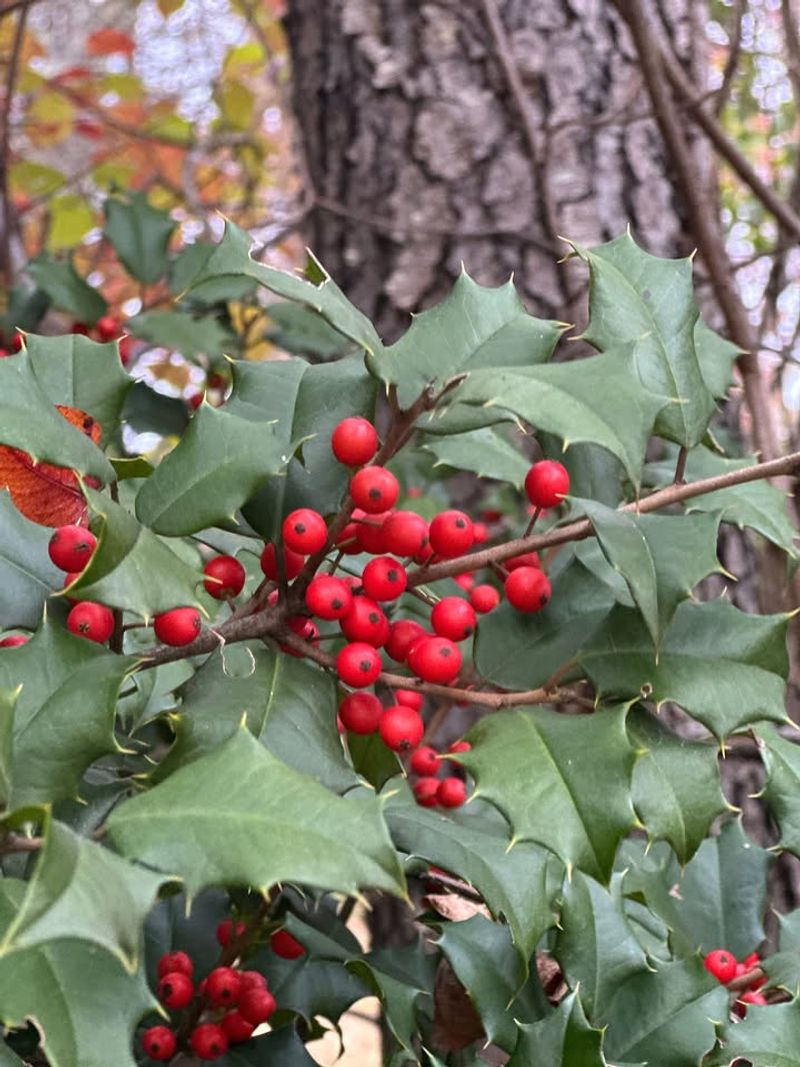
Few trees pull double duty as elegantly as American Holly. Year-round green cover, brilliant red berries through fall and winter, and a bold upright structure that looks polished in almost any landscape.
It is also native to North Carolina, which means it is already well-adapted to the state’s soils, rainfall patterns, and pest pressures. It belongs here, and it acts like it.
American Holly is a broadleaf evergreen, meaning its thick, glossy, spine-tipped leaves stay on the tree through every season.
Mature trees typically reach 40 to 50 feet tall with a spread of 18 to 40 feet. That spread is the detail most homeowners underestimate.
Space them at least 15 feet apart when planting a privacy row so the canopy can develop fully without fighting for room.
Growth runs one to two feet per year, so it is not the fastest option on this list. What it lacks in speed it makes up for in longevity and structure.
A well-established row of American Hollies creates a layered, multi-textured screen that looks far more natural than a uniform wall of arborvitae.
More than 18 bird species depend on holly berries as a winter food source, so the screen doubles as a wildlife corridor through the coldest months.
Plant in full sun to partial shade and well-drained soil. To get berries, you need at least one male tree planted near your female trees.
Most nurseries sell both, so ask before you buy. Showing up without asking and planting an all-female row is the kind of mistake that produces a berry-free screen and a confusing conversation with the nursery a few years later.
4. Southern Magnolia Creates Big Privacy
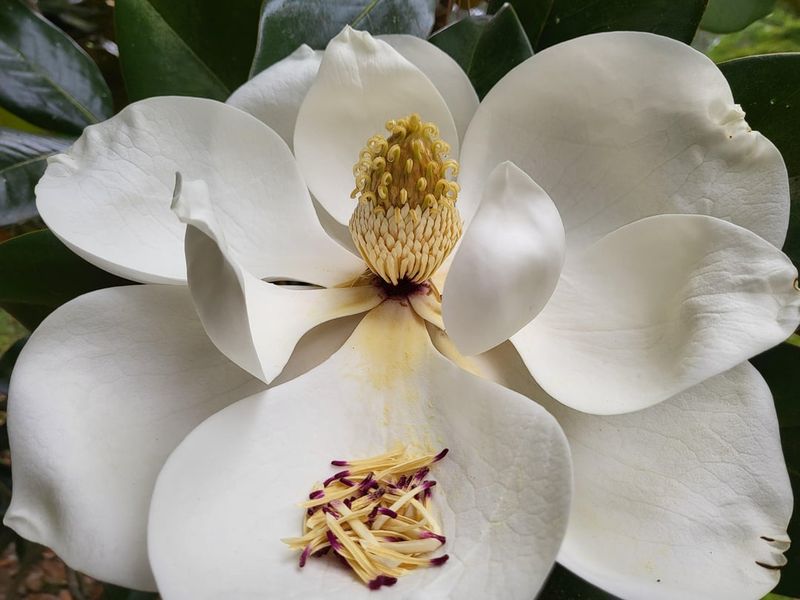
Before planting a Southern Magnolia near your property line, check the mature size. Actually, go look it up right now.
Mature Southern Magnolias commonly reach 60 to 80 feet tall with canopy spreads of 30 to 40 feet. Some specimens push even wider in ideal conditions. This is a big tree in the most genuine sense of the phrase.
That size is exactly what makes it such a powerful privacy screen.
The thick, leathery, dark green leaves stay on the tree year-round in most of North Carolina, creating an imposing wall of foliage that blocks sightlines, reduces wind, and softens road noise.
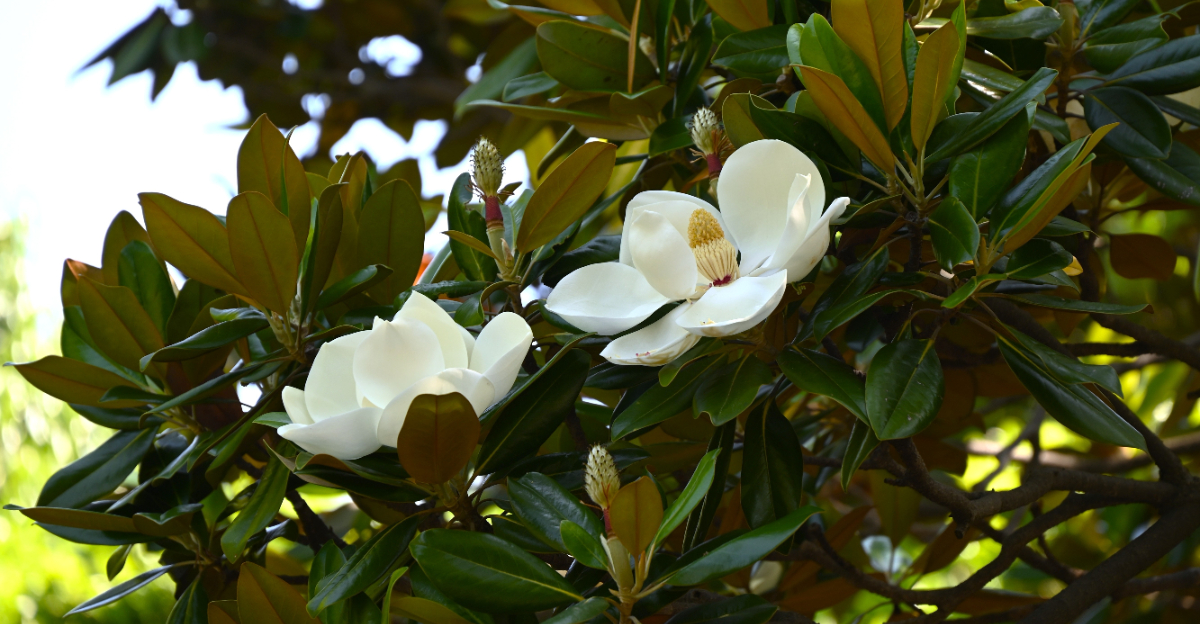
In late spring and early summer, enormous white flowers up to 12 inches across open across the canopy, filling the yard with a rich, lemony fragrance that is unmistakably Southern. The privacy screen comes with a seasonal perfume bonus that no other tree on this list can match.
Southern Magnolia grows one to two feet per year and performs best in full sun with moist, well-drained, slightly acidic soil.
It handles the heavy clay soils common across the Piedmont better than many trees, though good drainage still matters. Avoid planting too close to driveways, sidewalks, or structures.
The surface roots are aggressive and the leaf litter is persistent, so plan for ongoing cleanup beneath the canopy. Beautiful trees are not always tidy tenants.
Space trees at least 30 feet apart and 20 feet from structures to give the canopy full room to develop. For a statement screen that combines scale, structure, and year-round presence, nothing on this list comes close.
5. Sweetbay Magnolia Works In Moist Spots
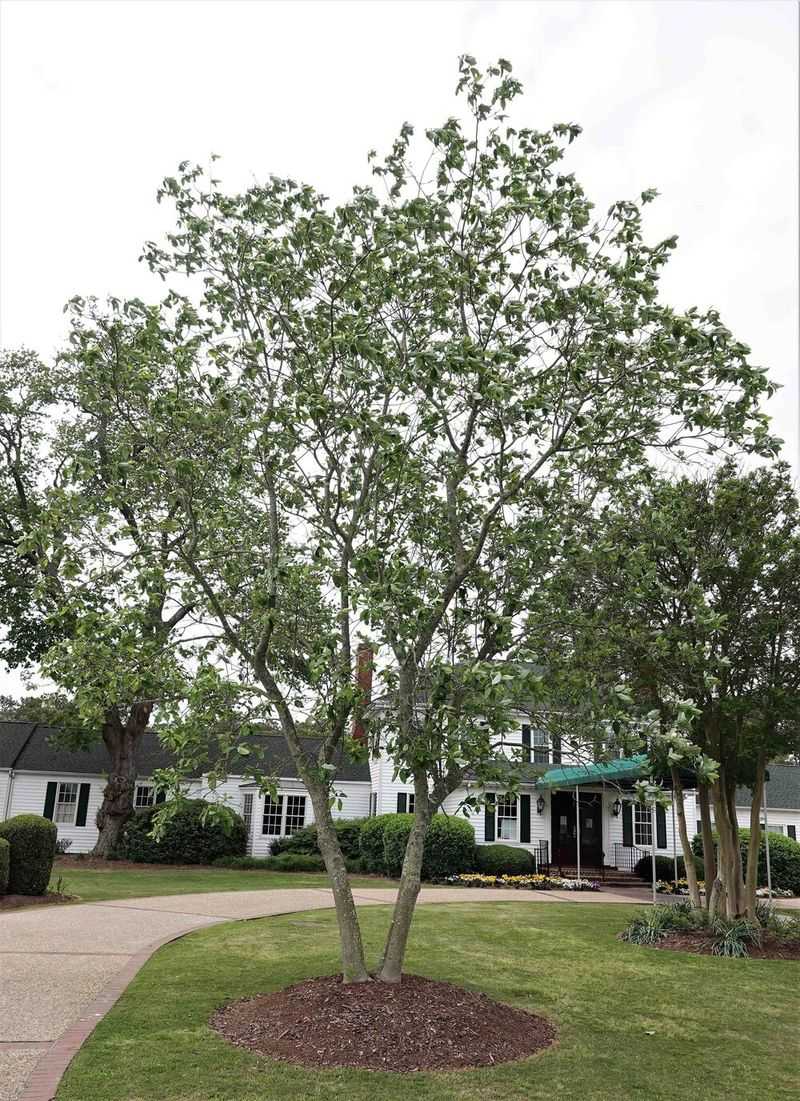
That soggy low corner of your yard where nothing seems to want to grow is not a problem. It is a planting opportunity, and Sweetbay Magnolia is the tree that turns it into an asset.
Sweetbay Magnolia is one of the few screening trees that actively thrives in moist to wet soil conditions, making it the right call for drainage problem areas that other trees simply cannot handle.
In the warmer parts of North Carolina, including the Coastal Plain and much of the Piedmont, it behaves as a true evergreen, holding its attractive silvery-green leaves through the winter.
In the cooler Mountain region it tends to act semi-evergreen, dropping foliage in cold winters before leafing out again in spring. Either way, meaningful coverage for most of the year.
Sweetbay Magnolia typically grows 10 to 35 feet tall, making it considerably more manageable than its larger Southern cousin.
It often develops a graceful multi-stem form that gives it a soft, layered appearance well-suited to naturalistic screening.
Growth runs one to two feet per year under good conditions. The creamy white flowers that appear in late spring and continue sporadically through summer carry a light, sweet vanilla-like fragrance.
Plant in full sun to partial shade and space trees 10 to 15 feet apart for a relaxed but effective privacy row. This tree rewards patience with a screen that looks genuinely beautiful rather than purely functional.
For a wet corner that has frustrated you for years, that outcome is worth waiting for.
6. Carolina Cherry Laurel Fills Space Fast
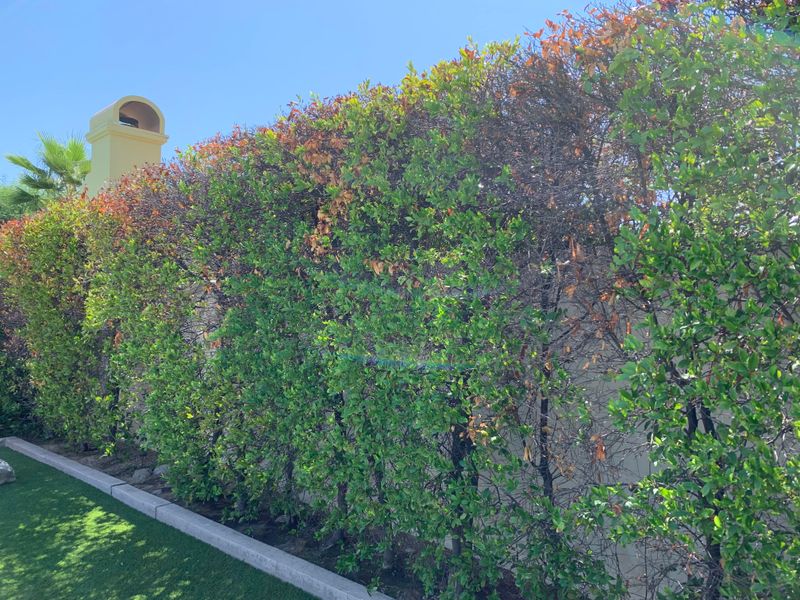
Give Carolina Cherry Laurel the right conditions and it will fill a gap in your privacy screen faster than almost any other broadleaf evergreen available in North Carolina.
This is a bold, assertive plant with an appetite for space, and understanding that upfront is the key to using it well rather than spending years trying to manage what it has already become.
Carolina Cherry Laurel grows two to three feet per year and reaches 18 to 40 feet tall at maturity, with a spread that often matches or exceeds its height.
The large, glossy, dark green leaves create a dense, layered canopy that blocks sightlines effectively at multiple levels.
White flower spikes appear in spring, followed by small dark fruit that birds find irresistible, adding wildlife value to its practical screening role.
Placement matters enormously with this tree. Its aggressive root system and fast spread mean it needs room to grow without bumping into structures, fences, or utility lines.
Plant at least 10 to 15 feet from any structure and space individual trees 10 feet apart to allow full canopy development.
It performs best in full sun to partial shade and adapts to a wide range of soil types, including the clay-heavy soils common across the Piedmont.
One fair warning: Cherry Laurel seeds spread readily, and the plant can naturalize aggressively in some areas. Monitor seedlings around your planting and pull them early if spread becomes a concern.
Managed thoughtfully, though, it is one of the fastest, most lush privacy screens available. Fast-growing plants respect people who plan ahead. Carolina Cherry Laurel especially.
7. Cryptomeria Gives Tall Soft Screening
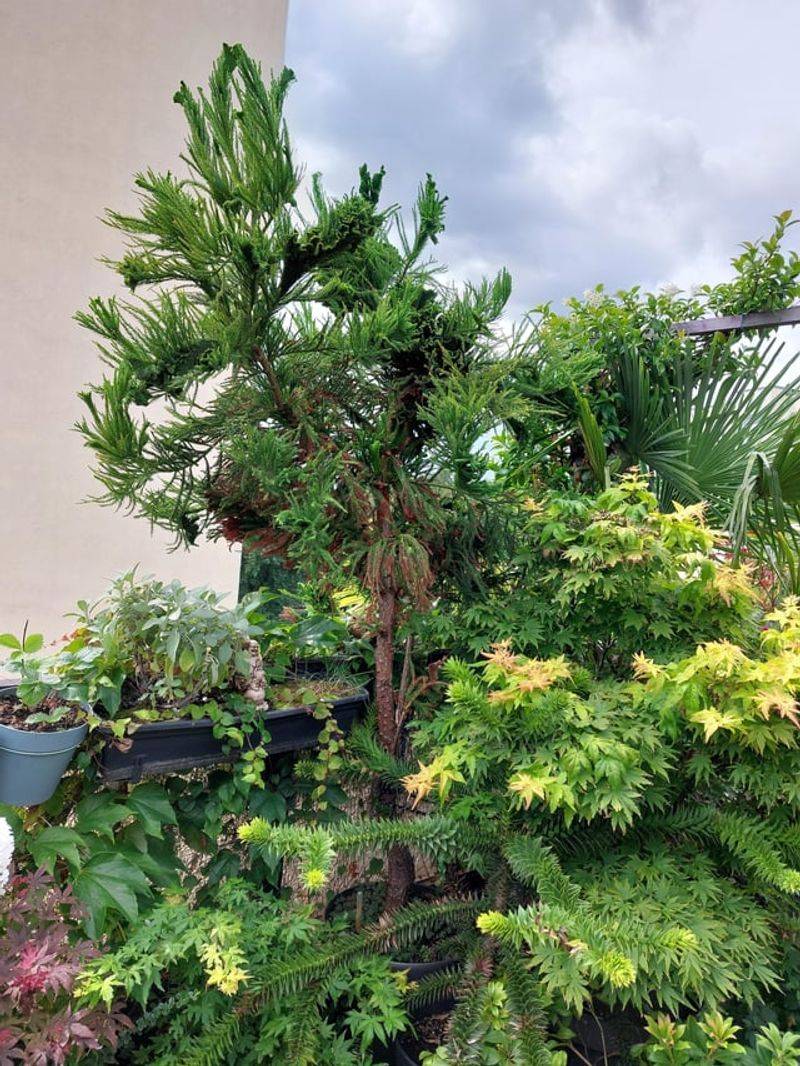
Not every privacy screen needs to look like a wall of dark green soldiers marching along a fence line.
Cryptomeria brings something different: tall, graceful, feathery texture that softens a landscape while still building serious screening height.
Sometimes called Japanese Cedar, Cryptomeria has become a genuinely reliable performer in North Carolina’s climate over the past few decades.
It grows two to three feet per year under good conditions and reaches 50 to 60 feet tall at maturity with a spread of 20 to 30 feet.
The soft, needle-like foliage holds a rich blue-green color through most of the year. In winter, some cultivars shift to a warm bronze-green tone before returning to green in spring. The screen changes with the seasons without ever losing meaningful coverage.
Cryptomeria performs best in full sun with moist, well-drained, slightly acidic soil.
It handles North Carolina’s summer heat and humidity better than many evergreen conifers, though it appreciates consistent moisture during dry spells, especially in the first two or three growing seasons.
Avoid heavy clay with poor drainage, as wet roots are the primary long-term threat. Space Cryptomeria trees 15 to 20 feet apart to allow full canopy spread at maturity.
Planting too close creates competition for light and air circulation, which leads to thin lower branches and a screen that loses density at exactly the level where you need it most.
Proper spacing from the start is the single best investment you can make in a long-lasting privacy planting. The trees will reward the extra room with a screen that stays full, healthy, and genuinely beautiful for decades.