Why Spotted Lanternflies Are Spreading Through Tennessee, And What You Can Do
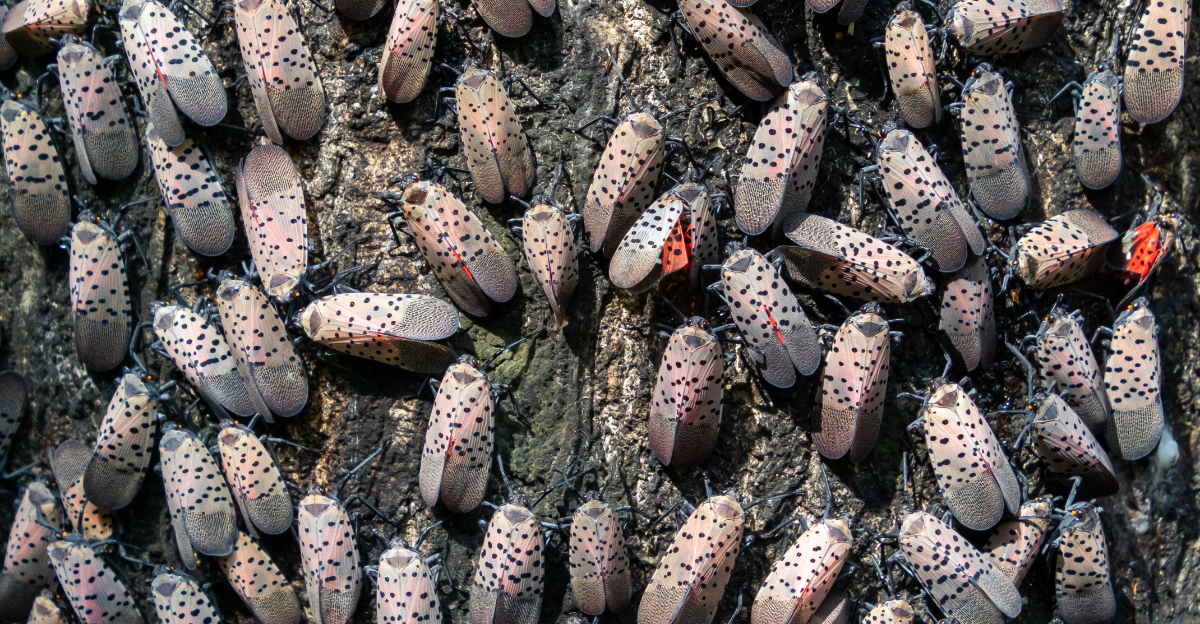
Spotted lanternflies do not sneak in quietly. They show up in swarms, coat tree trunks in sticky residue, and leave behind a trail of stressed, struggling vegetation.
Tennessee gardeners and homeowners are now seeing them firsthand, and the reports are not encouraging. This invasive insect first touched down in Pennsylvania in 2014 after hitchhiking on a stone shipment from Asia.
Since then, it has pushed into dozens of states, and Tennessee is firmly in its path. What makes this pest particularly frustrating is how fast it reproduces and how little it cares about property lines.
Vineyards, orchards, backyard maples, and vegetable beds have all taken hits. The window to push back is still open, but it is closing fast.
A Closer Look At Tennessee’s Spotted Lanternfly Problem

Spotted lanternflies are not just a nuisance. They are a full-blown ecological threat spreading through Tennessee at an alarming pace.
Native to China, India, and Vietnam, these insects hitchhiked to Pennsylvania in 2014 on a shipment of stone. Since then, they have spread to 19 states and the District of Columbia.
Their rapid movement is not accidental. Spotted lanternflies lay egg masses on almost any flat surface, including cars, trailers, outdoor furniture, and firewood.
People unknowingly carry those eggs across county lines and state borders every single day. That is how a bug from Asia ends up in your backyard in Nashville or Knoxville.
Tennessee agriculture officials have confirmed sightings in multiple counties. The problem is growing faster than most residents realize.
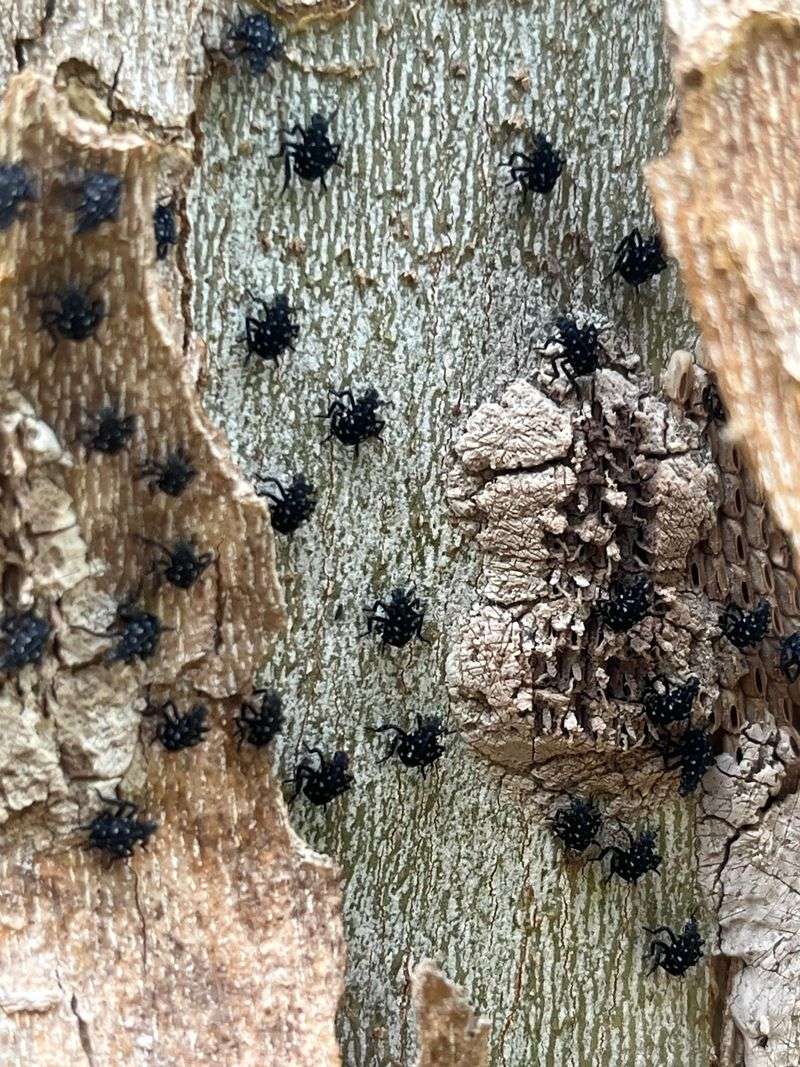
What makes this insect especially tricky is how ordinary it looks in its early stages. Young spotted lanternflies are small, black, and easy to overlook against bark.
Adults, however, are harder to miss. Their wings reveal a bold pattern of red, black, and white that is striking and unmistakable.
Understanding how spotted lanternflies spread is the first step toward slowing them down. Every informed resident becomes a frontline defender for local forests and farms.
The Plants And Trees Most At Risk In Tennessee

Not every plant is equally vulnerable, but the list of at-risk species is long enough to worry any gardener. Spotted lanternflies feed on over 70 plant species, and many of them grow right here in Tennessee.
Grapes top the danger list. Vineyards across the state could face devastating losses if populations go unchecked.
Hops, apples, peaches, and cherries are also prime targets. For backyard growers and commercial orchards alike, that is a serious problem.
Hardwood trees like oak, walnut, and maple are also on the menu. These trees anchor entire ecosystems and losing them could have long-term consequences for local forest health.
Tree of heaven, an invasive tree itself, is the spotted lanternfly’s absolute favorite food. Unfortunately, tree of heaven grows abundantly throughout Tennessee, giving the insect a perfect base camp to thrive and multiply.
When lanternflies feed, they pierce the plant’s tissue and suck out the sap. That feeding weakens the plant and leaves behind a sticky substance called honeydew.
Honeydew coats leaves and branches, inviting mold growth that blocks sunlight. Over time, even a healthy tree can decline rapidly from repeated attacks.
Your Tennessee Garden Changes Every Week. Your Plan Should Too.
Gardening in Tennessee changes quickly throughout the season. Every Friday you’ll receive a simple weekly plan showing exactly what to plant, prune, fertilize, harvest, and protect so you never miss the right timing.
Knowing which plants to watch is genuinely useful. If you grow grapes, fruit trees, or hardwoods, start checking them closely for signs of feeding or egg masses this season.
How To Identify A Spotted Lanternfly At Any Life Stage

Catching this pest early means knowing what to look for at every stage of its life. Spotted lanternflies go through four distinct phases before becoming adults.
In early spring, tiny black nymphs emerge with bold white spots. They are about the size of a pencil eraser and easy to confuse with other insects.
As they grow, the nymphs turn red with white and black markings. At this stage, they are more visible and often found clustered on young plant stems.
Adults appear in late summer, usually between July and December. They measure about an inch long and fold their wings flat against their bodies when resting.
When those wings open, the show begins. The inner wings are a vivid red with black spots, while the outer wings are gray with speckled black dots.
Egg masses are another key thing to recognize. They look like smears of dried mud or putty, usually about an inch long, and can appear on tree bark, rocks, or even car bumpers.
Fresh egg masses have a waxy coating that fades over time. Older ones look more cracked and dry, almost like old chewing gum on a sidewalk.
Learning to spot these stages is genuinely empowering. Once you know the signs, you will start seeing things in your yard that you never noticed before.
The Real Damage Spotted Lanternflies Do To Gardens And Crops
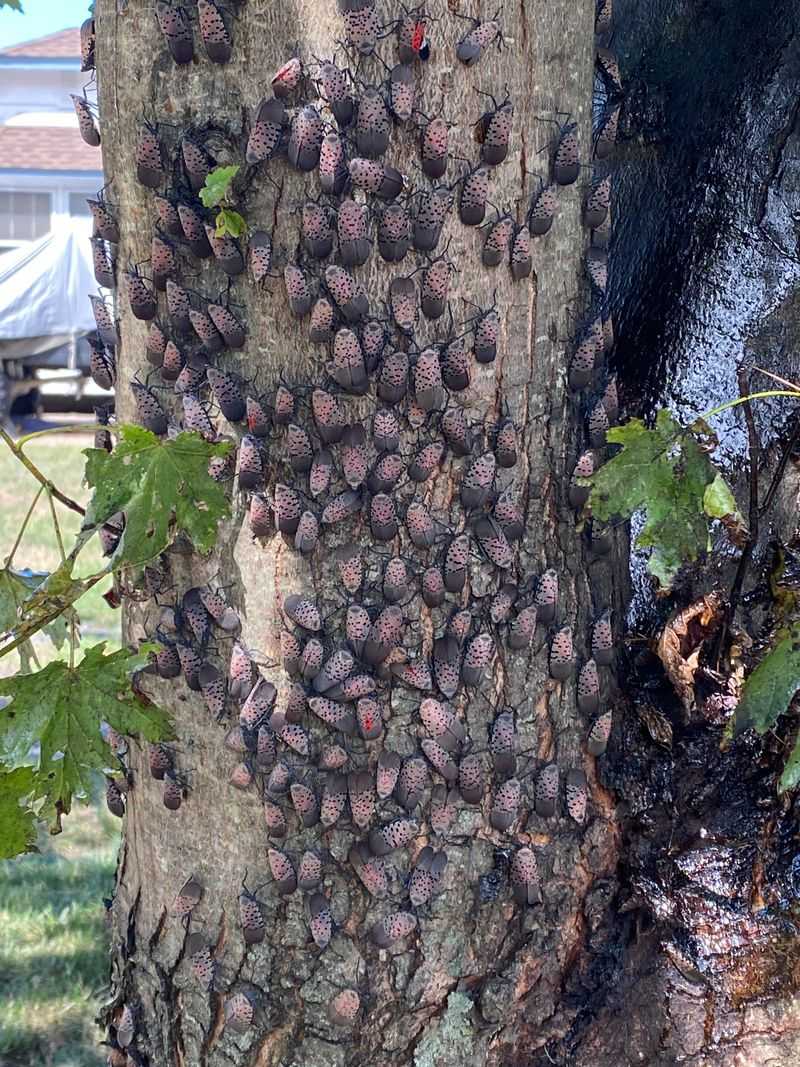
The damage these insects cause goes far beyond a few chewed leaves. Spotted lanternflies feed in massive groups, and their collective impact can devastate a plant within a single season.
When they pierce a stem and feed, the plant loses vital sap. That loss of sap weakens branches, stunts growth, and leaves the plant open to disease.
The honeydew they excrete is another layer of trouble. It drips onto lower leaves and surfaces, creating a thick, sticky mess that attracts wasps, bees, and ants.
Black sooty mold then grows on top of that honeydew. The mold blocks sunlight from reaching leaves, which further reduces the plant’s ability to produce energy.
For grape growers, the threat is particularly sharp. Some Pennsylvania vineyards reported losing up to 90 percent of their crop in a single season under heavy infestation.
Apple and peach orchards face similar pressure. Repeated feeding weakens trees to the point where they cannot survive harsh winters or recover between seasons.
Home gardeners are not immune either. A backyard grape arbor or a prized Japanese maple can decline quickly once a colony moves in and settles.
Projected economic losses across affected states could reach hundreds of millions of dollars if the pest continues to spread unchecked. Acting now to protect Tennessee’s farms, forests, and gardens is not an overreaction.
How To Report A Spotted Lanternfly Sighting In Tennessee
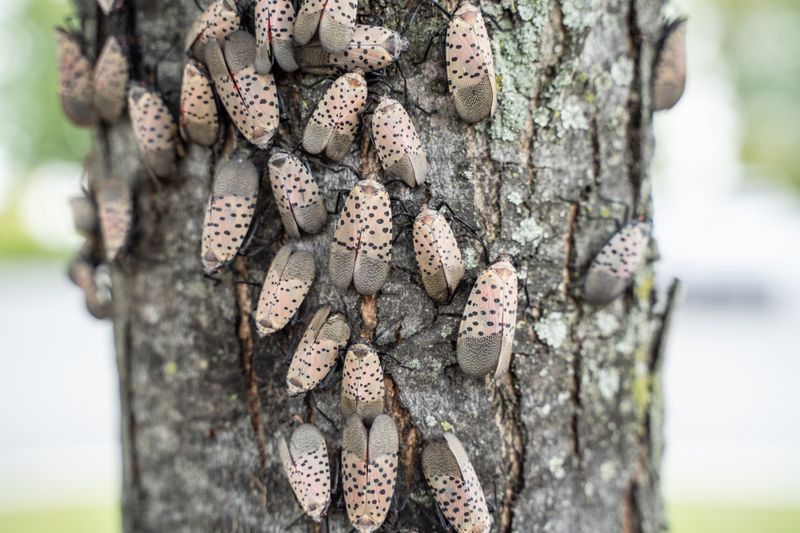
Spotting one of these insects and reporting it can genuinely make a difference. Early reports help scientists and agriculture officials track where the pest is spreading and respond faster.
In Tennessee, you can report a sighting through the Tennessee Department of Agriculture’s website. The process takes just a few minutes and asks for your location, a photo, and a brief description.
Photos are the most important part of any report. Snap a clear picture from multiple angles if possible, and try to capture the insect against a plain background.
If you cannot photograph it, try to collect the insect in a sealed bag or container. A physical specimen helps experts confirm the identification with certainty.
You can also report sightings through the EDDMapS app, which is free and easy to use on any smartphone. Many states use this platform to track invasive species in real time.
Do not worry about being wrong or reporting something that turns out to be a different bug. False alarms are far better than missed detections at this stage of the invasion.
Agriculture officials genuinely want to hear from regular residents. Citizen reports have already helped map the spread in several states much faster than field surveys alone could manage.
Your backyard observation could be the data point that triggers a faster response in your county. Reporting is one of the most powerful things a Tennessee resident can do right now against spotted lanternflies.
Practical Steps Tennessee Residents Can Take Right Now
You do not need to be an expert to make a real impact against spotted lanternflies. A few simple habits can slow the spread and protect your property starting today.
Check your car before driving, especially if you park near wooded areas. Egg masses can cling to wheel wells, bumpers, and undercarriages without you ever noticing.
If you find an egg mass, scrape it off using a credit card or stiff brush. Drop the scrapings into a sealed bag and trash it.
Inspect outdoor furniture, grills, and play equipment regularly. These smooth surfaces are surprisingly popular egg-laying spots for adult lanternflies in late summer and fall.
Avoid moving firewood from one location to another. Firewood is one of the most common ways egg masses travel long distances without anyone realizing it.
If you have tree of heaven on your property, consider having it removed by a professional. Eliminating that preferred host plant can make your yard less attractive to spotted lanternflies.
You can also use sticky bands wrapped around tree trunks to trap nymphs as they climb. Make sure to check and replace bands frequently so other wildlife does not get accidentally caught.
Staying informed and sharing what you know with neighbors multiplies your impact. Fighting spotted lanternflies in Tennessee is truly a community effort, and every action adds up.