What Georgia Gardeners Should Do With Crepe Myrtles Before June Ends
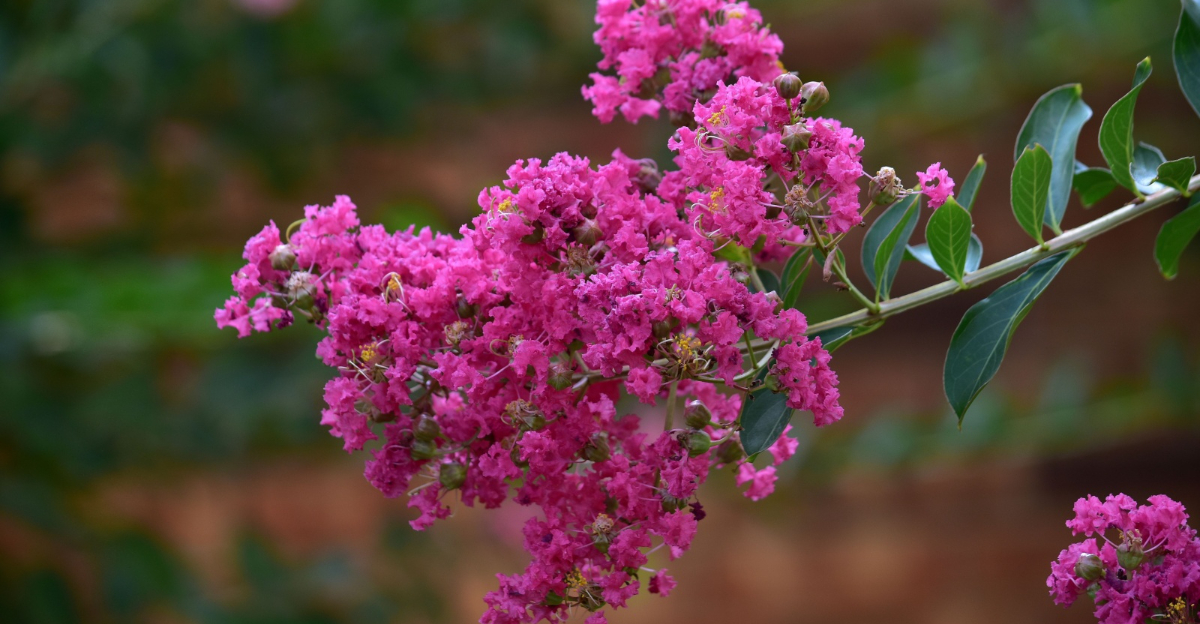
Late June in Georgia and the crepe myrtles are putting on their summer show, which is honestly one of the better things about this time of year in the yard.
But while those blooms are doing their thing, the warm, sticky conditions that make Georgia summers so intense are also creating the kind of environment where pests and disease can quietly move in if you’re not paying attention.
The good news is that late June crepe myrtle care isn’t complicated or time consuming.
It’s mostly about walking the yard, taking a close look at what’s actually going on, and handling a few small tasks around moisture, mulch, and light cleanup.
Knowing what not to do right now matters just as much as knowing what to do, and that part is simpler than most people expect.
1. Check For Aphids And Sticky Honeydew
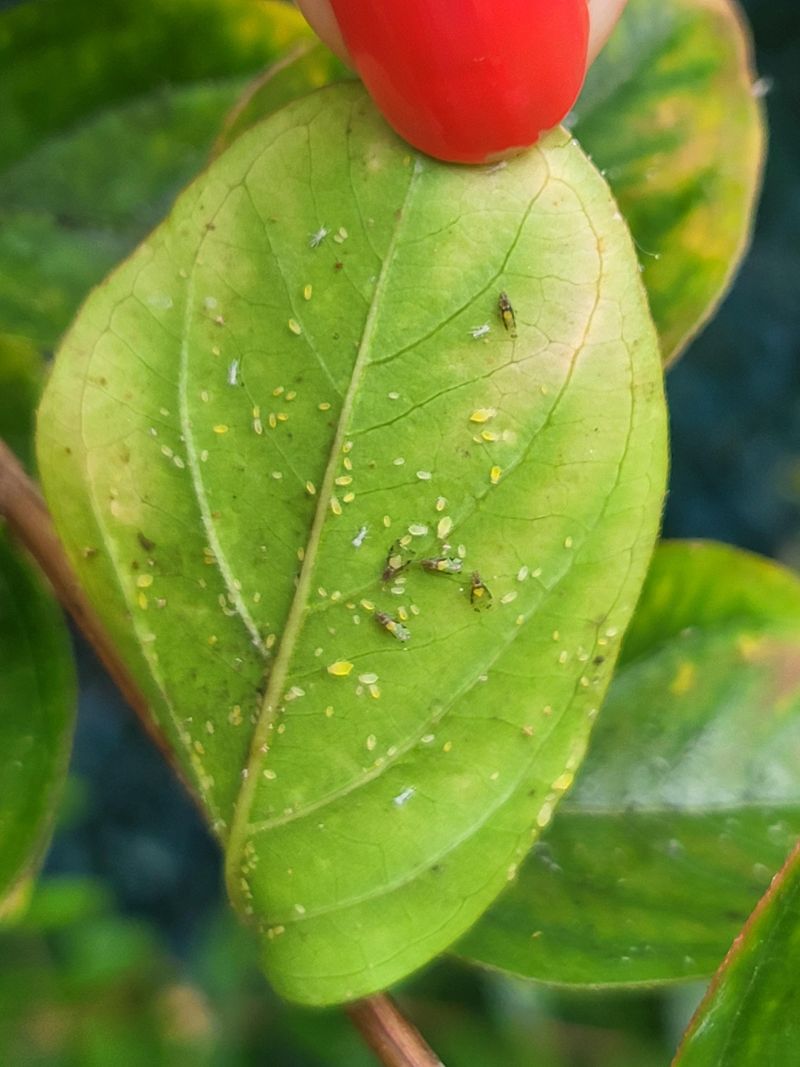
Sticky leaves on a crepe myrtle are often the first clue that something is feeding on it. If you walk under the tree and notice the pavement or nearby plants feel tacky underfoot, look up.
Aphids, particularly the crepe myrtle aphid, tend to cluster on the undersides of new leaves and on tender stem tips. They feed by piercing plant tissue and pulling out sap, and the waste they produce is a sugary liquid called honeydew.
In Georgia’s warm, humid June weather, that honeydew coats leaves and surfaces quickly. It also attracts a secondary problem: a black fungal coating called sooty mold.
Sooty mold does not directly harm the tree, but it blocks sunlight from reaching the leaf surface and makes the whole plant look dark and unhealthy.
A strong spray of water from a garden hose is often enough to knock aphids off new growth.
For heavier infestations, insecticidal soap sprays can help reduce populations without harming beneficial insects as severely as broad-spectrum insecticides.
Checking trees in the morning, when aphids are easier to spot on cool leaf surfaces, makes the inspection quicker.
Georgia summers move fast, and catching aphid pressure early in late June gives the tree a better chance of looking its best when bloom season peaks later in summer.
2. Look For Powdery Mildew Early
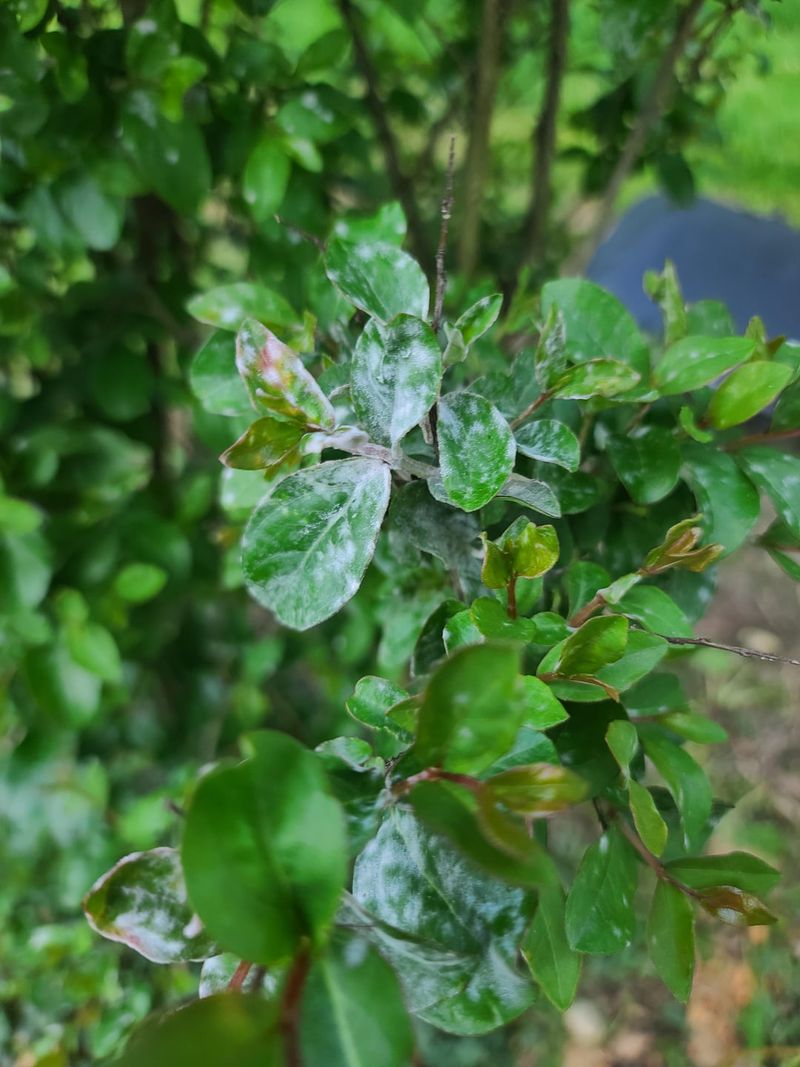
On a humid Georgia morning, you might notice a faint white or grayish dusting on the leaves of a crepe myrtle, especially on newer growth near the tips of branches.
That chalky coating is powdery mildew, a fungal condition that spreads quickly when warm days are followed by cooler, humid nights.
Late June in Georgia often delivers exactly those conditions, making early detection genuinely useful.
Powdery mildew tends to show up first on young, tender leaves before spreading to older foliage. It can also affect developing flower buds, which may cause them to look distorted or fail to open fully.
Some crepe myrtle cultivars have been bred with stronger resistance to this fungus, so if powdery mildew is a recurring issue in your yard, it may be worth noting the cultivar for future reference.
Your Georgia Garden Changes Every Week. Your Plan Should Too.
Gardening in Georgia changes quickly throughout the season. Every Friday you’ll receive a simple weekly plan showing exactly what to plant, prune, fertilize, harvest, and protect so you never miss the right timing.
For trees that are already affected, improving air circulation around the canopy can slow the spread. Avoid overhead watering, which keeps foliage wet and encourages fungal growth.
Fungicide sprays labeled for powdery mildew on ornamentals can be used on badly affected trees, though they work best as a preventive measure rather than a cure after the fact.
Georgia gardeners who catch the first signs of powdery mildew in late June have more options available than those who wait until the problem has spread through much of the canopy.
3. Inspect Bark For Crape Myrtle Bark Scale
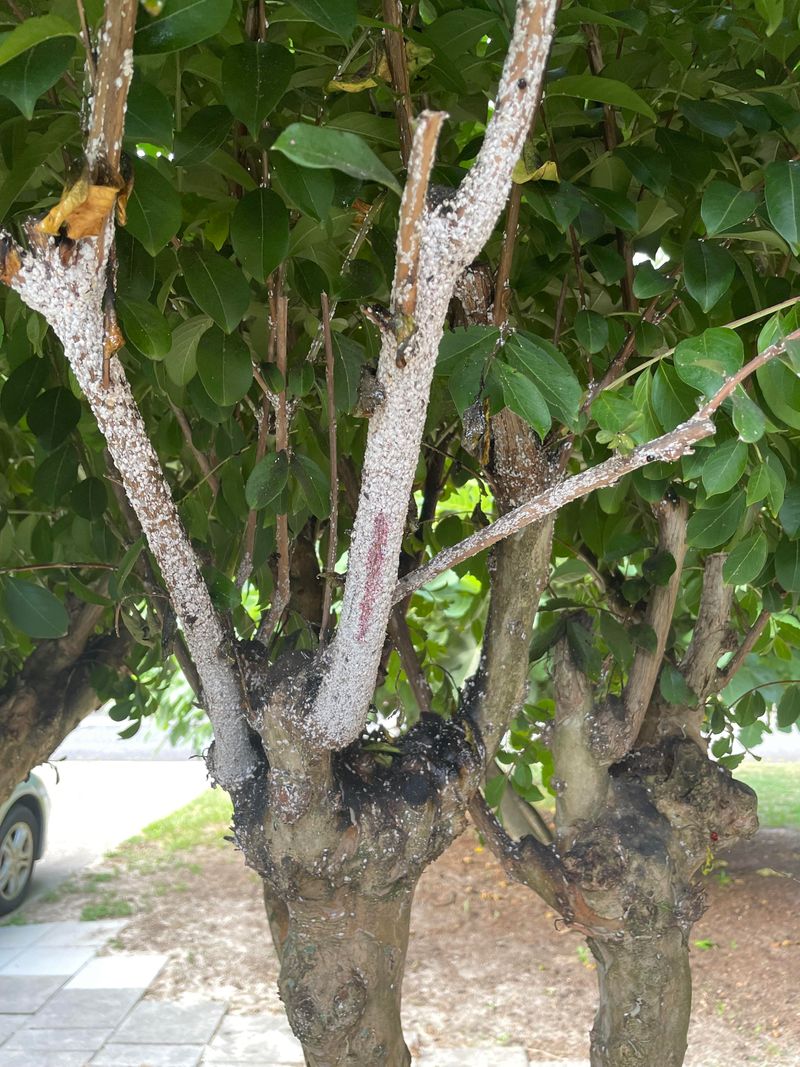
Running your hand along the bark of a crepe myrtle and feeling something rough and crusty is worth a second look.
Crape myrtle bark scale is a relatively recent pest in Georgia landscapes, and it has become one of the more challenging insects for homeowners to manage.
It shows up as small, white or gray felt-like clusters on the bark of branches and trunks, and it tends to concentrate in branch crotches and on older wood.
Like aphids, bark scale produces honeydew as it feeds, which leads to sooty mold coating the bark and sometimes the surrounding pavement or plants. Trees with heavy infestations can look almost entirely blackened.
Unlike aphids, bark scale cannot be washed off easily with a hose because it is protected by a waxy outer covering that shields it from contact sprays.
Late June is a reasonable time to inspect for bark scale because new crawlers, the mobile juvenile stage of the insect, are active in warmer months and easier to spot during this period.
A diluted solution of horticultural oil or insecticidal soap applied directly to the bark can help reduce crawler populations.
For serious infestations, a systemic insecticide applied as a soil drench may be more effective, though timing and product selection matter.
Georgia homeowners who spot bark scale early have a much better chance of reducing the infestation before it spreads to other trees nearby.
4. Remove Suckers At The Base
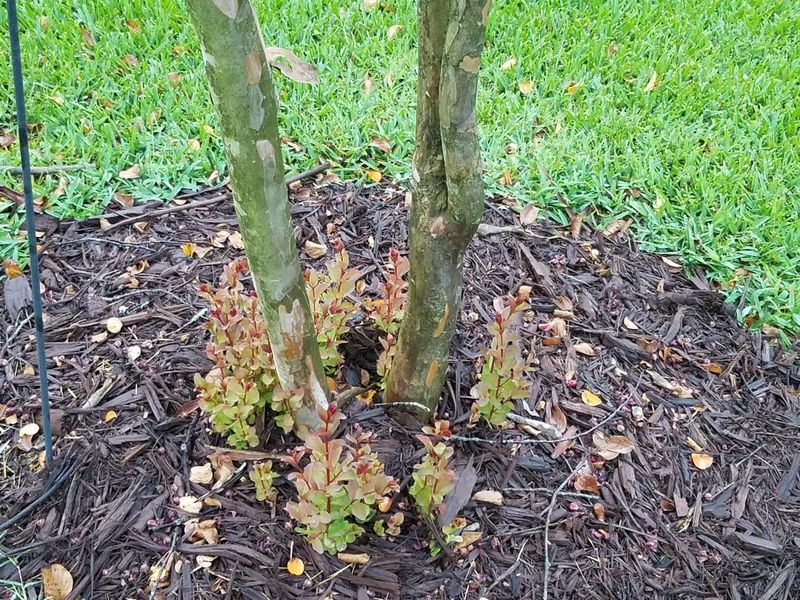
Thin, upright shoots poking out of the soil at the base of a crepe myrtle are easy to overlook when the tree above is blooming and looking its best.
Those shoots are called suckers, and they grow from the root system or the base of the trunk rather than from the main canopy.
While they might look like bonus growth at first glance, they are actually pulling energy away from the parts of the tree you want to thrive.
In Georgia’s growing season, suckers can appear quickly and grow surprisingly fast. Left alone through summer, a cluster of suckers can become a tangled thicket at the base of the tree that is harder to remove cleanly later in the season.
They also make it harder to mow or maintain the area around the trunk, and they can make a well-shaped tree look messy from the street.
Removing suckers is straightforward. Pull them out by hand as close to the point of origin as possible, or use pruning shears to cut them flush at the soil line.
Pulling them out rather than cutting tends to slow regrowth slightly. Late June is a practical time for this task because the suckers are still tender and easy to remove without heavy tools.
Checking the base of each crepe myrtle during your regular late June walkthrough takes only a few minutes and keeps the tree looking clean and well-maintained.
5. Avoid Heavy Summer Pruning
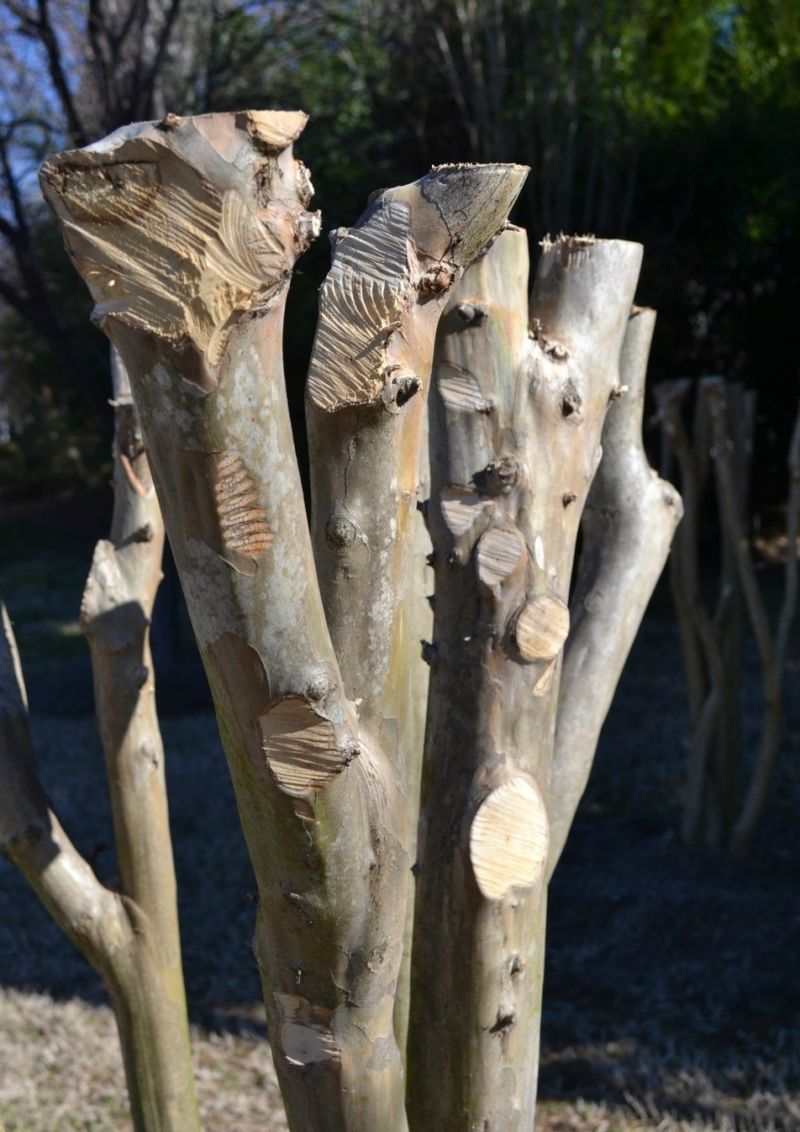
One of the most common mistakes made with crepe myrtles across Georgia is cutting them back hard during summer, especially once they have already started flowering.
Heavy pruning in late June removes the very growth that carries flower buds, which means fewer blooms for the rest of the season.
Crepe myrtles bloom on new growth produced in spring and early summer, so cutting back that growth mid-season reduces what the tree can offer through late summer and into fall.
Heavy summer pruning also pushes the tree to produce a flush of soft, fast-growing new shoots in an attempt to recover.
That tender new growth is more vulnerable to aphids and other insects, and it rarely has time to harden off properly before the heat of July and August arrives in Georgia.
If a branch is crossing another awkwardly, rubbing against a structure, or clearly damaged, removing it in late June is reasonable. Light, selective cuts that address specific problems are fine.
What is worth skipping is the habit of cutting all the main branches back to stubs, sometimes called topping, which disfigures the natural shape and stresses the tree without any real benefit.
Crepe myrtles do not need heavy pruning to bloom well.
Letting them grow naturally through summer and handling any structural pruning during the dormant season tends to produce a healthier, better-looking tree in the long run.
6. Water Young Or Spring-Planted Trees During Dry Spells
Georgia summers can flip between stretches of afternoon thunderstorms and dry spells that last a week or two without any meaningful rainfall.
Established crepe myrtles that have been in the ground for several years tend to handle these dry stretches reasonably well once their root systems are developed.
Young trees and those planted in spring are in a different situation entirely.
A crepe myrtle planted earlier this year is still working to establish roots in its new location. During a dry spell in late June, that tree is relying heavily on whatever moisture is available in the top layer of soil, which dries out faster than deeper ground.
Wilting leaves, drooping branch tips, or leaf edges that look scorched and dry are signs that a young tree may need supplemental water.
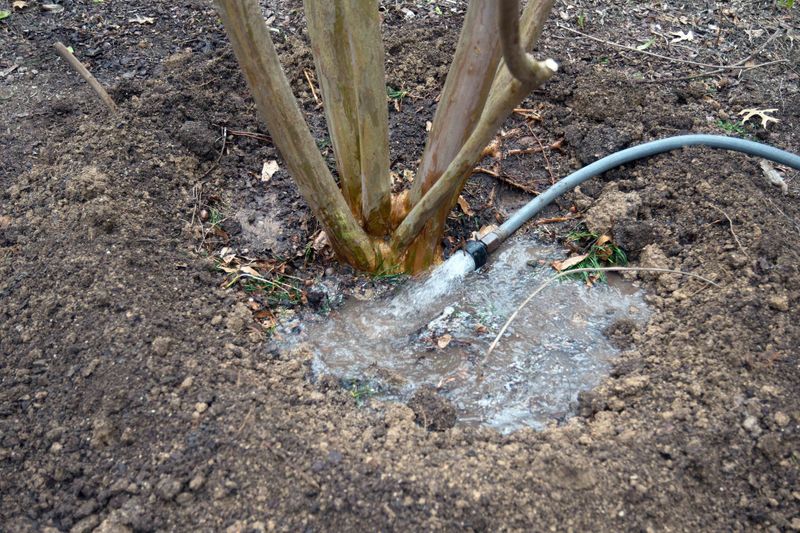
Slow, deep watering is more useful than frequent shallow sprinkles. Running a soaker hose or garden hose at a trickle for 20 to 30 minutes at the base of the tree encourages roots to reach deeper into the soil rather than staying near the surface.
Watering in the morning reduces evaporation and gives foliage a chance to dry before evening, which helps discourage fungal issues.
In Georgia, late June is a month when checking on young trees every few days during dry weather makes a noticeable difference in how well those trees settle in and perform through the rest of summer.
7. Keep Mulch Even And Pulled Back
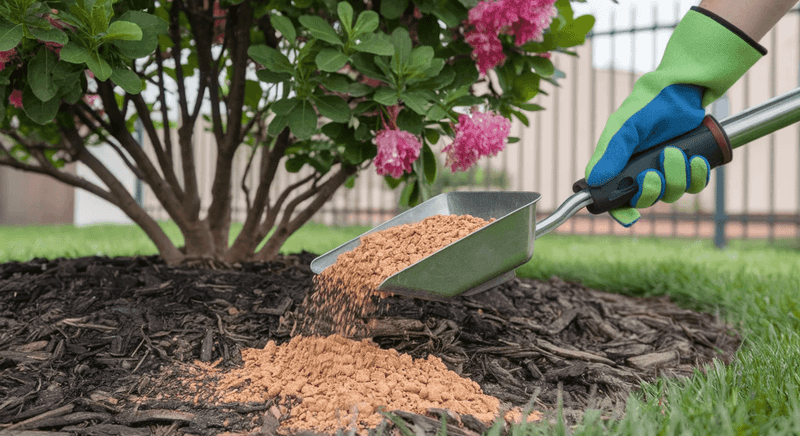
Fresh mulch around the base of a crepe myrtle does several useful things at once.
It slows moisture evaporation from the soil, keeps roots cooler during Georgia’s intense summer heat, and reduces competition from weeds and grass that would otherwise compete with the tree for water and nutrients.
A two-to-three-inch layer of mulch spread out to the drip line of the tree is a practical late June task that pays off through the rest of the season.
One common mulching mistake is piling it up against the trunk itself. Mulch pressed against bark holds moisture against the wood and can encourage rot and fungal problems over time.
It also creates a sheltered spot where insects can establish themselves closer to the base of the tree.
Keeping mulch pulled back a few inches from the trunk, leaving the root flare visible, avoids those problems while still delivering the moisture and temperature benefits across the root zone.
Late June is a good time to check mulch that was applied earlier in spring. Some of it may have decomposed, shifted with rain, or been disturbed by foot traffic or lawn equipment.
Topping off thin spots and raking existing mulch back into an even layer takes very little time.
For Georgia gardeners managing crepe myrtles in full-sun beds or along driveways, keeping that mulch layer consistent through the hottest months can make a real difference in how the tree looks and grows.
8. Remove Spent Flower Clusters Only If Needed
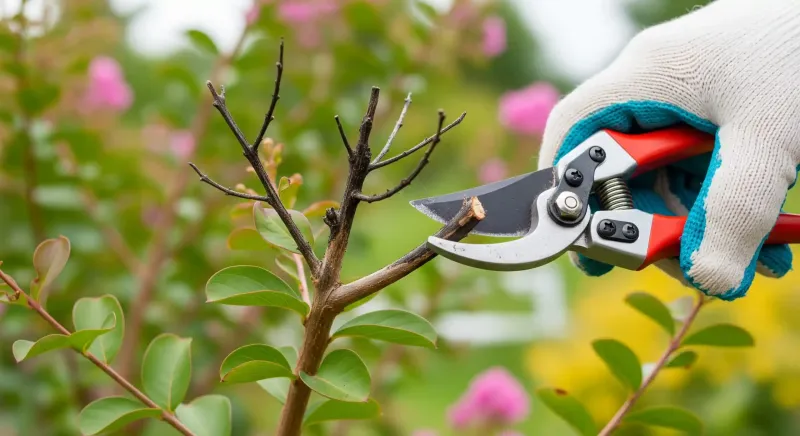
Faded flower clusters hanging from branch tips are one of the more visible signs that a first bloom flush is winding down on a crepe myrtle.
Some Georgia homeowners prefer to remove them for a tidier appearance, while others leave them in place and find the tree still looks attractive as new growth and buds develop around the spent clusters.
Both approaches are reasonable, and the choice mostly comes down to personal preference and how the tree looks in your particular landscape.
Removing spent flower clusters, a practice sometimes called deadheading, may encourage the tree to put energy into producing a second round of blooms rather than developing seedheads.
On some cultivars, this can result in another noticeable flush of color later in summer.
On other cultivars, the effect is less dramatic. Seedheads that are left on the tree are not harmful, and some people find them interesting through late summer and into fall.
If you decide to remove spent clusters, use clean, sharp pruning shears and cut just behind the faded flower head, leaving the rest of the branch intact. This is a light task that does not require removing significant amounts of growth.
Late June in Georgia is warm enough that trees respond quickly to this kind of minor grooming.
Doing it selectively on branches that are within easy reach, and leaving the rest, is a practical approach that keeps the task manageable without turning it into a major pruning session.