7 Summer Pruning Mistakes Georgia Gardeners Make That Reduce Shrub Blooms
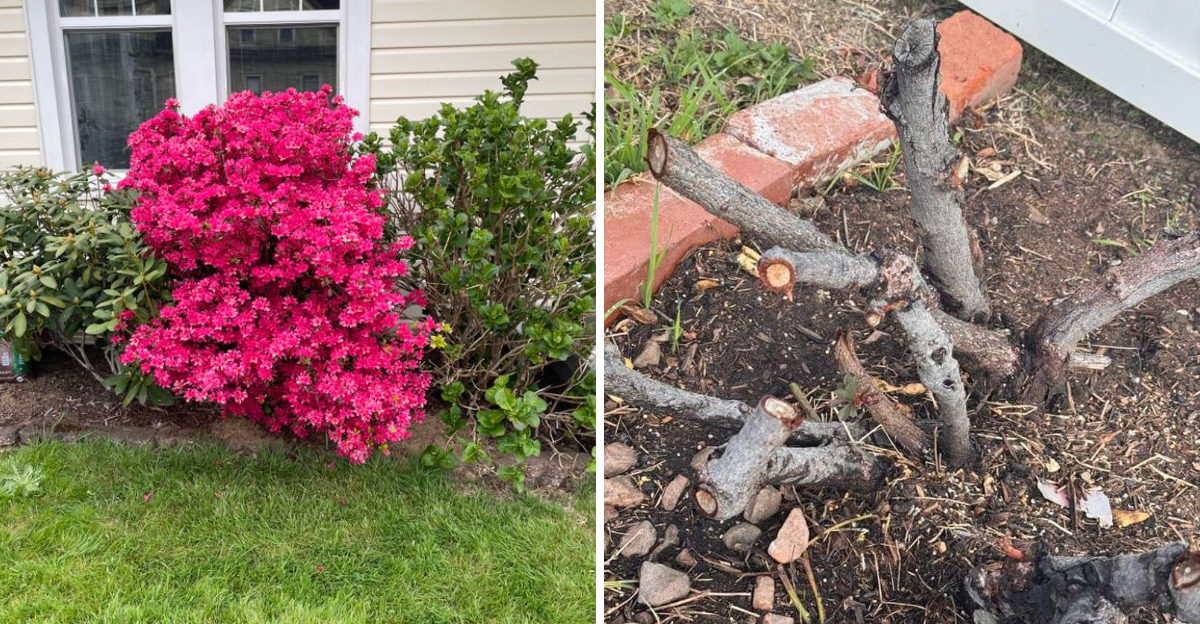
March in Georgia and your azaleas delivered.
Pink, white, red, the whole neighborhood looked like a garden show. Then summer came, you grabbed the shears, tidied things up, and felt good about the work.
Fast forward to the following March. Fewer blooms. Patchy spots. That hollow feeling that something went wrong but you cannot quite identify it.
Here is what happened: the pruning session that felt productive erased months of bud development before those buds ever had a chance to open.
Flowering shrubs operate on schedules many gardeners never learn, and Georgia’s long growing season makes it especially tempting to prune whenever something looks overgrown.
The timing of the cut matters more than the technique, the tool, or the intention behind it.
Eight mistakes show up in Georgia gardens almost every summer and cost homeowners an entire spring bloom season. Most of them take thirty seconds to commit and months to recover from.
1. Ignoring The May Bloom Rule
Many gardeners treat all shrubs the same.
Branches getting long? Grab the pruners. But flowering shrubs operate on two completely different schedules, and treating them identically is how a bloom season disappears without explanation.
Shrubs that bloom before May form their buds the previous year, long before the flowers actually open. Pruning these in summer or fall removes next spring’s entire display.
The plant looks fine afterward. Green leaves, healthy stems, no visible damage. Then March arrives and the branches stay bare while the neighbor’s matching shrub explodes in color.
Shrubs that bloom after May form buds on fresh growth that emerges in spring. Pruning these in late winter or early spring does not cost any flowers. In fact, a well-timed cut encourages stronger flowering shoots and better bloom coverage.
The May cutoff is not a perfect line for every single shrub, but it is a reliable starting point that keeps most Georgia gardeners on the right side of the decision.
If the bloom time is genuinely unclear, watch the shrub through one full season. Note when the flowers appear, then plan pruning around that timing.
One season of observation prevents years of accidental bloom removal, and that trade is absolutely worth it.
2. Pruning Spring Bloomers Too Late
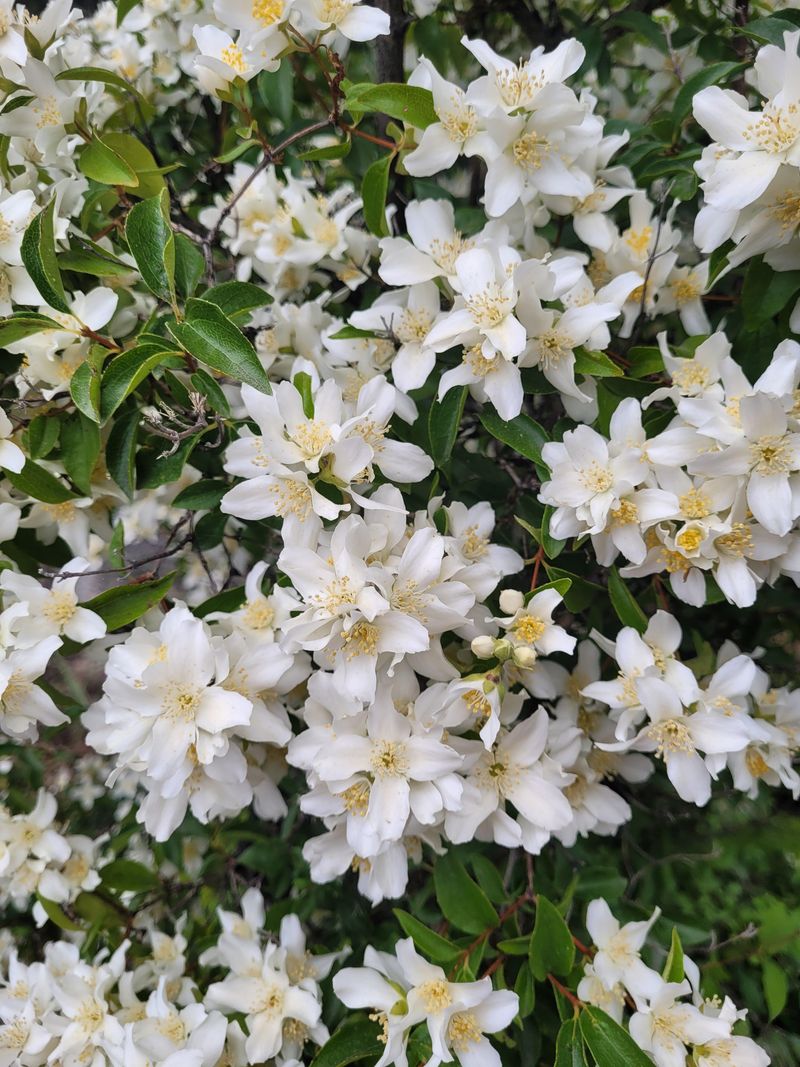
Azaleas are Georgia’s spring signature. Pink, red, white, and purple carpeting neighborhoods from late March into May.
Then the flowers fade, the shrubs look a little wild, and the impulse to tidy up feels completely reasonable. That is exactly when the damage happens.
Spring bloomers like azaleas, forsythia, mock orange, spirea, and weigela set their flower buds in late spring and early summer, right after their current blooms fade.
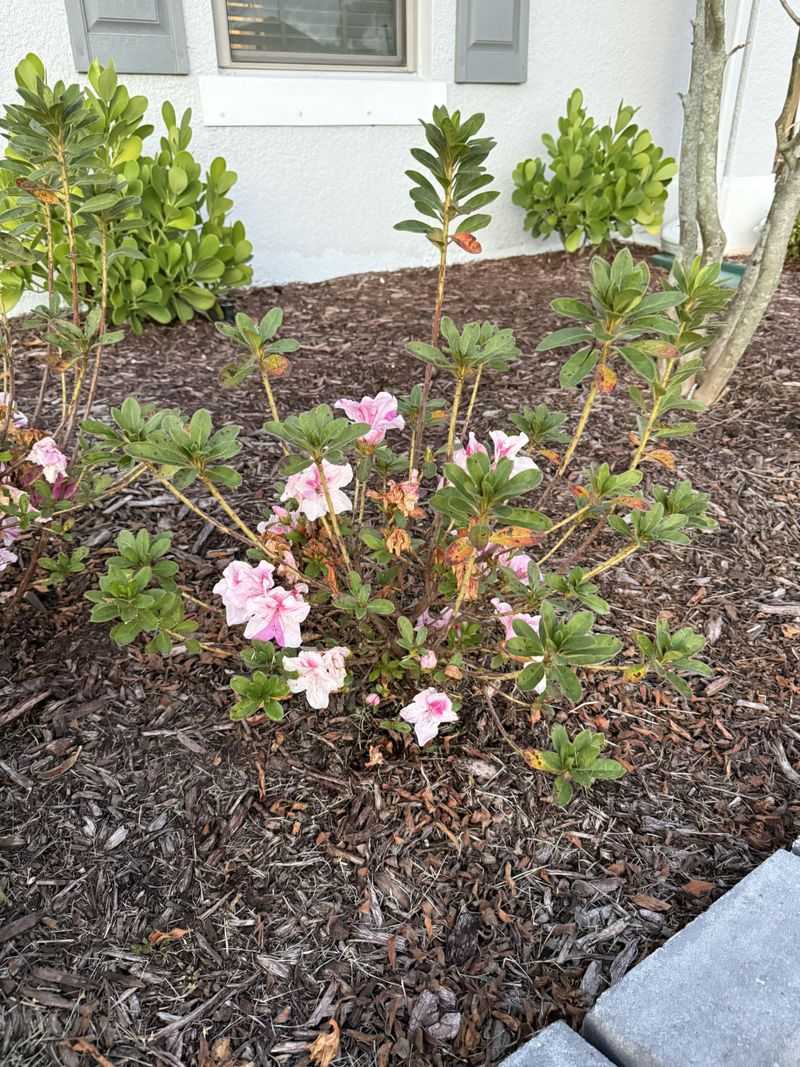
A July or August pruning session removes the buds that were supposed to open the following March or April. The shrub will not look hurt.
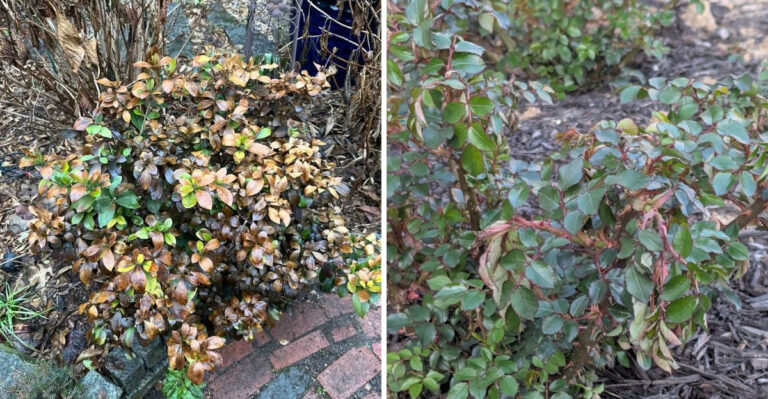
It will grow green leaves and healthy branches right through fall. But come spring, the cut areas will be noticeably bare while the unpruned sections bloom normally.
The right window is immediately after flowering, usually late April or May in Georgia. That timing gives the plant several months to form new buds on fresh growth before the season closes.
Your Georgia Garden Changes Every Week. Your Plan Should Too.
Gardening in Georgia changes quickly throughout the season. Every Friday you’ll receive a simple weekly plan showing exactly what to plant, prune, fertilize, harvest, and protect so you never miss the right timing.
Shaping, wood removal, and size control all happen at that point without costing a single bloom.
Miss that window and the better call is to leave the shrub alone entirely until after it blooms the following spring.
An overgrown azalea covered in flowers is always more satisfying than a neatly trimmed one with nothing to show for itself in bloom season. The shears can wait. The buds cannot.
3. Treating Every Hydrangea The Same
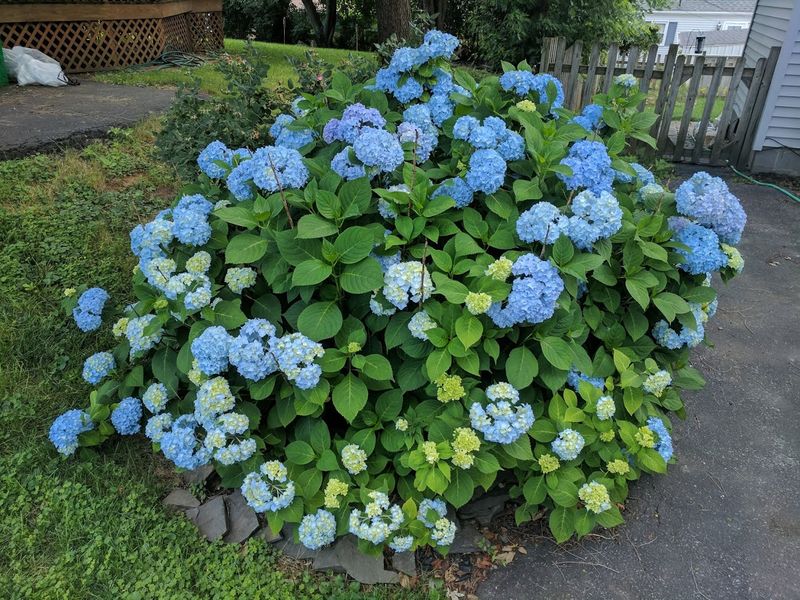
Walk through any Georgia garden center in spring and hydrangeas are everywhere.
Big blue mopheads, white cone-shaped panicles, delicate lacecaps, oakleaf varieties with dramatic fall foliage. They all look like hydrangeas, and that visual similarity leads to one of the most common and costly pruning mistakes in Georgia gardens.
Bigleaf hydrangeas and oakleaf hydrangeas bloom on old wood. They set buds in late summer and fall, hold them through winter, and open them the following season.
Pruning these types in summer, fall, or early spring removes buds that were weeks or months away from opening. The plant survives. The blooms do not.
Panicle hydrangeas and smooth hydrangeas bloom on new wood. They form buds on fresh spring growth, so late-winter pruning does not cost any flowers.
A well-timed cut on these types actually encourages bigger blooms and stronger stems, the opposite outcome from what the same cut does to a bigleaf.
The confusion is completely understandable because these plants look nearly identical when they are not blooming.
Check the tag at purchase, or look up the specific variety before the pruners come out.
That one step takes two minutes and prevents years of pruning a bigleaf hydrangea on the wrong schedule while wondering why it never blooms the way it did when you first brought it home.
4. Shearing Azaleas Into Tight Shapes
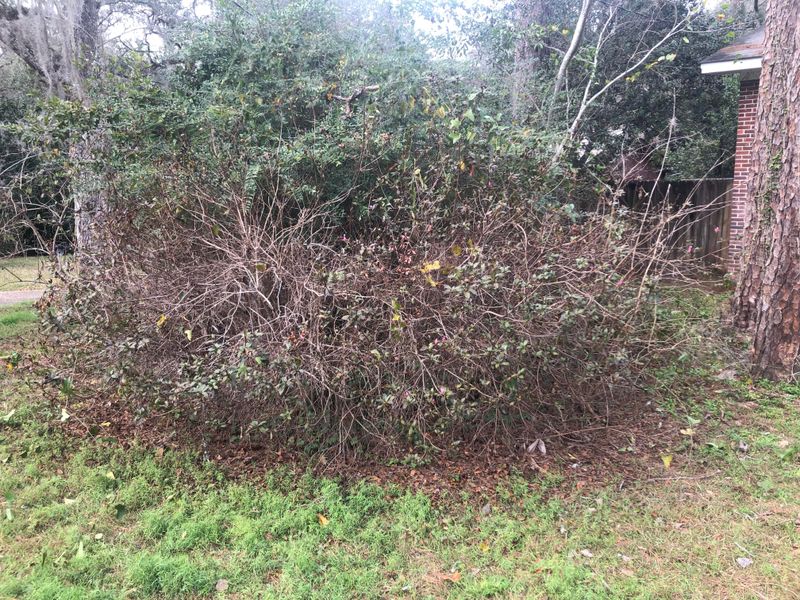
Rounded azalea balls line driveways and foundation beds all over Georgia. They look tidy and controlled, the shearing feels satisfying, and the result is a neat, uniform shape.
The problem shows up at bloom time, when those sculpted shrubs produce noticeably fewer flowers than the looser, more natural ones nearby.
Shearing removes the outer layer of growth all at once, cutting through stems, leaves, and developing flower buds without any selectivity.
Repeat this every season and the shrub forms a dense outer shell of twigs that blocks light and air from reaching the interior. Flowering shoots struggle to develop inside that shell. The shrub looks maintained. It just stops performing.
Azaleas bloom best when allowed to grow in a more natural shape with occasional selective guidance.
Hand pruners instead of hedge shears let each cut target a specific stem, directing it back to a side branch or leaf node.
The shrub fills in naturally rather than forming that stiff outer layer, and flowering wood stays distributed throughout the plant instead of being crowded out.
Selective pruning done right after flowering gives the plant time to push new shoots and set buds for next spring.
The result is a fuller plant that blooms more heavily, with a natural form that actually looks more lush than the tight ball it used to be. Formal shapes have their place in a garden. Azaleas generally do better without them.
5. Removing Oakleaf Hydrangea Flowering Wood
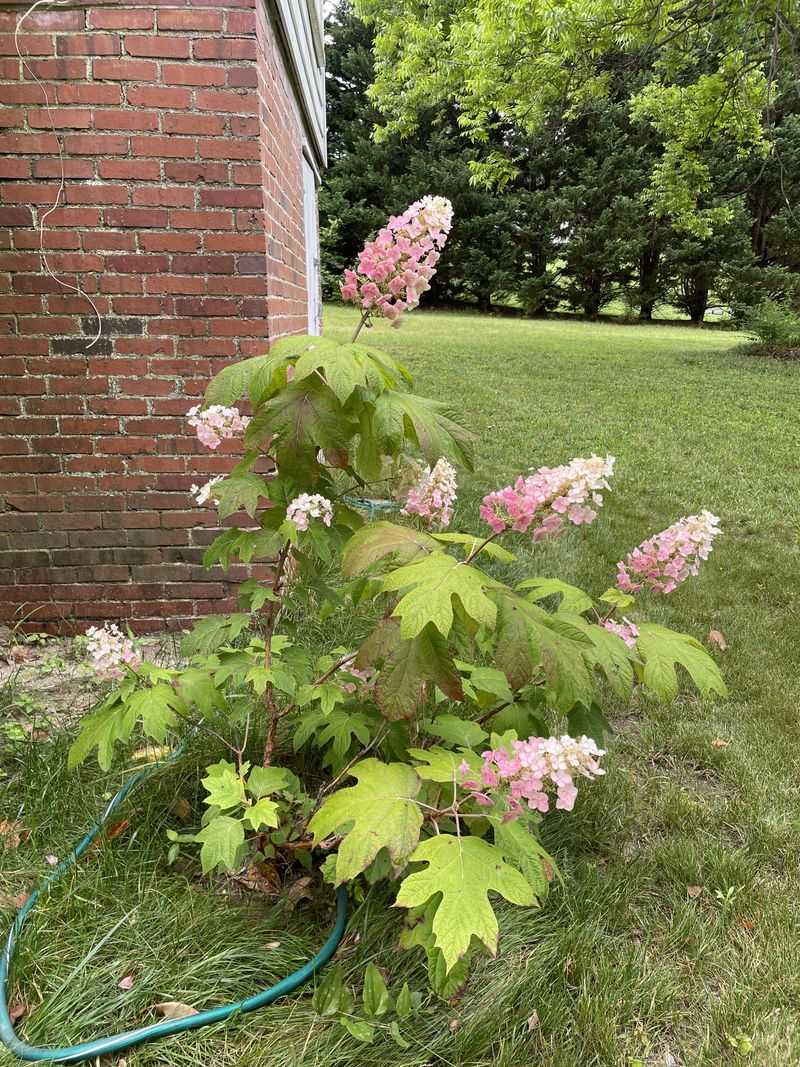
Oakleaf hydrangeas earn their place in Georgia shade gardens with large lobed leaves that turn brilliant red and burgundy in fall and cone-shaped white blooms that add real elegance to summer.
But these shrubs need careful handling, and the most common mistake targets exactly the wood that makes them beautiful.
Oakleaf hydrangeas bloom on old wood. The flowering stems are the ones that grew last year, not the fresh green shoots emerging in spring.
Trimming back those older woody stems in summer, fall, or early spring removes the wood that was supposed to produce next season’s flowers. The plant continues to grow and leaf out normally. The bloom display thins dramatically.
The situation often starts with good intentions. Spent flower heads turn brown and papery after bloom, and cleaning them up seems like sensible maintenance.
Cutting too aggressively into that old wood removes the buds forming just below, and the following summer reveals the cost.
The safest approach is to prune oakleaf hydrangeas lightly and only when necessary. Damaged wood can come out anytime.
Shaping and size control belong right after blooms finish in mid to late summer, and even then, selective cuts to individual stems outperform shearing the whole shrub.
Keeping the older wood intact keeps next year’s flowers exactly where they should be.
6. Cutting Camellias Before Buds Set
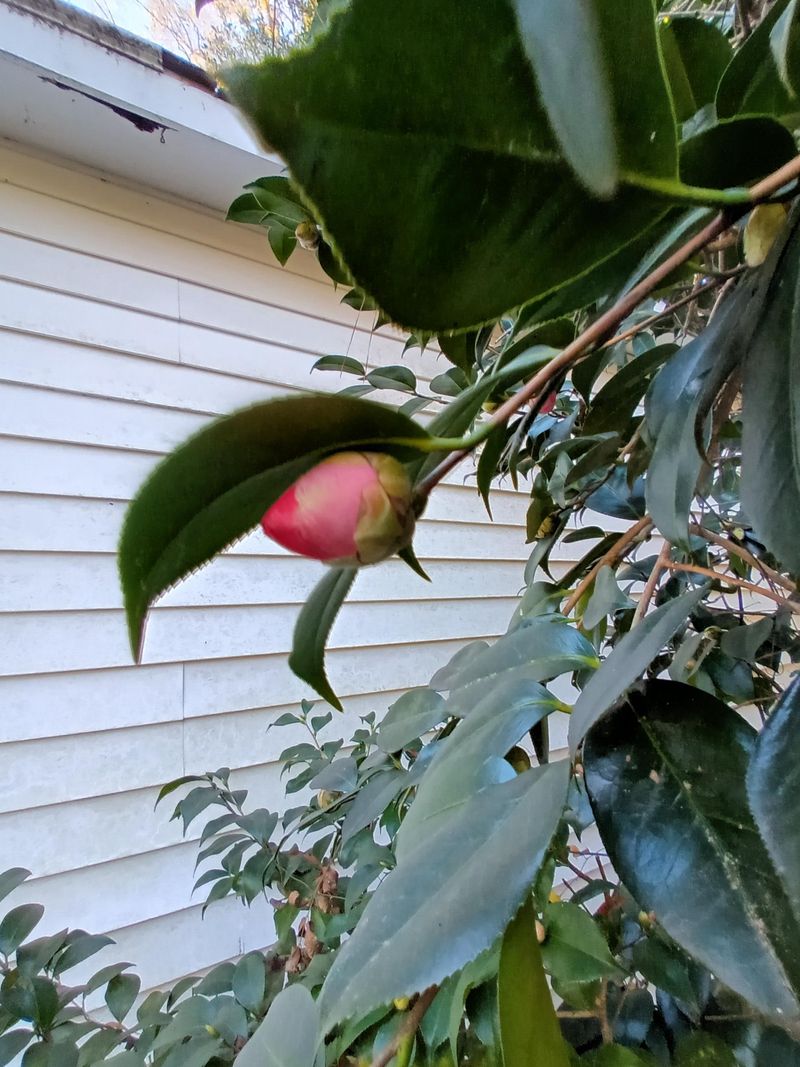
Camellias do something almost no other shrub in Georgia manages: they bloom when everything else has gone dormant.
Glossy evergreen leaves year-round, flowers opening in fall, winter, or early spring depending on the variety.
That off-season bloom window is the whole point of growing them, and a poorly timed pruning session can eliminate it entirely.
Camellias set their flower buds in late spring and summer. By midsummer those buds are already forming, months before they will open.
Pruning in July, August, or September removes buds that were supposed to bloom in fall or winter. The shrub will not show any visible damage.
It will look completely healthy right through September. Then bloom season arrives and the cut areas stay bare while the untouched sections flower normally.
The right timing is right after flowering ends. Fall-blooming varieties get pruned in late fall or early winter. Spring-blooming types get pruned in late spring before new buds start forming.
Both windows give the plant time to push fresh shoots and set the next cycle of buds without interference from the pruners.
Emergency removal of storm-damaged or broken branches is always fine regardless of timing. But cutting healthy stems in summer will cost the next bloom cycle, and camellias are planted specifically for that bloom cycle.
When the timing is unclear, waiting until after flowering is the right default. The patience consistently pays off.
7. Taking Too Much Growth At Once
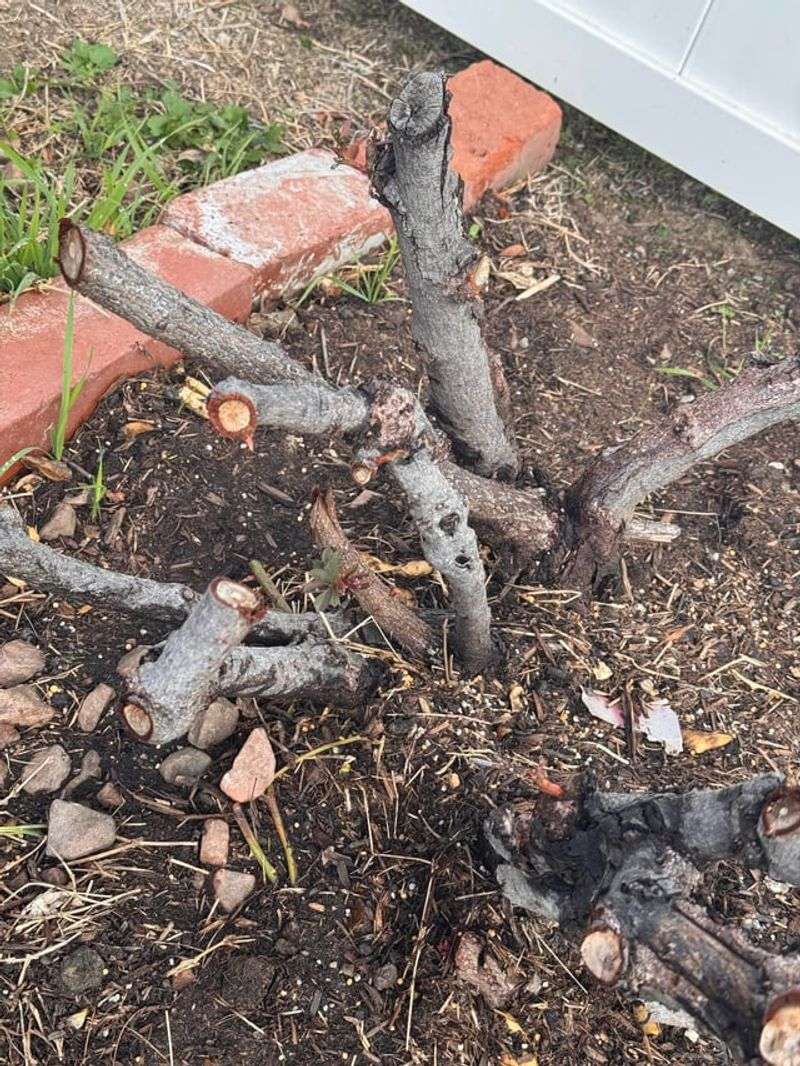
Sometimes a shrub genuinely gets out of hand. It blocks a window, crowds a walkway, or outgrows its space faster than expected.
The instinct is to cut it back hard and reset it. In summer, that instinct leads directly to a stressed plant and a disrupted flowering cycle.
Heavy pruning removes a large portion of the shrub’s leaves, and those leaves produce the energy the plant needs to grow, set buds, and stay healthy.
Strip away too much foliage and the shrub shifts its focus from flower production to survival. New shoots push out to replace what was lost, but they may not have time to mature and form buds before the season closes.
The recovery takes energy that would otherwise have gone into next year’s bloom display.
Georgia’s summer heat compounds the problem. A shrub that is stressed from heavy pruning becomes more vulnerable to pests, disease, and drought at exactly the time of year when those pressures are highest.
Even a full recovery can leave the flowering cycle disrupted for a year or two, which feels like an eternity when the shrub was planted specifically for its seasonal display.
The better approach is to remove no more than one-third of total growth in a single session. If the shrub needs more correction than that, spread the work over two or three seasons.
The plant stays healthy, the energy reserves stay intact, and the flowering wood that matters most survives the process.
Slow and steady produces better results than one dramatic session that the shrub spends the next two years recovering from.
8. Leaving Crowded Centers Without Airflow
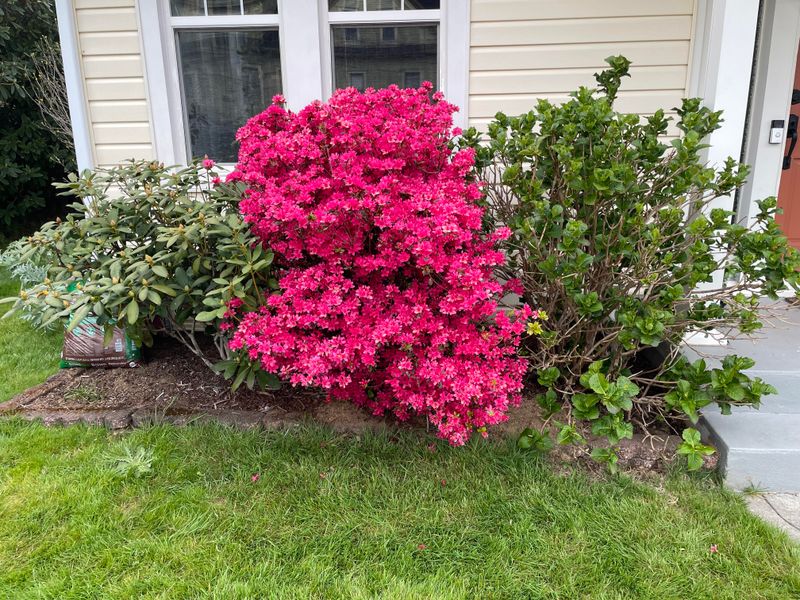
Pruning is not only about controlling size or removing spent blooms. It is also about keeping the interior of the shrub functioning properly, and that part of the job gets skipped more often than any other.
Many Georgia gardeners focus entirely on the outer shape, leaving the center crowded with old stems, crossing branches, and tangled growth.
That dense interior traps humidity after rain and morning dew, creating ideal conditions for fungal diseases like powdery mildew and leaf spot.
Pests also thrive in crowded, shaded interiors where air movement is minimal and natural predators cannot easily reach them. The outside of the shrub can look completely fine while the center quietly weakens.
Selective thinning solves this without sacrificing any blooms. Reach into the center and remove entire stems at the base, targeting branches that are damaged, or crossing over others.
This opens the interior, improves airflow, and allows light to reach more of the plant without changing the outer shape significantly.
The technique requires restraint. Remove a few stems at a time rather than gutting the center in one session.
For most flowering shrubs this kind of thinning can happen anytime, though right after flowering is the safest window.
The result is a healthier plant that dries faster after rain, resists disease more effectively, and produces stronger flowering shoots throughout.
A shrub with good airflow and a well-managed interior almost always outperforms a tightly sheared one that looks neater from the street.