Oregon Deer Target These 7 Garden Plants First And Homeowners Keep Replanting Them
Something is raiding Oregon gardens with impressive consistency, and it operates mostly at night. By the time many homeowners notice the damage, the best plants in the yard are already gone.
Deer in the Pacific Northwest are bold, hungry, and genuinely selective about what they eat first. They consistently bypass the plants nobody cares about and head directly for the ones that cost the most and took the longest to establish.
The pattern repeats across Oregon counties every season, and the frustrating part is that it follows a logic most gardeners never learn until after multiple expensive replacements.
Deer preferences shift with season, local food pressure, and herd size, which means a plant your neighbor loses every year might survive in your yard until the day conditions change.
Eight plants land consistently at the top of the Oregon deer menu, and understanding why keeps the replanting cycle from continuing indefinitely.
1. Hostas Invite Fast Browsing
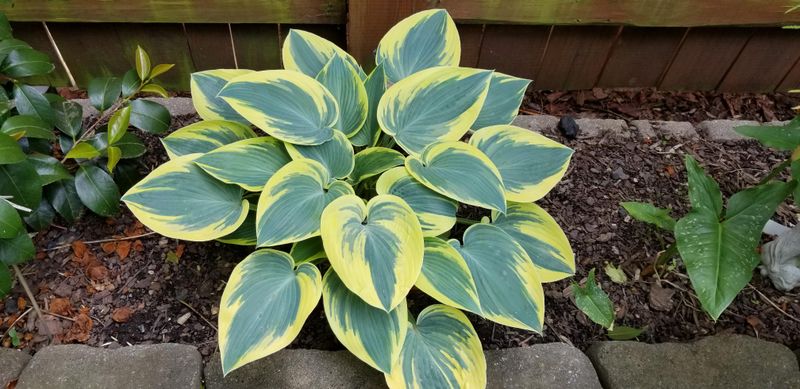
Few plants send deer into immediate, focused browsing quite like hostas.
These shade-loving perennials sit low to the ground, carry a mild scent, and produce soft, tender leaves that require almost no effort to consume.
For a deer moving through a shaded Oregon backyard, a hosta bed registers as an effortless meal in an accessible location.
Hostas rank among the most frequently browsed ornamental plants in Pacific Northwest gardens, and the timing of the damage makes it particularly discouraging.
Deer hit them hardest in spring when new growth is emerging and again in late summer when other food sources dry up. The overnight turnaround catches most homeowners off guard.
A full, healthy hosta at dusk can be nothing but stubby stems by the following morning.
Hunger level drives the aggression behind browsing behavior significantly. A well-fed deer near a busy road might pass right by a hosta planting.
A hungry deer in a quiet suburban yard will walk up to the front steps to reach one. Planting hostas in containers on elevated decks moves them out of easy reach.
Repellent sprays applied every two weeks, more frequently after rain, provide meaningful protection during peak browsing periods.
Surrounding hostas with strongly scented plants like lavender or catmint along the perimeter reduces approach frequency for some deer.
A motion-activated sprinkler adds a startle response that discourages settling in for a prolonged meal. Combining those two approaches with elevated placement gives the plants a realistic chance of surviving a full Oregon season intact.
2. Roses Draw Repeat Attention
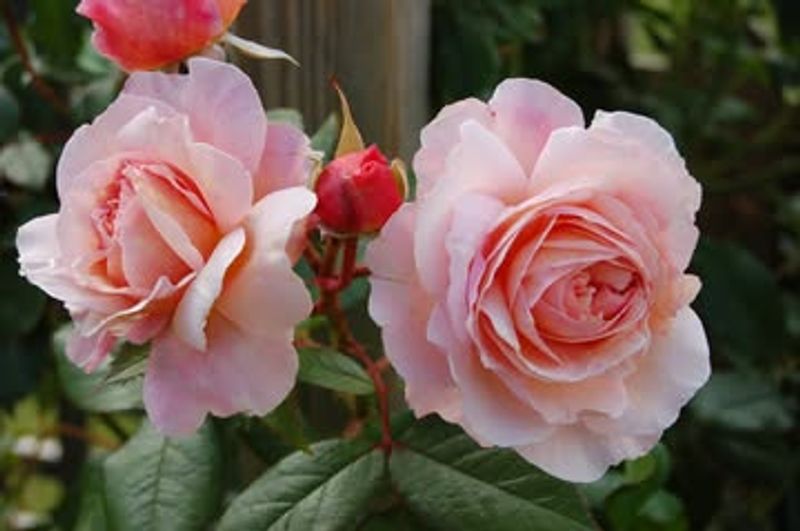
Ask Oregon gardeners which plant loss stings the most, and roses come up consistently.
There is something specifically painful about watching a deer remove every bud from a rose bush the night before the anticipated bloom.
Roses represent months of attention and real financial investment, and the timing of deer browsing on them is reliably the worst possible.
Deer target roses for a specific nutritional reason. New growth and tender buds carry high moisture content and accessible nutrition, particularly through spring and early summer.
The thorns that most first-time rose growers assume will protect the plant do almost nothing to discourage a deer that has already decided to browse. They work around the spines without apparent difficulty or hesitation.
Your Oregon Garden Changes Every Week. Your Plan Should Too.
Gardening in Oregon changes quickly throughout the season. Every Friday you’ll receive a simple weekly plan showing exactly what to plant, prune, fertilize, harvest, and protect so you never miss the right timing.
Deer return to rose bushes repeatedly once they identify a location as reliable.
That repeat browsing accumulates stress across the full season and reduces blooming significantly even when the plant itself survives each individual visit.
Physical barriers installed before the habit forms work better than any intervention applied after deer have established a feeding pattern at a specific location.
Repellent sprays containing putrescent egg solids have shown consistent results in Pacific Northwest trials and need reapplication after rain.
Strong-smelling soap bars hung near rose beds provide low-cost supplemental deterrence.
Deer pressure varies enough across Oregon counties that approaches effective in the Willamette Valley may need adjustment in more rural or heavily forested areas where herd size and boldness both tend to be greater.
3. Daylilies Disappear In Hungry Yards
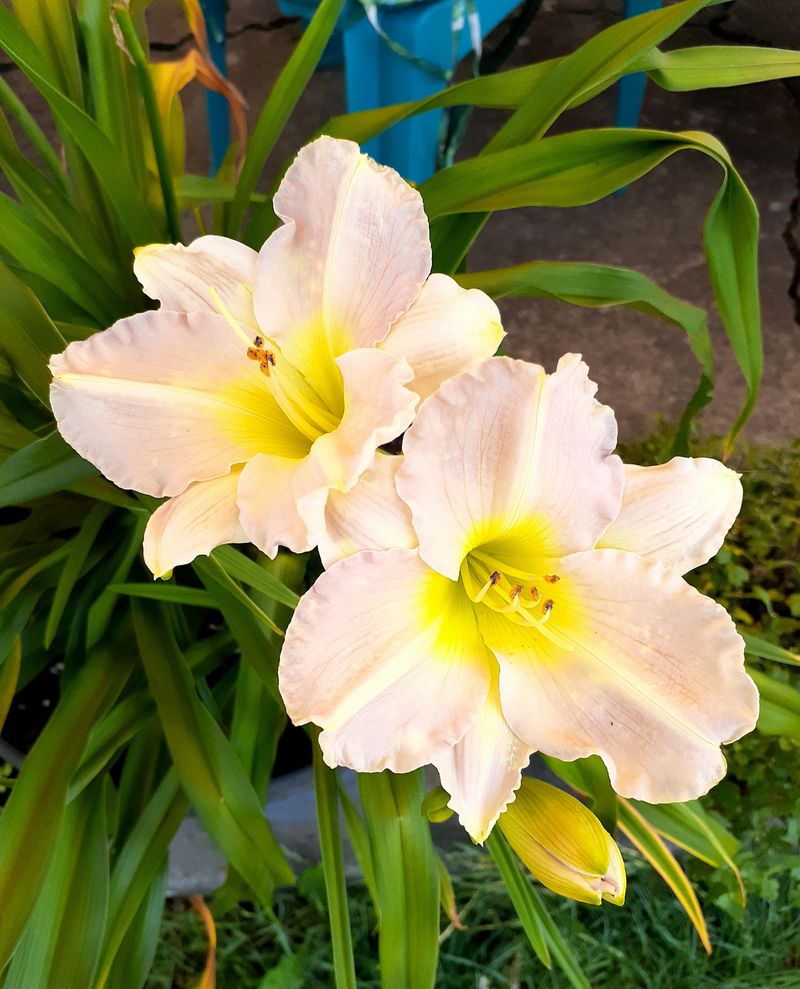
Bright, established, and remarkably resilient under normal conditions, daylilies seem like a straightforward low-maintenance choice for an Oregon perennial bed.
Then deer discover the flower buds, and the calculation changes immediately. A thriving clump can look completely unrecognizable after one focused night of browsing, with every bud gone and the foliage chewed well below normal height.
Deer target daylily buds specifically and deliberately. The buds are soft, nutritionally dense, and accessible at exactly the height deer prefer for effortless feeding.
After the buds are gone, they move to the foliage, which is tender enough to remain appealing particularly during spring and early summer when the plant is producing fresh new growth.
Daylilies consistently appear on high-preference lists for deer activity in both Oregon suburban and rural garden surveys.
The rebound capacity of daylilies creates a frustrating cycle. The plant recovers quickly from browsing, puts out new growth, and deer return for a follow-up visit.
This repeats multiple times through a single season. The plant survives but rarely blooms successfully under that level of repeated stress, which defeats the primary reason most people grow them.
A perimeter of deer-resistant plants like ornamental grasses or Russian sage around the daylily bed slows browsing approach without eliminating the planting.
Motion-activated lights or sprinklers add a response layer that interrupts the settled feeding behavior deer prefer.
Seasonal adjustment matters here because approaches that work through June often need reinforcement by September when food pressure increases across Oregon herds.
4. Tulips Become Spring Snacks
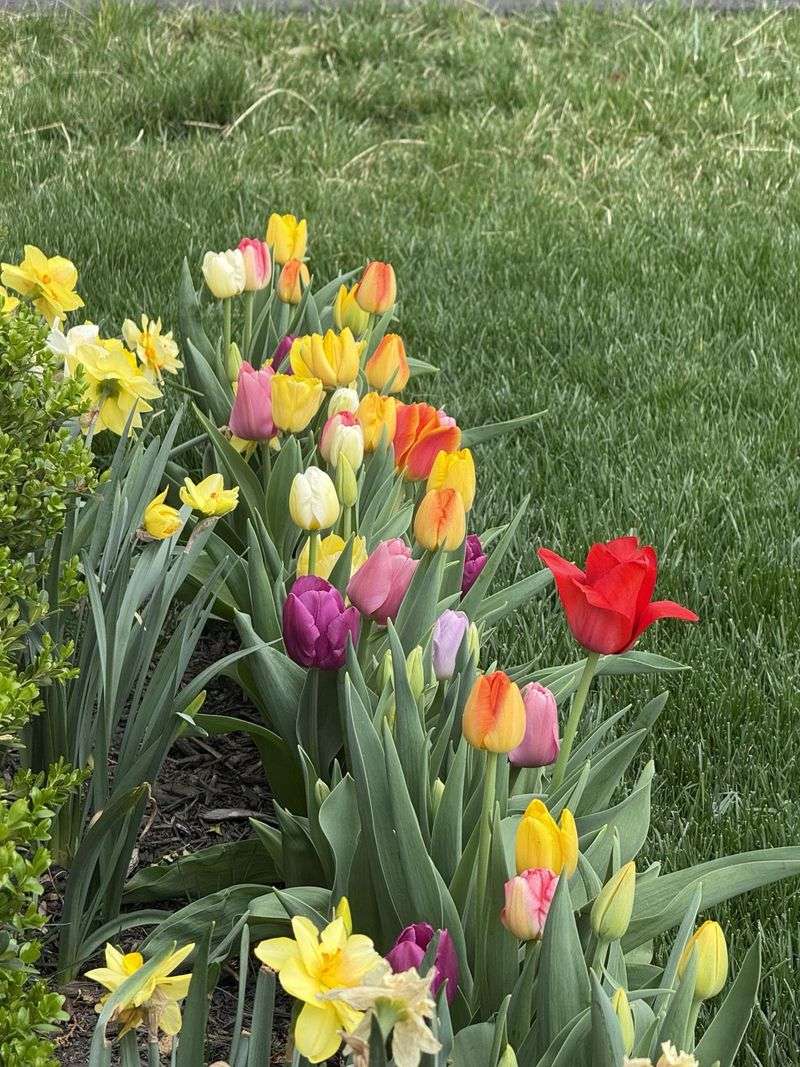
Every spring, thousands of Oregon gardeners plant tulip bulbs with genuine optimism.
They water through cold months, watch for the first green shoots breaking the soil surface, and get ready for the payoff. Then the deer arrive, and the timing is nearly perfect for the deer and nearly devastating for the gardener.
Late winter and early spring represent the most food-pressured period of the deer calendar. Natural forage is limited and the fat reserves built through fall are running low.
When tulip shoots push up from the ground, they present as fresh, protein-rich, easily accessible food in an otherwise sparse landscape.
Deer browse tulip shoots to the soil line and return the following night for anything they missed.
Tulips rank among the most palatable plants for deer in the Pacific Northwest, meaning they are among the first browsed when deer pressure exists at a location.
The flower buds, once they form, become even more attractive than the leaves. Losing the buds eliminates the entire seasonal display that the planting was designed to produce.
Physical barriers installed before shoots emerge provide the most reliable protection.
Simple wire cages over the bed block browsing effectively and come down after the bloom period without any lasting visual impact.
Repellent sprays require pre-emergence application and consistent reapplication.
Gardeners who have cycled through multiple failed protection strategies often find success by mixing deer-resistant bulbs like daffodils and alliums into the tulip bed, creating a mixed planting that reduces the concentrated attractiveness of a pure tulip display.
5. Hydrangeas Need Extra Protection
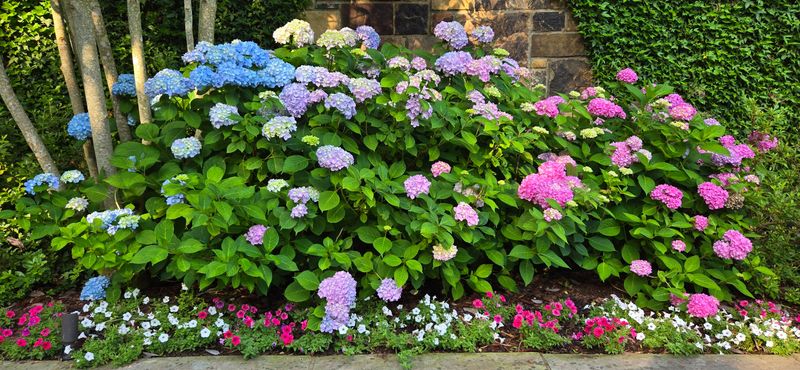
Hydrangeas have become one of the most widely planted shrubs in Oregon home gardens, and deer have noticed their popularity.
The appeal that draws homeowners to hydrangeas, lush new spring growth and large, accessible flower buds, is precisely what makes them attractive to deer at the same time of year.
The tender new foliage produced in spring is particularly vulnerable during early establishment. Deer strip lower branches clean and reach as high as four to five feet depending on the animal.
Flower buds at risk in late spring and early summer represent the loss of an entire season’s display since most hydrangea varieties only bloom on those specific stems. Losing the buds at that stage means waiting a full year for another opportunity.
Variety makes a meaningful difference in browsing frequency.
Smooth hydrangeas and bigleaf varieties attract more consistent deer attention than oakleaf hydrangeas across Oregon observations, though no variety is fully reliable in areas with established, active deer populations.
Treating all hydrangeas as susceptible until proven otherwise in a specific location is the more conservative and generally more accurate assumption.
Wire cages or burlap wrapping through the most vulnerable spring season provides real protection for plants in the establishment phase.
Liquid repellents applied to foliage and reapplied consistently after rain have shown effectiveness across multiple Pacific Northwest trials.
Positioning hydrangeas closer to the house, near lights or regular foot traffic, reduces browsing risk meaningfully because deer consistently prefer feeding locations where they feel undisturbed and unlikely to be startled.
6. Arborvitae Gets Stripped Along Edges
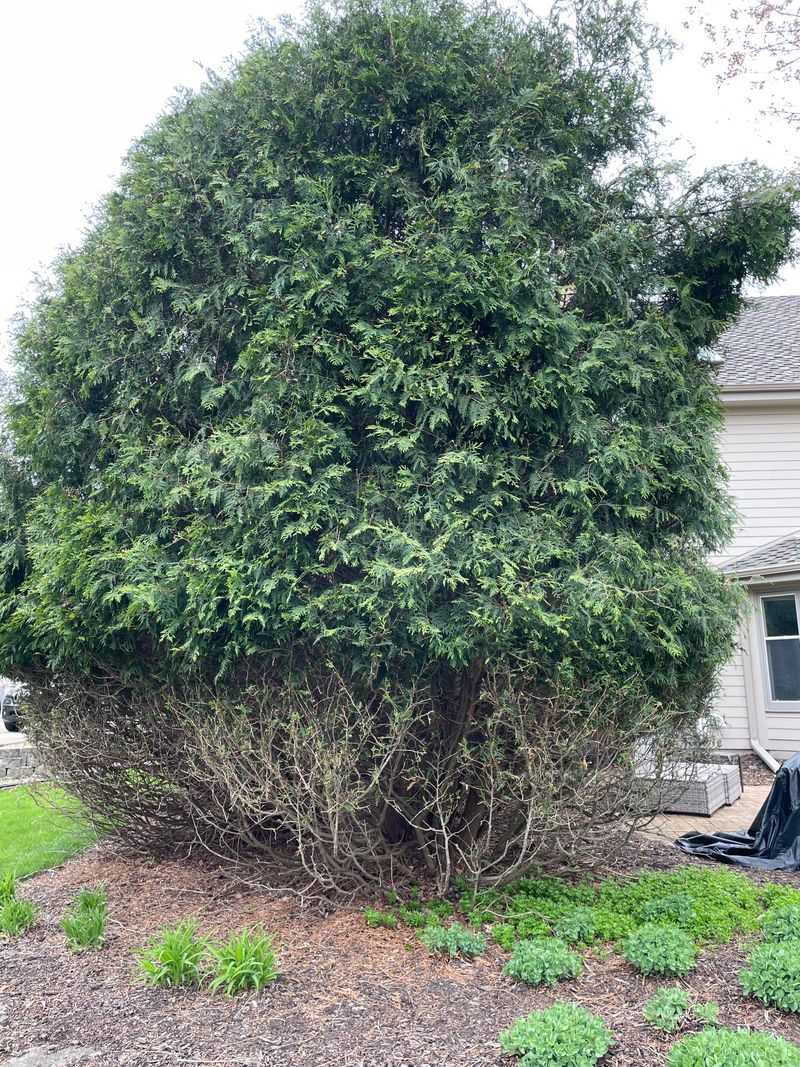
Walk along almost any residential street in the Willamette Valley or along the Oregon Coast Range foothills and the evidence is visible without any searching.
Arborvitae hedges with their lower sections stripped completely bare, leaving that flat-bottomed browse line that explains everything about what has been happening at night through the fall and winter months.
Arborvitae is one of the most commonly planted privacy hedges across Oregon, and its year-round green foliage makes it a reliable food source precisely when deer pressure is highest.
Other plants have gone dormant, natural forage is reduced, and arborvitae stays accessible and nutritious through the coldest months.
Deer return to the same hedge rows night after night, systematically working along the line and removing everything within comfortable reach.
The damage compounds in a particularly difficult way. Arborvitae does not regenerate well from heavily stripped branches, which means significant browsing creates permanent visual gaps in a hedge that took years to develop.
This makes early protection of newly planted trees especially critical before deer establish a feeding pattern at that location.
Deer netting or wire fencing around individual trees or complete hedge rows is the most durable long-term solution.
Repellent sprays applied to the lower four feet of foliage every few weeks through fall and winter reduce ongoing damage for established hedges.
Oregon landscapers with significant experience in deer-heavy areas increasingly recommend evaluating deer-resistant alternatives like skip laurel or boxwood for new privacy plantings where deer pressure is already established and documented.
7. Pansies Vanish From Easy Beds
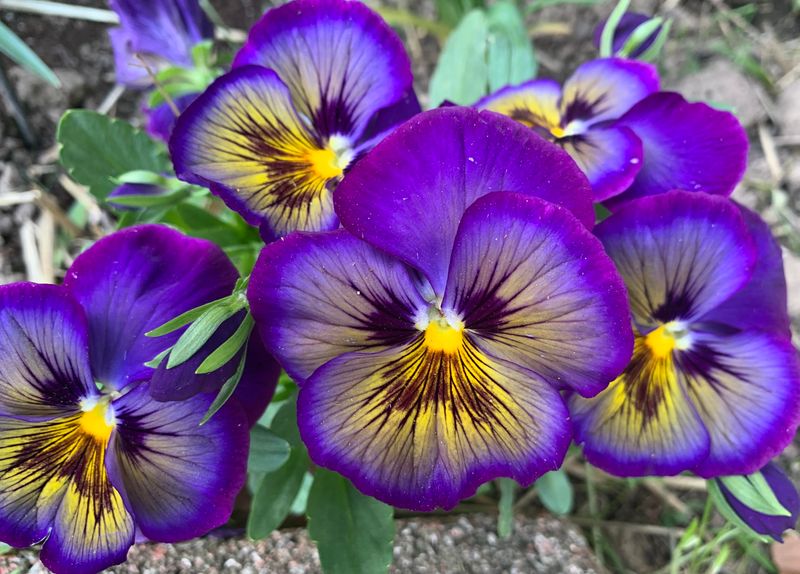
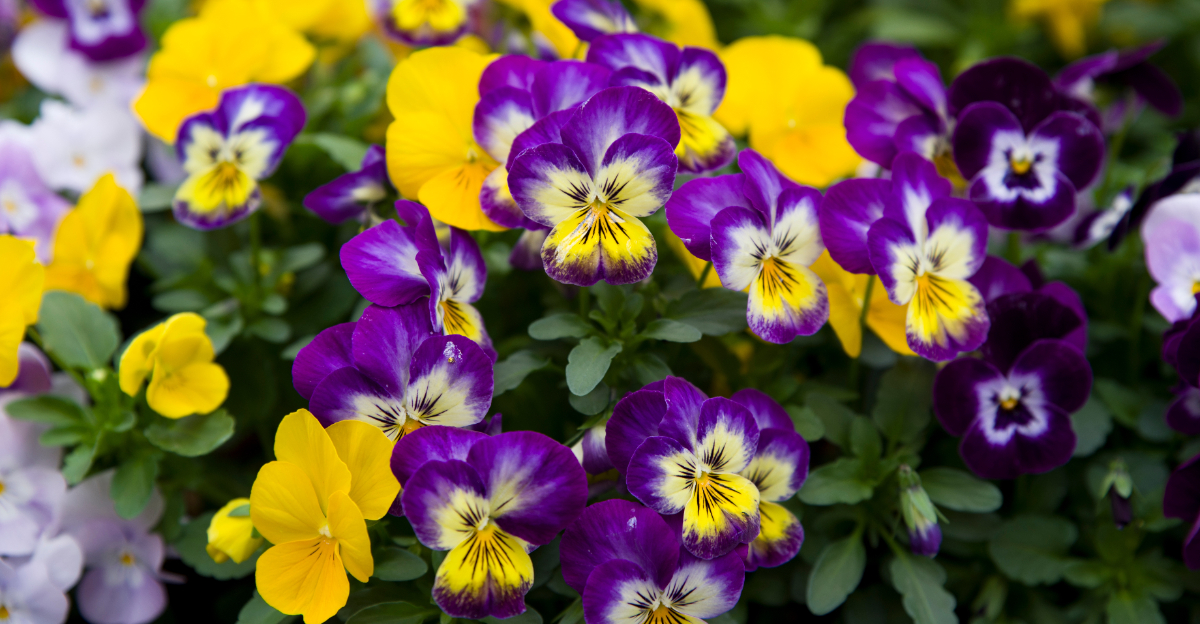
Pansies make a garden look immediately cheerful.
Bright, varied, and well-suited to Oregon’s cool seasonal conditions, they are affordable enough to plant generously and produce an impact that more expensive plants sometimes fail to match.
That accessibility and low growing habit is exactly what makes them so consistently easy for deer to target.
Cool-season bedding plants reach peak vulnerability in fall and early spring, which overlaps directly with periods of heightened deer activity in Oregon yards.
A full pansy bed can clear completely in a single night, leaving chewed stems and bare soil where color and texture existed the previous evening. The low profile of the plants means deer do not even need to slow their pace to browse through them.
Front yard beds and border plantings along sidewalks face the highest exposure because deer move comfortably through open spaces near roads, particularly at dawn and dusk.
A pansy border along a sidewalk edge functions as an open, easily accessible food source at a height and location that requires no special effort to reach.
Oregon deer browsing in suburban settings has increased noticeably over recent decades as urban herds grow more comfortable around human activity and less responsive to ambient disturbance.
Physical barriers are awkward with low-growing plants, but consistent repellent spray application combined with strongly scented herbs like thyme or rosemary planted along the border edge reduces browsing frequency meaningfully.
Raising pansies in window boxes or elevated containers eliminates the primary vulnerability entirely by simply removing them from the height range deer browse most efficiently.