These Are The Oregon Plants That Fill Shady Spots Better Than Hostas
Hostas get plenty of attention in shady gardens, but Oregon gardeners have other options that can bring just as much charm.
Some shade plants offer bolder texture, better seasonal color, or stronger support for local wildlife.
That makes them worth a second look, especially in yards with damp corners or tree covered beds.
Oregon’s mild climate can help many shade lovers settle in fast, but the best plants do more than simply survive without full sun.
They make dark spots feel planned instead of forgotten. A shaded corner can become one of the prettiest parts of the yard when the plants have interesting leaves, soft blooms, or a shape that fills space nicely.
Hostas are dependable, sure, but they are not the only answer. For gardeners who want something fresh, shady areas can hold way more personality than one leafy standby.
1. Lady Fern
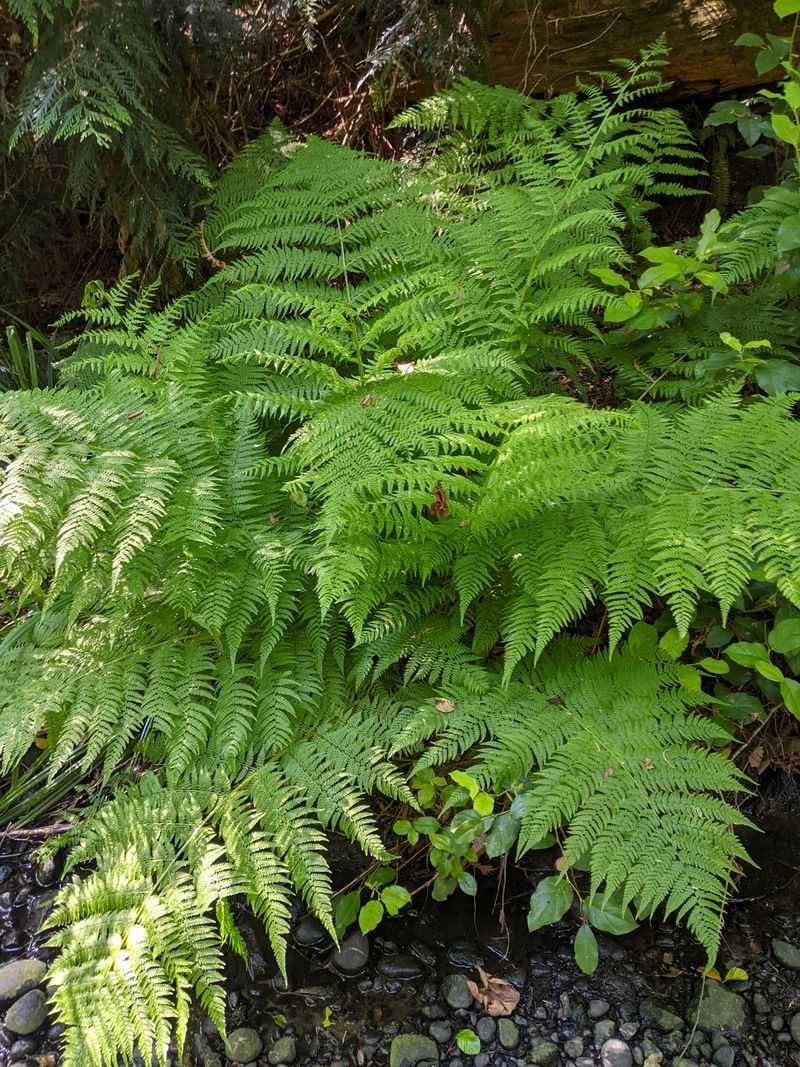
Few plants match the airy elegance of Lady Fern growing in a shaded corner of the garden. Its lacy, bright green fronds can reach up to five feet tall, making it one of the most striking ferns you can grow in our region.
It loves moisture and shade, which makes it a natural fit for the damp, wooded conditions found across much of this state.
One of the best things about this fern is how fast it fills in. It spreads through underground rhizomes, slowly forming lush colonies that crowd out weeds without much help from you.
Plant it near a water feature or along a shaded fence line and watch it take over in the best possible way.
Lady Fern is also surprisingly tough. It handles cold winters well and bounces back quickly in spring with fresh, vibrant growth.
It pairs beautifully with darker-leaved plants because its bright green color really pops in low light. Gardeners who want a bold, natural look without a lot of maintenance will find this fern hard to beat.
It also provides shelter for small wildlife like frogs and ground-nesting birds. If you have a wet, shady spot that feels bare and sad, this fern will transform it into something that looks wild and wonderful.
2. Licorice Fern
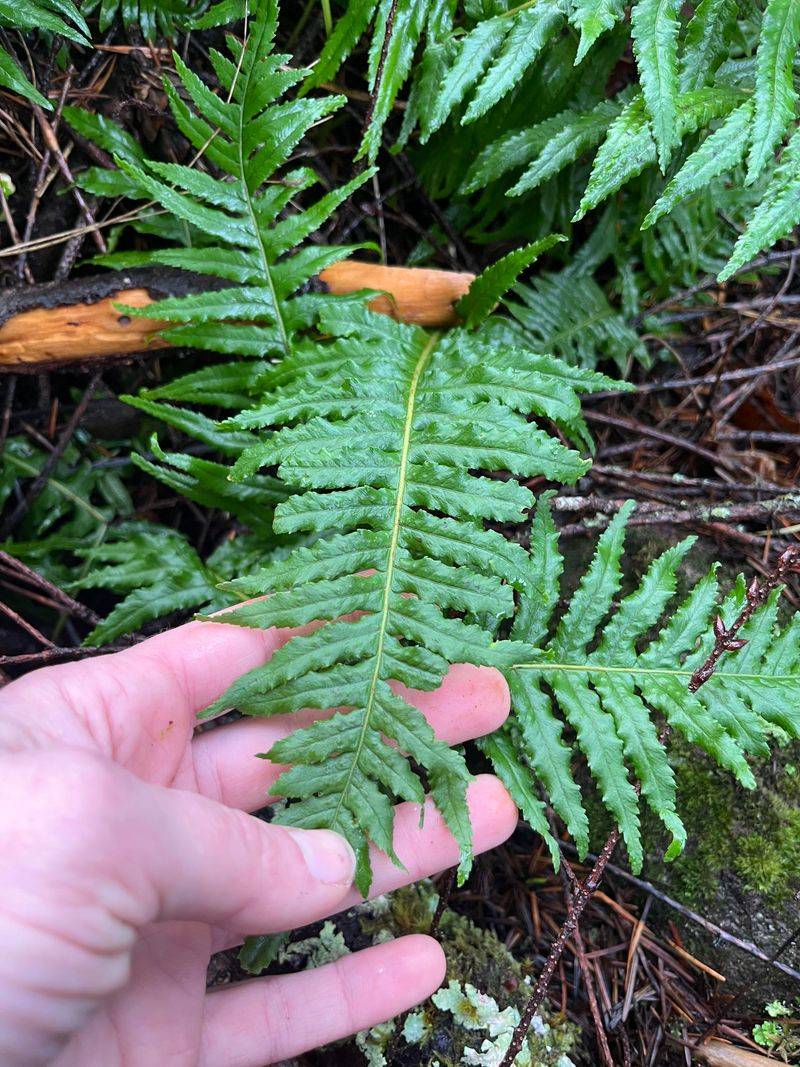
There is something almost magical about finding Licorice Fern growing right out of a mossy log or rocky cliff face.
Unlike most ferns that grow in soil, this one is an epiphyte, meaning it can grow on the surface of rocks, trees, and old wood.
Its roots produce a faint licorice scent, which is how it got its charming name. This fern thrives in the cool, wet winters of our state and actually goes dormant during the dry summer months.
That makes it a great companion for summer-blooming plants that can take over when the fern rests.
Once the fall rains return, Licorice Fern springs back to life with glossy, deep green fronds that brighten up any shaded area.
It stays relatively compact, usually reaching only about twelve inches tall, which makes it perfect for smaller gardens or container plantings. Try it cascading over the edge of a raised bed or tucked into a shaded rock garden.
Your Oregon Garden Changes Every Week. Your Plan Should Too.
Gardening in Oregon changes quickly throughout the season. Every Friday you’ll receive a simple weekly plan showing exactly what to plant, prune, fertilize, harvest, and protect so you never miss the right timing.
Because it naturally grows on trees, it also does well planted at the base of large conifers where other plants struggle. Wildlife enthusiasts will appreciate that deer tend to leave it alone.
For anyone wanting a low-fuss, uniquely textured plant that celebrates the true spirit of our region’s forests, Licorice Fern is a top pick.
3. Salal
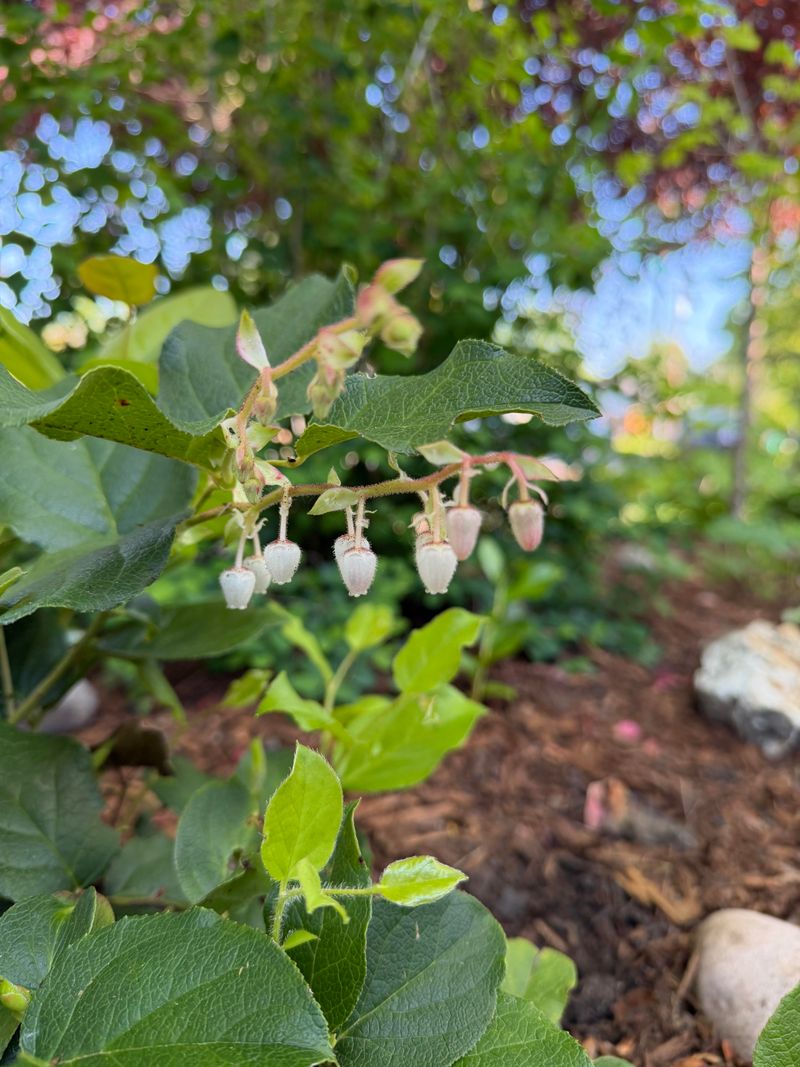
Walk through almost any forest in western parts of this state and you will find Salal growing in thick, glossy mats beneath the trees. It is one of the toughest and most versatile native shrubs around.
Its leathery, dark green leaves stay on the plant all year long, giving your garden structure and color even in the middle of winter.
In late spring, Salal produces strings of small, bell-shaped flowers that range from white to soft pink.
By late summer, those flowers turn into dark purple berries that are edible and have been used by Indigenous peoples of this region for centuries.
Birds absolutely love the berries too, so planting Salal is like setting up a natural bird feeder right in your backyard.
Height-wise, it usually stays between two and five feet tall, though it can get larger in ideal conditions. It spreads slowly by rhizomes to form a dense groundcover that shades out weeds effectively.
Salal handles dry shade better than most native plants, making it a great choice for areas under big conifers where rain rarely reaches the soil. It also works well as a low hedge or border plant along a shaded path.
Florists have long prized its glossy leaves for arrangements, so you can even cut a few stems to bring the garden indoors.
4. Low Oregon Grape
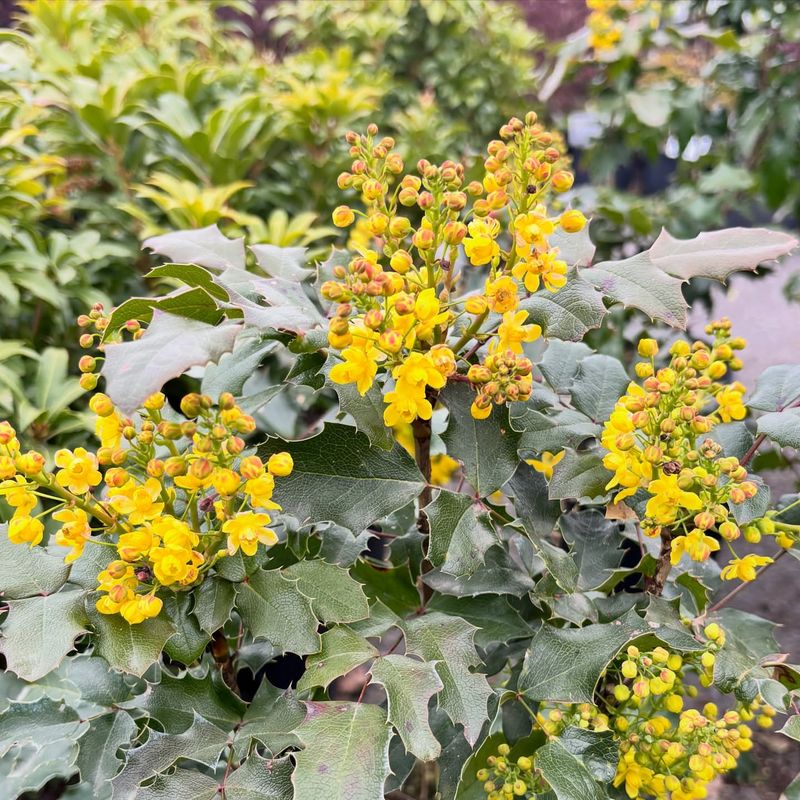
Bold, spiky, and surprisingly beautiful, Low Oregon Grape is one of the most recognizable native plants in our region. It grows close to the ground, usually only one to two feet tall, making it an excellent choice for edging shaded beds or filling in under taller shrubs.
Its leaves look a lot like holly, with glossy surfaces and pointed edges that catch the light even in dim conditions.
Every spring, clusters of bright yellow flowers appear above the foliage, creating a cheerful pop of color when most shade plants are still waking up.
Those flowers attract early pollinators like native bees and butterflies. By fall, the plant produces clusters of tart, blue-purple berries that birds find irresistible.
One of the standout qualities of this plant is its year-round interest. In winter, its leaves often turn deep red or bronze, adding unexpected warmth to the garden during cold months.
It handles both dry shade and moist shade, making it one of the most adaptable plants on this list.
It also spreads slowly to form a dense, weed-suppressing mat over time. Deer tend to avoid it, likely because of those sharp leaf edges.
For gardeners in northern or higher-elevation areas of this state who need something tough enough to handle cold and shade at the same time, this plant is a reliable and beautiful solution.
5. Evergreen Huckleberry
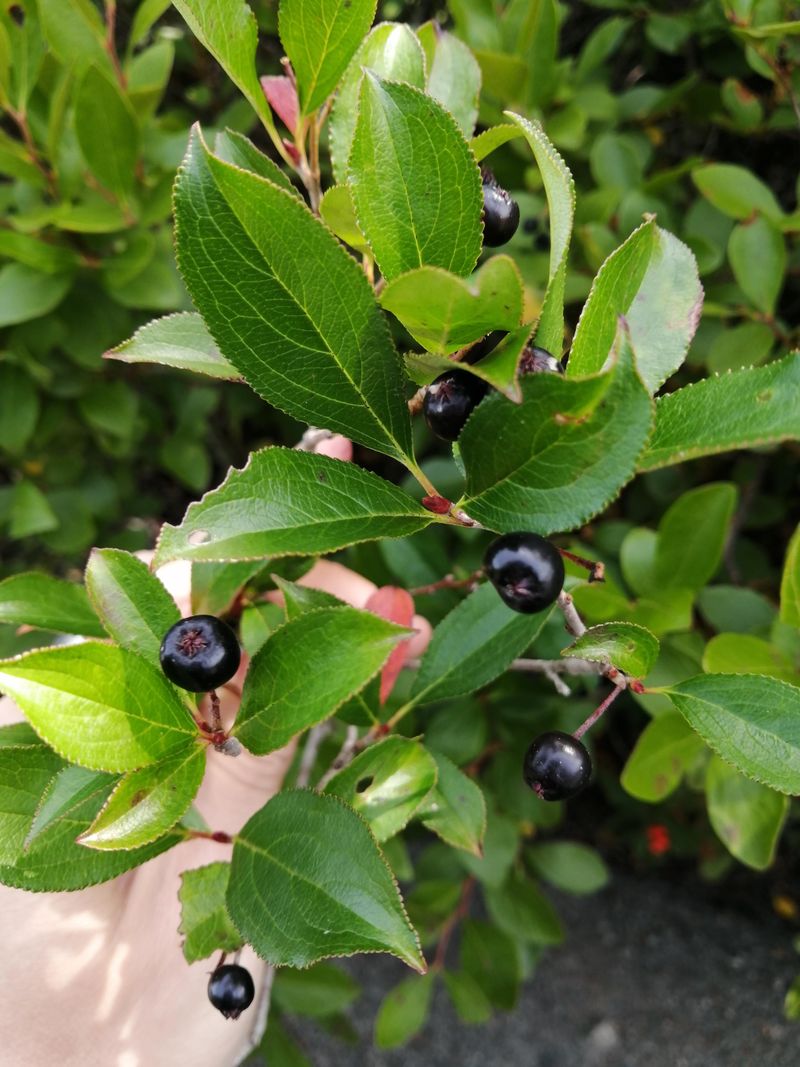
Few native shrubs combine beauty, wildlife value, and edibility as effortlessly as Evergreen Huckleberry. It keeps its small, glossy leaves all year long, which means your shaded garden spot will never look bare or dull.
The foliage takes on lovely reddish tones in winter, adding seasonal interest without any extra effort on your part.
In spring, tiny pink or white bell-shaped flowers dangle from the branches like little lanterns.
By late summer and into fall, those flowers become small, deep purple berries packed with flavor.
They taste similar to blueberries but with a richer, more complex sweetness. You can eat them straight off the bush, bake them into pies, or leave them for the birds and bears that rely on them as a key food source.
This shrub grows well in both moist and moderately dry shade, which gives it an edge over many other fruiting plants that demand full sun.
It typically reaches four to eight feet tall over time, making it useful as an informal hedge or backdrop plant in a shaded border.
It grows slowly, so it will not take over your garden. Evergreen Huckleberry is also very low maintenance once established.
It rarely needs pruning and generally stays healthy without supplemental feeding. Coastal and valley gardeners across our state have relied on this shrub for generations, and it is easy to understand why once you taste those berries.
6. Bunchberry
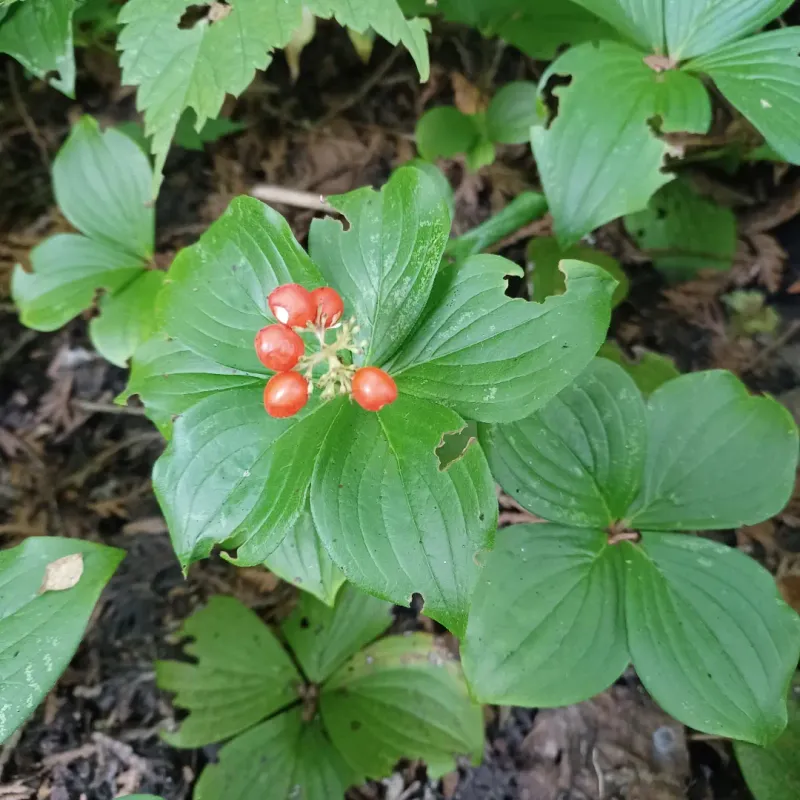
Bunchberry is the smallest member of the dogwood family, and it carries all the charm of its larger relatives in a tiny, ground-hugging package.
It rarely grows more than six inches tall, but what it lacks in height it more than makes up for in visual impact.
Each plant produces four-petaled white flowers in late spring that look almost identical to those of a full-sized dogwood tree.
After the flowers fade, clusters of bright red berries appear in late summer and persist into fall. These berries are a favorite food for many forest birds, including thrushes and waxwings.
The plant spreads slowly by underground runners to form a dense, low carpet that is incredibly effective at suppressing weeds in shaded areas.
Bunchberry prefers cool, moist, acidic soil and does best in the shadier, more humid parts of the garden. It is particularly well suited to gardeners in the wetter, western parts of this state where the climate naturally stays cool and damp.
It also pairs beautifully with ferns and mosses, creating a lush, forest-floor look that feels completely natural. In fall, its leaves turn deep red before dropping, giving you one last burst of color before winter.
Gardeners who want something truly unique and conversation-worthy for a difficult shady spot will find Bunchberry to be a genuine standout. It rewards patience with a carpet of color that feels like a slice of the wild forest.
7. Twinflower
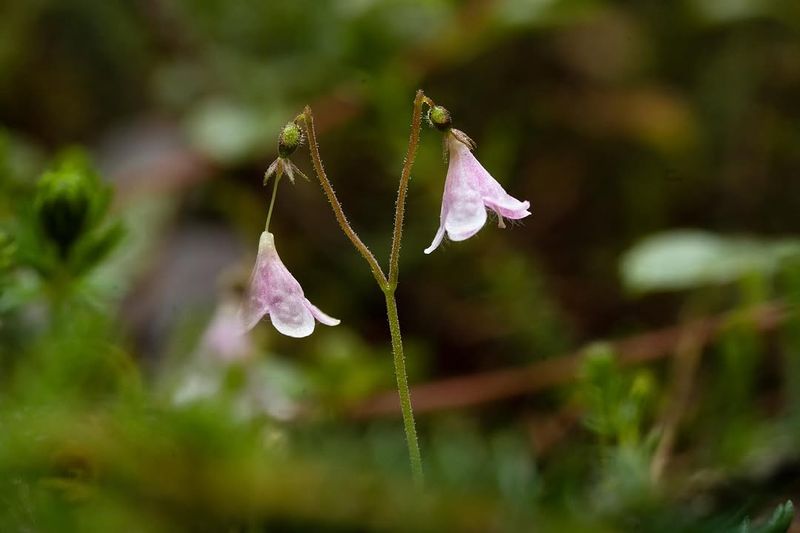
Named for the charming way its tiny pink flowers always come in pairs, Twinflower is one of the most delicate and endearing native plants you can grow in a shaded garden.
Each pair of bell-shaped blooms hangs from a slender Y-shaped stem, nodding gently in the breeze.
Up close, the flowers have a faint, sweet fragrance that feels like a little gift from the forest. This plant creeps along the ground on thin, woody stems, forming a low mat that rarely rises above four inches.
It is perfectly suited for filling in gaps between stepping stones, spreading under shrubs, or blanketing the base of trees where grass will not grow.
Because it stays so low, it never competes with taller plants and works well in layered plantings.
Twinflower prefers cool, moist, acidic soil with good organic matter. It thrives under conifers, which naturally create the kind of shaded, slightly acidic conditions this plant loves.
It is most commonly found in the forests of the northern and coastal parts of this state, but it can be grown successfully in home gardens with the right soil preparation.
Once established, it is quite low maintenance and spreads steadily without becoming invasive.
It also provides nectar for small pollinators during its bloom period in early summer. For anyone who wants a fairy-tale feel in a shaded corner, Twinflower is the plant to reach for.
8. Stream Violet
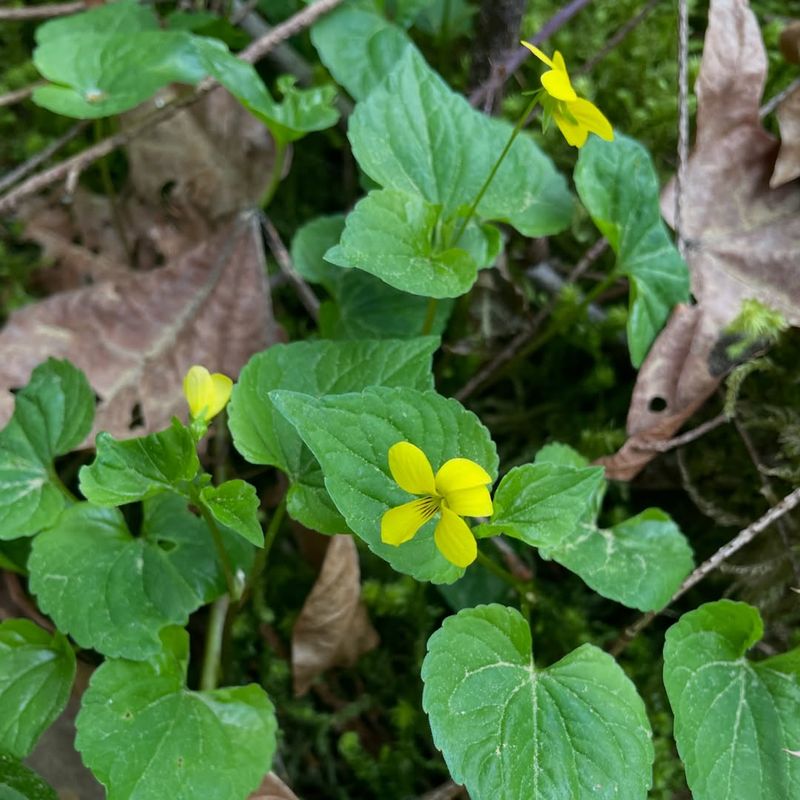
Cheerful and unpretentious, Stream Violet brings a burst of sunny yellow to shaded spots where most flowers refuse to bloom.
Its bright yellow petals are often streaked with thin purple lines near the center, which helps guide pollinators right to the nectar.
The flowers appear in early spring, making this one of the first native wildflowers to wake up after winter.
The leaves are heart-shaped and a fresh, medium green that looks clean and tidy throughout the growing season.
Stream Violet naturally grows along stream banks and in moist, wooded areas, which tells you exactly what kind of conditions it prefers.
It loves consistently moist soil and dappled or deep shade, making it a great choice for low spots in the garden that tend to stay wet.
This violet spreads by both runners and self-seeding, so it will slowly naturalize to fill in bare ground over time. It works especially well planted in masses under deciduous trees, where it gets enough light in early spring before the tree canopy fills in.
It also pairs nicely with ferns and other moisture-loving plants. Unlike some violets that can become weedy, Stream Violet tends to stay manageable in garden settings.
It is also a host plant for several native butterfly species, adding ecological value beyond its good looks.
If your garden has a damp, shaded area that feels like wasted space, this violet will prove that wrong in the most delightful way.
9. Woodland Strawberry
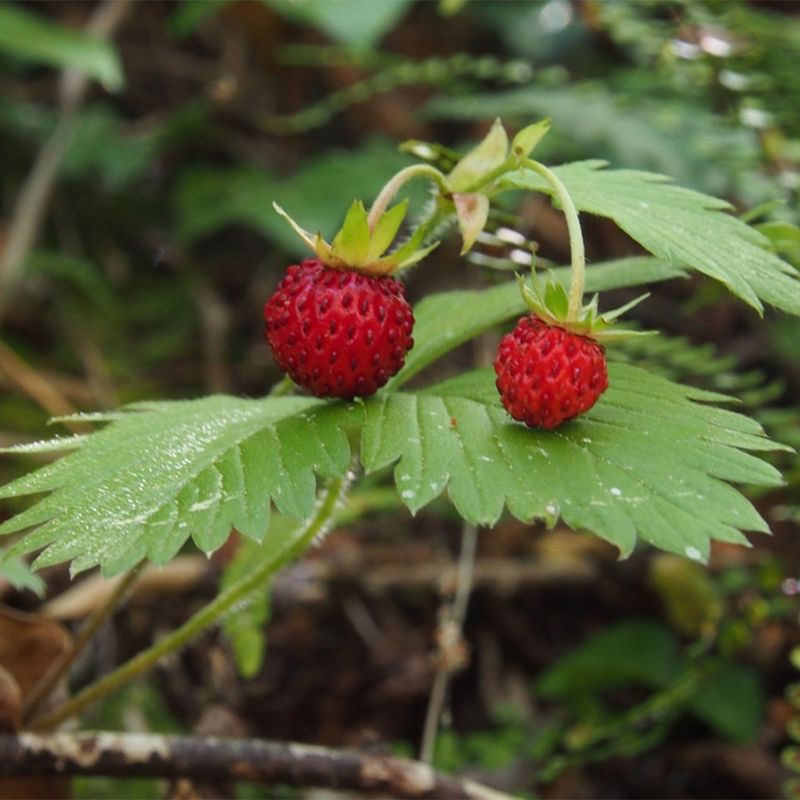
Who would not love a groundcover that produces real, edible strawberries? Woodland Strawberry is a native species that grows wild across much of this state, and it translates beautifully into the home garden.
The berries are small but intensely sweet and flavorful, often described as tasting more like a strawberry than the big ones from the grocery store.
The plant grows in a low, spreading mat of three-leaflet leaves that stays attractive all season long. White flowers appear in spring, followed by the tiny red fruits in early summer.
Even after fruiting is done, the foliage continues to look tidy and green through fall. In some areas it even stays semi-evergreen through mild winters.
Woodland Strawberry spreads by sending out runners, much like its cultivated cousin, so it fills in ground quickly without becoming a nuisance.
It handles both moist and moderately dry shade, though it fruits more generously with a bit more light.
Plant it along shaded paths, under fruit trees, or around the base of shrubs for a practical and pretty solution to bare ground.
Birds, small mammals, and even turtles enjoy the berries, making it a wildlife-friendly choice as well.
Children especially love discovering the tiny fruits hidden among the leaves. For gardeners who want their shade garden to be both beautiful and productive, Woodland Strawberry delivers on both counts without asking for much in return.
10. Youth-On-Age
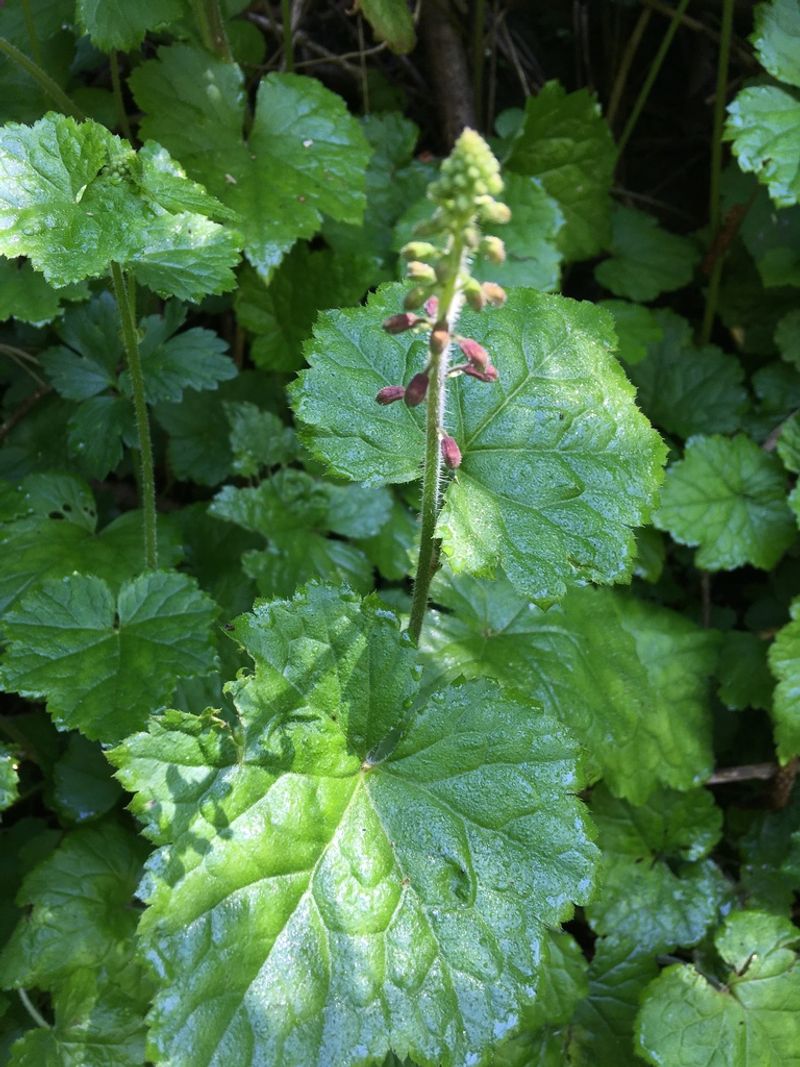
With a name like Youth-On-Age, you already know this interesting native plant has a story to tell.
It gets its quirky name from the way tiny new plantlets sprout right at the base of each mature leaf, creating a curious piggyback effect that looks like something out of a science fiction movie.
Botanically known as Tolmiea menziesii, it is native to the moist coastal forests of the Pacific Northwest and thrives in deep shade.
The leaves are large, heart-shaped, and covered in soft, fine hairs that give them a slightly velvety texture. The plant grows in loose, mounding clumps that reach about twelve to eighteen inches tall.
In late spring, it sends up slender flower spikes with tiny, unusual reddish-brown blooms that attract small insects.
Youth-On-Age is incredibly easy to propagate. Just pin a leaf to moist soil and the plantlet at its base will root on its own.
This makes it a wonderful plant to share with friends and neighbors. It prefers consistently moist soil and does not tolerate drought well, so keep it in a spot that stays reliably damp.
It makes an excellent houseplant too, which has made it popular far beyond the Pacific Northwest. In the garden, it works beautifully as a groundcover under large shrubs or along shaded stream banks.
Its unusual reproduction habit alone makes it worth growing, but its lush, textured foliage is reason enough to give it a permanent spot in your shade garden.
11. False Solomon’s Seal
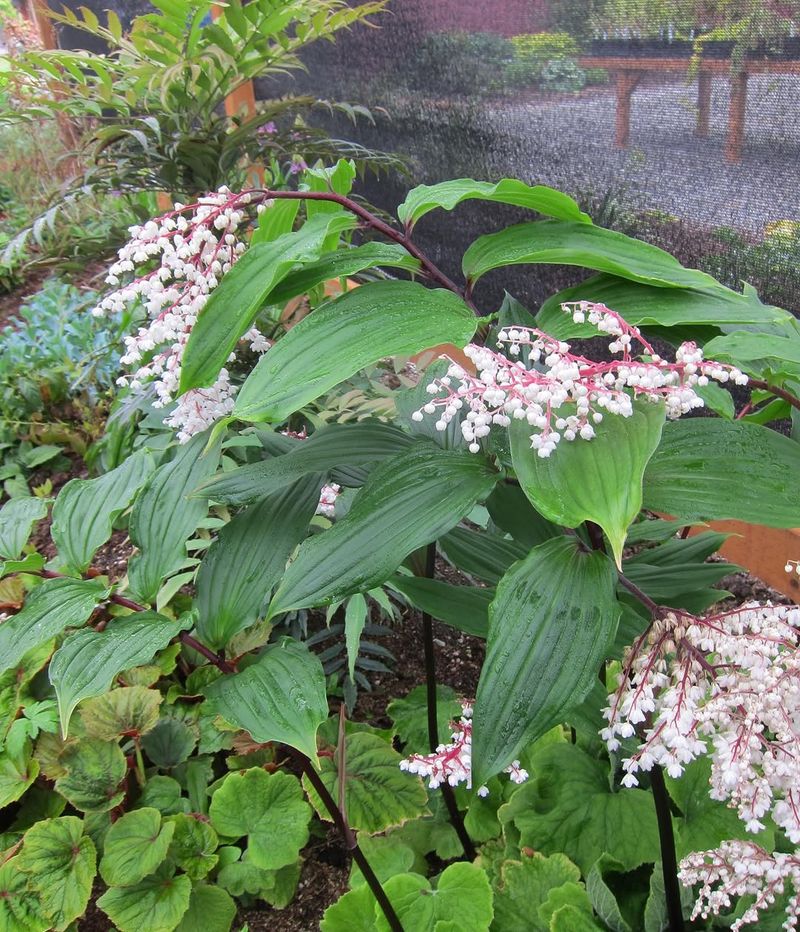
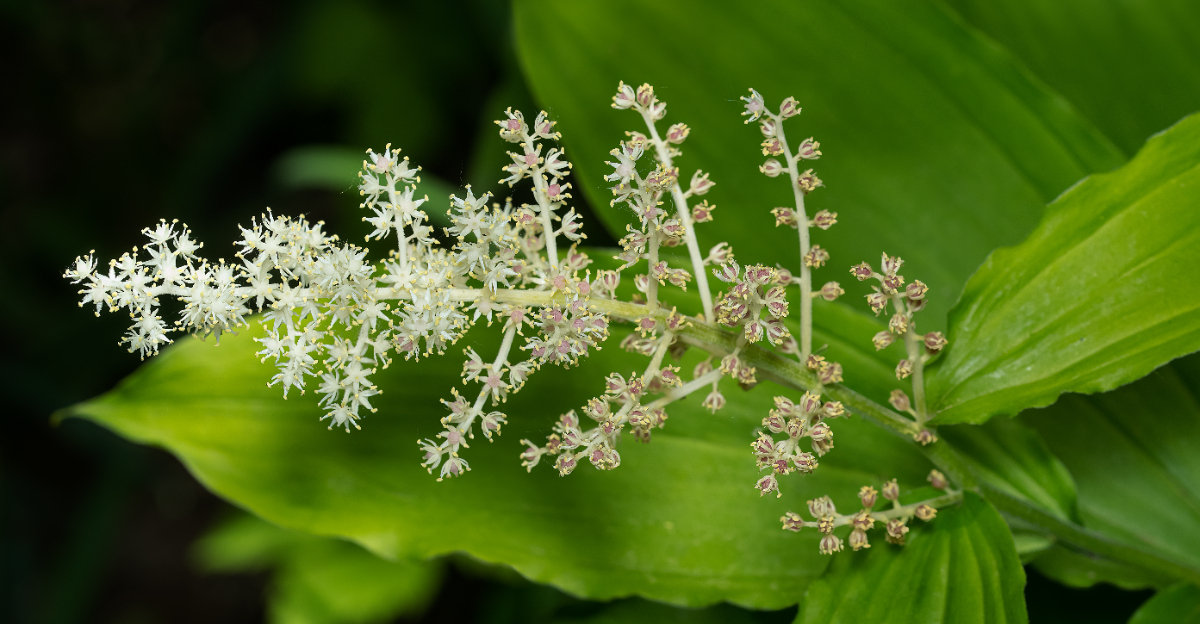
Graceful and architectural, False Solomon’s Seal is the kind of plant that makes a shade garden look professionally designed. Its long, arching stems are lined with broad, parallel-veined leaves that create a beautiful layered effect.
In late spring, each stem is topped with a fluffy plume of tiny, creamy white flowers that catch the light and brighten even the darkest corners.
By fall, those flower clusters transform into clusters of small berries that start out green, turn speckled red and white, and finally ripen to a deep ruby red.
The berries are technically edible but are best left for the birds, who flock to them eagerly.
The fall foliage also turns golden yellow before the plant goes dormant, giving you one final show before winter.
This plant grows from spreading rhizomes and slowly forms colonies that look lush and full over time. It prefers moist, rich soil with good organic matter and does best in partial to full shade.
It pairs especially well with ferns and wildflowers, creating a layered woodland look that feels completely natural.
Height-wise, it typically reaches two to three feet, giving it enough presence to anchor a shaded border. It is also very long-lived once established, coming back reliably year after year.
Gardeners in the wetter valleys and coastal areas of this state will find it particularly easy to grow. For a shade plant with true four-season interest, this one is hard to top.
12. Starflower
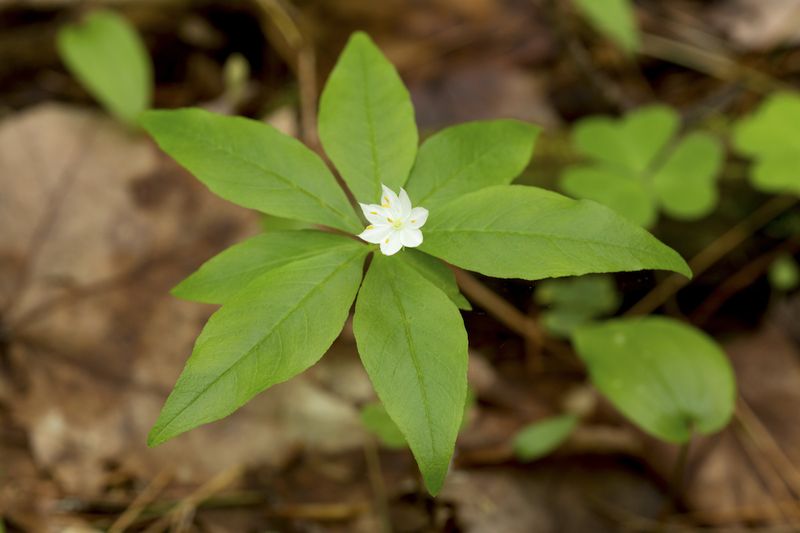
Tiny but absolutely captivating, Starflower earns its name with perfectly formed, star-shaped white blooms that seem to glow in the dim light of a shaded garden.
Each flower has five to nine pointed petals arranged in a neat star pattern, and they float above the foliage on slender stems that look almost too delicate to hold them.
The blooming period falls in late spring and early summer, offering a quiet, refined beauty that rewards close attention.
The leaves are also arranged in a star-like whorl around the stem, which gives the plant a geometric, almost artful appearance even when it is not in bloom.
It grows only four to eight inches tall, making it one of the smaller plants on this list. But what it lacks in size it makes up for in charm and ecological value.
Starflower prefers cool, moist, acidic soil under a canopy of conifers or deciduous trees. It grows naturally in the forest understory across much of the western and northern parts of this state.
In the garden, it works beautifully as part of a naturalized woodland planting alongside mosses, ferns, and other low-growing wildflowers.
It spreads slowly by rhizomes and is not invasive, so it will fill space gradually without crowding out neighbors.
Because it is so small and refined, it works best planted in groups for visual impact. For a finishing touch that brings true forest magic to a shaded bed, Starflower is unmatched.