7 Florida Border Plants That Help Make Yard Edges Less Tick-Friendly
Your yard edges are doing something you probably did not plan for. That narrow strip where lawn meets fence, garden bed, or tree line is exactly the habitat ticks prefer most.
The overgrown, shady, damp conditions that develop along neglected borders create ideal questing territory for ticks waiting for a host to brush past.
Many Florida homeowners spend time on tick prevention through sprays, checks, and repellents without ever addressing the underlying habitat problem sitting right at the edge of the property.
The overgrowth that accumulates along those borders does not look dangerous. It looks like a low-priority landscaping task.
But to a blacklegged tick waiting for a warm-blooded host to walk by, it looks like prime real estate.
Luckily, the fix is more straightforward than many people expect, and it starts with plant selection rather than chemical treatment.
The right border plants keep edges open, sunny, and dry in ways that make tick habitat genuinely less viable.
These Florida-friendly plants do this job reliably, look good doing it, and support local pollinators at the same time.
Your yard edges can work for you instead of against you, and the change starts with what goes in the ground along those borders.
1. Muhly Grass
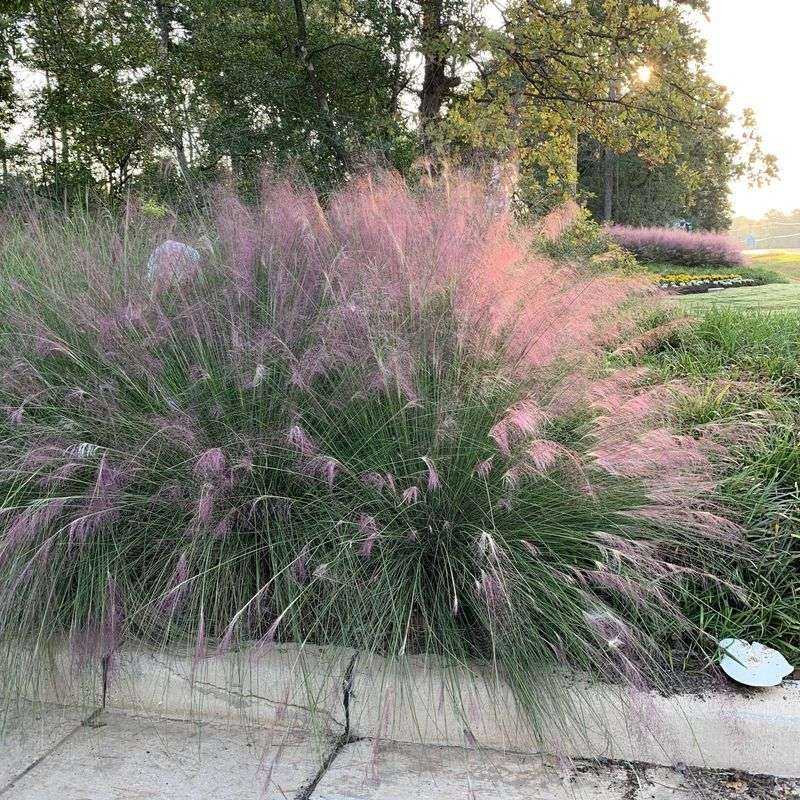
Few plants stop people mid-step the way Muhly grass does in fall.
Those soft pink-purple plumes catch light and move with the breeze in a way that makes a yard edge look considered and intentional rather than incidental.
The visual appeal is real, but the practical case for this plant along Florida yard borders is just as strong.
Muhlenbergia capillaris is a Florida native that thrives in full sun and well-drained soil, forming neat rounded clumps that stay relatively low and open.
Dense, shady, overgrown borders give ticks sheltered questing positions at exactly the right height to reach passing hosts. Muhly grass works against that setup.
Its airy structure allows sunlight to reach the soil surface, keeping the ground drier and meaningfully less hospitable to tick activity.
Once established, Muhly grass handles drought without supplemental watering and requires almost no regular maintenance beyond a cutback in late winter to keep the clumps tidy.
No fertilizer requirements, no fussing, no replanting cycle. A clean defined edge that performs reliably year-round.
Plant it along fence lines, property edges, or anywhere a clear visual border is needed without creating a shaded, tangled mass underneath.
Spacing clumps about two to three feet apart maintains the open sunlit structure that makes this plant effective for border management.
Replacing weedy mats or overgrown grass clumps with Muhly grass is one of the most straightforward ways to start shifting the tick-friendliness of a Florida yard edge in the right direction.
2. Coontie
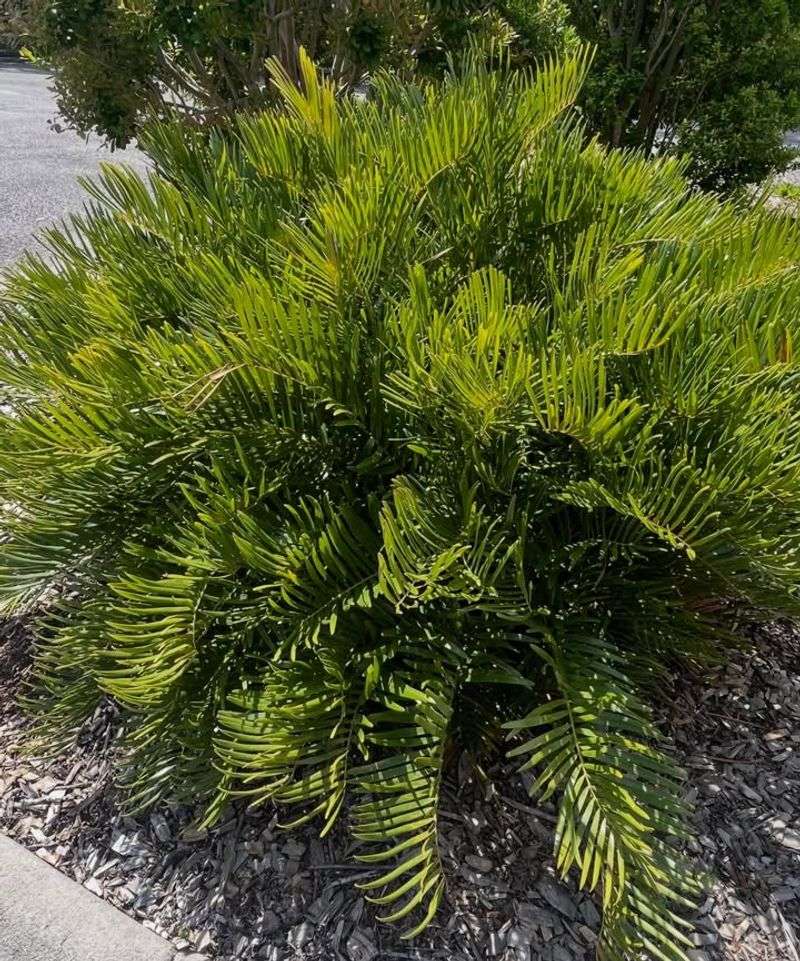
Coontie has been growing in Florida longer than almost anything else in the landscape.
This ancient cycad is the only native cycad in the eastern United States, and its track record in Florida conditions is measured in thousands of years rather than growing seasons.
That kind of adaptation produces a plant that handles what Florida throws at it without complaint or special care.
Your Florida Garden Changes Every Week. Your Plan Should Too.
Gardening in Florida changes quickly throughout the season. Every Friday you’ll receive a simple weekly plan showing exactly what to plant, prune, fertilize, harvest, and protect so you never miss the right timing.
Zamia integrifolia stays compact, reaching only two to three feet tall with glossy dark green fronds forming a dense but organized mound.
That defined, predictable shape is exactly what makes Coontie valuable along yard edges.
It creates a clear visual boundary without the scraggly overgrown look that provides tick habitat, and it maintains that structure through Florida’s heat and humidity without regular intervention.
Unlike dense moisture-trapping shrubs that create dark hiding conditions at ground level, Coontie keeps its footprint organized and manageable.
It handles drought, shade, and sandy soils with equal patience, making it adaptable to the range of conditions that develop along different sections of the same property edge.
The ecological return extends beyond tick management. Coontie serves as the sole host plant for the Atala butterfly, a species that depends on it for reproduction.
A border planting that reduces tick habitat while supporting a native butterfly species simultaneously is delivering a level of value that most ornamental plants never approach.
Planting it along shady edges where other plants consistently underperform gives it both a practical purpose and an appropriate growing environment.
3. Sunshine Mimosa
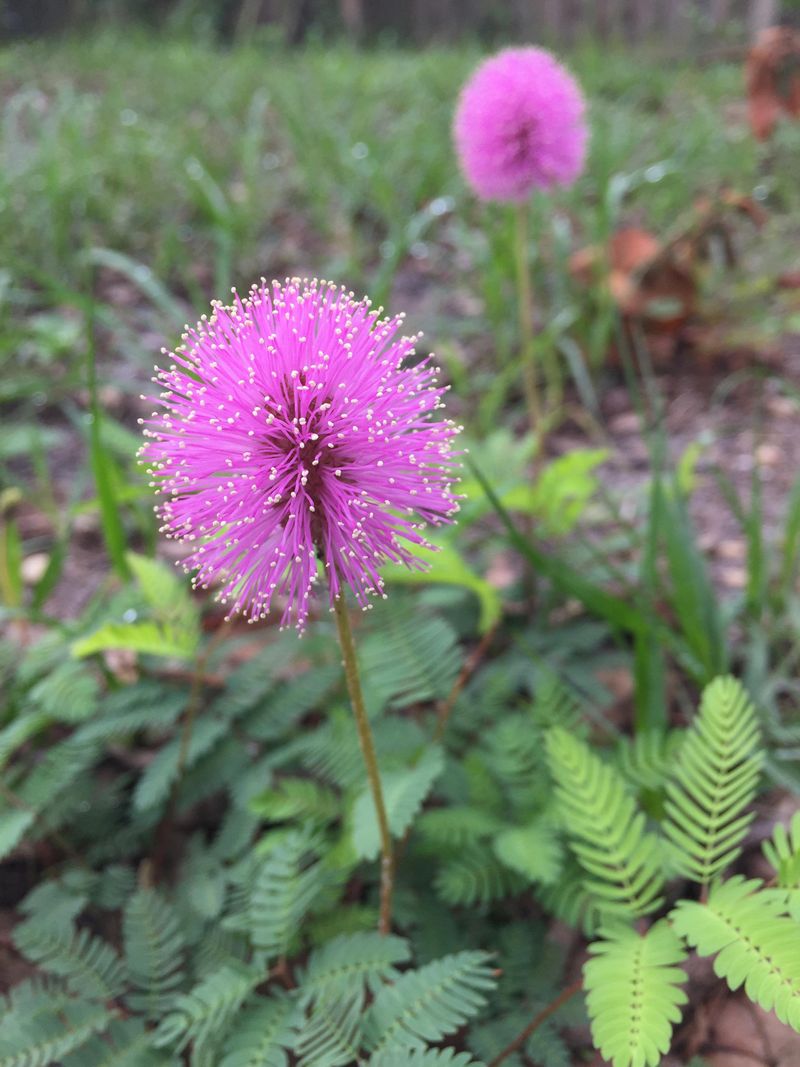
Walk across a patch of Sunshine Mimosa and watch the leaves gently fold closed in response to contact.
That touch-sensitive movement is one of the more charming qualities in Florida’s native plant lineup. Mimosa strigillosa also brings serious practical value to the yard edges where tick habitat most commonly develops.
This native groundcover spreads low and wide, covering bare patches along borders with soft ferny foliage and cheerful pink puffball flowers.
Bare soil along yard edges is a consistent problem because it provides exposed, warm ground where ticks can rest and wait while remaining difficult to spot.
Sunshine Mimosa closes that gap quickly and keeps it covered without growing tall enough to create the shaded humid conditions that make tick habitat functional.
It spreads by runners, naturally filling gaps over time without requiring replanting through the season. That spreading habit is an asset when the goal is eliminating patchy weedy border areas that develop along fence lines and property edges.
The low profile, two to four inches above the soil surface, keeps sunlight reaching down through the planting and maintains airflow across the border zone.
Occasional mowing or edging keeps it from moving into areas where it is not wanted, and it recovers from mowing quickly without setback.
Pollinators visit the flowers consistently throughout the bloom period, which adds wildlife value to what is already a practical border management solution.
For Florida homeowners dealing with patchy, problematic border areas that resist other solutions, Sunshine Mimosa is consistently underutilized relative to how well it performs.
4. Blanket Flower
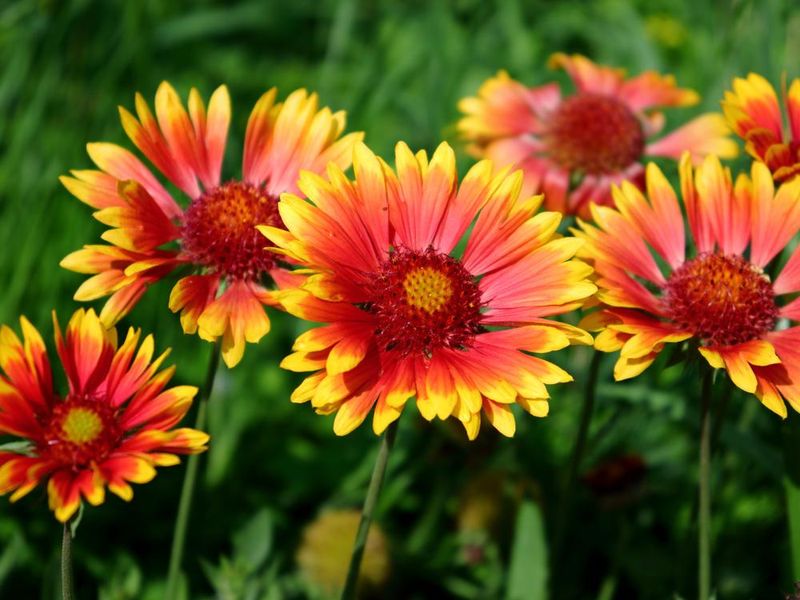
Hot, dry, and reliably colorful. Blanket Flower delivers all three qualities along Florida yard edges through the full growing season.
Gaillardia pulchella is a native wildflower producing bold red and yellow blooms that attract pollinators consistently from spring through fall while thriving in exactly the open, exposed conditions that make borders less hospitable to ticks.
The preference for dry, sunny locations with well-drained soil is the practical feature that earns Blanket Flower its place on this list alongside its visual appeal.
A bright, open border filled with this plant creates conditions that are the functional opposite of tick-friendly habitat.
Exposed, sun-warmed, low-growing, and dry between rain events, it checks every box for what tick management in a border planting actually requires.
Growing about one to two feet tall, it keeps the border low and visible rather than tall and tangled.
That height keeps the planting from developing the dense vertical structure that provides questing positions for ticks waiting to reach a passing host.
Removing spent blooms encourages continued flowering and maintains the neat appearance that distinguishes a managed border from an overgrown one.
Sandy soils and drought conditions that challenge other plants suit Blanket Flower well, which means it performs reliably in the same difficult edge zones where other choices struggle to establish.
It reseeds itself after the first season, so an established patch returns without additional investment. Pairing it with other low, sun-loving Florida natives creates a border that looks intentional, stays open, and brings consistent pollinator activity through the hottest months.
5. Beach Sunflower
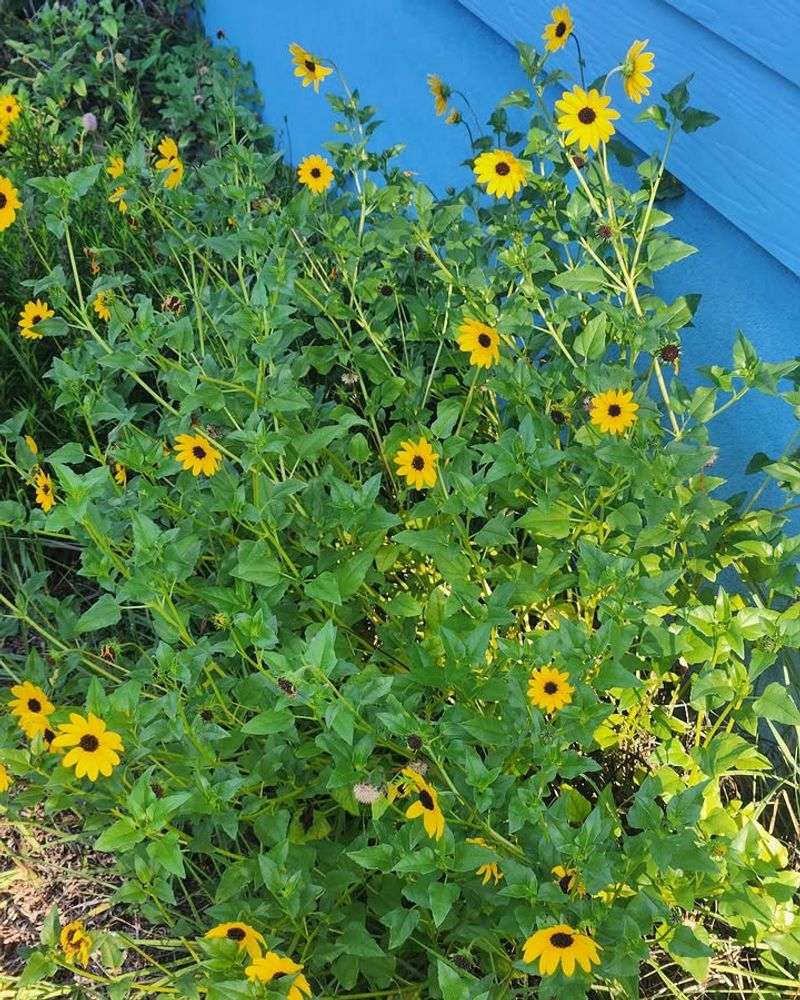
Some plants are genuinely suited to Florida conditions rather than merely tolerant of them. Beach Sunflower falls clearly into the first category.
Helianthus debilis grows naturally along Florida coastlines and roadsides, spreading through sandy soil and sustained heat without any assistance, and that toughness carries directly into residential border applications.
As a groundcover, Beach Sunflower stays relatively low and spreads horizontally rather than vertically.
That growth pattern covers bare ground along borders quickly, reduces weed pressure, and maintains the open sunny conditions that work against tick habitat development.
Tall, dense, shaded border growth is what creates the questing positions and humidity that ticks require. Beach Sunflower consistently produces the opposite of those conditions.
The bright yellow flowers bloom nearly year-round in South and Central Florida.
It means the pollinator activity and visual interest the plant provides run through the seasons without any management effort required to maintain them. Full sun, salt spray, and drought present no challenges to an established planting.
Trimming every few months prevents leggy growth and keeps the border looking managed rather than wild.
A quick cutback refreshes the growth pattern and maintains the horizontal coverage that makes this plant effective for border management rather than allowing it to develop into taller, denser structure.
Along driveways, sidewalk edges, and sun-baked property borders where reliable coverage is needed without creating a tangle, Beach Sunflower performs consistently and without complaint.
6. Frogfruit
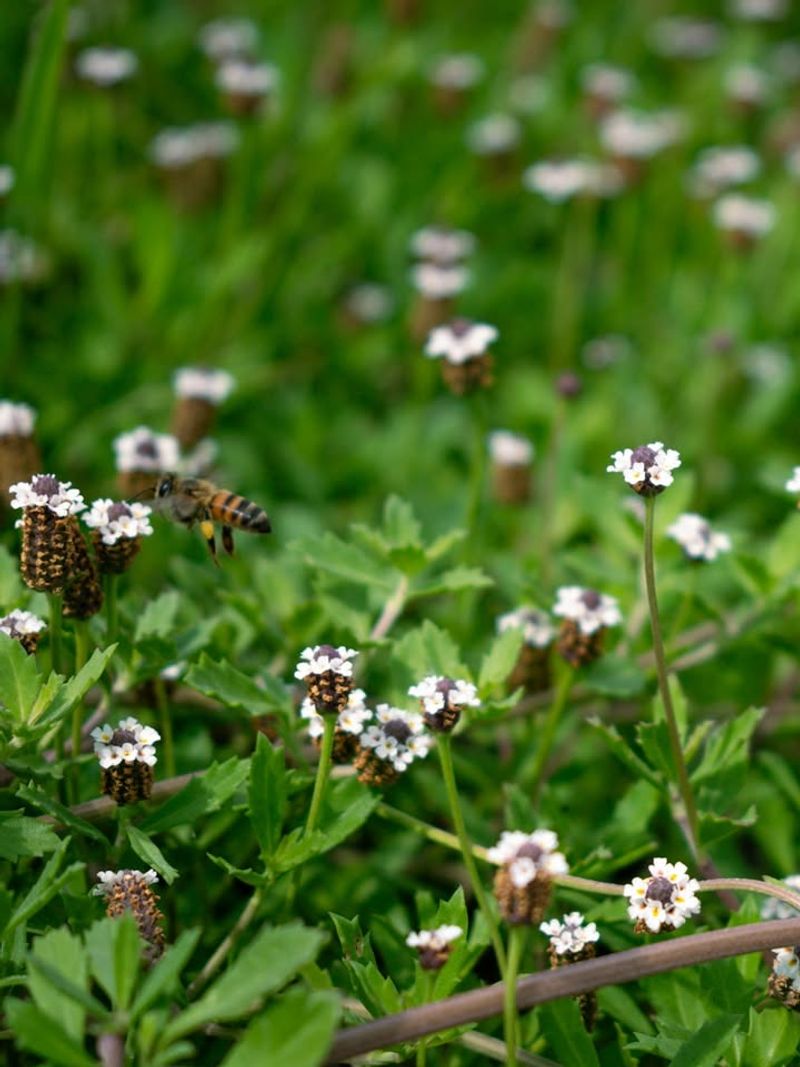
The name raises questions. The plant answers them quickly.
Frogfruit is one of Florida’s most effective native groundcovers for border management, and its primary asset is a growth profile that stays closer to the ground than almost anything else available for this application.
Phyla nodiflora creeps along the soil surface, maintaining a height of one to two inches while filling in border edges with a dense even mat of small leaves and tiny white flowers.
Ticks typically position themselves in taller vegetation where they can reach passing hosts more effectively.
A groundcover this close to the ground, maintained with regular edging along the border perimeter, removes the structural feature that makes tick questing viable in that zone.
Full sun, partial shade, and even occasional foot traffic fall within the tolerance range of this plant, making it adaptable to the variable conditions that develop along different sections of a property edge.
It handles mowing without setback, which makes maintenance straightforward and consistent rather than requiring special treatment.
Multiple butterfly species use Frogfruit as a larval host plant, which adds ecological function to what is already a practical border management tool.
The small flowers attract additional pollinator activity through the season, contributing to the overall biological activity of the yard edge without any management input beyond regular edging.
Staying on top of that edging is the one consistent requirement. Frogfruit spreads by runners and moves into lawn areas and garden beds if the boundary is not maintained.
A clean edge every few weeks keeps it exactly where it belongs.
For Florida homeowners who want low, consistent border coverage that eliminates the patchy weedy conditions where tick problems develop, Frogfruit delivers results that its modest appearance significantly undersells.
7. Saw Palmetto
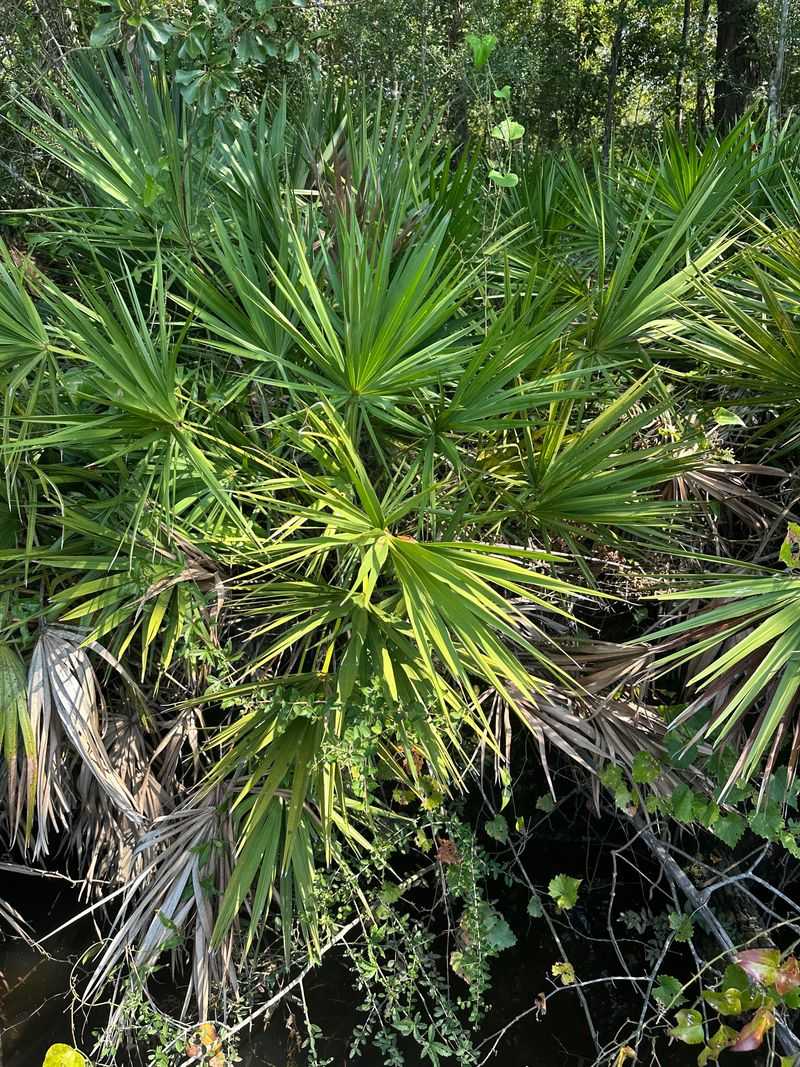
Where a Florida yard meets a wooded border, drainage area, or undeveloped lot, the transition zone becomes the highest-risk section of the entire property for tick activity.
Deer move through these edges, small mammals shelter in them, and the shaded, leaf-littered ground beneath dense vegetation creates tick habitat that border plants closer to the lawn cannot fully address.
Saw palmetto planted along these wilder edges creates a physical barrier that changes how both deer and ticks interact with that transition zone.
Serenoa repens is one of Florida’s most recognizable native plants, forming dense, low-growing clumps of fan-shaped fronds that create an impenetrable thicket at ground level.
Deer generally avoid pushing through established saw palmetto due to the sharp-toothed leaf stems that line every frond.
That deer deterrence reduces the primary vehicle through which ticks move from wooded edges into residential yard spaces.
The dense low canopy of saw palmetto also changes the ground-level conditions beneath it.
The dry, well-ventilated interior of an established clump is significantly less hospitable to tick survival than the moist leaf litter that accumulates under other large shrubs.
Saw palmetto manages its own leaf litter differently, allowing fronds to dry and shed without creating the deep, damp insulating layer that ticks overwinter in.
Drought tolerance, salt tolerance, and the ability to handle periodic flooding make saw palmetto adaptable to the full range of conditions that develop along Florida property edges.
Once established, it requires essentially no maintenance and continues providing the barrier and habitat modification function indefinitely.
For the most challenging section of any Florida yard, where the managed landscape meets the unmanaged edge, saw palmetto earns its place as a genuinely practical long-term solution.