8 Steps To Revive Heat-Damaged Desert Rose Plants In Florida
Desert rose is supposed to love heat. That reputation is mostly earned, but Florida summers have a way of pushing even the most heat-tolerant plants past a comfortable threshold.
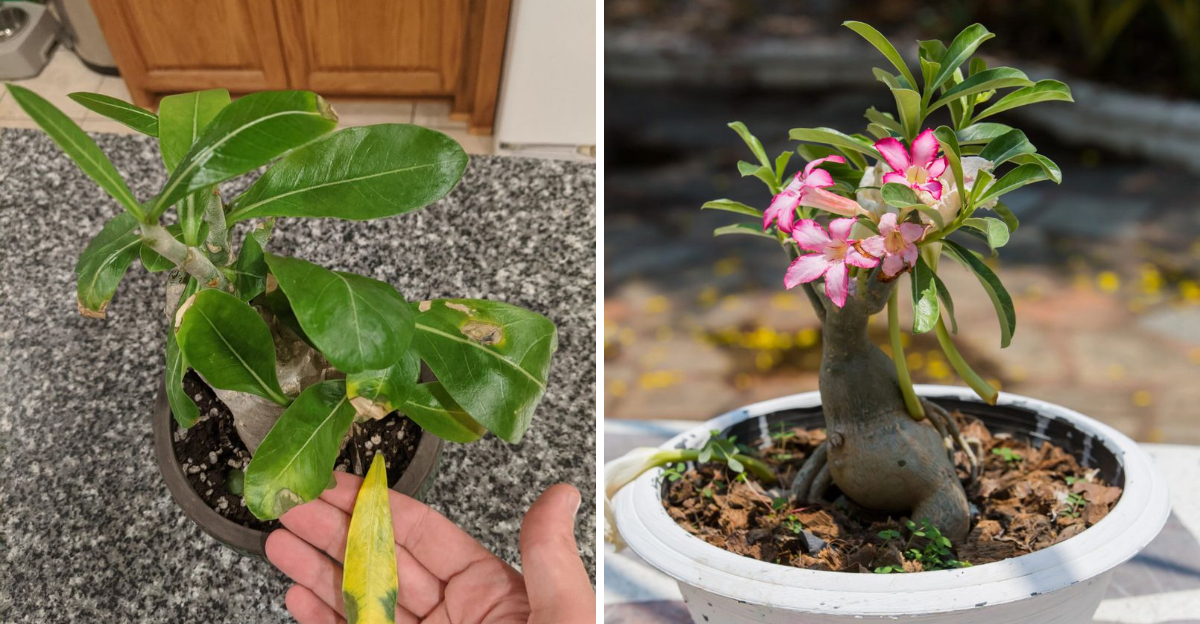
Scorched leaves, wilting that does not bounce back overnight, a plant that looked bold and tropical two months ago now asking for help in every way it knows how. The good news is that desert rose is a tough plant with real recovery potential.
Heat damage that looks dramatic on the outside is not always as serious as it appears, and the right response in the right order makes a meaningful difference.
Most Florida gardeners either panic and do too much or assume the plant will sort itself out and do nothing.
Both approaches cost the plant time it does not have in the middle of summer. A clear set of steps gives a heat-damaged desert rose the best path back.
1. Check The Caudex Before You Water Again
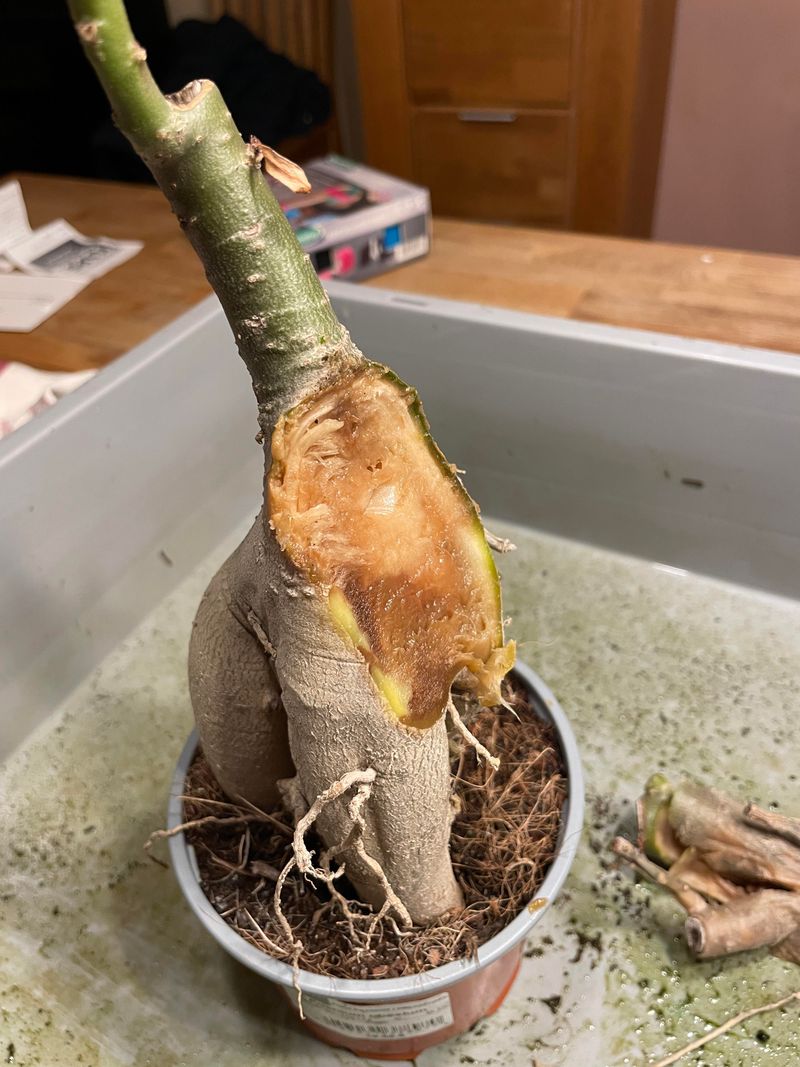
Before you reach for the hose, take a moment to press your fingers gently against the caudex, that swollen, bulb-like base that stores water and energy for the plant.
A firm, solid caudex is a reassuring sign that the plant still has reserves and a reasonable chance at recovery.
A soft, mushy, or collapsing caudex, especially one with a sour or foul smell, can point to rot that may have already moved into the root system.
Heat stress and overwatering damage can look almost identical at first glance. Both can cause yellowing leaves, wilting, and sudden leaf drop.
Inspecting the caudex before doing anything else helps you avoid watering a plant that is already too wet. Check the stems near the base for soft or discolored spots as well.
Push a finger or a wooden skewer into the potting mix near the edge of the container, not right against the caudex. If the mix is still damp a few inches down, hold off on watering completely.
Also check the drainage holes at the bottom of the pot to make sure nothing is blocking them. A blocked drain can keep roots sitting in moisture long after a rain or watering session, quietly making heat stress much worse.
Start here before taking any other step.
2. Move Potted Desert Roses Out Of Afternoon Blast
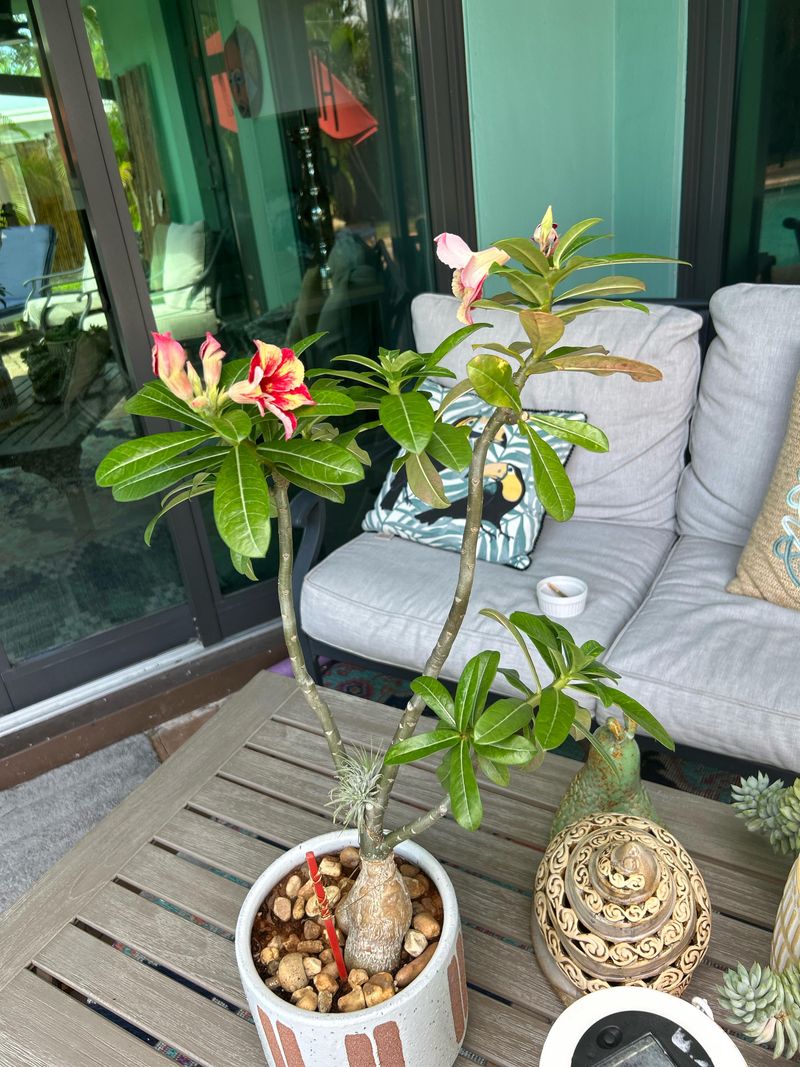
A pot sitting on a west-facing wall, a concrete driveway, or a pool deck in midsummer can reach temperatures that would surprise most Florida gardeners.
The container itself absorbs and radiates heat, and the roots inside can cook even when the air temperature feels manageable.
Dark-colored pots, metal planters, and glazed containers with no airflow around them tend to run the hottest.
Moving a stressed plant into bright morning sun with filtered or indirect afternoon light can take a real load off the root zone. It does that without plunging the plant into low-light conditions.
A spot under an open patio cover or near a light-colored wall on the east side can work well as temporary relief. A large tree canopy that still lets in filtered brightness can also help.
Your Florida Garden Changes Every Week. Your Plan Should Too.
Gardening in Florida changes quickly throughout the season. Every Friday you’ll receive a simple weekly plan showing exactly what to plant, prune, fertilize, harvest, and protect so you never miss the right timing.
Do not move the plant into deep shade as a long-term fix. Desert rose needs strong light to stay healthy, bloom, and push new growth.
Keeping it in deep shade for more than a week or two can cause its own set of problems, including weak stems and reduced vigor. The goal is to reduce the afternoon heat blast while the plant stabilizes, not to change its light requirements permanently.
Once new growth appears and the caudex stays firm, you can gradually shift it back to its regular sunny spot over several days.
3. Let The Soil Dry Before The Next Deep Drink
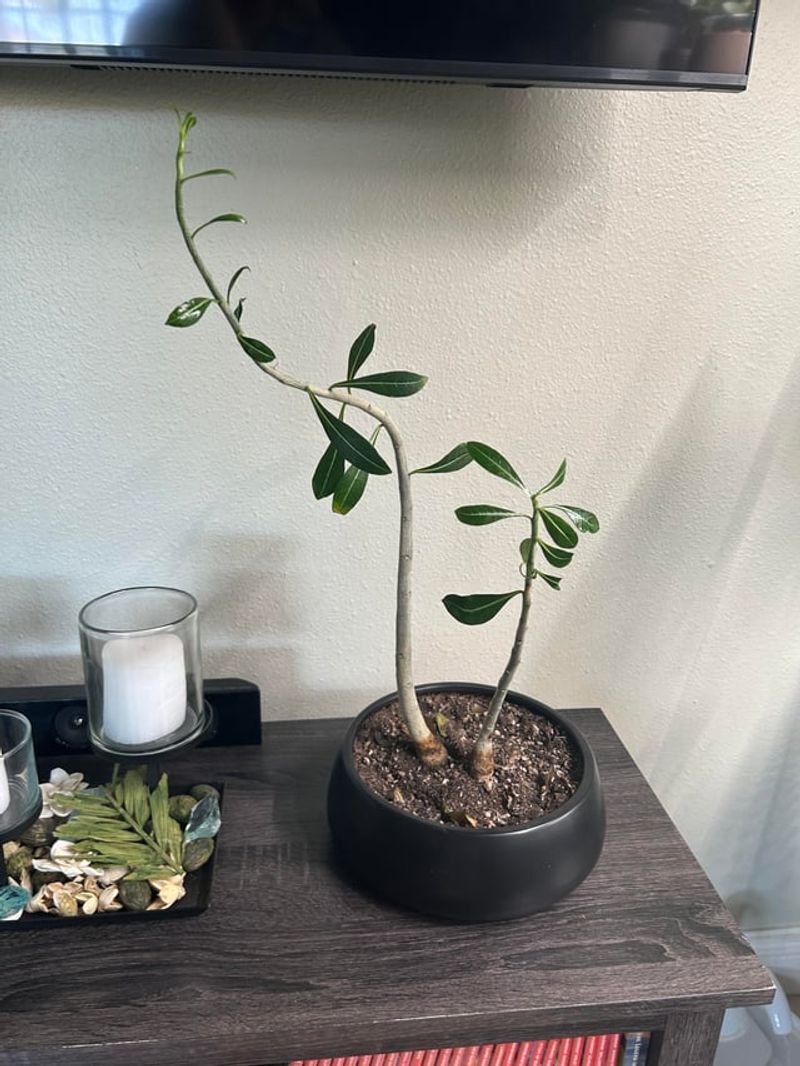
Panic watering is one of the most common ways a heat-stressed desert rose gets pushed from bad to worse. When leaves drop or look limp, the instinct is to water immediately.
If the mix is already moist from recent rain or a previous watering, adding more moisture can suffocate roots and speed up rot.
Desert rose thrives in fast-draining, gritty mixes that dry out relatively quickly between watering sessions. A heavy commercial potting mix that stays wet for days is not ideal for this plant.
That is especially true during humid, overcast rainy-season weather when evaporation slows down. Saucers left full of standing water, decorative cachepots that trap drainage, and blocked drainage holes all create the same soggy problem.
Check the mix by pressing a finger about two inches below the surface or using a wooden skewer. If the skewer comes out with moist particles clinging to it, wait before watering again.
When the mix does feel dry enough, water deeply and let the excess drain fully from the bottom of the pot before returning it to its spot. Dump any water sitting in the saucer after about thirty minutes.
Deep, infrequent watering with full drainage each time gives recovering roots a much better environment than frequent shallow drinks in a pot that never fully dries.
4. Trim Crispy Leaves Without Cutting Hard
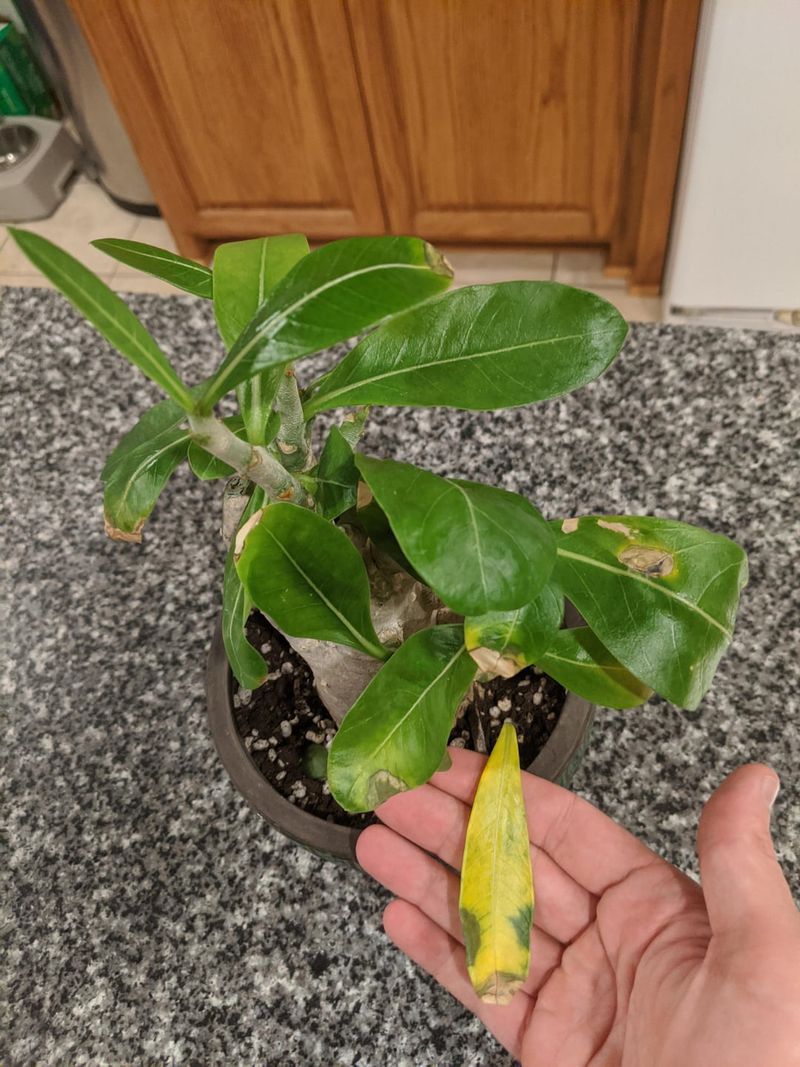
A desert rose that has been through a brutal heat stretch often holds onto a mix of crispy brown leaves and partially scorched foliage. It may also keep a few healthy green leaves that are still doing real work for the plant.
Pulling off the fully dry, brittle leaves by hand or snipping them with clean pruners is fine and can make the plant look less alarming. What to avoid is hard pruning, cutting back healthy stems or green tissue while the plant is already under stress.
Leaf drop during heat stress is a normal survival response. The plant sheds foliage to reduce water loss and protect the caudex and root system.
Leaves that are still partially green or only slightly scorched at the edges may still be supporting stem function and should be left in place for now. Reshaping or cutting back for appearance can wait until the plant has visibly stabilized and new growth is pushing.
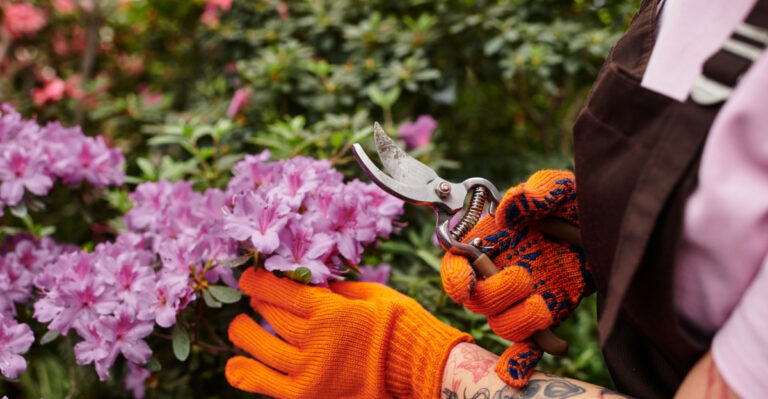
Always use clean, sharp pruners when removing any tissue. Desert rose sap is toxic and can cause skin or eye irritation, so wearing gloves and avoiding contact with the milky sap is strongly advised.
Keep trimmed pieces away from pets and children. If sap contacts skin or eyes, rinse thoroughly with water.
If ingestion or significant exposure is suspected, contact Poison Control or a veterinarian right away. Do not cut into soft or questionable stem tissue without a clear reason to do so.
5. Hold Fertilizer Until Fresh Growth Returns
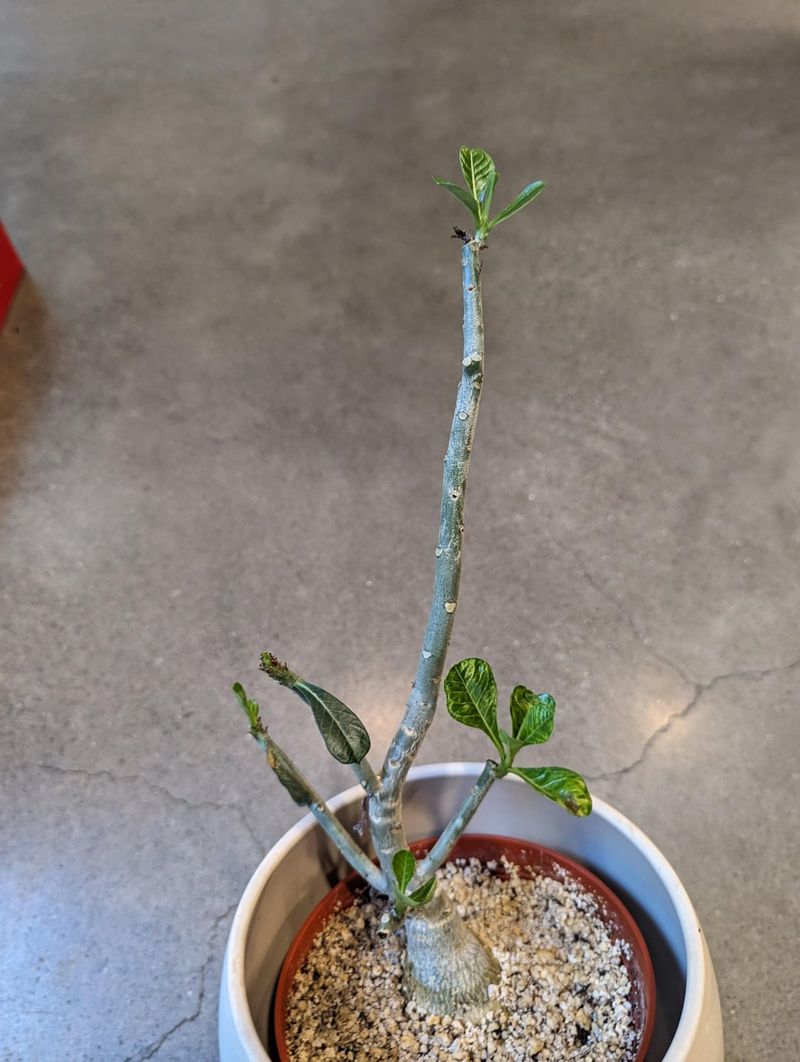
Reaching for fertilizer when a plant looks rough feels like a logical rescue move. For a heat-stressed desert rose, feeding too soon can push the plant in the wrong direction.
Fertilizer encourages new, tender growth, and tender growth on an unstable plant that still has questionable roots or a stressed root zone is more vulnerable, not less.
The energy used to push that growth can also pull resources away from stabilizing the caudex and root system.
Wait until the caudex is consistently firm, watering is steady and well-drained, and the plant has settled in its adjusted location. Fresh leaf buds or new growth should also be clearly visible.
Those signs together suggest the plant has moved past the acute stress phase and is ready to use nutrients productively. Fertilizer cannot repair scorched leaves, and it cannot fix rotten roots.
When growth does return and conditions are stable, resume feeding cautiously. A diluted, balanced fertilizer or one slightly higher in phosphorus to support root development is a reasonable starting point.
Avoid heavy doses or frequent applications early in the recovery phase. Follow label directions, and do not fertilize during periods of extended cloudy or wet weather when the plant is not actively growing.
Patience here protects the recovery you have already worked to build. Rushing fertilizer is one of the easier mistakes to avoid.
6. Protect The Pot From Rainy Season Soaking
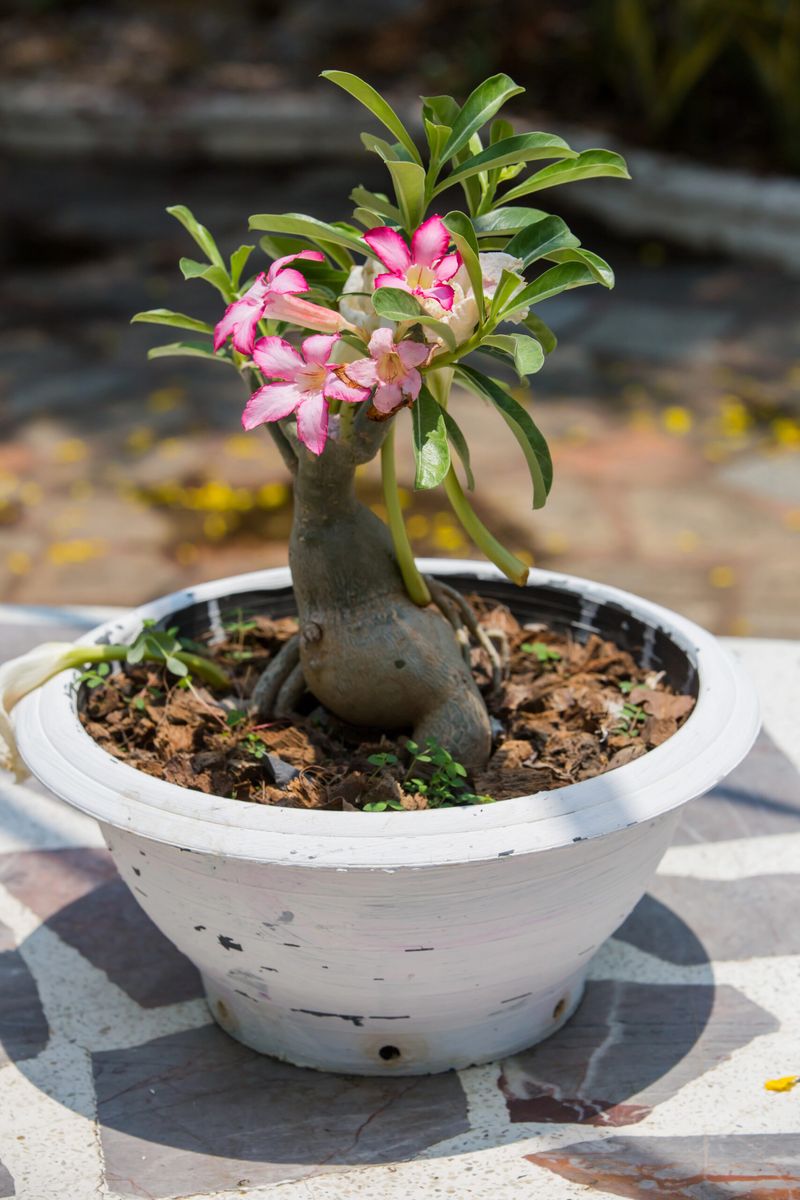
Recovering from heat stress and then sitting through a week of daily summer storms is a tough combination for a desert rose. The rainy season in this state brings intense, frequent downpours that can keep a pot saturated for days.
That risk rises if drainage is slow, the mix is heavy, or the saucer fills up and never empties. A plant that just survived scorching heat does not have the root strength to handle prolonged soggy conditions.
Moving the pot under an overhang, a covered patio, or even a temporary shelter during heavy storm stretches can make a real difference.
Raising the pot on pot feet or bricks improves airflow under the container and helps water drain away from the bottom holes more efficiently.
Check drainage holes regularly during rainy season to make sure they are not clogged with roots, debris, or compacted mix.
Decorative cachepots, those outer containers used to dress up a plain nursery pot, are a hidden risk. They trap drainage water at the bottom and keep the inner pot sitting in moisture without any visible sign of a problem.
Either remove the cachepot during rainy season or drill drainage holes in it. Emptying saucers after every rain event is a simple habit that protects roots without any extra cost.
Keeping the pot from soaking is not the same as keeping it dry all the time. The goal is controlled drainage, not drought.
7. Watch For Pests On Stressed New Growth
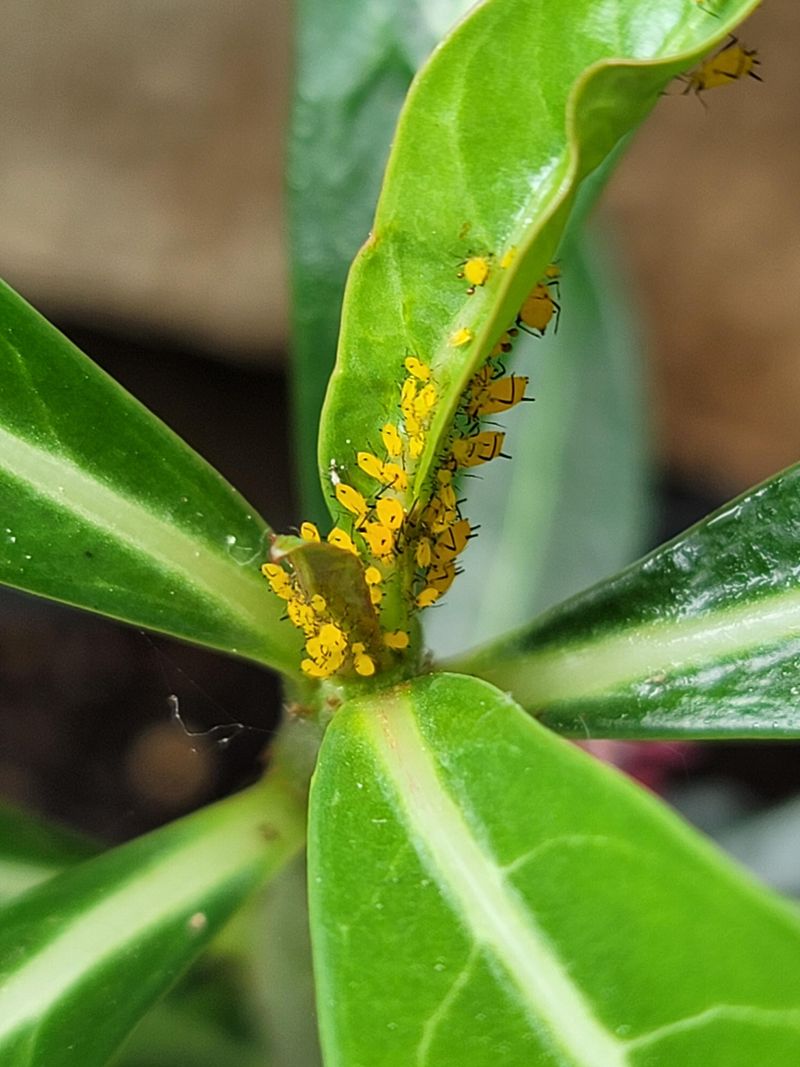
New growth pushing out of a recovering desert rose is a genuinely exciting sign, but that tender, soft tissue also tends to attract pests.
Stressed plants can be more vulnerable to insect pressure, and the fresh buds and young leaves that signal recovery are exactly what certain pests target first.
Catching a problem early keeps it from undoing the progress you have made.
Common pests on desert rose in warm Florida regions include aphids, mealybugs, spider mites, and scale insects. Aphids tend to cluster on soft stem tips and bud bases.
Mealybugs show up as white, cottony masses in leaf joints and near the caudex. Spider mites cause stippling on leaves and may produce fine webbing on the undersides.
Scale insects attach to stems and can be easy to miss at first glance.
Check the undersides of leaves, stem tips, bud clusters, and the area around the caudex regularly, especially during and after recovery. Do not reach for a broad pesticide without identifying what you are dealing with first.
Misidentification can lead to treatments that are unnecessary or harmful to beneficial insects. For serious or persistent pest pressure, contact your county Extension office or consult UF/IFAS resources for verified management guidance.
Catching pests while populations are small gives you the most options and the least disruption to a plant that is still working its way back to health.
8. Give The Plant Time Before Calling It Lost
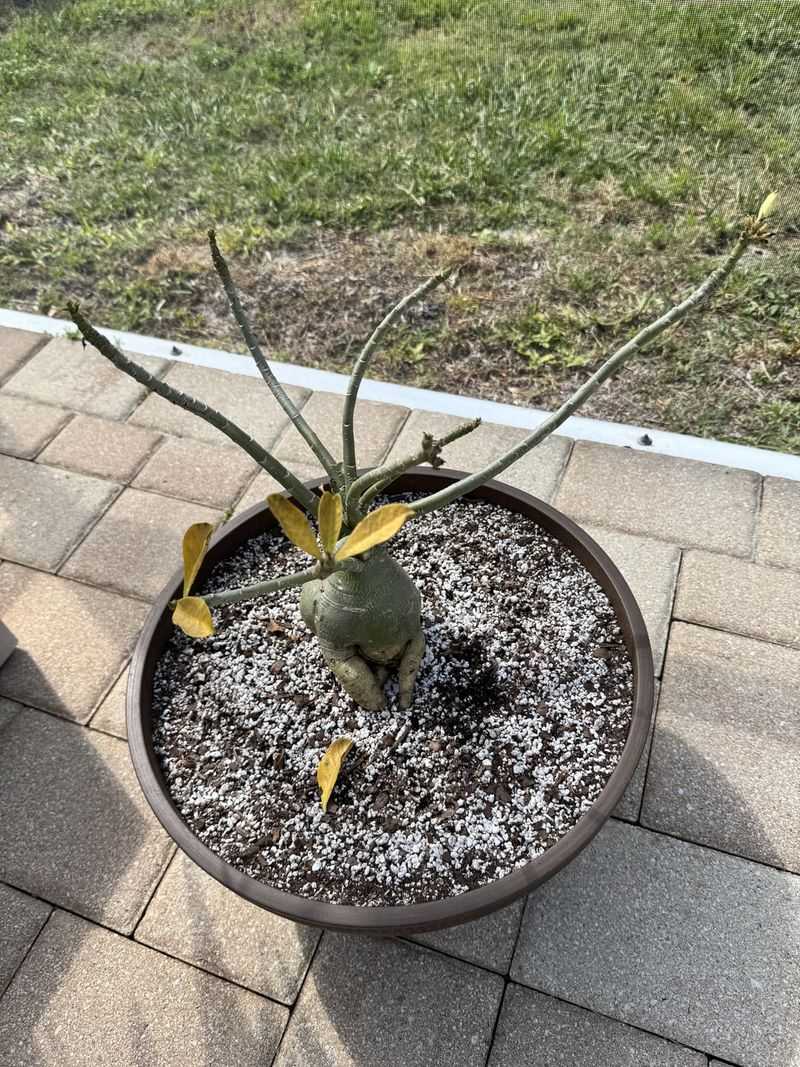
A bare desert rose with no leaves, no visible buds, and stems that look completely still can feel discouraging after weeks of heat and stress in Florida.
But this plant is built to survive tough conditions, and it sometimes needs more time than expected to show signs of recovery.
Leaf drop is a conservation strategy, not necessarily a sign that the plant is beyond help.
Watch for recovery signs over several weeks rather than days. A caudex that stays firm and does not continue to soften is a positive indicator.
Stems that remain plump and green under the outer skin when gently scratched are still alive. Small leaf buds appearing at stem tips, even tiny ones, are a real signal that the plant is working toward recovery.
Roots that are pale, firm, and intact when the plant is carefully lifted from the pot are also a good sign.
Be honest with yourself if the caudex becomes progressively softer, begins to collapse, or develops a spreading foul odor. Rot that has moved through the entire caudex and root system is very difficult to reverse.
Keeping a completely failed plant does not help you or the space it occupies. Most heat-damaged plants with a firm caudex and decent root health will push new growth given stable conditions, appropriate light, careful watering, and enough time.
Recovery is real, but it rewards patience more than it rewards urgency.