Michigan Gardeners Use This Native Plant To Hold Wet Slopes In Place
Wet slopes are one of Michigan’s most stubborn landscaping problems.
Grass refuses to establish, soil washes away with every significant rain, and the erosion creeps a little further each spring until the slope looks worse than when anyone started trying to fix it.
Most solutions either fail to address the underlying problem or require ongoing maintenance that makes the project feel endless.
However, there is a native plant growing along Michigan’s marshes, stream banks, and wet meadows that has been solving this exact problem without much help from gardeners for thousands of years.
Tussock sedge handles standing water, slippery saturated soil, and Michigan winters simultaneously, and it does all three without fertilizer, supplemental irrigation, or specialized care.
Gardeners who find it after years of fighting a wet slope often describe the discovery as the turning point that finally changed the outcome.
Everything below explains exactly why it works and how to use it effectively.
Start With Tussock Sedge
Not every plant handles standing water, unstable slopes, and Michigan winters without complaint. Tussock sedge, known scientifically as Carex stricta, manages all three consistently.
It grows naturally in Michigan’s marshes, wet meadows, and along stream banks, which means wet, poorly drained sites are not a challenge for this plant. They are its native environment.
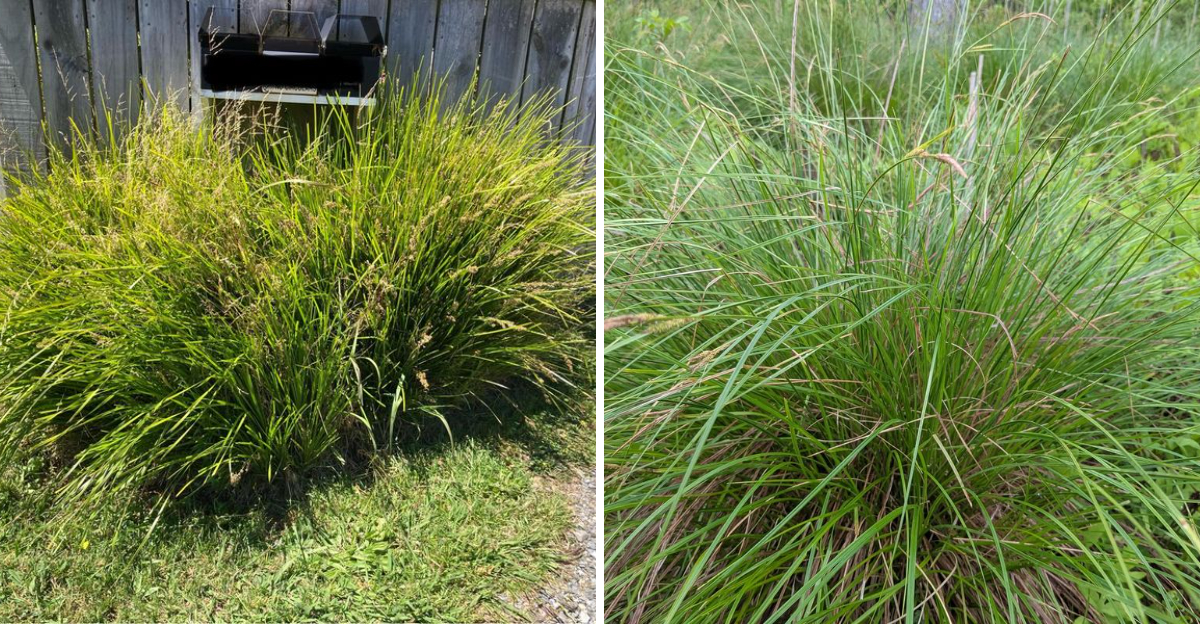
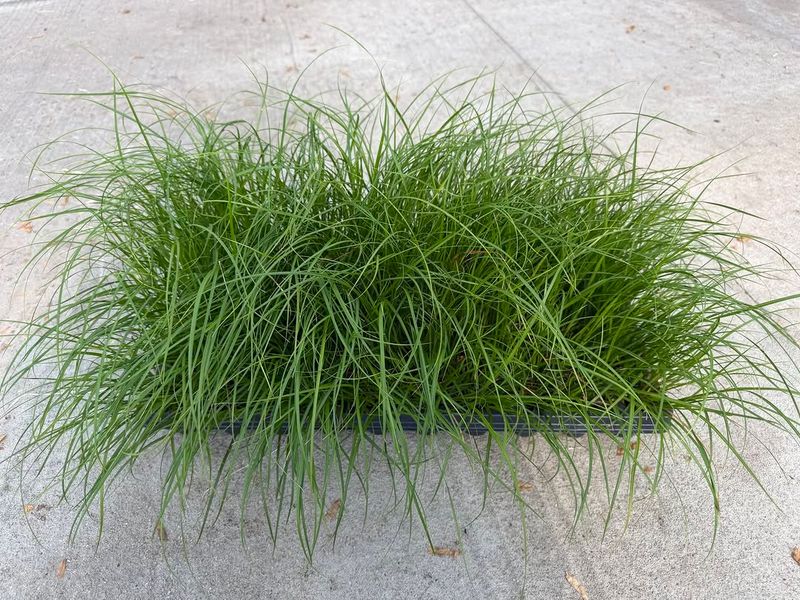
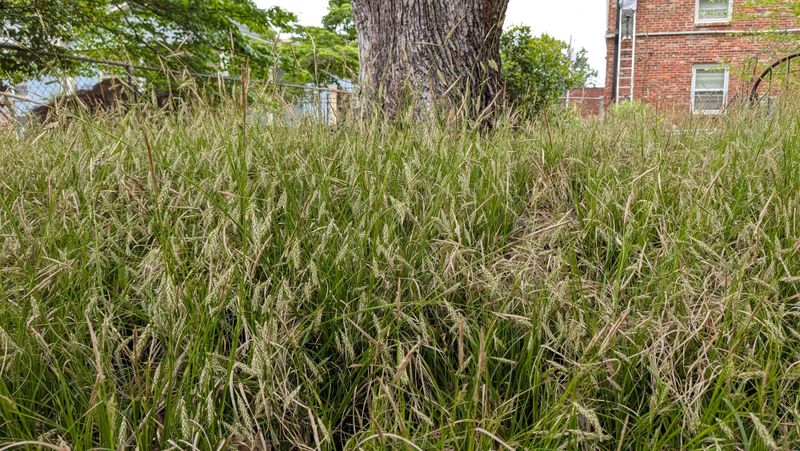
Tussock sedge grows in dense rounded tufts reaching two to three feet tall. The leaves are narrow, bright green, and slightly rough to the touch.
Spring brings thin flowering stalks with small brownish seed heads that add soft texture to the landscape without demanding attention. The plant is not visually dramatic, but it delivers reliability that more ornamental choices rarely match.
Michigan State University Extension recognizes tussock sedge as a strong choice for wet, low-lying, and slope-adjacent sites.
It performs across USDA hardiness zones 3 through 8, which covers all of Michigan without restriction.
Full sun and partial shade both suit it, giving it flexibility across the range of conditions that develop on different slopes and in different yard orientations.
Sourcing tussock sedge from a native plant nursery rather than a big-box store ensures a locally adapted strain that establishes faster and performs more reliably in Michigan conditions.
Starting with the right plant puts the entire project on a better foundation, which matters considerably when the goal is keeping a slope from washing away season after season.
Dense Roots Grip Wet Soil
The visible part of tussock sedge tells only half the story.
The underground network is what actually holds a wet slope together through runoff, freeze-thaw cycles, and the sustained saturation that destabilizes most other plantings.
Tussock sedge produces a thick fibrous root mass that spreads horizontally through the soil, weaving together into what functions like a natural net beneath the surface.
On a wet slope, soil particles are constantly at risk from moving water. Clay soils become slick and unstable when saturated. Sandy soils shift even faster under flow pressure.
Tussock sedge roots thread through both types, binding particles together and increasing the soil’s resistance to displacement.
Your Michigan Garden Changes Every Week. Your Plan Should Too.
Gardening in Michigan changes quickly throughout the season. Every Friday you’ll receive a simple weekly plan showing exactly what to plant, prune, fertilize, harvest, and protect so you never miss the right timing.
Native sedge plantings in wetland buffer studies consistently show reduced erosion rates compared to bare or grass-covered slopes under equivalent water flow conditions.
The root system also handles Michigan’s freeze-thaw cycles effectively.
Repeated winter freezing and thawing pushes soil up and pulls it apart, heaving shallow-rooted plants out of the ground or breaking their grip on the slope.
Tussock sedge roots extend deep enough and spread wide enough to stay anchored through that repeated cycling without losing their hold on the surrounding soil.
Water absorption adds a third dimension to what the roots accomplish. Dense roots pull moisture from saturated soil, reducing the total water pressure building against the slope.
Less water pressure means less force driving soil downhill. The roots hold soil in place and simultaneously reduce the hydraulic pressure that would otherwise accelerate movement.
That combination is difficult to replicate with any other planting approach on a consistently wet site.
Clumps Slow Runoff On Slopes
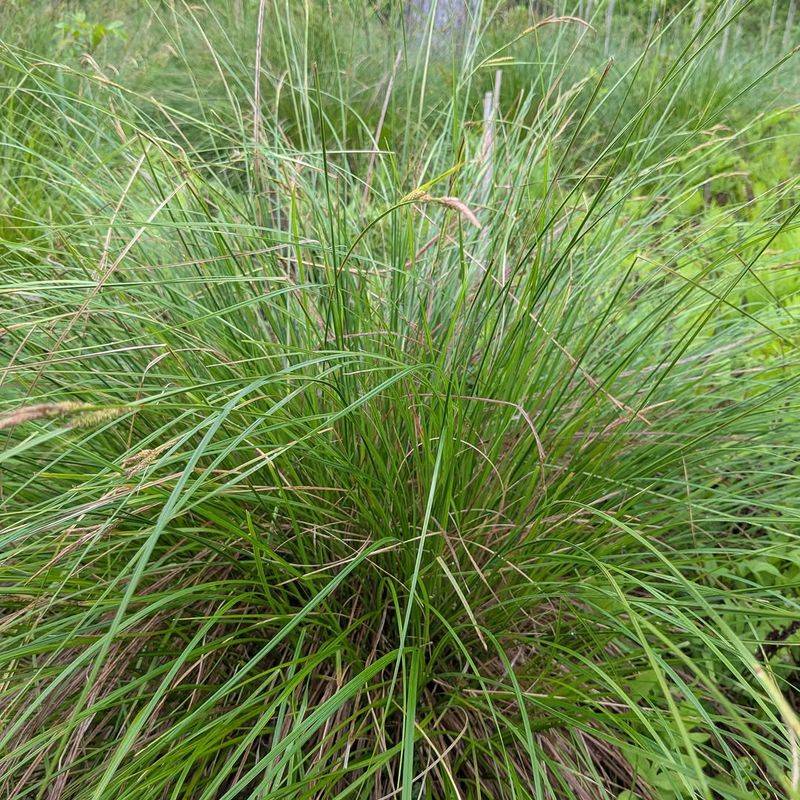
Water moving down a slope accelerates quickly. The steeper the grade, the more kinetic energy it carries and the more soil it tears loose as it travels.
Individual tussock sedge clumps function as distributed resistance across that slope, breaking up flow before it builds into the kind of sustained rush that causes significant erosion events.
Each dense clump forces water to split and decelerate as it moves around the plant base. That energy reduction causes suspended soil particles to settle rather than continue traveling downhill.
Over multiple seasons, settled particles accumulate slightly around each clump, creating low natural terraces that further reduce slope movement without any deliberate engineering.
The process is gradual and invisible from season to season, but the cumulative results are real and measurable.
Staggered planting rows across the slope rather than straight lines maximize this effect. Staggered placement ensures water contacts a clump regardless of the path it takes downhill.
Straight rows leave channels between plants where water regains speed and picks up soil before reaching the next row. Closing those channels through placement is the single most important design decision in a tussock sedge slope planting.
Michigan’s intense summer storms deliver large rain volumes quickly.
A well-established tussock sedge planting absorbs the initial surge, slows overflow, and keeps the slope surface largely intact through heavy downpours that strip bare slopes of significant topsoil in a single event.
The difference between a planted slope and an unplanted one becomes most visible in the hours after a major storm, which is also when it matters most.
Wet Sites Match Its Natural Habitat
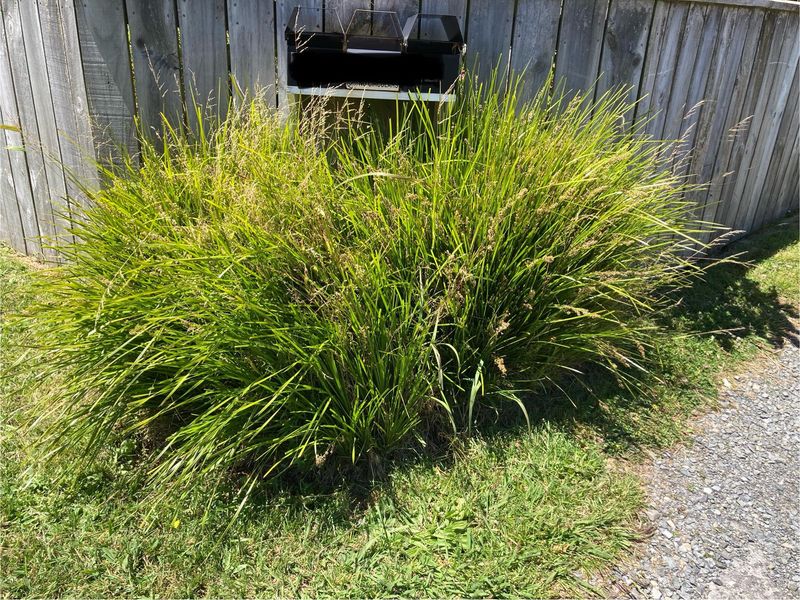
Forcing a plant into conditions it did not evolve for produces predictable results: poor establishment, ongoing maintenance demands, and eventual failure.
Tussock sedge bypasses that pattern entirely because wet, poorly drained sites represent the environment it developed in over thousands of years of natural selection.
Planting it on a problem slope is not an experiment. It is a match between plant and place.
Extended flooding tolerance separates tussock sedge from most ornamental alternatives. Roots stay healthy and functional even when soil remains saturated for weeks at a time.
During dry spells the plant pulls back noticeably but recovers quickly once moisture returns.
That range of tolerance across wet and briefly dry conditions makes it reliable through Michigan’s variable weather patterns rather than dependent on a narrow set of ideal conditions.
Soil type matters less with tussock sedge than with most landscape plants. Heavy clay, loamy soil, and peaty wetland mixes all support it adequately.
Consistent moisture is the primary requirement. A slope that remains wet through most of the year, particularly one with seasonal flooding at the base, sits near the ideal end of the range for this plant.
Slopes that dry out completely through summer represent the least suitable conditions, though brief dry periods with cool soil are manageable.
Matching plant to site is the foundational principle of effective native planting.
When the plant already belongs in that type of environment, establishment accelerates, maintenance requirements drop, and performance stays high without intervention.
Wet slopes that feel like landscaping problems often simply need a plant that treats the moisture as a natural condition rather than an obstacle to overcome.
Wildlife Uses The Sedge Cover
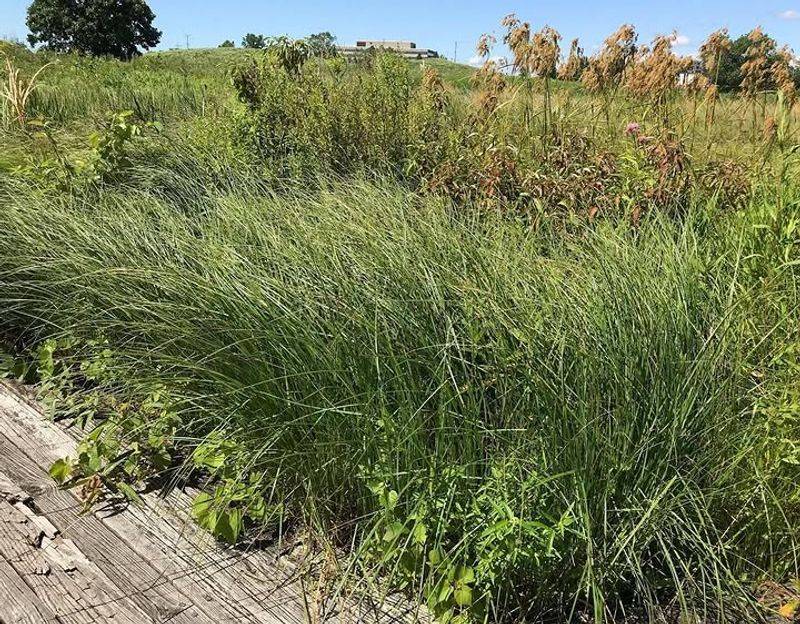
A slope planted with tussock sedge produces erosion control benefits and simultaneously becomes functional habitat for wildlife that depends on dense low vegetation near wet areas.
The two outcomes require no trade-off. The planting that holds the slope also supports species that Michigan gardeners regularly encounter in their own yards.
Song sparrows use tussock sedge stands for low nesting and edge foraging. Swamp sparrows, red-winged blackbirds, and marsh wrens all incorporate tussock sedge into their habitat use where patches are large enough to provide cover.
The seed heads produced in late spring and early summer offer a modest but real food source for small birds through the growing season.
Amphibians find the shaded moist base of the clumps useful for cover through warm months.
The microhabitat between clumps stays cool and humid even on hot days, which matches the conditions frogs and salamanders actively seek.
Near ponds or drainage areas, an established tussock sedge planting can noticeably increase frog activity within a single growing season as the habitat becomes recognized and occupied.
Native bee species and beneficial beetles use the plant for foraging and shelter, which supports the bird species that feed on insects throughout the season.
The wildlife value of a tussock sedge planting is not comparable to a large prairie installation, but on a wet slope it creates a functional habitat patch that genuinely supports local species.
Mass Planting Works Better Than Singles
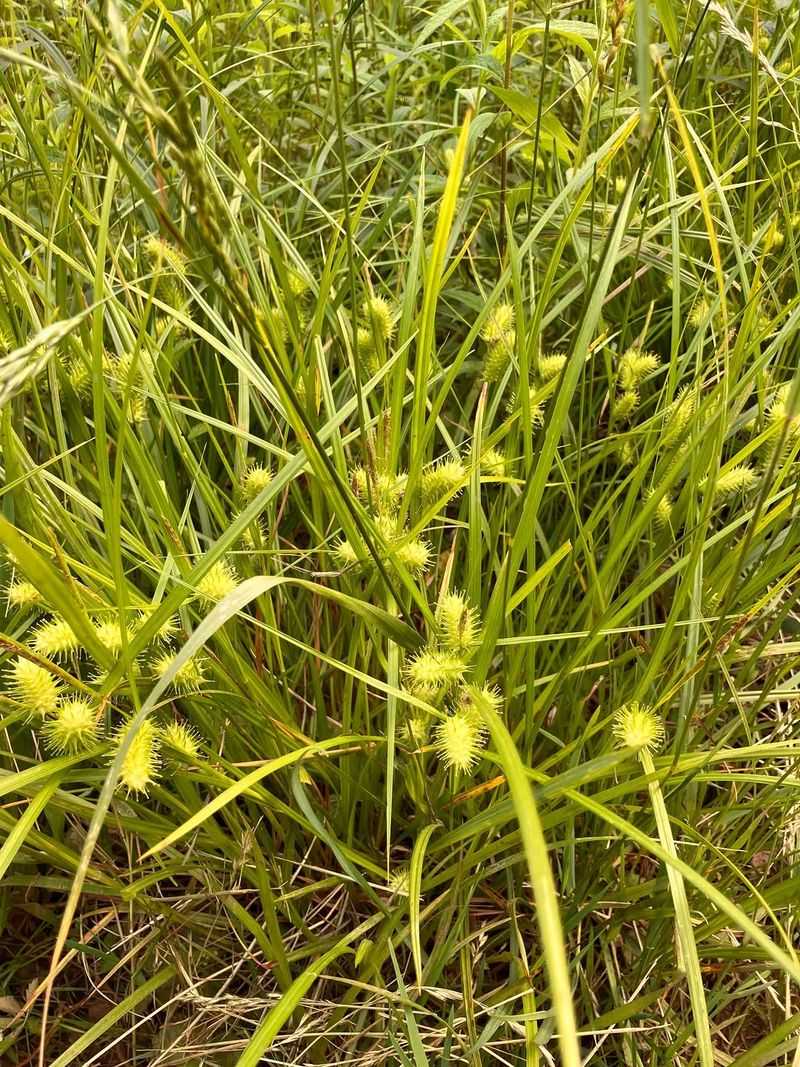
A single tussock sedge plant on a slope holds essentially nothing and contributes minimally to erosion control.
A dozen plants begin making a measurable difference. A complete mass planting transforms the slope’s behavior under rainfall and runoff.
More plants produce more roots, more flow interruption from clumps, and more complete ground coverage that eliminates bare soil exposure.
Spacing plants eighteen to twenty-four inches apart gives each clump room to expand while reaching solid coverage within two to three growing seasons.
Closer spacing around twelve inches accelerates coverage but increases upfront cost. On steep or actively eroding slopes, the faster coverage that tighter spacing provides justifies the additional expense.
Every week of exposed soil on a wet slope represents ongoing erosion that cumulates across a full season.
Mass planting also builds weed resistance into the planting over time.
A dense stand of tussock sedge shades the soil between clumps, significantly reducing the establishment opportunities for invasive plants like reed canary grass or purple loosestrife.
Single plants and widely spaced plantings leave too much open ground for aggressive weeds to occupy before the sedge spreads to close the gaps naturally.
Native plant nurseries frequently offer bulk pricing that reduces per-plant cost meaningfully.
Some Michigan conservation districts offer native plant sales in spring where tussock sedge is available at reduced prices, making larger installations more financially accessible.
Planning the complete layout before purchasing prevents under-buying that results in gaps.
A well-executed mass planting on a wet slope pays back the investment through reduced erosion, lower ongoing maintenance, and a slope that finally behaves consistently through every season.
Weeds Need Early Competition
The period immediately following planting represents the highest vulnerability point for any native planting project.
Bare soil between newly established tussock sedge plants creates establishment opportunity for weeds that move quickly into open disturbed ground.
Reed canary grass, one of the most aggressive invasive plants in Michigan wetland systems, can overwhelm a young planting within a single season if early competition is not established.
Mulching between new plants closes that vulnerability window. Wood chips or straw applied in a two-inch layer suppress weed germination without interfering with sedge establishment or spread.
Landscape fabric is less suitable because it traps moisture unevenly and physically blocks the spreading rhizomes through which tussock sedge naturally fills in over time.
Reapplying mulch in the second year where it has thinned extends weed suppression through the critical establishment phase.
Hand-pulling weeds during the first and second growing seasons remains necessary despite mulching. Removing weeds while small prevents seed set and limits further spread.
Weeds that reach maturity and set seed during the first season create a dramatically larger management challenge in subsequent years.
Early and consistent removal is far less labor-intensive than managing an established weed population among young sedge plants.
Once tussock sedge fills in fully, competitive strength increases substantially.
The dense leaf canopy shades the soil surface enough to slow most annual weeds, and the developed root mat leaves minimal space for perennial weed roots to expand.
The first two growing seasons require the most active management. After that transition, maintenance requirements drop sharply and the planting largely sustains itself.
The early investment in weed management determines how quickly that transition happens.