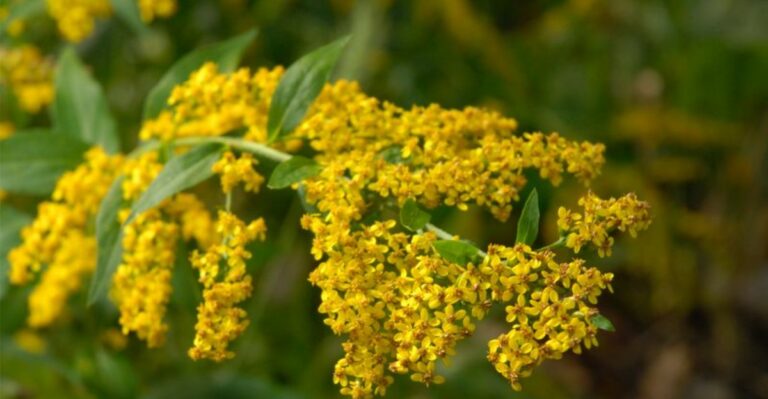
Native Ohio Plants To Grow Instead Of Knockout Roses Along Driveways
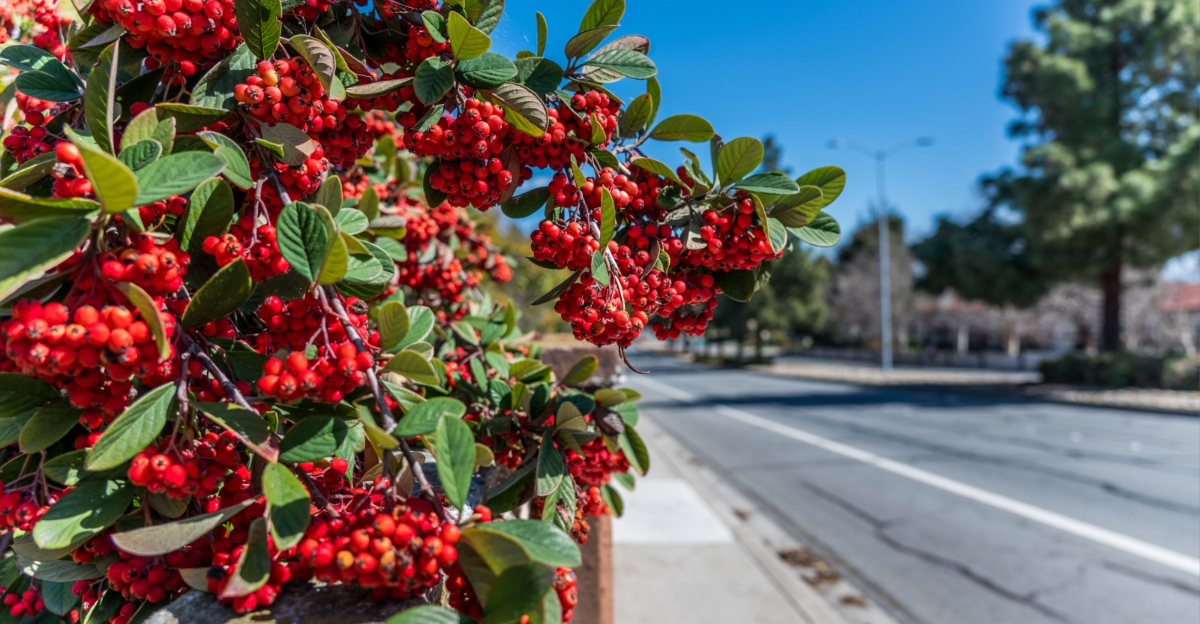
Knock Out roses along an Ohio driveway are basically a rite of passage at this point. Reliable color, decent shape, not too demanding: they check enough boxes that it is hard to argue with the choice.
But Ohio driveways are tougher growing environments than they look.
Reflected heat baking off the pavement, compacted soil, narrow planting strips, and salty winter runoff can quietly wear down even the most resilient roses over a few seasons.
And a growing number of homeowners are starting to wonder if there is something better suited to the job.
Something that roots deeper into the local landscape, supports wildlife, and brings a little more seasonal personality to the front of the property.
Good news: there are some excellent native options worth considering. Let’s take a look at what could be growing there instead.
1. Ninebark Adds Tough Shrubby Structure
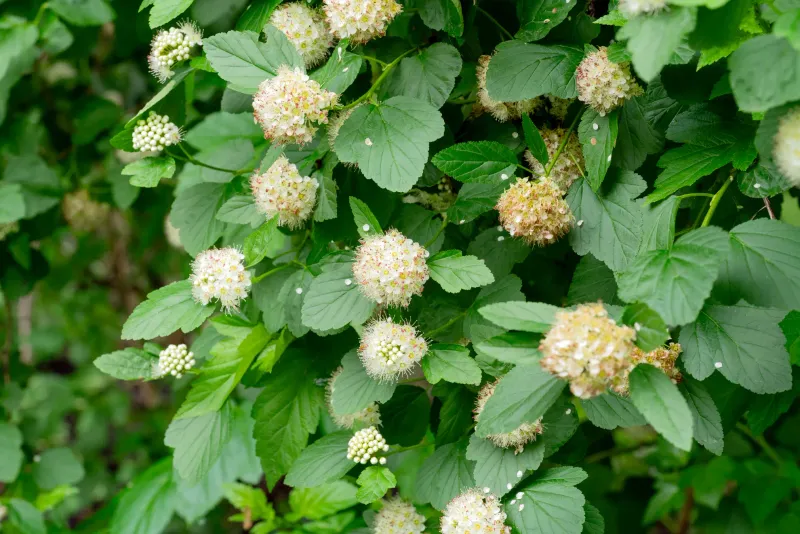
Few shrubs can match the year-round presence that ninebark brings to a driveway bed.
Native across much of Ohio, this tough, adaptable shrub offers layered interest through multiple seasons, which is something Knock Out roses rarely deliver on their own.
Ninebark produces clusters of small white or pinkish flowers in late spring, followed by reddish seed capsules that extend the visual interest well into summer.
The foliage on many ninebark cultivars ranges from deep burgundy to golden green, giving homeowners a strong color anchor without relying entirely on blooms.
As the seasons shift, the peeling, exfoliating bark adds a subtle winter texture that keeps the planting strip from looking bare.
Along Ohio driveways, ninebark generally performs well in full sun to light shade and tolerates a range of soil conditions, including heavier clay soils common in many yards.
Ninebark is not a formal, tidy shrub in the same way that a pruned rose hedge might look, so it works better in relaxed, mixed native borders than in clipped formal rows.
Giving it enough space to spread naturally will reduce the need for heavy pruning and let the plant show its best shape.
Compact cultivars are available for narrower driveway strips.
2. Black Chokeberry Brings Spring Flowers
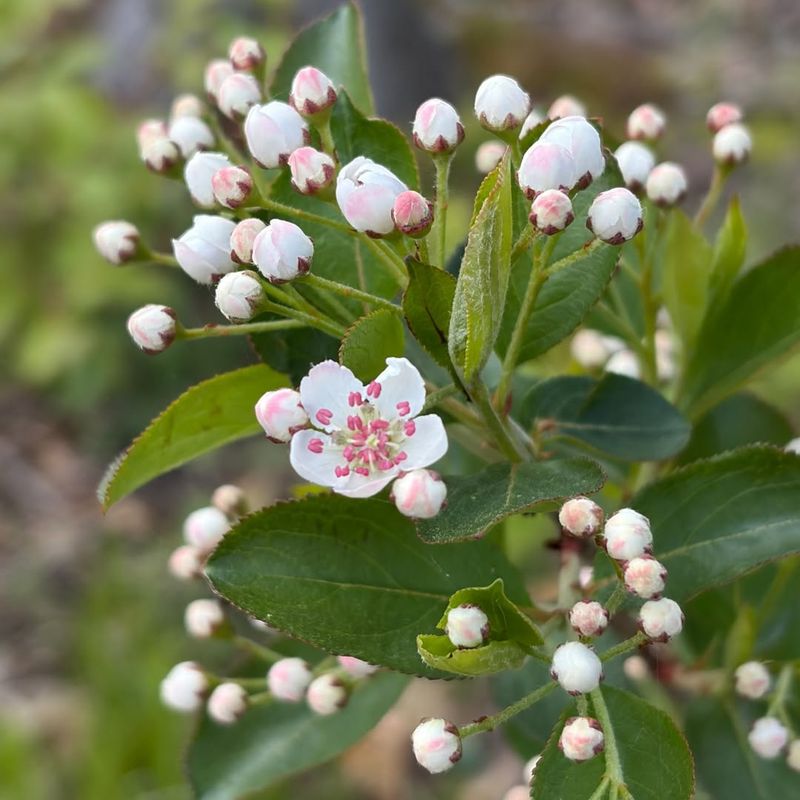
Watching a black chokeberry shrub bloom in spring is one of those small seasonal rewards that makes Ohio gardening worthwhile.
The clusters of white flowers appear in mid to late spring, arriving after the worst frost risk has passed and brightening up driveway borders before many other native shrubs get going.
Black chokeberry is a suckering shrub that spreads gradually to form a multi-stemmed clump, which gives it a different growth habit than the mounding form of a Knock Out rose.
Along Ohio driveways, this native shrub tends to do well in full sun, where it flowers most reliably and develops its best fall foliage color.
The leaves shift to rich red and burgundy shades in autumn, adding a second wave of seasonal interest that extends the planting’s appeal well past the summer months.
Small dark berries follow the flowers and attract birds through fall and into early winter.
Your Ohio Garden Changes Every Week. Your Plan Should Too.
Gardening in Ohio changes quickly throughout the season. Every Friday you’ll receive a simple weekly plan showing exactly what to plant, prune, fertilize, harvest, and protect so you never miss the right timing.
Black chokeberry is generally tolerant of moist soil conditions, which can be an advantage in low spots along driveways where water tends to collect after heavy rain events.
It is not a plant for extremely dry, compacted driveway strips with no irrigation, but in reasonably prepared beds it can establish with moderate care.
Spacing plants about four to five feet apart allows room for natural spread.
3. Red Chokeberry Adds Bright Seasonal Color
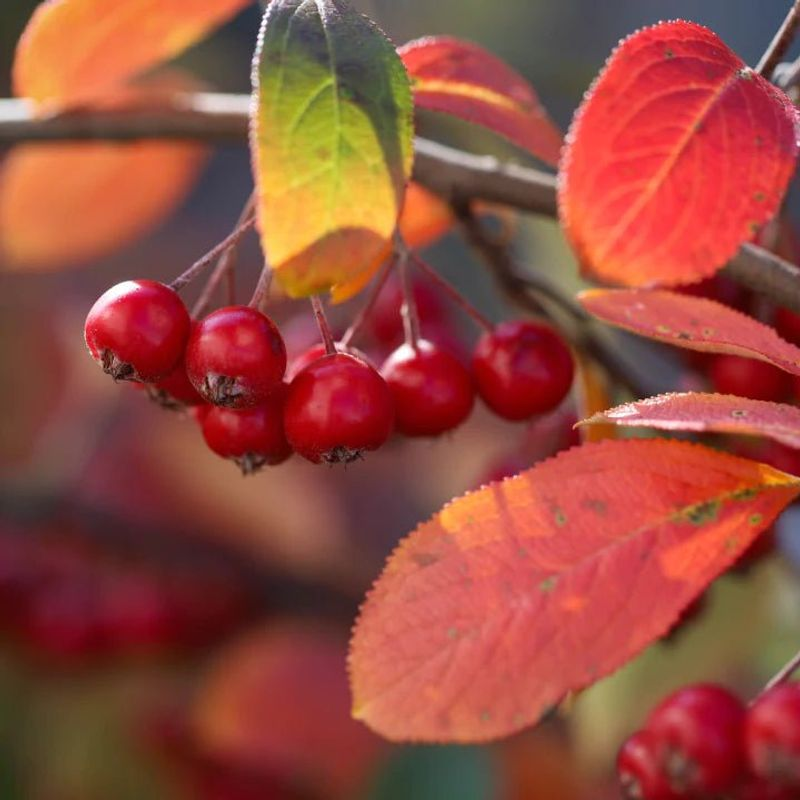
Bold seasonal color is one of the strongest arguments for planting red chokeberry along an Ohio driveway.
While it shares some characteristics with its black-fruited relative, red chokeberry tends to grow a bit taller and puts on a showier display of bright red berries that ripen in late summer and hold on the branches well into fall.
The combination of vivid fruit and deep red autumn foliage creates a striking roadside display that can turn a plain driveway bed into a genuine seasonal feature.
Red chokeberry blooms in spring with white flower clusters similar to black chokeberry, giving the planting early interest before the berry season begins.
In Ohio landscapes, it generally performs best in full sun, though it can tolerate some afternoon shade without losing too much of its fruiting or fall color quality.
Like its relative, it spreads by suckers, so over several years it will gradually widen into a naturalistic clump rather than staying as a single-stemmed specimen.
For homeowners who want to replace the seasonal color of Knock Out roses with something that also supports wildlife, red chokeberry is worth considering. The berries attract several bird species, and the flowers provide early pollinator forage.
It is not a formal hedge plant, but in a mixed native driveway border it can anchor a planting with four-season appeal and genuine Ohio character.
4. New Jersey Tea Fits Sunny Borders
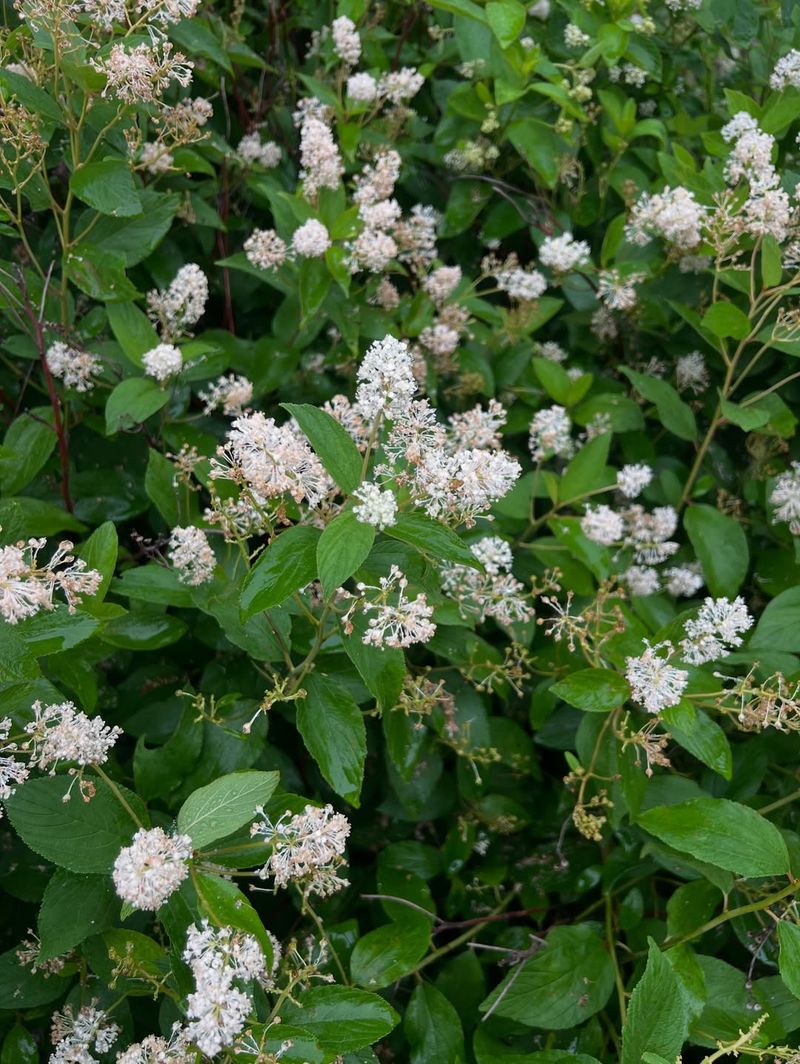
Compact, flowering, and surprisingly drought-tolerant once established, New Jersey tea is a native Ohio shrub that fits naturally into sunny driveway borders where space is limited.
It typically grows two to three feet tall and spreads to a similar width, making it a reasonable fit for narrow planting strips where larger shrubs would quickly overwhelm the space.
The frothy clusters of small white flowers appear in early summer and attract a wide range of native bees and other pollinators.
One of the qualities that sets New Jersey tea apart in driveway settings is its deep taproot system, which helps it access moisture during dry summers without much supplemental watering once the plant has had a season or two to settle in.
That drought tolerance makes it a practical choice for south-facing driveway beds that absorb reflected heat from pavement and dry out faster than garden borders in shadier spots.
New Jersey tea does not produce the continuous bloom of a Knock Out rose, but its flowering period is genuinely attractive and the dark green foliage holds up well through the summer.
It prefers well-drained to dry soils and can struggle in heavy, poorly drained clay without some soil improvement.
For Ohio homeowners with lean, sunny driveway beds, this low-growing native shrub offers a dependable and wildlife-friendly alternative worth considering.
5. Butterfly Milkweed Handles Dry Sunny Spots
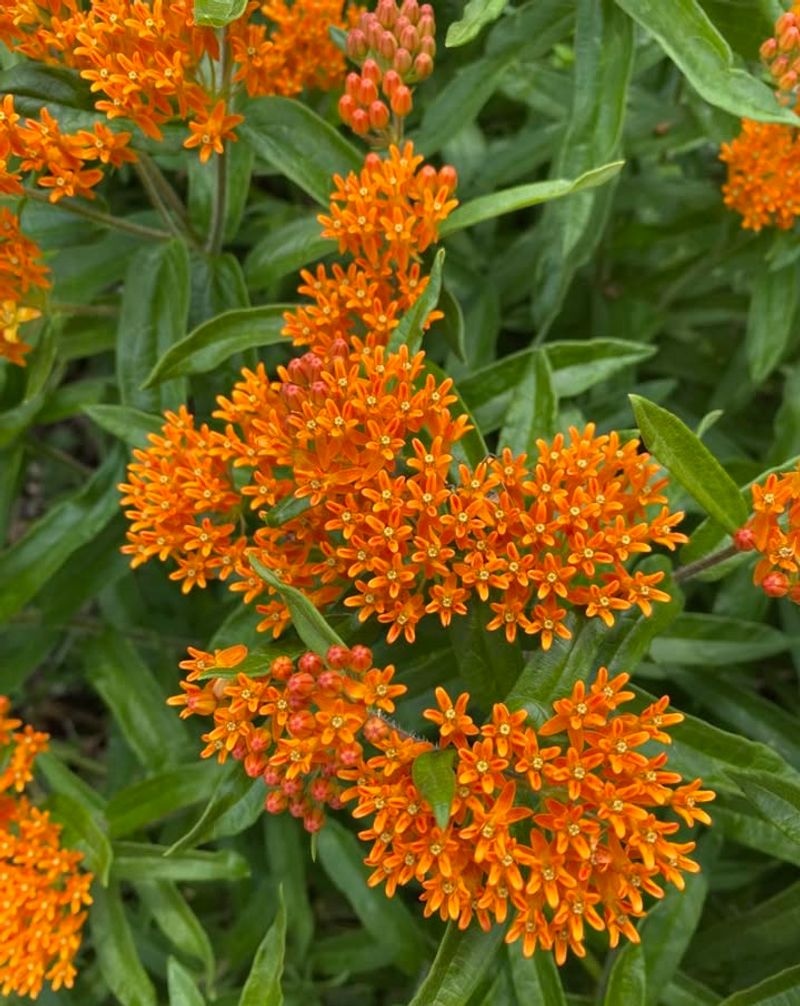
Vivid orange flower clusters on a plant that thrives in hot, dry, sunny spots along Ohio driveways – butterfly milkweed earns its place in driveway beds through a combination of bold color and genuine toughness.
Unlike many perennials that sulk in reflected heat and lean soils, butterfly milkweed is built for exactly those conditions.
It is a native Ohio perennial that grows from a deep taproot, which means it handles drought and heat without much fuss once it has established over its first growing season.
The flowers bloom from early to midsummer and attract monarch butterflies, native bees, and other pollinators that are increasingly important in Ohio residential landscapes.
Because it is a host plant for monarch caterpillars, planting even a few stems along a driveway border contributes meaningfully to local pollinator populations.
The seed pods that follow the flowers have an interesting architectural quality that adds texture to the planting through late summer.
Butterfly milkweed is a perennial rather than a shrub, so it does not provide the year-round woody structure that Knock Out roses offer. It works best in a mixed native driveway planting alongside other natives rather than as a standalone specimen.
It strongly prefers well-drained soils and can rot in heavy, wet clay without adequate drainage, so raised beds or amended planting areas can help in those situations.
6. Black-Eyed Susan Brightens Driveway Beds

Cheerful and reliably blooming through the heat of an Ohio summer, black-eyed Susan is one of the most recognizable native wildflowers in the state and one of the easiest to establish in driveway beds.
The bright yellow ray flowers surrounding a dark central cone appear from midsummer into fall, providing weeks of color during the stretch when many other plants are past their peak.
That long bloom window is one of the reasons black-eyed Susan is often recommended for residential borders across Ohio.
In driveway settings, black-eyed Susan generally performs well in full sun and tolerates moderately dry soils, making it a reasonable fit for south-facing planting strips that bake in summer heat.
It tends to self-seed in Ohio gardens, which means a small initial planting can fill in a bed over several seasons without much effort from the homeowner.
Managing self-seeding is something to keep in mind if the planting area has defined edges where spread would be unwanted.
Black-eyed Susan is a biennial or short-lived perennial depending on conditions, so maintaining a healthy population means allowing some self-seeding to continue from year to year.
It pairs well with other Ohio natives like little bluestem and butterfly milkweed in mixed driveway borders.
The seed heads that remain after flowering attract goldfinches and other small birds through the fall and into winter, adding a layer of wildlife value.
7. Gray-Headed Coneflower Adds Prairie Style

Tall, airy, and unmistakably prairie-inspired, gray-headed coneflower brings a looser, more naturalistic energy to Ohio driveway beds than the structured mounding form of a Knock Out rose.
The flowers feature drooping yellow petals surrounding a grayish to brownish central cone, giving the plant a relaxed, informal character that suits mixed native plantings better than formal hedged borders.
Blooms appear from midsummer into fall, extending the color season in driveway beds.
Gray-headed coneflower is native to Ohio prairies and open woodlands, and it adapts well to sunny residential borders with average to dry soils.
It can grow three to five feet tall depending on conditions, which means it works best in driveway beds where some height is welcome rather than narrow strips where a shorter plant would fit better.
Planting it toward the back of a mixed native border, with lower plants in front, tends to produce the most visually balanced result.
One characteristic worth noting is that gray-headed coneflower spreads by both seed and rhizome over time, gradually expanding its footprint in a planting bed.
That spreading habit can be an advantage in a larger driveway border where filling in bare ground is desirable, but it may require occasional management in more defined spaces.
The seed heads persist through winter and provide food for birds while adding structural interest to an otherwise quiet Ohio winter landscape.
8. Little Bluestem Softens Hard Edges
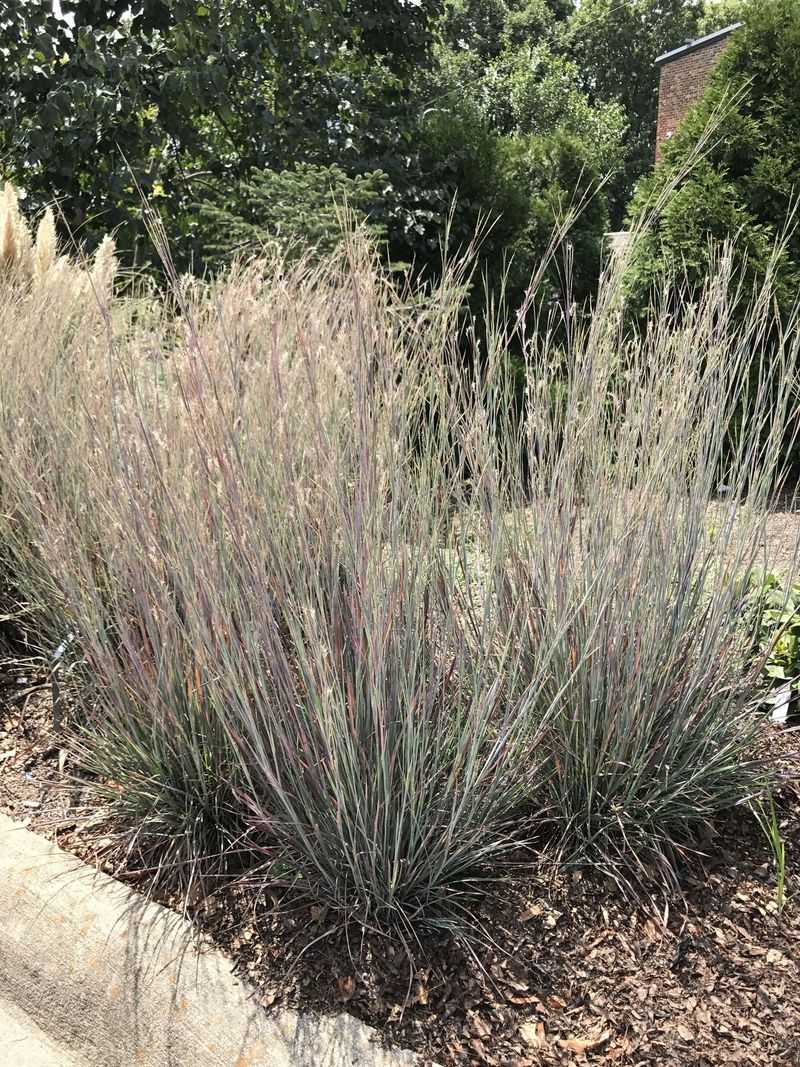
Running a hand along the feathery seed plumes of little bluestem in October is one of those small pleasures that makes Ohio fall gardening memorable.
This native grass shifts from blue-green in summer to warm copper, orange, and red tones in fall, providing a seasonal color display that rivals many flowering plants.
Along Ohio driveways, where hard pavement edges can look stark and uninviting, little bluestem’s soft texture and graceful movement in the breeze bring a welcoming quality to the planting.
Little bluestem typically grows two to three feet tall, making it a manageable size for most residential driveway borders. It is well-suited to full sun and well-drained soils, and it handles dry, lean conditions better than many ornamental grasses once it has established.
That drought tolerance is a genuine advantage in south-facing driveway beds where reflected heat and limited soil moisture can stress less-adapted plants through an Ohio summer.
As a grass rather than a shrub, little bluestem does not provide the woody structure or bloom color of Knock Out roses, but it contributes texture, movement, and four-season interest that rounds out a mixed native planting.
It works especially well when combined with black-eyed Susan, butterfly milkweed, or coneflowers in a layered driveway border.
Cutting it back in late winter before new growth emerges keeps the planting looking tidy heading into the Ohio growing season.
9. Southern Arrowwood Works In Larger Spaces
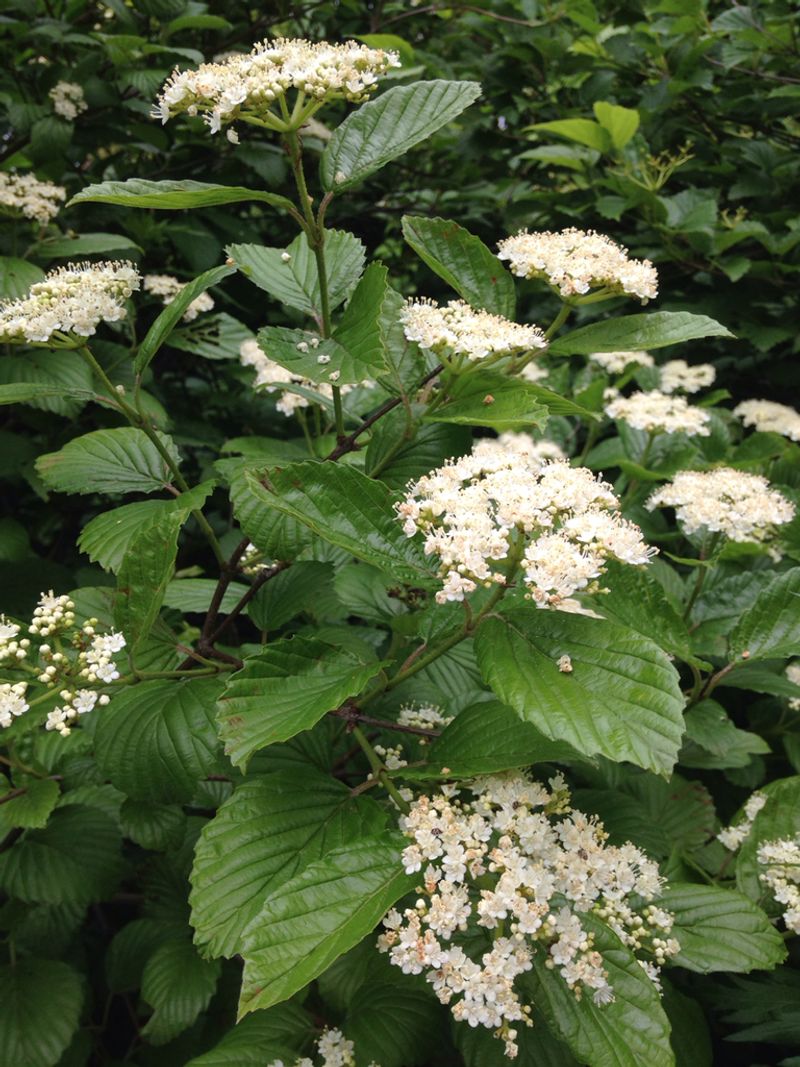
Generous in size and generous in what it offers wildlife, southern arrowwood is a native Ohio viburnum that works well along driveways where there is enough room to let a larger shrub develop naturally.
It can grow six to ten feet tall and spread to a similar width, so it is not a candidate for narrow planting strips, but in wider driveway borders or at the end of a driveway where space opens up, it can become a reliable four-season anchor plant.
Flat-topped clusters of white flowers appear in late spring to early summer, attracting native bees and other pollinators.
The flowers give way to clusters of blue-black berries in late summer and fall that are highly attractive to birds, including several migratory species that move through Ohio in autumn.
The foliage develops reddish to purplish fall color that adds to the seasonal display before the leaves drop.
Southern arrowwood tolerates a range of soil moisture conditions and can handle both moderately dry and occasionally wet spots, which makes it adaptable to the variable soil conditions found along many Ohio driveways.
It performs best in full sun to partial shade and generally does not need heavy pruning if given adequate space from the start.
For homeowners replacing Knock Out roses in a wider driveway bed, southern arrowwood brings wildlife value, seasonal color, and a genuinely native presence that fits naturally into the Ohio landscape.