How To Prune Oleander In Arizona In June Without Stressing The Plant
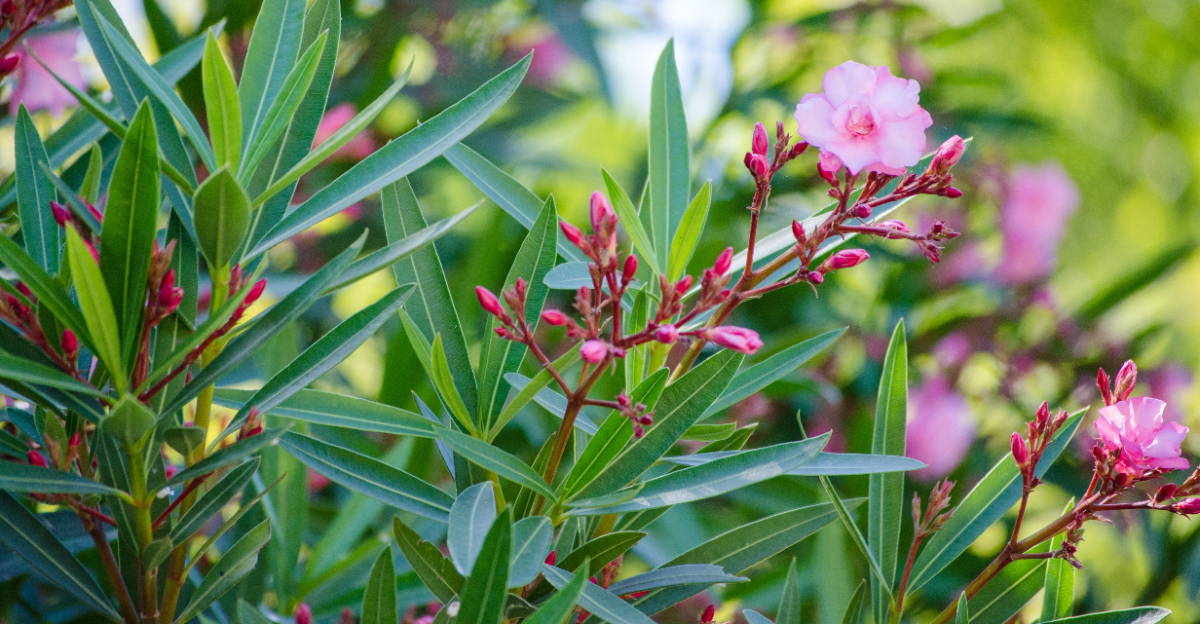
It is easy to think a quick trim will only help your oleander. After all, it is one of the toughest shrubs you can grow.
It handles intense sun, dry weather, and long summers better than many other landscape plants. That is exactly why so many gardeners assume it can be pruned whenever it starts looking overgrown.
Unfortunately, June is not the time to make random cuts. The wrong pruning job can leave the plant working harder to recover instead of putting energy into healthy new growth and flowers.
A little extra care now can make a big difference later in the season.
That is especially true in Arizona, where extreme heat adds another layer of stress. The good news is that you do not have to avoid pruning altogether.
A few simple pruning changes can help your oleander stay healthy through the hottest weeks of summer.
1. Remove Spent Flower Clusters After They Fade
Faded flowers are easy to overlook, but leaving them on the plant is actually a missed opportunity. Spent blooms stop the plant from redirecting energy toward new growth and fresh flowers.
Snipping them off is one of the simplest things you can do in June.
Focus on cutting just below the base of the flower cluster. You want to remove the whole spent head, not just the petals.
A clean cut right above a leaf node encourages the plant to push out a new branch tip faster.
Work section by section across the shrub. Moving methodically keeps you from missing clusters tucked deep inside the canopy.
It also gives you a chance to spot any damaged or crossing stems while you are already in there.
Oleander blooms on new wood, so the sooner you clean up old flower heads, the sooner fresh blooms appear. Hot desert summers are long enough that your plant has plenty of time to rebloom after a June cleanup.
Stay consistent with this habit and your shrub will look tidy and full all season. Wear gloves every single time since all parts of the plant are toxic to skin contact.
2. Avoid Cutting Into Older Woody Stems
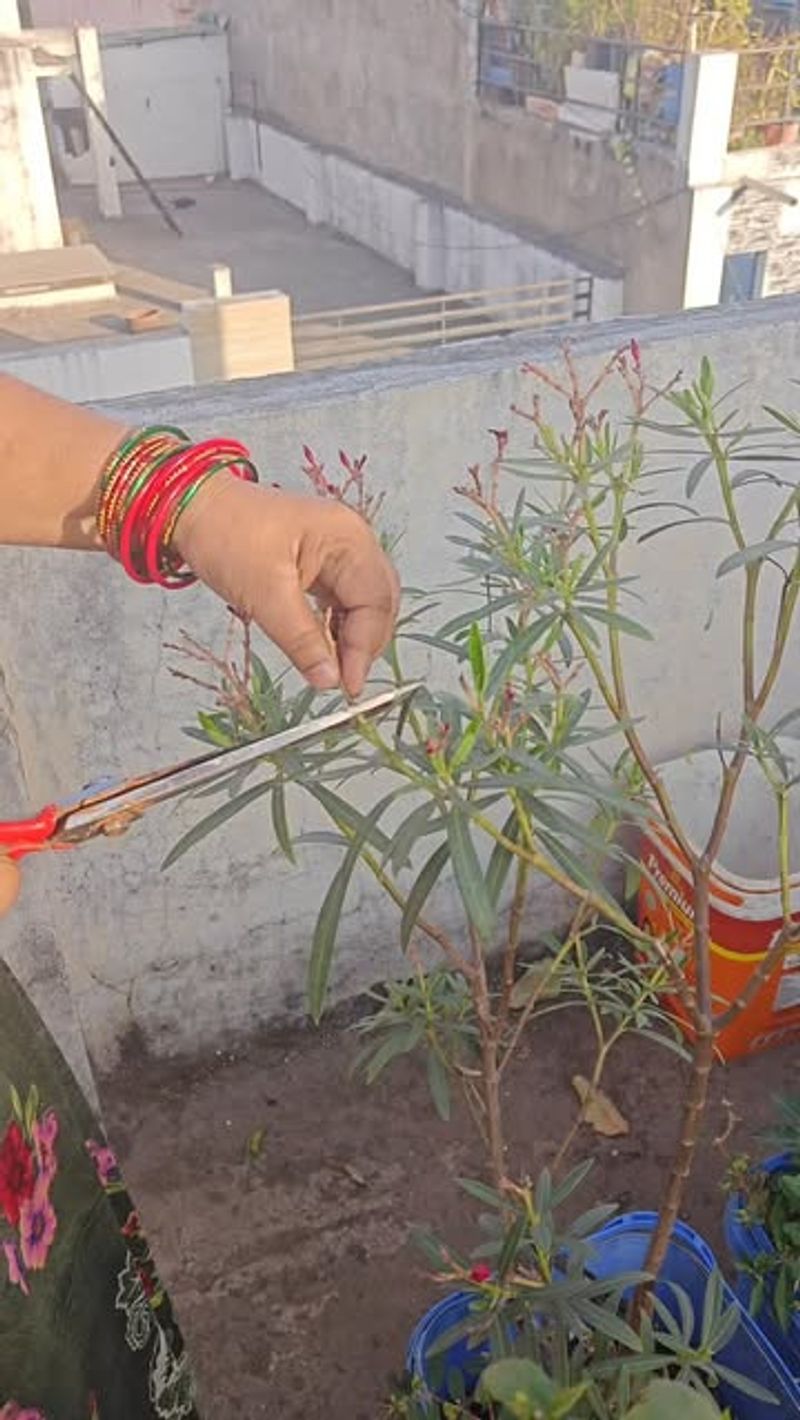
Old woody stems look tempting to cut back, but hacking into them during summer heat is a bad move. Mature wood takes much longer to recover than young green growth, especially when temperatures are pushing past 105 degrees.
Woody stems store reserves that help the plant survive extreme heat. Cutting them back hard removes that buffer and forces the plant to work overtime during the hottest stretch of the year.
June is not the right window for that kind of aggressive work.
Save hard rejuvenation cuts for late winter or very early spring. At that point, the plant has cooler temperatures ahead and plenty of time to push out new growth before summer stress arrives.
Trying to do it in June puts the shrub in a tough spot.
If you spot a woody stem that looks unhealthy or badly damaged, it is fine to remove it carefully.
Your Arizona Garden Changes Every Week. Your Plan Should Too.
Gardening in Arizona changes quickly throughout the season. Every Friday you’ll receive a simple weekly plan showing exactly what to plant, prune, fertilize, harvest, and protect so you never miss the right timing.
Just avoid slicing into healthy old wood without a clear reason.
Stick to green, flexible growth when pruning in summer and your oleander will bounce back quickly. The goal in June is light maintenance, not a full reshape.
Keep the big cuts reserved for the right season and the plant will reward you with strong, consistent growth year after year.
3. Shorten Leggy Growth With Selective Cuts
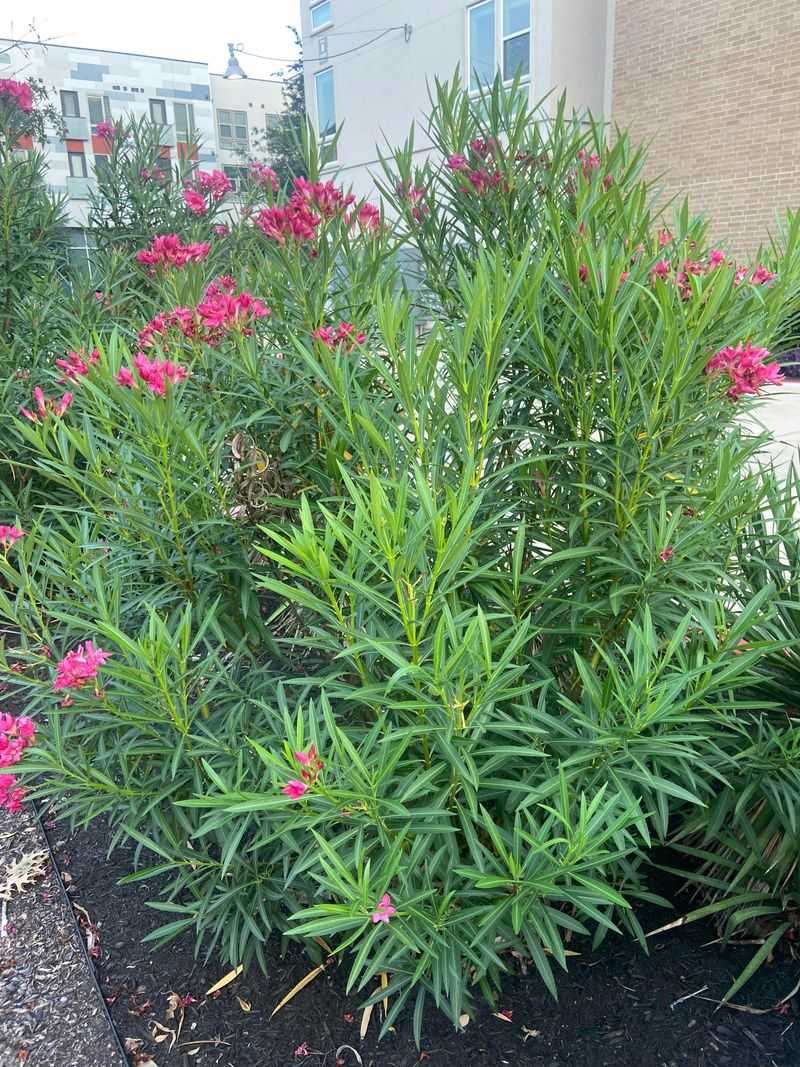
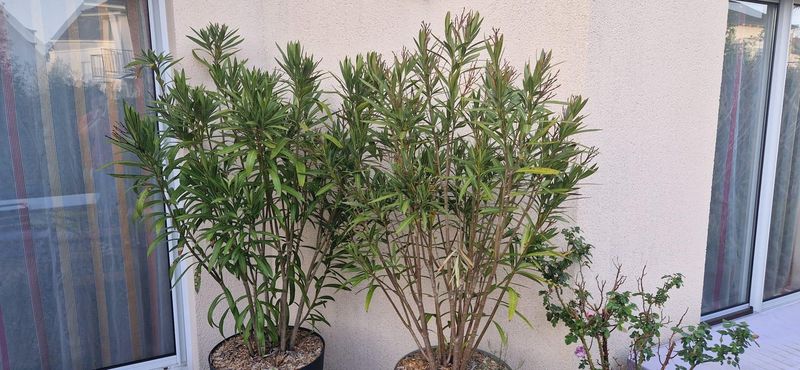
Leggy stems shoot out fast during warm weather, and by June they can make a once-tidy shrub look unruly. Selective cuts are the smart fix.
You do not need to reshape the whole plant, just target the stems stretching well beyond the natural canopy line.
Cut each leggy branch back to just above a healthy leaf node or side shoot. That spot is where new growth will sprout.
Cutting there gives the plant a clear signal to branch out rather than keep stretching in one direction.
Spread your cuts evenly around the plant instead of focusing on one side. Uneven pruning creates lopsided growth over time, and correcting it later takes more work.
A few minutes of thoughtful cutting now saves a lot of trouble down the road.
Avoid removing more than about a third of the plant’s total green growth in a single session during summer. Taking too much at once stresses the shrub when it is already managing intense heat.
Light, targeted cuts keep the shape clean without overloading the plant.
In Arizona, June heat is relentless, so working in the early morning before temperatures peak is a smart habit.
4. Skip Major Pruning During Extreme Heat
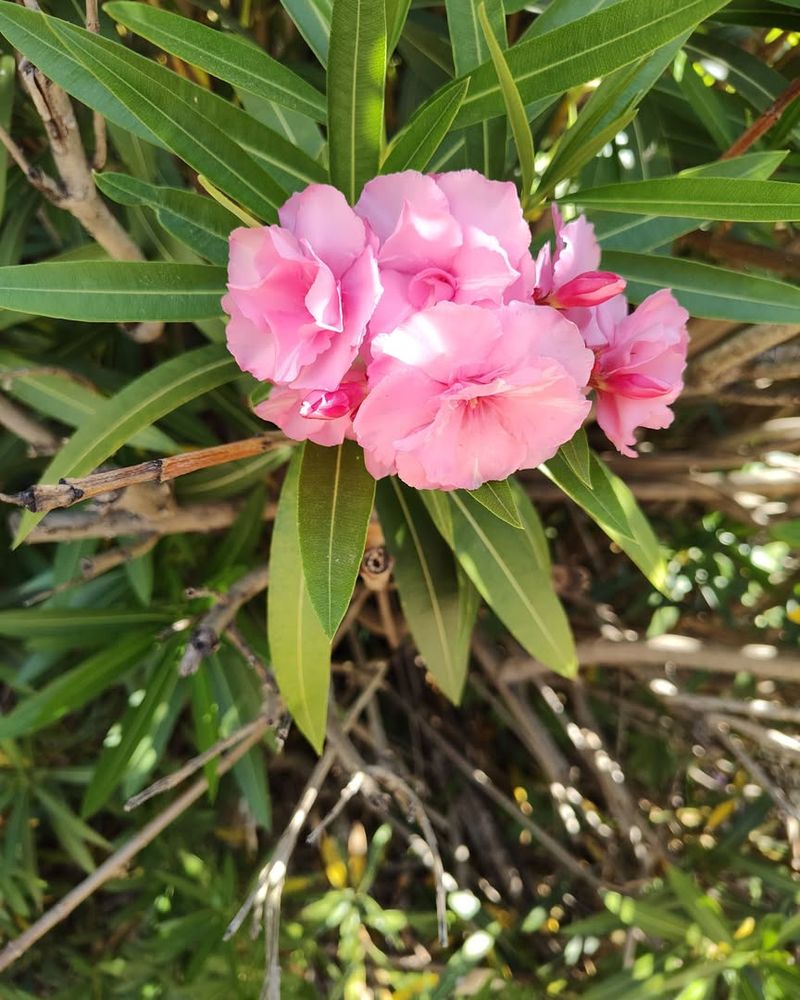
When the forecast is hitting 110 degrees or higher, put the pruning shears down. Extreme heat days are not the time to cut into your oleander.
Fresh cuts open wounds that lose moisture fast, and the plant struggles to seal them under intense heat stress.
Watch the weather before you plan any pruning session. A stretch of triple-digit days back to back is a clear sign to wait.
Even a brief cool spell in the forecast can make a meaningful difference in how well the plant handles fresh cuts.
Morning temperatures in June can still be manageable in many desert areas. If you must prune, aim for the early hours before 8 a.m. when heat stress is at its lowest point.
Get in, make your cuts, and step back so the plant is not disturbed further as the day heats up.
Timing matters more than most gardeners realize. A plant already under heat stress is less capable of healing quickly after pruning.
Waiting even two or three days for a slightly cooler window can make a noticeable difference in recovery. Major reshaping, heavy thinning, or cutting back large portions of the canopy should always be scheduled outside of peak summer heat.
5. Thin Dense Branches To Improve Air Circulation
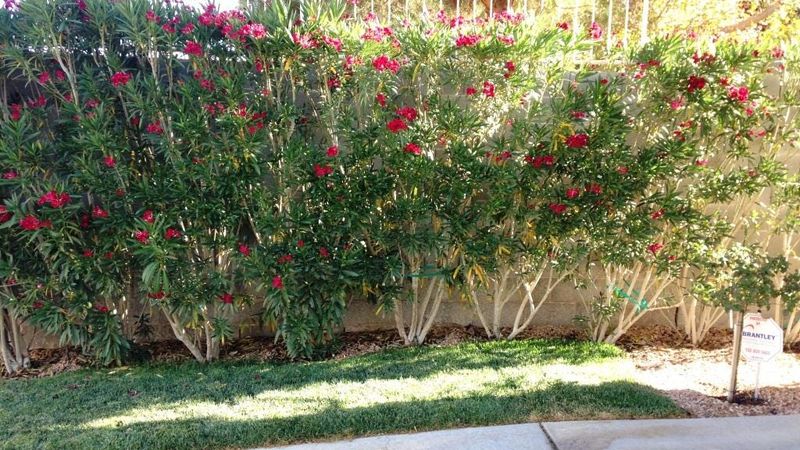
A packed, tangled canopy traps heat and moisture in ways that invite problems. Poor air movement through the center of an oleander creates the right conditions for fungal issues and pest activity.
Opening up the interior a bit goes a long way.
Start by looking for crossing branches that rub against each other. Those friction points create wounds over time.
Remove the weaker of the two crossing stems, cutting cleanly at its base or back to a healthy junction point.
Next, look for stems growing straight toward the center of the plant rather than outward. Inward growth clogs the middle without adding to the overall shape.
Removing a few of these opens up airflow without changing the plant’s appearance from the outside.
Do not go overboard. Thinning out about ten to fifteen percent of the interior growth is usually enough to make a real difference.
Pulling too much out at once can shock the plant and expose inner branches to direct sun they are not used to, which causes its own set of problems. Work slowly and step back often to check your progress.
In hot desert climates, good air circulation also helps the plant shed heat more efficiently.
6. Water Deeply After Light Summer Pruning
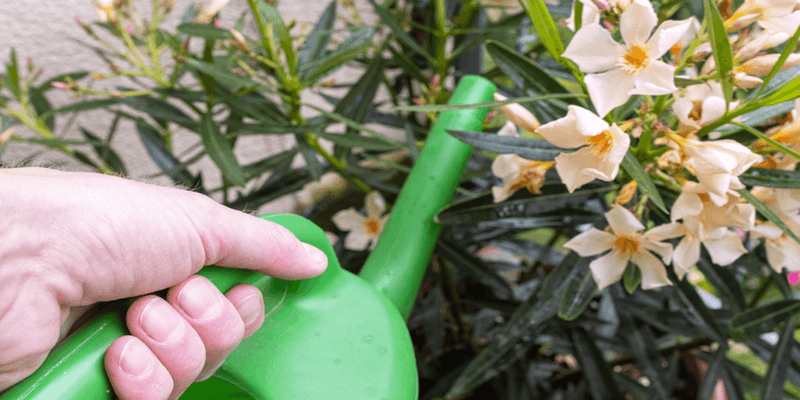
Pruning opens cuts across the plant, and those fresh wounds need support to heal cleanly. Deep watering right after a light pruning session helps the plant push moisture and nutrients up to those healing points quickly.
Shallow watering just does not cut it in summer.
Let the water soak in slowly at the base of the shrub rather than spraying the foliage. Wet leaves under intense sun can scorch, and extra moisture on the canopy after pruning is not helpful.
Focus the water at the root zone where the plant actually absorbs it.
For established oleanders, a long, slow soak once or twice a week during summer is usually enough. After pruning, bump that up by one extra session during the first week.
Recovery goes smoother when the plant is not also fighting drought stress at the same time.
Drip irrigation works really well for desert shrubs like oleander. It delivers water directly to the roots without wasting it on foliage or open soil.
If you are hand-watering, use a slow trickle and let it run for at least fifteen to twenty minutes at the base. Mulching around the root zone also helps retain soil moisture between waterings.
A two to three inch layer of organic mulch keeps the root zone cooler and reduces how often you need to water after a summer pruning session.
7. Use Clean Sharp Tools To Make Every Cut
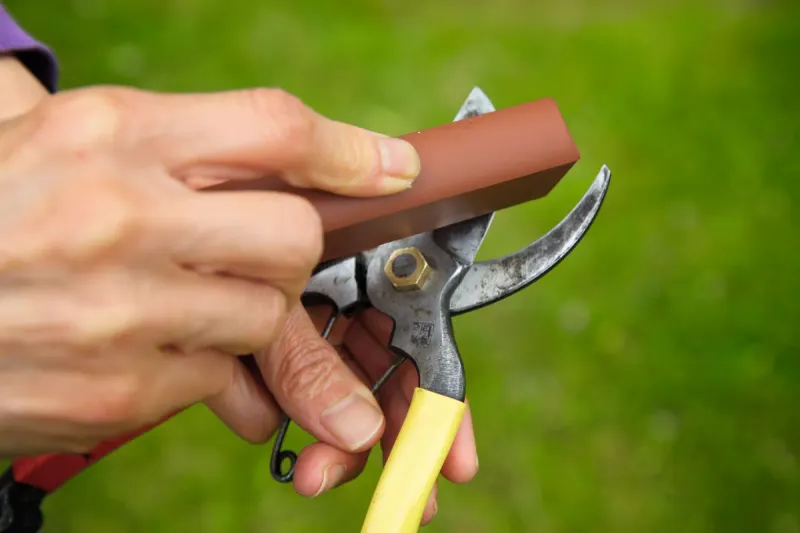
Dull blades crush stem tissue instead of slicing through it cleanly. Crushed cuts take longer to heal and create ragged entry points for bacteria and fungal spores.
Sharp tools are not just convenient, they are genuinely better for the plant’s health.
Before you start, wipe the blades with a diluted bleach solution or isopropyl alcohol. Oleander disease can travel from one plant to another on dirty tools without you ever noticing.
A quick wipe between plants takes seconds and prevents a lot of potential problems.
Check your pruners for blade alignment before each session. Even sharp blades can give bad cuts if they are misaligned.
A properly aligned bypass pruner slices cleanly with minimal effort and leaves a smooth, flat wound that heals faster.
Bypass pruners work best for stems up to about three quarters of an inch in diameter. For thicker branches, switch to loppers with long handles.
Trying to force pruners through wood that is too thick bends the blade and damages the cut surface. After each pruning session, wipe the blades clean, dry them thoroughly, and apply a light coat of oil to prevent rust.
Sharp tools last longer when stored correctly.