The Invasive Shrub North Carolina Gardeners Should Remove Before It Takes Over The Backyard
It probably came with the property. It might have even been planted intentionally by someone who thought it looked nice along the fence line or filled an awkward corner well.
This particular invasive shrub has established itself across North Carolina yards so thoroughly that many homeowners have lived alongside it for years without ever questioning whether it belongs there.
The problem is not just aesthetic.
This shrub actively outcompetes native vegetation, alters soil conditions around its root zone, and spreads into natural areas with a persistence that makes early removal far less work than dealing with it once it has claimed serious ground.
The longer it stays, the more complicated the removal becomes.
1. The Shrub Is Chinese Privet
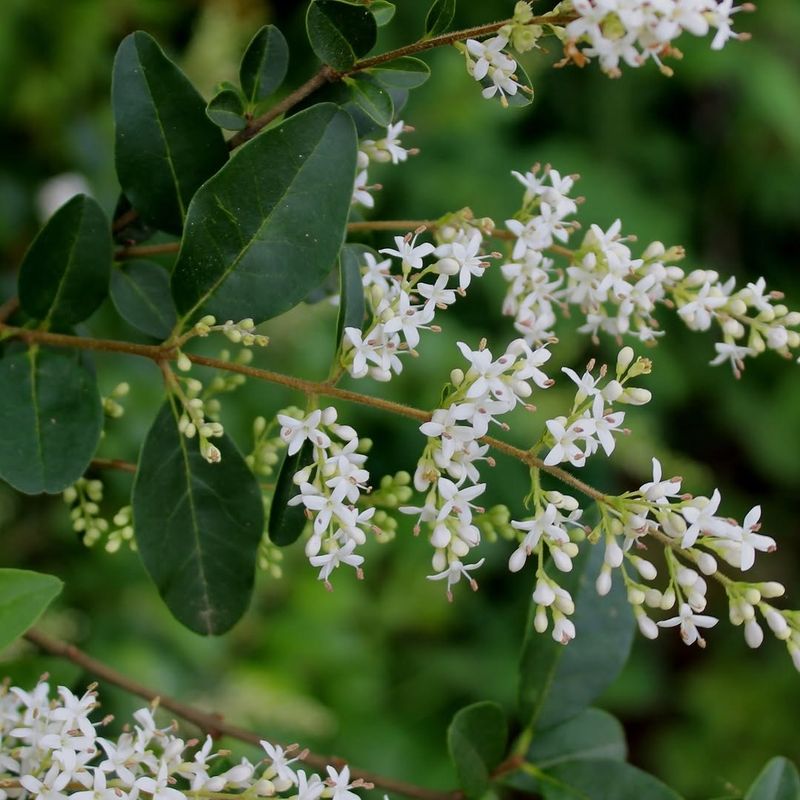
Not every fast-growing hedge shrub in a North Carolina yard is harmless. The one that gardeners and land managers worry about most is Chinese privet, known scientifically as Ligustrum sinense.
It was brought to the United States from China in the 1800s and planted widely as an ornamental hedge because it grew quickly, stayed green through mild winters, and gave yards a tidy, formal look.
For a while, it seemed like the perfect landscaping choice. Nurseries sold it by the thousands, and homeowners planted it along driveways, fences, and property lines across the Southeast.
Nobody expected it to spread the way it did. Over time, Chinese privet escaped garden boundaries and began showing up in natural areas, roadsides, creek banks, and wooded backyards far from where it was ever planted.
Today, North Carolina considers it an invasive species, which means it causes real harm to the local environment. Replacing it with better-behaved shrubs is the smartest move a homeowner can make.
The sooner you identify it in your yard, the easier it will be to clear it out and reclaim that space for plants that truly belong in your landscape.
2. It Can Grow Into A Large Shrub Fast
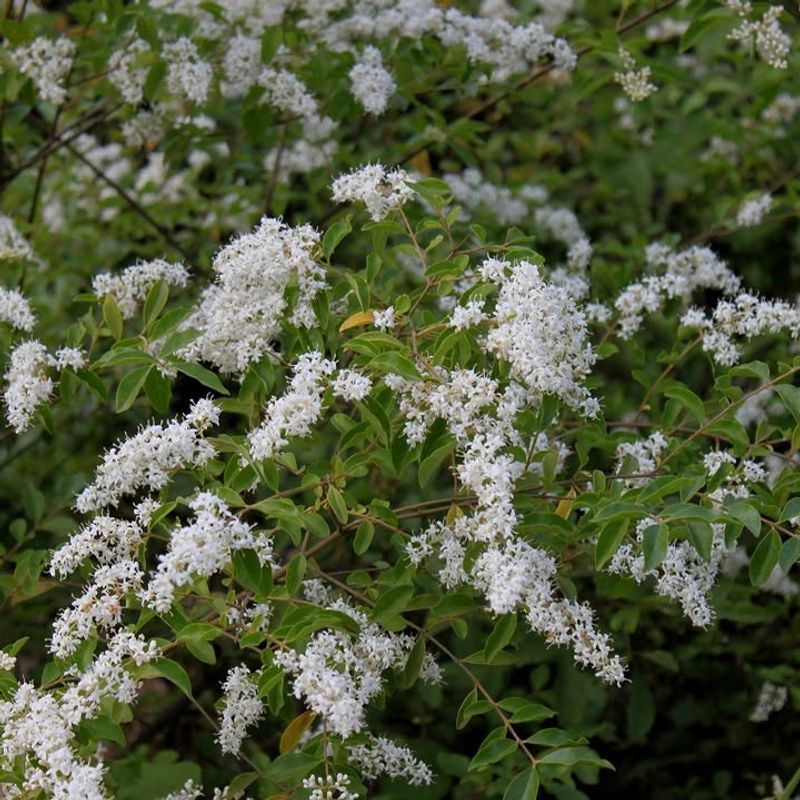
Speed is one of the most surprising things about Chinese privet. What starts as a small, innocent-looking seedling near a fence post or shed can turn into a towering shrub reaching anywhere from 6 to 15 feet tall and equally as wide.
That kind of growth happens faster than most gardeners expect, especially in the warm, humid climate that much of North Carolina provides for most of the year.
Many homeowners first notice Chinese privet as a neat little volunteer that fills in a bare spot along the property line. It looks tidy at first, and some people even let it grow, thinking it will stay manageable.
The problem is that without regular attention, it quickly outgrows the space and starts pushing into garden beds, shading out smaller plants, and taking over wooded yard edges where native shrubs once thrived.
Once a Chinese privet gets established and large, removing it becomes a much bigger project. Roots go deep, branches spread wide, and the shrub becomes difficult to handle without serious effort.
Catching it while it is still small saves an enormous amount of work later. Regular yard checks, especially along fence lines, creek edges, and shaded corners, help you spot new growth before it becomes a real problem.
Your North Carolina Garden Changes Every Week. Your Plan Should Too.
Gardening in North Carolina changes quickly throughout the season. Every Friday you’ll receive a simple weekly plan showing exactly what to plant, prune, fertilize, harvest, and protect so you never miss the right timing.
3. It Spreads Through Birds And Root Suckers
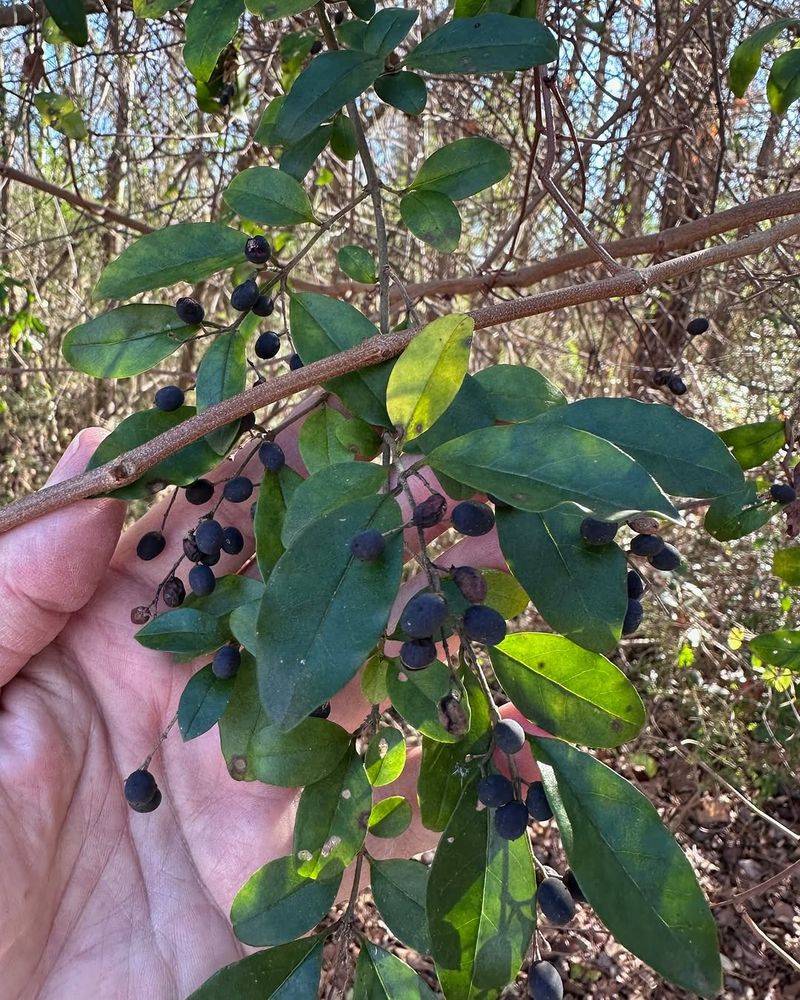
Chinese privet has two very effective tricks for spreading across a landscape, and that combination is a big reason why it shows up in so many unexpected places. The first method involves birds.
Each fall, the shrub produces clusters of small, dark, berry-like fruits that birds find very attractive. When birds eat those fruits and fly off, they carry the seeds with them, depositing them far from the original plant through their droppings.
That is how Chinese privet ends up sprouting along creek banks, under trees, and in wooded corners of yards where no one ever planted it.
A single fruiting shrub can scatter hundreds of seeds across a wide area in just one season, which explains why infestations seem to appear out of nowhere.
If you have a fruiting privet on or near your property, new seedlings will keep appearing year after year until the source is removed.
The second spreading method is root suckers, which are new shoots that grow up from the roots of an existing plant. These suckers allow Chinese privet to thicken into a dense patch even without any help from birds.
Over a few seasons, what started as one shrub can multiply into a cluster of connected plants. Watching for suckers around any privet you already know about helps you catch new growth before it gets out of hand.
4. It Shows Up In All Regions Of North Carolina
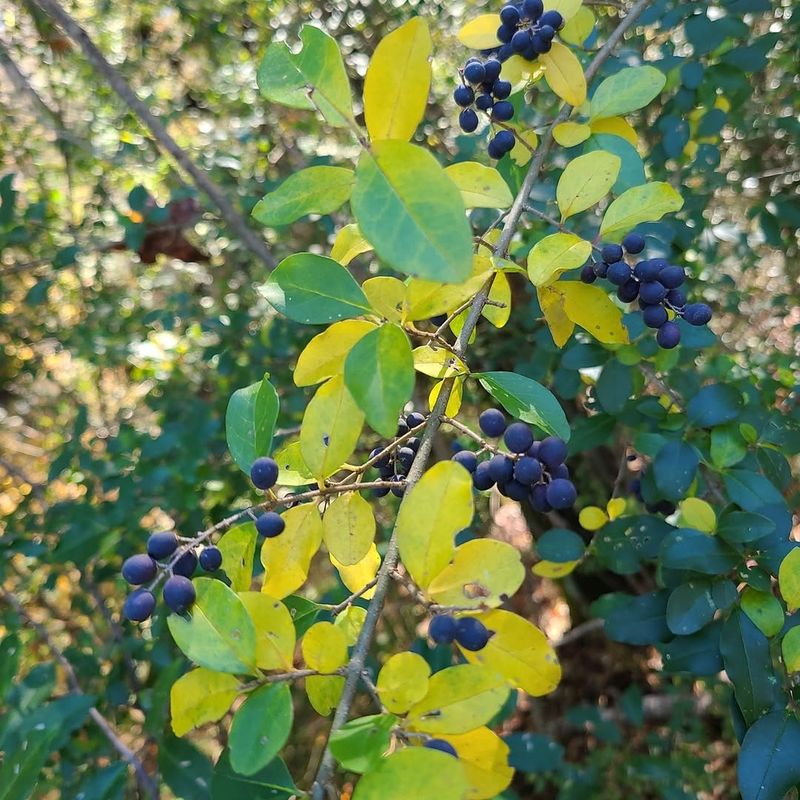
Some invasive plants prefer specific climates or soil types, but Chinese privet is not that picky. It has established itself across all three major regions of North Carolina, from the rugged mountains in the west to the flat, sandy Coastal Plain in the east.
That wide range makes it a concern for virtually every homeowner and gardener in the state, not just those in certain areas.
In the mountains, Chinese privet tends to appear along creek bottoms, roadsides, and disturbed areas where soil has been moved or cleared. In the Piedmont, it shows up in suburban backyards, utility corridors, and forest edges.
Along the Coastal Plain, it thrives in the moist, warm conditions near wetlands, drainage channels, and wooded neighborhoods. Each region gives it slightly different growing conditions, but the shrub adapts well to all of them.
Gardeners sometimes assume that a plant causing problems in one part of the state is not their concern if they live somewhere else. With Chinese privet, that assumption does not hold up.
No matter where you garden in North Carolina, learning to recognize this shrub is genuinely useful.
Catching it early in your specific region, whether you are surrounded by mountains, red clay, or sandy soil, gives you the best chance of keeping it from spreading further across your property.
5. It Forms Dense Backyard Thickets
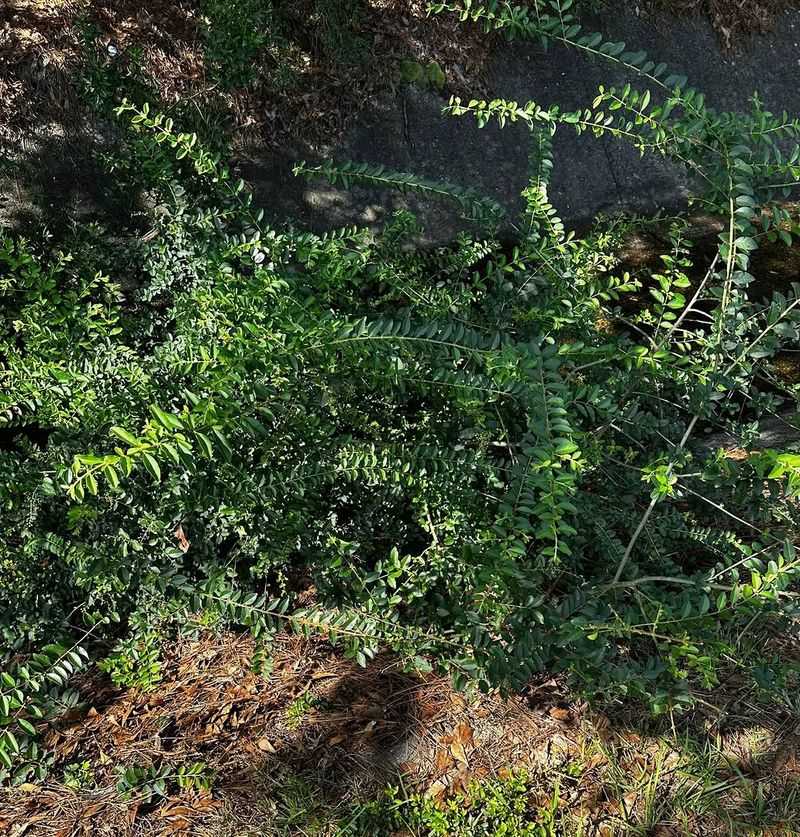
One of the most visible signs of a Chinese privet problem is the thick, tangled wall of greenery that forms along neglected fence lines, creek banks, and shaded yard edges.
These thickets can develop surprisingly quickly, especially in spots where nobody is paying close attention.
A wooded corner that looked fine last spring can look completely overgrown by the following summer if privet has moved in and started spreading.
The real damage goes beyond appearance. Dense privet thickets crowd out native shrubs, spring wildflowers, and young trees that would otherwise grow in those spaces.
Native plants that local wildlife depends on for food and shelter simply cannot compete with privet once it gets a foothold.
Over time, a rich, diverse patch of native growth can be replaced by a nearly single-species stand of privet that provides far less ecological value.
Early action always makes the job easier. A small cluster of privet plants along a fence is a manageable weekend project.
A thicket that has been growing for several years and spreading by root suckers is a much larger undertaking that may require multiple rounds of effort.
Checking shaded borders, fence lines, and wooded yard edges at least once a year gives you the chance to catch new growth while it is still small and easy to address before it takes over the whole corner.
6. Its Leaves Help With Identification
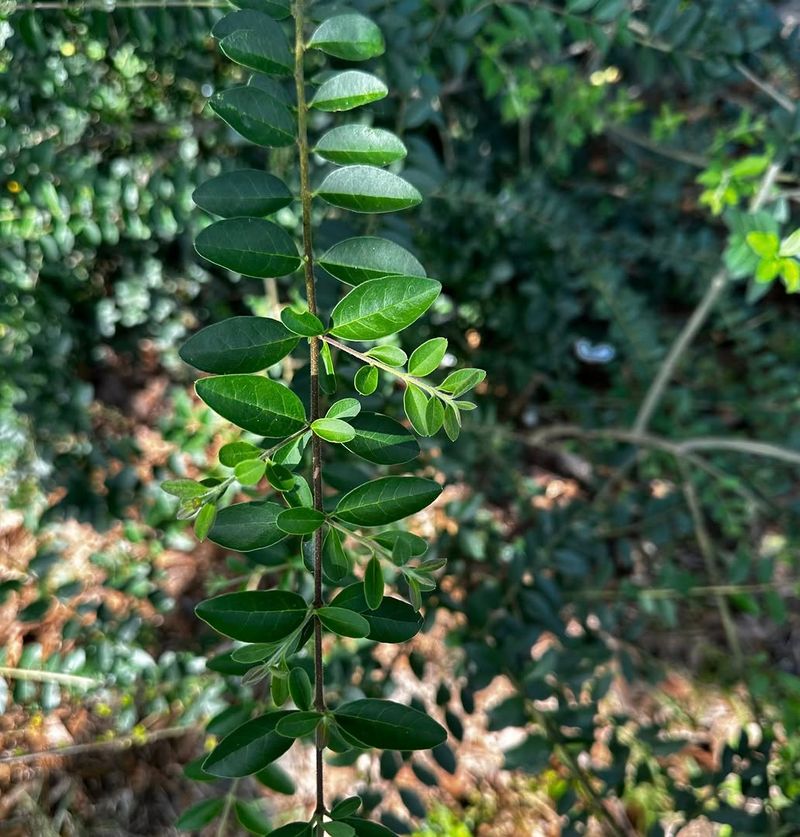
Knowing what Chinese privet looks like up close makes it much easier to spot in a yard full of different shrubs and plants. The leaves are one of the most reliable identification clues.
They grow in opposite pairs along the stem, meaning one leaf sits directly across from another at each node. Each leaf is small and oval with smooth, untoothed edges that give the plant a clean, polished appearance at first glance.
Look at the upper surface of the leaf and you will notice a glossy, almost waxy shine. Flip the leaf over and the underside is noticeably paler and a bit duller than the top.
That contrast between the shiny upper surface and the lighter underside is something to watch for when you are trying to confirm what you are looking at. It is a small detail, but it helps narrow things down quickly.
For an even more specific clue, look closely at the midrib, which is the central vein running down the middle of the leaf.
On Chinese privet, that midrib can appear slightly hairy or fuzzy when you examine it closely, which separates it from some other privet species.
Combining the opposite leaf arrangement, the glossy upper surface, the pale underside, and the slightly hairy midrib gives you a solid set of identification markers to work with in the field.
7. Its Flowers And Fruits Are Seasonal Clues
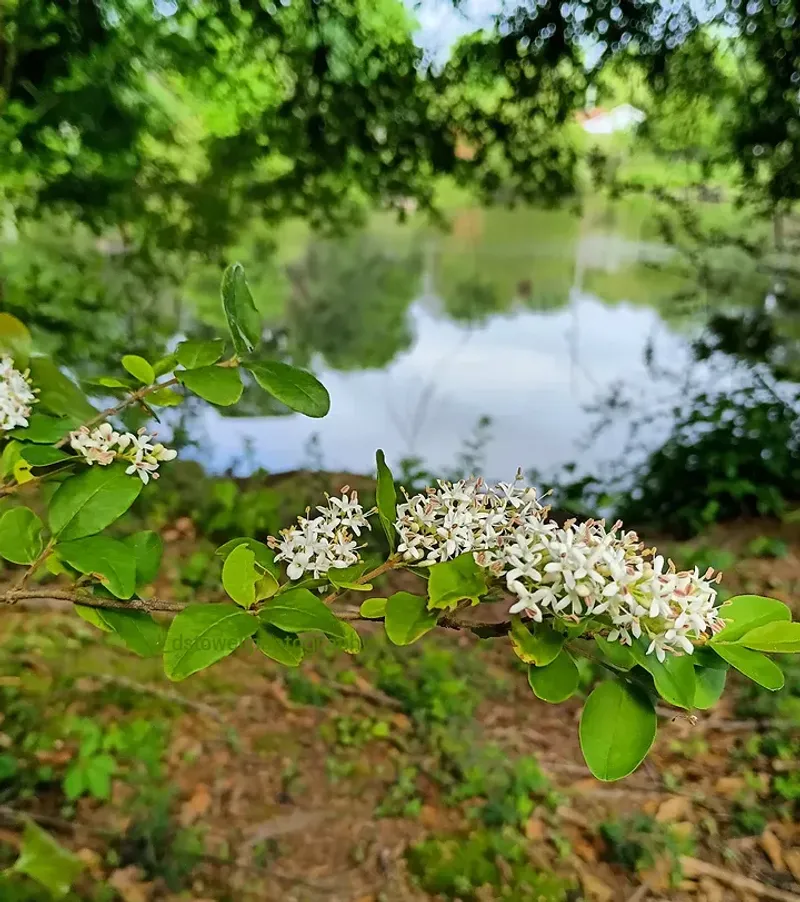
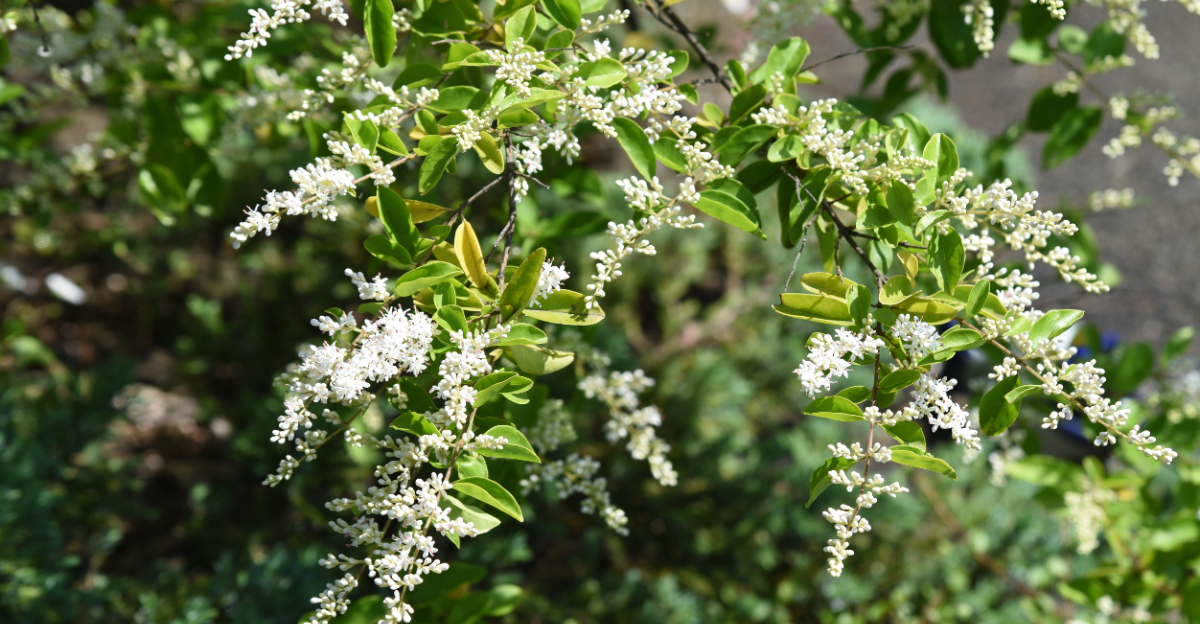
Twice a year, Chinese privet gives gardeners a very clear signal that helps with identification. In late spring to early summer, the shrub produces clusters of small white flowers arranged in dense, branching groups called panicles.
These blooms are hard to miss because they appear in large numbers and can cover the tips of the branches in a frothy-looking white display that stands out against the glossy green leaves.
The scent is something people notice immediately, though not always in a pleasant way. Some gardeners and passersby find the fragrance overpowering or even irritating, especially on warm, still days when it concentrates in the air.
People who are sensitive to strong floral scents sometimes report headaches or discomfort near blooming Chinese privet. That intense smell is actually another helpful identification clue if you are not sure what you are looking at.
After the flowers fade, small dark fruits develop and ripen through late summer and into fall. These fruits are the ones birds carry away, which is why addressing a fruiting shrub before seeds spread further is so important.
If you spot a privet in bloom or loaded with fruit, that is the moment to start making a removal plan. Waiting until after the birds have visited means seeds are already on their way to new corners of your yard and beyond.
8. Small Seedlings Are Easier To Handle
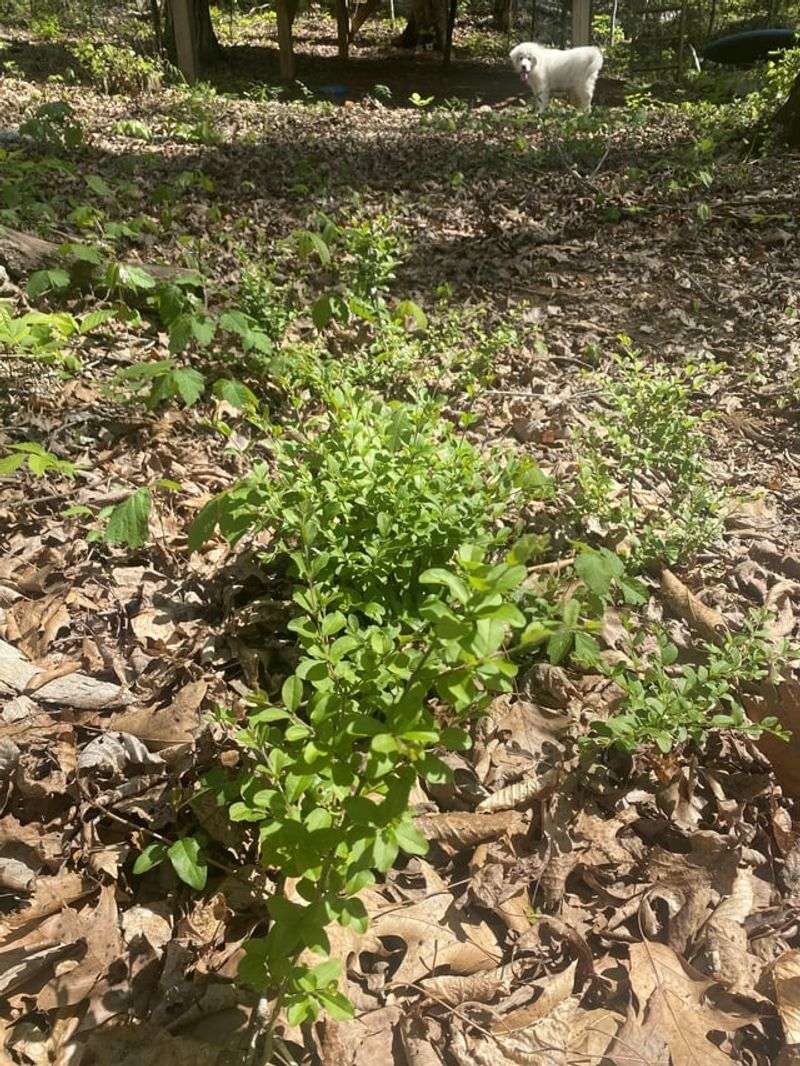
Catching Chinese privet while it is still a seedling is genuinely one of the best things a North Carolina gardener can do.
Young plants, especially those that sprouted from bird-dropped seeds in the past season or two, have relatively shallow root systems that respond well to hand pulling.
With a little effort and the right timing, removing them can be quick and satisfying work.
Soil moisture makes a big difference. Trying to pull privet seedlings from hard, dry ground often results in the stem snapping off while the root stays in place, which means the plant will resprout.
Waiting until after a good rain, or watering the area first, softens the soil enough to get the whole root out in one pull.
A hand trowel or garden fork helps loosen the soil around the base of the seedling before you tug, giving you a much better chance of a clean removal.
After clearing an area, do not assume the work is finished. Check the same spot again in a few weeks and again the following season.
Seeds already in the soil can germinate later, and any root fragments left behind may send up new shoots. Staying consistent with follow-up checks is what makes the difference between a one-time effort and a long-term win.
A few minutes of monitoring each season keeps small problems from becoming large ones again.
9. Large Shrubs Need A Careful Plan
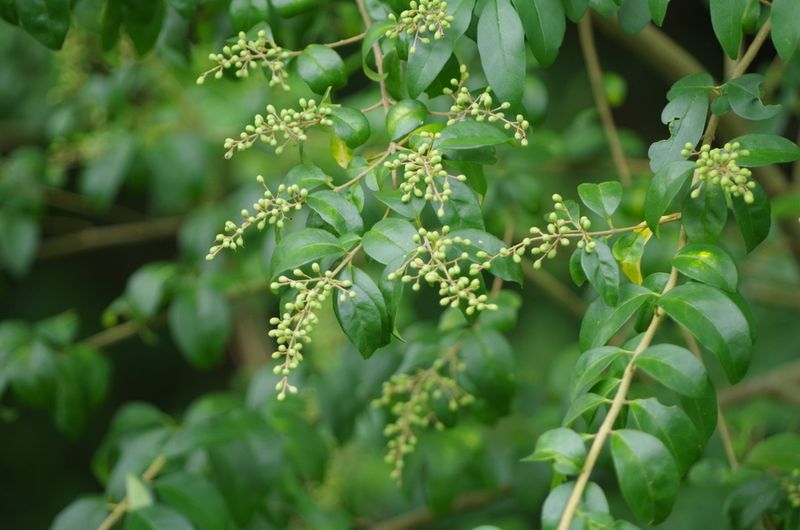
A mature Chinese privet that has been growing for several years is a very different challenge compared to a handful of seedlings. Large shrubs develop thick, woody stems and deep root systems that do not come out with a simple tug.
Cutting the shrub down at the base might seem like the obvious solution, but privet is well known for resprouting vigorously from the stump and roots after being cut. Without follow-up treatment, the plant often returns stronger and bushier than before.
For large infestations or shrubs growing near water, sensitive native plants, or areas where you want to be careful about what you use, reaching out to your local NC Cooperative Extension office is a smart first step.
Extension agents can give you region-specific guidance based on your exact situation, whether that is a wooded edge, a creek bank, or a large thicket in a suburban backyard.
They can walk you through the most appropriate approach for your site.
One method that professionals and experienced gardeners sometimes use is a cut stump treatment, which involves applying an appropriate product directly to the freshly cut stump surface immediately after cutting.
This approach targets the root system and reduces the chance of resprouting.
Any product used this way must be applied strictly according to the label instructions, which is not just good advice but a legal requirement. Skipping label guidance can cause unintended harm to nearby plants or water.
10. Replant With North Carolina Friendly Alternatives
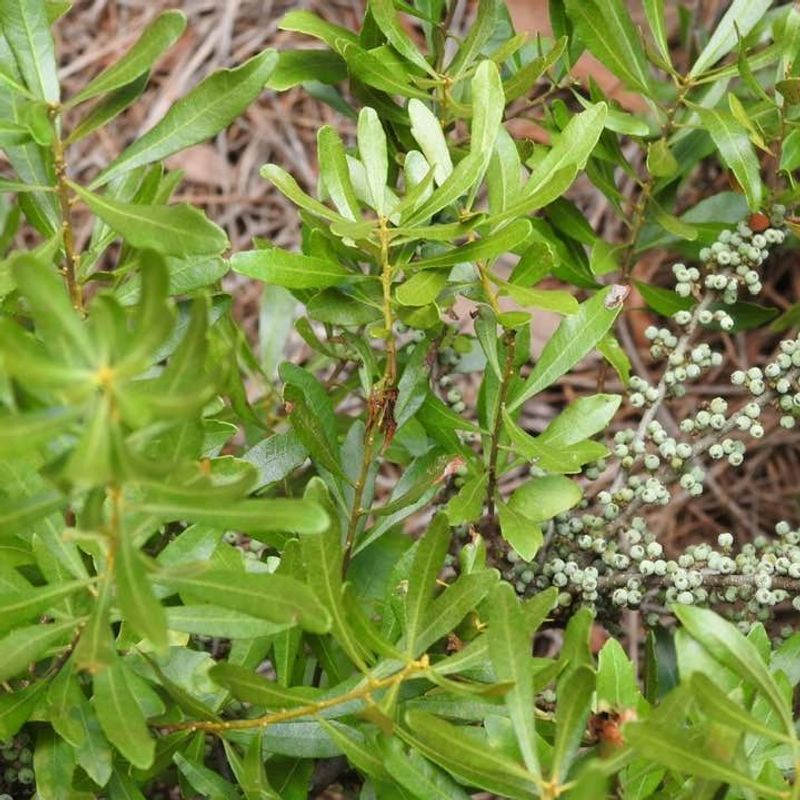
Clearing Chinese privet from your yard is genuinely exciting because it opens up space for shrubs that actually belong in the North Carolina landscape.
Native and well-behaved alternatives not only look great but also support local birds, pollinators, and other wildlife in ways that privet simply cannot match.
The effort you put into removal pays off every season when those replacement plants grow and thrive.
Wax myrtle is a strong choice for sunny, well-drained spots and grows quickly enough to fill a fence line or screening area without becoming a problem.
Sweetbay magnolia works beautifully in moist, low-lying areas where privet tends to take hold near creek edges.
Mountain laurel is a stunning option for shaded, acidic slopes in the western part of the state. Blackhaw viburnum and mapleleaf viburnum both provide wildlife value through their berries and attractive fall color.
Yaupon holly is tough, adaptable, and one of the most wildlife-friendly shrubs you can plant in most parts of North Carolina.
The best backyard strategy is straightforward: identify Chinese privet early, clear it carefully using the right approach for the size of the problem, monitor the area consistently for new growth, and replant with shrubs that support your local ecosystem.
A yard full of plants that belong there is healthier, more beautiful, and far easier to manage over the long run than one slowly taken over by privet.