What It Really Means When Cicadas Are Louder Than Usual In Your North Carolina Trees This Summer
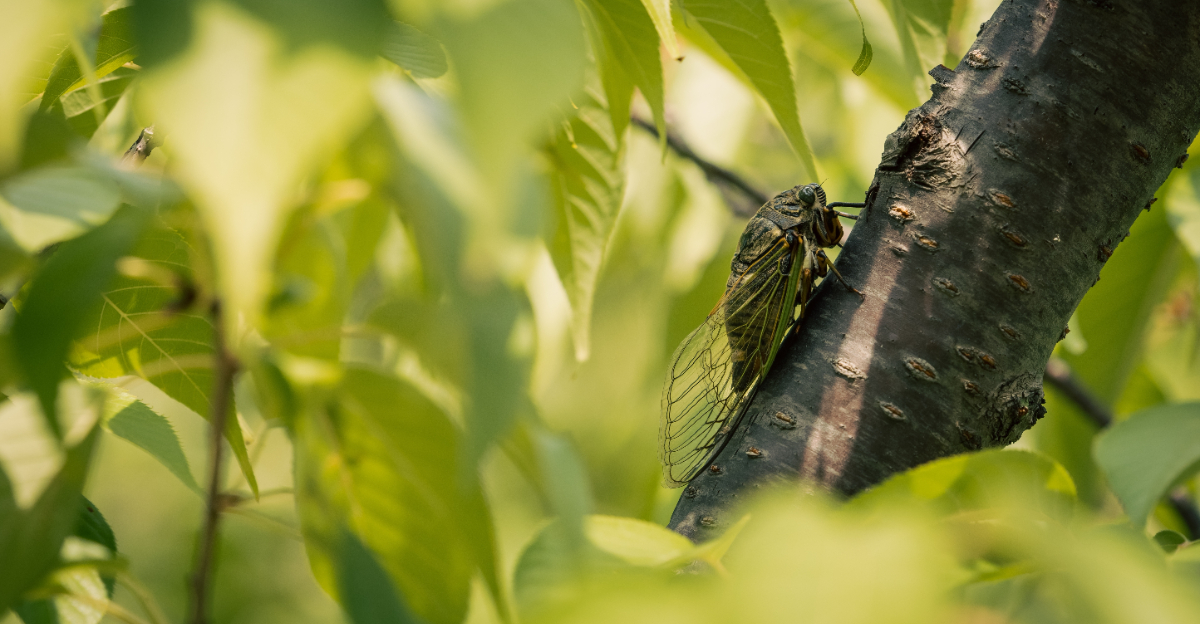
Cicadas are part of every North Carolina summer, and most people stop consciously hearing them after the first few weeks of the season.
When the volume shifts noticeably and the sound becomes impossible to tune out, something specific is driving that change.
It is not random variation or an overactive imagination. Cicada intensity responds to identifiable conditions including temperature patterns, moisture levels, tree health, and population cycles that follow predictable timelines in this region.
What sounds like background noise is actually communicating something precise about what is happening in the trees overhead and in the broader environment surrounding your North Carolina property this particular summer.
1. It Usually Means Male Cicadas Are Calling
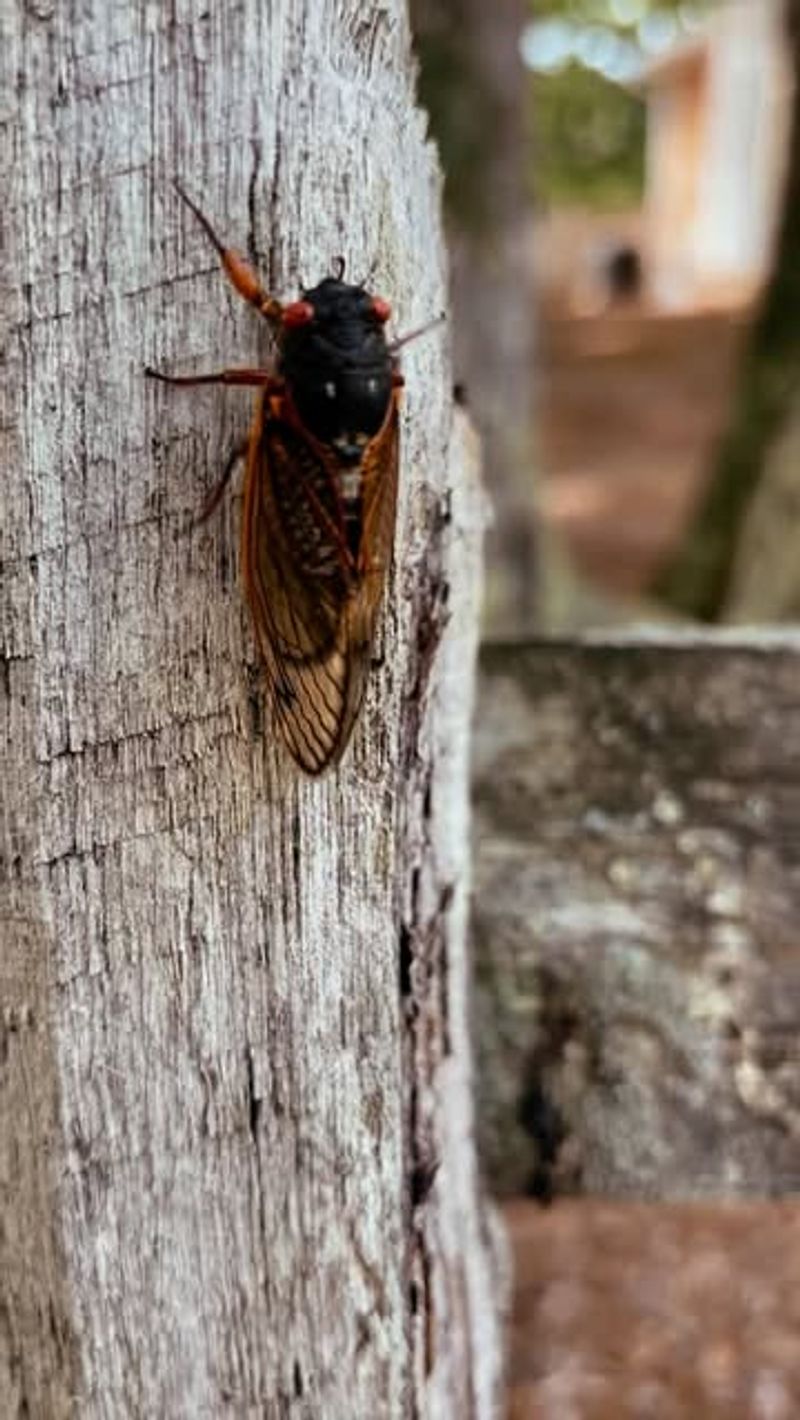
That loud, buzzing hum coming from your trees is one of summer’s most iconic sounds, and it almost always traces back to one source: male cicadas. Male cicadas are the singers of the species.
Females are mostly silent, which means every bit of that powerful chorus you hear is coming from the guys.
Male cicadas produce sound using a pair of drum-like structures on their abdomen called tymbals. When they flex these muscles rapidly, the tymbals buckle in and out, creating a buzzing or clicking sound that gets amplified by their hollow abdomens.
The result is a sound that can reach over 90 decibels, which is roughly as loud as a lawnmower running nearby.
They typically call from high up in the tree canopy, which makes the sound carry even farther across your yard and into neighboring properties.
The height gives their calls a wide broadcast range, almost like a natural speaker system built right into your trees. You may hear them loudest during the warmest part of the afternoon.
The reason they call so persistently is straightforward: they are trying to attract a mate. This is completely normal summer behavior and has nothing to do with the health of your trees.
Your oaks, maples, or pines are not in any kind of trouble just because cicadas have chosen them as a stage.
Gardeners who hear this sound can feel reassured. The noise is a sign of a healthy, active outdoor environment.
Your trees are simply hosting one of nature’s most enthusiastic summer performers, and the show is completely free.
2. Annual Cicadas Are Often The Main Summer Sound
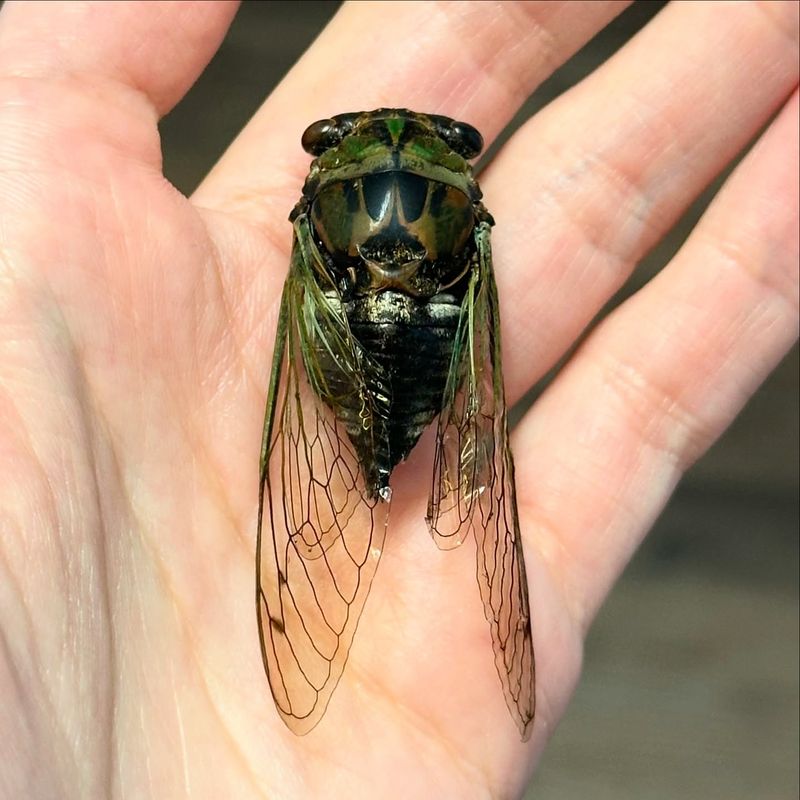
Not every loud summer in North Carolina means something unusual is happening. Annual cicadas, sometimes called dog-day cicadas, are the ones most North Carolina residents hear year after year.
Unlike their periodical cousins, these cicadas show up every single summer without fail, and their chorus can be surprisingly powerful.
NC State Extension notes that these cicadas sing from mid to late summer, which lines up perfectly with those hot July and August afternoons when the heat feels heaviest and the air seems to vibrate with sound.
Most gardeners hear them far more often than they actually see them, since the insects blend into tree bark and leaf cover with impressive skill.
One interesting quirk of annual cicadas is how the sound can feel like it is coming from everywhere at once. That is because several males may be calling from different trees in or near your yard simultaneously.
Your North Carolina Garden Changes Every Week. Your Plan Should Too.
Gardening in North Carolina changes quickly throughout the season. Every Friday you’ll receive a simple weekly plan showing exactly what to plant, prune, fertilize, harvest, and protect so you never miss the right timing.
When multiple cicadas overlap their calls, the combined effect creates a wall of sound that seems much larger than any single insect could produce on its own.
Annual cicadas belong to the genus Neotibicen, and North Carolina is home to several species within that group.
Each species has its own slightly different call, which is part of why the summer chorus can feel so layered and complex to the human ear.
For gardeners, this steady annual presence is simply part of the seasonal rhythm. If your trees seem to be buzzing with energy every summer, annual cicadas are almost certainly the main reason.
They are reliable, they are loud, and they are completely expected.
3. More Trees Can Mean More Cicada Noise
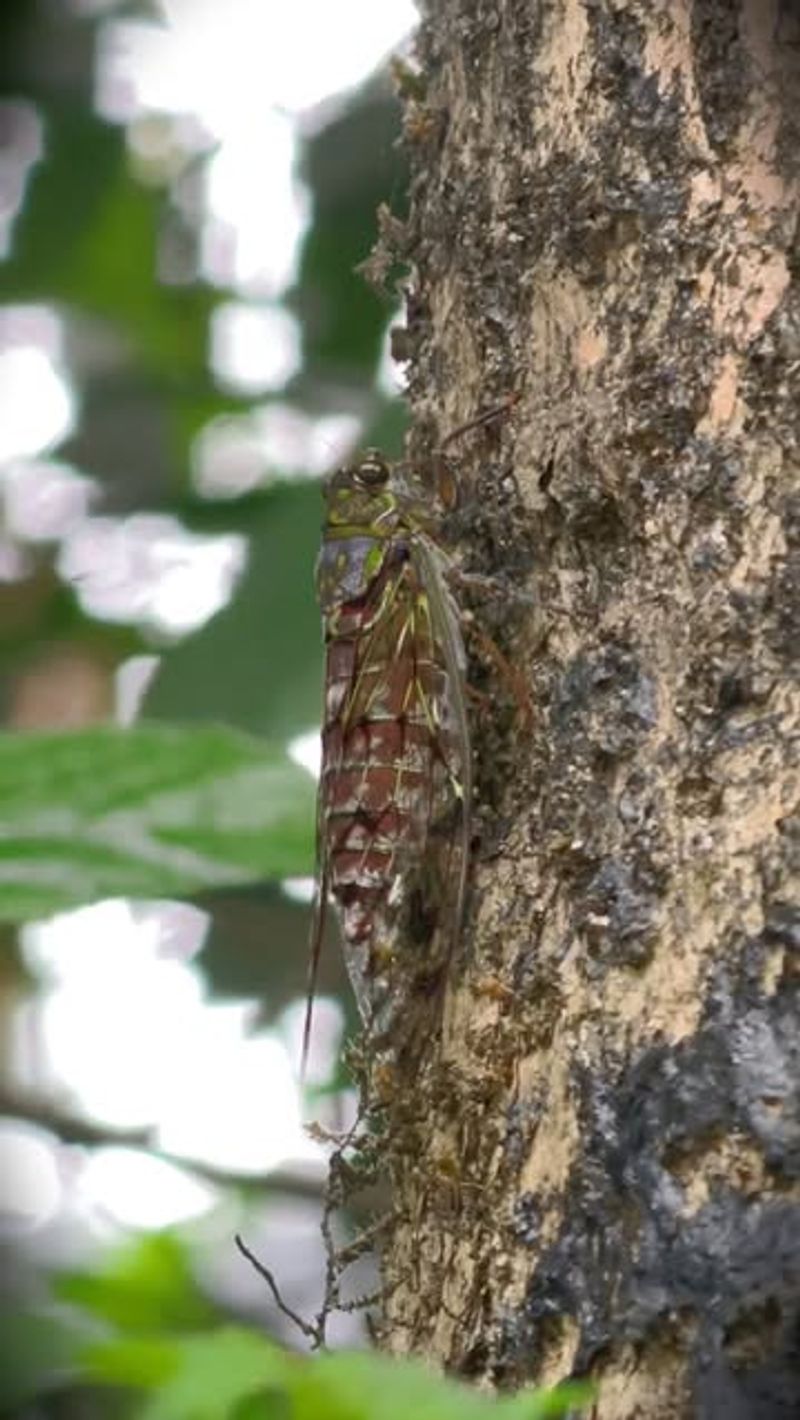
Your yard’s tree lineup might have more to do with that summer buzz than you realize.
Annual cicadas have strong ties to deciduous hardwood trees, and a yard full of mature oaks, maples, elms, beeches, walnuts, or persimmons is basically a five-star destination for them.
More host trees naturally means more cicadas setting up their summer stage. Cicada nymphs spend years underground feeding on tree root fluids before emerging as adults.
Yards with deep-rooted, established hardwoods tend to support larger underground populations simply because there is more root material available over a wider area.
When those nymphs finally emerge and climb into the canopy, the sheer number of adults can make the noise feel overwhelming.
The canopy itself plays a role too. Dense, leafy trees act like natural sound chambers.
Calls bounce between branches and leaves, amplifying the overall volume in a way that an open, treeless yard simply cannot replicate. Standing beneath a large oak on a hot afternoon can feel like being inside a concert hall built entirely from leaves.
North Carolina’s Piedmont and mountain regions are especially rich in hardwood diversity, which partly explains why summer cicada noise can seem so intense in wooded neighborhoods and rural properties.
If your yard has grown more mature over the years, you may notice the summer chorus getting louder season by season as the tree canopy fills in.
Planting more hardwoods is wonderful for wildlife and shade, and a livelier cicada chorus is simply part of that package. Think of the noise as a natural sign that your landscape is thriving and full of life.
4. Warm Summer Weather Can Make The Chorus Feel Stronger
Summer heat and cicada noise go hand in hand in North Carolina, and there is a real reason behind that connection. Cicadas are cold-blooded insects, which means their activity levels are closely tied to the temperature around them.
On hot, sunny days, they tend to be far more active and vocal than on cooler or overcast ones.
Gardeners who spend time outdoors often notice that the calling seems to peak during the warmest part of the afternoon, usually between late morning and early evening.
That is typically when temperatures climb highest and the sun beats down most intensely on the tree canopy. The cicadas respond to that warmth by ramping up their calling behavior.
It is worth pointing out that heat is not the only factor involved. Humidity, light levels, and the number of cicadas present all play a role in how loud any given afternoon feels.
But warm stretches do seem to correlate with louder, more sustained choruses, which is why particularly hot summers in North Carolina often feel especially noisy.
Some research suggests that cicadas may also call more during warm spells because those conditions favor successful mating.
Warmer temperatures may help females move more actively through the canopy, giving males more reason to keep calling consistently. The whole system feeds itself in a very efficient natural loop.
For gardeners working outside on a scorching afternoon, the cicada chorus can feel almost deafening. But that sound is simply proof that the natural world around you is fully alive and running at full speed.
Hot days in North Carolina come with a soundtrack, and cicadas wrote every note.
5. A Loud Yard Does Not Usually Mean Tree Damage
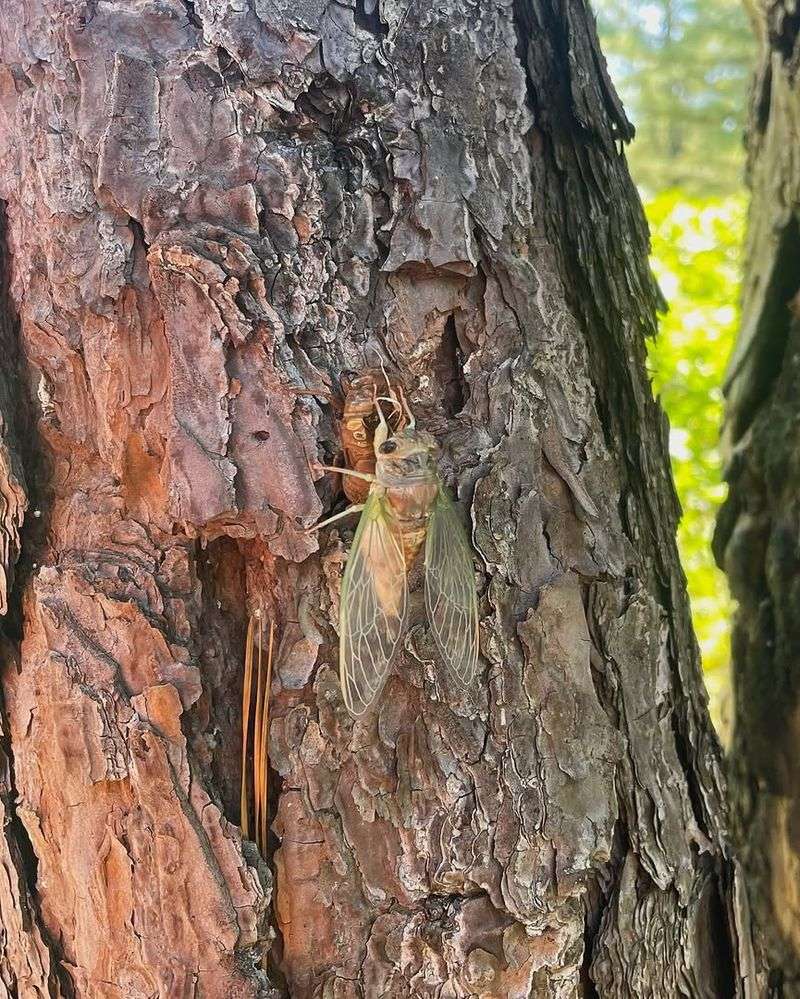
Hearing an unusually loud cicada chorus can make any gardener wonder if something is wrong with their trees.
That concern is completely understandable, but the reassuring news is that annual cicadas are generally not a serious threat to established landscape trees.
NC State Extension has noted that annual cicadas are usually of little consequence to the overall health of mature trees in home landscapes.
Adult annual cicadas do not feed on leaves or bark in any damaging way. Females do create small slits in twigs when they lay their eggs, a process called flagging, which can cause the tips of small branches to turn brown and droop.
On young or recently planted trees, this can look alarming, but on mature trees it is generally minor and the tree recovers on its own without any intervention.
One of the most common mistakes gardeners make is reaching for a pesticide spray at the first sign of a noisy yard. NC State Extension guidance points out that pesticides are not generally needed for annual cicadas in home landscapes.
Spraying rarely reduces the noise significantly, and it can affect other beneficial insects that your garden depends on.
The loud chorus is actually a sign that your yard is part of a healthy, connected ecosystem. Cicadas provide real value to the food chain, feeding birds, squirrels, and other wildlife throughout the summer season.
Their activity also contributes organic matter back to the soil over time.
Before reaching for any treatment, simply step back and observe. In most cases, a loud yard is a healthy yard, and your trees are doing just fine on their own.
6. Periodical Cicadas Are Different From Annual Cicadas
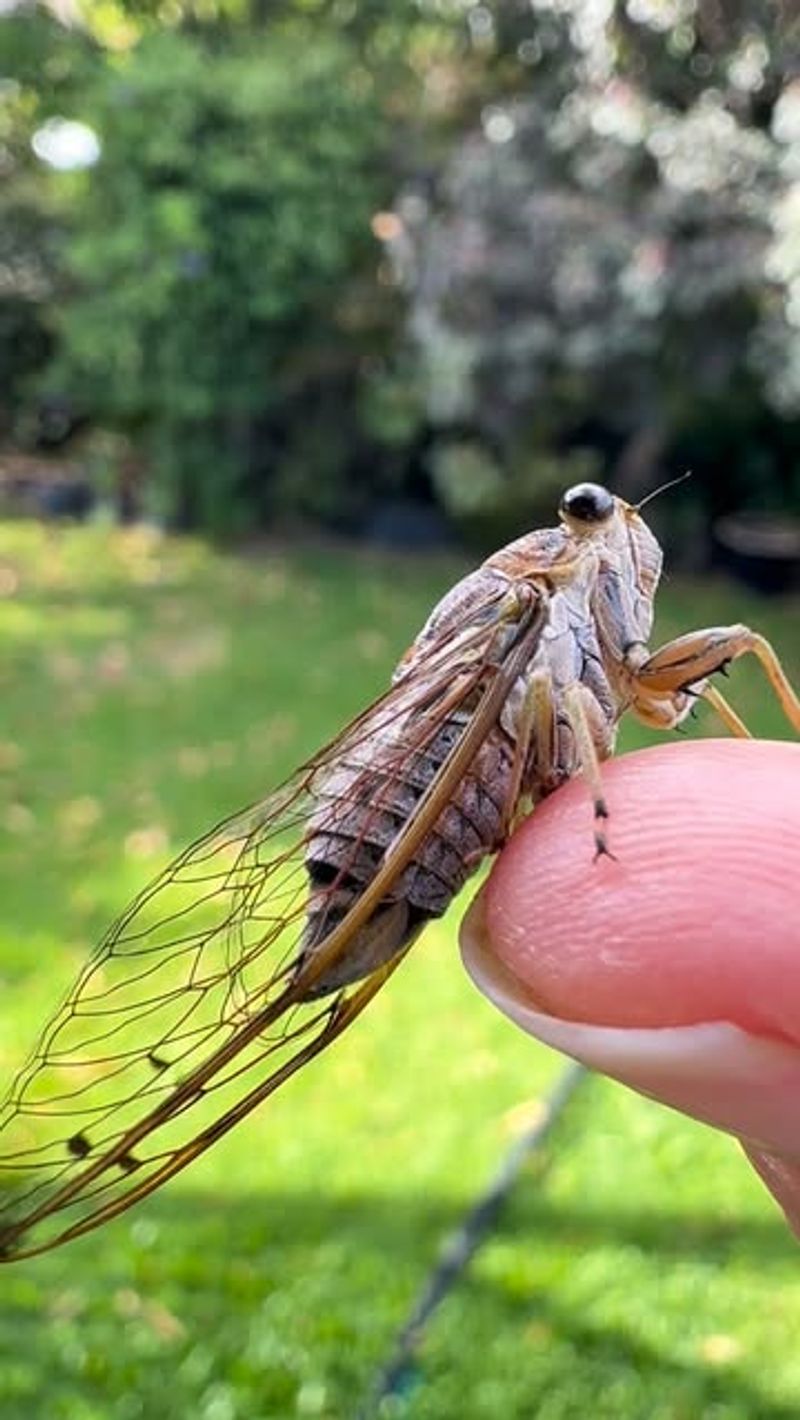
Most summers in North Carolina, the cicada chorus you hear belongs to annual species. But every so often, something much bigger happens.
Periodical cicadas emerge in massive numbers on a predictable schedule, and when they do, the sound is on a completely different level than anything a typical summer produces.
Annual cicadas appear every year in moderate numbers, blending into the background hum of summer. Periodical cicadas, on the other hand, spend either 13 or 17 years underground before emerging all at once in what scientists call a brood event.
North Carolina is home to several of these broods, and their emergence years are well documented and tracked by researchers.
North Carolina experienced notable periodical cicada activity in 2024 and 2025, with certain broods making headlines for their sheer numbers.
The next listed brood year for parts of North Carolina is currently 2027, though specific brood ranges vary by location within the state.
Checking with NC State Extension or the USDA cicada brood maps can help you identify which broods are relevant to your area.
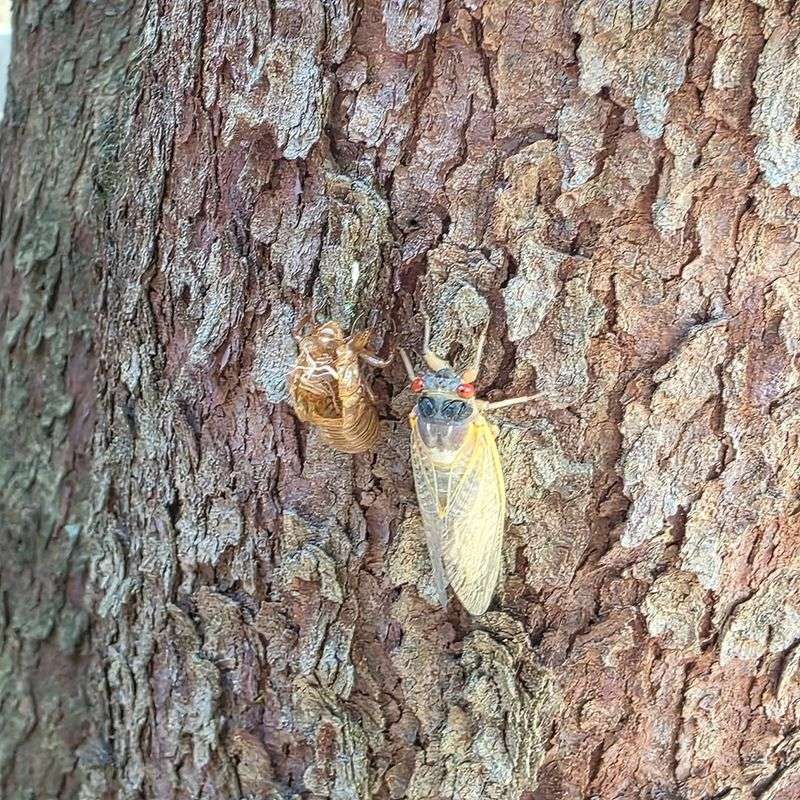
Periodical cicadas also look slightly different from annual ones. They are typically smaller, with striking red eyes and orange wing veins that make them easy to spot once you know what to look for.
Annual cicadas tend to be larger and green or brown in color, helping them blend into foliage.
Knowing which type is in your yard helps you set realistic expectations. A periodical year means temporary, intense noise followed by years of quiet.
An annual year means the steady, familiar summer buzz that North Carolina gardeners have come to know well.
7. The Best Response Is Usually Observation
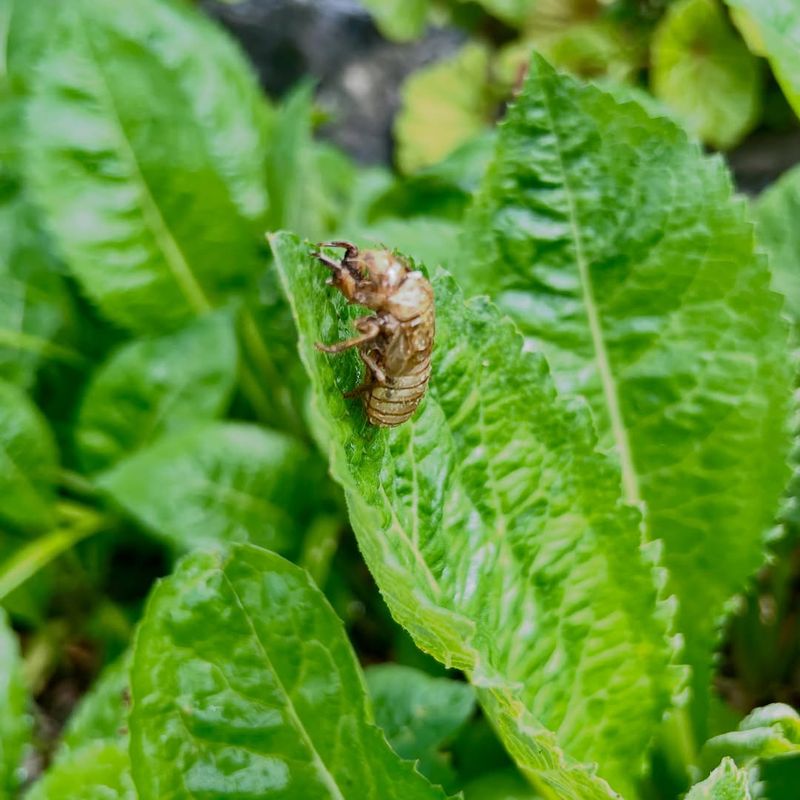
When cicadas seem louder than usual in your North Carolina yard, the single most helpful first step is also the simplest one: stop, look up, and observe. Before assuming anything is wrong, spend a few minutes watching the tree canopy.
In most cases, what you will see is completely normal summer activity, with cicadas moving along branches and calling from high in the leaves.
Walk slowly around the base of your trees and check for any obvious signs of stress, such as large sections of wilting leaves, unusual bark damage, or significant branch loss.
A small number of browning twig tips, known as flagging, is normal during egg-laying season and does not require treatment on a healthy, mature tree.
What you are really looking for is anything that seems out of the ordinary beyond the noise itself.
Young trees and recently planted specimens do deserve a closer look. Smaller trees have less overall mass to absorb the minor damage from egg-laying, so keeping an eye on new plantings during peak cicada season is a smart habit.
If flagging on a young tree seems heavy, physical barriers like fine mesh netting can help protect vulnerable branches without any chemicals involved.
For the vast majority of established North Carolina landscapes, the best response to a loud cicada summer is simply patience. Avoid unnecessary sprays, trust your trees, and enjoy the wild energy of the season.
The chorus will naturally wind down as summer progresses and the adults complete their life cycle.
Cicadas have been part of North Carolina summers for thousands of years. Your garden has handled them before, and it will handle them beautifully again this year.