Ohio Gardeners Should Know This Low-Fuss Fruit Shrub That Produces Season After Season
Somewhere between the back fence and the soggy corner of your yard, there is a shrub waiting to be discovered.
It blooms white in spring, feeds birds in late summer, and turns a jaw-dropping red in fall.
Many Ohio gardeners walk right past it at the nursery without a second glance.
That is one of the more understandable mistakes in Midwest gardening because nothing about its modest nursery appearance hints at what it becomes once it settles into the ground.
It is a four-season performer that thrives across Ohio without demanding much from the gardener who plants it.
It tolerates wet feet, handles clay soil, and shrugs off most pest problems that would send other shrubs into a tailspin.
Native to eastern North America, it belongs right here in the Midwest landscape, and it knows how to act like it.
Pollinators love its spring flowers. Birds race to its dark berries. And every October, it puts on a color show that rivals plants that cost three times as much and require twice the work.
If you have been searching for a reliable, wildlife-friendly, and genuinely beautiful native shrub for your Ohio garden, keep reading.
This one is worth every inch of space you give it.
Start With Black Chokeberry
Not every garden hero looks the part at first glance.
Black chokeberry, or Aronia melanocarpa, is a medium-sized deciduous shrub native to eastern North America, including much of Ohio.
It typically grows between three and six feet tall and spreads to a similar width, forming a tidy, upright clump that fills in naturally over time.
The leaves are glossy, deep green, and slightly oval with fine-toothed edges.
Tiny glands dot the midrib of each leaf, which is a handy identification clue that separates it from look-alike shrubs. The overall shape is clean and rounded without needing constant attention from a gardener.
Ohio State University Extension recognizes black chokeberry as a valuable native shrub well suited to Ohio landscapes.
It is found naturally in moist woodlands, bogs, and stream edges across the state, which tells you a lot about its toughness. Unlike many ornamental shrubs that need coddling, this one evolved right alongside Ohio weather and soil conditions.
Black chokeberry is not the same as chokecherry, which is a different plant entirely.
The two names cause confusion, but Aronia melanocarpa stands apart with its smaller stature, clustered dark fruit, and stunning fall foliage.
Once you learn to spot it, you will notice it popping up in native plant nurseries, rain garden projects, and wildlife habitat plantings all across the Midwest.
It earns its place in every one of those settings.
White Spring Flowers Start The Show
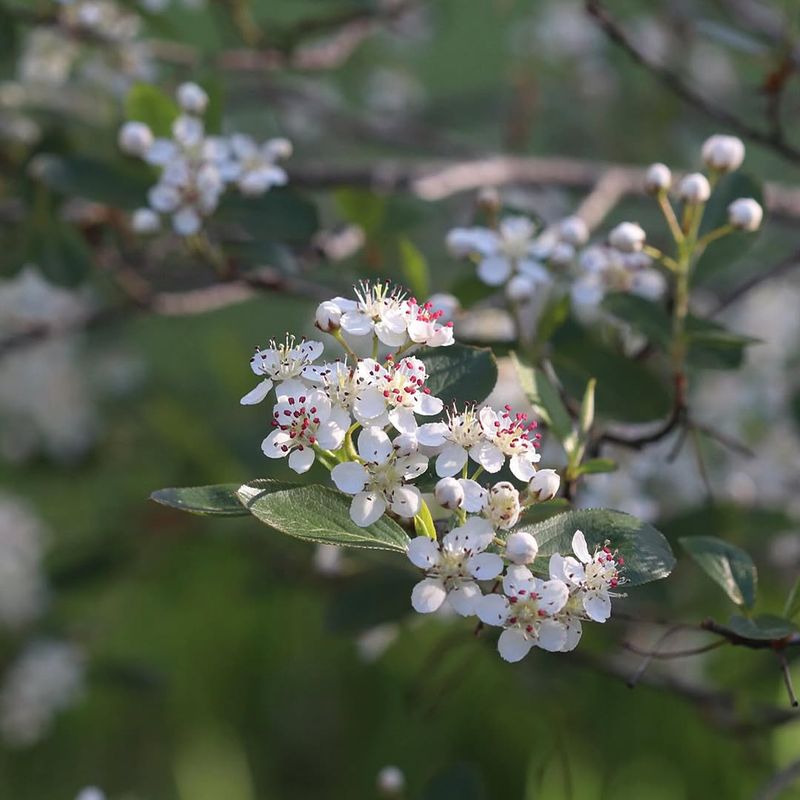
Spring in Ohio brings a lot of competition. Redbuds, serviceberries, and ornamental cherries all fight for attention at the same time.
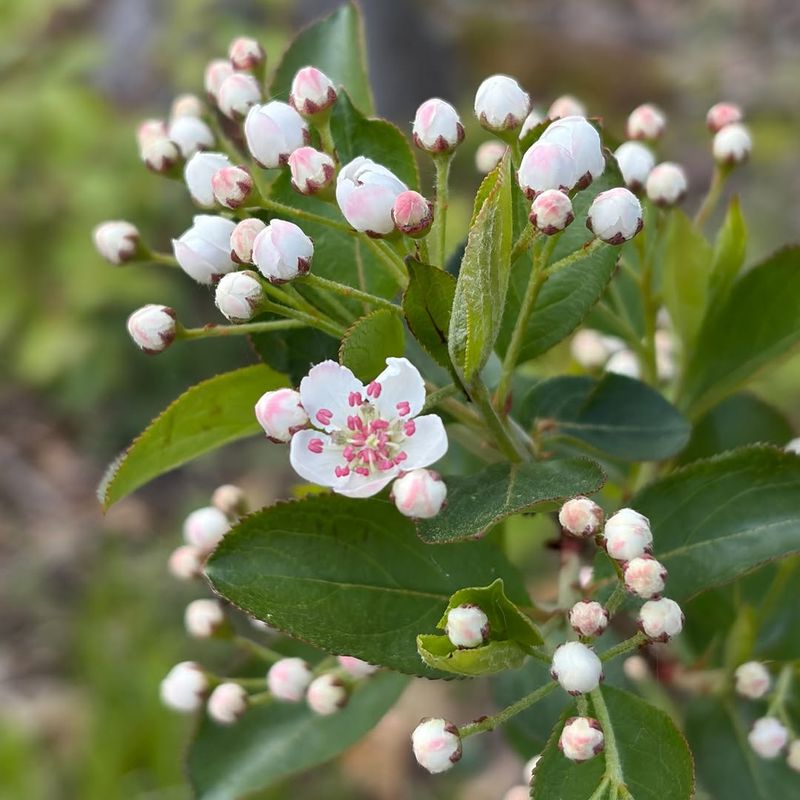
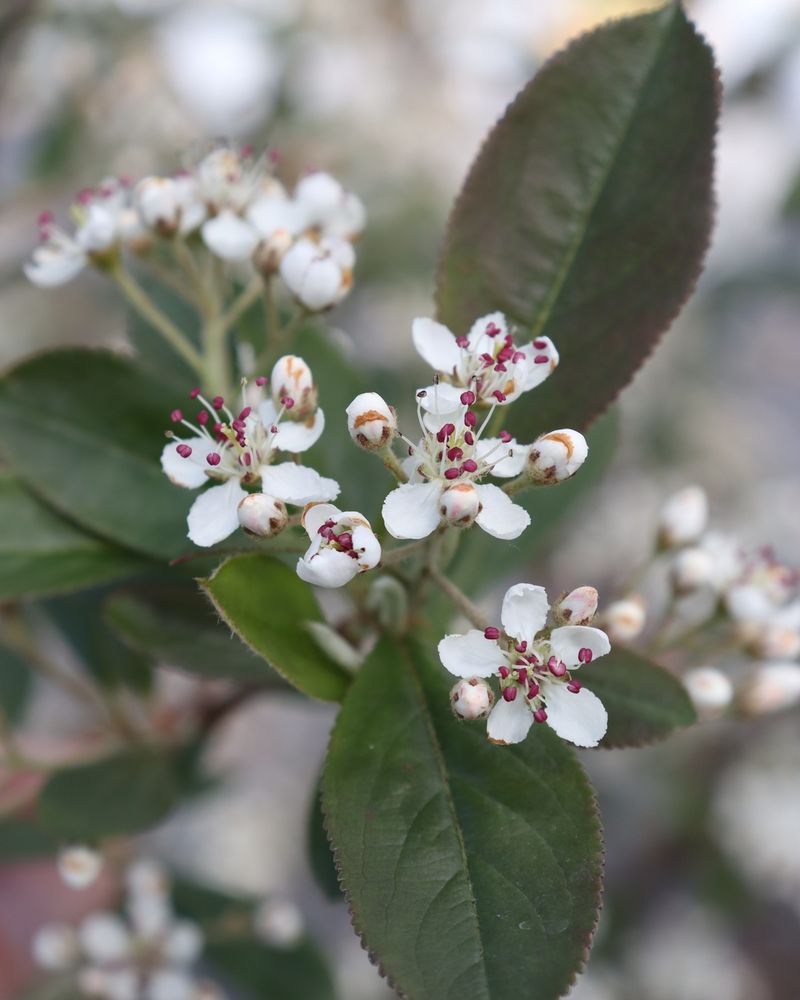
Black chokeberry holds its own in that crowd with clusters of small, five-petaled white flowers that appear in mid to late spring, usually around May in most parts of Ohio.
Each flower is modest on its own, but the clusters are generous.
Your Ohio Garden Changes Every Week. Your Plan Should Too.
Gardening in Ohio changes quickly throughout the season. Every Friday you’ll receive a simple weekly plan showing exactly what to plant, prune, fertilize, harvest, and protect so you never miss the right timing.
A mature shrub covered in bloom looks genuinely beautiful, especially against a backdrop of fresh green leaves that emerge right alongside the flowers. The contrast is crisp and clean, the kind of look that makes neighbors slow down while walking past your yard.
Pollinators take notice quickly.
Bees, particularly native bees, visit the flowers for both nectar and pollen. The blooms attract a reliable stream of insect visitors during the short window they are open, and that pollinator activity sets up a good fruit crop later in the season.
From an ornamental standpoint, the spring bloom gives black chokeberry a reason to earn prime real estate in a mixed shrub border.
It does not need a hidden corner. Plant it where people can enjoy the flowers up close, then watch it transition seamlessly into its summer role as a fruit producer.
Few native shrubs pull double duty this gracefully. That is not a berry bad deal for a plant that asks so little in return.
Dark Fruit Arrives Late In Summer
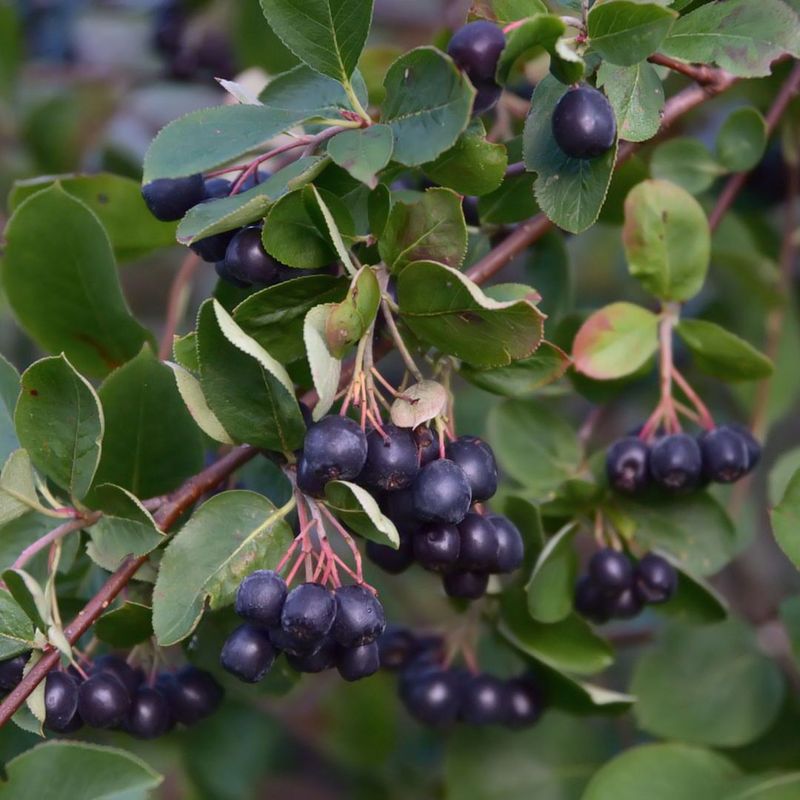
By August, something dramatic happens on a black chokeberry shrub.
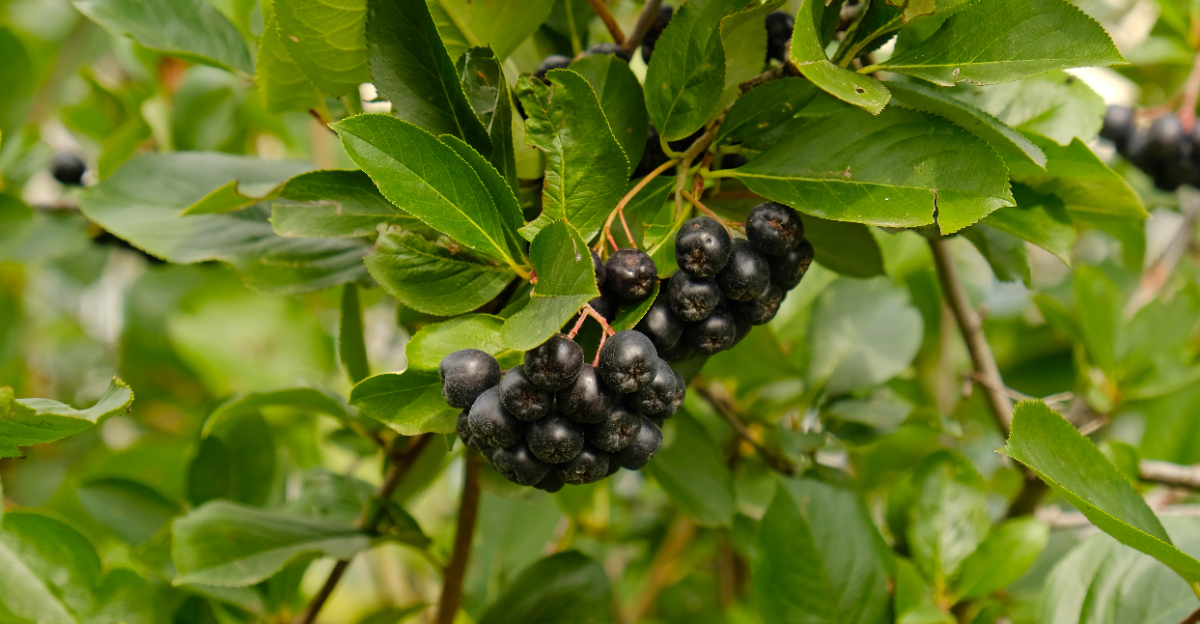
The small green fruits that formed after the spring flowers begin to ripen into deep, glossy, dark purple-black berries about the size of a large blueberry.
They hang in tight clusters and look almost jewel-like against the still-green summer foliage.
The berries are edible and packed with antioxidants, particularly anthocyanins, which give them their deep color.
They are quite astringent when eaten fresh off the bush, which is how the plant got its name. However, when cooked into jams, jellies, juices, or syrups, the flavor mellows considerably and takes on a rich, dark berry character that works well in many recipes.
Fruit typically ripens in late August through September in Ohio.
The berries hold on the shrub for several weeks, which gives you time to harvest some before the birds figure out what is available.
Ohio homesteaders and foragers have used chokeberry fruit for generations, and interest in the berries has grown recently as research highlights their nutritional value.
Even if you never plan to harvest a single berry yourself, the fruit stage adds real ornamental value to the shrub.
Those dark clusters against late summer foliage create a striking display. Paired with ornamental grasses or late-blooming perennials, black chokeberry becomes a standout element in the late-season garden.
The fruit is just one more reason this shrub earns its spot in an Ohio yard.
Birds Notice The Berries Fast
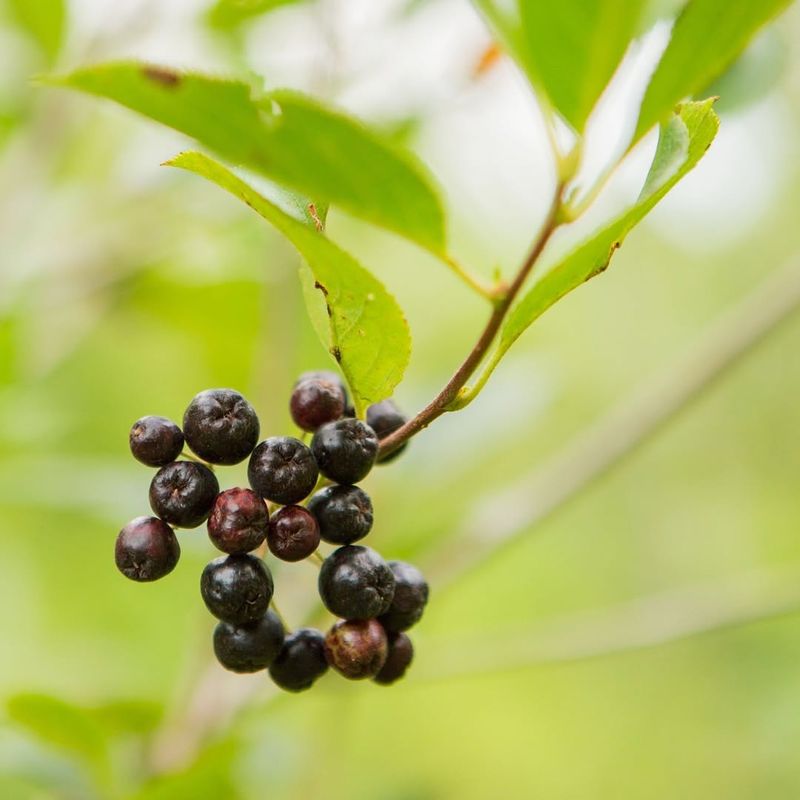
Word travels fast in the bird world.
Once black chokeberry fruit ripens in late summer, it does not stay on the shrub forever.
Cedar waxwings, American robins, gray catbirds, and several species of thrushes are among the birds that regularly visit Aronia shrubs to feed on the berries. If you want a backyard that hums with bird activity, this shrub delivers.
The berries are not the absolute first choice for every species, which actually works in your favor.
Some higher-priority fruits like dogwood and serviceberry get stripped almost immediately.
Chokeberry fruit tends to linger a bit longer, providing a reliable food source as fall migration picks up and resident birds begin preparing for colder months ahead.
Native plant advocates often point to black chokeberry as a strong choice for wildlife gardening specifically because it is part of the natural food web Ohio birds evolved with.
Exotic fruiting shrubs may attract birds too, but native plants provide nutritional value and habitat relationships that non-native species simply cannot replicate as effectively.
Planting black chokeberry near a window or seating area gives you a front-row seat to the action.
You do not need a fancy feeder setup to enjoy watching birds work through a shrub loaded with ripe berries. The plant does the work.
Nature handles the rest of the invitation process on its own.
Fall Color Adds Big Payoff
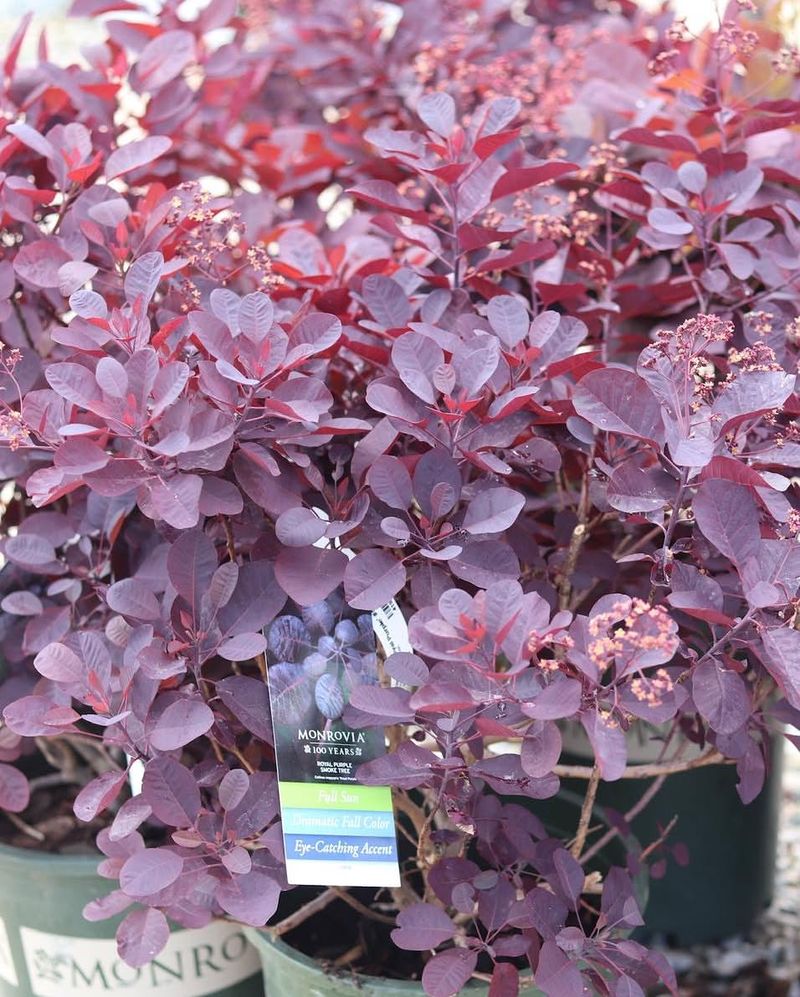
Many gardeners plant black chokeberry for the fruit or the wildlife value. Then fall arrives and completely changes the conversation.
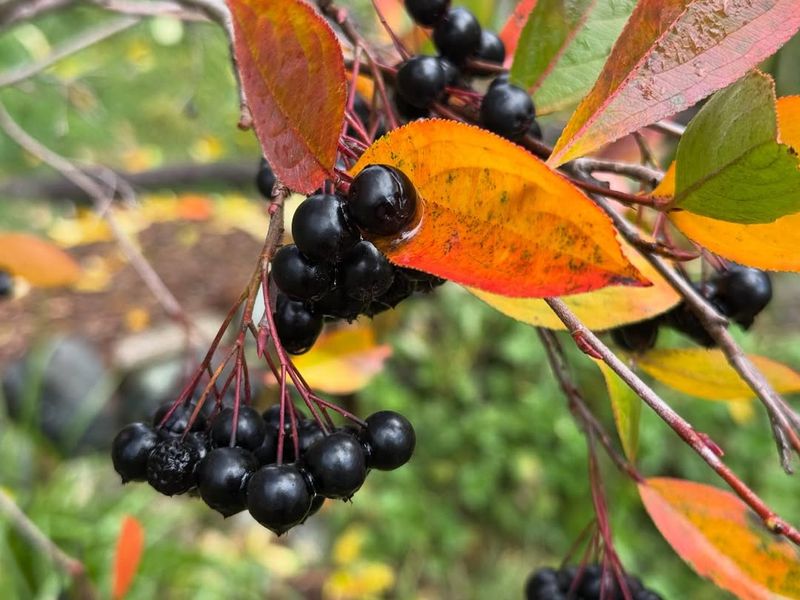
The foliage transforms into one of the most vivid displays of any native shrub in the Ohio landscape, turning shades of orange, red, and deep scarlet that rival burning bush without any of the invasive baggage that plant carries.
The color show typically peaks in October, right when the garden needs something bold and reliable.
While many perennials are fading and the yard starts to look tired, black chokeberry lights up like it has been saving its best performance for last.
The leaves hold their color for a couple of weeks before dropping cleanly, leaving behind a tidy, bare framework.
Fall color is consistently highlighted as one of the top ornamental features of Aronia melanocarpa.
It performs especially well in full sun, where the foliage develops the deepest, most saturated color. Even in partial shade, the fall display is still impressive compared to many other landscape shrubs of similar size.
Pairing black chokeberry with ornamental grasses, goldenrod, or asters creates a late-season combination that looks intentional and polished.
The dark berry clusters that remain into early fall add texture alongside the blazing foliage.
Landscape designers working with native plants in Ohio regularly use this shrub as an anchor for fall interest in rain gardens, borders, and naturalized areas where color matters.
Tough Roots Handle Damp Spots
Almost every Ohio yard seems to have that one spot.
The corner that stays soggy after rain, the low area where puddles linger for days, the slope that drains everything into one wet mess.
Most shrubs struggle there. Black chokeberry does not just survive in those conditions. It actually prefers them, which makes it almost uniquely qualified for the wet zones that frustrate so many homeowners.
In the wild, black chokeberry grows naturally in bogs, wet meadows, and along stream banks across eastern North America.
Its root system is adapted to handle periodic flooding and consistently moist soil without the rot problems that plague less tolerant shrubs.
It is a top choice for rain gardens and bioswales, where plants must handle both flooding and dry spells between rain events.
Clay soil, which covers much of Ohio, is not a dealbreaker for this shrub either.
While it does best in moist, slightly acidic soil with good organic matter, it adapts to heavier soils far better than most ornamental shrubs.
That flexibility makes it genuinely useful across a wide range of Ohio yard conditions rather than just ideal textbook situations.
If you have been avoiding a problem spot in your yard because nothing seems to grow there well, black chokeberry is worth a serious look.
Plant it in fall or early spring, water it through the first season to help it establish, and then step back.
Once those roots settle in, this shrub handles the wet work without any help from you.
Full Sun Improves Fruit Production
Sunlight is where black chokeberry really shows off what it can do.
This shrub tolerates partial shade reasonably well, and it will grow and look decent with only four to five hours of direct sun per day.
But give it a full-sun spot with six or more hours of direct light, and the difference in fruit production is noticeable and significant.
More sunlight means more flowers in spring, and more flowers means more berries by late summer.
A shrub growing in a shaded corner might produce a modest cluster here and there.
That same shrub in a sunny location will be loaded with fruit, attracting more birds and offering more harvest potential for anyone interested in using the berries in the kitchen.
Full sun is consistently recommended as the preferred condition for maximum Aronia performance.
Fall color also intensifies in stronger light, giving you those deep scarlet and orange tones that make the shrub a true seasonal star.
Partial shade tends to produce softer, less vivid fall color, though it is still attractive compared to many other landscape plants.
When choosing a planting location, prioritize a south-facing or west-facing exposure if you can.
Avoid spots where large trees will eventually shade the shrub out as they grow. Black chokeberry is a long-lived plant that can thrive for decades in the right spot.
Giving it the sunlight it needs from the start pays off every single season with better flowers, more fruit, and richer fall color throughout its life.