7 Ohio Backyard Mistakes That Disrupt The Luna Moth Life Cycle
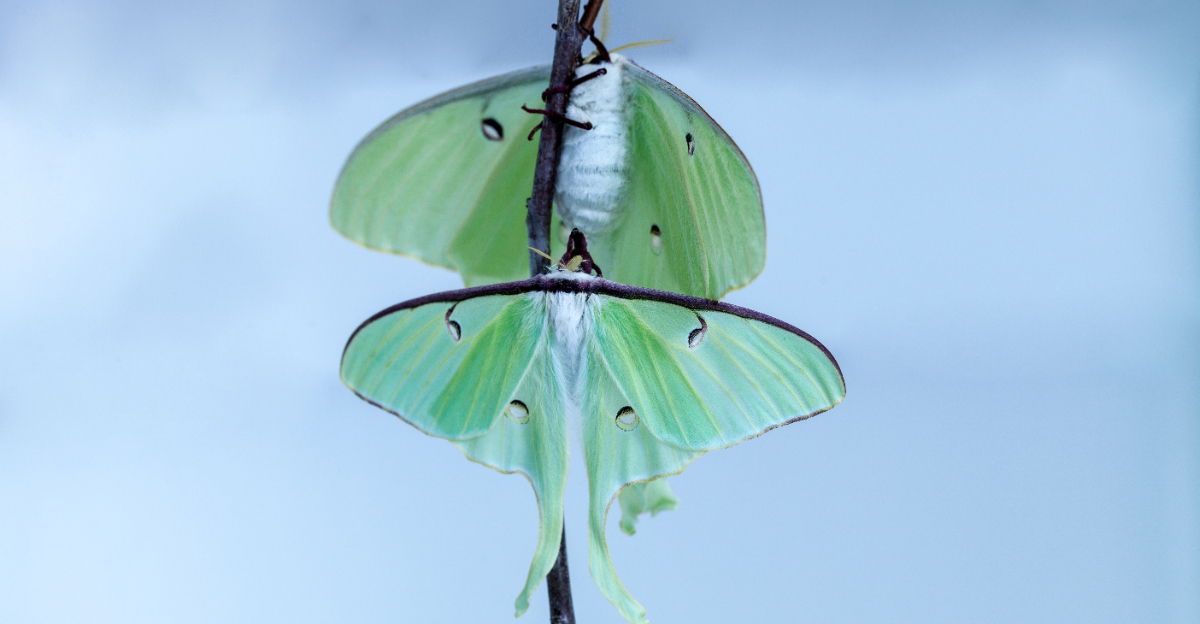
Somewhere in an Ohio backyard, on a warm June night, a pale green wing flickers past a porch light.
That is a luna moth, one of the most stunning insects in North America, and many people who see one never forget it.
What many people do not realize is that the choices they make in their yard, from how they rake leaves to which trees they remove, can quietly unravel everything this moth needs to survive.
Ohio backyards can be surprisingly powerful habitat for luna moths, but only if a few common mistakes are avoided.
Luna moths depend on specific host trees, soft leaf litter, and dark, undisturbed nights to complete their life cycle.
They are not fragile in the dramatic sense, but they are deeply connected to the details of a healthy woodland-edge landscape.
Small yard decisions add up fast, and the damage often happens without the homeowner ever knowing it.
The good news is that most of these mistakes are easy to fix once you know what to look for.
So, what might be working against luna moths in your own backyard right now?
1. Removing Host Trees From The Yard
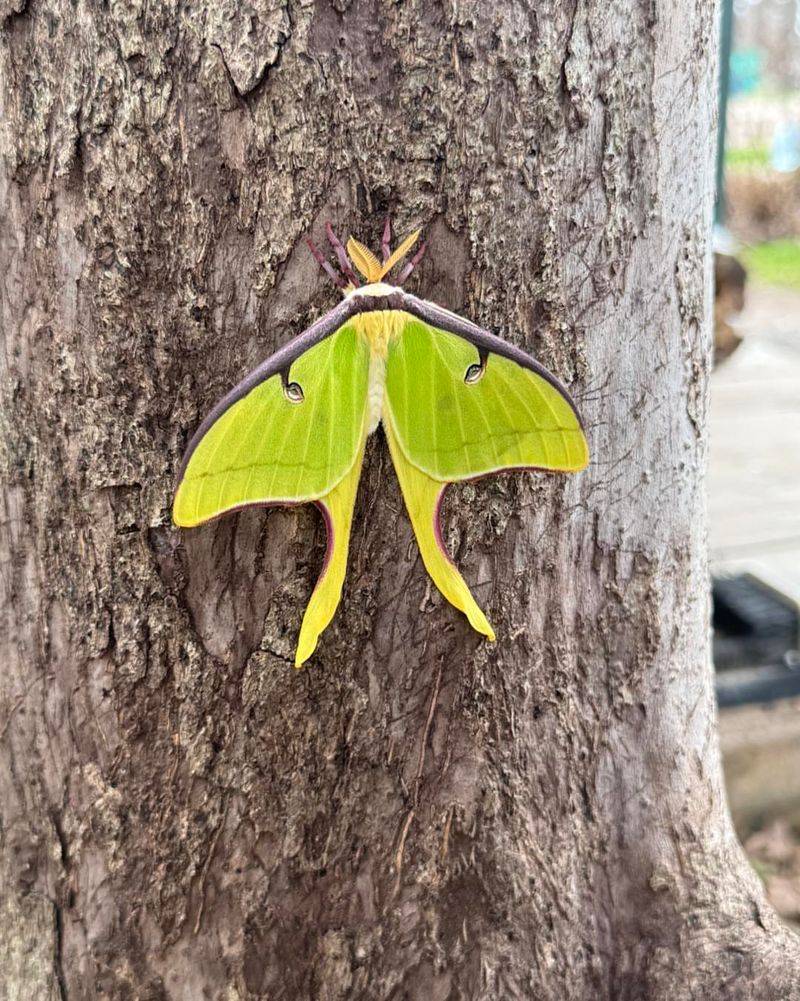
A luna moth caterpillar needs a specific menu, and without the right trees, it simply cannot survive.
Black walnut, shagbark hickory, sweetgum, white birch, and persimmon are among the favorite host trees for luna moth caterpillars in Ohio.
These are the plants where eggs are laid, where caterpillars feed and grow, and where the whole next generation gets its start.
Many Ohio homeowners remove these trees without realizing their value.
Walnut trees get pulled because of their messy fruits. Hickories come down because of falling branches. Sweetgums get removed because of their spiky seed balls.
Every one of those removals quietly shrinks the habitat available to luna moths in your neighborhood.
Native hardwoods are recognized as anchors for healthy backyard ecosystems.
Keeping even one mature walnut or hickory in your yard can make a real difference. If you do not have any of these trees, consider planting a young one.
A hickory planted today will support luna moths and dozens of other native species for generations.
You do not need a forest to help.
One or two well-chosen host trees near a woodland edge or fence line can be enough to attract a female ready to lay eggs.
These trees are not yard work headaches. They are living moth nurseries quietly doing important work every summer night.
2. Raking Every Leaf From Beds
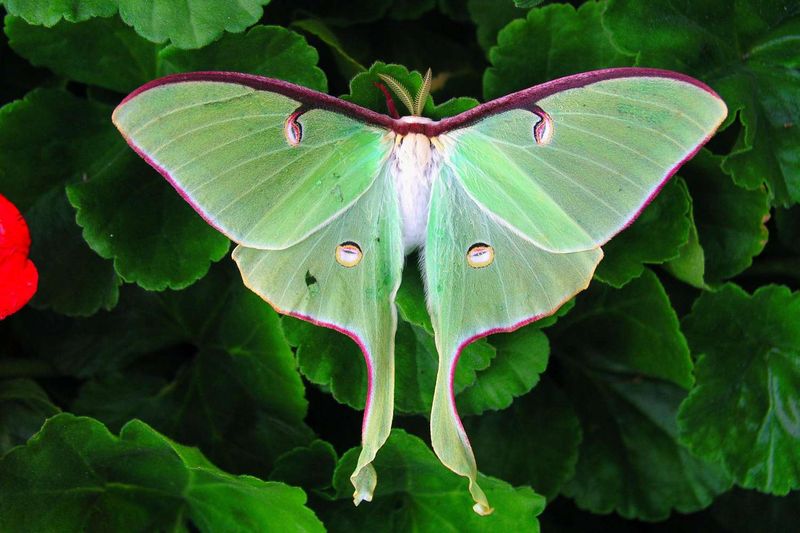
Leaf litter is not a mess. To a luna moth, it is a home.
After a luna moth caterpillar finishes feeding in late summer, it spins a papery cocoon and wraps itself in fallen leaves on the ground.
That layer of leaves is where it spends the entire winter, waiting for warm Ohio spring temperatures to trigger its emergence.
When you rake every single leaf out of your yard and bag it for the curb, you may be removing dozens of overwintering pupae without ever knowing it.
Your Ohio Garden Changes Every Week. Your Plan Should Too.
Gardening in Ohio changes quickly throughout the season. Every Friday you’ll receive a simple weekly plan showing exactly what to plant, prune, fertilize, harvest, and protect so you never miss the right timing.
This is one of the most common and most damaging mistakes Ohio homeowners make. It looks tidy, but it quietly erases an entire stage of the luna moth life cycle.
The fix is surprisingly simple.
Leave a natural layer of leaves under your host trees and along garden bed edges through winter and into spring. You do not need to let your whole yard go wild.
Just resist the urge to rake everything perfectly clean, especially in areas near walnut, hickory, or sweetgum trees.
Research from wildlife habitat organizations consistently shows that leaf litter supports far more native insect species than most people expect.
Luna moths are just one example. Fireflies, native bees, and many beneficial beetles also rely on undisturbed leaf layers to complete their own life cycles.
Keeping a messy patch of leaves is one of the easiest and most rewarding things you can do for Ohio wildlife this fall.
3. Shredding Leaves Under Hardwood Trees
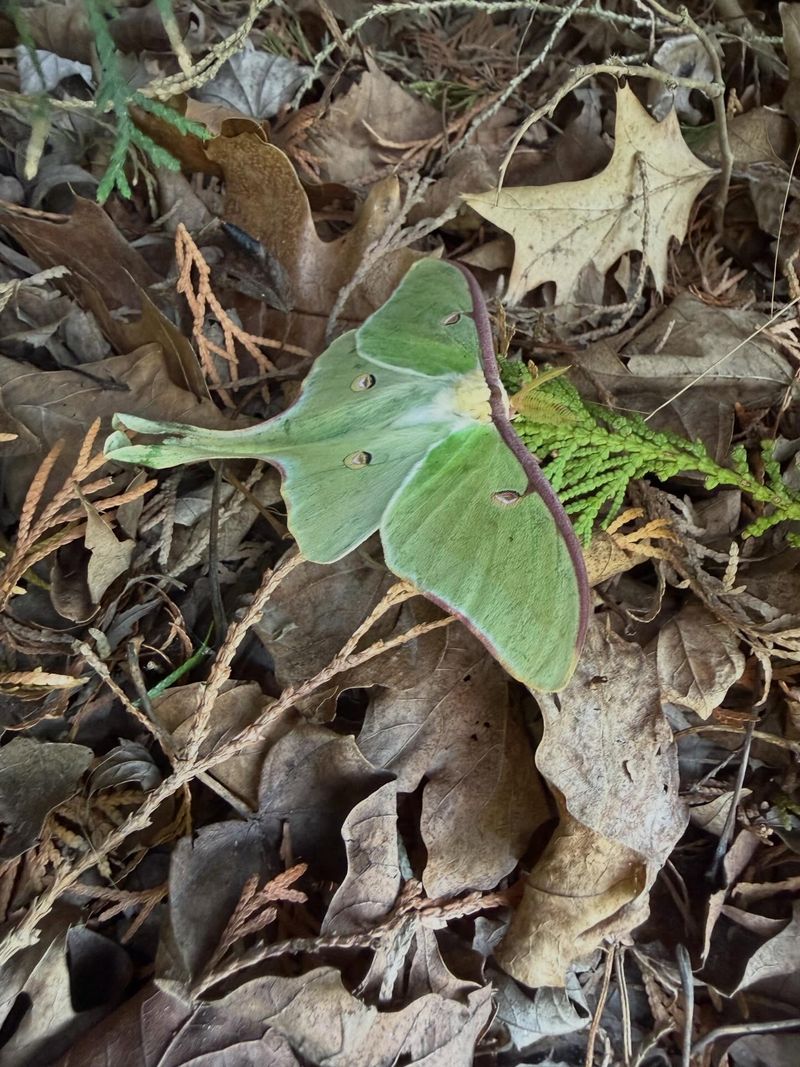
Leaf shredding has become popular in Ohio yards because it speeds up decomposition and creates a tidy mulch layer.
For most of the yard, that is perfectly fine. But directly under host trees like walnut, hickory, and sweetgum, shredding leaves at the wrong time can seriously disrupt luna moth development.
Luna moth cocoons are wrapped inside whole leaves.
The caterpillar rolls a leaf around itself and uses silk to hold it together before it drops to the ground. When those leaves get shredded by a mower or leaf shredder in fall or early spring, the cocoons inside can be damaged or exposed.
A luna moth pupa that loses its protective leaf wrapping is vulnerable to cold, moisture, and hungry birds.
If you love the idea of leaf mulch, try a simple compromise.
Rake or blow leaves from open lawn areas and shred those freely. But leave the natural leaf drop directly under your hardwood trees undisturbed through winter.
By late May, when luna moths have typically emerged, you can gently turn or compost what remains.
This one habit shift protects a critical overwintering zone without asking much of you.
The area under your host trees functions as a seasonal nursery from October through May. A little restraint in those spots goes a long way toward keeping luna moths cycling through your Ohio backyard year after year.
4. Spraying Broad Pesticides Near Hosts
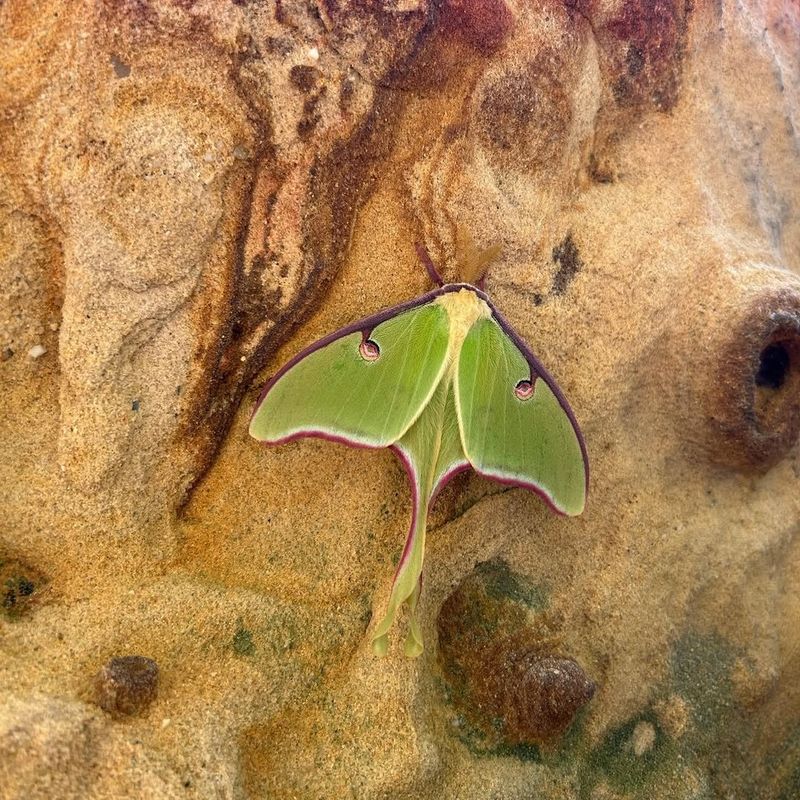
Broad-spectrum pesticides are designed to stop insects fast, and that is exactly the problem. They do not distinguish between a pest caterpillar and a luna moth caterpillar.
Sprays containing pyrethroids, organophosphates, or Bacillus thuringiensis kurstaki, commonly called Btk, can harm or eliminate luna moth larvae when applied near host trees during the feeding season.
Btk is often promoted as a natural or organic option, and it does target certain caterpillar pests effectively.
But Btk does not know a gypsy moth caterpillar from a luna moth caterpillar. When it is sprayed broadly across a yard or woodland edge, it affects every caterpillar in the area.
Targeted application only when pest populations genuinely threaten tree health is the recommended approach, not routine preventive spraying.
Timing matters enormously.
Luna moth caterpillars are typically active from June through August in Ohio. Spraying host trees during this window carries the highest risk of exposure.
If you need to treat a pest problem near a walnut or hickory, spot-treating specific branches rather than blanket-spraying the whole tree significantly reduces the impact on non-target species.
Ask yourself whether a spray is truly necessary before reaching for the bottle.
Many caterpillar populations on healthy trees are manageable without chemical intervention. Giving luna moths a pesticide-free zone around their host trees is one of the most direct ways to support their presence in your Ohio yard.
5. Using Bright Outdoor Lights All Night
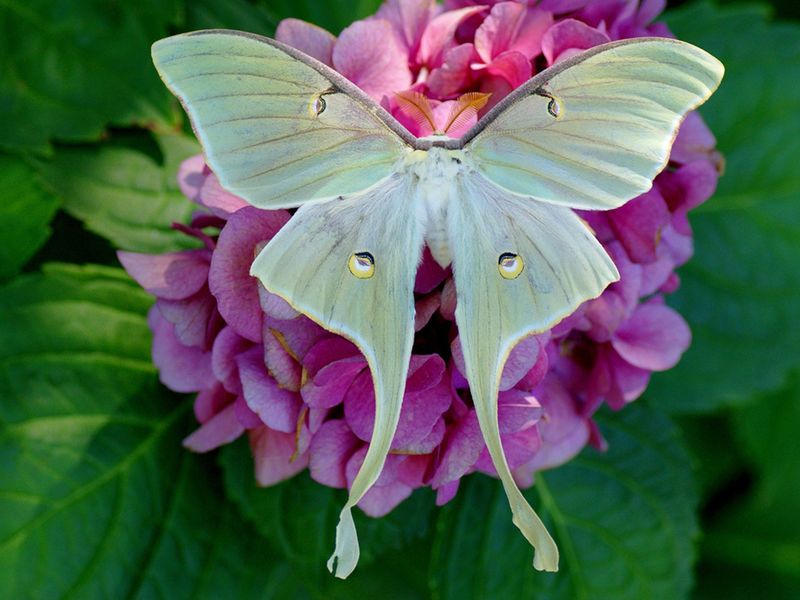
Luna moths are famous for showing up near porch lights, and that reputation has a dark side.
Artificial lights at night pull moths off course in a significant way. Luna moths navigate using the moon and stars, a system that worked perfectly for millions of years before electric lighting came along.
Bright artificial lights confuse that system, causing moths to spiral toward light sources instead of finding mates or host trees.
A luna moth caught circling a porch light all night is a luna moth not mating.
It is wasting energy, exposing itself to predators, and potentially missing its narrow reproductive window. Luna moths in their adult form do not eat at all. They have only about a week to find a mate and lay eggs.
Every hour lost to a bright light is an hour that cannot be recovered.
Switching to amber or warm-toned LED bulbs outdoors significantly reduces the attraction effect on moths and other beneficial night insects.
Motion-activated lights are even better because they only turn on when needed.
Turning off decorative or landscape lighting between 10 p.m. and dawn during late spring and early summer can make a real difference during peak luna moth flight season in Ohio.
You do not have to give up outdoor lighting entirely.
Small, thoughtful changes in bulb color, timing, and placement can protect the luna moths flying through your yard on warm Ohio summer nights.
Even one less bright light left on all night is a genuine win for these gorgeous green visitors.
6. Treating Caterpillars Like Garden Pests
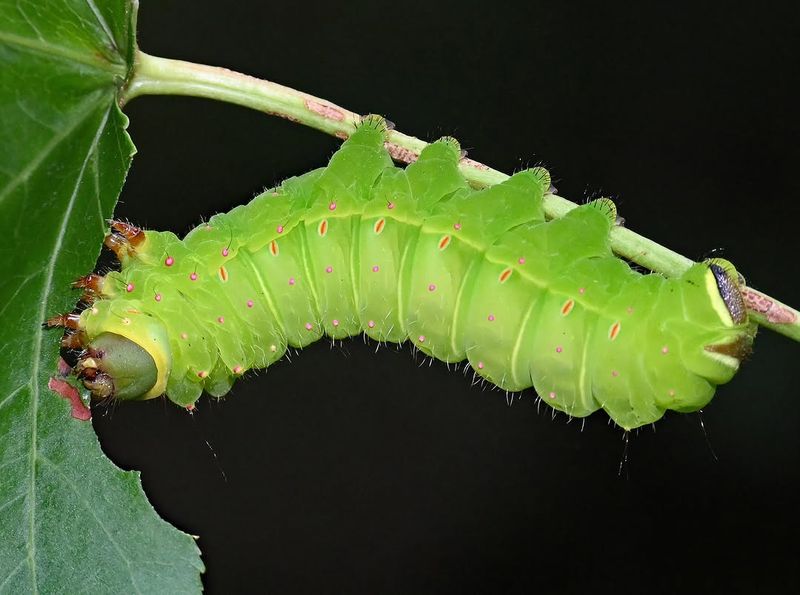
Spotting a large green caterpillar on a walnut tree can set off alarm bells for a lot of Ohio gardeners.
The instinct to remove it or spray it is understandable, but it is worth pausing for a closer look.
Luna moth caterpillars are bright apple green, plump, and decorated with faint yellow lines and small reddish or orange dots along their sides. They are genuinely beautiful once you know what you are looking at.
These caterpillars are not harming your tree in any meaningful way.
A healthy walnut or hickory can easily support several caterpillars feeding on its leaves without suffering. Luna moth larvae feed steadily through five growth stages over about a month before spinning their cocoons.
During that time, they are completely harmless to humans and pets, carry no venom, and pose no threat to garden vegetables or flowers.
The problem is that many people mistake them for pest species and remove them or treat the tree before taking time to identify what they have found.
Ohio is home to several large, impressive caterpillars that are entirely beneficial, and luna moth larvae top that list.
If you find a big green caterpillar on a host tree, try photographing it and running it through a free identification app before doing anything else.
Learning to recognize luna moth caterpillars turns a potential panic moment into something genuinely exciting.
Finding one in your yard means the life cycle is already happening right where you live. That is something worth celebrating, not removing.
7. Clearing Woodland Edges Too Cleanly
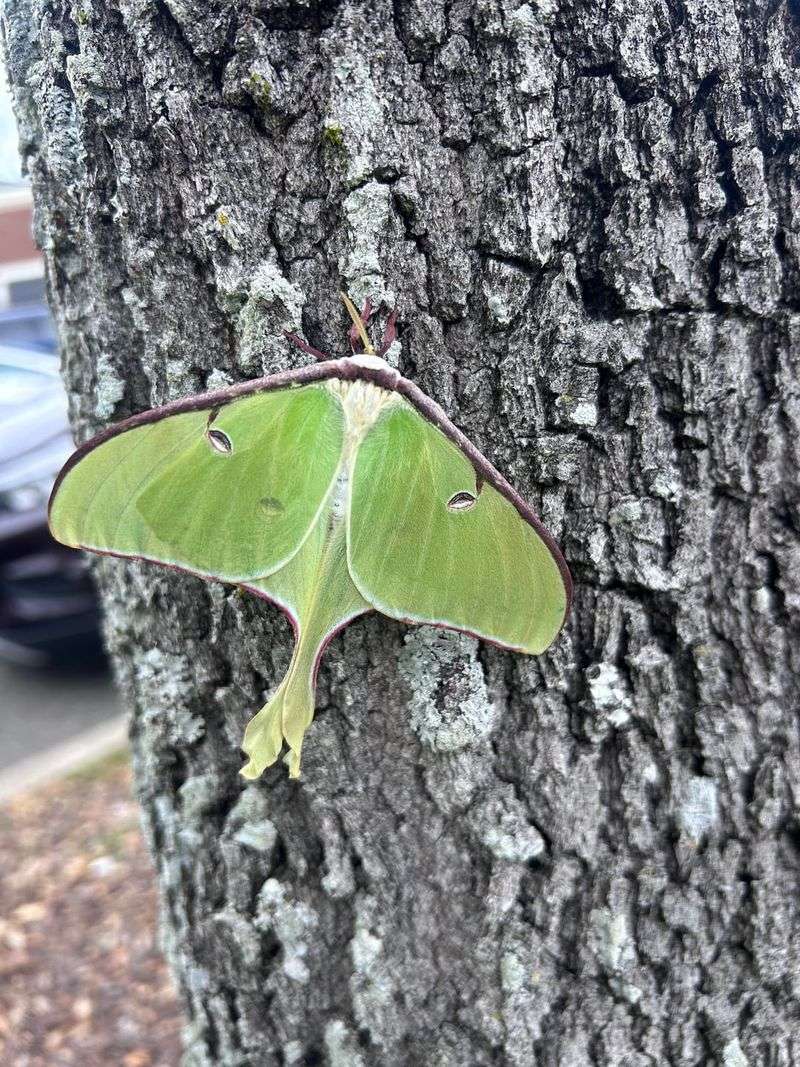
The edge where your yard meets a tree line, a fence row, or a neighboring woodlot is some of the most valuable real estate for luna moths in Ohio.
That transition zone, where open space meets layered vegetation, offers shelter, host plants, and overwintering spots all in one place.
When that edge gets mowed flat, trimmed to bare trunks, or cleared of understory plants, the habitat value drops sharply.
Many Ohio homeowners prefer a clean, manicured look along their property edges. That is completely understandable.
But clearing out every shrub, vine, and low-growing plant removes the layered structure that luna moths and many other native species depend on.
Female luna moths often rest in lower vegetation during the day. Pupae overwinter in leaf litter along these edges.
Even the slight temperature moderation offered by dense shrubs and ground cover can make a difference for overwintering insects.
Creating what wildlife ecologists call a soft edge does not require much.
Simply stop mowing a strip of ground along the tree line. Let native shrubs like spicebush or elderberry grow naturally in that zone. Allow tall grasses and wildflowers to fill in between.
This kind of layered transition takes very little maintenance once it is established and looks far more interesting than a hard-mowed edge anyway.
Ohio backyards with soft, natural edges consistently support more native wildlife than those with sharply cleared boundaries.
Giving luna moths that buffer zone along your property line could be the single most impactful habitat change you make this year.
Start with just a ten-foot strip and watch what moves in.