What It Really Means When Wasps Start Building Nests Around Your Texas Porch This Summer
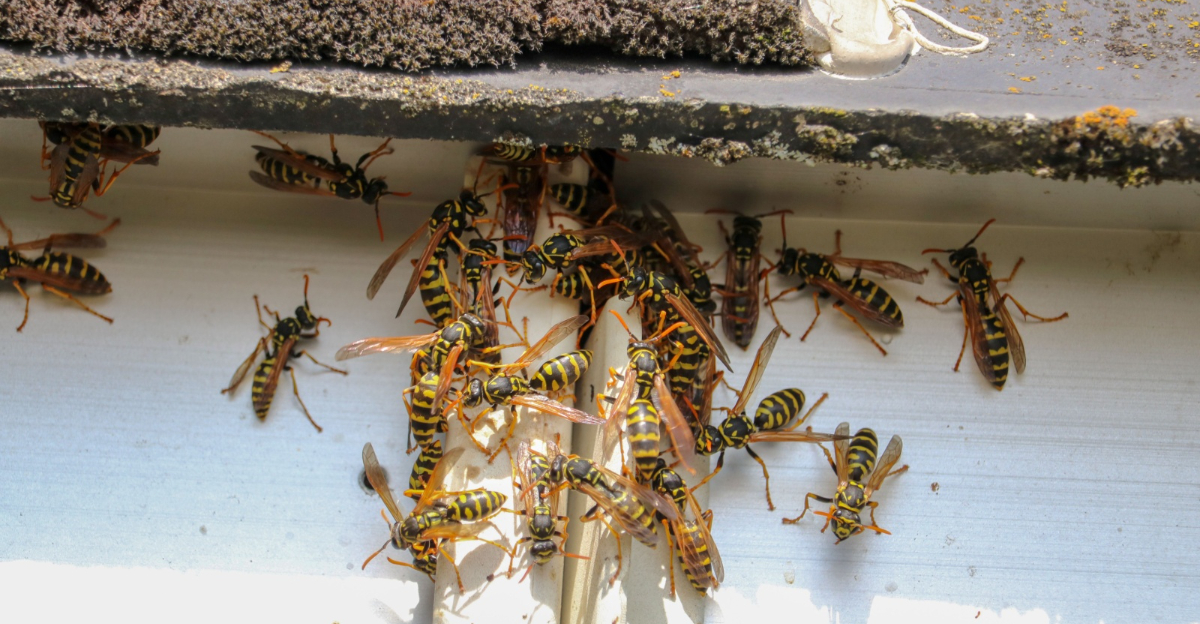
There you are, heading out to enjoy a perfectly good Texas summer afternoon on the porch, and then you notice it. Wasps circling the eaves.
A nest tucked into the garage corner that was definitely not there last week. Suddenly the porch feels a lot less relaxing.
Texas summers basically roll out a welcome mat for wasps searching out sheltered spots near doors, patio covers, mailboxes, and porch ceilings, and they are remarkably good at finding every available option.
Paper wasps and mud daubers are the most frequent builders around Texas homes, and here’s something interesting: where they choose to build actually tells you quite a bit about your yard’s shelter, food sources, and how much foot traffic moves through certain areas.
Understanding what pulled them in is the most useful place to start before deciding what to do next.
1. Your Porch Offers A Sheltered Nest Site
Shaded porch ceilings and covered eaves are among the most appealing spots a wasp can find during a Texas summer. When temperatures soar, wasps actively seek out protected surfaces that stay relatively cool and dry.
Your porch essentially offers everything a nesting wasp looks for: overhead cover, low wind exposure, and structural surfaces that hold nest material well.
Paper wasps, which are very common across Texas, tend to favor horizontal surfaces like porch ceiling boards, the undersides of railings, or the corners where a beam meets a wall.
These spots shield a nest from direct rain and sun, which helps the colony stay stable through the hottest months.
A porch that faces a garden or has nearby flowering plants may be especially attractive.
Homeowners sometimes notice wasp activity near their front or back door without realizing a small nest has already been started overhead.
Checking the undersides of eaves, porch ceiling corners, and the tops of outdoor light fixtures regularly during early summer can help catch nest starts early.
Spotting a nest when it is still small gives you more options for how to handle it safely and on your own terms.
2. Paper Wasps May Be Starting An Open-Faced Nest
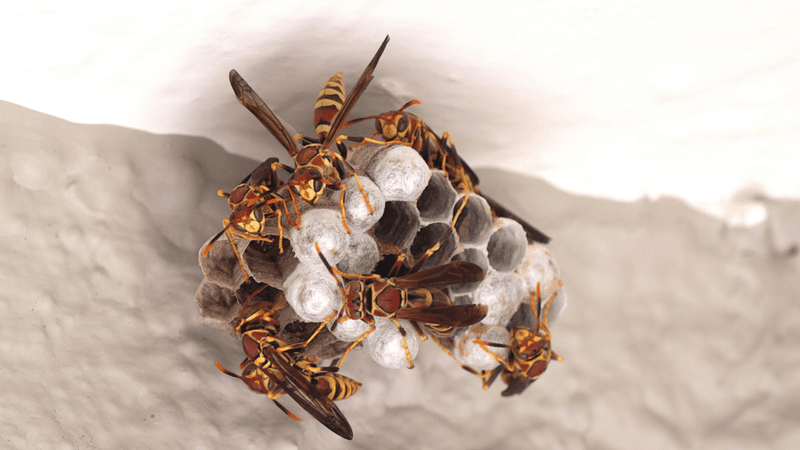
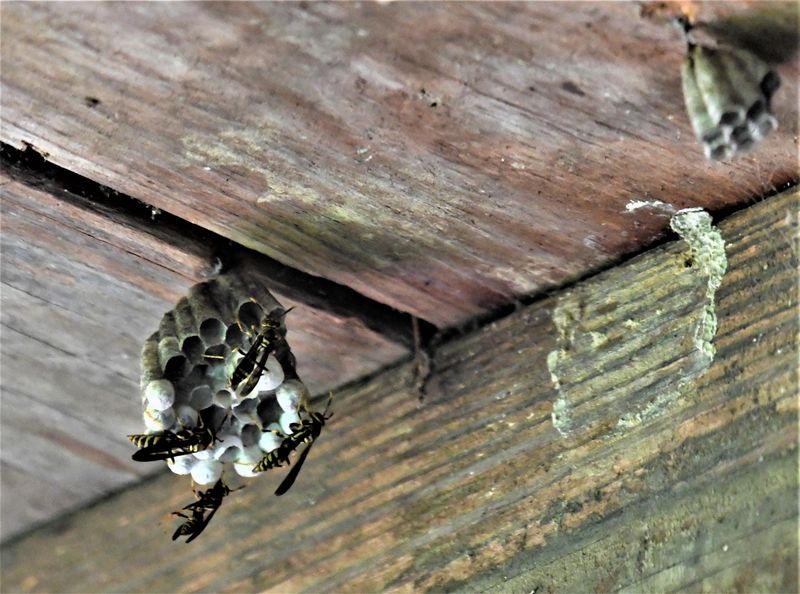
An open-faced nest that looks like a small upside-down paper umbrella is one of the most recognizable signs that paper wasps have moved in. These nests are made from chewed plant fibers mixed with wasp saliva, which dries into a papery gray or tan material.
Unlike enclosed hive structures, paper wasp nests have visible cells that are open at the bottom.
Texas is home to several paper wasp species, including the red wasp, which is reddish-brown with yellow markings, and the golden paper wasp, which tends to be more yellow.
Both species commonly build under eaves, porch ceilings, patio covers, and even inside garage door frames.
Their nests start small, sometimes just a few cells, but can grow steadily through the summer if left undisturbed.
Paper wasps are generally not aggressive unless their nest is disturbed or they feel threatened. A nest tucked high in a porch corner away from foot traffic may cause little concern through the season.
Your Texas Garden Changes Every Week. Your Plan Should Too.
Gardening in Texas changes quickly throughout the season. Every Friday you’ll receive a simple weekly plan showing exactly what to plant, prune, fertilize, harvest, and protect so you never miss the right timing.
However, a nest directly above a doorway or near a pet area deserves more attention. Watching how often wasps fly in and out can help you gauge how active a colony has become before deciding on next steps.
3. Mud Daubers May Be Using Protected Corners
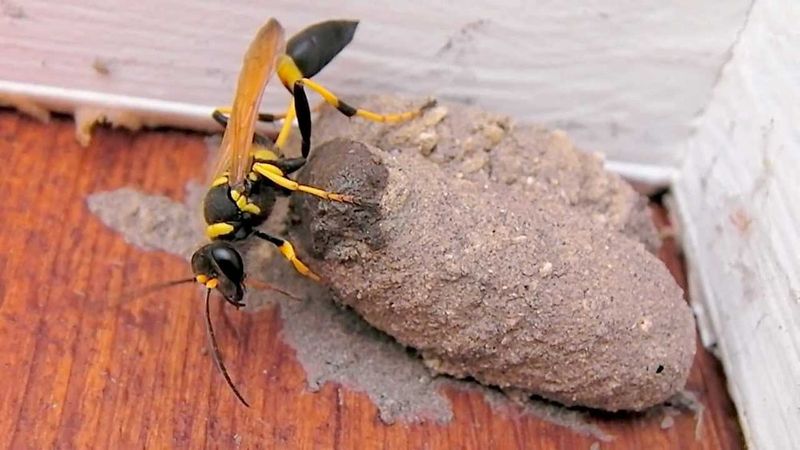
Mud tubes packed into a sheltered garage corner or along the underside of a porch ledge are a telltale sign of mud dauber activity.
Unlike paper wasps, mud daubers are solitary wasps, meaning each female builds and provisions her own nest rather than working as part of a colony.
Their nests look very different from paper wasp nests because they are made entirely from wet soil or clay shaped into narrow cylindrical tubes.
Mud daubers are drawn to Texas porches and garages because these spaces offer dry, protected surfaces where their mud nests can cure and stay intact.
A nest tucked behind a downspout, inside a shed corner, or beneath a porch step is a fairly common sight in Texas during summer.
Mud daubers provision each tube with paralyzed spiders before sealing it, which means they are actually hunting spiders in your yard and garden throughout the season.
Because mud daubers are solitary and generally very non-aggressive, their nests rarely pose a practical safety concern. Most pest-management guidance suggests that mud dauber nests can often be left alone or simply scraped away once the season ends.
If a nest is in a spot that causes concern, removing it while the wasp is away is usually straightforward with basic protective gloves and a scraper.
4. Wasps May Be Finding Garden Insects Nearby
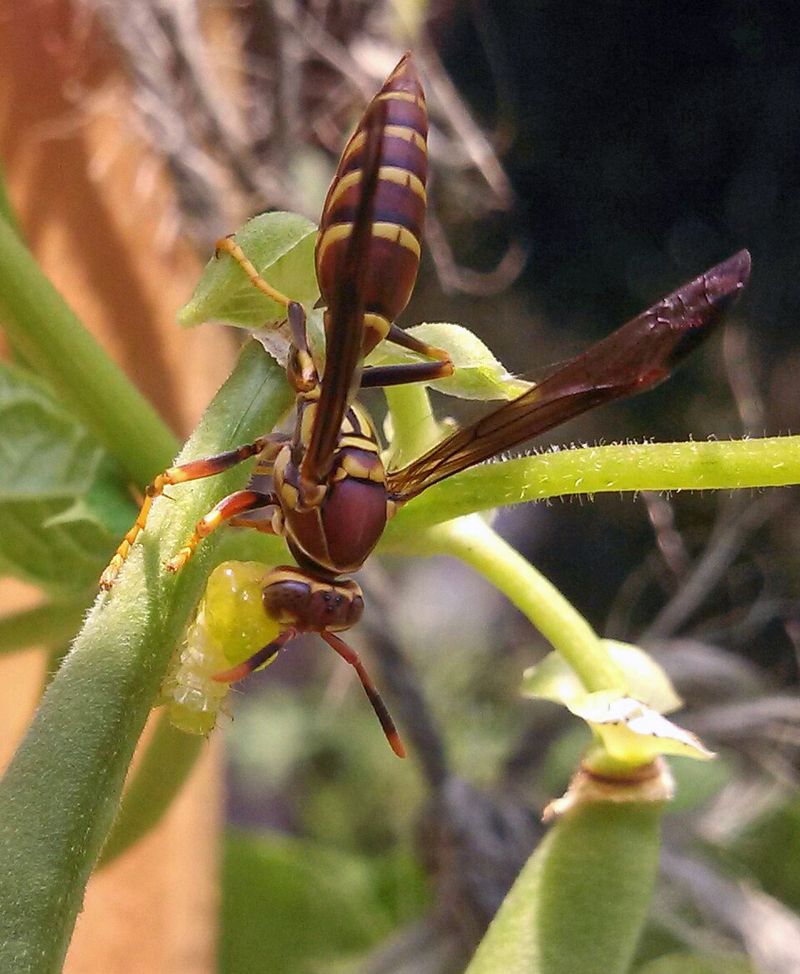
Foraging wasps flying low over garden beds or hovering around vegetable plants are often on the hunt for soft-bodied insects. Many wasp species, including paper wasps common to Texas, feed their larvae on caterpillars, aphids, and other garden pests.
A porch near a productive garden or a yard with dense plant borders may draw wasps in simply because the food supply is close and reliable.
This hunting behavior can actually benefit a Texas garden by reducing pest pressure on vegetables, herbs, and flowering plants. Wasps that are actively foraging are generally focused on their task and are far less likely to sting unless grabbed or cornered.
Seeing wasps move through garden rows or inspect the undersides of leaves is usually a sign they are working rather than defending a nest.
The connection between a nearby nest and garden pest activity is worth keeping in mind before deciding how to respond to wasp presence.
A colony nesting under a porch eave may be regularly patrolling the surrounding garden beds for food, which means removing the nest could shift the balance of insects in your yard.
Understanding this relationship does not mean ignoring a nest in a risky location, but it does add useful context to the decision.
5. Flowering Plants May Be Drawing Foraging Wasps
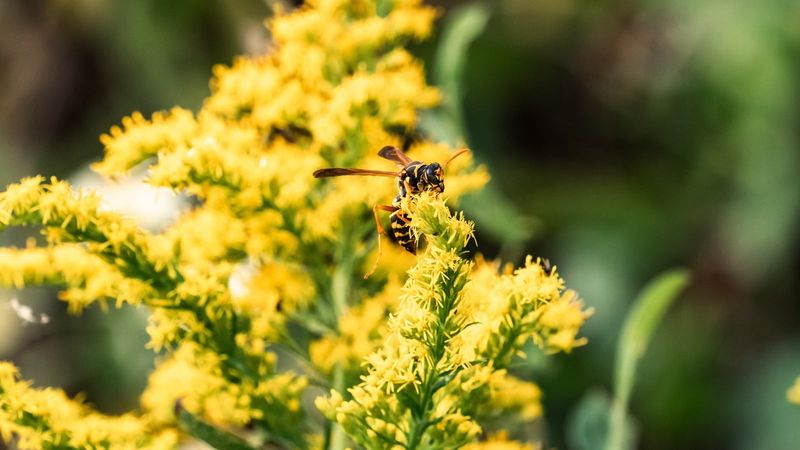
Blooming plants near a Texas porch or patio can pull wasps in just as reliably as a bird feeder draws songbirds. Many adult wasps feed on nectar and sugary plant secretions, and they are particularly active around open, accessible flowers during summer.
If your porch sits beside a flowering border, potted plants, or a vegetable garden in bloom, wasps may be making regular stops simply to feed.
Flowers with flat or shallow blooms tend to be easiest for wasps to access, and plants like fennel, dill, yarrow, and native Texas wildflowers are frequently visited.
Wasps seen hovering around flowers are typically foraging adults rather than nest defenders, and they are usually not interested in nearby people unless provoked.
That said, high wasp traffic near a seating area can still feel uncomfortable, especially for families with young children or pets.
If flowering plants near your porch seem to be drawing a lot of wasp attention, taking note of where the wasps go after feeding can help you locate a nearby nest. Wasps often follow a fairly direct flight path back to their nest site.
Watching for that repeated route in the late afternoon, when foraging activity often slows, can help you pinpoint where a colony has set up without getting too close.
6. Regular Traffic Near The Nest Can Raise Sting Risk
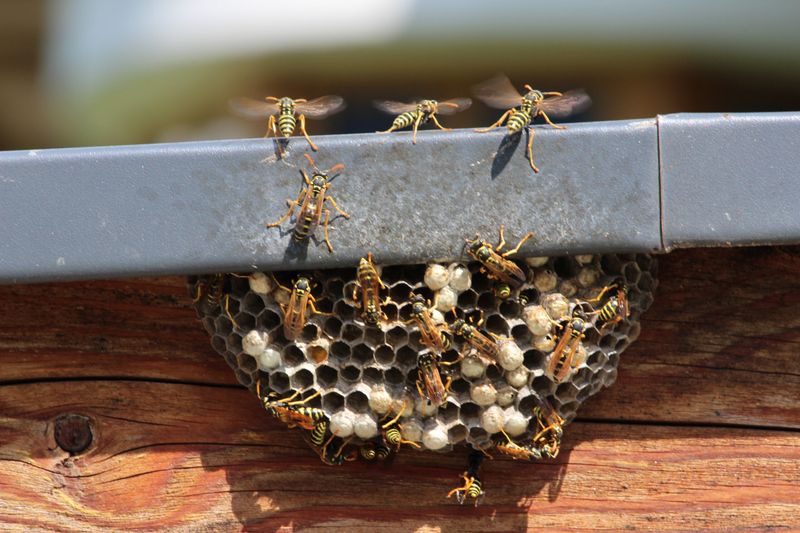
A nest positioned directly above a doorway, along a frequently used garden path, or near a pet feeding station creates a very different situation than one tucked into a quiet shed corner.
Wasps near high-traffic areas encounter more disturbance throughout the day, and repeated close passes by people or pets can prompt defensive behavior.
The practical risk of a sting goes up when a nest sits within arm’s reach of daily household activity.
Children playing on a porch, dogs brushing past a low eave, or adults reaching for a door handle can all inadvertently come too close to a nest.
Paper wasps in particular will defend their nest if they sense a threat, and a single wasp can sting more than once, unlike a honey bee.
Knowing where a nest is located relative to your daily routine is one of the most useful assessments a Texas homeowner can make before choosing how to respond.
If a nest is in a spot where accidental contact seems likely, addressing it sooner rather than later tends to be the safer choice. Early summer nests are smaller and less populated, which generally makes them easier to manage.
Wearing long sleeves and moving calmly near wasp activity, rather than swatting or running, can also reduce the chance of a defensive response in the meantime.
7. Repeated Flight To One Spot May Signal A Nest
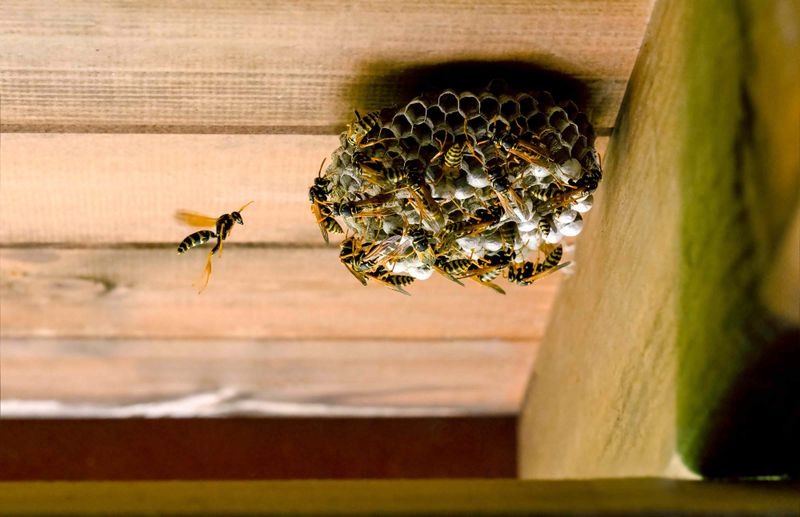
Watching the same corner of your porch ceiling or the same gap in a garage door frame attract wasp after wasp throughout the day is one of the clearest signs a nest is nearby.
Wasps are creatures of habit when it comes to navigating back to their colony, and they tend to follow the same flight path repeatedly.
If you notice wasps landing in one particular spot rather than simply passing through, there is a good chance a nest has already been started there.
Early nest starts can be surprisingly small and easy to miss. A queen beginning a new colony may have only a few cells in place before workers emerge and begin expanding the structure.
Catching this stage requires looking carefully in shaded spots, especially along the underside of porch overhangs, behind shutters, inside outdoor light fixtures, and around the joints where porch beams connect to walls.
Repeated flight to one spot is especially worth noting if the activity increases over the course of a week or two. A growing colony will show more and more wasp traffic as new workers emerge and take on foraging duties.
Tracking that pattern early, without getting close enough to disturb the nest, gives you a clearer picture of what you are dealing with and how much the colony has grown before you decide on a course of action.
8. A Small Early Nest Is Easier To Address Safely
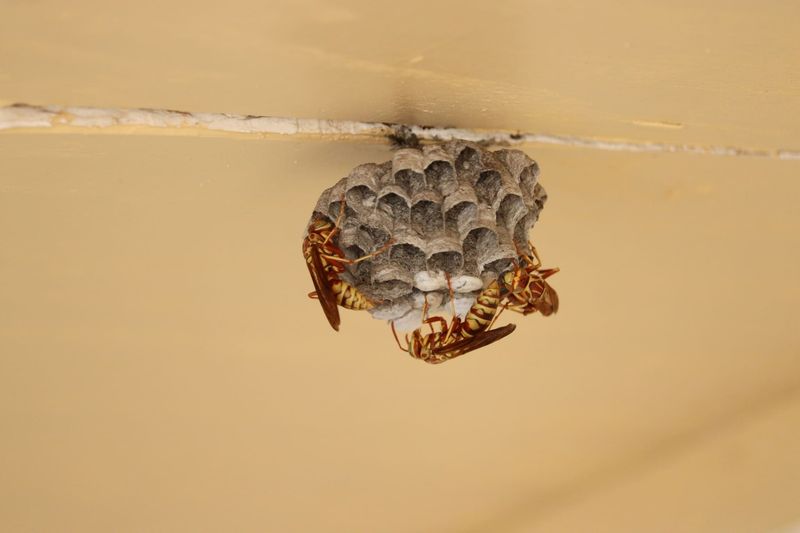
Catching a nest when it is still just a few cells wide is one of the most practical advantages a homeowner has during early Texas summer. Small nests have fewer workers, which means less defensive activity and a lower overall risk when addressing them.
Waiting until a nest has grown through the height of summer typically means dealing with a much larger and more active colony.
Early summer nest starts are common from late spring through June across much of Texas, as overwintered queens emerge and begin building. A nest the size of a golf ball or smaller is often the work of a single founding queen with only a handful of workers.
At that stage, the colony is focused on building and foraging rather than guarding a large established structure.
Homeowners who want to remove a small nest themselves should do so at night when wasps are less active and most of the colony is clustered on the comb. Wearing protective clothing, including gloves and a long-sleeved shirt, adds a reasonable layer of caution.
A wasp-specific aerosol spray applied at a safe distance is a common approach for nests within reach.
For nests in harder-to-reach spots or for households with members who have sting allergies, contacting a licensed pest-management professional is a sensible option at any nest size.
9. Some Nests May Be Better Left Alone
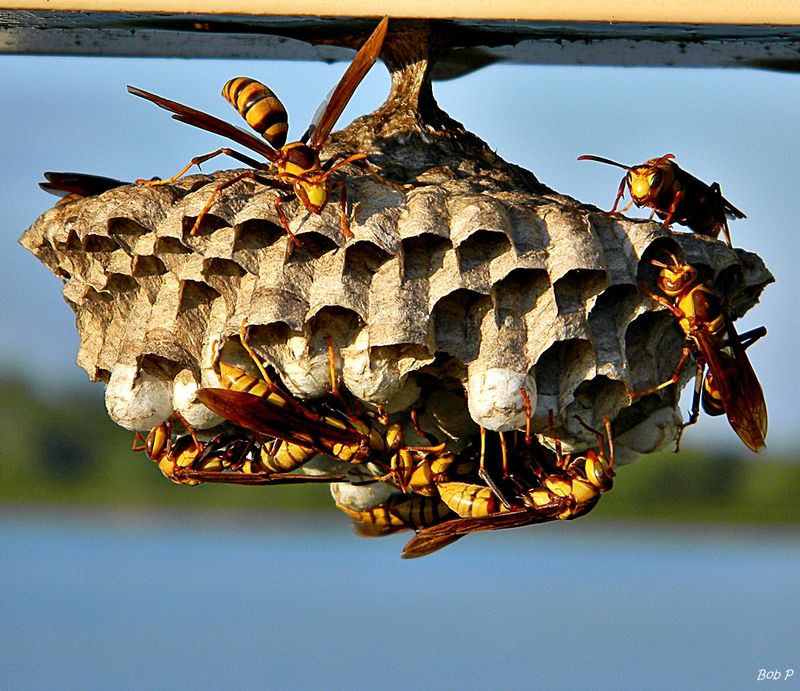
Not every wasp nest around a Texas property needs the same response.
A mud dauber nest sealed into a quiet shed corner, or a small paper wasp colony tucked under a porch eave far from any door or seating area, may cause little practical concern throughout the summer.
Deciding whether a nest warrants action depends largely on where it is, how active it is, and how close it sits to regular household movement.
Mud daubers in particular are known for being very docile, and their nests are provisioned and sealed rather than actively guarded. A sealed mud tube nest with no visible wasp activity is often an old nest from a previous season rather than an active one.
Scraping it away is simple enough, but leaving it in place causes no meaningful harm if the location is out of the way.
Paper wasp nests in low-traffic spots can also go the whole season without causing problems, especially in gardens where their pest-hunting behavior may be genuinely helpful.
The key question is always whether the nest location creates a reasonable risk for the people, children, or pets who use that space regularly.
When the answer is no, observing from a respectful distance and letting the colony run its natural seasonal course is a completely reasonable choice for many Texas homeowners.