Ohio Container Plants Are Disappearing For A Reason Many Gardeners Never Think To Check
Something strange is happening to container plants all across Ohio.
Gardeners water them, feed them, and give them plenty of sun, yet the plants still look sick, shrivel up, or simply stop growing.
Many people blame the weather or bad soil. A few blame overwatering. Almost nobody thinks to look below the surface of the potting mix, which is exactly where the real problem is hiding.
There is one of the most overlooked pests in Ohio container gardening, and it operates in a way that makes it almost impossible to diagnose without knowing what to look for.
The adults work at night, feeding on leaves in ways that look like other pests entirely. The larvae work underground, chewing through roots while the plant above quietly declines for weeks before anyone notices something is wrong.
By the time the plant looks seriously distressed, the damage inside the container has usually been building for an entire season.
Once you know this pest exists and understand how it operates, you will never look at a wilting pot the same way again.
Meet The Black Vine Weevil
Many gardeners have never heard its name, but the black vine weevil has been causing problems in Ohio gardens for decades.
Ohio State University Extension identifies it as one of the most damaging pests of container-grown ornamentals in the state. Its scientific name is Otiorhynchus sulcatus, and it belongs to a large family of beetles known as weevils.
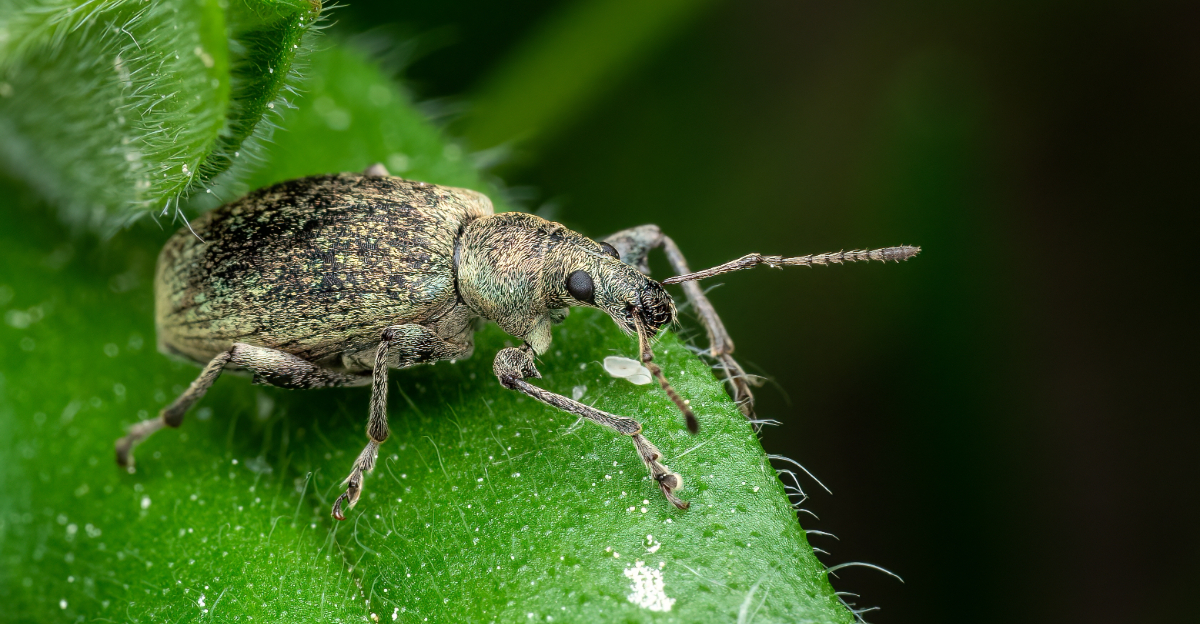
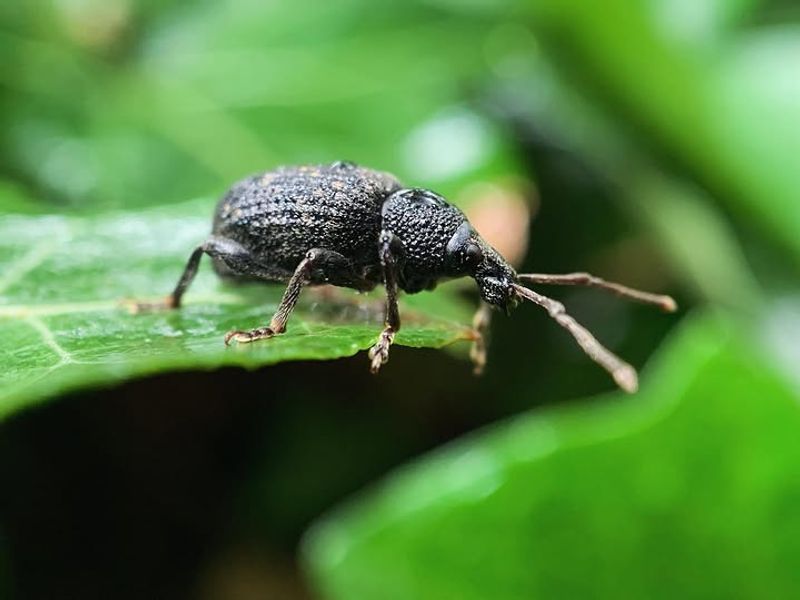
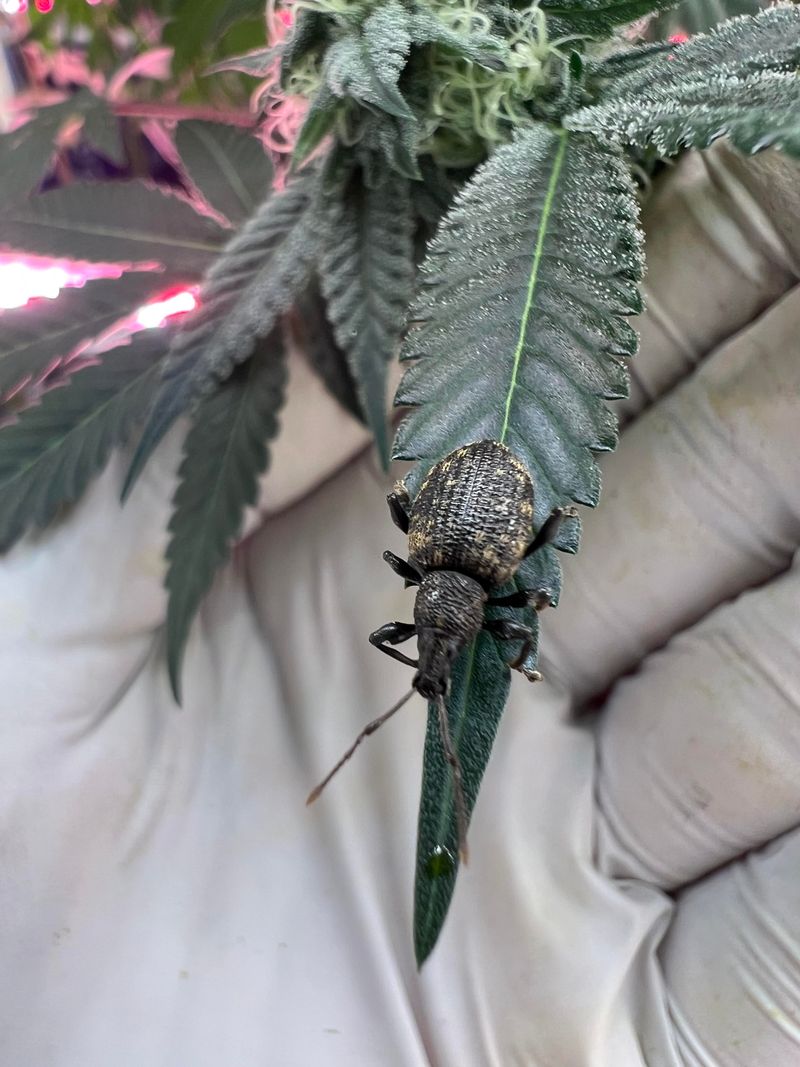
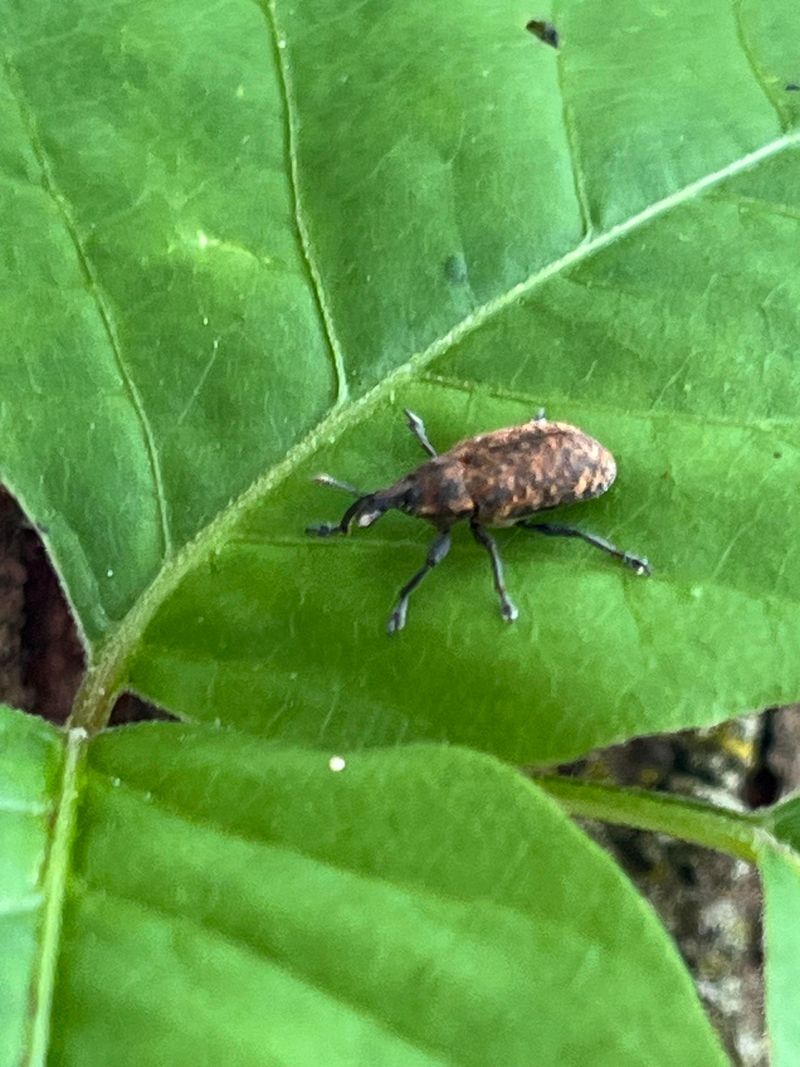
The adult is a small, hard-bodied insect about a third of an inch long.
It is completely black with tiny yellowish flecks on its back, and its most recognizable feature is a short, curved snout. Adults cannot fly because their wing covers are fused together, so they walk everywhere they go.
Here is the sneaky part: every single adult black vine weevil is female.
No males exist in the population. Each female can lay hundreds of eggs without mating, which means even one weevil finding her way into a pot spells serious trouble.
Eggs hatch into creamy white, C-shaped larvae that feed aggressively on roots underground.
The pest targets a wide range of popular Ohio container plants, including rhododendrons, yews, hostas, and strawberries.
Because both the adult and larval stages cause damage in different ways, the problem can drag on for an entire growing season before a gardener realizes what is happening.
Knowing this insect exists is the very first step toward protecting your pots.
Leaf Notches Give The First Hint
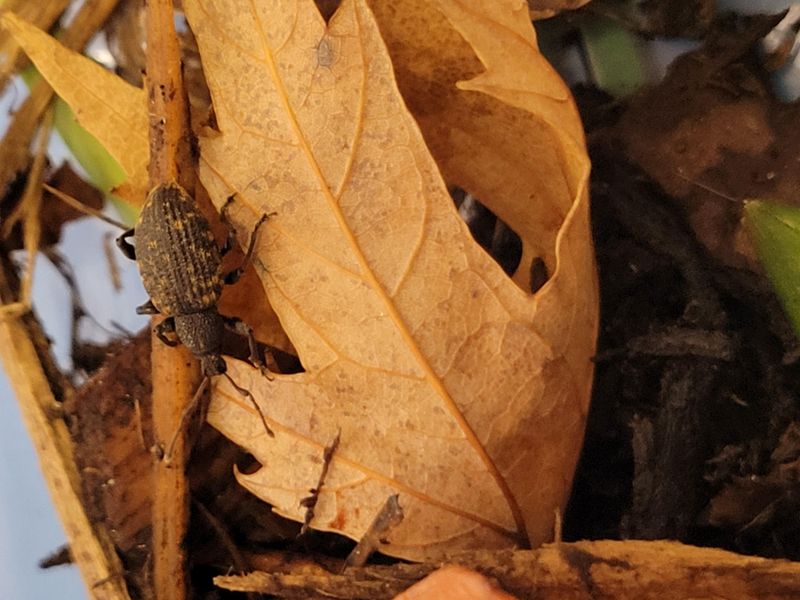
Pick up a hosta leaf and find the edge looks like someone took a tiny cookie cutter to it.
Those smooth, crescent-shaped bites along the leaf margins are the calling card of adult black vine weevil feeding. Gardeners often mistake this damage for caterpillars or slugs, but the shape and location of the notches tell a different story.
Adult weevils chew from the outer edge inward, leaving rounded scallops that are surprisingly uniform in size.
Slugs tend to leave ragged, irregular holes anywhere on the leaf surface. Caterpillars chew larger sections and leave frass behind. Vine weevil notches are clean, curved, and almost always along the leaf margin.
Your Ohio Garden Changes Every Week. Your Plan Should Too.
Gardening in Ohio changes quickly throughout the season. Every Friday you’ll receive a simple weekly plan showing exactly what to plant, prune, fertilize, harvest, and protect so you never miss the right timing.
The damage itself rarely ruins a plant on its own.
A few notched leaves are mostly a cosmetic problem. What the notching really does is serve as a warning signal that adults are active nearby, which means eggs may already be in the soil of your containers.
Common Ohio host plants that show this notching include rhododendrons, azaleas, euonymus, impatiens, and hostas.
Check the entire plant, including leaves close to the soil line, since adults tend to feed low on the plant before climbing higher.
If you spot consistent crescent notches on multiple leaves across several pots, treat that pattern as an early alert system.
The root damage that follows larval feeding is far more serious than any leaf notching you will ever see above ground.
Larvae Feed Below The Soil
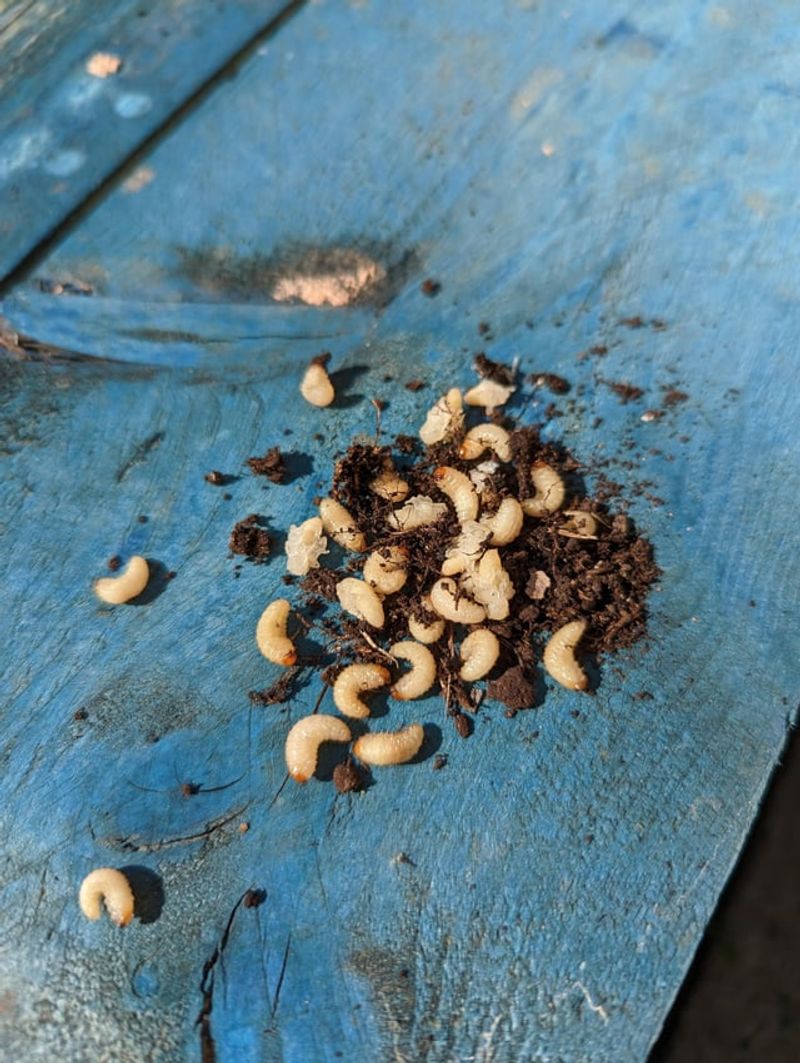
Out of sight truly means out of mind when it comes to vine weevil larvae.
While adult notching gets some attention, the larvae are the real heavy hitters. They hatch from eggs laid at the soil surface or just below it, then immediately begin working their way down toward the roots.
Larvae are creamy white, legless, and curl into a tight C-shape when disturbed.
They range from pinhead-sized when newly hatched to about half an inch long when fully grown. As they grow, their appetite grows with them, and they feed directly on fine feeder roots and eventually on the main root system of the plant.
Root feeding cuts off the plant’s ability to take up water and nutrients.
A plant with a heavily damaged root system will show classic stress symptoms above ground, even if the soil is moist and fertilized.
This disconnect between what you see above the soil and what is happening below it is exactly why so many Ohio gardeners misdiagnose the problem.
Larvae are most active in late summer through fall and again in early spring as soil temperatures warm.
In containers, the concentrated root zone gives larvae very little room to roam, so all their feeding pressure lands directly on the plant’s root system.
Tipping a suspicious pot and examining the soil and roots is one of the fastest ways to confirm a larval infestation before it gets worse.
Containers Make Roots Easy Targets
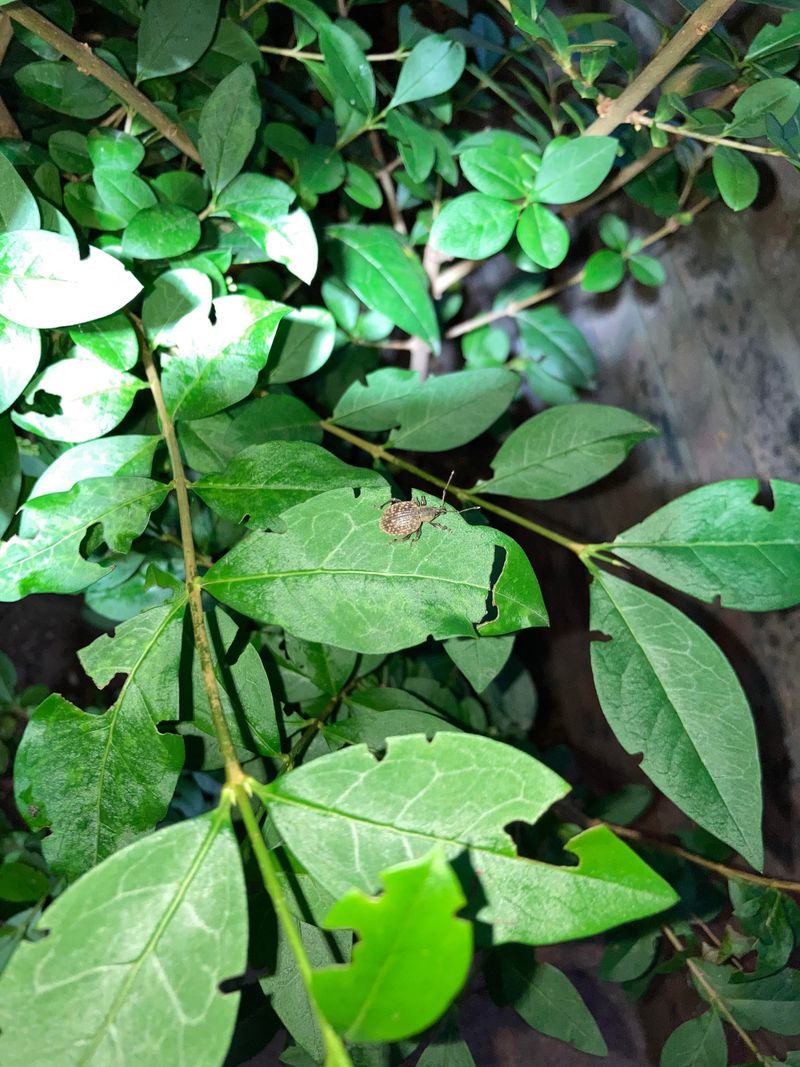
Pots are basically all-inclusive resorts for root-feeding pests.
A container limits how far roots can spread, concentrates moisture in a small space, and often stays warmer than garden beds. For black vine weevil larvae, a pot is a perfectly sized buffet with nowhere for the roots to escape.
In a garden bed, a plant’s root system spreads outward and downward, sometimes covering several square feet.
Larval feeding on part of that root zone causes stress, but the plant often compensates by relying on undamaged roots elsewhere. Container roots have no such luxury.
Every root is within reach, and the larvae can work through the entire system methodically.
Container soil also tends to warm up faster in spring and cool down slower in fall compared to in-ground soil.
This extended warm season keeps larvae active longer. Pots sitting on concrete patios or wooden decks absorb and hold heat, which can accelerate larval development and extend feeding periods well beyond what you would see in a traditional garden bed.
Ohio gardeners who love deck container gardens or patio displays are particularly at risk because weevil adults walk from pot to pot with ease.
One infested plant moved to a display grouping can spread eggs to neighboring containers within days.
Keeping pots slightly elevated and inspecting them regularly, especially those that have been in the same spot for more than one season, gives you a real advantage in catching problems early.
These pests really do know how to dig in.
Night Checks Reveal Adult Weevils
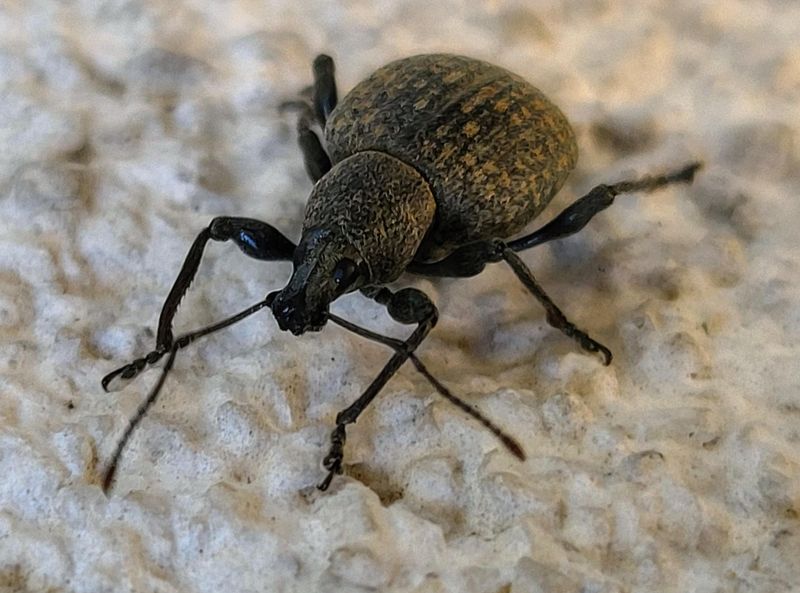
Grab a flashlight and head outside after dark.
That simple habit might be the single most effective scouting tool you have against adult black vine weevils. These insects are strictly nocturnal, hiding in soil, mulch, or leaf litter during the day and coming out to feed and lay eggs at night.
Daytime searches almost never turn up adults.
Start your check about an hour after sunset when temperatures have cooled slightly.
Shine the light along the soil surface, under pot rims, and on the undersides of lower leaves. Adults move slowly and tend to freeze or drop off the plant when disturbed by light, so look carefully before touching anything.
A white sheet of paper placed under a plant can help catch any weevils that fall when you shake the foliage gently.
Sticky traps placed around container rims are a passive monitoring option that captures adults as they climb up from the soil at night.
These traps provide a rough idea of population levels without requiring you to be outside at midnight every evening. Check traps every few days during peak season, which runs from late spring through midsummer in Ohio.
Consistency matters more than perfection with nighttime scouting.
You do not need to find a weevil every time you go out. What you are building is a habit of awareness so that when adults do appear, you catch them quickly and can act before eggs are laid in large numbers across your container collection.
Wilted Plants Need Root Checks
A wilting plant in a container almost always gets blamed on thirst first.
You water it, wait a day, and it still looks droopy. You water it again, and nothing changes.
That pattern, where watering provides no relief, is one of the strongest signs that root damage may be the actual problem rather than drought stress.
Black vine weevil larvae sever the connection between roots and the rest of the plant.
Even if the potting mix is moist, a plant with heavily damaged roots cannot pull water upward efficiently. The result looks exactly like underwatering but does not respond to it.
Overwatering in response to this confusion can actually worsen conditions by creating the soggy environment larvae find comfortable.
The only way to know for certain is to check the roots directly.
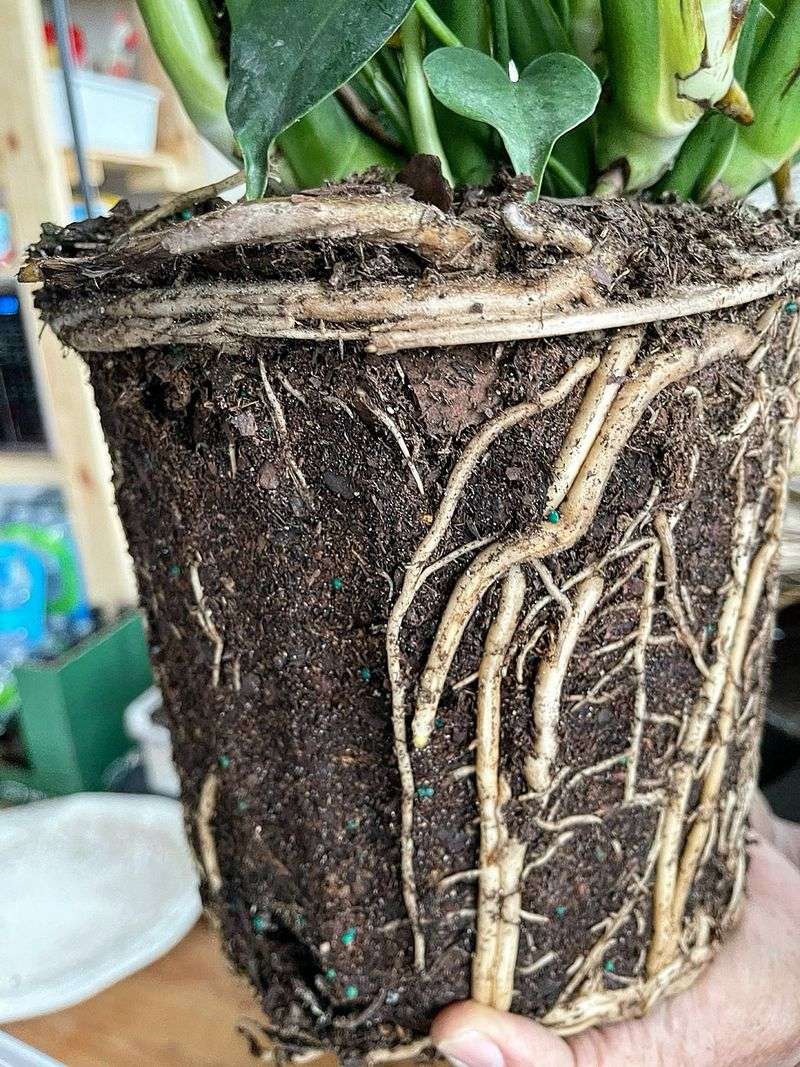
Slide the plant out of its container and look at the root ball. Healthy roots are white or light tan and firm to the touch.
Roots that have been fed on by larvae may appear brown, mushy, or simply missing from sections of the root ball. You might also spot larvae themselves curled in the soil near the root zone.
Ohio gardeners should make root checks a standard practice anytime a container plant shows unexplained decline.
This is especially worth doing in late summer and fall, when larval populations peak.
Catching root damage early, before the entire root system is compromised, gives the plant a real fighting chance at recovery with the right treatment applied promptly.
Fresh Potting Mix Reduces Carryover
Old potting mix is one of the most underrated problems in container gardening.
Soil that has been used for a full season or more can harbor eggs and larvae from the previous year, ready to wake up and start feeding again when spring arrives.
Reusing infested media without treatment is essentially giving the pest a free pass to start over.
Replacing potting mix in containers that have had known pest problems rather than trying to reuse or treat the old soil in place is consistently recommended.
Fresh, sterile potting mix breaks the carryover cycle by removing the environment where eggs and young larvae overwinter. This is a simple, low-cost step that pays off significantly the following season.
Dispose of old potting mix carefully.
Do not compost it if you suspect infestation, because compost piles rarely reach the temperatures needed to eliminate weevil eggs and larvae reliably.
Bag the old soil and place it in your regular trash, or check with your local Ohio solid waste district for guidance on disposal options.
Clean containers thoroughly before adding fresh mix.
Scrub the inside walls with a diluted bleach solution, rinse well, and allow them to dry completely before refilling. Eggs can cling to pot walls and reintroduce the problem even with fresh soil.
Combining new potting mix with clean containers creates a genuinely fresh start.
Paired with good scouting habits, this sanitation step is one of the most practical things an Ohio container gardener can do to protect plants season after season.
Targeted Treatment Works Better Early
Timing is everything with vine weevil control.
Waiting until plants show severe decline means larvae have already done significant root damage, and recovery becomes much harder.
Acting early in the season, when egg hatch is just beginning and larvae are still small and close to the soil surface, gives treatments the best chance of working effectively.
Beneficial nematodes, specifically Steinernema kraussei and Heterorhabditis bacteriophora, are biological control options for container use.
These microscopic organisms are applied as a soil drench and actively seek out larvae in the potting mix. They work best when soil temperatures are between 50 and 70 degrees Fahrenheit and soil moisture is maintained after application.
Follow label directions precisely, as nematodes are living organisms that need proper handling to remain effective.
For adult weevils, pyrethroid-based insecticides labeled for ornamental use can be applied to foliage and pot surfaces during peak adult activity in late spring and early summer.
Repeat applications may be needed because adults continue emerging over several weeks.
Always check that any product you use lists black vine weevil on the label and is approved for your specific plant type.
Combining biological larval control with targeted adult management creates a two-stage approach that addresses both life stages.
No single treatment handles everything perfectly.
Consistent monitoring, early action, and rotating between control methods when needed will always outperform a single late-season spray applied after the damage is already obvious.
Start early and stay consistent all season long.