Japanese Beetles Are At Peak Numbers In Ohio Right Now (This Is What Stops Them)
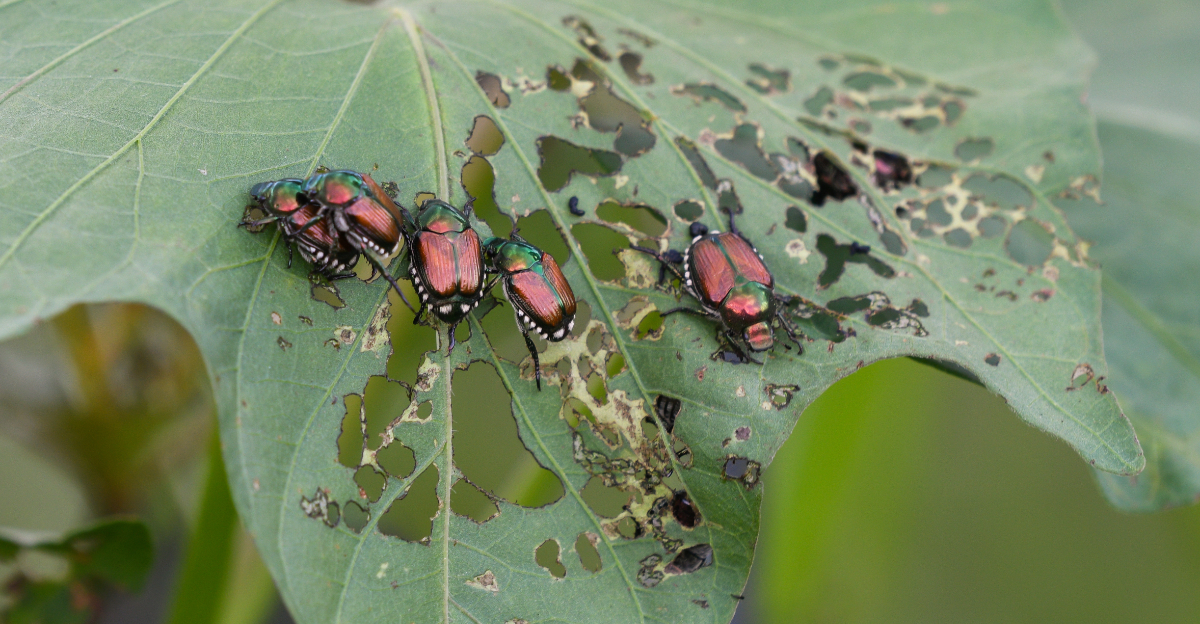
If Japanese beetles are in your Ohio garden right now, waiting can cost you more than a few chewed leaves. At peak numbers, these shiny pests feed in crowds and spread from plant to plant.
They can turn healthy summer growth into lace before many gardeners realize how fast the damage is moving. The tricky part is that the most obvious fixes are not always the smartest ones.
Some sprays miss the real problem, and those popular beetle traps can pull even more beetles toward the very plants you want to protect. That is why timing matters so much in late June and early July.
A few simple steps done early can reduce damage without turning your garden into a daily battle. Before you grab the nearest product or give up on your roses and vegetables, it helps to know what actually stops them.
1. Knock Beetles Into Soapy Water Early In The Morning
A quiet morning check can do more good than waiting until a rose bloom is covered by afternoon. Japanese beetles tend to move more slowly in cooler morning temperatures.
That makes early-morning handpicking the most reliable low-cost method most home gardeners can use right now.
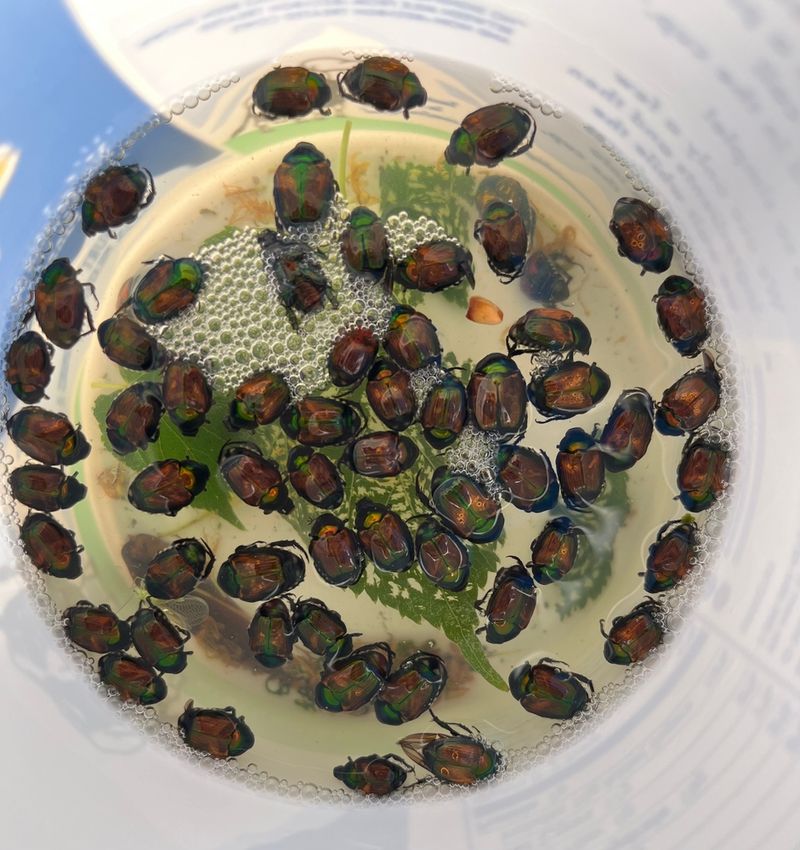
Fill a bucket with a few inches of warm water and a squirt of dish soap. Hold the bucket directly under a beetle-covered branch or bloom.
Shake or gently tap the stem, and most beetles will fall straight in. The soapy water does the work from there.
Wear light gloves if you prefer. Some gardeners use bare hands without any issue, but gloves can make the process faster.
Check every plant that showed damage the day before, not just the ones with visible beetles right now.
Do this before 9 a.m. when possible. Beetles become more active as temperatures rise, so late-morning checks are harder.
Staying consistent matters more than doing one big sweep. A short daily check of five to ten minutes keeps populations from building on your most valued plants in your Ohio garden.
2. Check Roses Grapes And Linden Trees First
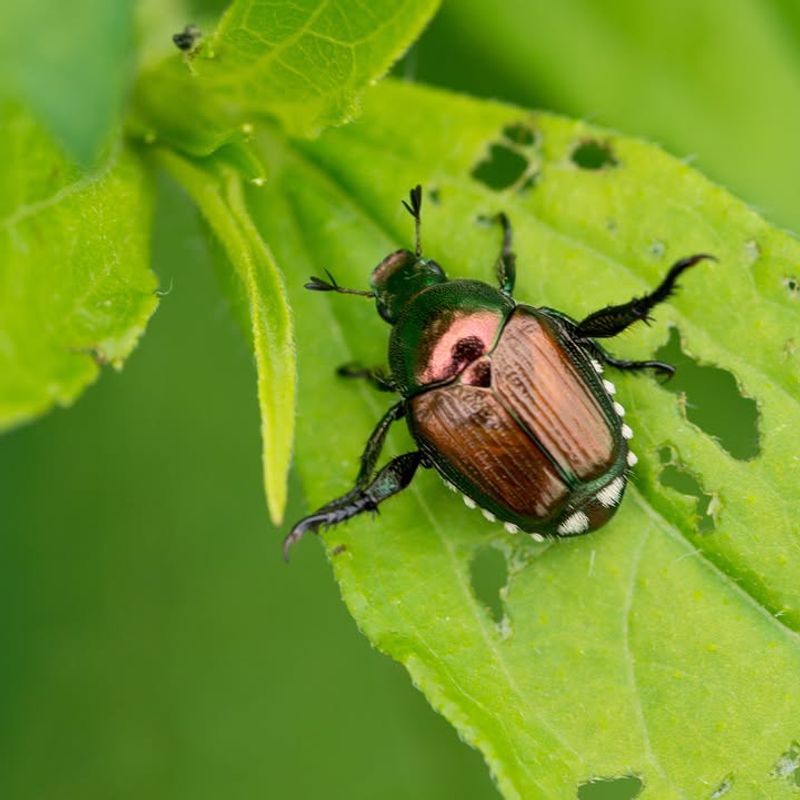
A grape leaf full of holes is often the first real sign that Japanese beetle pressure is building in the yard. Roses, grapes, and linden trees rank among the most heavily used host plants in this region.
Damage on these plants tends to appear earlier and more intensely than on others nearby.
Skeletonized leaves are a clear signal. Beetles feed between the leaf veins, leaving behind a lace-like skeleton of the leaf.
Flower buds and open blooms on roses often show chewed petals and collapsed centers when feeding pressure is high.
Linden trees in full bloom can draw large numbers of beetles during July. If you have one near your rose bed or grape arbor, expect more traffic on nearby plants.
Checking these three plant types first each morning gives you the clearest picture of where pressure is building.
Fruit trees including plum, peach, and apple also attract feeding. Ornamental plants like canna, hollyhock, and Virginia creeper are worth watching too.
Your Ohio Garden Changes Every Week. Your Plan Should Too.
Gardening in Ohio changes quickly throughout the season. Every Friday you’ll receive a simple weekly plan showing exactly what to plant, prune, fertilize, harvest, and protect so you never miss the right timing.
Knowing your yard’s most attractive plants helps you focus your time where it counts most during peak-season weeks.
3. Remove Beetles Before They Signal More To Gather
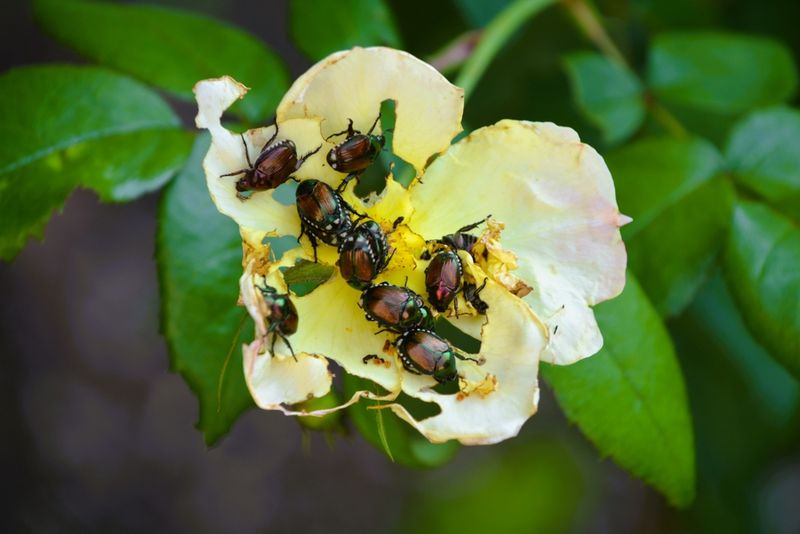
Damaged leaves and feeding beetles can draw more beetles to the same spot. Japanese beetles release compounds that attract other adults to active feeding sites.
This is why a small group on a rose can become a much larger cluster within a day or two if nothing is done.
Removing beetles early, before the cluster grows, reduces that pull. You do not need to get every single beetle to make a difference.
Consistent removal keeps populations from building on your highest-value plants during the weeks when adult activity is strongest.
Focus first on plants that already show fresh feeding damage. A leaf with new holes is more likely to attract additional beetles than an undamaged plant nearby.
Removing beetles from damaged plants and clearing heavily skeletonized leaves can slow the gathering effect.
This is not a one-time fix. Adult beetles are active for several weeks, typically from late June through August in this state, with peak numbers usually falling in July.
Plan for daily or near-daily checks during that window. Short, steady effort works better than waiting for damage to become severe before taking action.
4. Skip Traps Near The Plants You Want To Protect
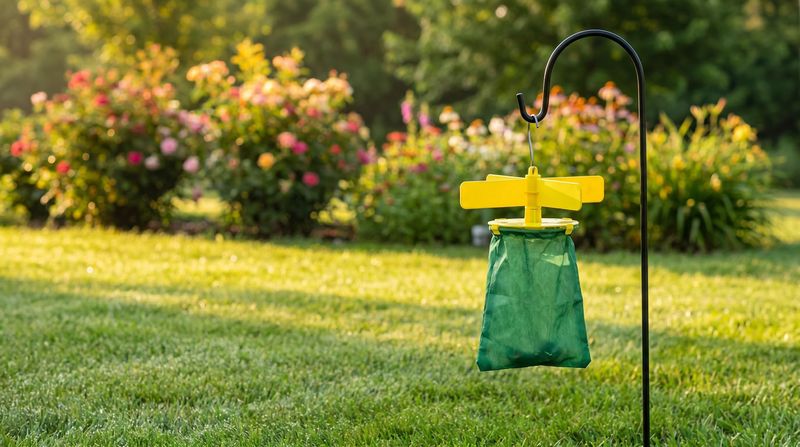
Traps baited with floral and pheromone lures can pull beetles from a wide area toward your yard. That sounds helpful, but placement is everything.
A trap hung near your rose bed or grape arbor can make damage significantly worse by drawing beetles directly toward the plants you are trying to protect.
Research and extension guidance from multiple university sources have noted that traps often catch large numbers of beetles. They can also increase the number that land on nearby plants.
The trap attracts more beetles than it captures, especially when placed too close to favored host plants.
If you choose to use a trap, place it well away from roses, grapes, fruit trees, and ornamental beds. The far edge of the yard or a location away from your most valued plantings is a safer spot.
Empty the trap bag frequently so it does not overflow.
Traps are not useless in every situation, but they are not a substitute for handpicking or other management. Many extension resources suggest skipping traps altogether unless you have a specific reason and enough space to place them far from high-value plants.
Think carefully before hanging one near your Ohio patio garden.
5. Cover Vulnerable Plants Only After Pollination Is Finished
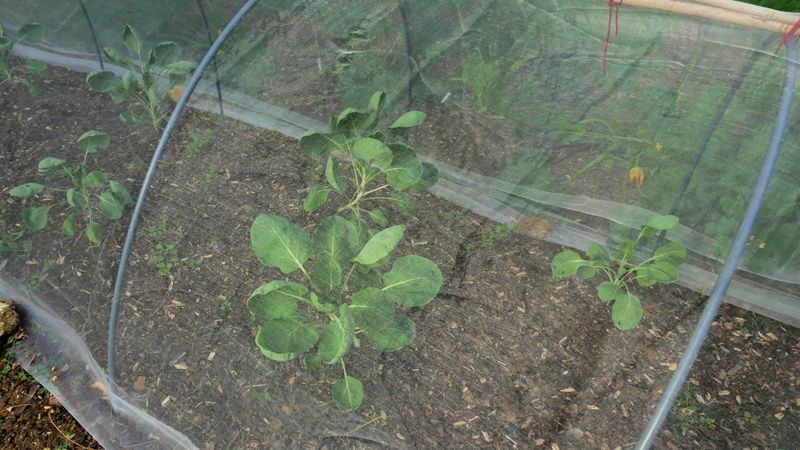
Row cover fabric and fine mesh netting can physically block Japanese beetles from reaching the plants underneath. For certain crops, this is one of the most reliable protective steps available during peak beetle weeks.
The key is timing the cover correctly.
Covering a plant that still needs pollinators will block bees and other beneficial insects from reaching the blooms. Fruits and vegetables that depend on pollination should not be covered with solid netting while they are actively flowering.
That includes grapes, squash, and many berries unless you plan to hand-pollinate.
Once fruit has set and pollination is complete, a lightweight row cover or mesh can go on and stay on through the peak beetle period. For ornamental plants that do not need pollination, covers can go on earlier.
Strawberries that have finished flowering are a good candidate for this approach.
Make sure the cover reaches the ground and is secured at the edges so beetles cannot crawl underneath. Check under the cover every few days to make sure no beetles got in before it was sealed.
Remove the cover once adult beetle numbers drop later in the season, usually by mid to late August in most parts of this state.
6. Protect Flowers Without Spraying Every Insect
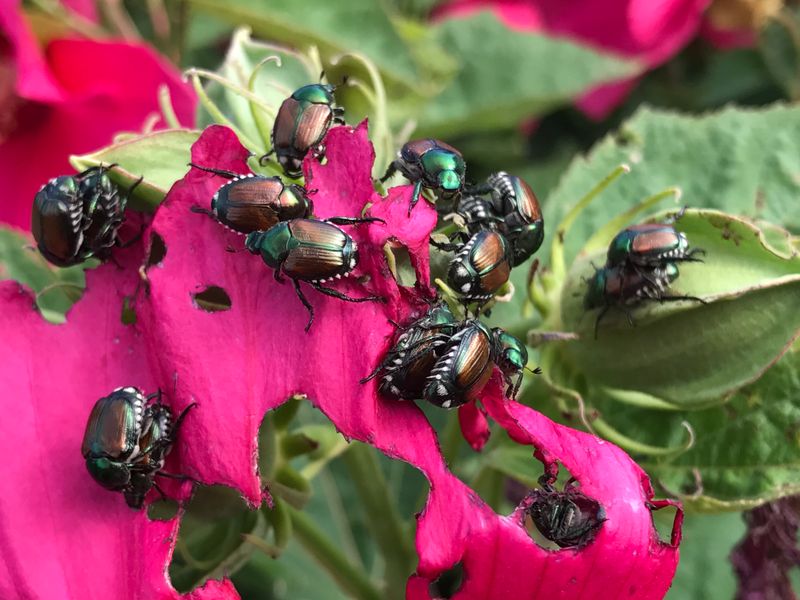
Reaching for a spray bottle every time you see a beetle on a bloom can cause more harm than good. Open flowers attract bees, native pollinators, and beneficial insects alongside beetles.
Spraying insecticides on blooms during active pollinator hours puts those helpful insects at serious risk.
Extension guidance consistently recommends avoiding any insecticide application directly on open flowers. If treatment is needed on a plant that is currently blooming, timing matters.
Early morning or evening applications, when pollinators are less active, reduce the risk of exposure. Always read the label before using any product.
For most Ohio home gardens, handpicking combined with consistent monitoring is enough to keep damage at a manageable level.
Insecticide treatment should be considered only when damage is severe, the plant is young or high-value, and other methods have not been enough.
Identify the pest correctly before treating anything.
Contact your local Ohio State University Extension office or check OSU Ohioline for current, region-specific guidance on treatment thresholds. Extension resources are updated regularly and reflect local conditions more accurately than general product labels.
Protecting pollinators while managing beetles is absolutely possible with careful, targeted decisions.
7. Watch For Skeletonized Leaves During Peak Feeding
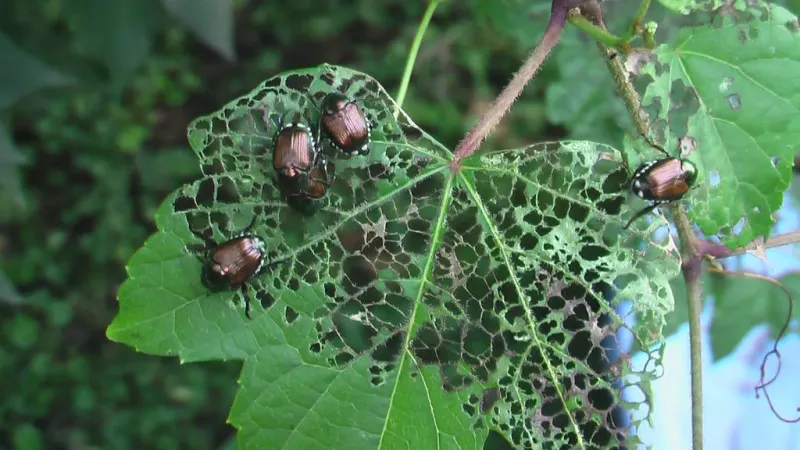
A skeletonized leaf is one of the most recognizable signs of Japanese beetle feeding. Beetles chew the soft tissue between the veins, leaving behind a dry, lace-like framework.
On roses, grapes, and lindens, this damage can appear quickly when beetle numbers are high.
Some cosmetic leaf damage can be tolerated, especially on large, established plants. A few skeletonized leaves on a mature linden or a large grape vine will not threaten the plant’s overall health.
But repeated heavy feeding on young plants, recently transplanted shrubs, or small fruit trees can stress them significantly during the growing season.
Check the upper and lower surfaces of leaves when you do your morning walk-through. Beetles often feed from the top, but damage shows clearly on both sides.
New skeletonizing on leaves that looked fine the day before is a sign that beetle pressure is still building in that spot.
Keep notes if it helps. Tracking which plants show the most damage across a week gives you a clearer picture of where to focus your time.
During peak July weeks, checking every day is not excessive. Steady observation is the most practical tool most home gardeners have available right now.
8. Keep Checking Daily Until Beetle Numbers Drop
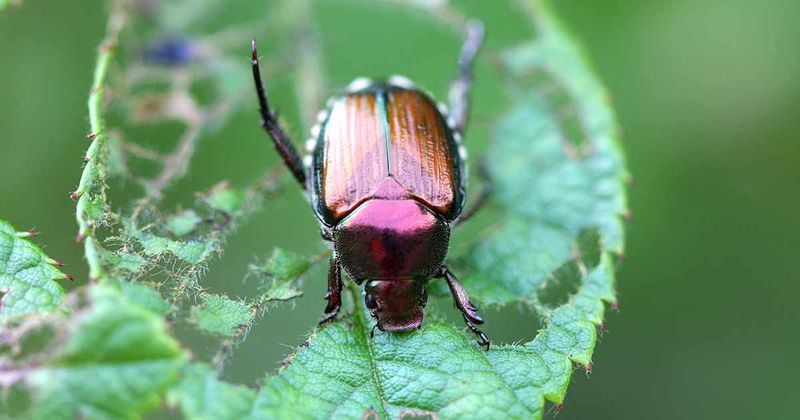
Persistence is what separates a manageable beetle season from one that feels out of control. Adult Japanese beetles are active for several weeks, and numbers do not drop overnight.
Daily checks during peak activity, usually mid-July in most parts of this state, keep you ahead of building clusters.
Set a simple routine. Check your highest-risk plants first: roses, grapes, lindens, and any fruit trees showing recent feeding.
Bring your soapy water bucket. Spend five to fifteen minutes each morning before the day heats up.
Hydrate before you go out, and avoid working through the hottest afternoon hours during a heat stretch.
You will likely notice beetle numbers starting to ease by early to mid-August in most local gardens, though timing varies by location and season. Cooler nights and changing plant conditions both play a role.
Keep checking even as numbers seem to drop, since a warm spell can bring a second wave of activity.
The goal is not perfection. No single method removes every beetle from a yard.
Consistent, low-effort daily action combined with smart plant protection and trap placement awareness gives your garden the best realistic chance through the rest of the summer season.