What To Do With Your Florida Bougainvillea In July So It Keeps Blooming Through September
Bougainvillea in Florida looks like it runs on autopilot through summer. Bright color, fast growth, almost no complaints about heat.
That appearance hides a plant that responds directly to how it gets treated in July. The gardeners getting the longest bloom seasons are doing something specific during this exact stretch.
Most people leave bougainvillea alone once it establishes a rhythm, which works fine through June. July is where neglect starts to cost real bloom potential, even though the plant still looks perfectly healthy from the outside.
There is a specific approach to bougainvillea care in July that keeps the color coming well past the point where neglected plants start slowing down. It is not complicated and it does not take much time.
The difference between a bougainvillea that fades by August and one still covered in color in September comes down to what happens this month.
1. Give Bougainvillea The Sunniest Spot You Have
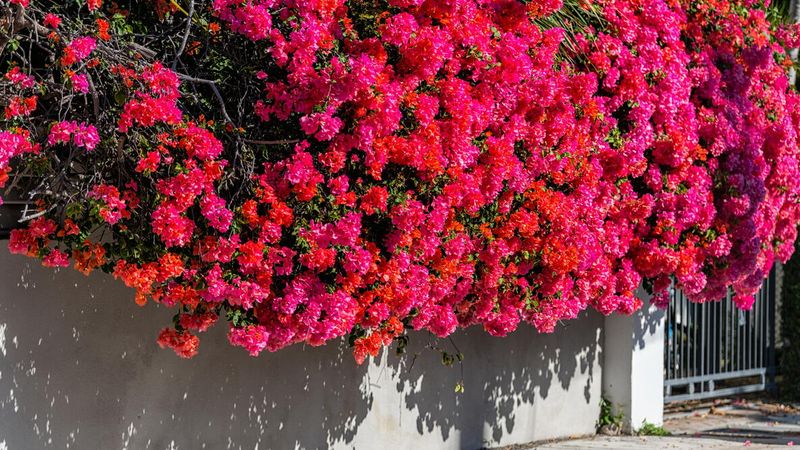
Picture a bougainvillea (Bougainvillea spp.) glowing against a sun-baked fence in the middle of July. That image tells you almost everything you need to know about what this plant craves.
Full sun, meaning roughly six or more hours of direct light daily, is one of the strongest drivers of bract production. When a plant sits in too much shade, it tends to push out leafy green growth instead of the colorful bracts that most Florida gardeners are after.
A south or west-facing exposure, an open fence line, a sunny patio wall, or an unshaded garden bed can all support strong bloom cycles. Heat and drainage still need to be managed correctly.
Container plants have an advantage here because you can reposition them as the season shifts. However, moving a pot suddenly from a shaded porch into harsh reflected heat from a driveway or pool deck can stress the plant.
Acclimate it gradually over several days, moving it into stronger light for a few more hours each day.
Watch for signs that light is working in your favor. New growth that stays compact and eventually develops colorful bracts is a good signal.
Leggy stems with wide gaps between leaves often mean the plant is stretching toward more light than it currently receives. Adjust placement before the next bloom flush begins.
2. Let The Soil Dry Before You Water Again
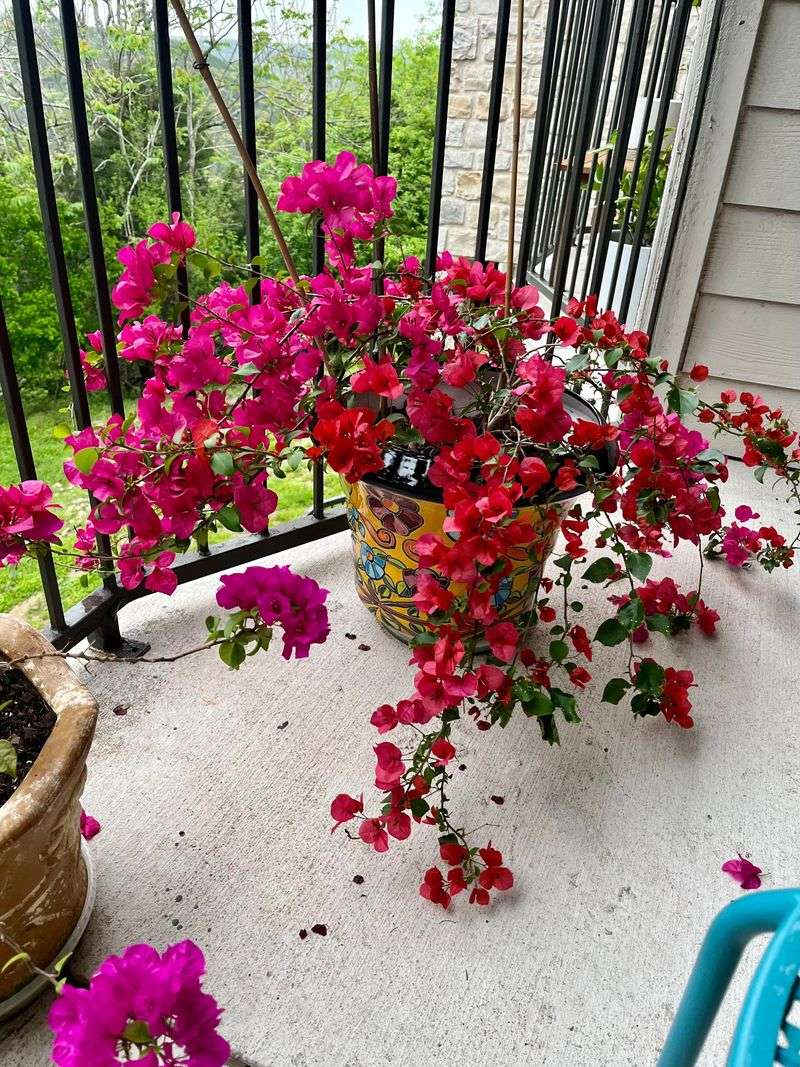
A potted bougainvillea sitting bone-dry on a sunny patio might look like it needs rescuing. This plant has a well-documented preference for drying out between waterings.
Wet roots held in constantly moist soil can lead to stress and reduced bloom performance. Watering deeply and then waiting until the soil or potting mix has dried back is a much better approach than watering on a fixed daily schedule.
July complicates this because so many variables change how fast a Florida container or garden bed dries out. Afternoon storms can drop an inch of rain in under an hour.
Humidity slows evaporation. A small pot in direct sun dries faster than a large glazed container in partial shade.
Your Florida Garden Changes Every Week. Your Plan Should Too.
Gardening in Florida changes quickly throughout the season. Every Friday you’ll receive a simple weekly plan showing exactly what to plant, prune, fertilize, harvest, and protect so you never miss the right timing.
Wind, root volume, and the type of potting mix all play a role too. Check the soil by pressing a finger about an inch deep before reaching for the hose.
Slightly dry cycles between waterings have been linked to better flowering in bougainvillea. The mild stress of drying encourages the plant to shift energy toward reproduction, which means bracts.
Soggy soil, on the other hand, can block that response and create conditions where roots struggle. If your plant is sitting in a saucer after a rainstorm, empty it promptly.
Standing water under a container is one of the easiest mistakes to overlook in this season.
3. Keep Rain From Soaking Container Roots Too Long
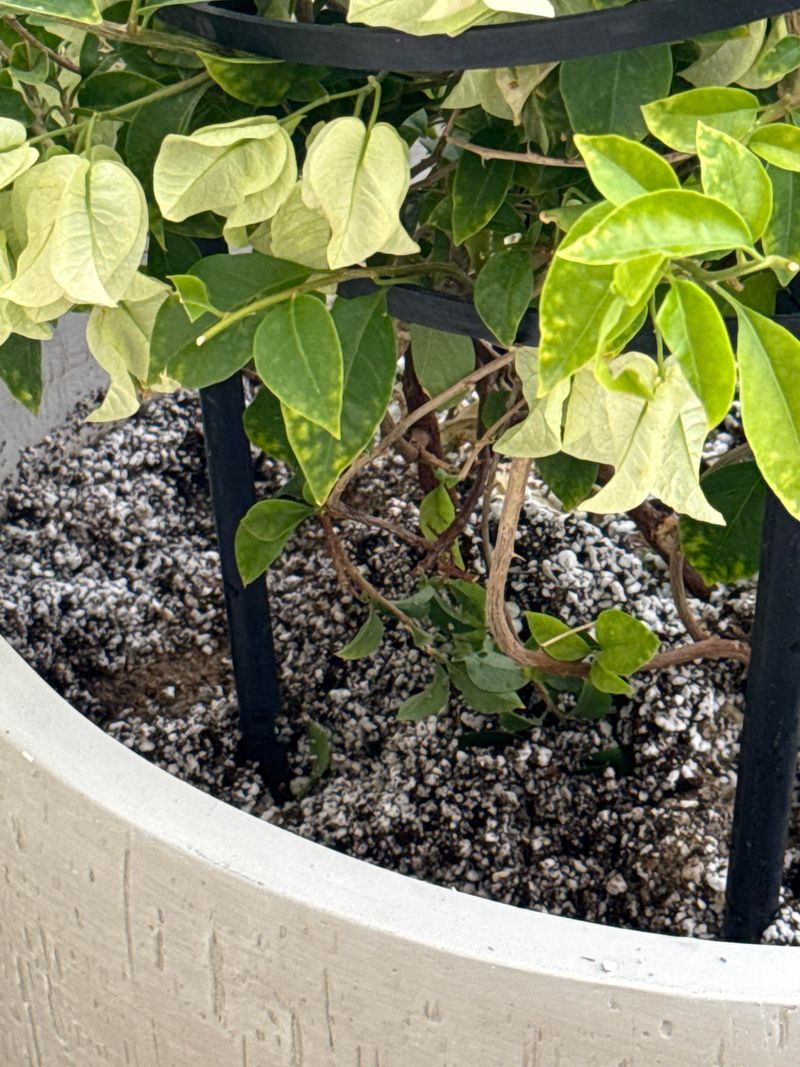
After a typical July afternoon storm, a decorative pot with no drainage hole can hold enough standing water to stress bougainvillea roots within a day or two. Rainy-season container care is one of the most overlooked parts of keeping this plant healthy through late summer.
Heavy potting mixes that stay saturated, saucers that collect runoff, and low-lying spots that catch roof drainage all create the same problem. They leave roots sitting in water far longer than they should.
Check your drainage holes regularly and make sure they are not blocked by compacted mix or debris. If you use saucers, empty them after every significant rain.
Raising pots on pot feet or a small platform improves airflow under the container and lets excess water escape more freely.
During a stretch of several rainy days, moving a container under a covered patio or overhang can prevent the mix from staying saturated for too long.
Avoid placing potted bougainvillea directly under a roof edge where concentrated runoff pours during storms. That kind of repeated drenching is harder on roots than steady natural rainfall.
A plant showing yellowing lower leaves, soft stems near the soil line, or bud drop after heavy rain may be signaling root stress from excess moisture.
Catching these signs early and improving drainage gives the plant a much better chance of pushing out a strong late-summer bloom flush.
4. Feed Lightly Without Pushing Leafy Growth
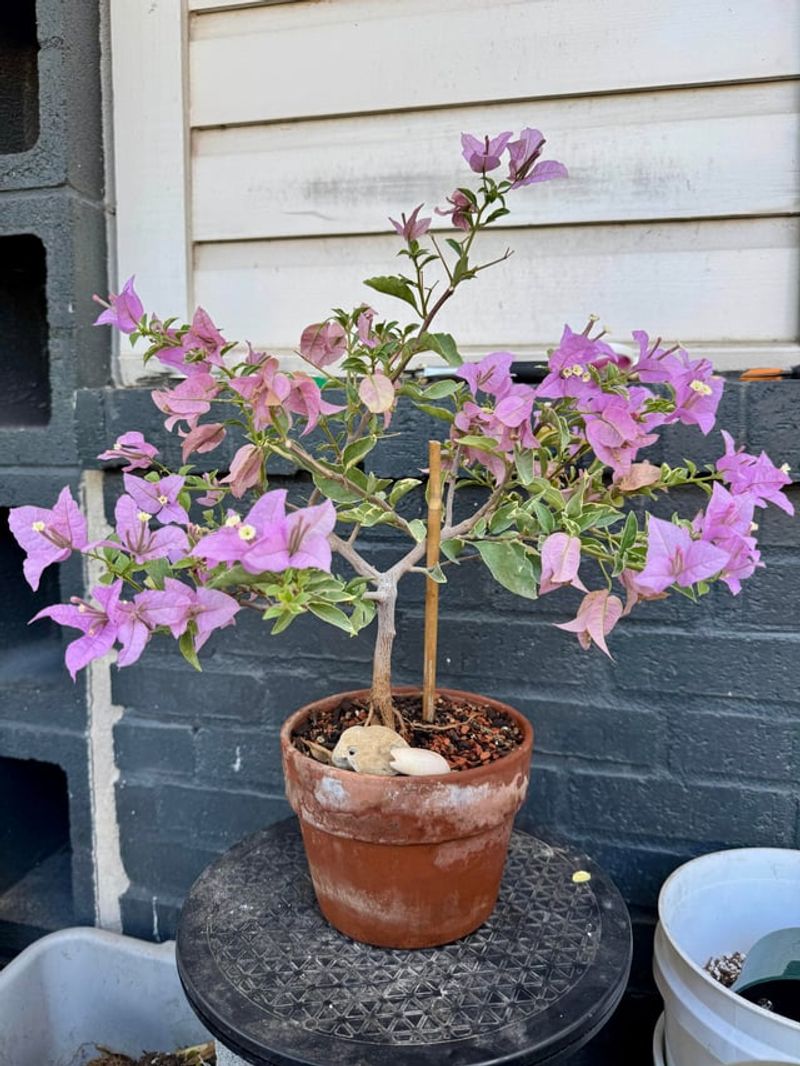
Reaching for a bag of fertilizer feels like a natural response when you want more blooms. Bougainvillea does not reward heavy feeding the way some other flowering plants do.
Too much nitrogen, the first number on any fertilizer label, can push the plant into producing lush green leaves at the expense of colorful bracts.
Light feeding during active growth is the approach that tends to support flowering without tipping the balance toward foliage.
Look for a fertilizer formulated for flowering plants or one with a lower nitrogen ratio relative to phosphorus and potassium. Always follow the label directions exactly.
Using more than recommended does not speed up results and can create salt buildup in container soil that stresses roots over time. Never feed a plant that is waterlogged, recently storm-damaged, or showing signs of pest activity.
Address those issues first, then consider a light feeding once the plant stabilizes.
Sun exposure, drainage habits, and watering restraint still matter more than fertilizer for triggering bloom cycles. A bougainvillea in the right spot with well-managed moisture will often outperform a heavily fed plant sitting in too much shade or wet soil.
A good sign that feeding is helping rather than hurting: compact new growth that eventually develops colorful bracts rather than long, soft shoots with no color. Adjust your approach based on what the plant actually shows you.
5. Prune Just Enough To Shape After A Bloom Flush
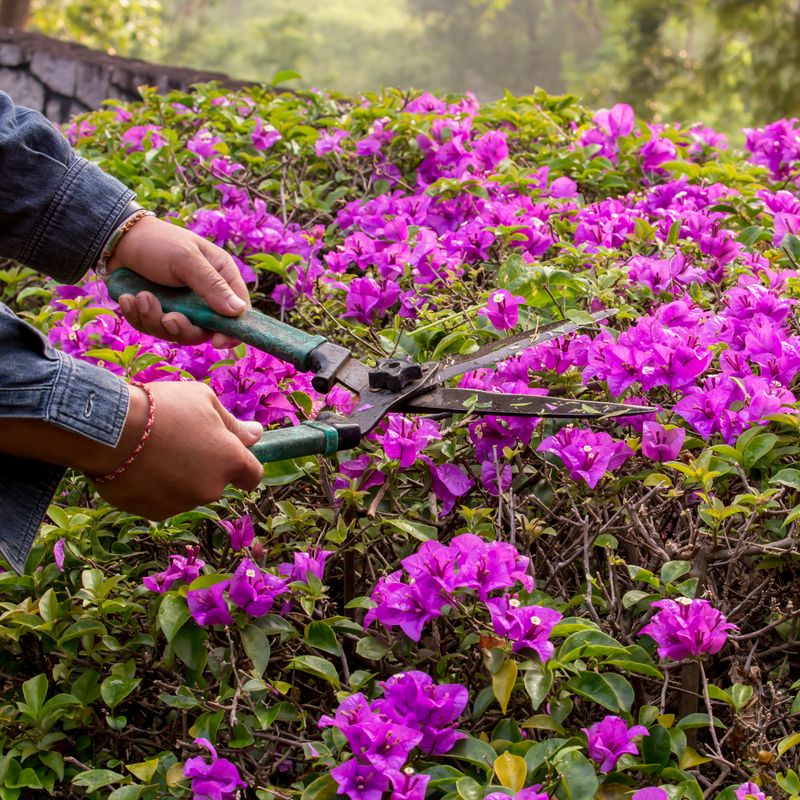
Bougainvillea blooms on new growth, which means how and when you prune directly affects whether the next bloom cycle happens on schedule.
Hard pruning at the wrong time can push the plant into producing a flush of leafy new growth that takes weeks to mature enough to bloom again.
July is not the month for a dramatic reset. Light shaping after a bloom flush is the smarter move.
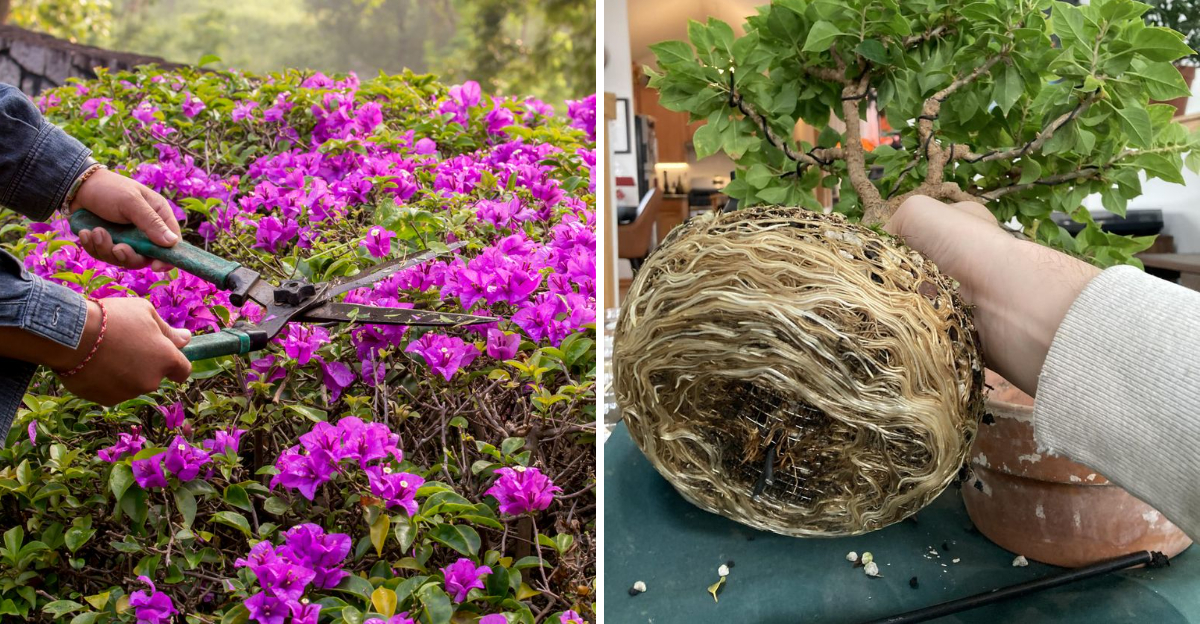
After the colorful bracts fade, trim back long or awkward canes by about a third at most. Remove any damaged, crossing, or withered growth.
This encourages new lateral shoots that can carry the next flush of bracts. Always wear sturdy gloves when working with bougainvillea.
The thorns are sharp and can cause puncture wounds, especially on long canes where they are easy to miss. Keep plants trimmed away from narrow walkways, gates, doors, and areas where children or pets move through regularly.
Avoid pruning simply out of habit every time you see a spent bract. Bougainvillea needs time between flushes to push new growth and set up the next bloom cycle.
Removing too much too often interrupts that rhythm. A plant that has been lightly shaped after one flush can still grow well in good sun with appropriate watering.
It is far more likely to deliver another round of color before September ends in Florida. Patience between pruning sessions pays off here.
6. Skip Repotting Unless The Plant Truly Needs It
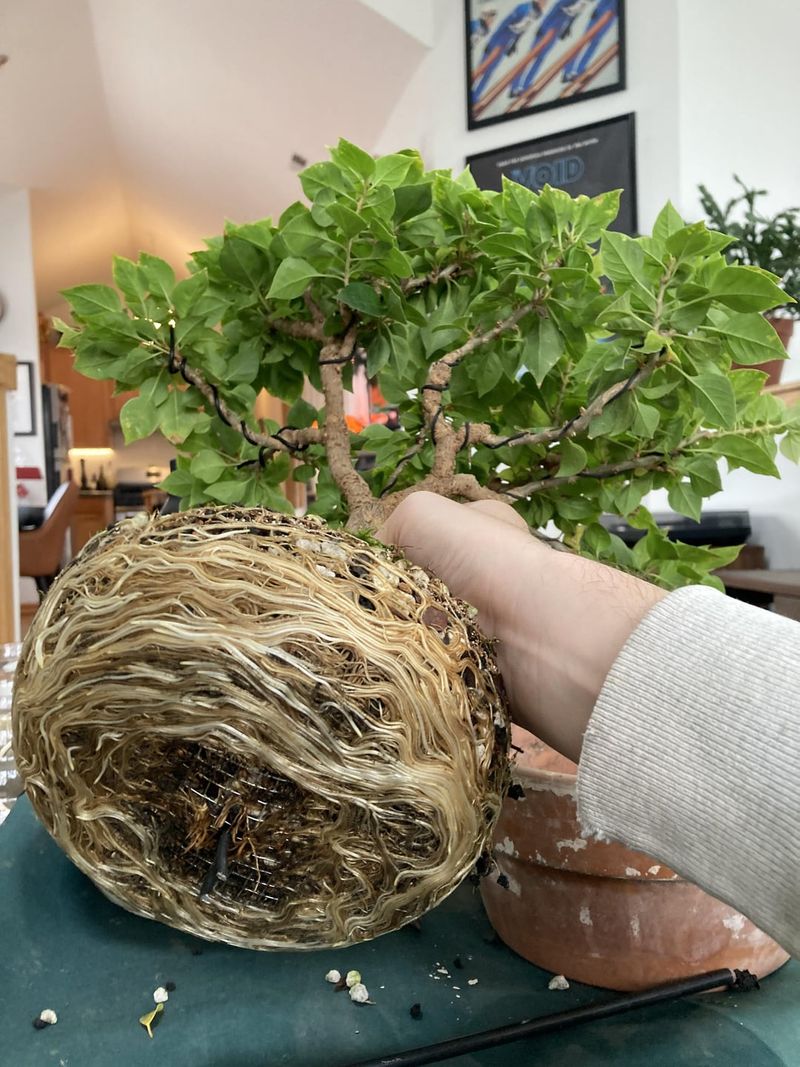
July is one of the harder months to justify repotting a bougainvillea. Heat, active bloom production, rainy-season stress, and the plant’s own sensitivity to root disturbance all stack against it.
Bougainvillea is actually known to bloom more reliably when its roots are a little snug in the container.
Moving it into a much larger pot can backfire by increasing the volume of moist potting mix around the roots, which slows drying and raises the risk of root stress.
That said, there are situations where repotting cannot wait. If drainage is failing completely, the pot is cracked, or roots are severely crowded, repotting may be reasonable.
Move the plant carefully into a container only one size larger. Choose a pot with good drainage holes and use a well-draining potting mix.
Do the work on a cooler morning, water lightly, and move the plant to a spot with bright but not punishing reflected heat for a few days.
Skipping unnecessary repotting in July protects bloom potential. A plant that has been disturbed at the roots needs energy to recover, and that energy comes at the cost of the next bract cycle.
If the container situation is manageable, leave it alone for now. Revisit repotting in late winter or early spring when conditions are gentler and the plant can better handle the transition.
7. Watch For Pests Before Buds Start Dropping
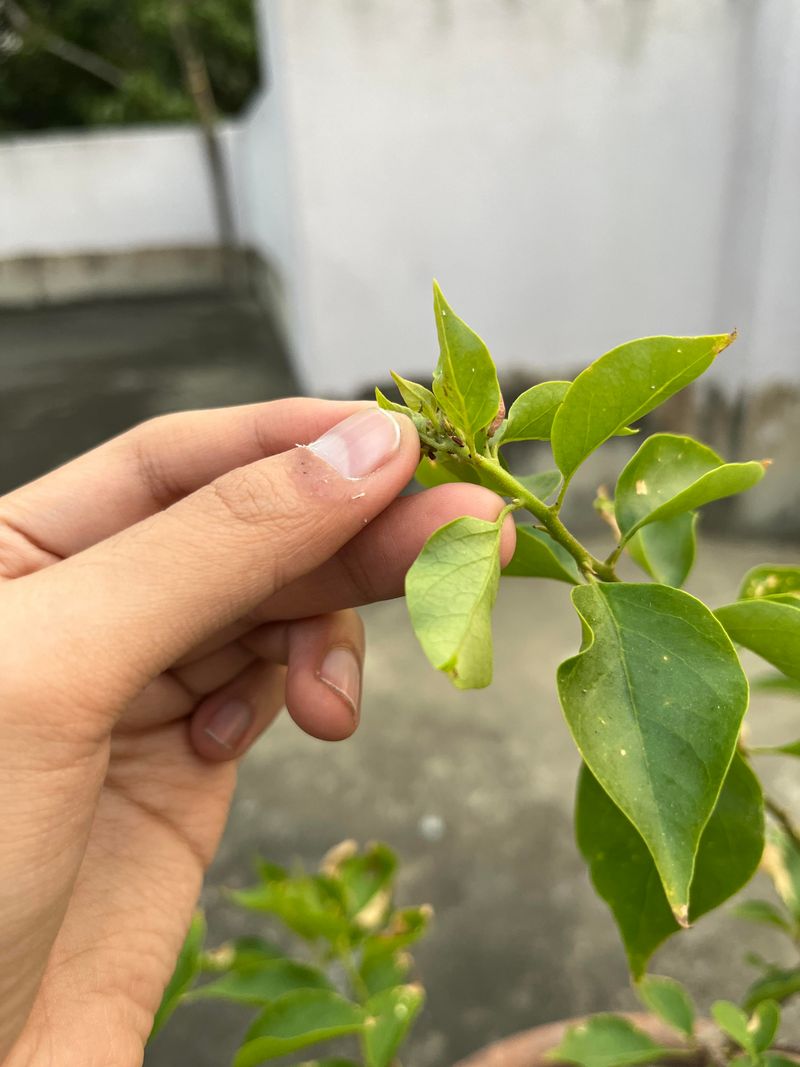
Bud drop on a bougainvillea can feel mysterious, especially when the plant looked healthy just days before. But the cause is usually traceable.
Sudden weather shifts, overwatering, root stress, too much shade, or pest pressure can all trigger buds to fall before they open. Catching the real cause early makes a real difference in whether the next flush comes in on time.
Common pests that can affect bougainvillea include aphids, mealybugs, scale insects, spider mites, and caterpillars. Before reaching for any spray, take a close look at the plant.
Check the undersides of leaves, along new stems, and near bud clusters. Identify what you are actually dealing with.
Broad spraying without a clear target can harm beneficial insects like predatory wasps and ladybugs that naturally help keep pest populations in check. A targeted approach based on correct identification is always the better starting point.
If pests are confirmed, choose a treatment appropriate for that specific pest and follow label directions carefully. Avoid homemade chemical mixtures or unapproved products.
For minor infestations, a strong stream of water directed at affected areas can dislodge soft-bodied insects like aphids without harming the plant.
After addressing the pest, revisit light, watering, and drainage to make sure those conditions are not creating the stress that attracted pests in the first place.
A plant thriving in the right conditions tends to be more resilient.
8. Protect Long Canes Before Summer Storms Snap Them
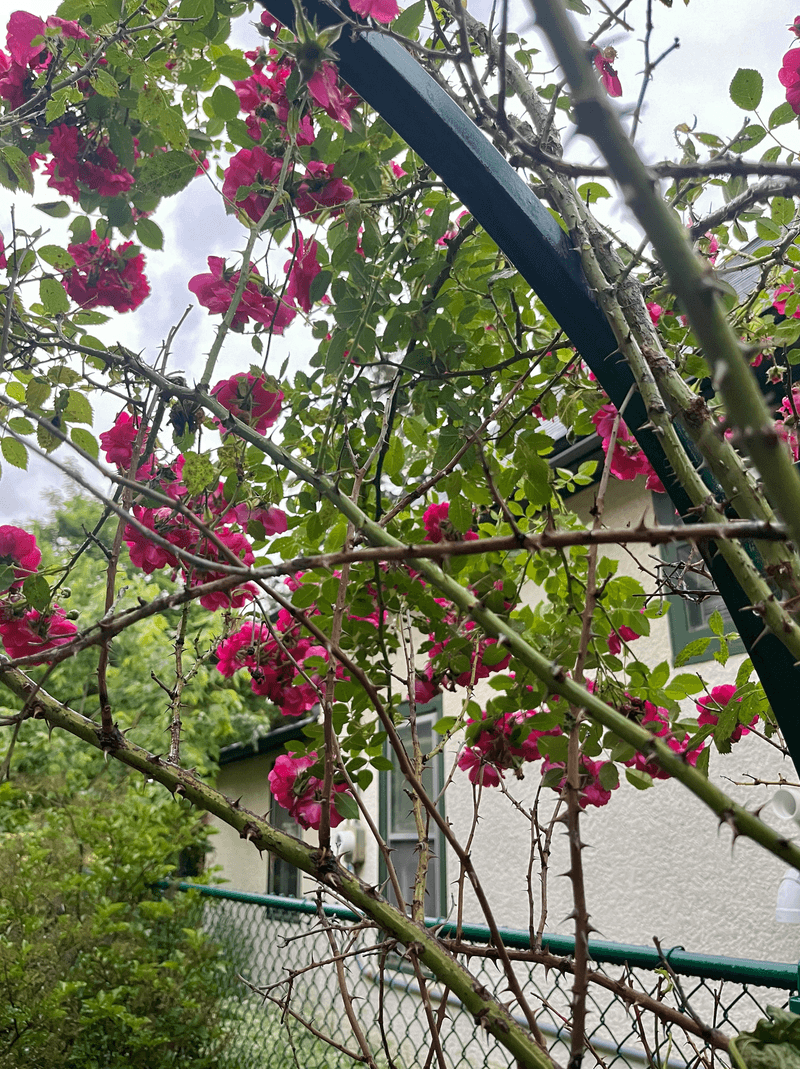
Long bougainvillea canes can act like sails in a Florida summer storm. They whip, tangle, scrape against structures, and sometimes snap entirely under strong wind gusts.
July in this state brings regular afternoon storms, and a few minutes of preparation before one arrives can save weeks of recovery time for the plant. Loose, untied canes are one of the most avoidable sources of storm damage in the home landscape.
Tie long canes to a sturdy trellis, fence, or support using soft garden ties, stretchy plant tape, or strips of fabric. Avoid anything that cuts into the cane or holds it so tightly that it cannot flex slightly.
Check that the support structure itself is secure before tying anything to it. Guide canes away from walkways, entry doors, and gates where thorns can snag people or pets passing by.
If a container plant has very long canes and sits in an exposed spot, consider moving it to shelter. Do this before a named storm or unusually strong weather system arrives.
Do not go outside to tie canes or move pots during active lightning, flooding, or dangerous wind conditions. Safety comes first, and the plant can recover from storm damage far better than a person can recover from a lightning strike or a fall.
After a storm passes, assess any broken canes and trim them cleanly with sharp bypass pruners while wearing gloves. July care comes down to sun, drainage, restraint, and small corrections before stress builds into something harder to fix.