The Forgotten Herb Texas Gardeners Should Consider Growing
Basil, rosemary, oregano, thyme: great herbs, all of them, no complaints. But if your herb garden is starting to feel a little predictable, it might be time to make room for something that will genuinely surprise you.
Meet lovage, a tall, leafy herb with a bold celery-like flavor that most Texas gardeners have never even considered growing. And honestly, that is a shame.
Now, full transparency: lovage is not one of those plants that laughs off triple-digit Texas heat without missing a beat. It has preferences, and it will let you know when those preferences are not being met.
But with partial sun, rich moist soil, good drainage, and realistic expectations going in, this is one of the more rewarding herbs to explore for anyone who enjoys stepping a little outside the usual kitchen garden lineup.
1. Lovage Brings A Celery-Like Flavor To The Herb Garden
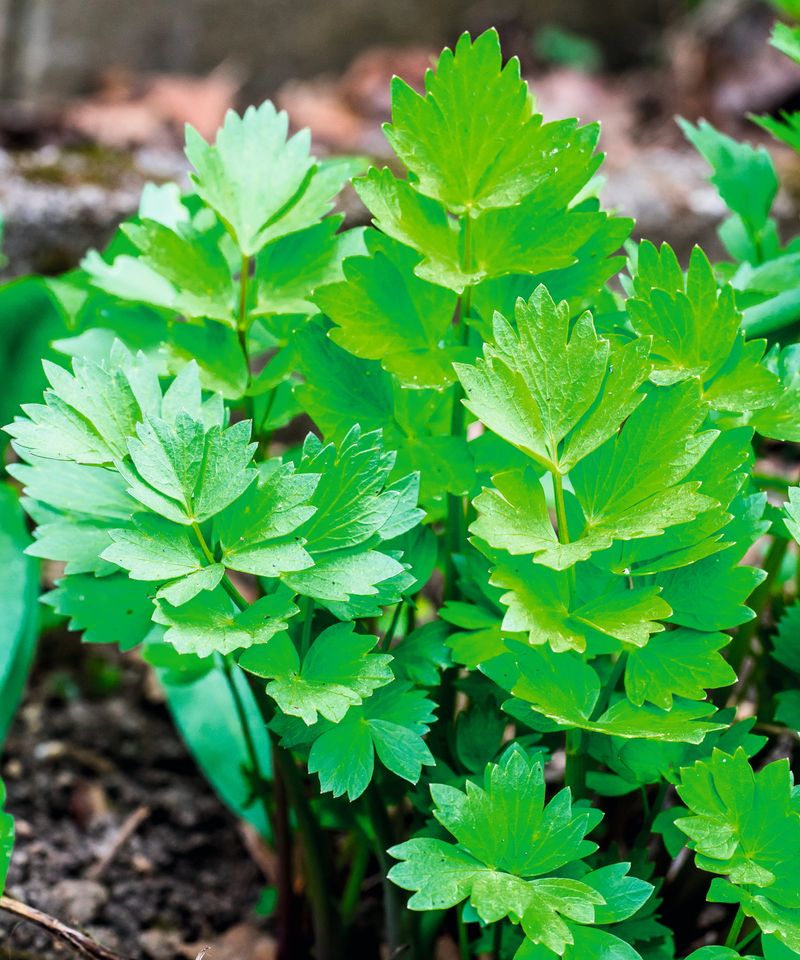
That unmistakable celery scent hits you the moment you brush against a lovage leaf. The flavor is bold, slightly peppery, and rich enough that a small handful of leaves can season an entire pot of soup without needing much else.
Cooks who enjoy working with fresh herbs often find lovage surprisingly versatile once they start experimenting with it in the kitchen.
The leaves can be chopped into salads, stirred into stocks, or used as a fresh garnish. Stems are hollow and have been used like straws in savory drinks, and seeds can add flavor to bread or dressings.
For Texas gardeners who grow herbs primarily for cooking, lovage offers a flavor profile that fresh celery and most common herbs simply cannot replicate.
Lovage is native to the Mediterranean region and has a long history in European cooking and folk medicine. It is not a trendy new plant but rather a traditional one that somehow got left behind as herb gardening became more mainstream.
Bringing it back into a Texas kitchen garden can feel like rediscovering something genuinely useful that has been waiting quietly on the sidelines for far too long.
2. Texas Heat Makes Lovage A Tricky Summer Herb
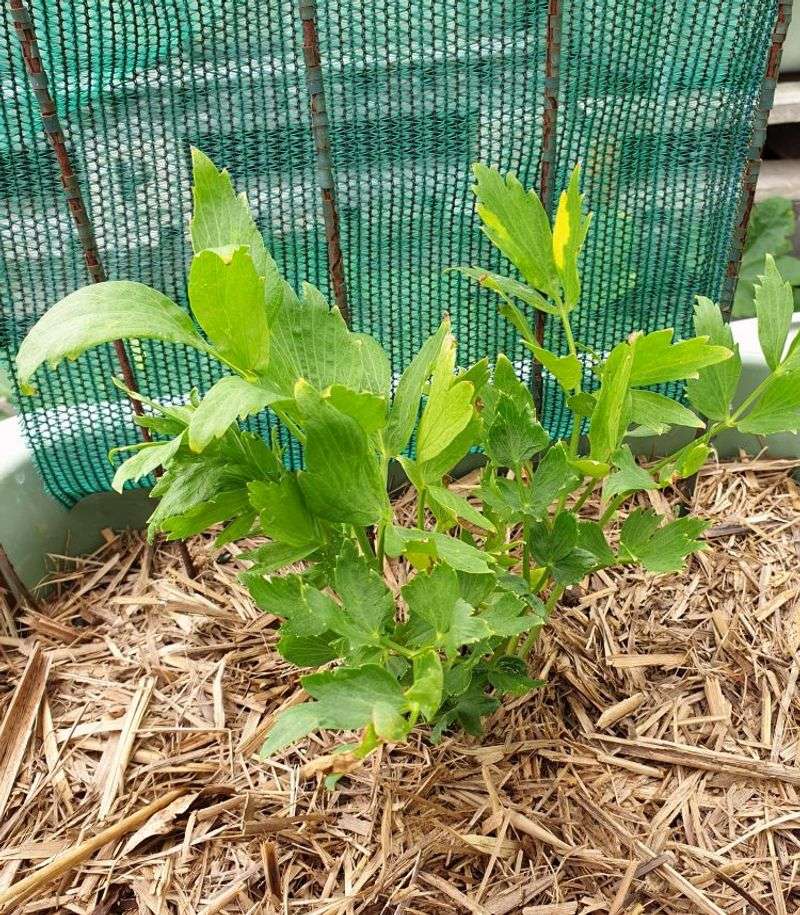
Summer in Texas is no gentle season. By July, afternoon temperatures in many parts of the state regularly climb past 95 degrees, and that kind of sustained heat puts serious stress on cool-season plants.
Lovage grows best in cooler conditions, and Texas A&M AgriLife Extension notes that it performs better when treated as an annual because of how brutal the summers can get.
That does not mean lovage cannot be grown here. It means gardeners need to go in with their eyes open.
Starting lovage in late winter or early spring gives the plant time to establish and produce leaves before summer heat builds. Some gardeners in cooler Texas regions or microclimates with consistent shade may see lovage hang on longer than expected.
Gardeners in South Texas or areas with long, intense summers may find lovage struggles more quickly than those in the Hill Country or North Texas. The plant may bolt, slow down, or simply fade as temperatures rise.
Your Texas Garden Changes Every Week. Your Plan Should Too.
Gardening in Texas changes quickly throughout the season. Every Friday you’ll receive a simple weekly plan showing exactly what to plant, prune, fertilize, harvest, and protect so you never miss the right timing.
Treating it as a cool-season herb rather than a year-round fixture is the most honest approach. Expecting it to perform like rosemary or oregano through summer will likely lead to disappointment.
3. Partial Sun Gives Lovage A Better Chance
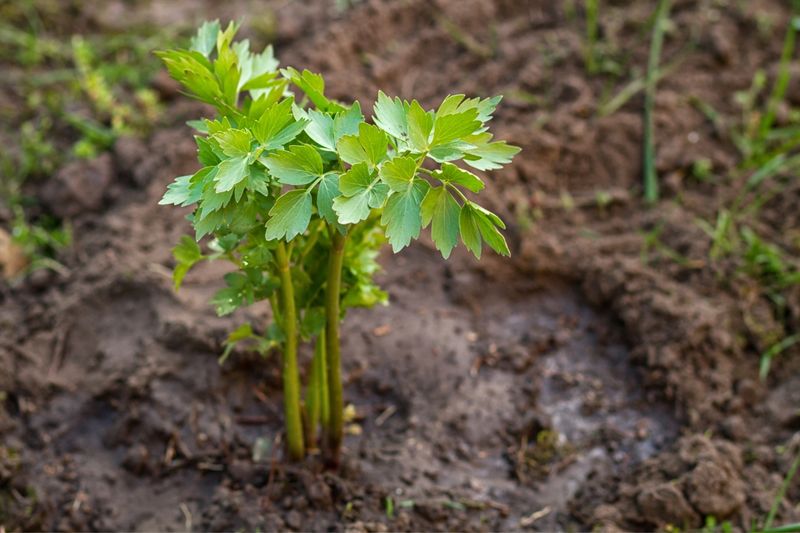
A patio corner that catches morning sun but stays shaded through the hottest part of the afternoon might be one of the best spots a gardener can offer lovage.
While the plant can handle full sun in cooler climates, the intensity of Texas sunlight during summer can be far more demanding than what lovage typically encounters in its preferred growing zones.
Afternoon shade in Texas is not just a comfort for the gardener sitting nearby. For heat-sensitive plants like lovage, that protection from direct western sun can make a meaningful difference in how long the plant stays healthy and productive.
Raised beds positioned along a fence, under the canopy of a small tree, or beside a taller companion plant can all provide that useful buffer.
Even with some shade, lovage will still need regular moisture and attention during warm stretches. Partial sun is a helpful advantage, not a guarantee of success on its own.
Gardeners who already manage a partly shaded herb bed for parsley or cilantro may find that lovage fits naturally into that same space. Thinking about light exposure before planting gives the herb a much better starting point from the very beginning.
4. Rich Moist Soil Helps Lovage Grow Well
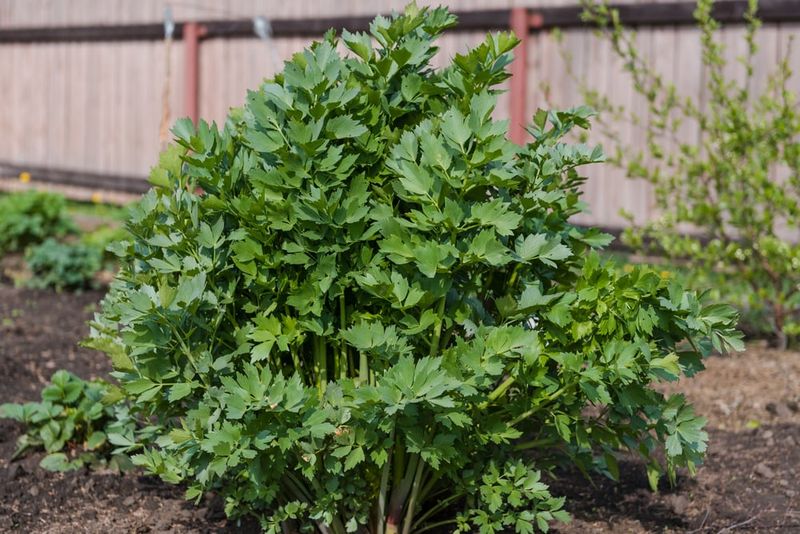
Soil quality matters more for lovage than many gardeners initially expect. This is not a plant that thrives in thin, sandy, or nutrient-poor ground.
Lovage prefers fertile, moist, well-drained soil with plenty of organic matter worked in before planting. In Texas, where native soils can vary from heavy clay to sandy loam depending on the region, amending the bed before planting can make a real difference.
Compost is one of the most practical additions a gardener can make. Working several inches of finished compost into the planting area improves moisture retention, adds nutrients, and loosens compacted soil so roots can spread more easily.
Raised beds filled with a quality garden mix tend to give lovage a better environment than in-ground clay beds that drain poorly or dry out unevenly.
Keeping the soil consistently moist without letting it become waterlogged is the goal. Lovage does not respond well to long dry spells, especially during warmer months when the soil dries out faster.
Mulching around the base of the plant helps slow moisture loss and keeps the root zone a bit cooler. In Texas, that extra layer of mulch can be one of the simplest and most effective tools a gardener has.
5. Good Drainage Still Matters For The Roots
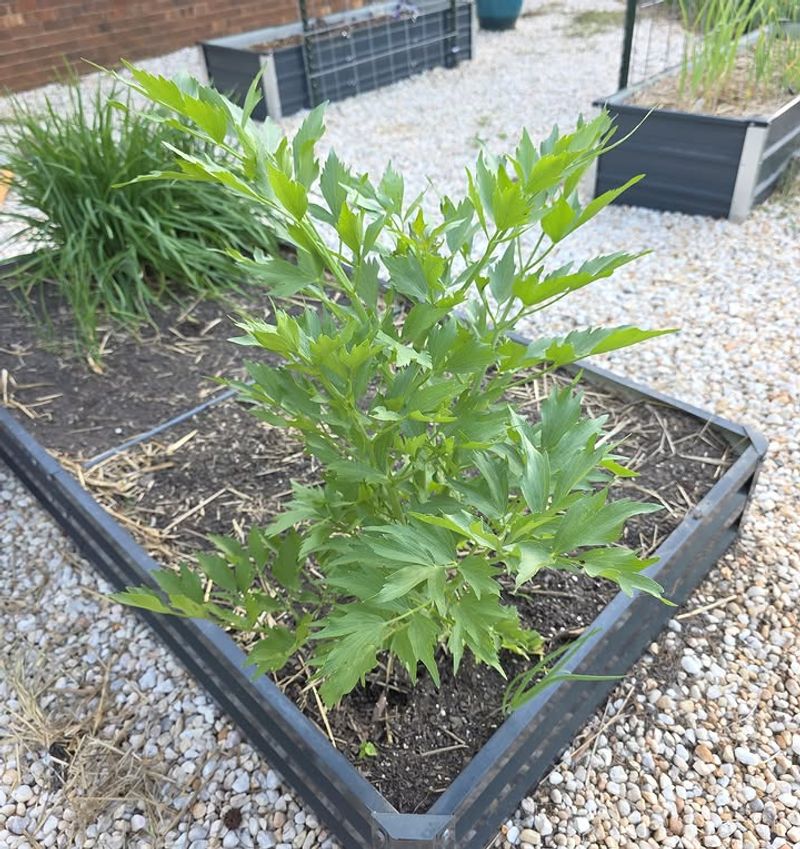
Even though lovage likes consistent moisture, sitting in waterlogged soil for extended periods can damage the root system. Good drainage is not the opposite of moisture retention.
It is the balance between keeping roots hydrated and making sure excess water can move through the soil freely rather than pooling around the plant’s base.
Texas gardeners working with heavy clay soil may find that water drains slowly after heavy rain, leaving plants sitting in soggy ground for hours or even days.
Raised beds help solve this problem by lifting the root zone above the surrounding soil and allowing water to drain more freely.
Adding perlite or coarse sand to a dense soil mix can also improve drainage without sacrificing too much moisture-holding capacity.
Containers with drainage holes offer another way to control what the roots experience. When a gardener can pour water in and watch it flow through the bottom within a few seconds, the drainage is likely working well enough for lovage.
Beds that stay wet and slow to drain after rain are worth improving before planting lovage or any other herb that needs that careful moisture balance. Getting drainage right from the start saves a lot of frustration later in the season.
6. Containers May Help Gardeners Test The Right Spot
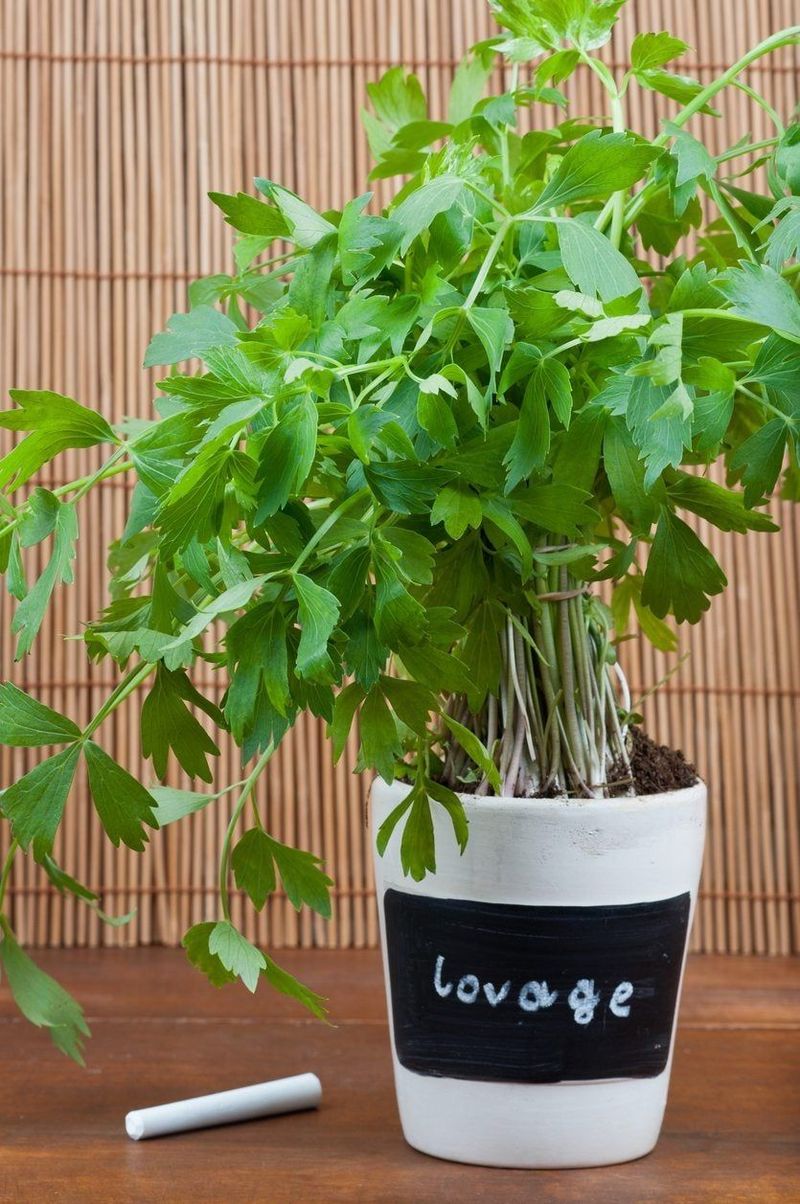
Growing lovage in a container before committing to a permanent garden bed is a practical way to learn how the herb behaves in a specific Texas yard.
Pots and planters can be moved to chase shade, adjusted as the season changes, and positioned where morning sun is available without the brutal afternoon western exposure that many Texas gardens receive.
Container size matters more than some gardeners expect. Lovage is a large plant that can reach several feet tall under good conditions, and a small pot will restrict the root system quickly.
A container that holds at least five gallons gives the roots more room to grow and helps the soil stay moist longer between watering sessions. Larger containers also tend to be more stable when the plant gets tall.
Porch planters, patio corners near a wall, and shaded balcony spaces can all work as testing spots for lovage in Texas.
The key is checking the container regularly for moisture since pots dry out faster than in-ground beds, especially during warm spring days when temperatures start climbing.
If the container experiment goes well and the plant looks healthy and productive, moving to a raised bed or garden border the following season becomes a more confident and informed decision.
7. Harvesting Leaves Keeps Fresh Growth Coming
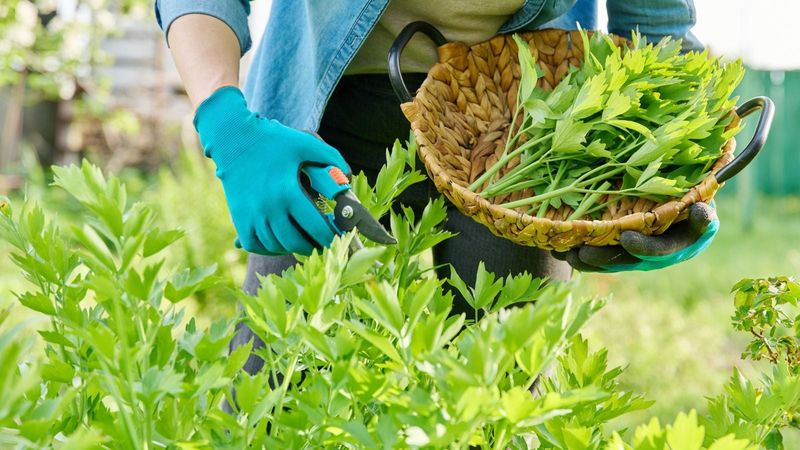
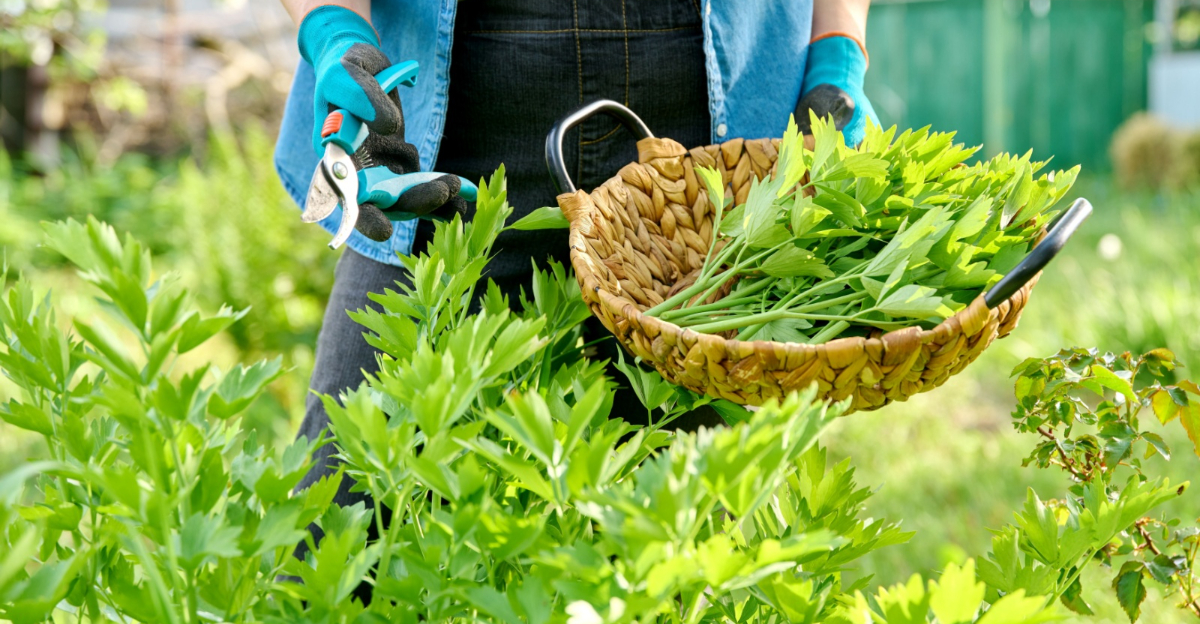
Clipping leaves for a pot of soup or a fresh salad is one of the most satisfying parts of growing any herb, and lovage rewards regular harvesting in a way that encourages continued leaf production.
When outer leaves are cut rather than the entire plant being stripped at once, the herb has a better chance of pushing out new growth from the center.
Light, frequent harvesting tends to work better than waiting until the plant is overgrown and then cutting it back severely all at once.
Taking a few stems at a time, clipping just above a leaf node, and leaving plenty of healthy foliage on the plant helps maintain steady production.
In the cooler months of a Texas spring, a well-managed lovage plant can produce a surprisingly generous supply of fresh leaves.
Young leaves tend to have a more delicate flavor than older, more mature foliage, which can become stronger and slightly more bitter over time. Harvesting regularly keeps the plant producing tender new growth rather than aging into tougher leaves.
Texas gardeners who treat lovage as a cut-and-come-again herb, similar to how they might handle parsley or cilantro, often get more out of the plant than those who harvest infrequently or wait too long between cuttings.
8. Seeds Need Attention If Plants Flower
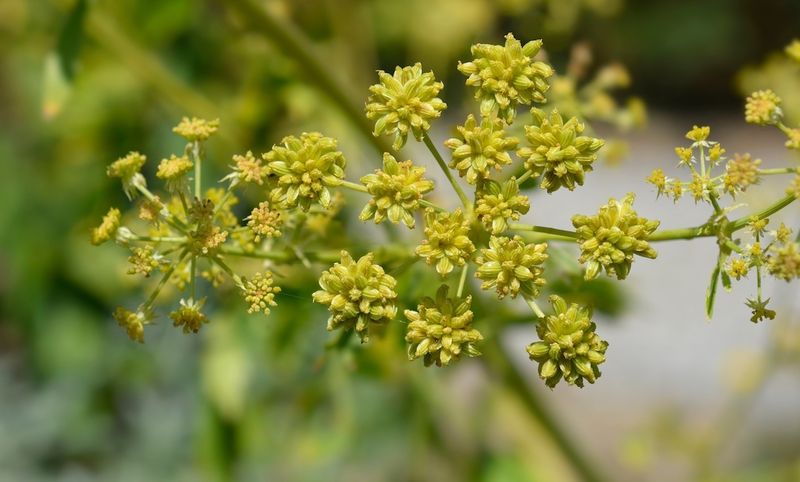
Flower stalks forming at the top of a lovage plant are a sign that the growing season is shifting. When lovage begins to bolt and send up its tall flowering stems, the plant’s energy moves away from leaf production and toward reproduction.
For gardeners focused on harvesting leaves, catching this transition early gives more options for managing what happens next.
Some gardeners choose to cut the flower stalks back as soon as they appear to encourage the plant to keep producing leaves a little longer. Others allow the flowers to develop fully because the seeds that follow can be used as a spice with a flavor similar to celery seed.
Both approaches have merit depending on what the gardener values most from the plant.
If seeds are allowed to mature and drop, lovage may self-sow in the garden bed. In some climates this leads to new plants appearing the following season, but Texas summers can be hard on seedlings that sprout at the wrong time.
Collecting ripe seedheads before they scatter and storing the seeds in a cool, dry place gives gardeners more control over where and when new plants get started.
Paying attention to flowering gives the whole growing experience a more intentional and rewarding outcome.
9. Lovage Works Better With Realistic Texas Expectations
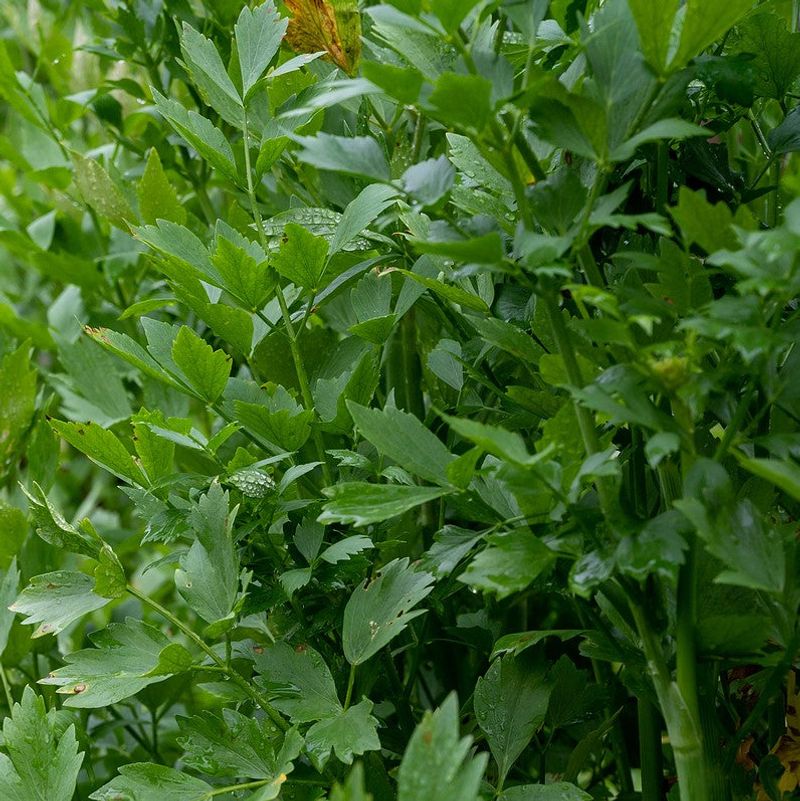
Anyone who has tried growing cilantro through a Texas summer already understands the value of matching plant expectations to actual growing conditions.
Lovage falls into a similar category: genuinely useful and flavorful, but not a tough, heat-defying herb that will thrive through every season without support.
Going into the experience with that understanding makes the whole process more enjoyable.
Thinking of lovage as a cool-season herb, similar to how parsley or dill are managed in Texas, sets a more realistic framework. It can be a productive and rewarding plant during the cooler months of late winter and spring.
Some gardeners in milder Texas regions may get more time out of it, particularly with afternoon shade, consistent moisture, and a well-prepared soil bed.
The herb is not for every garden, and that is fine. Not every plant belongs in every space, and lovage is honest about what it needs.
Gardeners who enjoy experimenting with something beyond the usual herb garden lineup may find that lovage fits well into that spirit of curiosity.
Trying it in a container first, keeping expectations grounded, and enjoying whatever the plant produces during its productive window is a reasonable and satisfying way to explore what this forgotten herb can offer a Texas garden.