Florida Yards With Fewer Bugs Often Have This Growing Along The Fence
Some Florida yards just feel more comfortable than others.
The bugs are still there, but somehow manageable. The evenings on the back porch are actually pleasant. The fence line looks lush and alive instead of bare and baking in the afternoon heat.
Many people attribute it to luck or location. A few of them know the real answer is growing quietly along the fence.
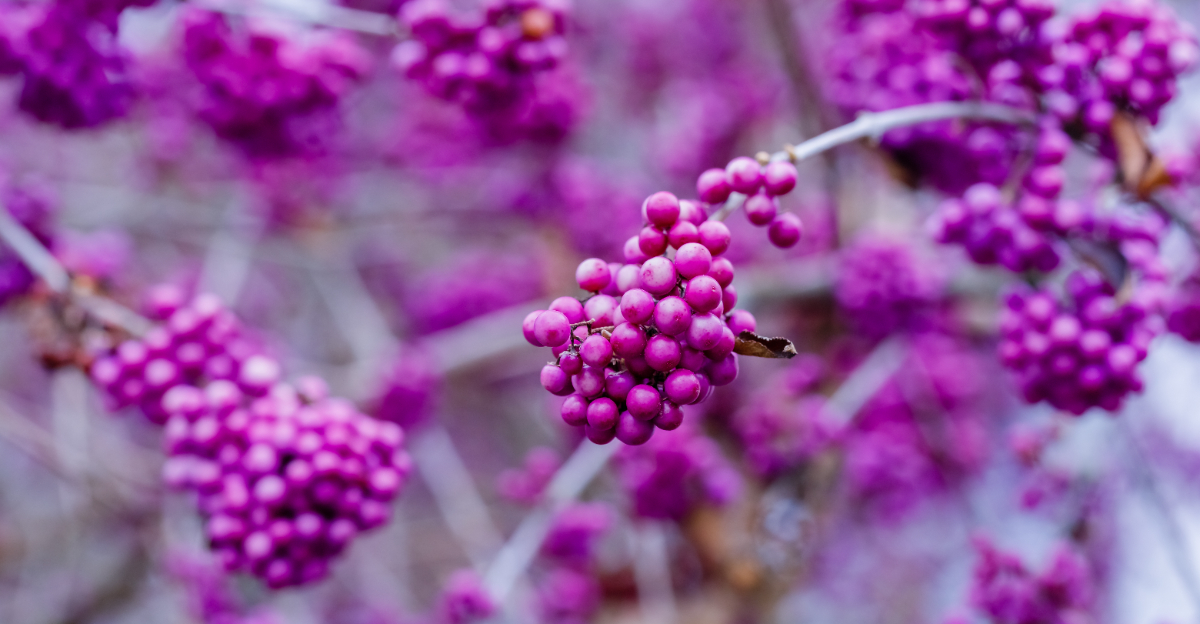
American beautyberry is a native Florida shrub that has been drawing attention from gardeners and researchers alike, and not just for its striking clusters of vivid purple berries.
It brings birds. It supports pollinators. Its leaves contain compounds that have genuinely surprised scientists studying natural insect repellents.
And it does all of this while looking like something a landscape designer charged a lot of money to install.
Many Florida homeowners have never heard of it.
The ones who have planted it tend to become devoted to it, and for reasons that go well beyond how it looks from the street.
Here is what makes this particular shrub worth a long second look.
Meet The American Beautyberry
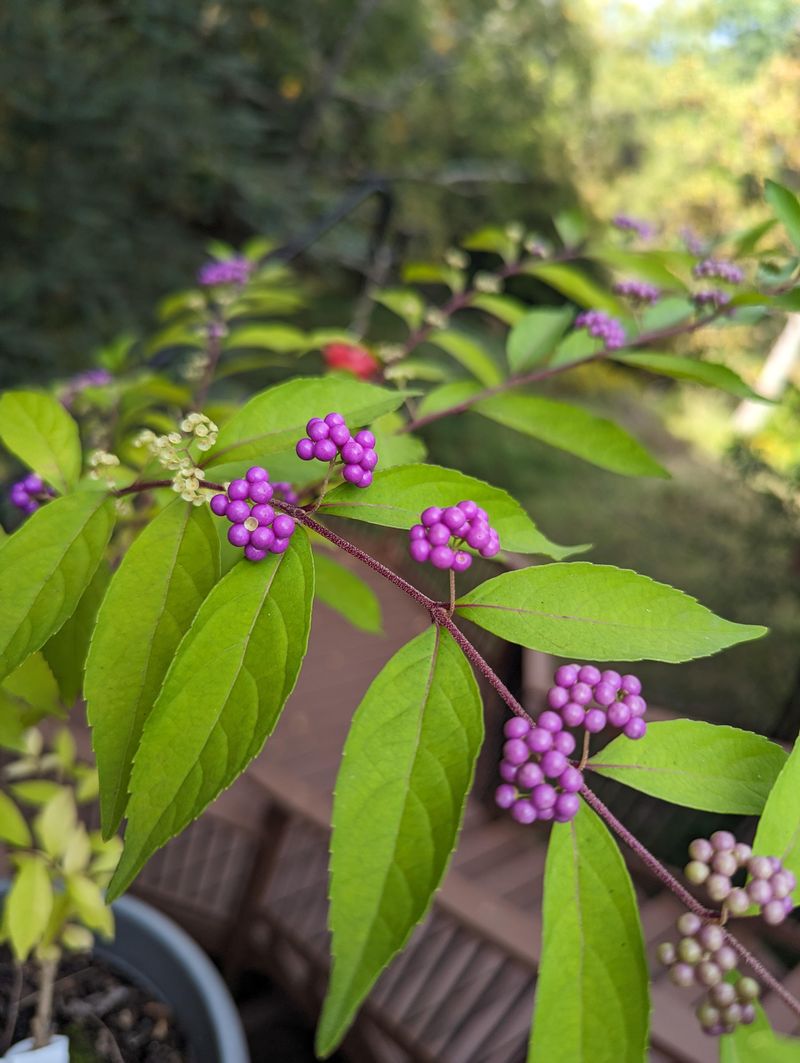
Not every backyard plant earns a second look, but American beautyberry stops people in their tracks.
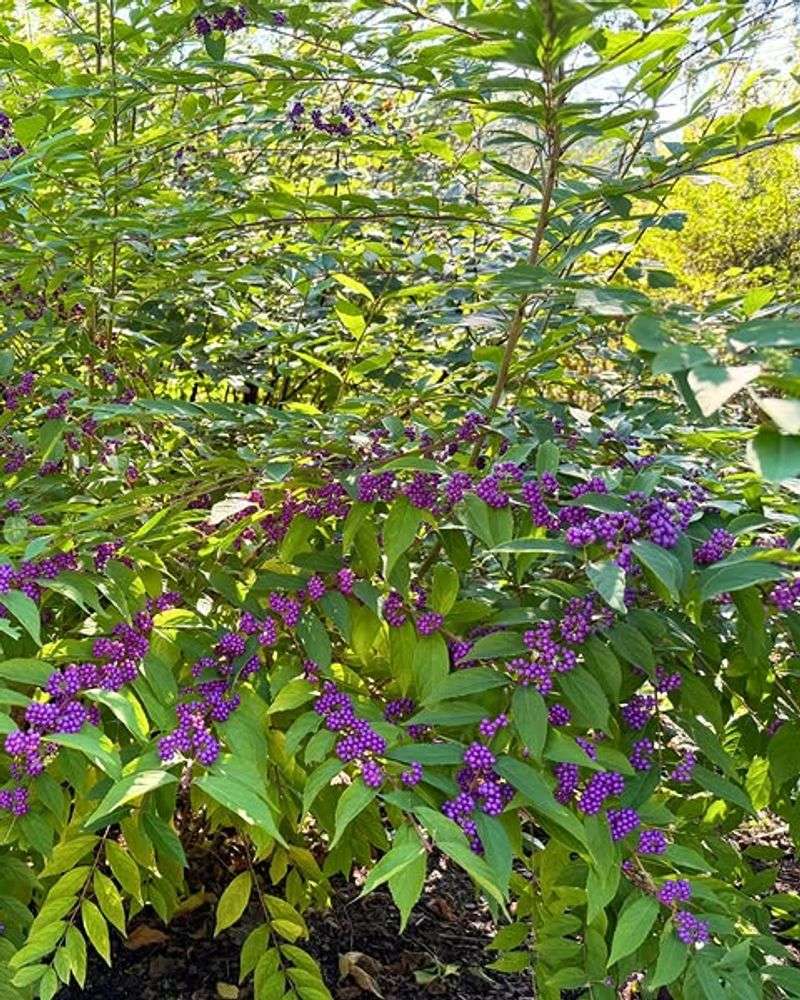
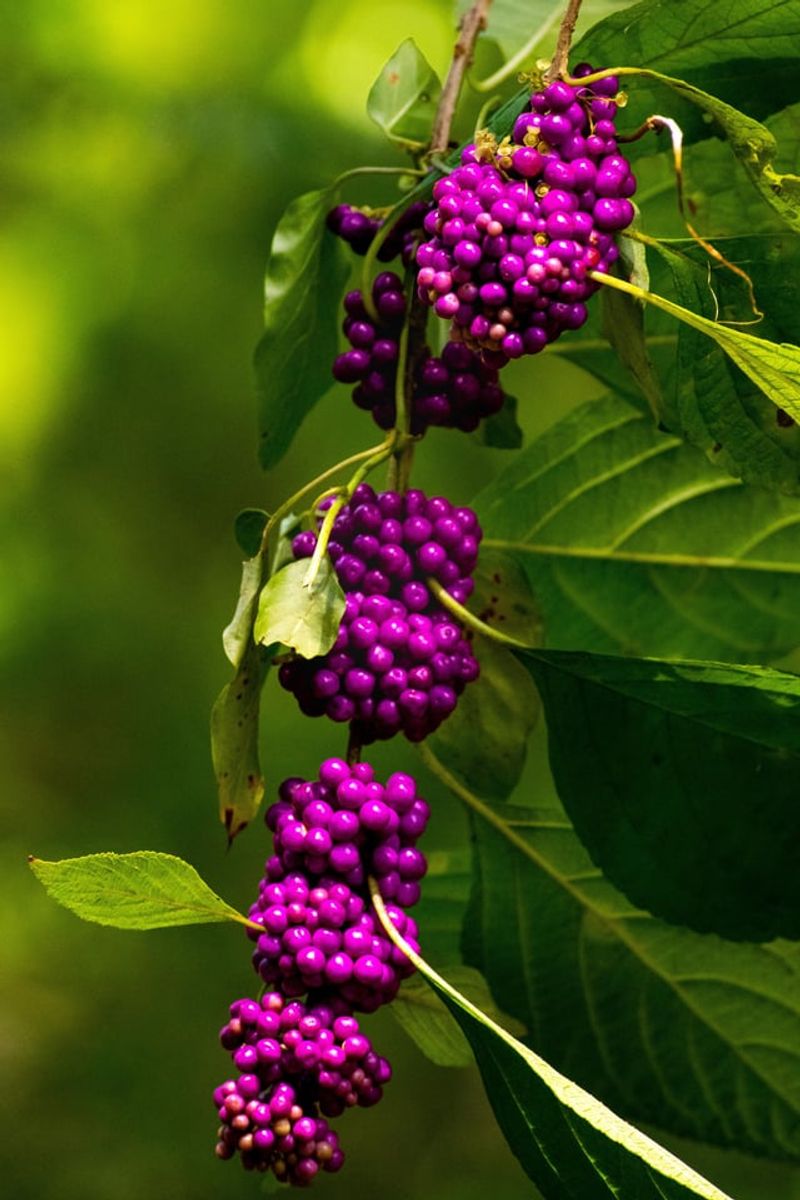
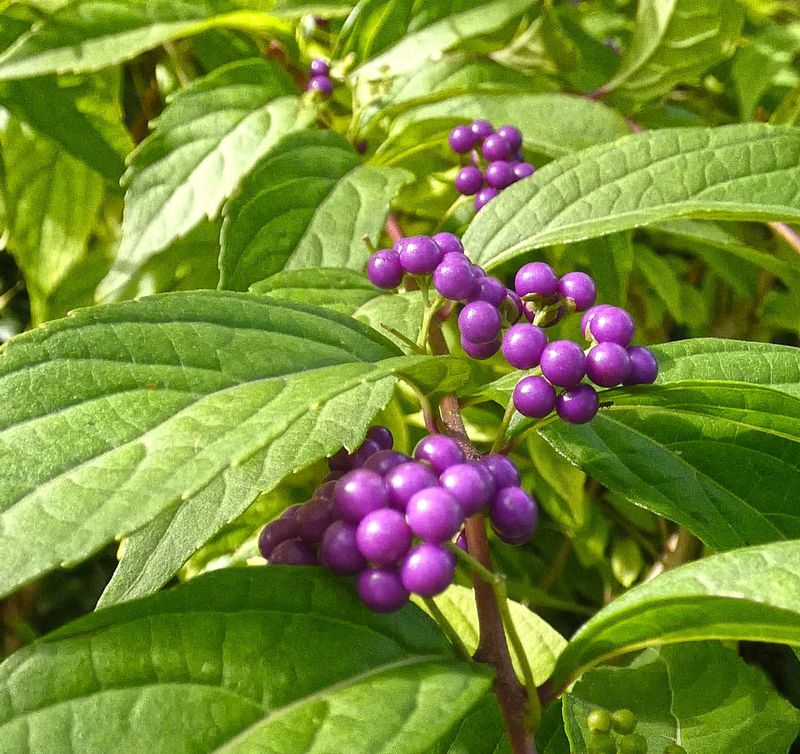
The clusters of vivid purple berries that wrap tightly around each stem in late summer and fall look almost too perfect to be real.
This is Callicarpa americana, a shrub native to the southeastern United States and a longtime resident of Florida’s natural landscapes.
The Florida Native Plant Society recognizes it as one of the most visually striking natives you can add to a home garden.
It grows in a loose, arching form that feels relaxed and natural rather than stiff or formal. Mature plants typically reach six to eight feet tall with a similar spread, making them ideal for filling in along a fence line without crowding the space.
Unlike many ornamental shrubs that need constant attention, beautyberry is well-suited to Florida’s climate.
It thrives in the state’s warm, humid conditions with minimal fuss once established.
The berries appear in late summer just as many other plants start to look tired from the heat, which is exactly when you most appreciate a plant that still looks spectacular.
Beyond its looks, beautyberry brings real ecological value to a yard.
Birds, pollinators, and small wildlife all interact with it throughout the year. For Florida gardeners looking for a fence-line plant that earns its spot, this native shrub offers a genuinely compelling starting point.
Fence Lines Give It Room To Arch
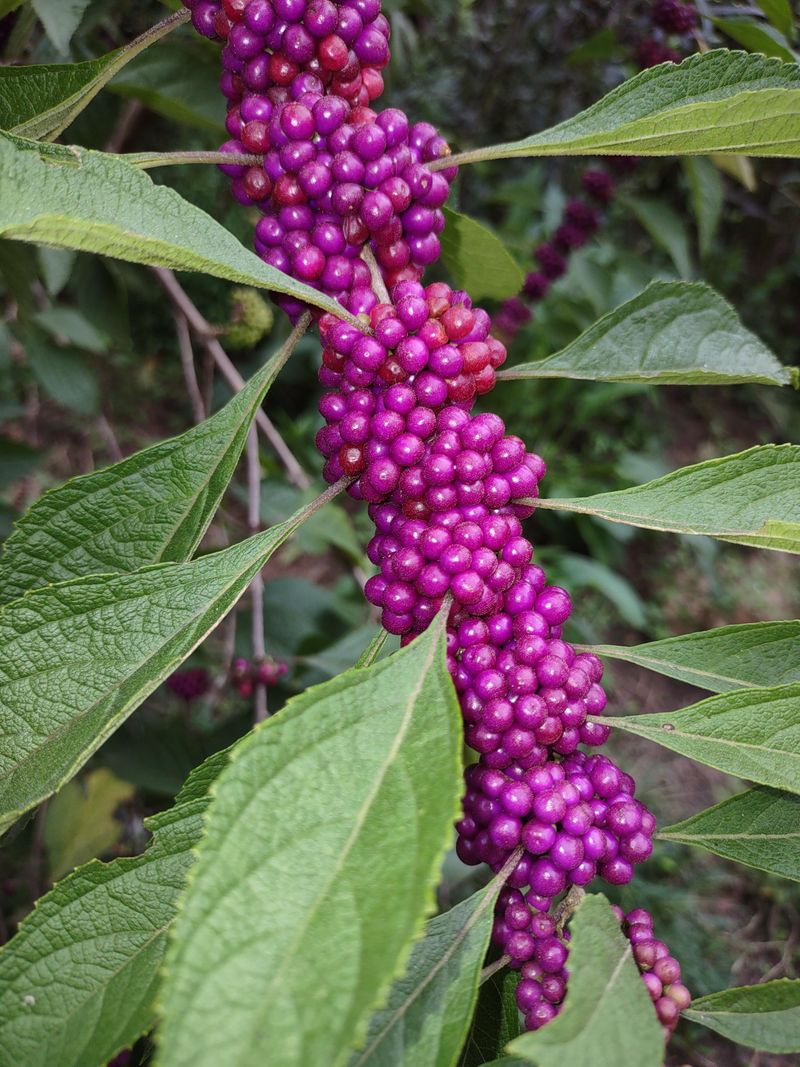
There is a reason beautyberry looks so comfortable growing along a fence.
Its natural growth habit is loose and arching, with long branches that sweep outward and downward in a graceful curve.
A fence gives those branches something to lean toward without forcing the plant into an unnatural shape.
Tight garden beds near walkways or patios can cramp a beautyberry’s style.
Along a fence line, it gets the horizontal space it needs to spread at its own pace. The result is a softened edge that looks intentional without requiring constant trimming or shaping.
Your Florida Garden Changes Every Week. Your Plan Should Too.
Gardening in Florida changes quickly throughout the season. Every Friday you’ll receive a simple weekly plan showing exactly what to plant, prune, fertilize, harvest, and protect so you never miss the right timing.
Many Florida gardeners describe it as one of the easiest shrubs to make look good without much effort.
From a practical standpoint, a fence-line planting also creates a buffer zone between your yard and whatever is on the other side.
The dense layering of leaves and branches adds visual privacy during the growing season. It won’t block every sightline, but it softens the hard line of a wooden or chain-link fence in a way that feels genuinely lush.
Giving beautyberry at least six feet of width when planting along a boundary is recommended.
That spacing allows air to move through the branches, which matters in Florida’s humid summers. Planting several shrubs in a staggered row along a long fence creates a living border that fills in beautifully over one or two growing seasons.
Leaves Carry Repellent Compounds
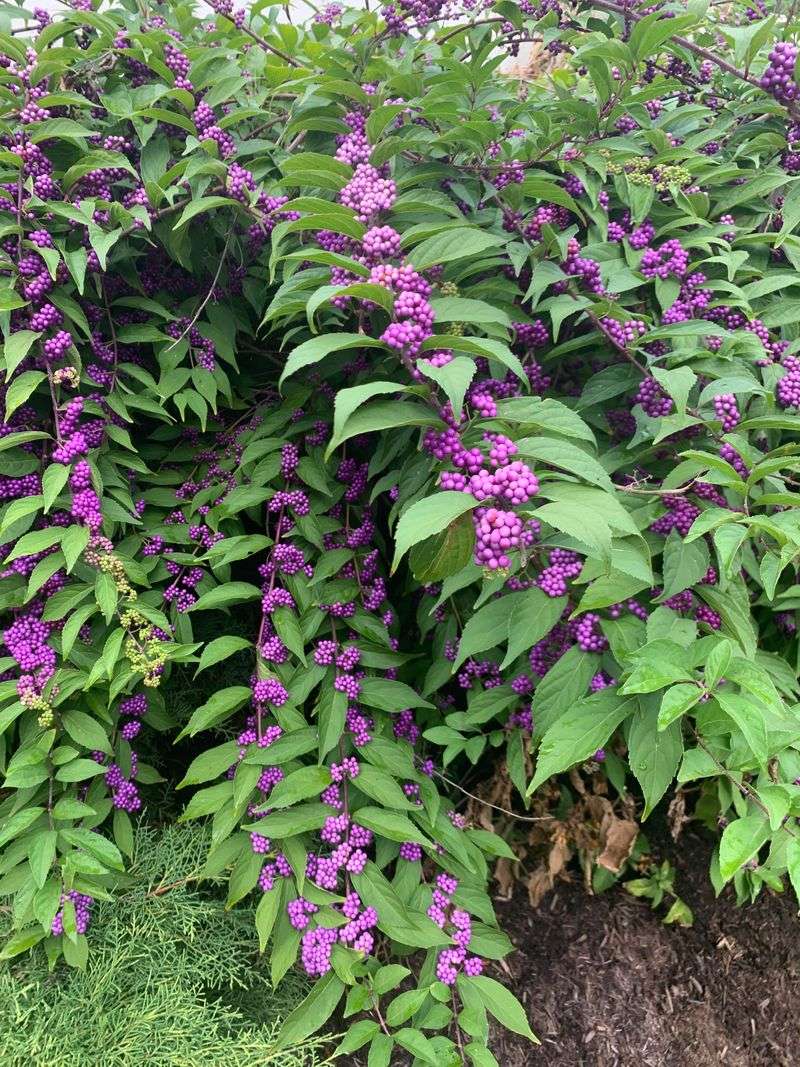
Researchers at the USDA have studied American beautyberry leaves with genuine scientific curiosity.
The leaves contain compounds called callicarpenal and intermedeol, which belong to a group of naturally occurring chemicals that have shown mosquito-repellent properties in laboratory and field studies. That is a real finding worth knowing about.
What it does not mean is that planting beautyberry along your fence creates an invisible bug-free zone.
The repellent effect has been observed when the leaves are crushed and the compounds come into direct contact with skin.
Simply having the plant nearby is not the same as applying a repellent. Researchers have been clear about that distinction, and it is an important one.
Some people do crush a few leaves and rub them on their arms before spending time outside.
Folklore in the rural South has supported this practice for generations, long before laboratory studies confirmed there was something chemically interesting happening.
It is a fun piece of plant history that adds personality to an already appealing shrub.
Mosquito control in Florida involves yard drainage, larval prevention, and sometimes professional treatment.
Beautyberry is a wonderful native plant, and its leaf chemistry is genuinely interesting, but it works best as one piece of a broader approach to backyard comfort rather than a standalone solution.
Flowers Pull In Helpful Pollinators
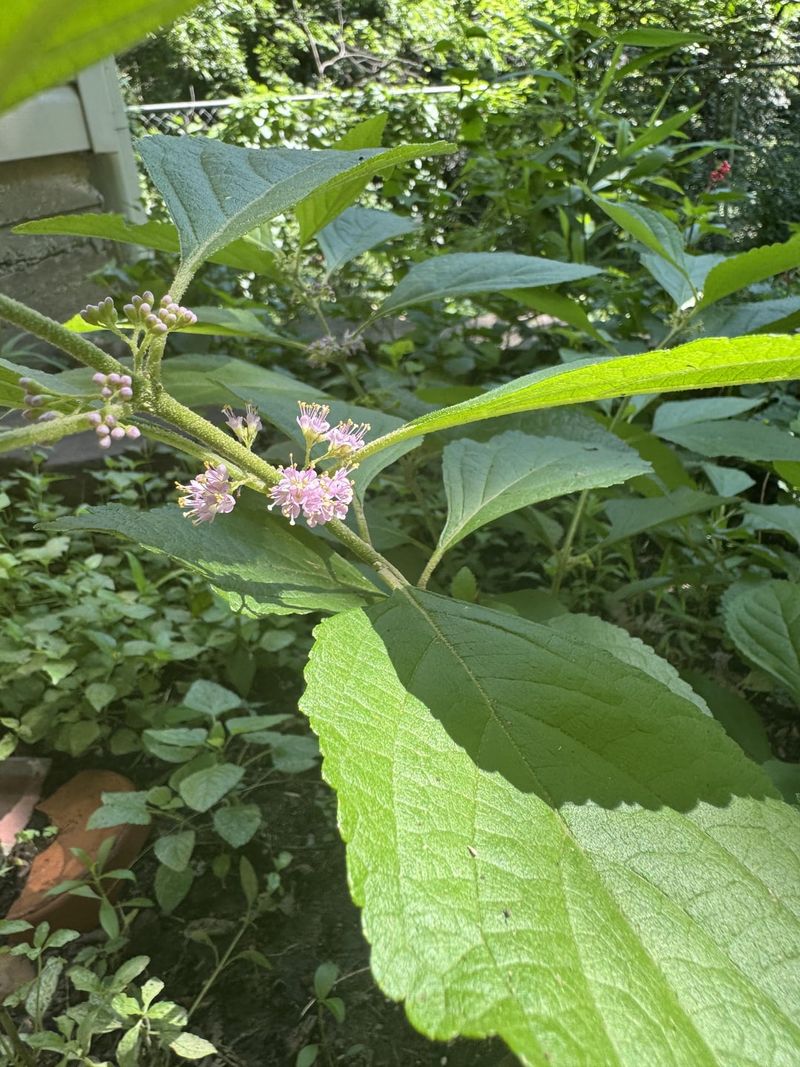
Before the purple berries arrive, beautyberry puts on a quieter show that most people overlook. The flowers are small, clustered tightly along the stems, and come in soft shades of pink and lavender.
They are not showy in the way a hibiscus or bougainvillea is, but they are magnets for pollinators that do serious work in your yard.
Native bees, small butterflies, and other beneficial insects visit beautyberry flowers regularly during the blooming period in late spring and early summer.
A yard that supports these visitors tends to feel more alive and balanced. Many beneficial insects that come for the flowers also help keep pest populations from getting out of hand by preying on aphids, whiteflies, and other common garden nuisances.
Creating a pollinator-friendly fence line does not require a major overhaul of your yard.
Adding a few beautyberry shrubs to an existing fence is a low-effort way to increase the variety of insects your yard supports.
Native plants consistently outperform non-native ornamentals when it comes to supporting local insect communities, which is why the choice of what to plant along a boundary matters more than most homeowners realize.
A fence line covered in blooming beautyberry is doing quiet ecological work every day.
It is providing food for pollinators, which in turn supports fruit set in nearby vegetable gardens and flower beds.
That ripple effect is one of the best arguments for choosing natives, and it costs nothing extra once the plants are in the ground.
Berries Bring Bug Eating Birds
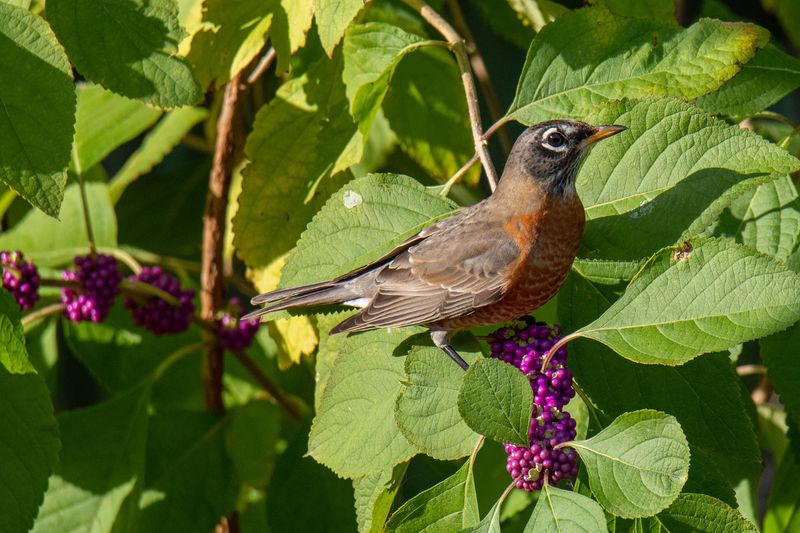
Come late summer, the berries on a beautyberry shrub turn a shade of purple so saturated it looks almost painted.
And birds notice immediately. More than 40 species of birds in the Southeast have been documented feeding on beautyberry fruit. That is a remarkable number for a single native shrub sitting quietly along a fence.
Cardinals, mockingbirds, robins, bluebirds, and brown thrashers are among the regulars at a beautyberry fence line in Florida.
These birds are not just decorative visitors. Many of them are active insect hunters.
A yard that hosts a healthy bird population often sees fewer caterpillars, beetles, and other insects on garden plants because the birds are picking them off throughout the day.
This is one of the more practical arguments for planting beautyberry along your fence.
You are not spraying anything or setting up traps. You are simply creating the right conditions for birds to show up and do what they naturally do. It is a low-effort strategy that builds on how ecosystems already function.
The berries also persist on the shrub for several weeks, which means the feeding activity continues well into fall.
During migration season, beautyberry becomes a reliable fuel stop for birds passing through Florida.
Watching that activity from a back porch is one of the unexpected rewards of choosing a native plant that actually works with the local environment instead of just decorating it.
Dense Branches Add Wildlife Cover
A bare fence does not offer much to the creatures that share your yard.
Add a row of mature beautyberry shrubs, and that same fence line transforms into layered habitat. The dense, overlapping branches create pockets of shelter that small wildlife use for cover, rest, and in some cases nesting throughout the year.
Lizards, anoles, and small frogs often take up residence in the inner branches of a beautyberry hedge.
These animals are natural insect hunters, and having them present in your yard is genuinely useful.
A lizard patrolling the base of your fence line will catch more insects in a day than most traps will in a week, which makes them an excellent argument for leaving a little wildness along the edge.
Ground-nesting birds sometimes use the leaf litter that accumulates beneath beautyberry shrubs.
The fallen leaves break down quickly in Florida’s heat and humidity, adding organic matter back to the soil while also providing a soft layer of cover at ground level.
That connection between the plant and the soil ecosystem is part of what makes native plantings feel different from purely ornamental ones.
Layered plantings in Florida landscapes consistently support a much wider range of species than single-plant approaches.
When you combine a beautyberry shrub with groundcovers underneath and taller trees nearby, you create vertical layers of habitat that self-regulate better than a simple lawn and make your yard a genuinely more interesting place to spend time.
Partial Shade Keeps It Comfortable
Beautyberry is not a full-sun diva.
In fact, it performs best in partial shade, which makes it ideal for fence lines that receive morning sun and afternoon shade.
That kind of light pattern is extremely common in Florida yards where trees, structures, or neighboring homes block the harsh afternoon rays.
Beautyberry grows naturally in the understory of Florida’s forests, which means it is adapted to filtered light and the kind of humidity that makes other plants struggle.
In a home landscape, that translates to a shrub that does not need babying during the hottest months of the year, which is a significant advantage when July arrives and the garden is already under pressure.
Soil conditions matter too, but beautyberry is not demanding.
It prefers moist, well-drained soil with decent organic content. In sandy Florida soils, mixing in some compost at planting time gives it a strong start.
Once the root system is established, usually after one full growing season, the plant handles Florida’s rainfall patterns with very little supplemental watering needed.
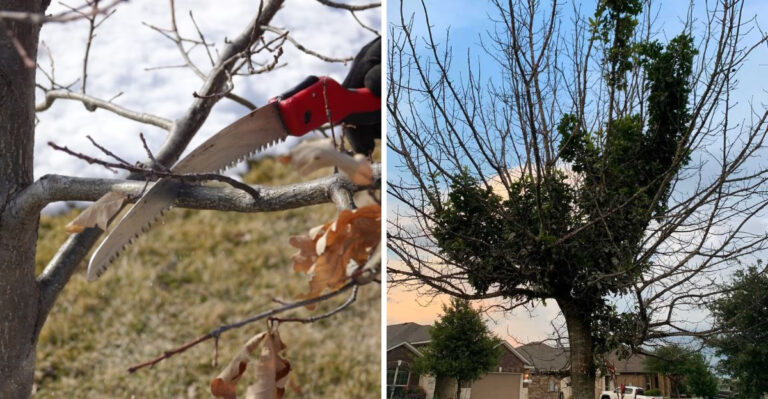
Occasional pruning in late winter or early spring helps keep the shape tidy and encourages vigorous new growth.
Because beautyberry blooms and fruits on new wood, cutting it back by about a third every year actually increases berry production.
That is a satisfying trade-off for a few minutes of work, and a partially shaded fence line will never look better.
Smart Placement Beats Spray Promises
Planting beautyberry along your fence will not eliminate every mosquito or beetle in your yard. Anyone who tells you otherwise is overpromising.
What a well-placed beautyberry hedge can do is make your yard more ecologically functional, more visually interesting, and more hospitable to the birds and insects that naturally help keep pest populations in check.
Realistic expectations are the foundation of a satisfying native plant garden.
Beautyberry is one piece of a larger puzzle. Pair it with good drainage practices to reduce standing water, regular removal of debris where insects breed, and thoughtful placement of other native plants that support predatory insects and birds.
That combination tends to produce better results than any single-plant solution.
Using native plants strategically, reducing chemical inputs, and working with the local ecosystem rather than against it leads to yards that feel more balanced over time.
Beautyberry fits neatly into that philosophy, and choosing where to plant it matters as much as choosing to plant it at all.
A south-facing fence with afternoon shade, near a rain garden or low-lying area with good drainage, is close to ideal.
Give each shrub six feet of horizontal space and plan for it to fill that space within two growing seasons. Start with one or three plants and see how your specific yard responds.
That kind of thoughtful, low-pressure approach is exactly how the best Florida gardens get built, one native plant at a time.