Why Florida Palms Drop Fronds In Summer And When It Becomes A Real Problem
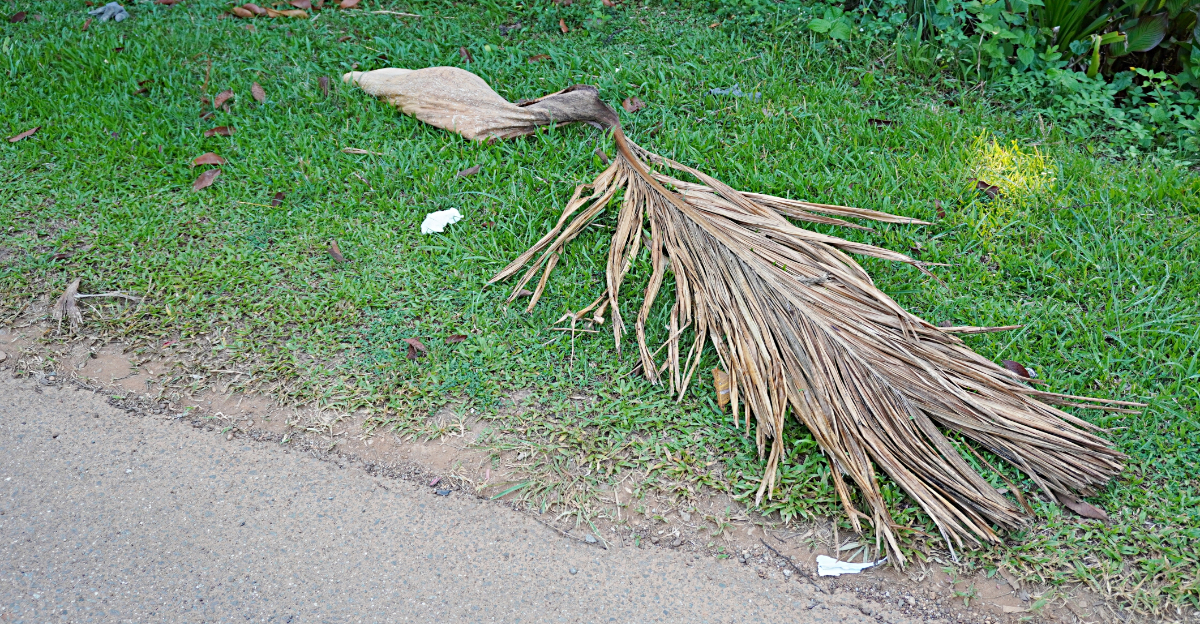
Florida palms drop fronds in summer and most homeowners panic on cue. That loud crack, the frond hitting the ground, the immediate assumption that something has gone wrong.
Usually nothing has. Summer is just when palms clean house.
But here is the part that catches people off guard. Normal frond drop and the early warning signs of a genuine palm problem look almost identical from the ground.
Same browning, same timing, same thud on the lawn. The difference between the two is not always obvious, and getting it wrong in either direction has consequences.
Treat a normal summer shed like an emergency and you stress a healthy tree. Miss an actual problem because it looked routine and you lose the window where intervention is still straightforward.
Florida palms are not always as easy to read as they look. This is the gap between a calm summer and an expensive one.
1. Expect Some Summer Shedding
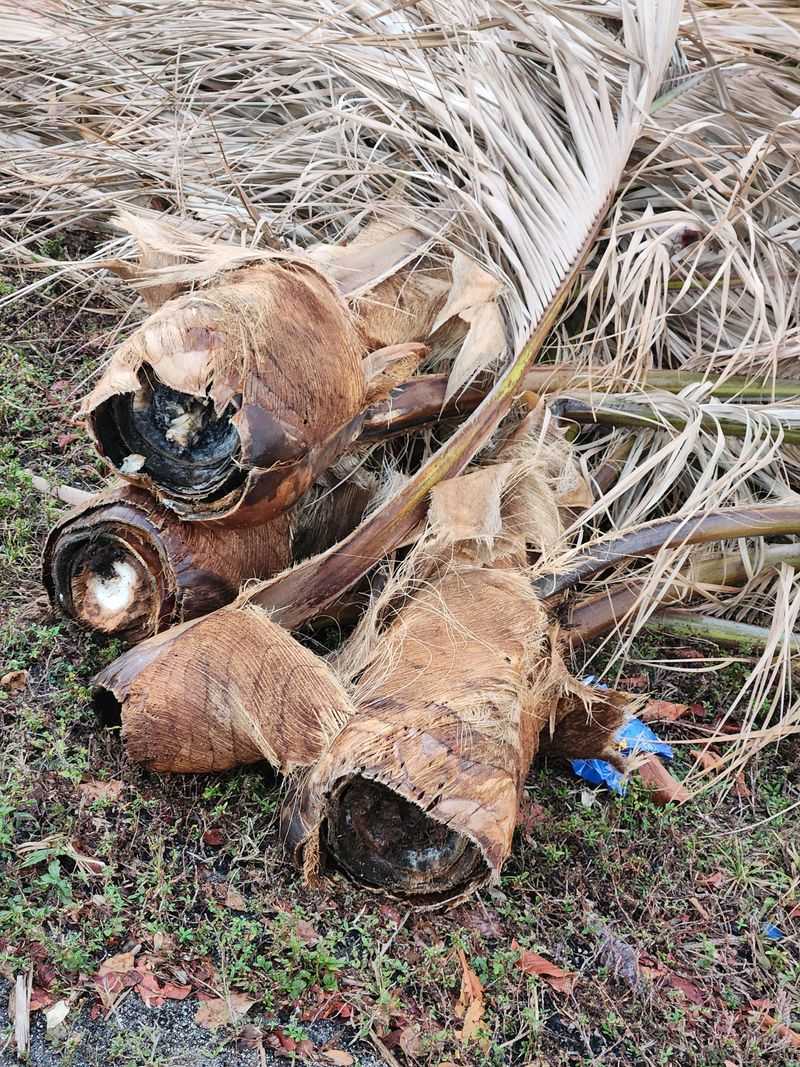
Picture this: you step outside after a summer afternoon storm and find three or four large palm fronds lying across your driveway. Before you panic, take a breath.
Some frond drop is completely normal for palms, and summer actually makes it more noticeable than any other time of year.
Palms grow by producing new fronds from the center of the crown. As new growth pushes outward, older fronds at the bottom of the canopy naturally age, yellow, and fall away.
Heat speeds up this cycle. Strong summer winds and heavy rain can knock loose fronds free before they would have fallen on their own.
The result is more frond litter on the ground during summer than in cooler months. This does not automatically mean your palm is struggling.
A healthy palm sheds old growth to make room for new leaves, and that process continues year-round.
The key is to watch the pattern, not just the pile. One or two older fronds dropping after a storm is routine seasonal cleanup.
What matters more is whether new growth at the top of the crown still looks full, green, and upright. If the canopy looks healthy and production continues, summer shedding is usually just part of the season.
2. Watch The Oldest Fronds First
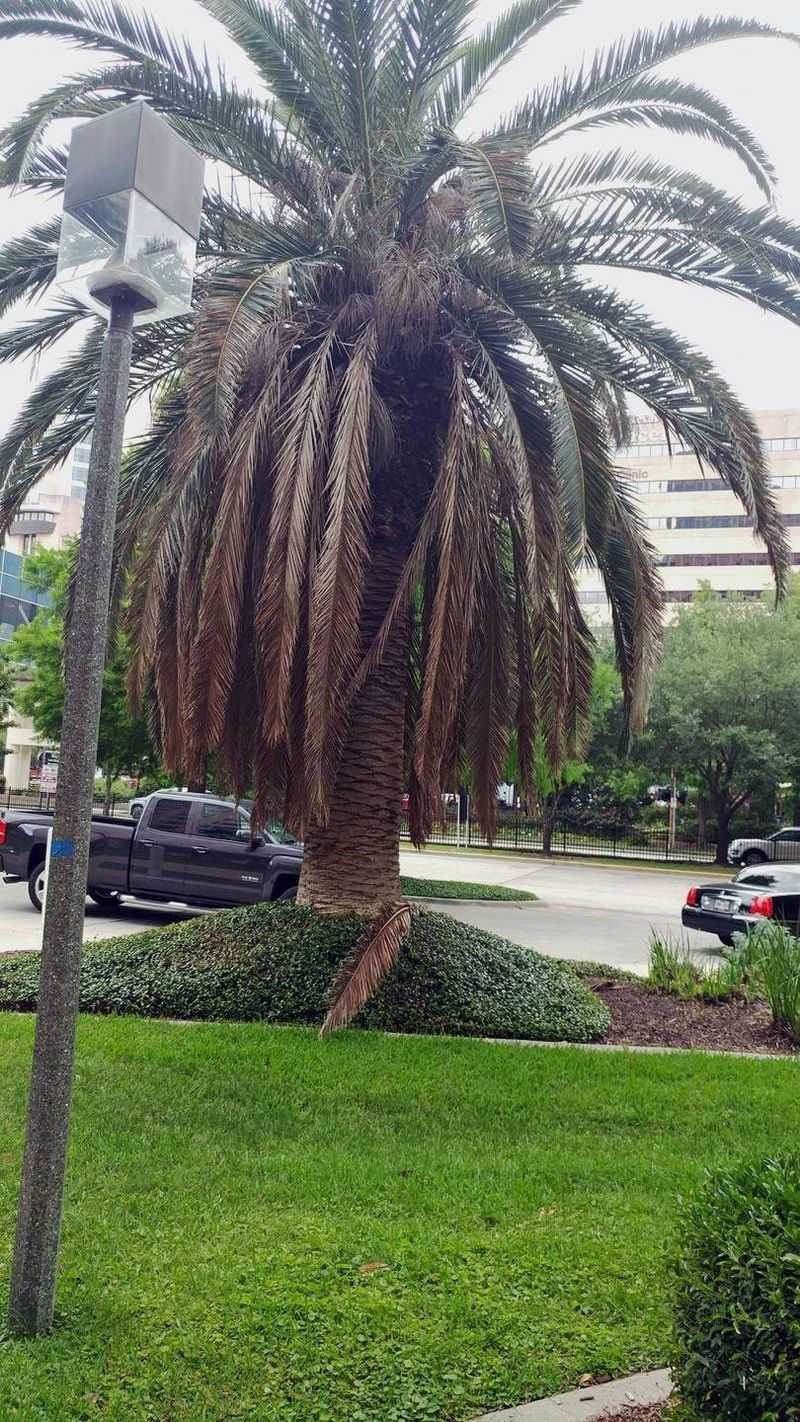
Older fronds do not last forever, and that is actually a good thing. On most palms, the lowest fronds in the canopy are the oldest.
They are the first to yellow, dry out, and detach as the palm focuses energy on newer growth higher up. Seeing a few brown fronds hanging at the bottom is a natural part of the growth cycle.
Location matters a lot when you are trying to figure out what is normal. Lower frond decline is much less concerning than yellowing or browning that starts near the top of the crown or affects the newest leaves.
If the oldest fronds at the bottom are fading while the newer fronds above them look green and strong, the palm is likely doing fine.
Pay attention to timing and speed as well. A frond that slowly yellows over several weeks before dropping is aging naturally.
Your Florida Garden Changes Every Week. Your Plan Should Too.
Gardening in Florida changes quickly throughout the season. Every Friday you’ll receive a simple weekly plan showing exactly what to plant, prune, fertilize, harvest, and protect so you never miss the right timing.
A frond that collapses quickly or turns brown in an unusual pattern may point to something else, such as a pest, disease, or watering problem.
Before you reach for pruning tools, spend a few minutes just looking at the palm. Notice which fronds are affected, how far up the canopy the symptoms reach, and whether new leaves at the top look healthy.
Simple observation can prevent unnecessary pruning and help you catch real problems early.
3. Leave Green Fronds On The Palm
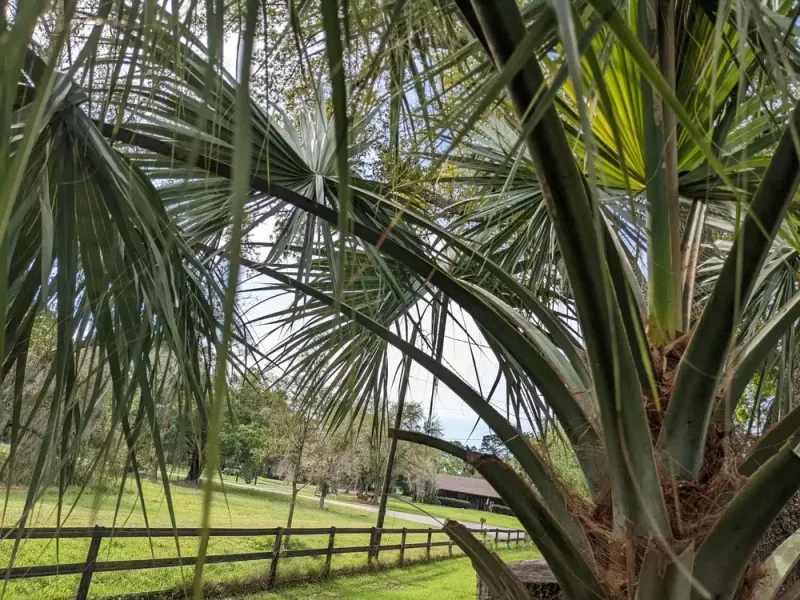
Green fronds are working fronds. Every healthy green leaf on a palm is actively making energy through photosynthesis, and removing them takes that energy source away.
Homeowners sometimes trim green fronds for a cleaner look, but this habit can quietly weaken the palm over time.
According to UF/IFAS guidelines, palms should only have withered, loose, or clearly hazardous fronds removed. Cutting off green fronds as routine maintenance stresses the tree and may make existing nutrient problems worse.
Palms move nutrients from older leaves to newer growth, so removing green fronds too early can interrupt that process.
One of the most harmful practices is called a hurricane cut, where nearly all fronds are stripped away, leaving only a small tuft at the top.
Research from UF/IFAS shows that this type of severe pruning can permanently damage palm health and does not actually protect the tree from storm damage.
In fact, it may leave the palm more vulnerable.
The safest approach is to remove only fronds that are fully brown, hanging loosely, or posing a clear safety risk. If a frond is still green, even partially, it is better to leave it alone.
A well-maintained palm with a full, healthy canopy is more resilient than one that has been heavily trimmed. Less pruning is almost always the right call when fronds are still green.
4. Check Yellowing Before You Prune
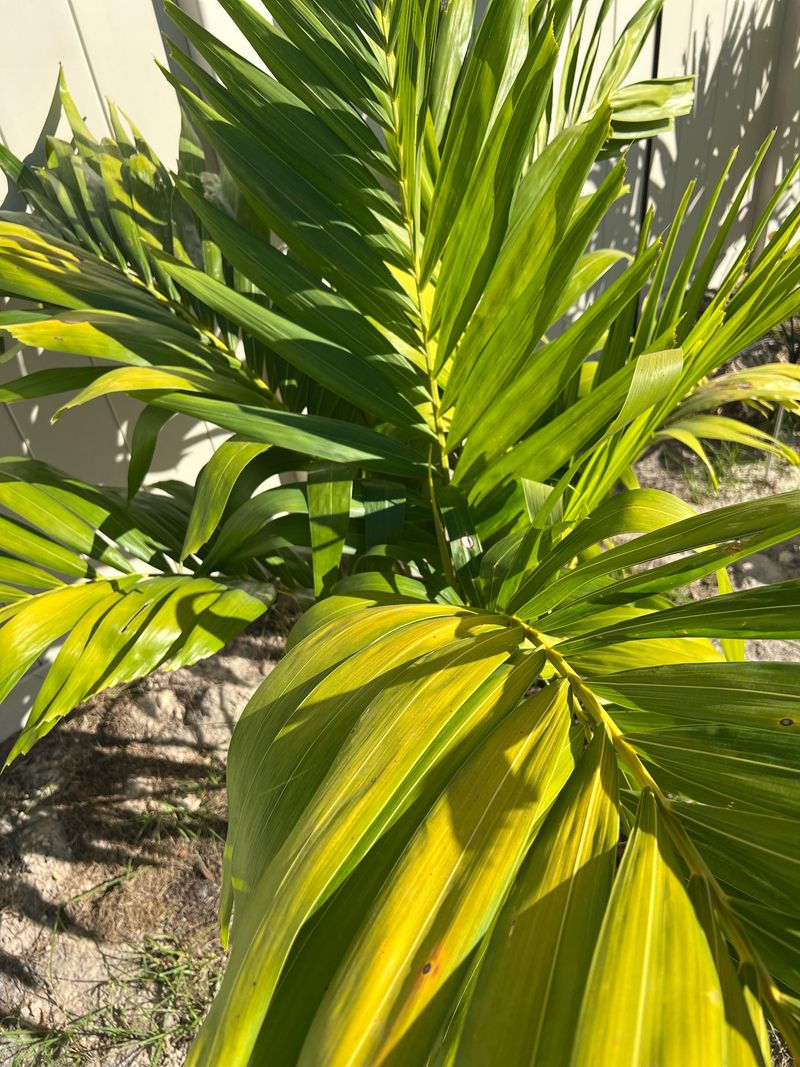
Yellowing fronds can mean several different things, and cutting them off right away is not always the right move. Before reaching for the pruning saw, it helps to slow down and figure out what is actually causing the color change.
The answer can make a big difference in how you respond.
Normal aging causes lower fronds to yellow gradually as they near the end of their life. But yellowing can also be linked to nutrient deficiencies, overwatering, underwatering, root stress, pest damage, or early signs of disease.
Each of these causes looks a little different and needs a different response.
One important reason to hold off on pruning is that palms actively pull nutrients from older leaves before they drop. If you cut off a yellowing frond too soon, you may be removing nutrients the palm is still reclaiming for use in newer growth.
This can slow recovery and make deficiency symptoms worse over time.
Take note of which fronds are yellowing and how fast the color is spreading. Are only the oldest, lowest fronds affected, or is yellowing moving upward toward newer growth?
Is the newest leaf at the top of the crown still green and upright? These observations can help you decide whether the issue is simple aging or something that needs closer attention.
They can also show whether a soil test or professional advice is needed before any pruning happens.
5. Treat Nutrient Trouble Early
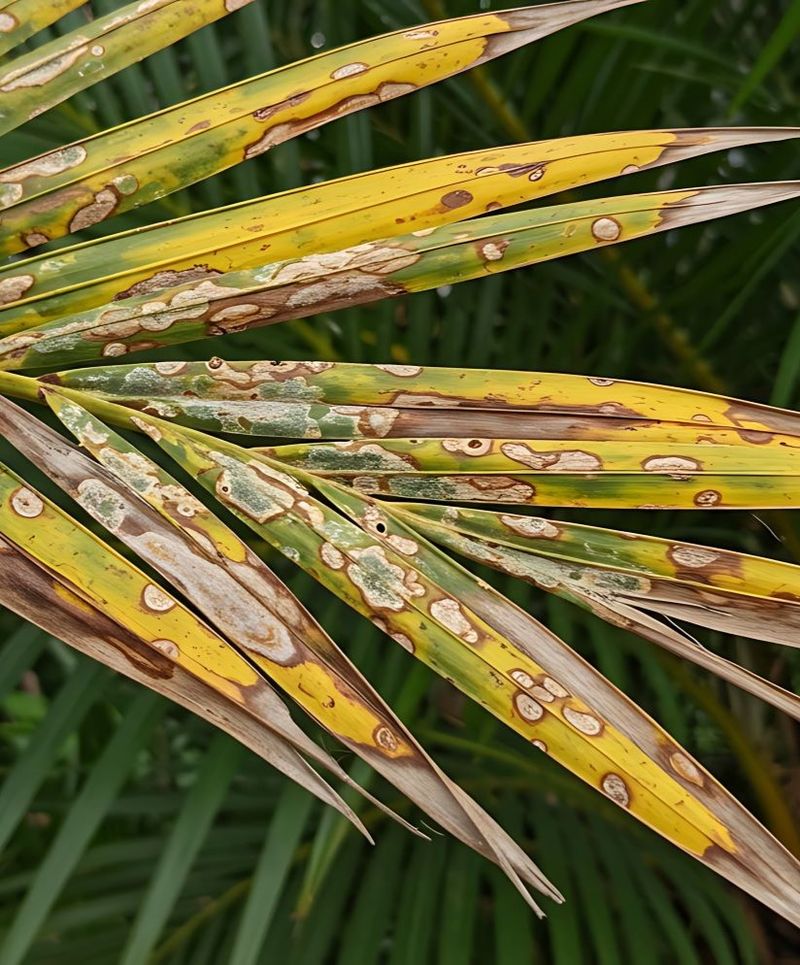
Palms in warm, humid climates have specific nutrient needs that regular lawn fertilizers often do not meet. When the soil is missing key minerals, palms can develop telltale symptoms on their fronds.
Catching these signs early gives you a much better chance of correcting the problem before it gets harder to manage.
Potassium deficiency is one of the most common issues seen in palms across Florida. It often shows up as yellowing, orange spotting, or translucent spots on older fronds.
Magnesium deficiency tends to cause a yellow band along the outer edges of older fronds while the center stays green. Both conditions can look similar to normal aging at first, which is why careful observation matters.
Standard turf fertilizer is not designed for palms and may not provide the right balance of nutrients. UF/IFAS recommends using a slow-release, palm-specific fertilizer with the right ratio of nitrogen, potassium, magnesium, and manganese.
Applying the right product at the right time is more effective than guessing or layering on multiple supplements.
Avoid quick-fix fertilizers or homemade mixtures. Rapid fertilizer applications can burn roots and create new problems.
Consistent, slow-release feeding two to four times per year, following your county extension office recommendations, gives palms the steady nutrition they need.
If symptoms are severe or confusing, a soil test or leaf analysis through your local extension office can point you in the right direction.
That can help before you spend money on the wrong product.
6. Remove Loose Fronds That Create Risk
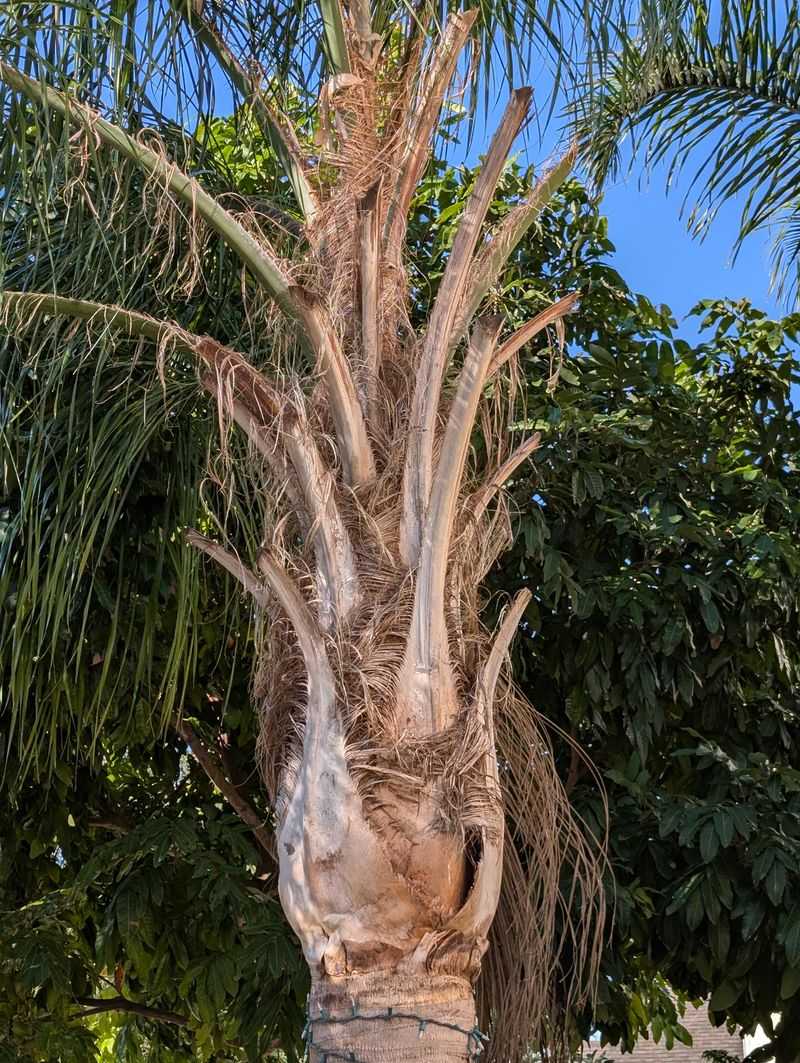
Not every dropped frond is just a yard cleanup issue. When loose fronds hang over walkways, driveways, pool areas, rooftops, or parked cars, they become a real safety concern.
A heavy frond falling at the wrong moment can cause injury or property damage, especially during summer storms when winds pick up fast.
Removing clearly withered, brown, or loosely hanging fronds before storm season is a reasonable and responsible step. It reduces the chance of a heavy frond breaking free in high winds and landing somewhere it should not.
This kind of targeted cleanup is different from stripping a healthy palm of its green canopy.
The timing of removal matters too. Checking your palms before and after major storms helps you spot fronds that were partially broken or knocked loose.
A frond that is still attached but hanging at an awkward angle after a storm is worth removing before the next weather event.
Safety during removal is just as important as the removal itself. For palms taller than about 15 feet, homeowners should hire a qualified tree care professional rather than climbing the tree themselves.
Working near power lines is especially dangerous and should always be left to professionals. Never use a ladder propped against a palm trunk without proper training and equipment.
Keeping the area below the palm clear while fronds are being removed is a simple but important precaution that often gets overlooked during cleanup.
7. Look For Patterns Beyond Normal Drop
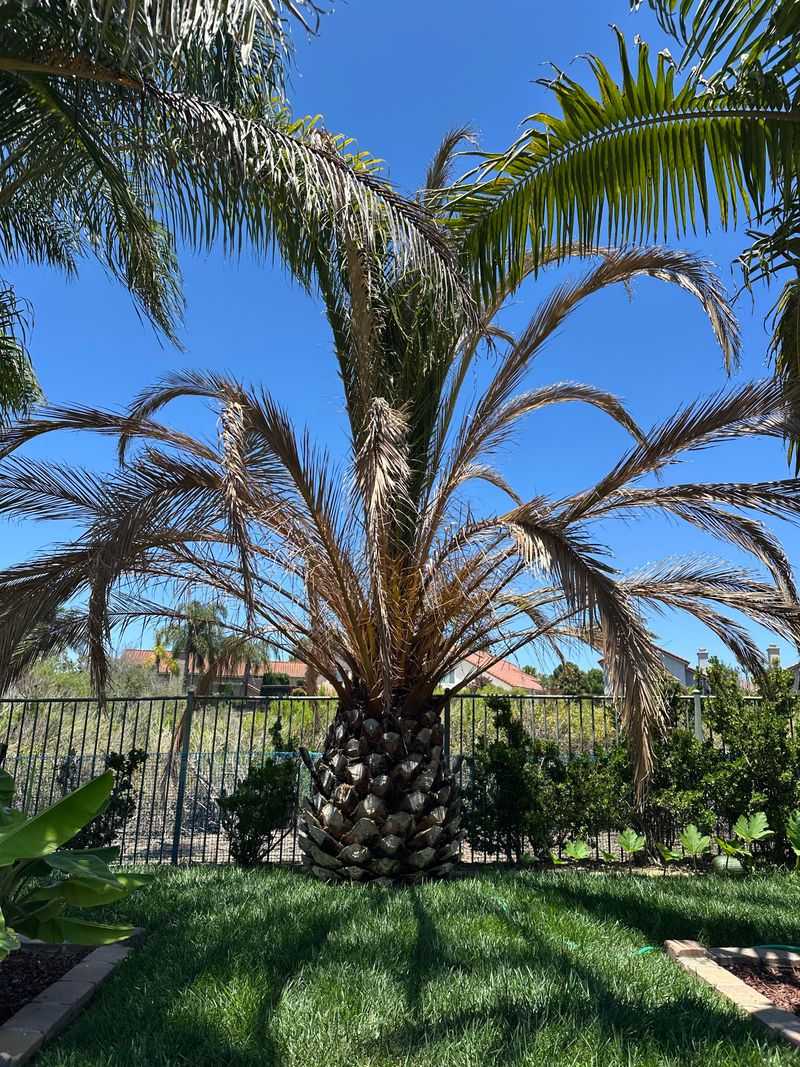
One fallen frond is easy to explain. A pattern of fronds falling repeatedly, especially when newer leaves are also affected, is a different story.
Patterns are the real signal that something beyond normal seasonal shedding may be happening with your palm.
Watch for rapid canopy thinning over a short period. If the crown looks noticeably less full than it did a month ago, that change deserves attention.
Pay close attention to the spear leaf, which is the newest, tightly rolled leaf at the very top of the palm. If that leaf looks discolored, mushy, or fails to open properly, it can point to a serious problem that needs quick action.
Other warning patterns include fronds that collapse rather than slowly age, unusual spotting or streaking across multiple frond levels, and visible trunk damage or soft spots. Signs of pest activity such as webs, holes, or sticky residue matter too.
Palms that were recently transplanted, flooded, or exposed to construction disturbance near their roots are also more likely to show stress-related frond drop.
Comparing your palm to others of the same species nearby can be helpful. If your palm looks noticeably worse than similar palms in the neighborhood under the same weather conditions, that difference is worth investigating.
The goal is not to assume every symptom is catastrophic, but to notice when a pattern breaks from what is expected for normal, healthy summer growth in your area.
8. Call In Help When The Crown Looks Weak
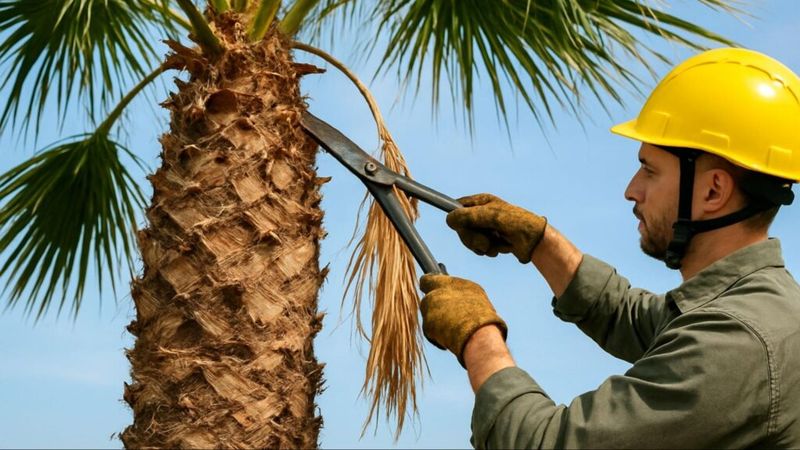
Some palm problems are beyond what a homeowner can safely assess or fix on their own. The crown of the palm is the area where all new growth originates.
When it starts showing signs of weakness, it is time to stop guessing and call in someone with real expertise.
Serious signs that warrant professional help include a spear leaf that looks brown, mushy, or fails to open, along with sudden collapse of multiple fronds in the upper canopy.
Visible wounds or soft spots on the trunk and frond loss that keeps happening without storms are serious signs too.
These symptoms can point to fungal disease, bacterial infection, root damage, or other conditions that need proper diagnosis.
A certified arborist or a qualified palm care professional can assess the tree safely and identify the cause of the symptoms. They can also recommend a treatment plan backed by current research.
Your county extension office is also a valuable free resource. Many offices offer plant diagnostic help and can connect you with local experts who know the specific challenges of your Florida region.
Summer frond drop is often just the Sunshine State doing what it does best: growing fast, storming hard, and moving on. Most healthy palms shed old fronds, push out new growth, and come through the season just fine.
But when new growth looks weak, the crown feels uncertain, or patterns shift quickly, acting early gives your palm the best chance of a full and healthy recovery.