What To Know About Neighbor Tree Problems In North Carolina Before It Becomes A Problem
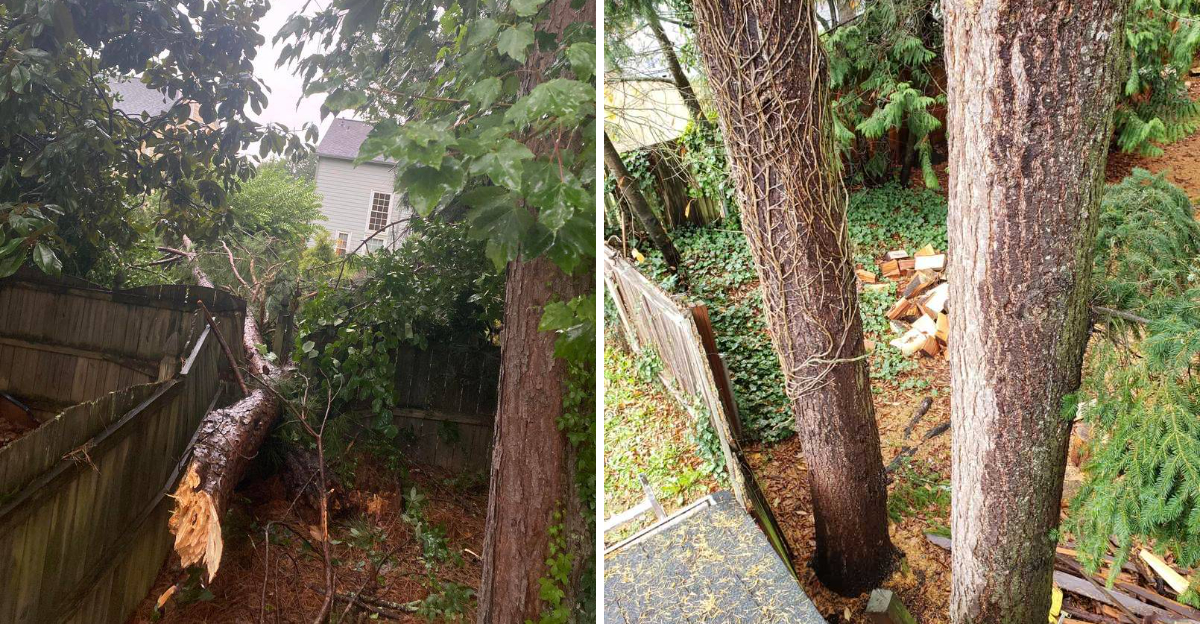
Tree disputes between neighbors can go from friendly to frustrating in a matter of days.
Someone notices a branch hanging over their fence, a root pushing up their driveway, or a leaning trunk that looks worse after every storm, and suddenly a relationship that was perfectly fine last season is under real strain.
North Carolina has specific rules and common-law traditions that shape who is responsible for what in these situations.
Many homeowners have no idea what those rules actually say until they are already in the middle of a conflict.
The good news is that most tree disputes are entirely preventable with a little knowledge upfront.
Knowing who owns a boundary tree, what happens when a storm drops a neighbor’s oak on your fence, and where your legal trimming rights actually end can save you money, stress, and a relationship worth keeping.
This guide walks through the most important things North Carolina homeowners should understand about neighbor tree issues so they can act calmly, fairly, and with the right information on their side before a problem ever starts.
1. Ownership Starts At The Trunk
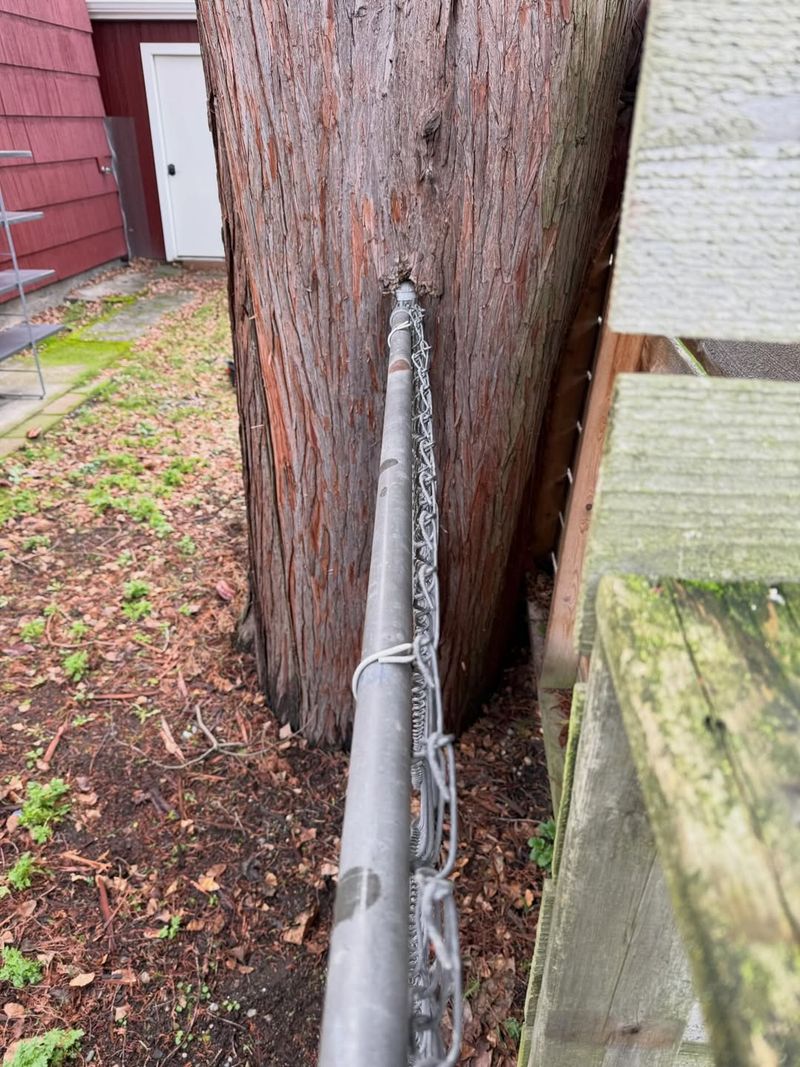
Where a tree trunk grows tells you almost everything about who owns it.
In North Carolina, the general rule is that ownership follows the trunk. If the trunk stands entirely on your property, the tree is yours.
If it stands entirely on your neighbor’s property, it belongs to them. That sounds simple, but things get complicated fast when a trunk sits right on the boundary line.
A tree whose trunk straddles the property line is called a boundary tree.
Both neighbors technically share ownership of that tree. Neither person can remove it, make major decisions about it, or significantly alter it without the other person’s agreement.
This is where disputes can quietly grow into big arguments if no one checks the property survey first.
Knowing exactly where your boundary sits is the smartest first step. A recorded plat or a licensed surveyor can tell you precisely where your line falls.
Many homeowners assume they know where the line is, but assumptions cause problems. A few inches in either direction can completely change who bears responsibility.
Before you call a tree service or confront a neighbor, pull out your deed and survey documents.
If you do not have them, your county register of deeds may have copies. Clarity here prevents a lot of unnecessary conflict later, and it protects you legally if the situation ever escalates beyond a conversation.
2. Foreseeable Hazards Change Liability
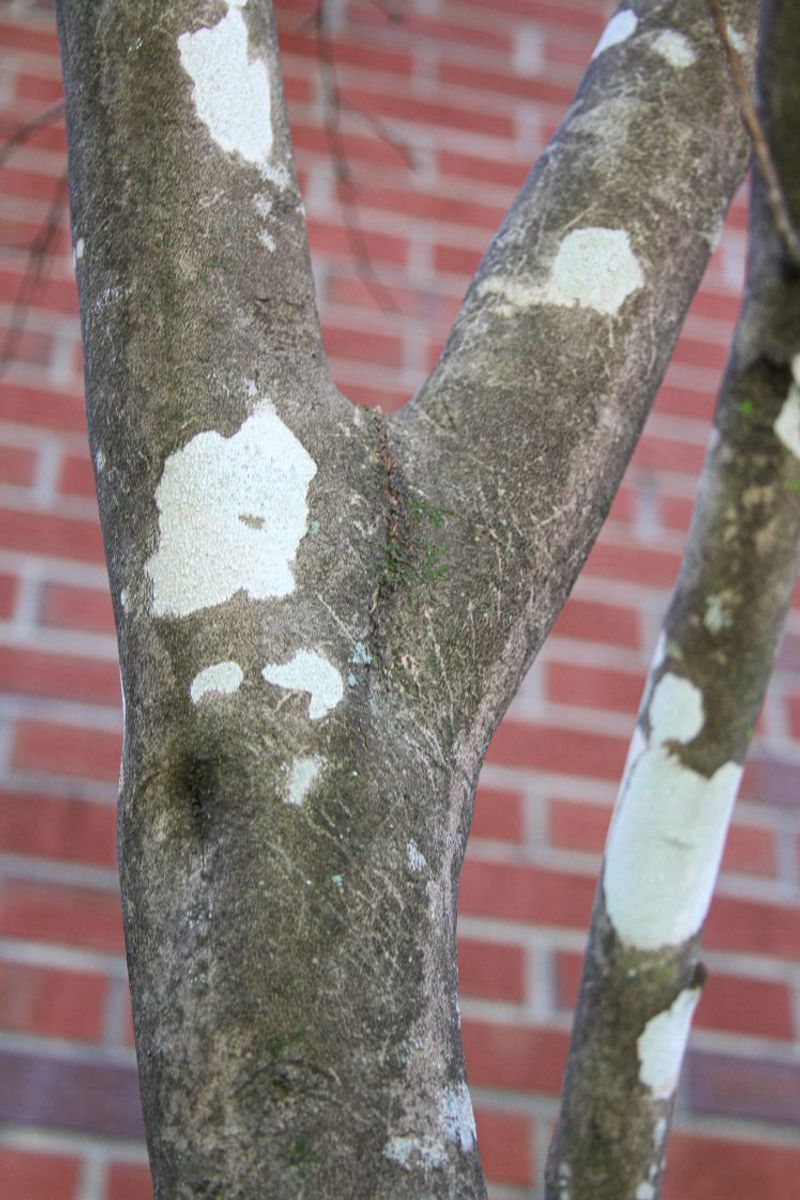
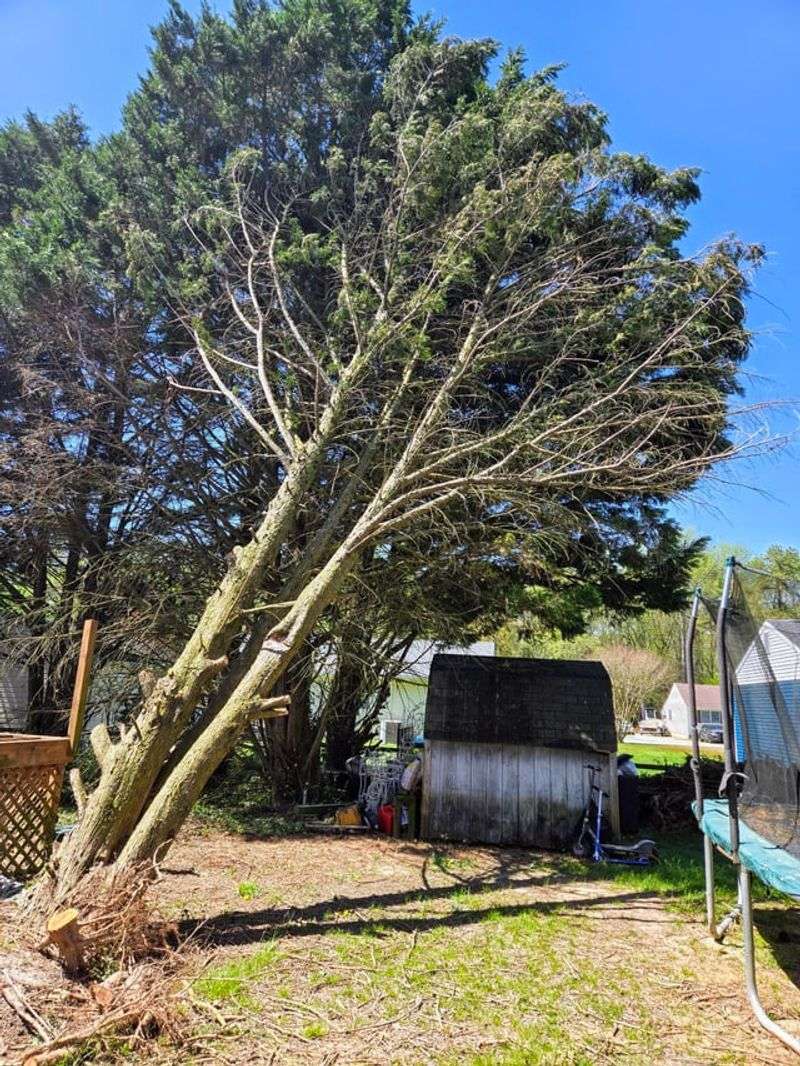
A healthy tree that falls during a storm is one thing. A tree with visible rot, cracked limbs, or a dangerous lean is something else entirely.
North Carolina courts and legal resources consistently point to the idea of foreseeability when it comes to tree liability.
If a hazard was obvious and nothing was done about it, that changes the conversation about responsibility significantly.
Consider this situation: your neighbor has a large oak with a clearly rotted trunk leaning toward your fence.
Your North Carolina Garden Changes Every Week. Your Plan Should Too.
Gardening in North Carolina changes quickly throughout the season. Every Friday you’ll receive a simple weekly plan showing exactly what to plant, prune, fertilize, harvest, and protect so you never miss the right timing.
You mention it to them twice, maybe even send a text. They do nothing. Then a windstorm brings that tree down onto your car. In that situation, the documented hazard and your prior warnings become very relevant.
A neighbor who knew about a visible defect and ignored it may carry more responsibility than one who had no warning at all.
This is not legal advice, and every situation is different.
For anything involving property damage or potential injury, speaking with a qualified attorney in North Carolina is the right move.
What you can do right now is pay attention to tree conditions near your boundary.
Obvious cracks, fungal growth at the base, a severe lean, or large hanging limbs are all signs worth noting. If you see something concerning on a neighbor’s property, a calm written notice is smarter than waiting and hoping for the best.
Certified arborists can assess risk professionally, and their written reports carry real weight if a dispute ever moves further.
3. Storm Damage Is Not Automatic Fault
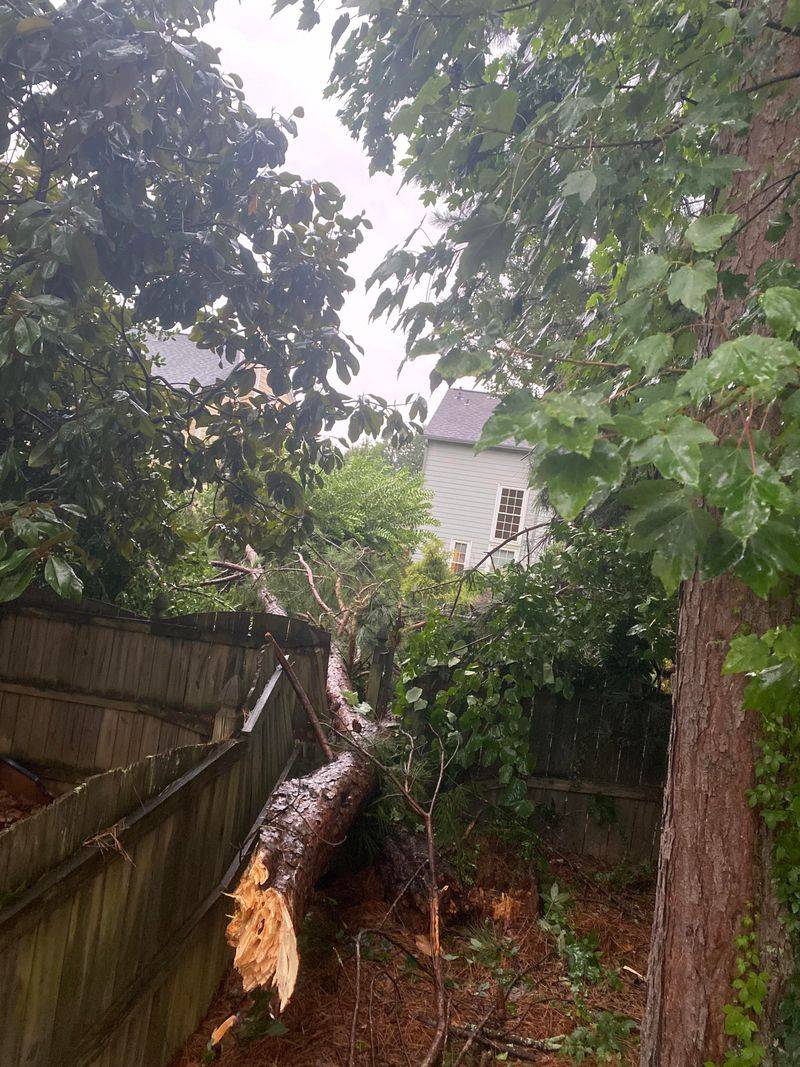
Storms hit North Carolina hard. Hurricanes, ice storms, and sudden wind events can bring down even healthy, well-maintained trees.
Many homeowners assume that if a neighbor’s tree falls on their property, the neighbor automatically pays for the damage. That assumption is wrong, and acting on it can create unnecessary conflict right from the start.
North Carolina generally follows the legal principle that a healthy tree falling during a storm is considered an act of nature.
In most cases, each property owner is responsible for damage on their own land.
So if your neighbor’s healthy oak falls on your fence during a hurricane, your homeowner’s insurance is typically the right place to start. Your neighbor’s insurance covers damage on their side.
Neither party is automatically at fault when a storm is the cause.
That said, insurance policies vary widely, and coverage details matter. Contacting your insurance agent promptly after storm damage is always a good idea.
Document everything before any cleanup begins. Take photos, note the date, and save any communication related to the event.
The picture changes if the fallen tree had known defects before the storm, which circles back to the foreseeability issue.
A tree that was already compromised is treated differently than one that appeared healthy.
Understanding this distinction helps you approach storm situations without jumping to blame, which keeps neighbor relationships calmer and gets everyone to a resolution faster.
4. Crossing The Line Brings Risk
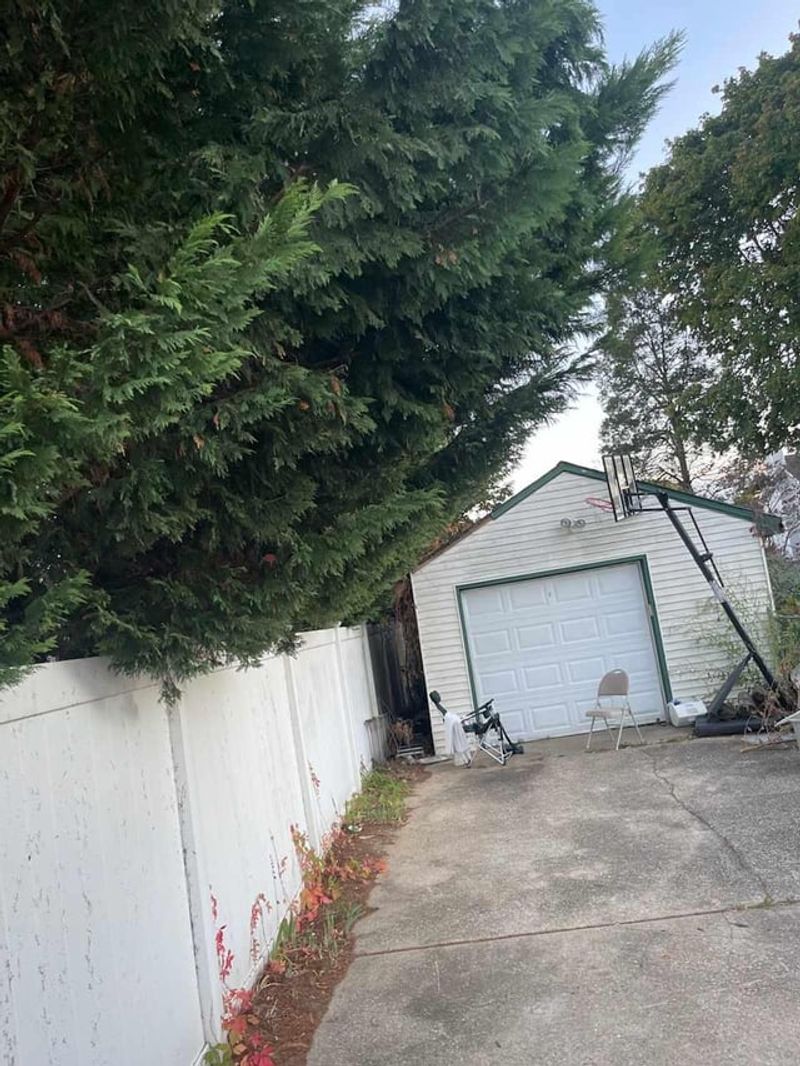
North Carolina law gives you the right to trim branches and roots that cross onto your property, but only up to the property line.
That right stops the moment you step onto your neighbor’s land or cut beyond the boundary. Many homeowners do not realize how quickly a well-intentioned trim can turn into a legal problem.
Cutting branches on your neighbor’s side without permission can be considered trespass and could even expose you to a damage claim.
If you hire a tree service and the crew works beyond your boundary, you could be held responsible for whatever happens.
Trees are valuable, and removing or seriously damaging a tree that belongs to someone else is not a small issue in North Carolina. Timber trespass laws can result in significant financial consequences.
Before you pick up any tool, know exactly where your line is.
Trim only what crosses onto your side. If branches are a serious concern, talk to your neighbor first. A written agreement about shared trimming is far safer than a unilateral cut.
If the situation involves roots damaging your foundation or a limb threatening your roof, document the issue carefully and consult both a certified arborist and a qualified attorney before taking action.
Acting in haste, even with good intentions, can make you the person at fault in a dispute that started on the other side of the fence. Patience and proper steps protect you every time.
5. Document Damage Before Touching Anything
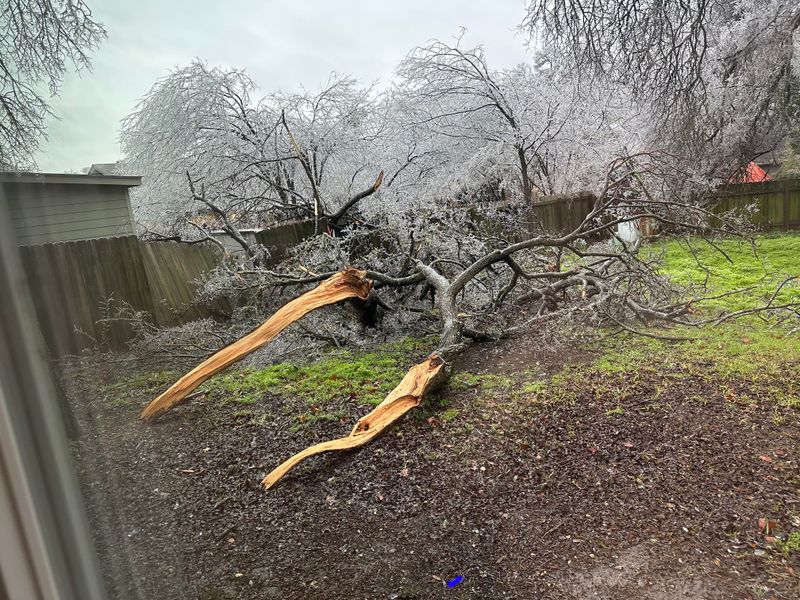
Good documentation is one of the most powerful tools you have in any tree dispute.
Before you move a single branch, take photos from multiple angles. Capture the full scene, close-up damage, and anything that shows the source of the problem.
Date-stamped photos are especially useful because they establish a clear timeline that nobody can argue with later.
Written notes matter just as much as pictures.
Write down what happened, when it happened, and what you observed. If a neighbor said something relevant, write that down too.
Save any text messages, emails, or voicemails related to the situation. If you reported a hazardous tree to your neighbor in writing, keep a copy of that message.
These records can be the difference between a smooth insurance claim and a long, messy dispute.
Insurance companies will ask for evidence. Adjusters need to see the original condition of the damage, not a cleaned-up version. If you clear debris before documenting properly, you may lose important proof.
Ask your insurance company whether they need to send someone out before cleanup begins.
Keep receipts for any emergency repairs, temporary fixes, or professional assessments. Store everything in a dedicated folder so it is easy to find if things escalate.
Many tree disputes that seem simple at first become complicated weeks later. A homeowner who has organized records from day one is always in a stronger position than one who relied on memory alone.
6. Hire An Arborist Before Cutting
Guesswork is expensive when it comes to trees.
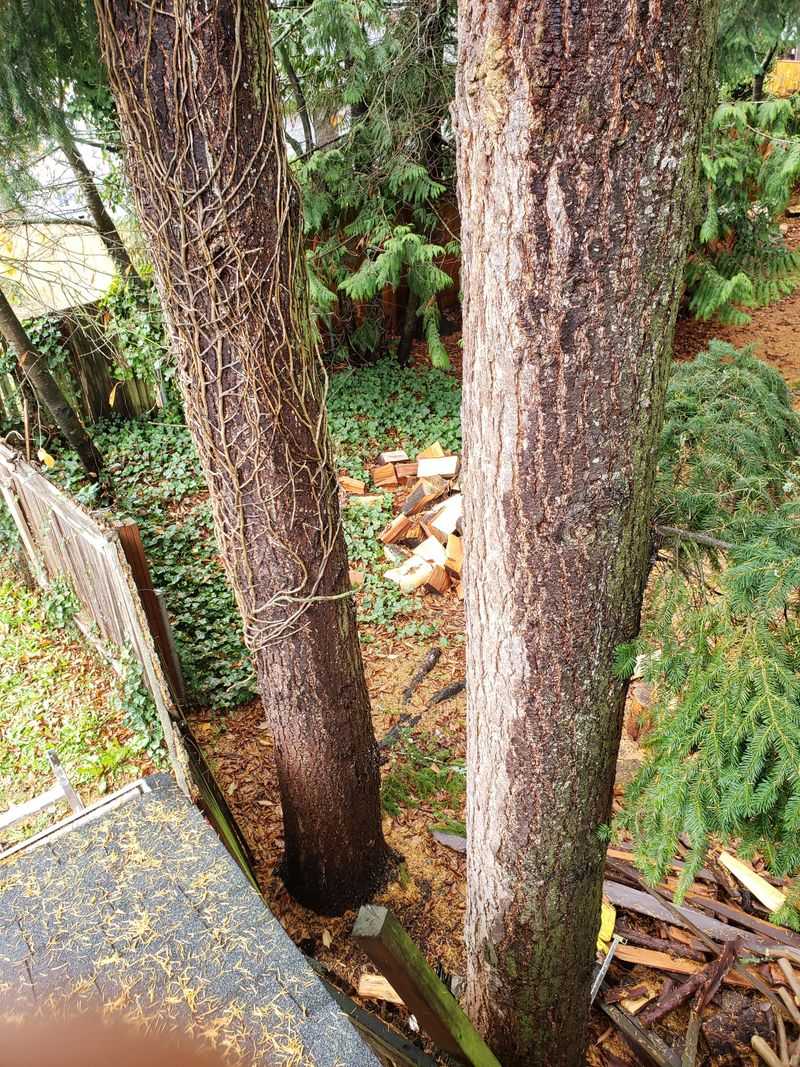
A limb that looks fine from the ground might be hollow inside. A tree that appears healthy could have root damage that makes it unstable.
Certified arborists are trained to spot what untrained eyes miss, and their professional assessments can help you make smarter decisions before any cutting begins.
The International Society of Arboriculture, known as the ISA, certifies arborists who meet specific education and experience standards.
Hiring an ISA-certified arborist in North Carolina gives you a qualified opinion backed by professional training.
They can assess whether a tree poses a real risk, recommend appropriate action, and provide a written report you can share with your neighbor, your insurance company, or an attorney if needed.
A written arborist report carries real credibility.
It shows you acted responsibly and based your decisions on expert evaluation rather than personal judgment. That matters a lot if a dispute ever becomes more formal.
Some homeowners skip the arborist step to save money, then spend far more later when something goes wrong.
Major pruning or removal near a property line without professional guidance can lead to unintended damage, neighbor conflict, or liability.
Before you hire any tree service, verify their credentials and insurance. Ask for a written plan.
A qualified professional who communicates clearly and documents their work is worth every dollar, especially when property lines and relationships are both on the line.
7. Shared Conversations Beat Surprise Cuts
Most neighbor tree problems do not start as legal disputes. They start as small annoyances that nobody talks about.
A branch drops leaves into a pool every fall. Roots push up a shared driveway. A fast-growing tree slowly blocks a view. These things feel minor at first, but resentment builds when nothing is said and nothing changes.
Bringing up a tree concern early, before it becomes urgent, gives both neighbors room to work together calmly.
A friendly conversation is almost always more effective than a surprise cut or an angry note. When people feel respected and included in a decision, they are far more likely to cooperate.
Explaining your concern clearly and listening to your neighbor’s perspective opens the door to a shared solution.
If you reach an agreement, write it down.
A simple written note or email summarizing what both parties agreed to is not a legal contract, but it creates a record that can prevent future misunderstandings.
Things like who pays for trimming, when it will happen, and who handles cleanup are all worth spelling out.
If informal conversation does not work and the situation is getting worse, some counties and municipalities in North Carolina offer mediation services that can help neighbors resolve disputes without going to court.
Solving a tree problem together builds goodwill. Solving it unilaterally, even if technically legal, often creates lasting tension that makes every future interaction with that neighbor more difficult than it needs to be.