Why July Is The Most Critical Month For Spotted Lanternfly Control In Pennsylvania Gardens
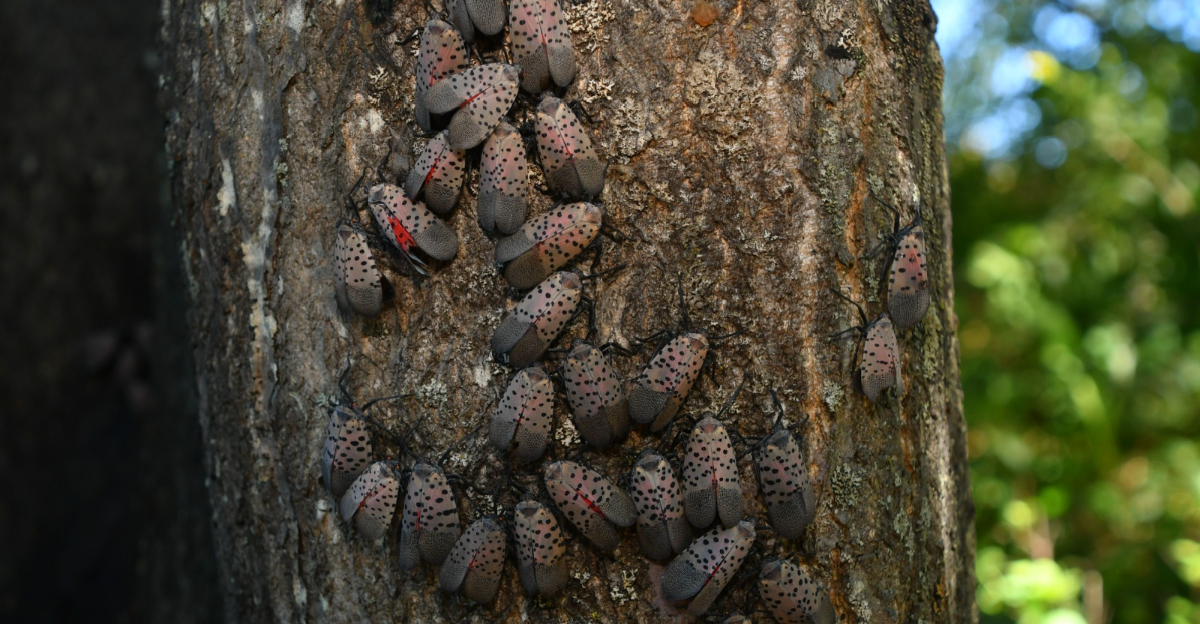
July in a Pennsylvania garden brings a lot of good things, and then it also brings spotted lanternfly adults.
If you have been watching small dark nymphs crawl around since spring, brace yourself, because the winged version is a whole different experience.
These insects do not get more subtle with age. As nymphs transform into adults through July, the activity level in Pennsylvania yards, patios, and garden beds picks up noticeably.
Tree-of-heaven draws thick clusters almost overnight, grapevines and fruit plants start seeing heavier feeding pressure, and that sticky honeydew residue has a way of showing up on deck furniture before most people realize what is happening.
Knowing what July actually looks like for spotted lanternfly and why timing your response thoughtfully matters can help Pennsylvania homeowners stay a step ahead of one of the state’s most closely watched invasive insects.
1. July Brings The Shift From Nymphs To Adults
Something noticeably changes in Pennsylvania gardens around midsummer, and spotted lanternfly is a big part of why.
Through late spring and early summer, most of the insects you spot are nymphs, small and wingless, moving across stems and bark in their early stages.
By July, those nymphs begin completing their final molt and emerging as fully winged adults, and that transition is one of the most significant shifts of the entire season.
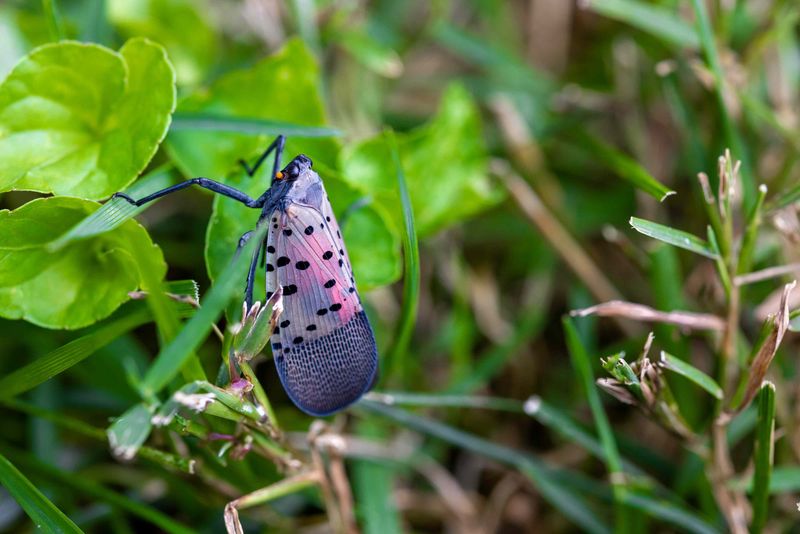
Adult spotted lanternflies look quite different from nymphs. Their forewings are grayish with black spots, and when startled, they flash bright red hindwings.
This sudden appearance of winged insects in yards where crawling nymphs were common just weeks earlier can catch gardeners off guard. Adults are also more mobile than nymphs, moving between plants and structures more readily once they have wings.
For Pennsylvania homeowners, this life-stage shift matters because adult spotted lanternflies behave differently than nymphs and tend to seek out different host plants and resting sites.
Knowing that July often marks the beginning of this adult phase helps you watch for early signs of the change.
Spotting adults on tree trunks, deck railings, or garden structures early gives you more options for responding thoughtfully, including reporting sightings and adjusting your monitoring habits going forward.
Consulting current guidance from Pennsylvania extension resources is also a smart move for understanding what steps make the most sense for your specific situation and property type.
2. Late Nymphs Move Across Garden Plants
On garden stems and lower branches in early July, late-stage nymphs are still very much active in many parts of Pennsylvania.
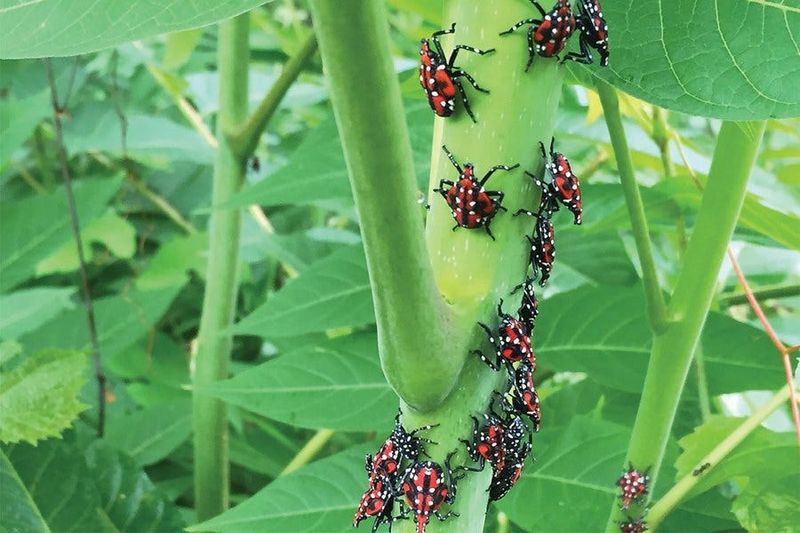
These older nymphs are larger than the tiny black-and-white ones that appeared in late spring, now showing bright red patches with black and white markings that make them easier to spot if you look closely.
They tend to move around more than younger nymphs and can cover surprising distances across garden plants in a short time.
Late nymphs feed by piercing plant tissue and drawing out sap, which can stress plants that are already working hard through summer heat. Ornamental plants, young trees, and vegetable garden borders are all places where nymphs may show up.
Your Pennsylvania Garden Changes Every Week. Your Plan Should Too.
Gardening in Pennsylvania changes quickly throughout the season. Every Friday you’ll receive a simple weekly plan showing exactly what to plant, prune, fertilize, harvest, and protect so you never miss the right timing.
In Pennsylvania gardens where tree-of-heaven grows nearby, nymphs often move back and forth between preferred hosts and other nearby plants, so activity in one part of your yard can spread across more of the garden than expected.
Checking stems, the undersides of larger leaves, and the base of woody plants regularly through early July gives you a clearer picture of how many nymphs are present.
Gentle physical removal, like scraping nymphs into soapy water, is one option some homeowners use during this stage.
Staying observant during this window is especially useful because late nymphs that are not yet adults may respond somewhat differently to certain control approaches than fully winged adults will later in the season.
3. Adults Start Gathering On Trees And Structures
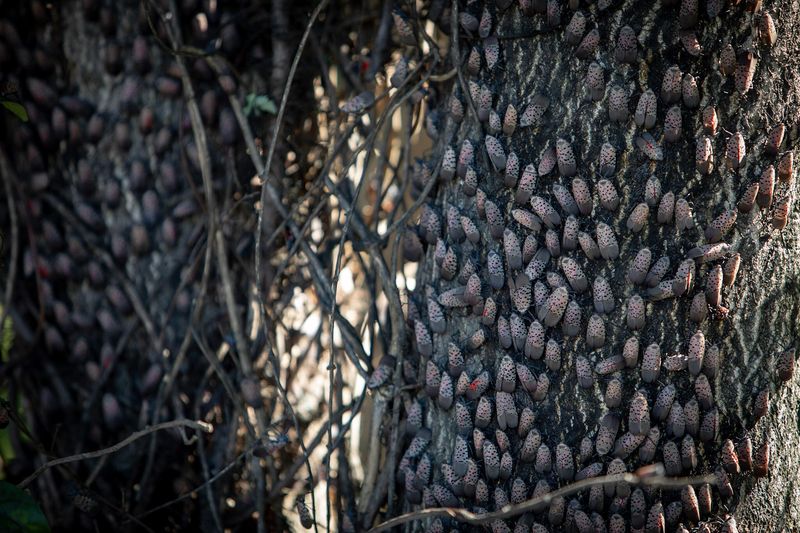
Once the first wave of adults appears, Pennsylvania gardeners often notice them gathering in places that can seem almost social.
Groups of adult spotted lanternflies cluster on tree trunks, wooden fencing, deck posts, siding, and the undersides of outdoor structures, sometimes in numbers that are hard to miss.
This grouping behavior is part of how adults feed and rest, and it tends to become more noticeable as July progresses.
Trees with smooth or lightly textured bark seem to attract resting adults, and structures near heavily infested trees may see adults moving onto decks and siding as the insects spread out from their primary feeding sites.
In Pennsylvania neighborhoods with mature trees and established landscaping, this kind of movement between trees and structures is fairly common during peak adult activity.
Homeowners sometimes find adults on patio furniture, outdoor umbrellas, and even vehicles parked near infested plants.
Watching where adults congregate helps you understand which parts of your property are seeing the most activity. If a particular tree or fence section is drawing repeated clusters, that spot is worth monitoring more closely.
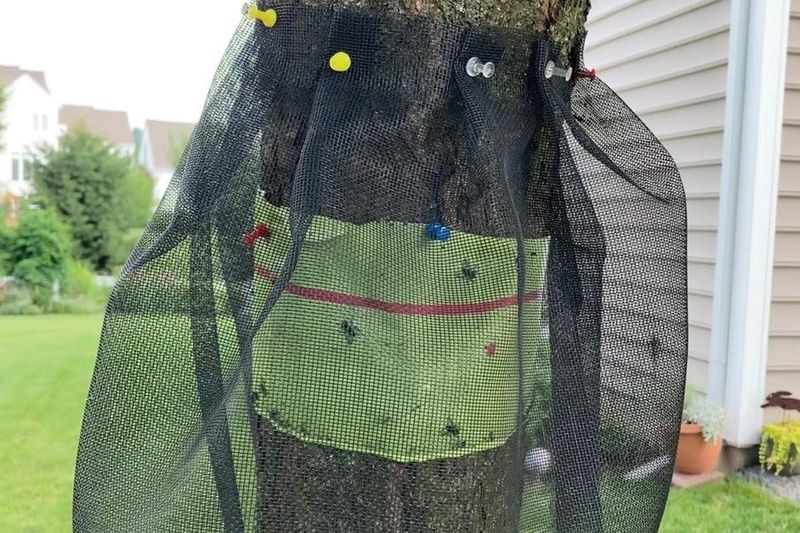
Some homeowners use sticky bands on tree trunks to capture insects moving up and down the bark, though current guidance from Pennsylvania extension resources recommends checking those traps regularly to avoid accidentally catching birds or other wildlife.
Staying aware of gathering spots gives you better information for deciding what steps to take next.
4. Tree-Of-Heaven Draws Heavy Activity
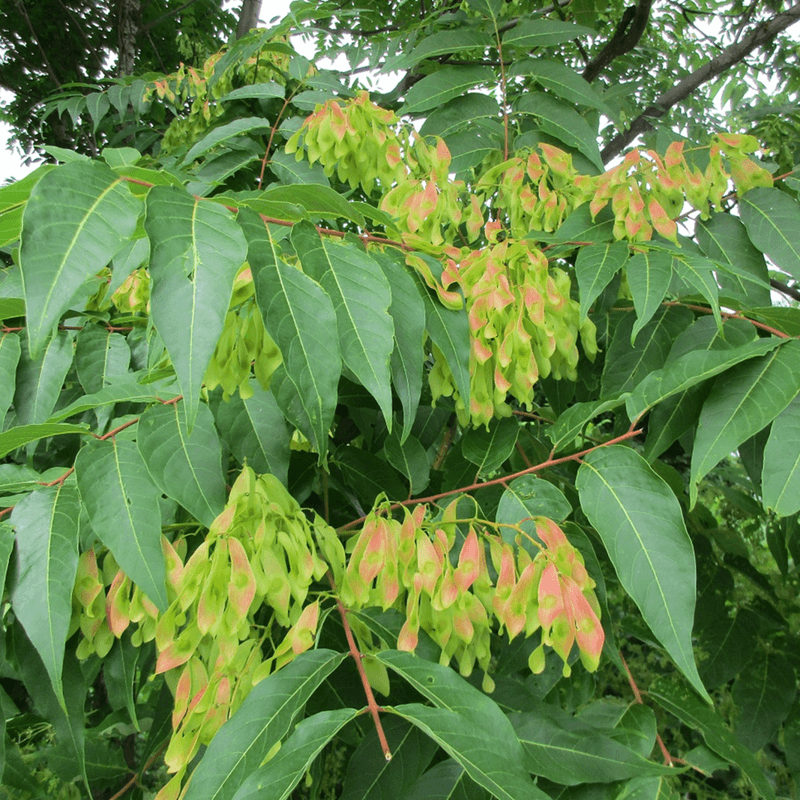
Along fence lines, roadsides, and property edges across Pennsylvania, tree-of-heaven has become one of the most recognizable features of spotted lanternfly country.
This invasive tree, which grows aggressively in disturbed soils and along borders, is a strongly preferred host for spotted lanternfly adults.
When tree-of-heaven is present near your garden, it tends to pull in heavy insect activity, especially as adult populations build through July.
Adults feed on the sap of tree-of-heaven in large numbers, and that concentrated feeding can make the tree look and feel like a magnet for the insects.
The connection between tree-of-heaven and spotted lanternfly is well-established, and Pennsylvania gardeners who have this tree on or near their property often notice that spotted lanternfly pressure in their yard is noticeably higher than in areas without it.
Even trees growing just beyond your property line can influence how many insects drift into your garden space.
Managing tree-of-heaven on your own property, when it is safe and practical to do so, is one step some Pennsylvania homeowners take to reduce the draw for spotted lanternflies.
Removing or treating tree-of-heaven is a longer-term strategy rather than an immediate fix, and the approach that works best depends on the size, location, and number of trees involved.
Checking with local extension guidance before taking action helps ensure that removal efforts are timed and handled in ways that are less likely to spread the insects to new areas unintentionally.
5. Honeydew Makes Patios And Plants Sticky
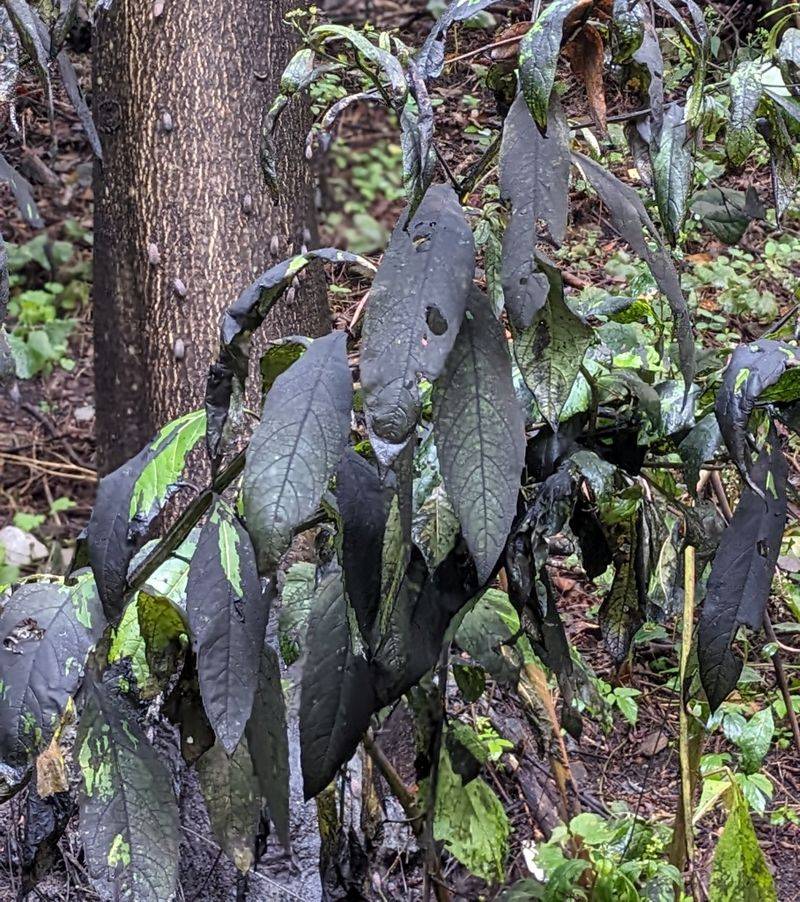
A telltale sign that spotted lanternflies have been feeding nearby is a sticky, sugary film that shows up on surfaces below their resting and feeding spots. This substance is honeydew, a byproduct that the insects excrete as they feed on plant sap.
In July, when adult populations begin to build in Pennsylvania gardens, honeydew can appear on patio furniture, deck boards, plant leaves, and even outdoor cooking equipment with surprising speed.
Beyond feeling unpleasant underfoot or on outdoor seating, honeydew creates a surface that black sooty mold tends to colonize.
That mold gives affected plants and surfaces a dark, dusty appearance that can look alarming even though it is a secondary effect rather than a direct result of the insects feeding.
On plants, heavy sooty mold buildup can reduce the amount of sunlight reaching leaves, which may affect plant health over time if feeding continues unchecked.
Cleaning honeydew from hard surfaces like decks and furniture is straightforward with warm soapy water, and doing it regularly during peak activity periods makes the task more manageable.
For plants showing sooty mold, a gentle rinse with water can help, though addressing the feeding insects is the more lasting solution.
Pennsylvania homeowners who notice sticky surfaces and dark mold in their outdoor spaces in July should look up and around for clusters of adult spotted lanternflies that may be feeding on nearby trees or structural surfaces above the affected area.
6. Grapes And Fruit Plants Need Extra Attention
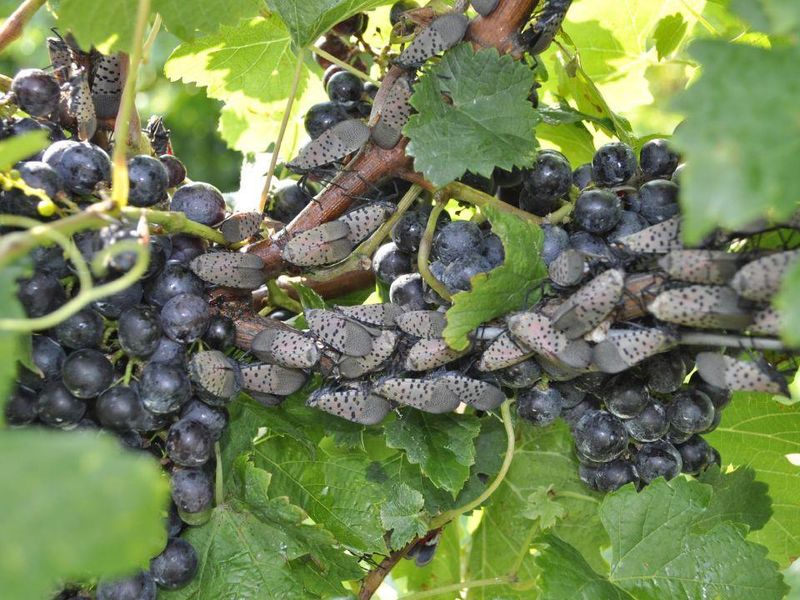
Backyard grapevines in Pennsylvania can become a real focus of spotted lanternfly activity as summer matures.
Grapes are among the host plants that adult spotted lanternflies feed on with notable enthusiasm, and July, as adults begin appearing in larger numbers, is a good time to start checking vines more carefully.
Even a small home planting of grapes can attract feeding adults if spotted lanternflies are active in the surrounding area.
Beyond grapes, other fruit plants in Pennsylvania gardens are also worth monitoring more closely in July. Peaches, apples, hops, and other fruiting plants have been documented as hosts that spotted lanternflies will feed on when present in the landscape.
Feeding on these plants, especially in large numbers, can stress them during a period when they are putting energy into fruit development.
Homeowners with fruit plants in their gardens have good reason to check stems, trunks, and the undersides of leaves regularly through the summer months.
Keeping records of where you see feeding activity on fruit plants from week to week can help you notice whether pressure is increasing or staying steady.
Some gardeners find that physical barriers or targeted treatments on specific plants help reduce feeding, though any pesticide use near edible plants should follow current label guidance and be approached carefully.
Connecting with Pennsylvania extension resources for updated recommendations on protecting backyard fruit plants from spotted lanternfly gives you the most reliable and locally relevant information available.
7. Outdoor Gear Can Carry Them Elsewhere
Patio furniture stacked for a camping trip, a bicycle loaded onto a car rack, a trailer hitched up for a weekend away – these everyday summer moments can accidentally become part of how spotted lanternfly spreads to new areas of Pennsylvania and beyond.
Adult spotted lanternflies and egg masses laid on smooth surfaces can hitch rides on outdoor gear, vehicles, and equipment without anyone realizing it.
Pennsylvania has an established quarantine zone that covers a large portion of the state, and moving potentially infested items out of that zone is something residents are asked to be mindful of.
Adults are mobile and can fly, but they also rest on vehicles, trailers, and outdoor items in ways that allow them to travel much farther than they would on their own.
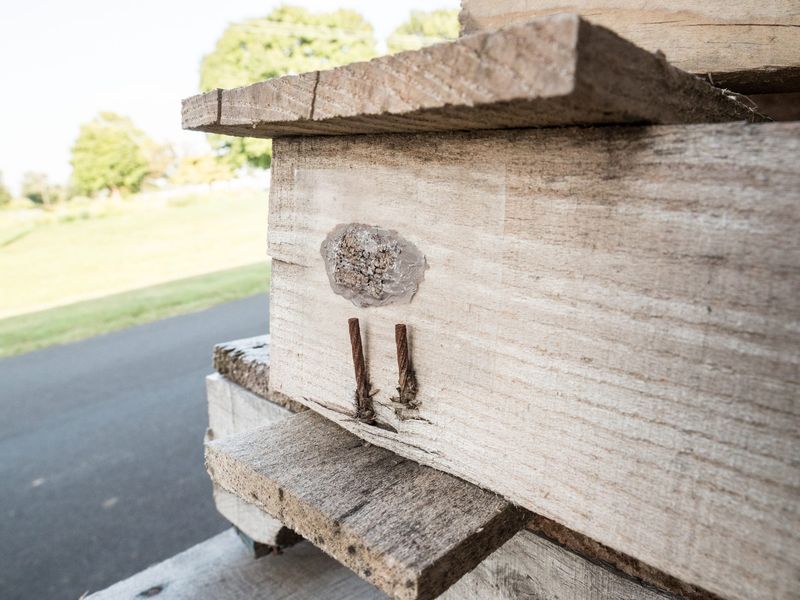
Egg masses, which are laid on flat surfaces including vehicle undercarriages, trailers, outdoor furniture, and firewood, are especially easy to move without noticing.
A quick check of outdoor gear before loading it up for travel takes only a few minutes and can prevent unintentional spread to areas where spotted lanternfly has not yet established.
Pennsylvania residents traveling outside quarantine areas are encouraged to inspect vehicles and outdoor items before leaving. Scraping off any egg masses you find and placing them in a sealed bag before disposal is the recommended approach.
Checking current Pennsylvania Department of Agriculture guidance on quarantine boundaries and traveler responsibilities keeps you informed about what is expected and helps protect communities in other parts of the state.
8. Control Works Best When Timed Carefully
Reaching for a control method at the right moment in the season tends to produce better results than acting at random times throughout summer.
In Pennsylvania, July sits at a transitional point where late nymphs and early adults are both present in many gardens, and that overlap is worth factoring into how and when you respond.
Some approaches work more effectively against nymphs, while others are better suited to adult populations, so knowing what life stage you are dealing with shapes which options make the most sense.
Physical removal, sticky traps on tree trunks, and targeted pesticide applications are all tools that Pennsylvania homeowners may consider, depending on the level of activity they are seeing and the plants involved.
Following current guidance from Penn State Extension or the Pennsylvania Department of Agriculture helps ensure that whatever approach you choose is appropriate for your situation.
Pesticide labels provide important safety and application information that should be read carefully before use, especially around edible plants, pollinators, and water features.
Timing also matters when it comes to inspecting for and reporting spotted lanternfly. Pennsylvania has reporting resources that help track where the insect is spreading, and submitting sightings from your yard contributes to that broader picture.
Rather than waiting until activity becomes overwhelming, checking your garden regularly through July and adjusting your response based on what you observe tends to be a more practical and effective approach than trying to address a large infestation all at once.