7 Plant Spacing Rules California Gardeners Need For Fire Safe Yards
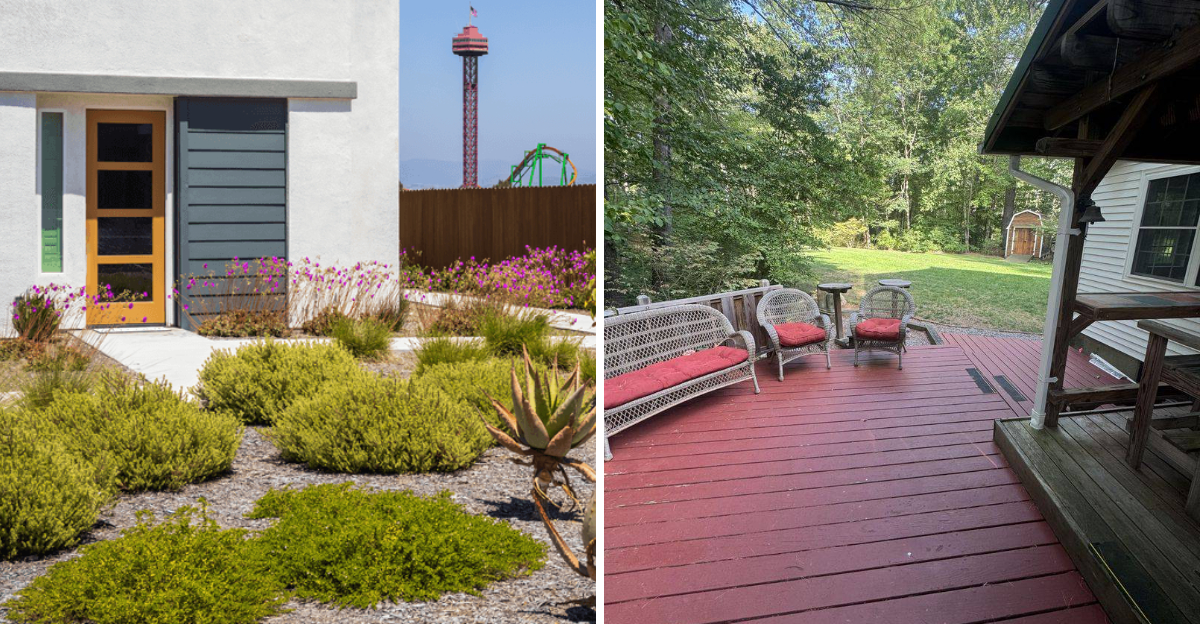
Wildfires in California are not slowing down, and your yard could either help protect your home or work against it.
Many homeowners focus on what plants they choose, but the real secret weapon is how far apart those plants are placed. Smart spacing can slow a fire’s path and give your home a fighting chance when conditions turn dangerous.
California’s CAL FIRE guidelines break your yard into zones, and each zone has its own spacing logic.
The closer you get to your house, the leaner and more open your plantings need to be. Getting this right does not require a landscaping degree. It just takes knowing which rules matter most and why each one works.
A few changes made this weekend could make a serious difference when fire season heats up.
Seven practical spacing rules can help California gardeners build a yard that looks good and stays safer during the months when a single ember landing in the wrong place can set off a chain of events that no garden hose can stop.
1. Keep The First Five Feet Lean
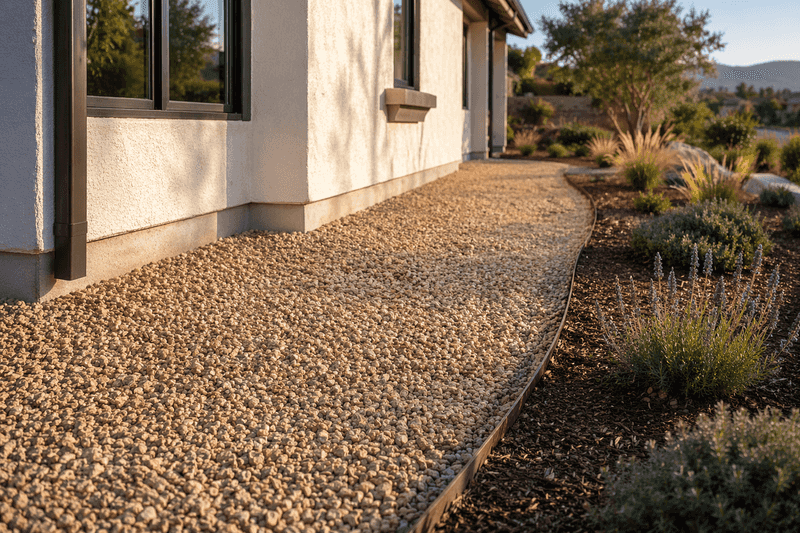
Right up against your house, the ground should be mostly bare, and that is not an accident.
The first five feet from any wall, fence post, or foundation is called Zone Zero by many fire authorities, and it deserves serious attention.
Gravel, decomposed granite, or concrete pavers work best in this strip because they do not burn.
Any plant you keep within this zone needs to be low-growing, non-woody, and spaced out with plenty of breathing room between each one.
Dense groundcovers, mulch piles, and anything with dry, papery leaves are a bad match for this area. Succulents with high water content, like sedums or ice plant, are a smarter pick here.
Wood mulch is a sneaky hazard that many gardeners overlook.
It can hold embers and stay hot long after a fire passes nearby. Swap it out for gravel or rock in this first five-foot band. You can still have a yard that looks sharp, just think of this strip as your home’s personal firebreak.
CAL FIRE recommends removing all dead plant material, wood piles, and flammable debris from this zone entirely.
Even a potted plant with dry leaves sitting on a wood deck counts as a risk. Keeping this zone lean is not about making your yard look bare. It is about removing the first step a fire would use to climb toward your walls.
2. Move Shrubs Away From Walls
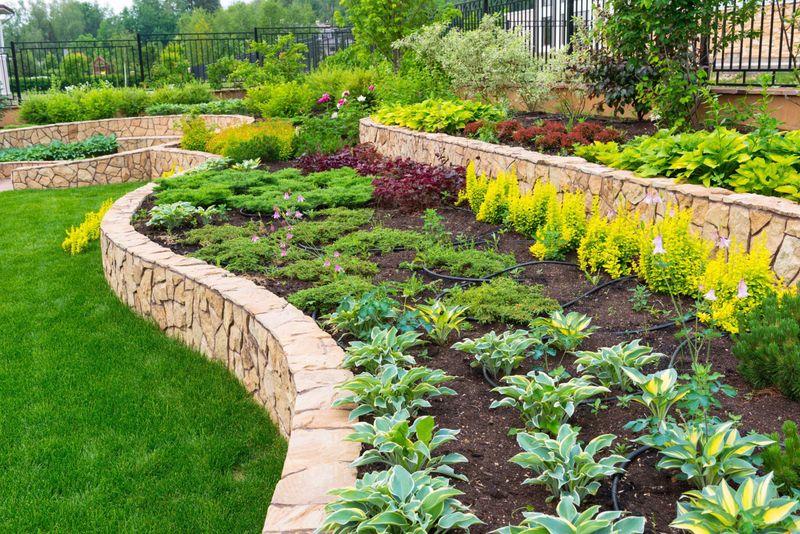
Shrubs planted flush against a wall act like a ramp for fire.
Hot gases and flames can travel straight up siding, reach roof overhangs, and slip through vents in seconds. Moving shrubs back from walls and fences is one of the fastest fixes a California gardener can make this season.
CAL FIRE and UC Cooperative Extension both recommend keeping shrubs at least two to three feet away from any exterior wall.
For larger shrubs that grow over three feet tall, push that gap even further. The taller the plant, the more fuel it carries, and the more clearance it needs from your structure.
Your California Garden Changes Every Week. Your Plan Should Too.
Gardening in California changes quickly throughout the season. Every Friday you’ll receive a simple weekly plan showing exactly what to plant, prune, fertilize, harvest, and protect so you never miss the right timing.
Vents are a special concern.
Ember intrusion through vents is one of the top causes of home loss during wildfires. A shrub sitting directly below or beside a vent gives embers a soft landing pad loaded with dry leaves and woody stems.
Move those plants back and consider ember-resistant vent covers as a bonus step.
Fences made of wood connect directly to your home in many yards.
A shrub leaning against a wood fence creates a fuel bridge that runs right to your siding. Keep shrubs away from fence lines too, not just walls.
Check each exterior wall this weekend and measure the gap. If you can touch both the plant and the wall at the same time, the shrub needs to move.
3. Break Plant Groups Into Islands
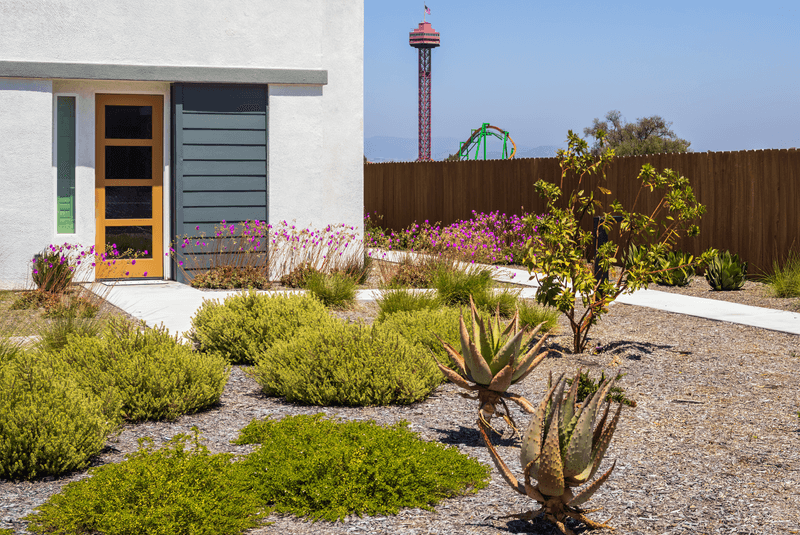
A yard full of plants touching each other from one end to the other is basically a runway for fire.
Continuous plant coverage lets flames travel fast and without interruption. Breaking up that coverage into separate islands of plants is one of the smartest structural moves a gardener can make.
The goal is to create gaps between plant groups so that fire cannot move freely from one cluster to the next.
UC ANR recommends spacing shrub clusters at least ten feet apart on flat ground. On slopes, that spacing should increase because fire moves faster uphill and needs more open space to slow it down.
Hardscape is your best friend here.
Flagstone paths, gravel beds, concrete stepping stones, and dry creek beds all serve double duty. They look great and they interrupt fuel continuity at the same time.
A well-placed path between two plant islands does real fire-safety work while making your yard easier to walk through.
Low-water California native plants work especially well in island arrangements.
Plants like Cleveland sage, coyote brush, and toyon can be grouped into compact clusters with open ground between them. Keep each island trimmed and tidy so dead material does not build up inside the group.
Even fire-resistant plants become a hazard when they are packed with dry, dead stems and leaves.
4. Separate Tree Crowns With Space
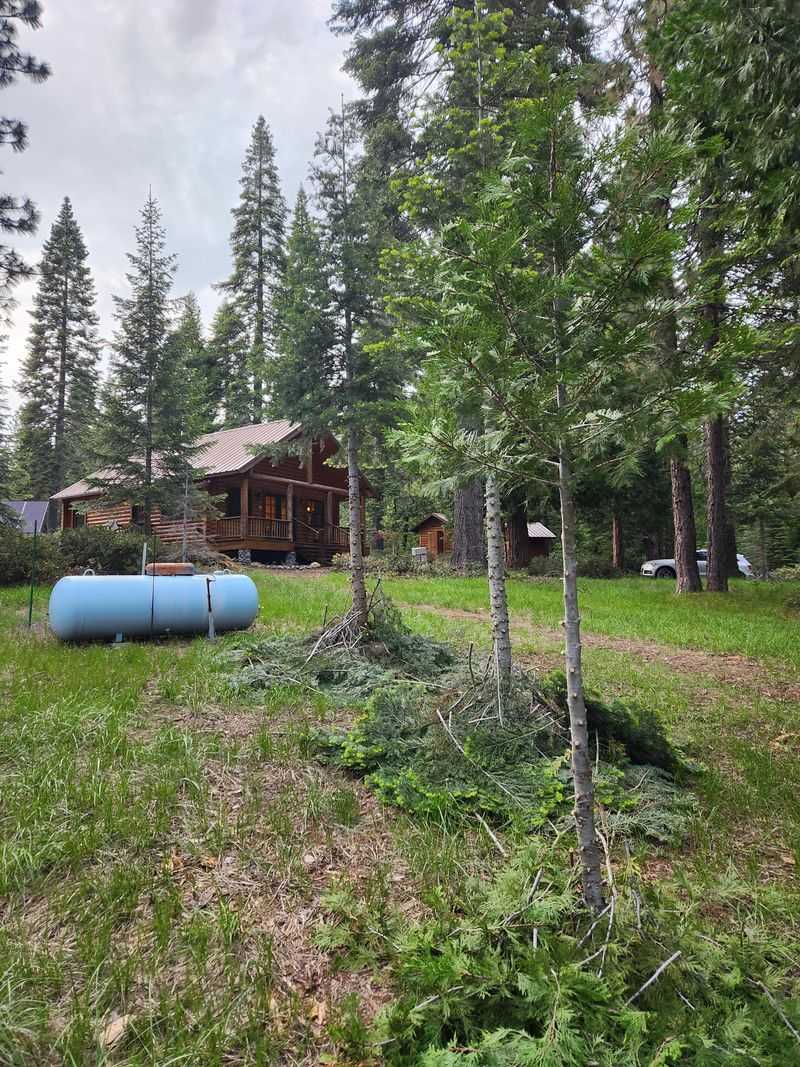
Trees touching each other overhead create a connected canopy that fire can climb into and travel across quickly.
Once fire gets into the treetops, it moves at a completely different speed than ground-level fire. Separating tree crowns is not optional in California fire country. It is essential.
CAL FIRE recommends keeping at least ten feet of horizontal space between tree canopy edges on flat ground.
On slopes, that number goes up significantly. A slope of 40 percent or more may require up to 30 feet of separation between crowns because uphill fire moves so aggressively. The steeper your yard, the wider your spacing needs to be.
Crowns that overlap are sometimes called ladder fuel connectors, and that name tells you everything.
Fire uses them to climb from the ground to the treetops with very little effort. Pruning back branches that reach toward a neighboring tree is a simple way to open that gap without removing the whole tree.
Pay attention to the species you have.
Fast-growing trees like eucalyptus and Monterey pine carry heavy fuel loads and have oils that make them especially reactive to heat. Space those trees generously and keep them well away from each other and from your roof line.
Crown spacing also improves tree health by reducing disease and pest pressure, making it a genuine two-for-one improvement for any California yard.
5. Lift Branches Above Nearby Shrubs
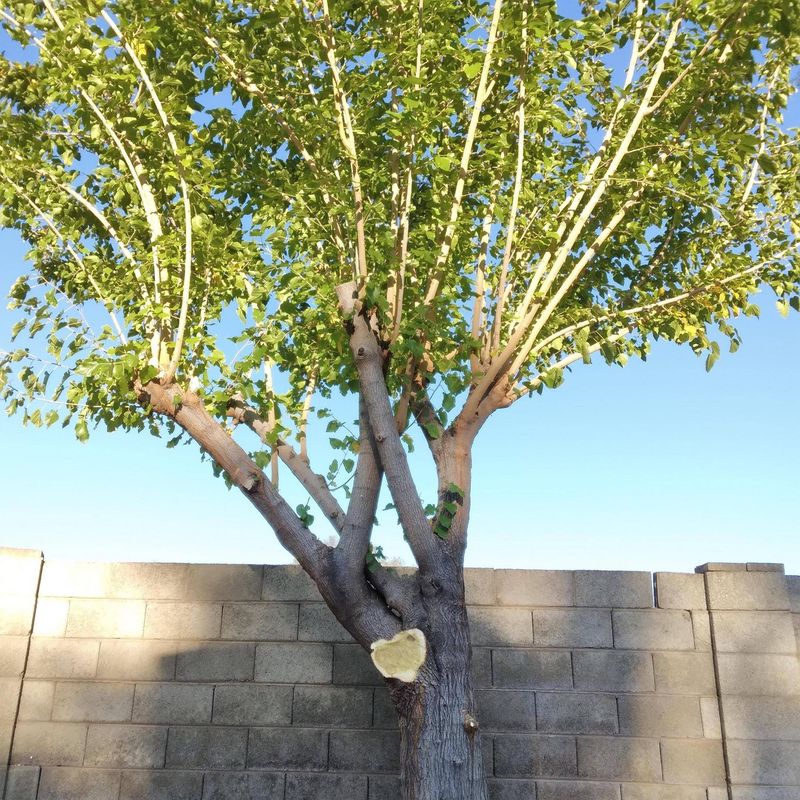
Ground-level fire loves to climb, and a tree branch hanging low over a shrub gives it the perfect ladder.
Vertical clearance between shrubs and the branches above them is a rule that often gets skipped, but it does a lot of heavy lifting in a fire-safe yard plan.
CAL FIRE recommends pruning tree branches up to at least six feet from the ground.
Some sources suggest pruning to a height that equals three times the height of the surrounding shrubs. So if your shrubs are two feet tall, branches should start no lower than six feet above them.
That gap removes the vertical fuel connection between ground and canopy.
Low-hanging branches are sneaky. They look harmless on a calm day, but during a fire, they act as bridges between ground fuel and the tree canopy above.
Once fire reaches the canopy, it moves faster and becomes much harder to manage. Removing those low limbs is a straightforward job for most homeowners with a pole pruner.
Do not over-prune.
Removing too many branches can stress the tree and leave it vulnerable to wind damage and disease. A good rule is to never remove more than one-third of a tree’s live branches in a single season.
Work gradually and let the tree adjust between pruning sessions.
Lifting branches is one of those tasks that sounds minor but pays off significantly during California fire season.
6. Keep Decks Clear Of Plant Bridges
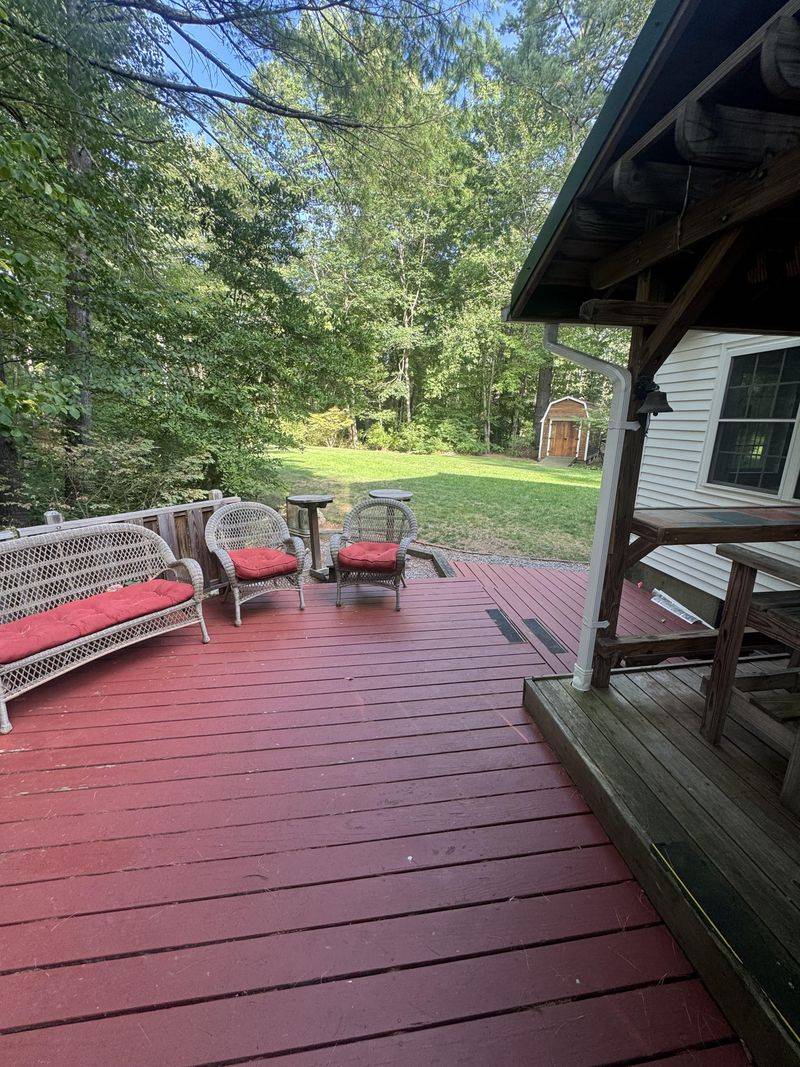
=Decks are one of the most overlooked fire hazards in a California yard.
Wood decking, railings, and stairs connect directly to your home, and any plant that bridges the gap between the garden and the deck gives fire a direct path to your structure.
Keeping that connection broken is a priority before fire season arrives.
Vines are a particular problem.
A climbing vine on a trellis attached to your deck railing looks stunning in spring, but by late summer it is a dry, woody fuel source pressed right against your home.
Remove vines from any structure connected to the house and replace them with potted plants that can be moved when conditions get dangerous.
Potted plants on decks need their own spacing rules.
Keep pots at least 18 inches from railings and move them further back during red flag warning days. Terra cotta and ceramic pots are better choices than plastic ones because they do not melt or fuel a fire the same way.
Water plants in pots regularly so they stay hydrated and less flammable.
Stairs leading off a deck often run through or beside plantings. Check that no shrub or ornamental grass is leaning against or growing through stair railings.
Even a small plant touching a wood stair creates a fuel bridge that matters during extreme fire conditions. Clear decks are not just tidy. They are genuinely tough.
7. Trim Grasses Low Near Structures
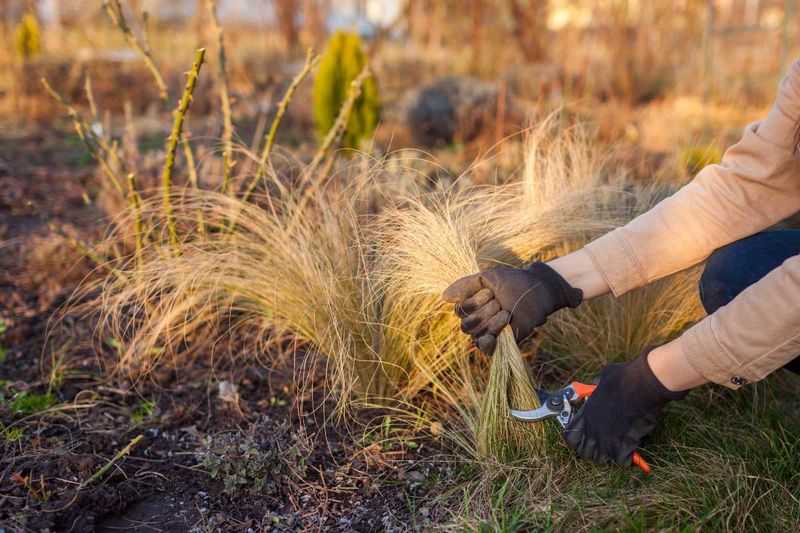
Ornamental grasses have become hugely popular in California landscapes, and for good reason.
They are drought-tolerant, beautiful, and low-maintenance most of the year. But by late summer, those same grasses turn into dry, papery fuel sources that ignite fast and burn hot. Managing them near your home is non-negotiable during fire season.
Cut ornamental grasses back hard before summer arrives.
Many varieties should be trimmed to just a few inches above the ground in late winter or very early spring.
This removes the previous year’s dry material and gives the plant a fresh start before the hot, dry months set in. Letting old grass accumulate is like stacking kindling around your foundation.
Keep all grasses, both ornamental and wild, at least 30 feet from any structure on flat ground.
On slopes, extend that distance further because dry grass on a hillside carries fire uphill at a shocking speed.
If you have a slope covered in dry grass leading toward your home, that is an urgent situation worth addressing before fire season peaks.
Native bunch grasses like purple needlegrass are lower risk than large, fluffy ornamental varieties like pampas grass.
Pampas grass in particular is a fire hazard and an invasive species in California. Removing it near structures is strongly recommended by fire authorities and local agencies alike.
Mow, trim, and hydrate grasses close to your home all season long.
A well-managed grass is a safe grass, and in California, that distinction is worth taking seriously every single summer.