Why Arizona Gardeners Should Rethink This Ornamental Grass For Fire Safety
The plants you choose today can affect much more than the way your yard looks a few years from now.
Every tree, shrub, and ornamental grass becomes part of the landscape around your home, and some are better suited to dry conditions than others.
That is something many homeowners never think about until wildfire season becomes part of the conversation.
Living in Arizona means paying attention to more than colorful blooms and fast growth. A plant that seems like the perfect addition to the yard can become a concern once long stretches of hot, dry weather arrive.
Appearance is only one piece of the puzzle when choosing what belongs in your landscape.
One popular ornamental grass deserves a closer look. Understanding how it behaves in fire prone conditions may change the way you plan your yard for years to come.
1. Fountain Grass Dries Out Quickly During Hot Weather
Grab a handful of dry fountain grass and it practically crumbles in your fingers. That brittle texture is not just unpleasant to touch.
It is a warning sign about what this plant becomes during the hottest months of the year.
Fountain grass loses moisture fast. When summer temperatures climb above 100 degrees, the blades dry from the tips down.
Within a few weeks, an entire clump can shift from green to golden-brown to a completely desiccated mass of dry fiber.
Dry plant material ignites quickly. Fountain grass burns at a low ignition temperature, meaning it does not need much heat or a direct flame to catch.
A stray ember from a neighbor’s yard, a passing vehicle, or even a piece of glass catching sunlight can be enough.
What makes this worse is the speed. Once fountain grass catches, it burns intensely and fast.
Flames can move through a patch in seconds, especially when there is any wind at all.
Homeowners often plant fountain grass along fences, near walls, or close to entry paths. Those locations put dry, flammable material right next to your home’s most vulnerable spots.
2. Dry Leaves And Seed Heads Build Up Over Time
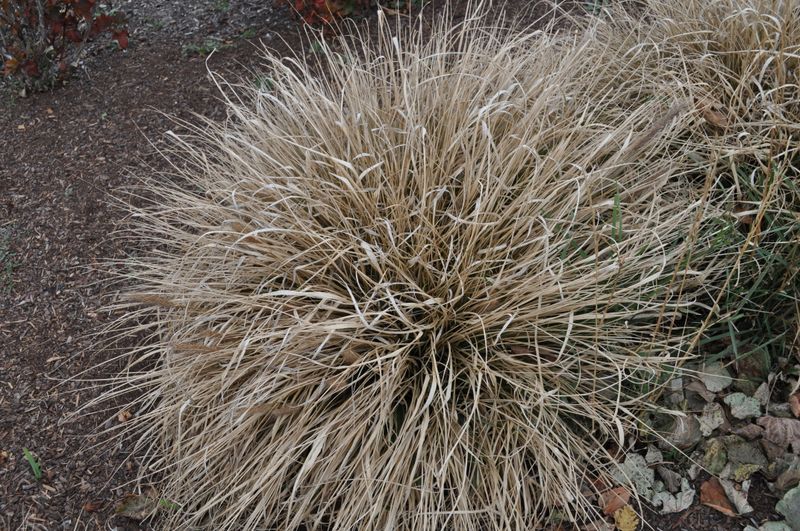
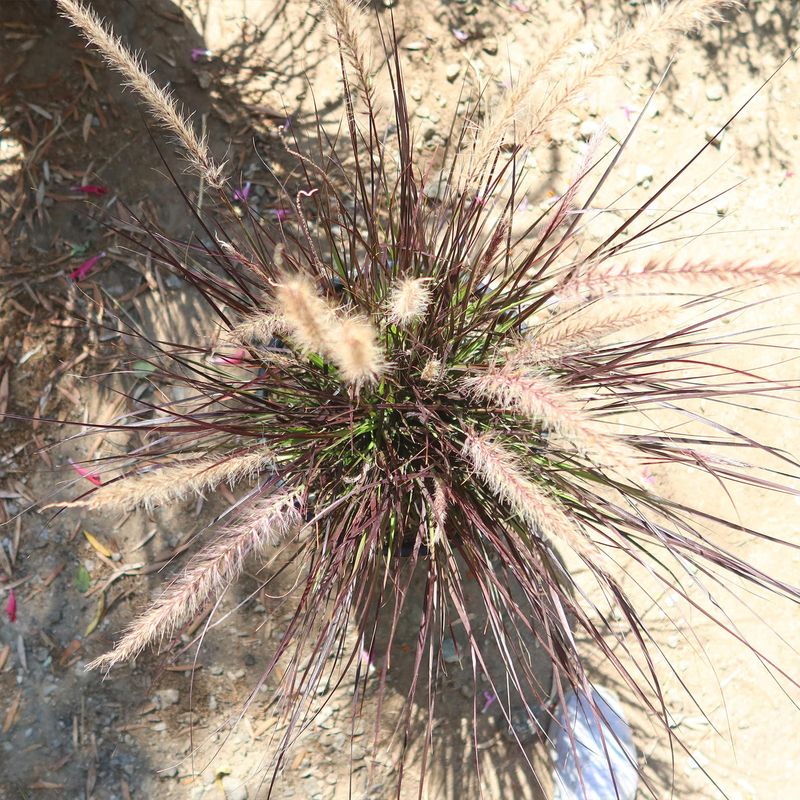
Look at the base of an older fountain grass clump and you will likely find a dense mat of brown, papery leaves. That buildup does not just look messy.
It acts like a fire starter sitting inches from your soil.
Fountain grass does not shed its old growth cleanly. Dry leaves accumulate at the base and stay trapped inside the clump.
Over one or two seasons, that layer of dry debris can become surprisingly thick and compact.
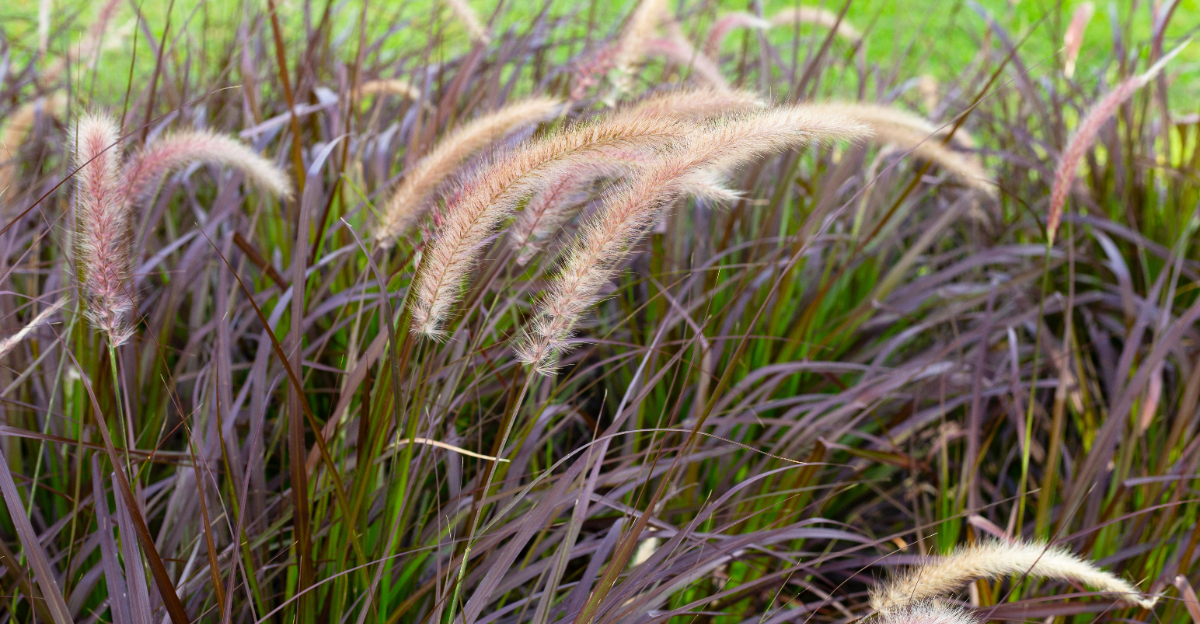
Seed heads add to the problem. Fountain grass produces fluffy plumes that dry out and stay attached to the plant for months.
Those plumes are lightweight and highly flammable. Wind moves them around the yard, spreading dry material far from the original plant.
Gardeners sometimes try to manage this buildup by cutting the grass back once a year. That helps, but it does not solve the problem entirely.
Your Arizona Garden Changes Every Week. Your Plan Should Too.
Gardening in Arizona changes quickly throughout the season. Every Friday you’ll receive a simple weekly plan showing exactly what to plant, prune, fertilize, harvest, and protect so you never miss the right timing.
New growth comes in fast, and the cycle of accumulation starts again almost immediately after cutting.
A single unmanaged clump can hold a surprising amount of flammable material by late summer. Multiply that by several plants in a yard and the fire load adds up quickly.
3. Wind Carries Seeds Far Beyond The Original Planting Area
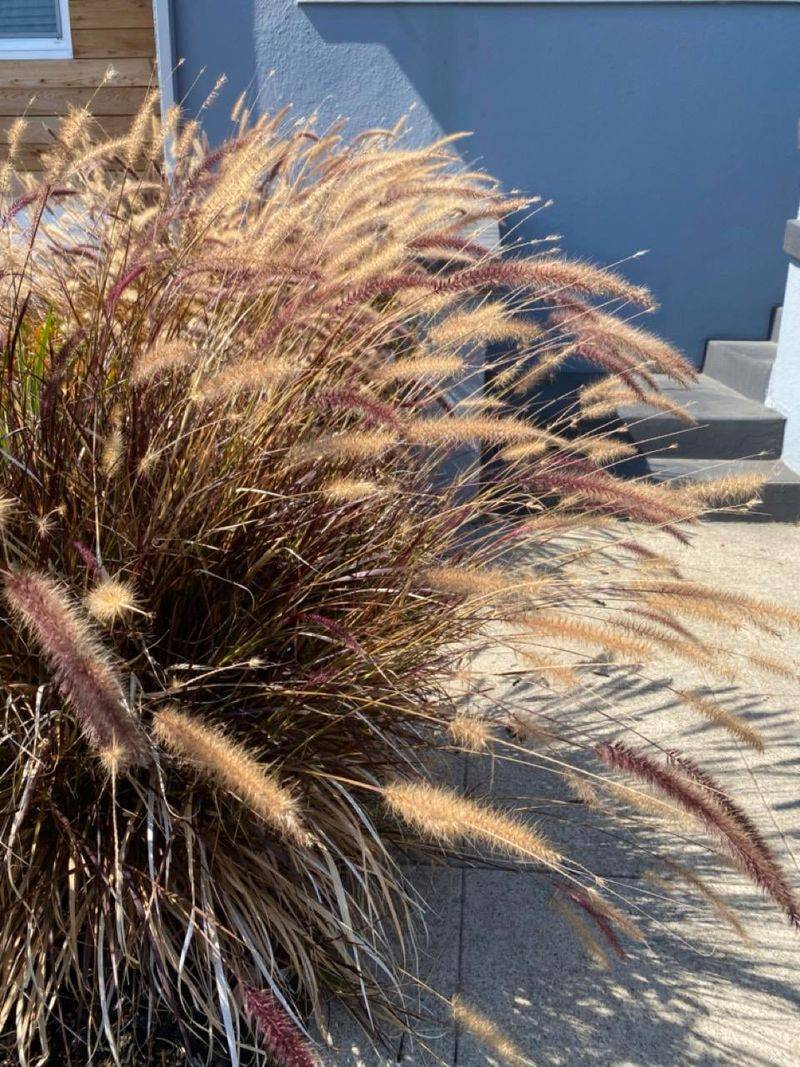
Fountain grass is an incredibly efficient spreader. One mature clump can produce thousands of seeds each season.
Those seeds are light, feathery, and built to travel on the wind.
A single afternoon gust can carry seeds across a fence, down a wash, and into open desert land. Once they land in dry soil, they germinate quickly when even small amounts of rain arrive.
Before long, fountain grass appears in places no one ever planted it.
Roadsides, vacant lots, and natural washes are full of escaped fountain grass across the Southwest. These plants do not stay contained to yards.
They move into wild spaces and establish themselves in areas that are harder to manage and monitor.
Wildland fire managers point to fountain grass as a serious concern precisely because of this spreading behavior.
When it colonizes open land, it creates long, continuous fuel beds that allow fire to travel much farther and faster than it would through native desert vegetation.
Native desert plants like saguaro and palo verde grow with natural spacing between them. That spacing slows fire spread.
Fountain grass fills in those gaps and connects fuel sources in ways that native plants never would.
4. Dense Clumps Become Harder To Manage Each Year
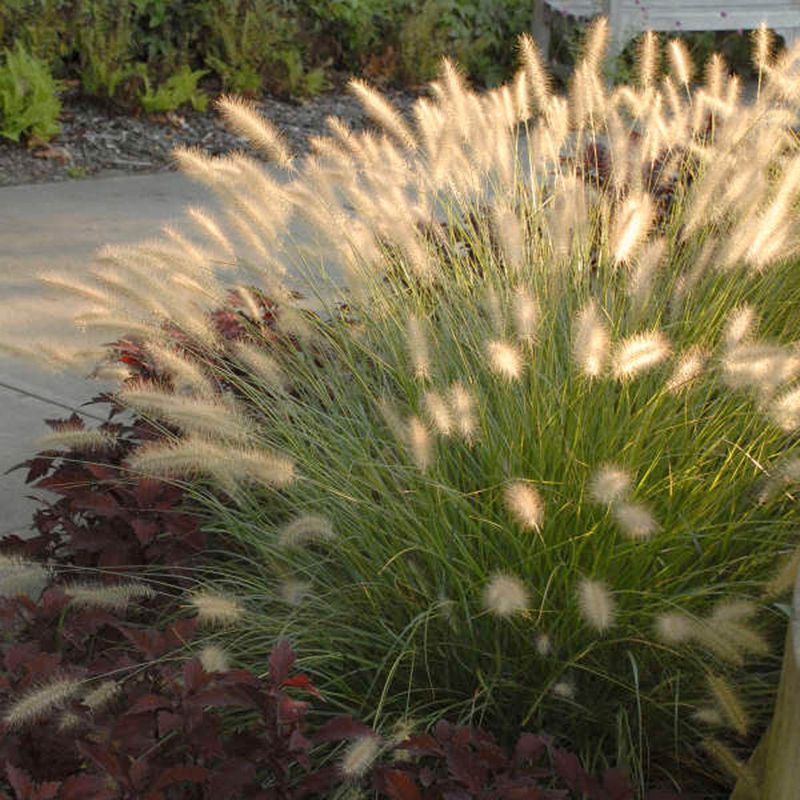
Fountain grass starts small and manageable. A single clump in its first season is easy to water, trim, and keep tidy.
Fast forward two or three years and that same clump has often doubled in size and density.
Root systems expand outward and downward each season. The crown of the plant gets thicker and woodier over time.
Cutting it back becomes a real physical job, requiring heavy gloves, loppers, and sometimes a saw just to get through the base.
Skipping even one season of maintenance makes a noticeable difference. Clumps that go uncut accumulate more dry material, grow wider, and become harder to remove or control.
What started as a low-maintenance ornamental quickly becomes a recurring chore.
Gardeners in hot desert regions often find that fountain grass looks its best only in the first year or two. After that, the plant tends to look ragged, with brown centers and uneven growth.
At that point, many homeowners either neglect it entirely or struggle to keep up with it.
Neglected clumps are the most dangerous from a fire safety standpoint. A large, overgrown clump with years of dry debris at its core is essentially a slow-burning pile of fuel.
5. Escaped Plants Can Crowd Out Native Species
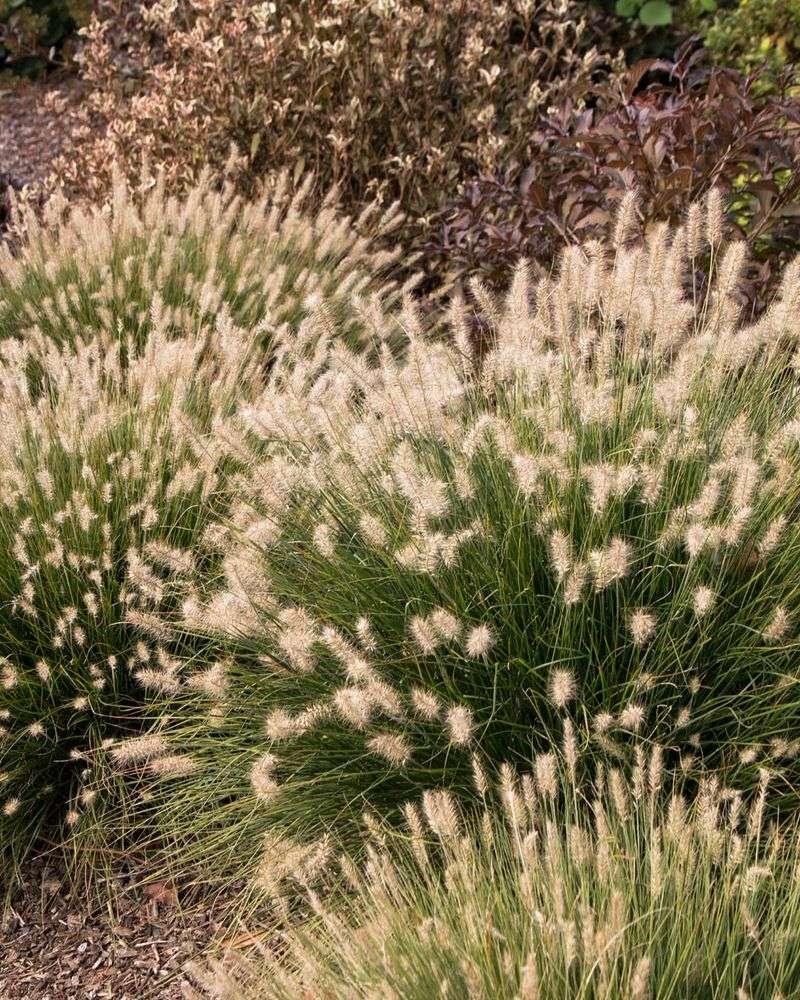
Fountain grass does not play well with others. Once it escapes cultivated yards and establishes itself in natural areas, it competes aggressively with native plants for water, sunlight, and soil space.
Native desert plants evolved to grow in conditions with limited resources. They space themselves naturally and support a web of local insects, birds, and animals.
Fountain grass disrupts that balance by growing faster and denser than most native species can match.
Brittlebush, desert marigold, and native bunch grasses lose ground when fountain grass moves in nearby. Those natives provide food and shelter for pollinators and wildlife.
When they get crowded out, the ecological impact ripples outward in ways that are not immediately visible but are genuinely significant.
Land managers in desert preserves spend real time and money removing escaped fountain grass from natural areas. Volunteer groups regularly organize removal efforts in regional parks and washes.
The labor involved is substantial, and the grass often regrows from seeds left in the soil.
Choosing not to plant fountain grass in the first place is far easier than participating in removal efforts later. Gardeners who care about the surrounding landscape have a direct role in preventing further spread.
6. Older Clumps Become More Difficult To Remove
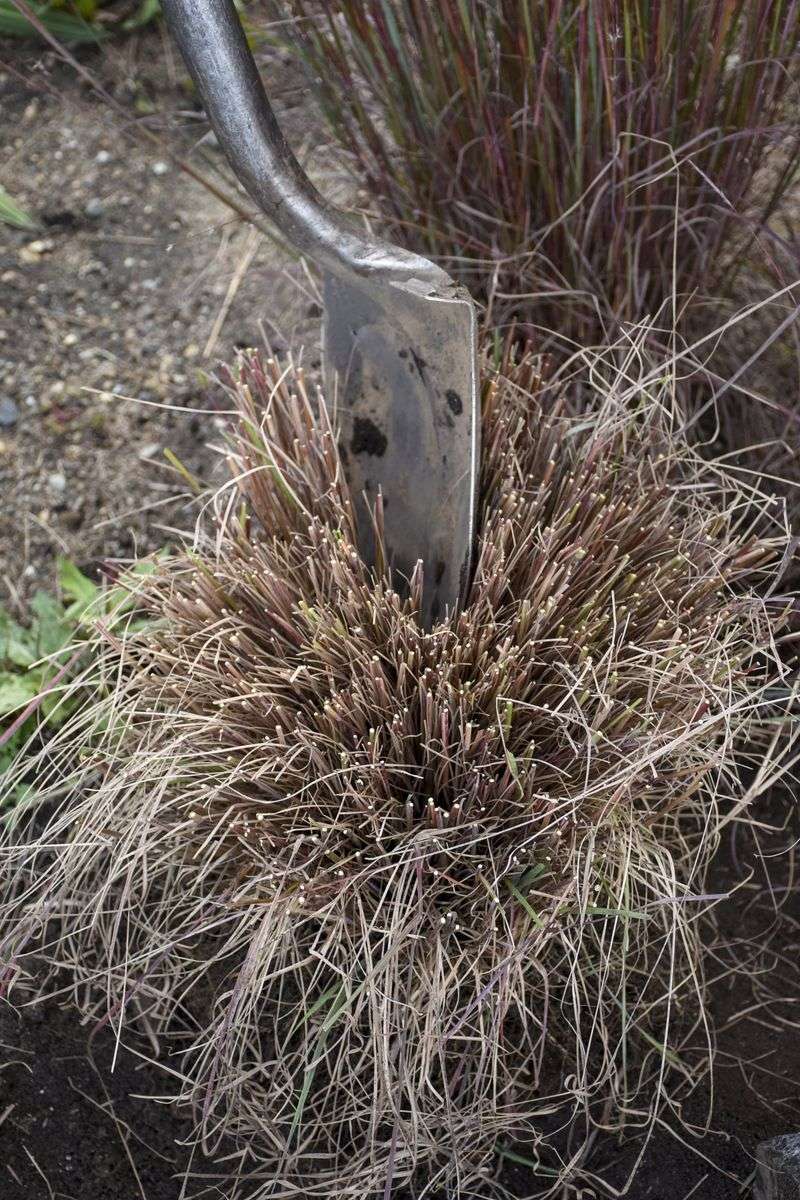
Removing a young fountain grass plant is straightforward. A shovel, some elbow grease, and about twenty minutes of work will usually get the job done.
Removing a clump that has been in the ground for five or more years is an entirely different situation.
Older root systems anchor deeply into compacted desert soil. The crown becomes dense and fibrous, almost like pulling out a small shrub.
Some gardeners find that even after cutting the plant completely to the ground, new growth returns from root fragments left behind.
Timing matters a lot with removal. Attempting to pull fountain grass during the hottest part of summer is exhausting and often ineffective.
Roots hold tighter in dry, hard soil. Late fall or early winter, when soil has some moisture and temperatures are cooler, tends to produce much better results.
Physical removal alone is not always enough. Seeds already in the soil can germinate the following spring, bringing new plants up in the same spot.
Monitoring the area for several seasons after removal is a realistic part of the process.
7. Deer Grass Offers A Better Native Alternative
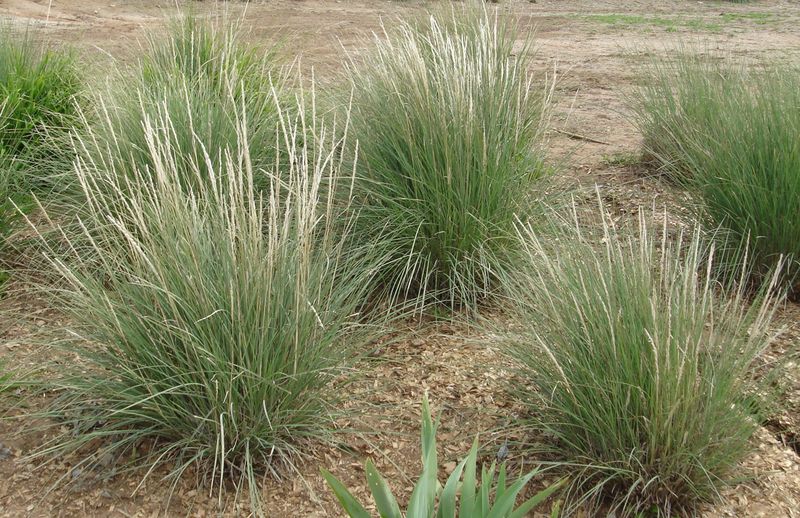
Not every ornamental grass is a fire risk. Deer grass, known botanically as Muhlenbergia rigens, is a native bunch grass that offers real visual appeal without the same dangers as fountain grass.
Deer grass grows in a loose, open clump. Its blades stay relatively green through much of the year, especially with occasional deep watering.
Compared to fountain grass, it retains more moisture and does not accumulate the same dense layer of dry debris at its base.
It also stays put. Deer grass does not produce the kind of wind-dispersed seeds that fountain grass spreads so aggressively.
It is far less likely to escape into natural areas and establish itself where it does not belong.
From a design standpoint, deer grass works well in residential landscapes. It produces elegant, airy seed stalks that sway gracefully in the breeze.
Birds are attracted to the seeds, which adds a small wildlife benefit that fountain grass simply does not offer.
Water use is another advantage. Deer grass is well-adapted to dry conditions and performs well on a low-water irrigation schedule once it is established.
It does not require the kind of frequent watering that keeps fountain grass looking its best.
Swapping fountain grass for deer grass is one of the most practical changes a desert gardener can make.