Ohio Slopes Do Not Need English Ivy, These Native Plants Do The Job And Then Some
English ivy looks tidy at first, but it has a dark secret.
It spreads aggressively, smothers native plants, and can take over an entire Ohio hillside before you even notice what is happening.
By the time most homeowners recognize the problem, removal has become a significant project that takes years rather than an afternoon.
What if your slope could be just as covered and controlled, but also support local wildlife, bloom with color, and never threaten your neighbor’s yard?
Ohio has a lineup of native plants that grip slopes, crowd out weeds, and bring real beauty to the job without any of the ecological baggage that comes with imported groundcovers.
You do not need to bring a plant from Europe to solve an American erosion problem.
Some of the best options for Ohio slopes are already growing wild nearby, and a few of them produce spring blooms, fall color, or wildlife value that English ivy could never come close to matching.
These native options prove that point loud and clear, and at least one of them is perfect for your specific slope conditions.
1. Use Allegheny Spurge In Deep Shade
Not every slope gets sunshine, and some of the trickiest spots in Ohio yards sit under dense tree canopy where almost nothing wants to grow.
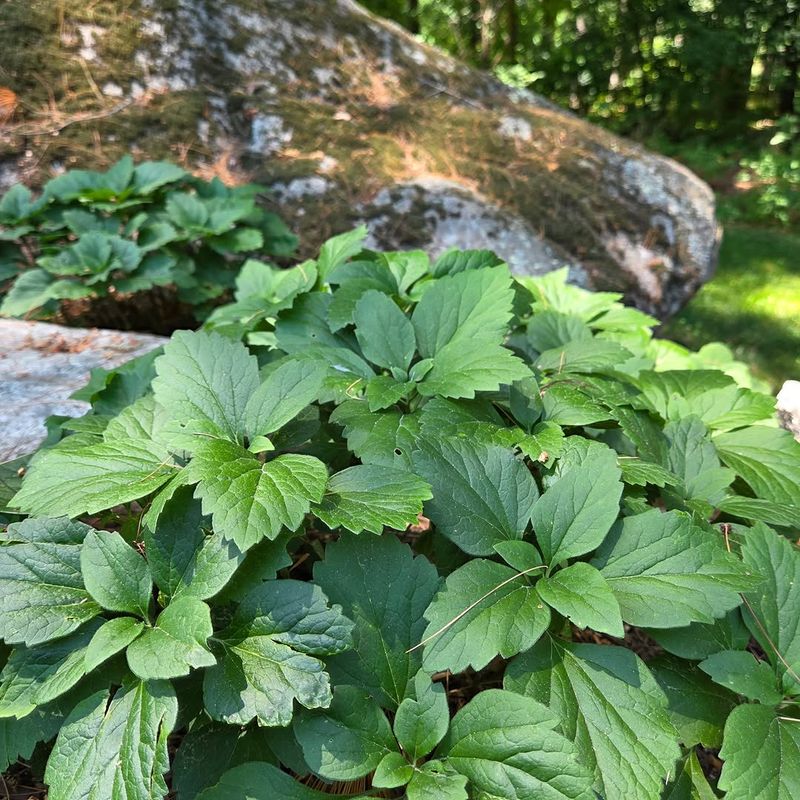
That is exactly where Allegheny spurge steps up and delivers. Pachysandra procumbens is the native answer to the overused Japanese pachysandra and the invasive English ivy, and it handles deep shade with quiet confidence.
It forms a low, spreading mat of dark green leaves that stay on the plant through most of Ohio’s winters.
The foliage has a subtle mottled pattern that looks attractive up close, giving your slope a polished, woodland feel without any fussy upkeep.
Spurge spreads slowly through underground runners, which means it will not jump your garden border and take over the yard next door.
That slow-and-steady approach is actually a plus. You plant it once, let it settle in, and it quietly fills the space over a few seasons.
Established plants hold soil effectively on gentle to moderate slopes.
The root system knits together the soil surface and reduces runoff after heavy Ohio rains. It pairs well with spring ephemerals and ferns in shaded planting schemes.
Plant in groups of at least five to seven plants per square yard for faster coverage.
Rich, moist, well-drained soil with a slightly acidic pH gives the best results. Once it settles in, Allegheny spurge needs almost no attention from you at all.
2. Plant Wild Ginger Under Trees
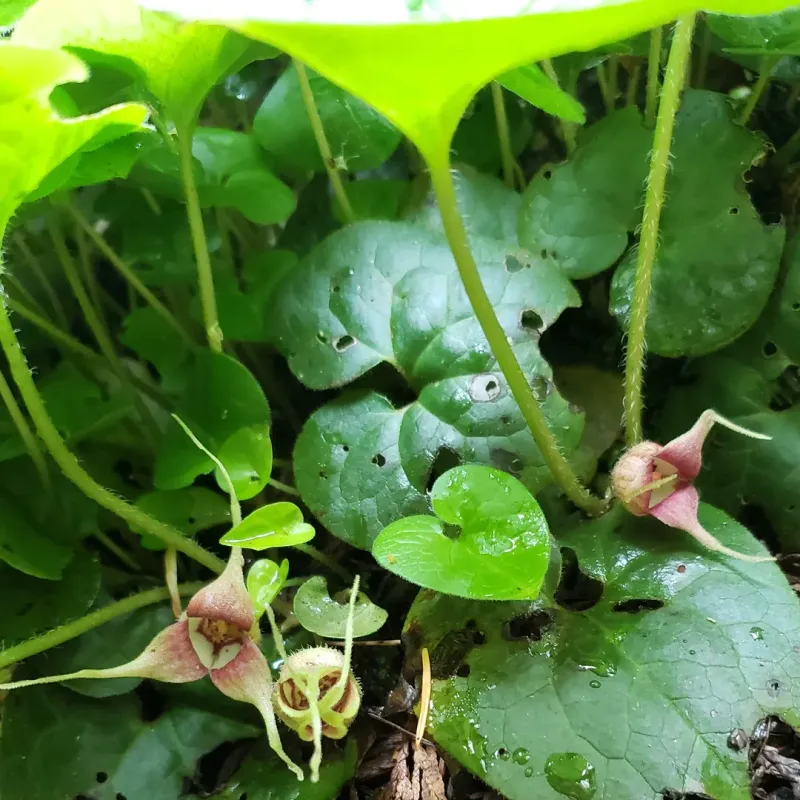
Few plants own a shaded slope quite like wild ginger does.
Walk into any mature Ohio woodland and you will likely spot its broad, heart-shaped leaves carpeting the ground in rich, deep green. That natural habit translates beautifully into a home landscape.
Asarum canadense is a true Ohio native with a long track record of holding woodland soil in place.
Each plant spreads outward through rhizomes, slowly building a dense mat that covers bare ground and reduces erosion from rain splash and surface runoff.
Your Ohio Garden Changes Every Week. Your Plan Should Too.
Gardening in Ohio changes quickly throughout the season. Every Friday you’ll receive a simple weekly plan showing exactly what to plant, prune, fertilize, harvest, and protect so you never miss the right timing.
The leaves are large enough to overlap, which means very little bare soil shows through once the colony establishes.
Wild ginger earns bonus points for shade tolerance that few other groundcovers can match.
Deep shade under mature oaks or maples is no problem for this plant. It actually prefers those conditions, making it the right tool for spots where lawn grass simply refuses to cooperate.
The hidden flower is a fun secret worth knowing.
A small, reddish-brown bloom hides right at the base of the plant in spring, tucked under the leaves and almost invisible. It is pollinated by ground-level insects and adds a quirky charm for anyone curious enough to look.
Plant in rich, moist soil amended with leaf compost, spaced about eight to twelve inches apart.
The colony will fill in steadily over two to three growing seasons without any dramatic intervention from you.
3. Try Pennsylvania Sedge For Soft Texture
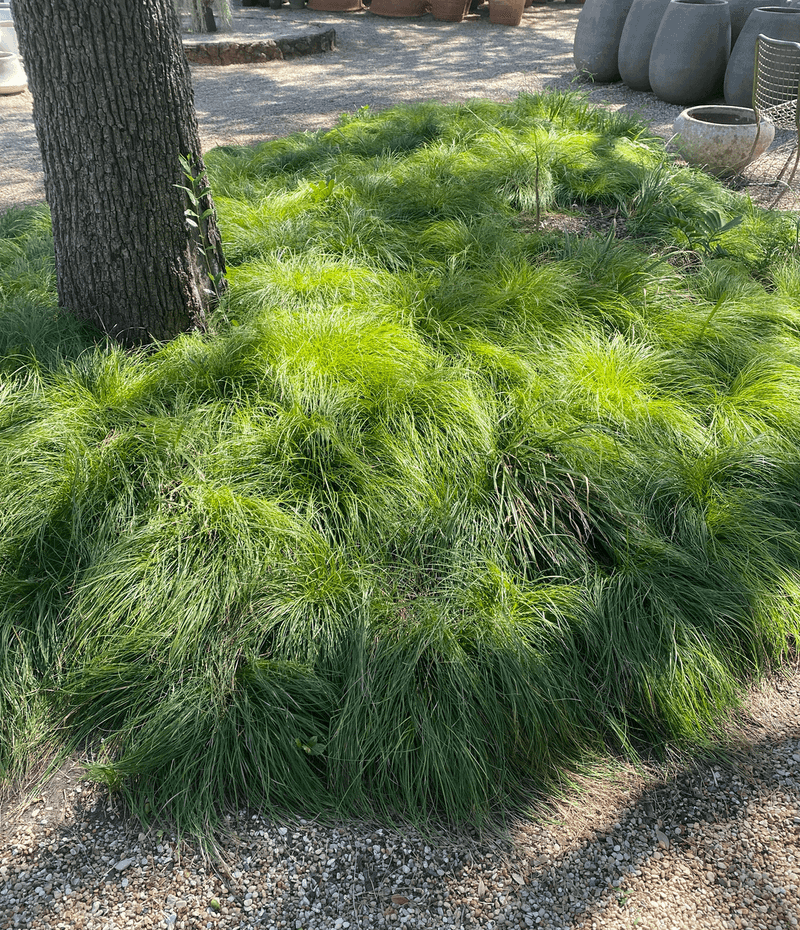
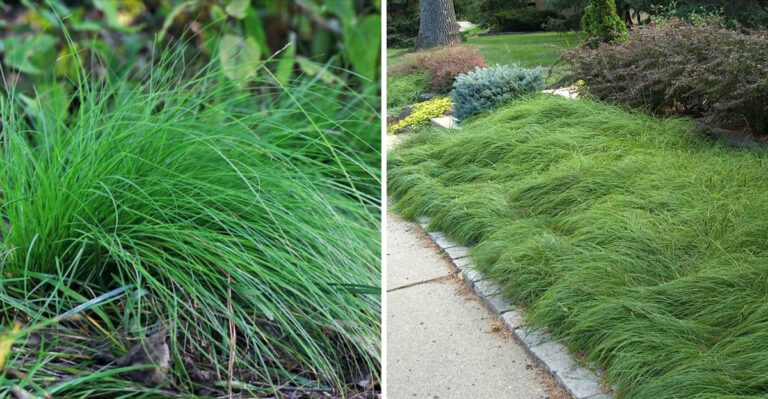
Grass lovers who want a low-maintenance native option for slopes should get acquainted with Pennsylvania sedge.
It looks like a fine-textured lawn from a distance, but it plays by completely different rules than turfgrass, and those rules are much more relaxed.
Carex pensylvanica thrives in part shade to full shade, which already puts it ahead of most lawn grasses that struggle under tree canopy.
It grows about six to ten inches tall and forms soft, arching clumps that spread slowly to create a meadow-like carpet. No mowing required, though a single late-winter trim keeps it looking fresh heading into spring.
On slopes, Pennsylvania sedge does real work.
Its fibrous root system grips the soil and holds it during rain events that would wash bare ground away. The dense growth also shades out many weeds once the colony fills in, reducing the need for hand-pulling throughout the season.
This sedge handles dry shade, which is one of the toughest conditions a plant can face in an Ohio yard.
Under shallow-rooted trees like maples, where the soil dries out fast, Pennsylvania sedge keeps its cool when most other groundcovers have already given up.
Plant plugs or small pots spaced about eight inches apart for coverage within two seasons.
A top dressing of shredded leaf mulch at planting helps retain moisture and gives the young plants a strong start on any slope.
4. Add Golden Ragwort For Spring Color
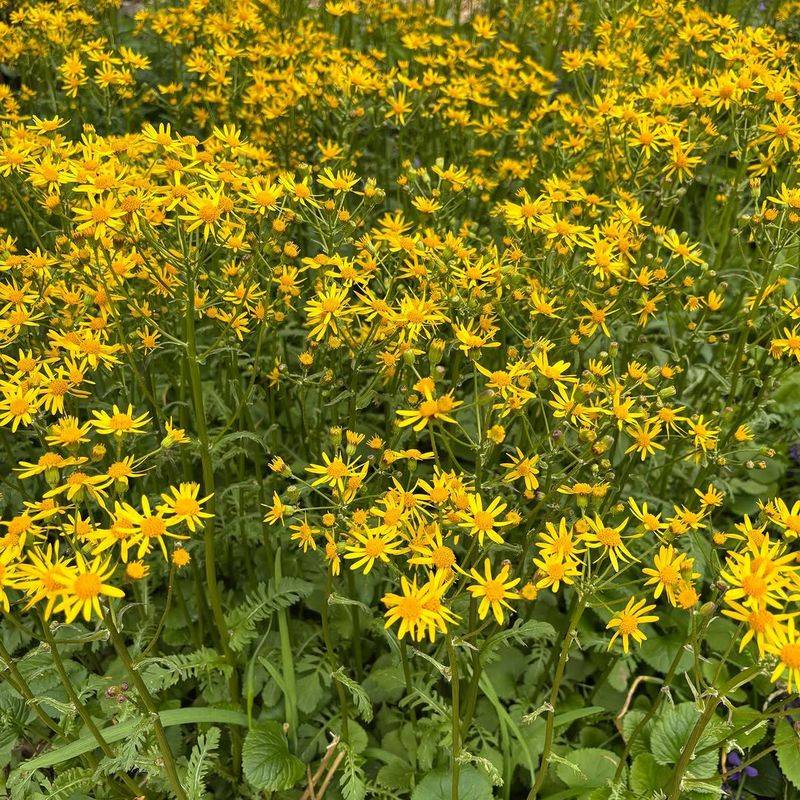
Spring on an Ohio slope can look pretty dull after a long winter. Golden ragwort fixes that problem fast, and it brings more than just good looks to the job.
Packera aurea erupts in bright yellow blooms in April and May, covering a slope with cheerful color right when the landscape needs it most.
The flowers sit on upright stems above a low mat of rounded, dark green leaves. After bloom, the foliage stays low and dense, continuing to cover and protect the soil through the rest of the growing season. That two-season performance is hard to beat.
Coverage speed is one of golden ragwort’s best qualities.
It spreads by both rhizomes and self-seeding, which means a small planting can fill a slope surprisingly quickly. On moist, shaded banks, it can form a thick colony within just two to three years.
The plant handles wet conditions well, making it an excellent fit for Ohio’s rain-heavy spring season.
Moist slopes near downspouts, drainage areas, or low spots under trees are prime territory.
Plant in fall or early spring in moist, humus-rich soil with partial to full shade, spacing plants twelve inches apart.
Combine with wild ginger or Pennsylvania sedge for layered, year-round coverage on challenging shaded slopes.
5. Let Wild Strawberry Cover Sunny Edges
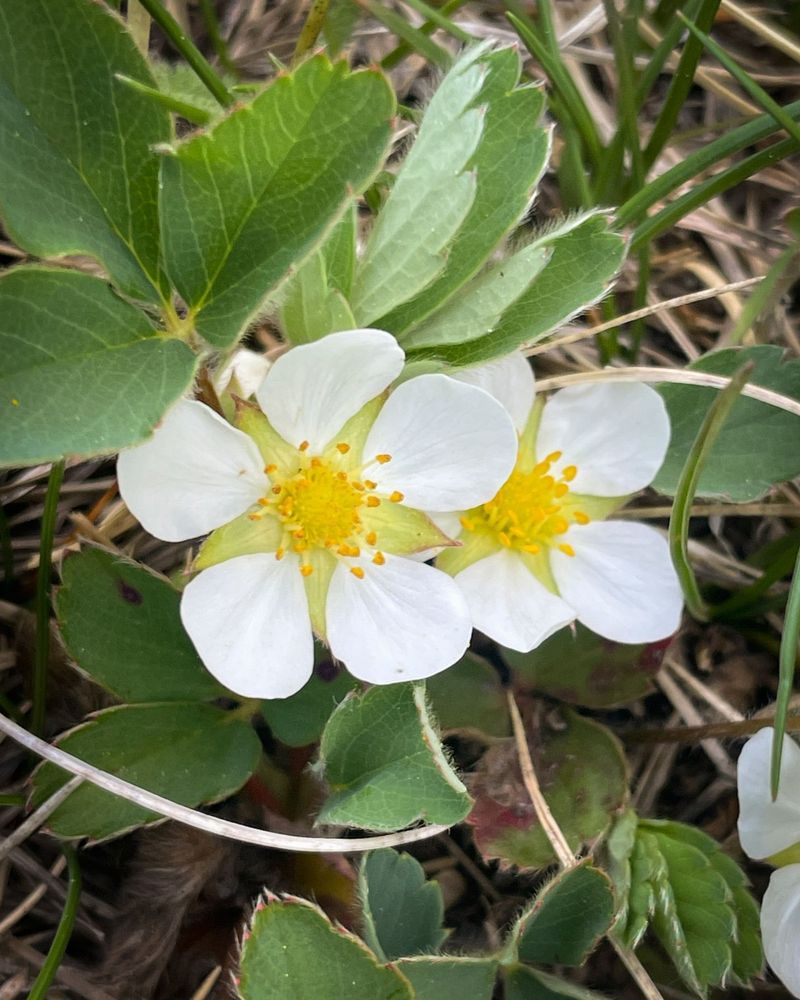
Sunny slope edges can be rough territory.
The soil dries out fast, foot traffic sometimes cuts across, and conventional groundcovers often look scorched by midsummer. Wild strawberry handles all of that without complaint.
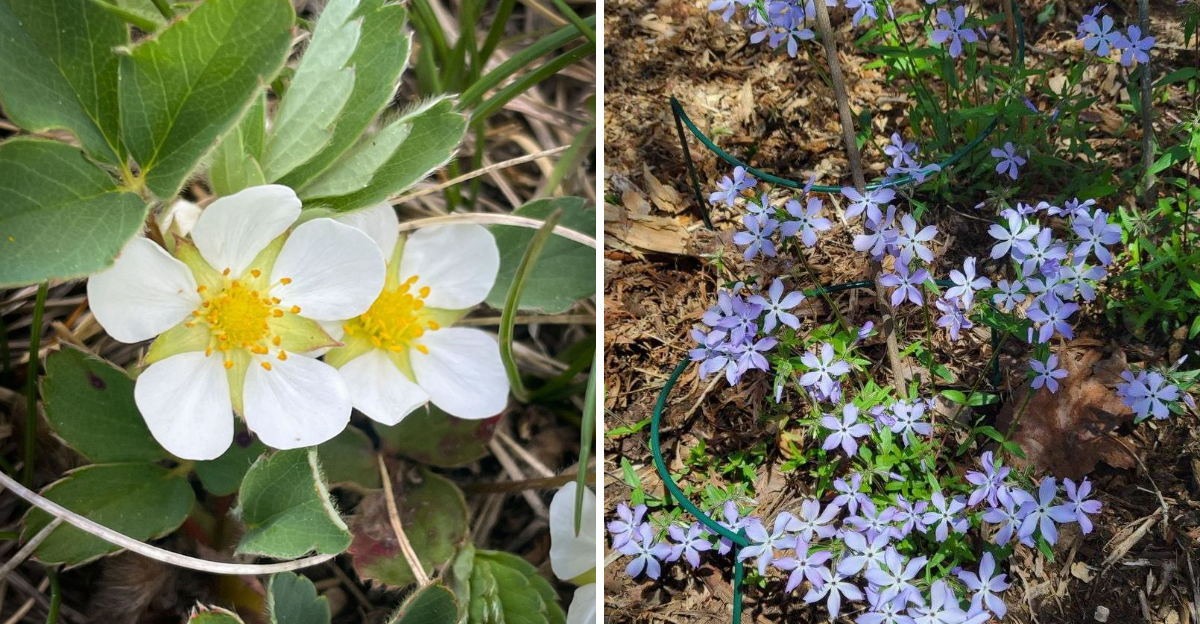
Fragaria virginiana is a tough, low-growing Ohio native that spreads by runners the same way its cultivated cousin does.
Each runner roots where it touches soil, steadily building a dense mat that covers bare ground and holds it in place. The three-part leaves stay low, usually topping out around six inches, which keeps the planting tidy without any trimming.
The seasonal show is genuinely fun.
Small white flowers appear in spring, followed by tiny red fruits that birds and small mammals find irresistible. The berries are edible for people too, though small.
Wildlife value on a slope is a real bonus, turning an erosion-control planting into a mini habitat that earns its keep in more ways than one.
Wild strawberry handles full sun and tolerates dry to average soil once established.
That combination makes it one of the few native groundcovers well suited to south-facing Ohio slopes where the sun beats down all afternoon.
Plant in well-drained soil with good organic content, spacing plants about twelve inches apart and letting the runners do the rest.
Avoid overly rich or wet soil, which tends to push leafy growth at the expense of flowers and fruit.
6. Use Creeping Phlox On Dry Sunny Banks
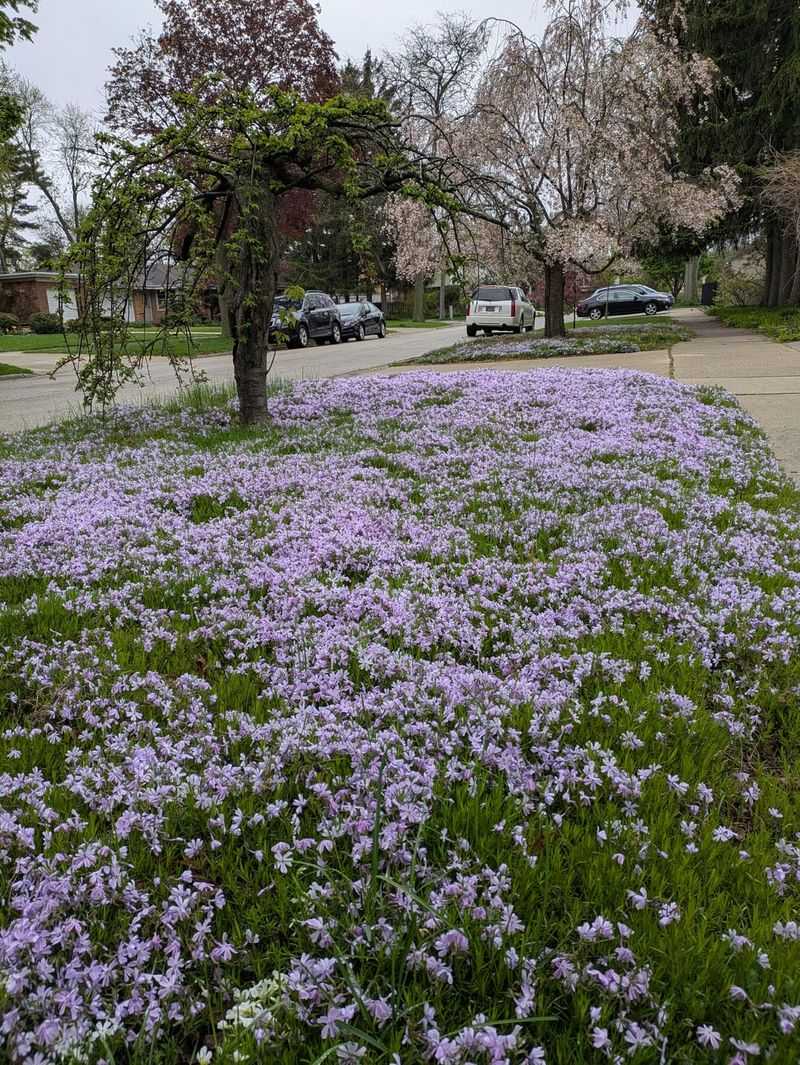
A dry, sunny bank in Ohio is one of the hardest spots to plant successfully.
Most groundcovers sulk, go crispy, or simply refuse to spread. Creeping phlox takes one look at that dry bank and gets to work.
Phlox subulata forms a tight, evergreen mat that hugs the soil surface and spreads outward over time.
The needle-like foliage stays green year-round, giving the slope structure even in the depths of winter when everything else looks bare.
Then, in April and May, the whole plant disappears under a wave of pink, purple, or white flowers that stop people in their tracks.
That spring bloom is genuinely spectacular.
A well-established colony on a sunny bank looks like someone rolled out a floral carpet. The color show lasts several weeks, which is a long run for a spring bloomer.
After bloom, creeping phlox settles back into its role as a reliable soil-holder.
The dense mat suppresses weeds effectively and the root system grips dry, rocky, or sandy soil that would erode under rain.
Plant in full sun and well-drained to dry soil, spacing plants twelve to eighteen inches apart.
A light trim right after bloom keeps the mat dense and tidy. Creeping phlox rarely needs fertilizer and handles Ohio summers without supplemental watering once established.
7. Grow Virginia Creeper Where A Vine Makes Sense
Sometimes a slope is steep enough that low groundcovers simply cannot keep up.
The soil is loose, the grade is sharp, and you need something with real grip and fast coverage. Virginia creeper is built for exactly that situation.
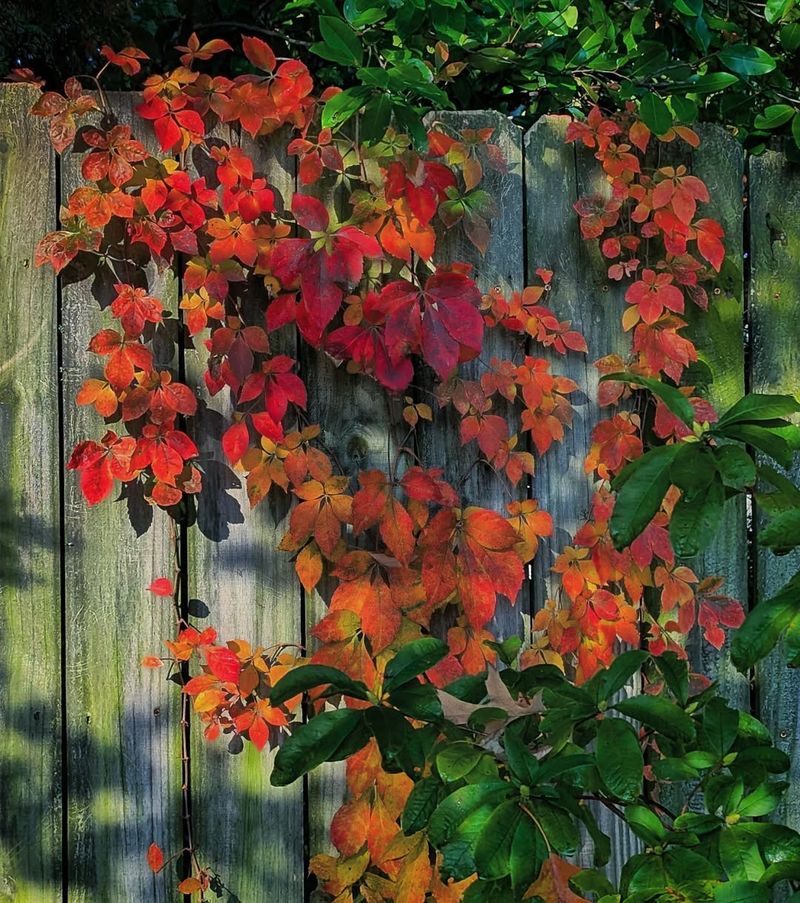
Parthenocissus quinquefolia is a vigorous native vine that works beautifully as a groundcover when kept away from buildings and trees.
On open slopes, it spreads across the ground in long, leafy runners that root as they go, building a layered mat that holds soil even on steep grades. The coverage rate is impressive, and the plant fills in far faster than most groundcovers.
Fall color is where Virginia creeper absolutely shines.
The five-part leaves turn a deep, vivid crimson in October, transforming a plain slope into a seasonal showpiece.
It is one of the most reliable fall color plants in the entire Ohio native plant palette, and it requires zero effort from you to pull it off.
Wildlife value is strong too.
Small dark berries feed more than 35 species of birds, making this vine a genuine contributor to the local food web.
Plant in average to moist, well-drained soil in full sun to part shade.
Keep it trimmed away from siding, gutters, and tree trunks. Annual pruning in late winter controls spread and keeps the planting where you want it on the slope.
8. Spread Wild Blue Phlox On Shaded Moist Banks
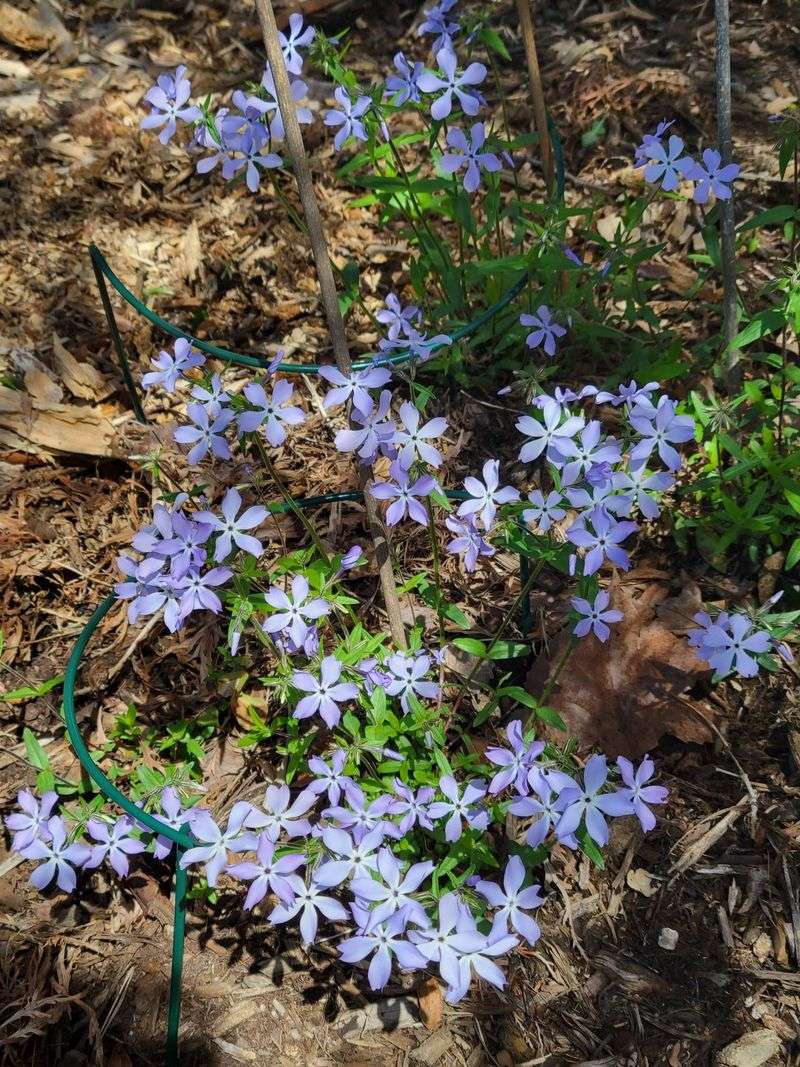
Wild blue phlox is one of those plants that makes you stop and stare in early spring, and it earns that reaction every single year without asking for much in return.
Phlox divaricata produces loose clusters of soft lavender-blue flowers in April and May, floating above a low mat of semi-evergreen foliage on stems that reach about twelve inches tall.
The color is genuinely beautiful, somewhere between periwinkle and soft purple, and it shows up right when Ohio landscapes are hungry for something other than bare soil and brown mulch.
Unlike its sun-loving cousin creeping phlox, wild blue phlox is built for shaded and partially shaded slopes where moist conditions prevail.
Wooded banks, north-facing hillsides, and slopes near downspouts or rain gardens are exactly the environments where this plant performs best.
It tolerates the kind of consistent moisture that would stress many other groundcovers, which makes it genuinely useful in the wet, shaded problem spots that Ohio yards tend to produce in abundance.
The plant spreads through both stolons and self-seeding, gradually building a soft, informal colony that covers bare ground without becoming aggressive.
It fills in at a moderate pace, faster than wild ginger but slower than golden ragwort, which puts it right in the middle of the coverage timeline. A planting of wild blue phlox looks full and established within two to three seasons.
Native bees are strongly attracted to the flowers during the spring bloom period, adding pollinator value to what is already a solid erosion-control plant.
Plant in moist, humus-rich soil with partial to full shade, spacing plants about ten to twelve inches apart.
Combine with wild ginger or golden ragwort for a shaded slope planting that delivers both spring color and year-round soil protection across Ohio’s most challenging bank conditions.