These 7 Plants Are Being Banned In More Florida Counties
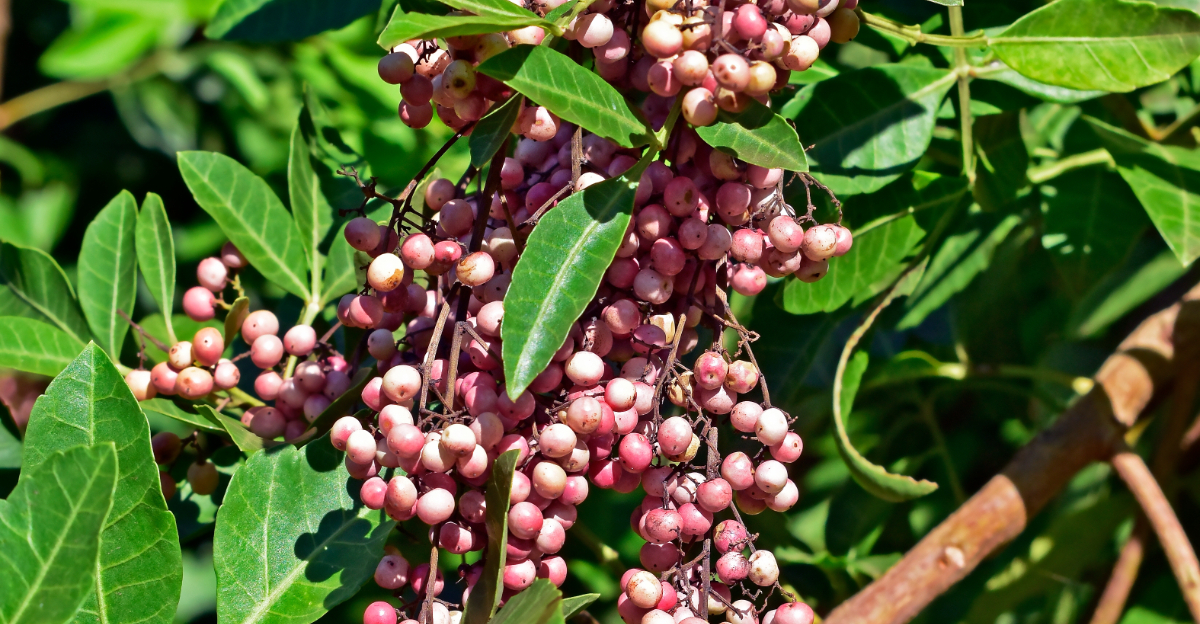
Florida’s invasive plant list has been growing quietly for years, and the counties acting on it are no longer waiting for statewide consensus. Restrictions that started in a handful of municipalities have been spreading.
Plants available at garden centers last season are showing up on prohibited lists this one. Most homeowners find out a plant is restricted after it is already in the ground.
That timing is expensive in more ways than one. Removal costs money.
The ecological damage does not undo itself. Several plants are showing up on newly restricted or banned lists across Florida counties right now.
Some will surprise people who have grown them for years without a second thought. Others have been controversial long enough that the restrictions feel overdue.
Before the next nursery run, this list is worth a few minutes of anyone’s time.
1. Brazilian Pepper Is The Biggest Name On Local Ban Lists
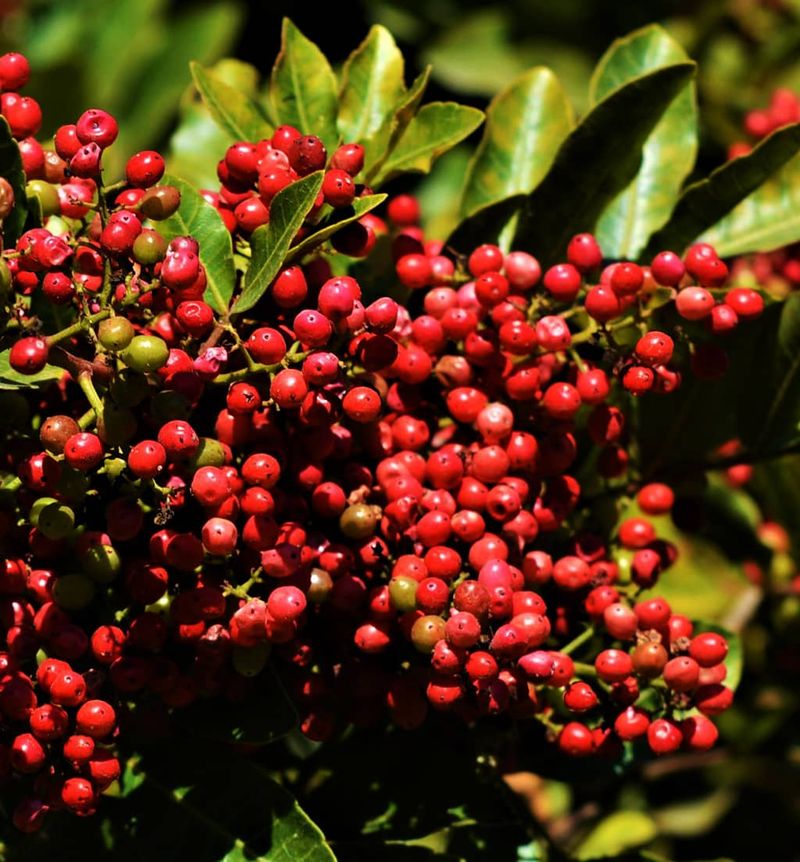
Walk along almost any waterway, roadside, or natural area in our state and there is a good chance you will spot Brazilian pepper.
With its dense canopy, bright red berries, and aggressive growth habit, this plant has earned a reputation as one of the most problematic invasive species in the state.
It is native to South America and was widely planted as an ornamental before its invasive nature became clear.
Brazilian pepper is listed as a Florida Prohibited Aquatic Plant by the Florida Department of Agriculture and Consumer Services. It also appears on the Florida Invasive Species Council’s list of the most invasive species.
Many counties and municipalities restrict planting it, and some local codes require its removal near natural areas, conservation lands, or water bodies.
The University of Florida IFAS Extension identifies it as a Category I invasive plant, meaning it is altering native plant communities.
One reason it spreads so aggressively is that birds eat the berries and deposit seeds widely. Dense stands crowd out native shrubs, grasses, and trees.
Near wetlands and coastal areas, this displacement can seriously affect wildlife habitat. Some development codes prohibit it in landscape plans or buffer zones.
If you have Brazilian pepper on your property, do not assume you must remove it without checking your specific local rules first. Requirements depend on your county, zoning, and proximity to natural areas.
Removal can also require care. Cut stumps may resprout if not treated properly, so follow UF/IFAS and county guidance.
Native shrubs like marlberry or beautyberry make far better, wildlife-friendly replacements.
2. Air Potato Keeps Spreading Beyond Backyard Fences
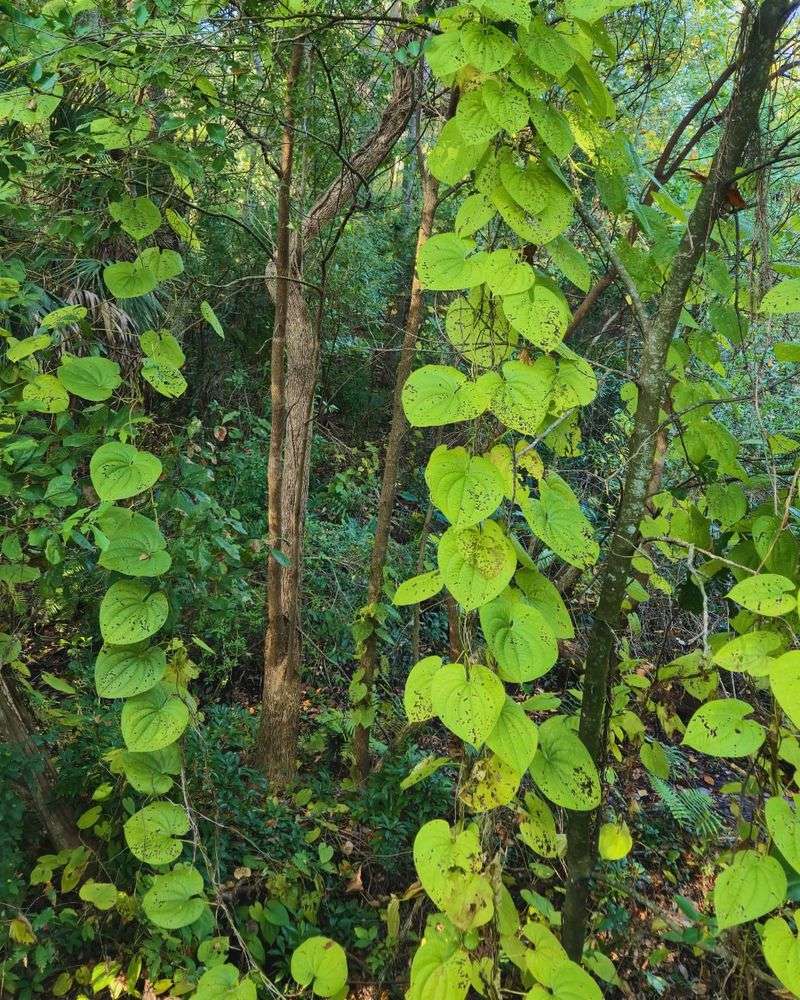
Imagine planting what looks like a fast-growing tropical vine, only to watch it climb over your fence, into the trees next door, and eventually into a nearby preserve. That is exactly the kind of problem air potato creates.
This vine, originally from Asia and Africa, was introduced to the Sunshine State long ago and has never stopped spreading.
Air potato produces small bulb-like structures called bulbils that fall to the ground, roll away, float in water, and get carried by animals. Each bulbil can sprout a new vine.
Your Florida Garden Changes Every Week. Your Plan Should Too.
Gardening in Florida changes quickly throughout the season. Every Friday you’ll receive a simple weekly plan showing exactly what to plant, prune, fertilize, harvest, and protect so you never miss the right timing.
One plant can produce dozens of bulbils in a single season, making containment genuinely difficult. The vines grow rapidly, sometimes climbing several inches in a single day under warm conditions, and they smother the shrubs and trees below them.
The Florida Invasive Species Council lists air potato as a Category I invasive plant. Some counties and municipalities include it on restricted or regulated plant lists.
Local extension offices often advise homeowners to remove vines before bulbils form and spread. If you find air potato in your yard, do not casually toss the vines or bulbils into a compost pile or wooded area, as that can spread the problem further.
Bagging plant parts securely before disposal is a commonly recommended step, but always confirm the right approach with your county extension office first. Biological control using the air potato leaf beetle has been used in some areas as part of a managed program.
Replacing air potato with native vines like coral honeysuckle or passionflower is a practical, code-safe alternative worth exploring.
3. Old World Climbing Fern Smothers Native Trees Fast
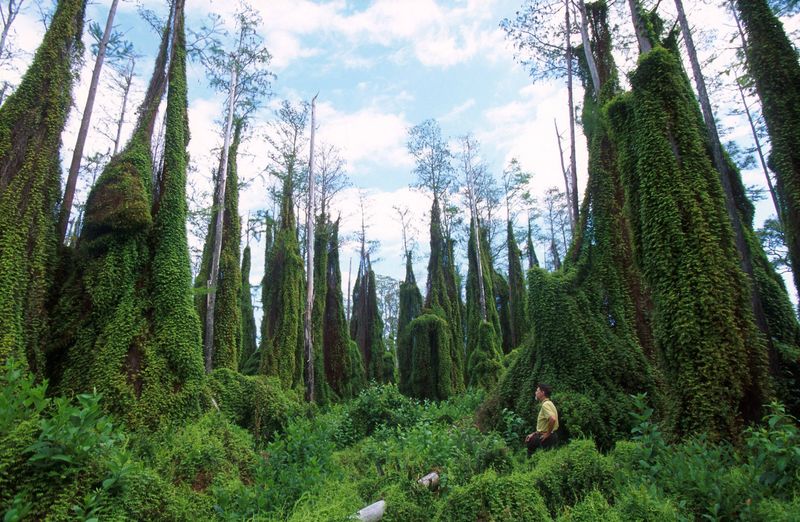
Few invasive plants change a natural landscape as dramatically as Old World climbing fern. Unlike typical ground-level ferns, this species climbs high into tree canopies.
It drapes over shrubs and native trees in thick mats that block sunlight and alter the fire behavior of natural areas. Land managers across this state consider it one of the most difficult invasive plants to manage near wetlands and conservation lands.
Old World climbing fern, known scientifically as Lygodium microphyllum, is native to tropical regions of Asia, Africa, and Australia.
It was brought to the Sunshine State as an ornamental plant and has since spread across millions of acres of natural areas, particularly in southern and central regions.
The Florida Invasive Species Council places it on the Category I list, and it is regulated as a prohibited aquatic plant under Florida law.
Some county codes and natural area management plans require removal of this fern where it threatens conservation lands, wetlands, or protected buffers. Correct identification matters a great deal here.
Native ferns, including some climbing species, can look similar to an untrained eye. Misidentifying a native fern and removing it would be a problem, so always confirm identification before taking any action.
If you suspect Old World climbing fern on your property, contact your county extension office or a licensed professional for identification help. Removal near sensitive natural areas may require permits or professional assistance.
Following UF/IFAS guidance and local rules before attempting removal is strongly recommended. Replacing it with native ferns or shade-tolerant native groundcovers helps restore the area without creating a new problem.
4. Australian Pine Is Losing Favor Near Coastal Areas
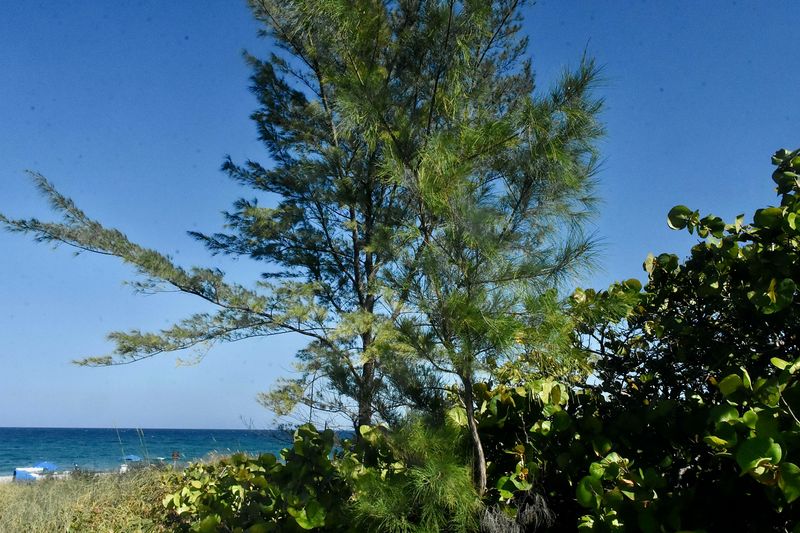
Despite its name, Australian pine is not a true pine at all. It is a fast-growing tree from Australia and the Pacific Islands that was introduced to the Sunshine State for shade and erosion control.
For decades, it was planted along roadsides, beaches, and canal banks without much concern. That has changed significantly as its impact on native coastal habitats became more widely understood.
Australian pine forms dense stands that shade out native dune vegetation. That includes sea oats and other coastal plants that stabilize beaches and provide nesting habitat for sea turtles and shorebirds.
Its shallow root system can also make it more vulnerable to toppling in storms, creating hazards in coastal areas. The Florida Invasive Species Council lists it as a Category I invasive plant, and it is prohibited under Florida law in certain contexts.
Several coastal counties and municipalities restrict or prohibit planting Australian pine near natural areas, beach dunes, and protected lands. Some local development codes exclude it from approved landscape plant lists entirely.
However, rules for existing trees on private property vary significantly by location. Not every county requires removal of a mature tree from a private yard, especially when it is not near a natural area or protected zone.
Before removing or replacing an Australian pine on your property, check your county code, city ordinances, and any HOA rules. Some communities may have protected tree ordinances that require permits before removal.
Native alternatives like slash pine, live oak, or Florida-friendly coastal plants are solid replacements. Your county extension office can recommend options that support local wildlife without the invasive risk.
5. Melaleuca Remains One Of The Most Regulated Invaders
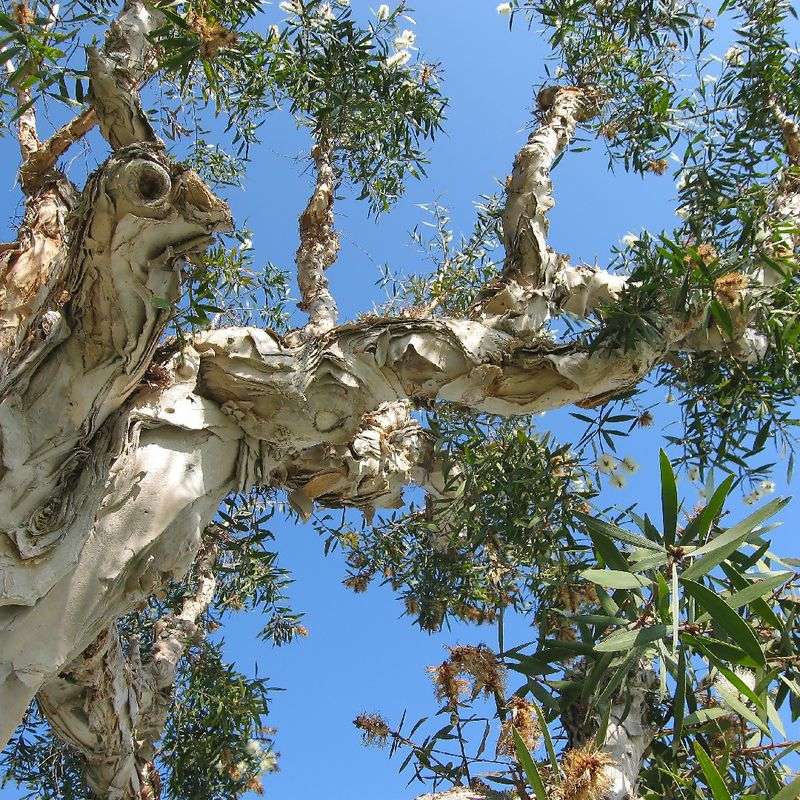
Melaleuca has been on this state’s invasive plant radar for decades, and for good reason. Originally from Australia, it was intentionally planted in the early twentieth century to help drain wetlands in southern regions.
That plan had serious unintended consequences. Melaleuca spread aggressively through wetlands, prairies, and natural areas.
It formed dense stands that replaced native plant communities and dramatically reduced habitat value for native wildlife.
A single melaleuca tree can produce millions of tiny seeds per year. The seeds are stored in capsules on the tree and released in large numbers after stress events like flooding or cutting, which makes careless removal a concern.
Because of its prolific seed production and aggressive spread, melaleuca is listed as a Florida Prohibited Aquatic Plant by FDACS. It is also on the Florida Invasive Species Council’s Category I invasive list.
Melaleuca is heavily regulated under state law. Many county and local rules add additional restrictions, particularly near wetlands, conservation areas, and natural preserves.
Homeowners who find melaleuca on their property should not attempt to remove it casually. Cutting without proper treatment can trigger mass seed release and worsen the problem significantly.
Contact your county extension office or a licensed invasive plant management professional before doing anything.
Identification is also important, since melaleuca’s papery bark and bottlebrush-style flowers are distinctive, but confirmation from an expert helps avoid mistakes.
UF/IFAS and FDACS both offer guidance on management approaches. Native trees like pond cypress, red maple, or swamp bay are appropriate alternatives in wetland-adjacent landscapes when local rules permit replanting.
6. Carrotwood Looks Harmless Until Birds Spread It
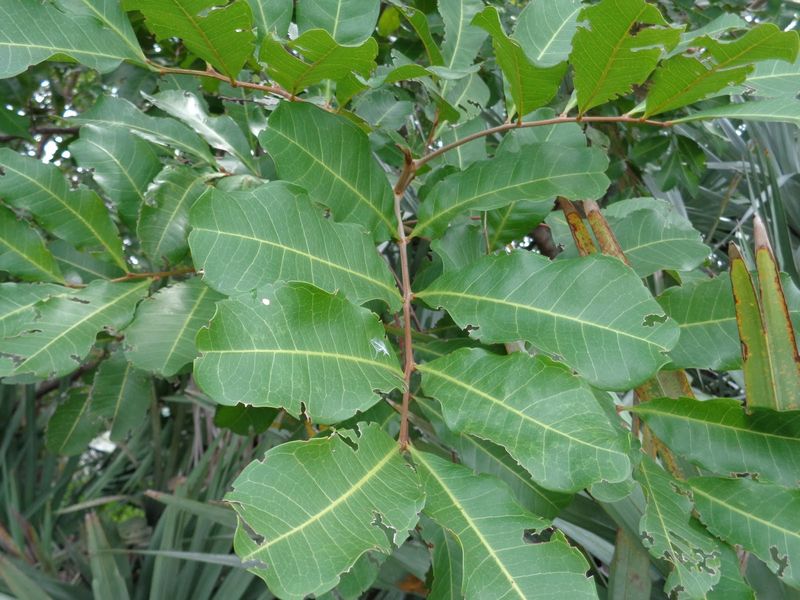
At first glance, carrotwood looks like a perfectly pleasant landscape tree. It has a tidy canopy, glossy leaves, and clusters of fruit that seem harmless enough from a distance.
Many homeowners planted it years ago without any concerns. The problem shows up when birds start eating those fruits and depositing seeds in natural areas, preserves, and parks far beyond the original planting site.
Carrotwood, known scientifically as Cupaniopsis anacardioides, is native to Australia. It was widely used in landscaping before its invasive behavior was well understood.
The Florida Invasive Species Council lists it as a Category I invasive plant. It has established itself in natural areas, particularly in coastal communities and near scrub habitats, where it competes with native plants for space and resources.
Some counties include carrotwood on their prohibited or regulated plant lists. This is especially common for new landscaping in development projects or near natural area buffers.
Local landscape codes in certain communities may already restrict its use in new plantings. If you inherited a carrotwood tree on your property, check your county and city codes.
They can clarify whether any removal or replacement requirements apply to your specific zone or situation.
Homeowners considering removing a carrotwood should also check whether local tree ordinances require a permit first, especially for mature trees. Replacing it with a native canopy tree is a straightforward way to reduce invasive risk.
Live oak, dahoon holly, or a county-recommended Florida-Friendly Landscaping option can keep your yard shaded and attractive. Your county extension office can point you toward the best native alternatives for your specific region.
7. Schefflera Is Restricted Where Natural Areas Are At Risk
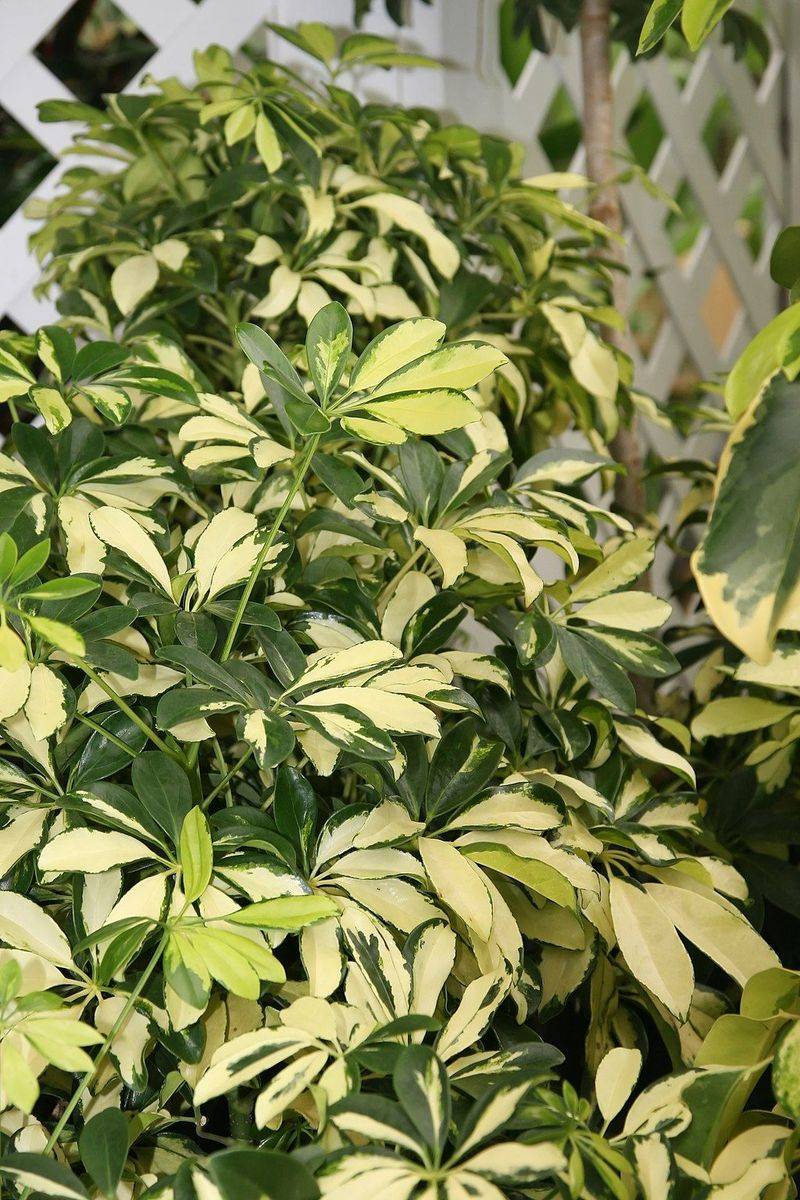
Most people know Schefflera as a popular houseplant. The larger outdoor varieties, particularly umbrella tree (Schefflera actinophylla), behave very differently in warm-climate landscapes.
In southern and central regions of the Sunshine State, this plant can escape cultivation. It can establish itself in hammocks, natural areas, and forest edges where conditions favor its growth.
Birds eat the small red fruits that umbrella tree produces and spread seeds into natural areas well beyond the original planting. Once established, it can grow into a large tree with dense foliage and aerial roots that alter the structure of native plant communities.
The Florida Invasive Species Council lists Schefflera actinophylla as a Category I invasive plant, meaning it is documented as altering native habitats in this state.
Some counties restrict or prohibit outdoor planting of this species, particularly in areas near conservation lands, hammocks, or designated natural area buffers.
Development landscape codes in certain communities may also exclude it from approved plant lists.
The restrictions tend to be most relevant for outdoor landscape use near natural areas rather than for small houseplants kept indoors in containers.
If you have a large Schefflera planted outdoors in your yard, check your county and city codes to understand whether any rules apply to your property or zone. Removal of a mature tree may require a permit in some areas.
Native shade trees such as gumbo limbo, pigeon plum, or other county-recommended species make excellent replacements. Your local extension office can help you find the right fit for your landscape and region.