What Michigan Gardeners Can Plant Around An Air Conditioner Without Blocking Airflow
Michigan summers can get surprisingly hot and humid, and your air conditioner works hard to keep up.
Many homeowners want to soften the look of their outdoor AC unit with plants, and that instinct is completely reasonable.
A condenser sitting on a concrete pad surrounded by bare gravel is not exactly a highlight of the backyard.
The problem is that the wrong plants in the wrong spots can block airflow, trap heat, and make it genuinely difficult for a technician to service the equipment.
The right plants in the right spots, though, do none of those things.
Before planting anything near your AC unit, most HVAC manufacturers recommend at least 18 to 24 inches of clear space on all sides, and up to 5 feet of clearance near the top where air is released.
Keep service access in mind so a technician can reach the unit without crawling through dense shrubs or stepping on fragile plants.
Eight low-growing, well-behaved, Michigan-tough options make this corner of your yard look intentional without putting your cooling system at risk.
1. Dwarf Little Bluestem Keeps Space Open
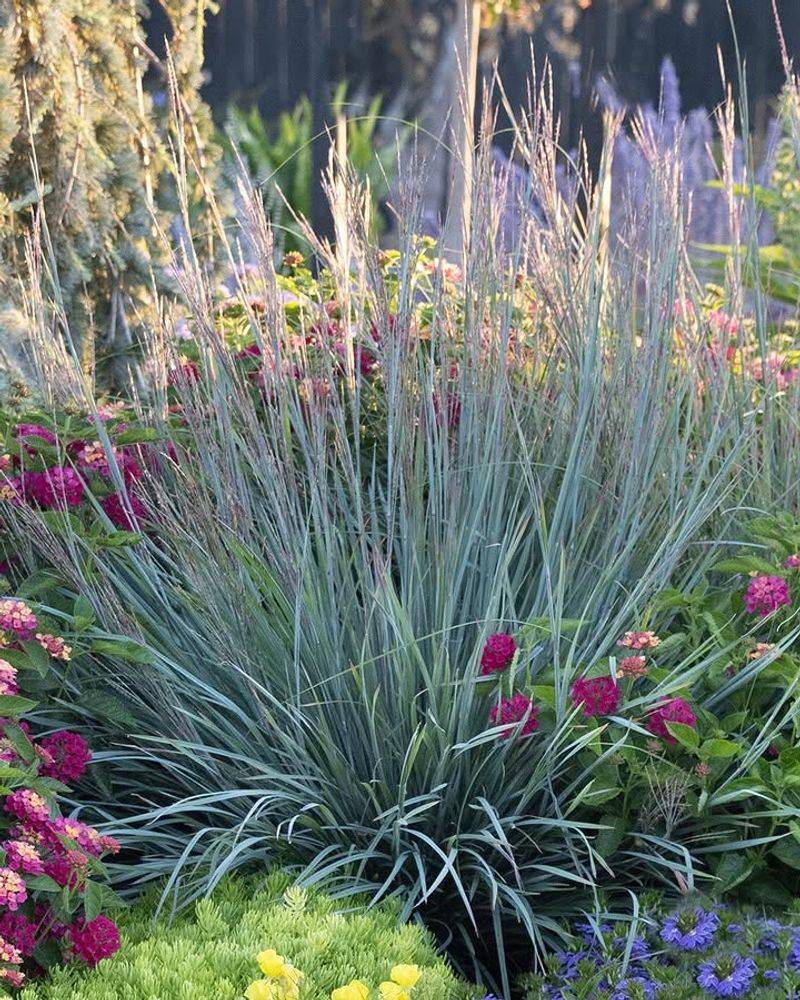
Not every grass has to make a statement by growing tall and taking over.
Dwarf little bluestem is a compact native grass that tops out at around 18 to 24 inches, making it one of the friendliest options for planting near an outdoor AC unit without crowding the equipment.
It grows in tidy clumps and does not spread aggressively, so you stay in control of the space.
Michigan gardeners already love little bluestem because it handles heat, drought, and poor soil reliably.
The dwarf varieties bring all those same tough qualities in a smaller package. Plant it at least 24 inches from the unit so air can still move freely around the condenser.
A single row of clumps along one side of the unit can look intentional and clean without creating a wall of vegetation.
In late summer, the foliage shifts to shades of orange and burgundy, giving your yard some seasonal color without any extra effort. The stems are fine and airy, meaning they do not trap debris or block the fan intake the way dense shrubs can.
Always leave a clear walking path along at least one side of the unit so a technician can reach it without any trouble.
Dwarf little bluestem proves that native plants and practical landscaping can absolutely work together in a Michigan yard.
2. Prairie Dropseed Stays Soft And Tidy
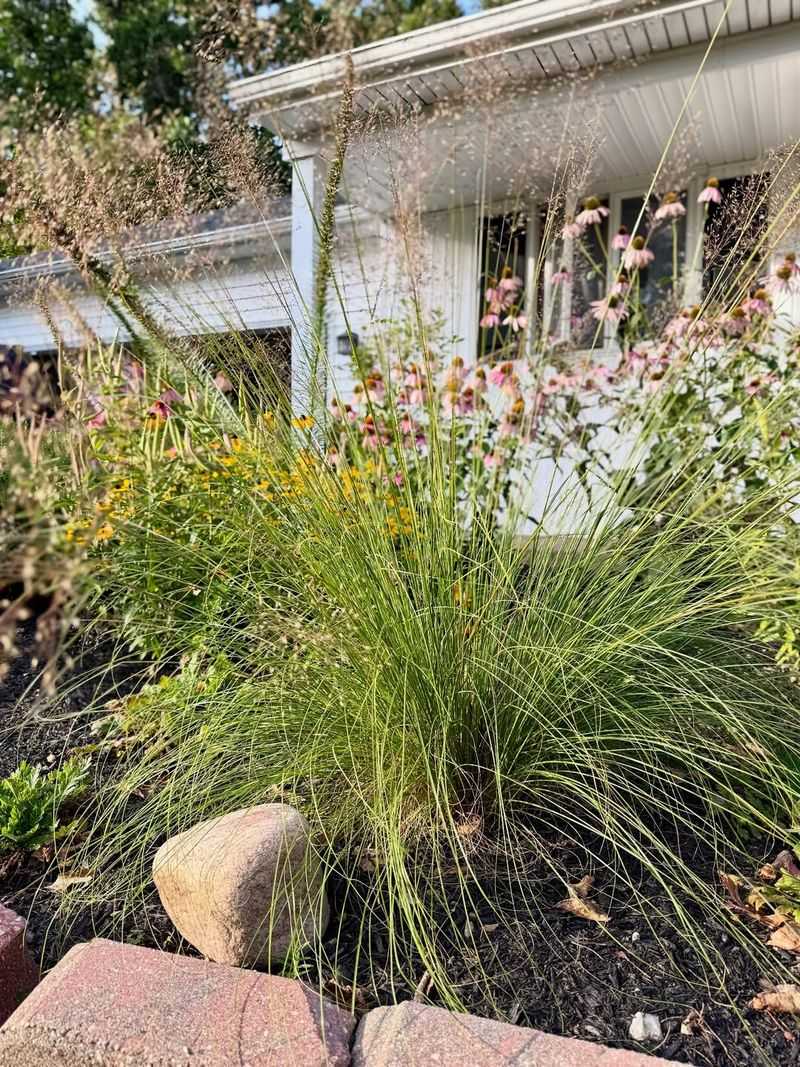
There is something almost delicate about prairie dropseed, and that quality is exactly what makes it useful near utility areas.
This fine-textured native grass forms low, arching mounds that rarely exceed 18 inches in height.
The foliage is narrow and wispy, so it never creates a solid barrier that could restrict the airflow your AC unit depends on during those sticky Michigan August afternoons.
Prairie dropseed is a slow grower, which is actually a benefit here.
You will not find yourself trimming it back every few weeks to keep it away from the condenser unit. Once established, it is remarkably self-sufficient, tolerating drought and heat without much fuss.
Your Michigan Garden Changes Every Week. Your Plan Should Too.
Gardening in Michigan changes quickly throughout the season. Every Friday you’ll receive a simple weekly plan showing exactly what to plant, prune, fertilize, harvest, and protect so you never miss the right timing.
Plant clumps at least 24 inches from the unit and space individual plants about 18 inches apart so each one has room to fill out naturally without bunching together.
In late summer, prairie dropseed sends up delicate flower stalks with a light, pleasant fragrance that is a bonus few people expect from a utility-area planting.
The overall look is soft and meadow-like, which can make an AC unit feel less industrial and more like part of a thoughtful landscape.
Keep the area around the base of the unit free of any fallen foliage or seed heads, and rake it out once or twice a season.
3. Coral Bells Fit The Shaded Side
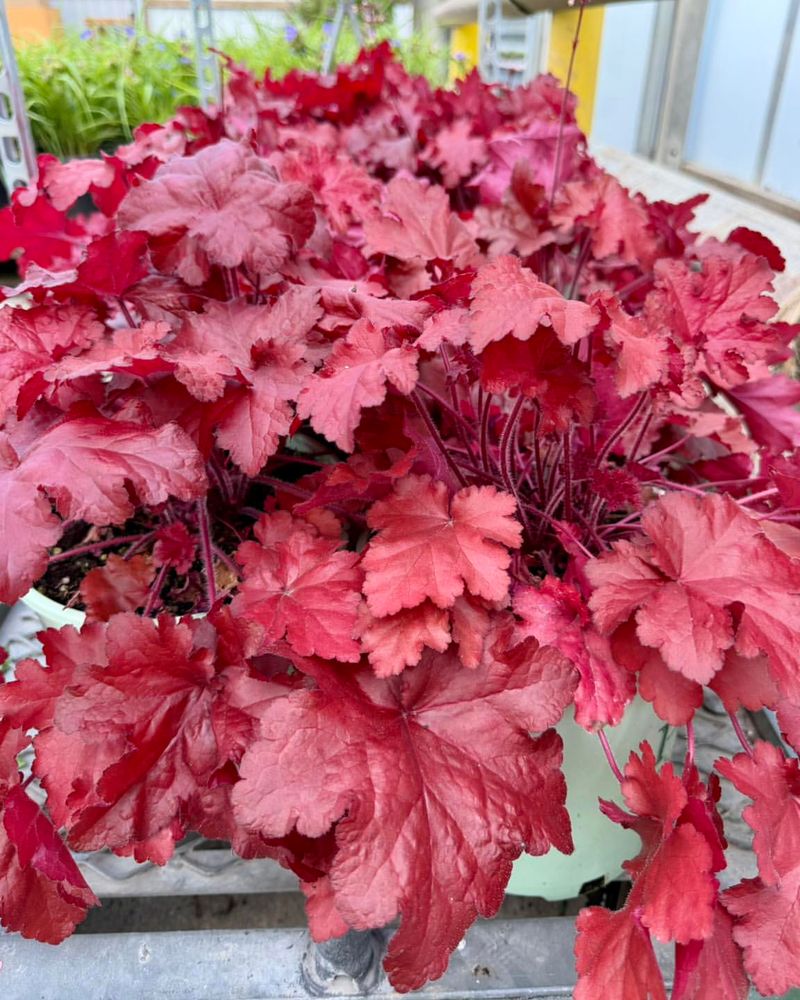
Most AC units have at least one side that gets less direct sun, especially if the unit sits near a fence, a wall, or under a tree canopy.
That shadier side is exactly where coral bells shine. These low-growing perennials are grown primarily for their colorful foliage, which comes in shades of deep burgundy, lime green, caramel, and silver.
They top out at about 12 to 18 inches, making them naturally suited to spots where you want low visual interest without bulk.
Michigan State University Extension recommends coral bells as a reliable perennial for both sun and part shade.
They perform especially well in the cooler microclimates that can develop on the north or east side of structures. Plant them at least 18 inches from the unit so the foliage does not press against the cabinet or the intake grilles.
Space individual plants about 12 to 15 inches apart to let air circulate between them.
One practical advantage of coral bells near an AC unit is that the foliage stays relatively compact and does not produce fluffy seeds or large leaf litter that could get pulled into the fan.
Coral bells are also deer-resistant, which matters in many Michigan neighborhoods where deer browse freely through residential yards.
Their tidy, mounding habit makes them a reliable and attractive low-maintenance choice for this tricky spot.
4. Sedum Handles Heat Near Concrete
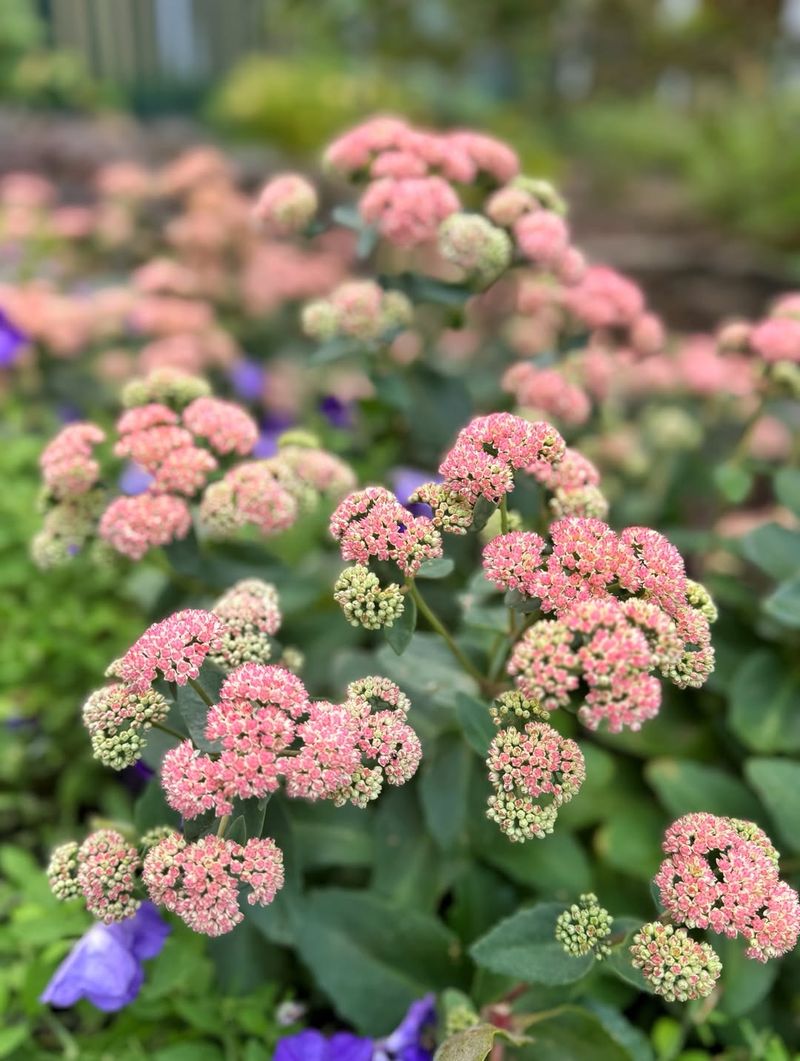
Concrete pads around AC units absorb heat and radiate it back outward, creating a microclimate that is hotter and drier than the rest of your yard.
Most plants struggle there, but sedum practically thrives on it. These succulent perennials store water in their thick leaves, shrug off reflected heat, and ask for very little in return.
For Michigan homeowners dealing with a sun-baked AC pad, sedum is one of the most practical ground-level choices available.
Varieties like Autumn Joy, Dragon’s Blood, and Brilliant grow between 6 and 18 inches tall depending on the cultivar.
Stick with the shorter, spreading types near the unit itself, and plant them at least 18 inches from the cabinet to maintain clear airflow around the condenser.
Sedum spreads slowly and stays put, so you will not be wrestling it back from the unit every summer like you might with more aggressive groundcovers.
Another reason sedum works well here is that it produces almost no messy debris.
The leaves are small and dense, and even when old flower heads dry out in fall, they stay on the plant rather than blowing into the unit’s intake.
A quick trim in early spring is all the maintenance most sedum varieties need.
Pair a low-growing sedum with a clean gravel mulch on the concrete pad, and you have a heat-tolerant, low-effort planting that looks purposeful and keeps your equipment breathing easy all season long.
5. Compact Ninebark Works Farther Back
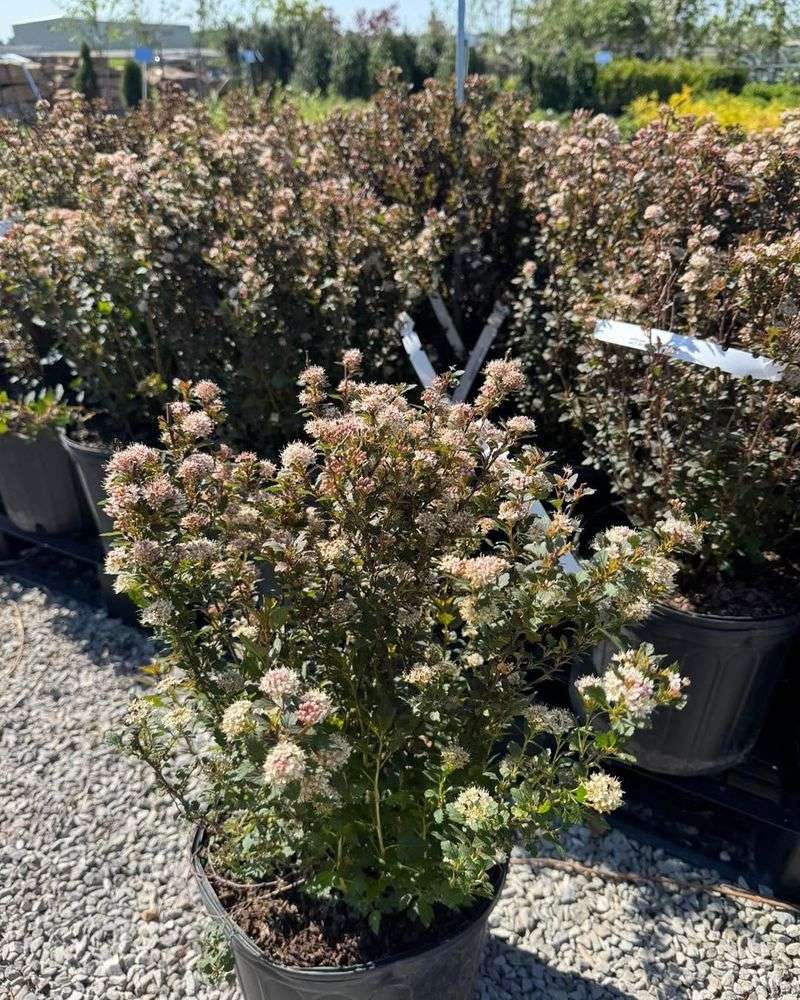
Shrubs and AC units can coexist, but only when the shrub is planted far enough back to respect the equipment’s need for open air.
Compact ninebark is a great Michigan-native shrub option because it offers real visual impact, interesting foliage color, and tough cold-hardiness, all without demanding constant pruning.
The key word is farther back. Plant compact ninebark varieties at least 3 to 5 feet from the unit so there is no chance of stems or leaves pressing against the cabinet or restricting the fan’s exhaust.
Varieties like Tiny Wine and Little Devil stay in the 3 to 4 foot range at maturity, which means they are manageable if you give them room.
Use them as a background planting on the far side of the AC area, where they frame the space without crowding it.
Their dark burgundy or copper foliage can actually draw the eye away from the unit itself, which is a nice design bonus.
Michigan winters are no problem for ninebark, since it is native to the region and extremely cold-hardy.
Keep up with light annual pruning to maintain the compact shape and prevent any branches from creeping toward the unit over time.
Always double-check the mature size of any shrub variety before planting, and give it a little more space than you think you need.
6. Dwarf Hydrangea Needs Careful Spacing
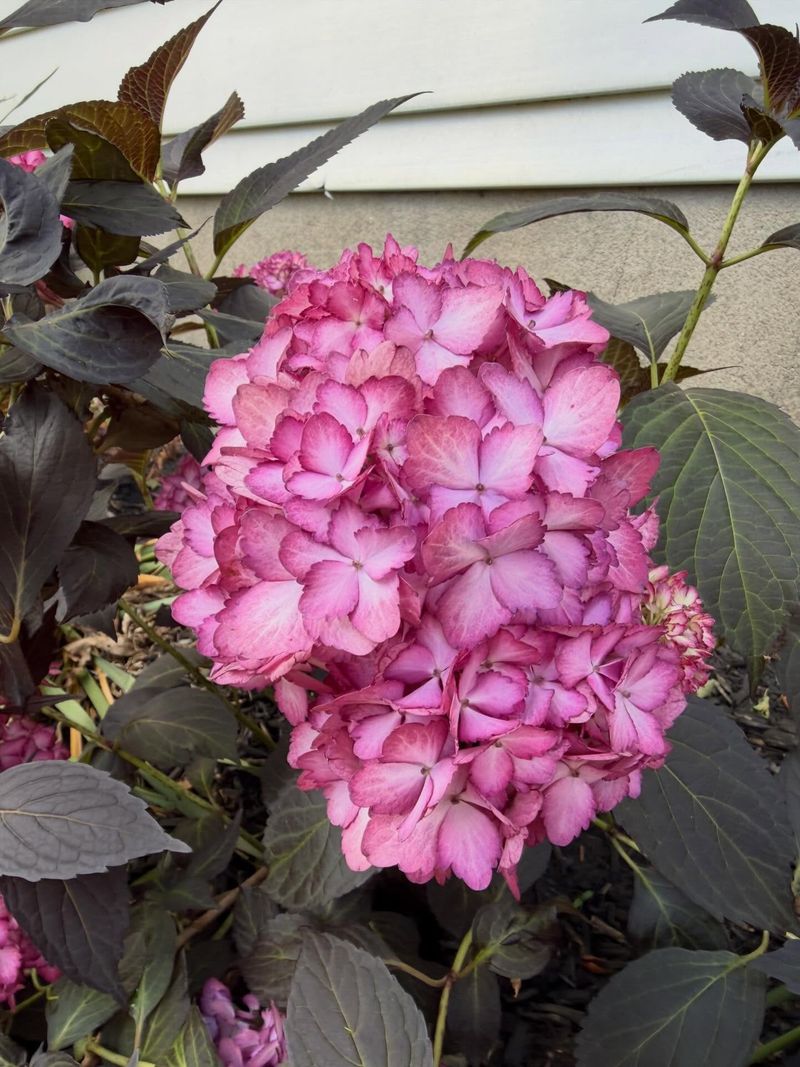
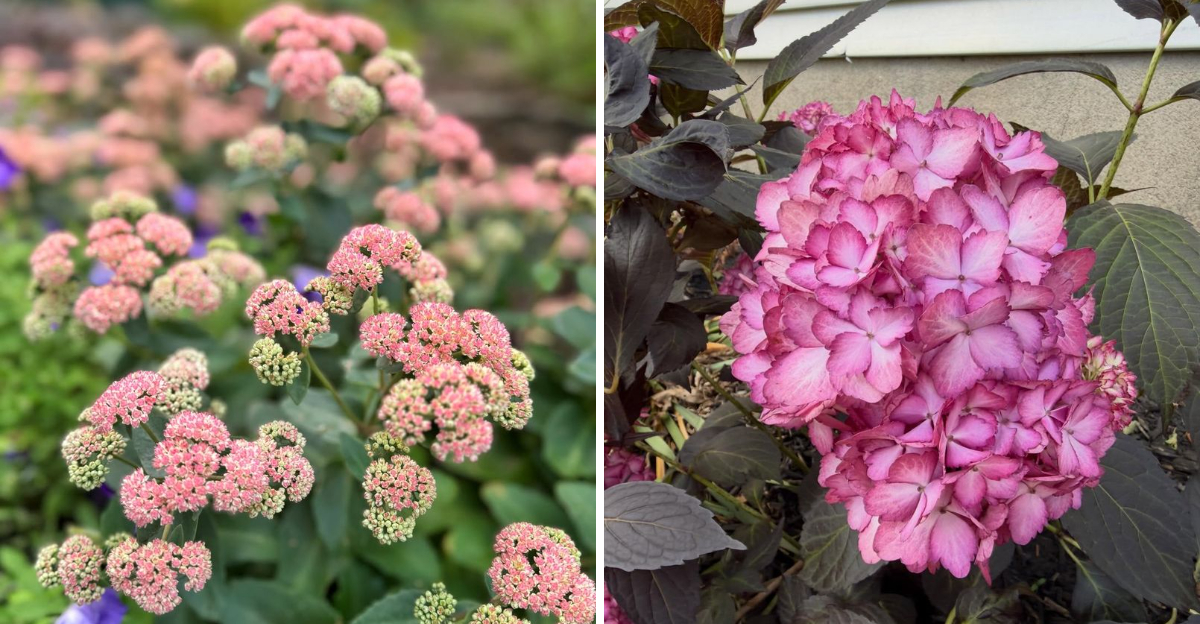
Few plants turn heads in a Michigan summer garden the way hydrangeas do, and the good news is that dwarf varieties can work near an AC unit if you plan the spacing carefully.
The challenge with hydrangeas is that even the compact types can put on significant growth once they are established, so you have to think ahead rather than plant based on how small they look at the garden center.
Varieties like Bobo, Little Quick Fire, and Incrediball Blush stay in the 3 to 4 foot range, but they need room to breathe.
Plant dwarf hydrangeas at least 4 feet from the AC unit, ideally on a side where the exhaust air from the fan will not constantly blow hot air directly onto the foliage.
Hydrangeas like consistent moisture, and the dry heat coming off an AC unit can stress them out if they are positioned directly in that airflow path.
One thing to watch with hydrangeas near equipment is the flower heads.
Dried hydrangea blooms can break apart in fall and scatter papery debris, which you do not want getting pulled into the unit’s fan intake. A quick cleanup of fallen flower heads in late autumn is a smart habit.
With the right spacing and a little seasonal tidying, a dwarf hydrangea can make the corner of your yard where the AC lives look genuinely lovely.
7. Blue Fescue Adds Low Texture
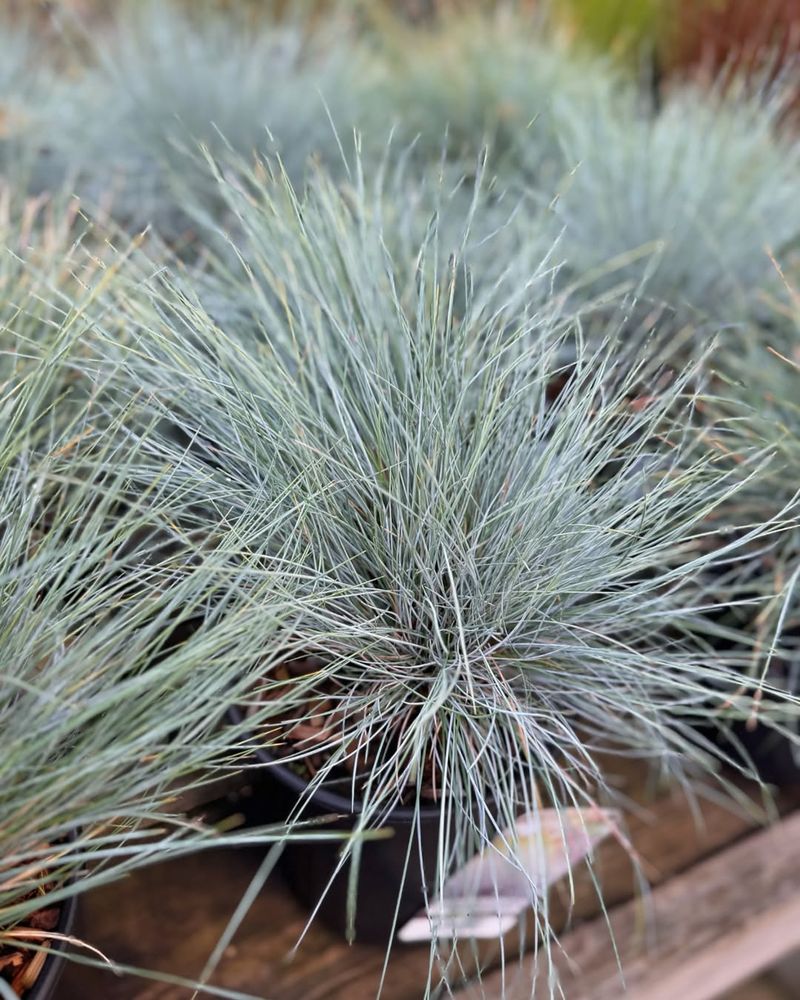
If you want a plant that looks like it belongs in a well-designed landscape rather than a forgotten utility corner, blue fescue is worth considering.
This cool-season ornamental grass forms tight, silvery-blue mounds that rarely exceed 10 to 12 inches in height.
The compact, spiky texture gives any planting bed a sense of structure and intention, even in a spot that most people overlook like the area around an AC unit.
Blue fescue is well-suited to Michigan’s climate, especially in spots that receive full sun and have well-drained soil.
It handles heat and occasional drought once established, and its low profile means it never gets close to blocking the condenser’s airflow.
Space individual plants at least 18 inches from the unit and about 10 to 12 inches apart from each other so each clump maintains its distinct rounded shape rather than merging into a solid mass.
One honest note about blue fescue is that it can look a little ragged by midsummer if the heat is intense.
Cutting the clumps back by about one-third in early spring refreshes the foliage and keeps the mounds looking sharp.
Because the grass blades are fine and stiff, they do not produce the kind of fluffy seeds or loose debris that could blow into your equipment.
Blue fescue earns its spot near an AC unit by staying small, staying tidy, and quietly making the whole area look more polished than it did before.
8. Creeping Thyme Fills Gaps Along The Border

The edge of a planting bed near an AC unit is one of the trickiest spots to manage.
Weeds find it immediately. Bare soil along the border looks unfinished. And most groundcovers spread too aggressively to stay contained in that narrow band without constant trimming.
Creeping thyme solves all three problems at once.
Thymus praecox is a low-growing perennial herb that stays under three inches tall and spreads in a flat, dense mat that threads naturally along bed edges and between stepping stones.
It fills in those awkward border gaps without ever growing tall enough to threaten the condenser’s airflow or require serious maintenance.
The plant handles heat and drought reliably, which makes it a strong fit for the warm microclimate that develops around a concrete AC pad.
In Michigan’s climate, it establishes well and comes back each spring without any fuss. Full sun and well-drained soil are its two main requirements, and both are typically available in the area surrounding an AC unit.
Small pink or purple flowers appear in late spring and early summer, attracting native bees and adding a brief but genuine moment of charm to what is otherwise a purely utilitarian corner of the yard.
The fragrance released when you brush past it is a bonus nobody expects from a utility-area plant.
Because the leaves are tiny and the stems stay pressed to the ground, creeping thyme produces almost no debris that could blow into the equipment.
It stays exactly where you put it, fills in gradually without requiring division or aggressive management, and quietly turns the awkward edge of your AC planting bed into something that looks like it was planned from the start.