This Is How To Revive Heat-Damaged Plumeria In Florida Before It’s Too Late
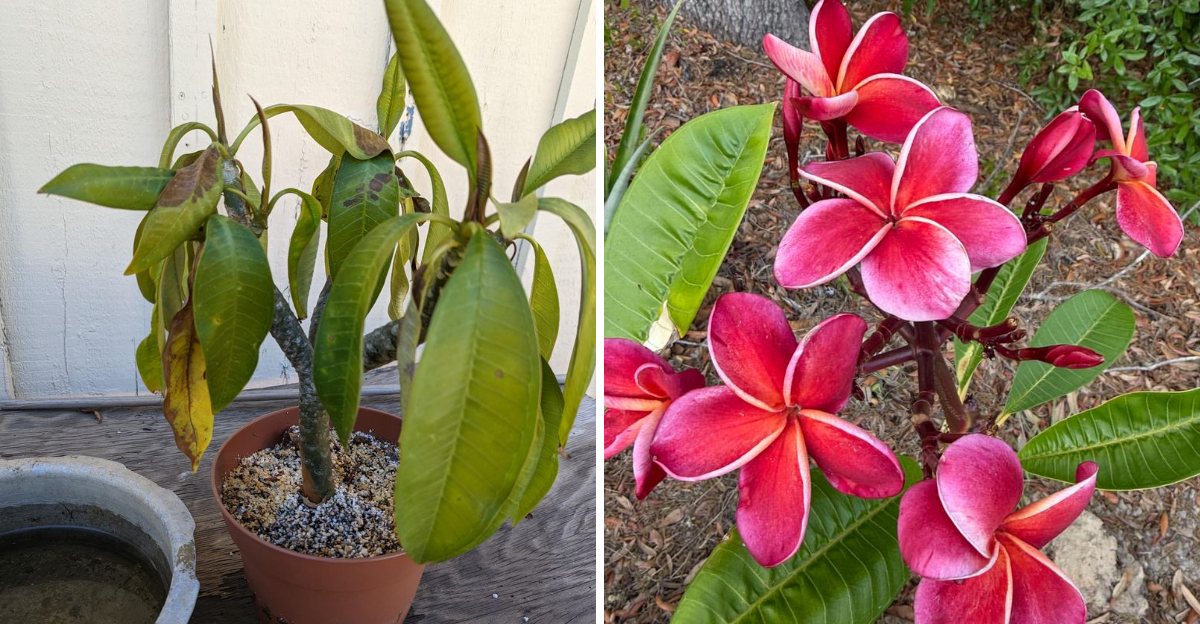
Plumeria looks invincible until a serious Florida heat stretch proves otherwise. Blackened stems, wilting that does not recover overnight, leaves that drop without warning.
A plant that was loaded with blooms two weeks ago can shift into something unrecognizable fast when the heat crosses a threshold even plumeria was not built for.
The window for turning things around is real. Plumeria holds significant reserve in its root system and woody stems, and that reserve is what makes recovery possible when the response comes at the right time.
Most Florida gardeners either do too much in a panic or wait too long assuming the plant will sort itself out. Both approaches cost the plant time it cannot afford once the damage has already set in.
What actually works is specific, it is not complicated, and the earlier it starts the better the outcome.
The season still has time left. So does the plant.
1. Check The Stems Before You Panic
Rough, curled, or dropping leaves can look alarming, but they rarely tell the whole story. The stems are where you find the real picture during heat stress.
Before making any cuts or major decisions, give each stem a slow, careful inspection from tip to base.
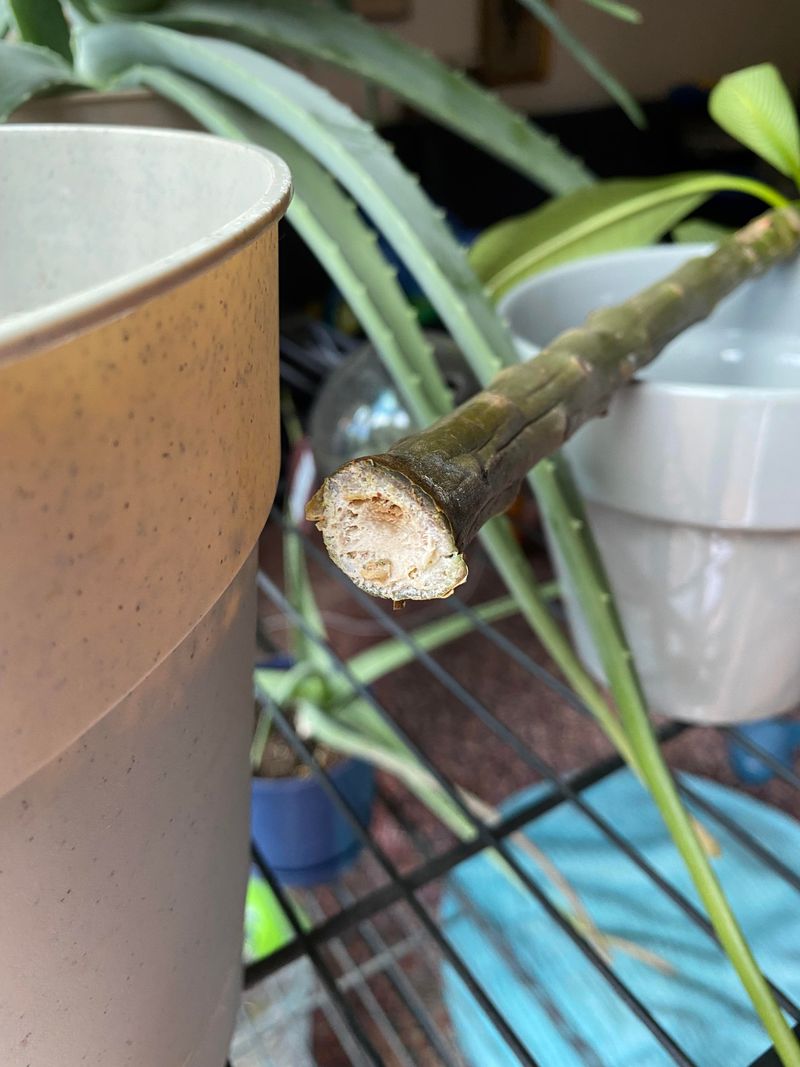
Lightly scratch the surface of a stem with your fingernail. If you see green or light-colored tissue underneath, that stem still has life in it.
A firm stem that feels solid when you gently squeeze it is a strong sign that recovery is possible. Do not let ugly leaves push you into cutting too soon.
Soft spots, dark discoloration, or a mushy feel are different stories. Those areas may signal rot, severe stress, or tissue that has broken down from extreme heat and moisture problems.
Mark those spots and evaluate them carefully before deciding what to do next.
Even one firm, healthy stem on a struggling plant gives you something to work with.
Florida extension offices and experienced growers in warm-weather yards often remind homeowners that plumeria can look much worse than it actually is during peak summer heat.
Stay calm, inspect slowly, and let the stems guide your next step.
2. Move Containers Out Of Harsh Afternoon Heat
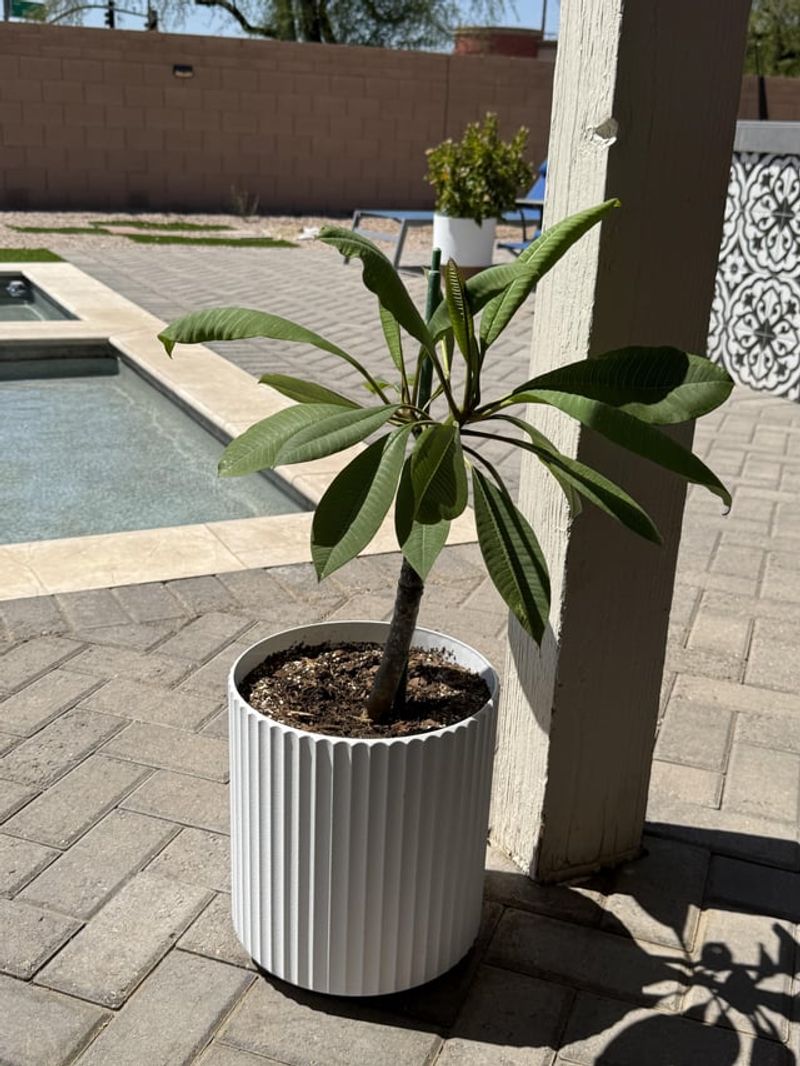
Container plumeria sitting on a sun-baked patio near a wall or pool deck faces a different kind of heat than an in-ground plant. The pot itself absorbs and holds heat, and the roots inside have nowhere to escape.
Dark-colored pots and concrete surfaces can push soil temperatures well beyond what the roots can handle comfortably.
Moving a stressed container to a spot with bright, indirect light during the hottest afternoon hours can reduce that pressure significantly. Look for places that still receive good morning sun but offer some relief between noon and four in the afternoon.
A covered porch, the east side of a structure, or a spot shaded by a tree canopy can work well during recovery.
Do not move a stressed pot into deep shade. Plumeria needs light to recover and grow, and a sudden shift to very low light adds a different kind of stress on top of the heat damage.
Your Florida Garden Changes Every Week. Your Plan Should Too.
Gardening in Florida changes quickly throughout the season. Every Friday you’ll receive a simple weekly plan showing exactly what to plant, prune, fertilize, harvest, and protect so you never miss the right timing.
The goal is reduction, not elimination, of sun exposure during the short recovery window.
Once the plant shows new firm growth and looks more stable, you can gradually move it back to a full-sun location. For now, a slightly sheltered spot gives roots a chance to stabilize without giving up the light the plant still needs.
3. Water Deeply Then Let Soil Drain
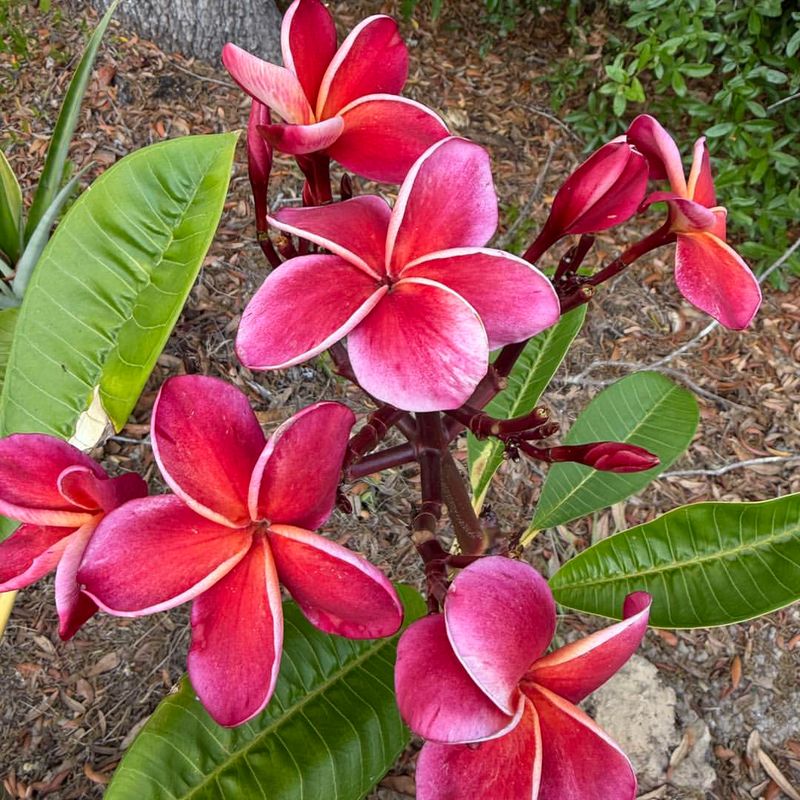
Shallow watering during a heat wave often does more harm than good. It wets the top inch of soil without reaching the roots that need it most.
A deep, thorough soak is what a stressed plumeria actually needs, followed by time for the soil to drain properly before the next watering.
For container plants, water slowly until you see it flowing freely from the drainage holes at the bottom. That tells you the entire root zone has received moisture.
Then wait. Check the soil with your finger before watering again.
If the top two inches still feel damp, hold off another day or two.
One of the most common mistakes in warm-weather yards is daily light watering combined with poor drainage. Roots sitting in wet, airless soil are far more vulnerable to stress and rot than roots in well-drained soil that dries out slightly between waterings.
Plumeria is naturally adapted to periods of dryness and bounces back better from brief dry spells than from soggy roots.
Never let a container sit in a saucer filled with standing water. That trapped moisture keeps the root zone waterlogged and invites problems.
Empty saucers after every watering session and make sure your pot has enough drainage holes to do its job properly.
4. Stop Feeding Until New Growth Returns
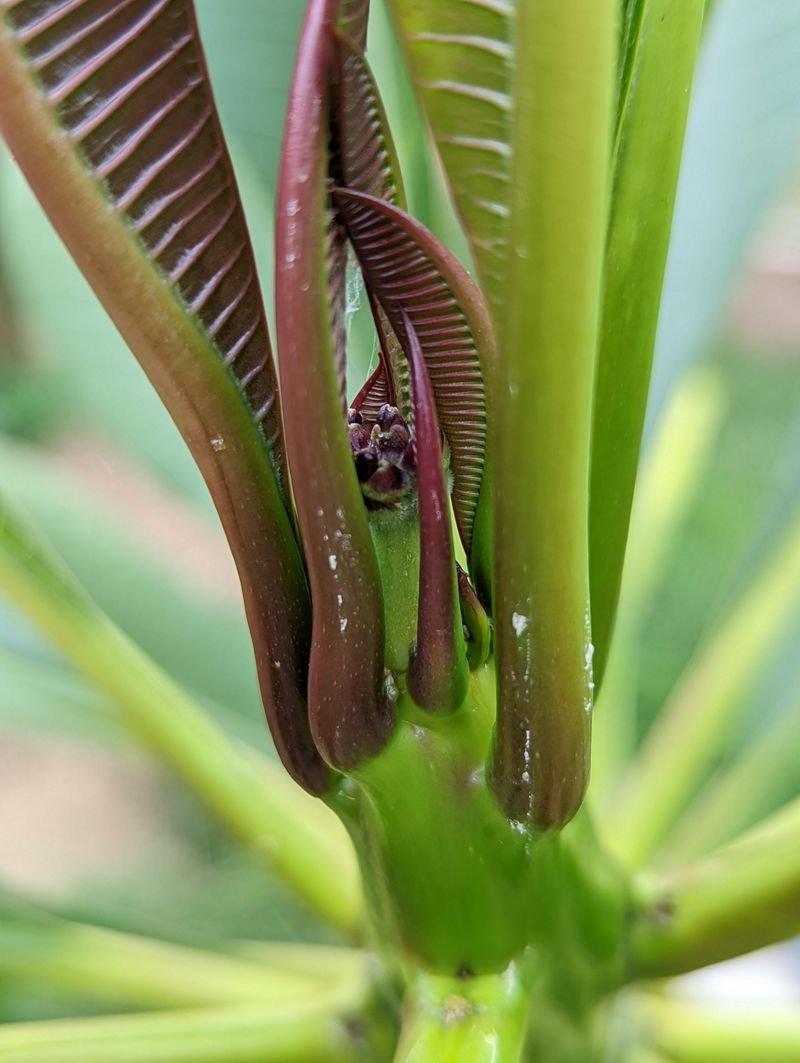
Reaching for fertilizer when a plant looks bad feels like a natural instinct, but it is one of the least helpful things you can do for a heat-stressed plumeria. Fertilizer encourages new growth and cellular activity, and roots under severe stress are not ready to support either of those things right now.
Pushing nutrients into a struggling root system can actually add pressure at the wrong time. Salts in fertilizer can draw moisture away from already-stressed roots, making the situation harder to recover from.
Experienced Florida growers in tropical landscapes consistently advise pausing all feeding until the plant shows clear signs it is coming back on its own.
What does recovery look like? Watch for firm new leaf tips emerging from the growing points at the end of each stem.
Look for a general improvement in stem firmness and color. When those signs appear, you can resume feeding with a light, balanced fertilizer appropriate for warm-season growth.
Skip bloom boosters entirely during this period. Trying to force flowers on a plant that is still rebuilding its root system will not produce good results.
Let the plant recover its structure first. Blooms can come later in the season once the plant is back on solid footing and feeding has resumed at a moderate pace.
5. Hold Off On Heavy Pruning
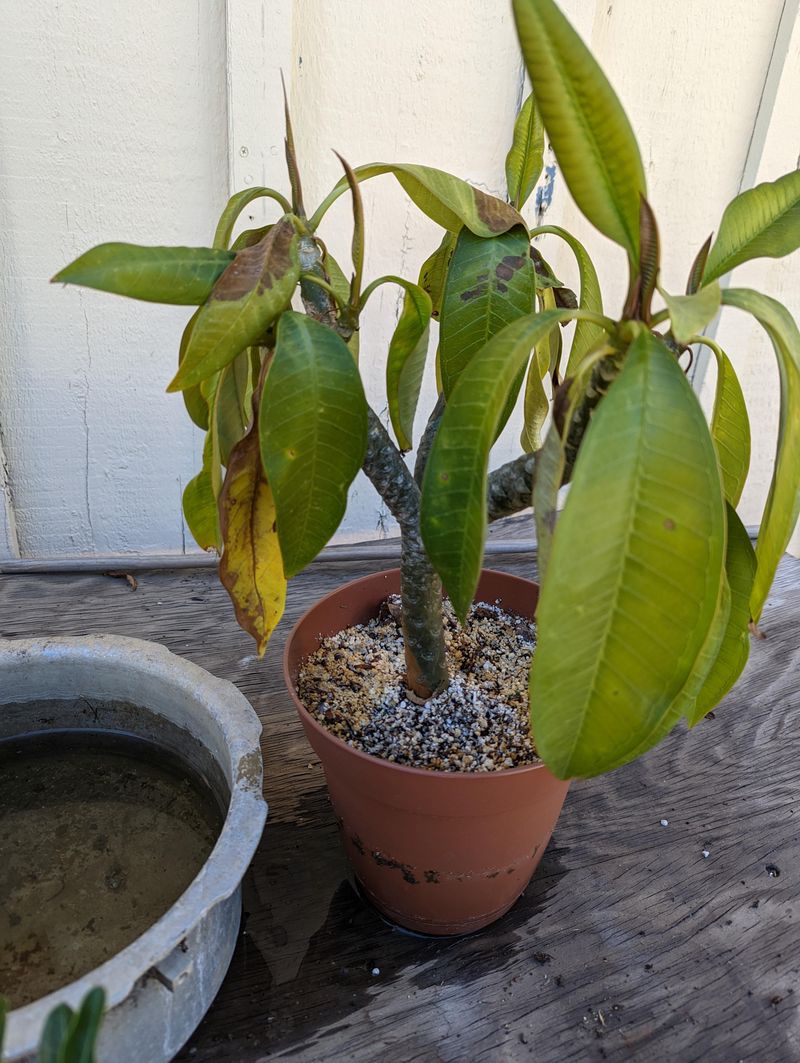
The temptation to cut back a struggling plant is real. When leaves look scorched, dropped, or sad, pruning feels productive.
But heavy pruning on a heat-stressed plumeria removes stored energy that the plant needs to recover. Stems hold reserves that fuel new growth, and cutting them back too far takes away the plant’s best recovery resource.
Wait before making big decisions. Plumeria responds slowly, especially after peak summer heat.
A stem that looks rough or bare today might push new growth in two to four weeks if given the chance. Cutting it off before that window closes means losing growth that was already on the way.
If there is clearly soft, mushy, or unsafe tissue that cannot stay on the plant, use clean and sharp tools to remove only what is necessary. Sanitize your cutting tools before and after to avoid spreading any problems between stems or plants.
Make cuts just above a healthy node when possible.
Avoid the approach of cutting the whole plant back to the base to force a fresh start. That strategy removes too much at once and puts a stressed plant in an even more difficult position.
Restraint and patience are the most effective pruning tools during a heat recovery period in warm, humid climates like ours.
6. Remove Only Leaves That Are Fully Spent
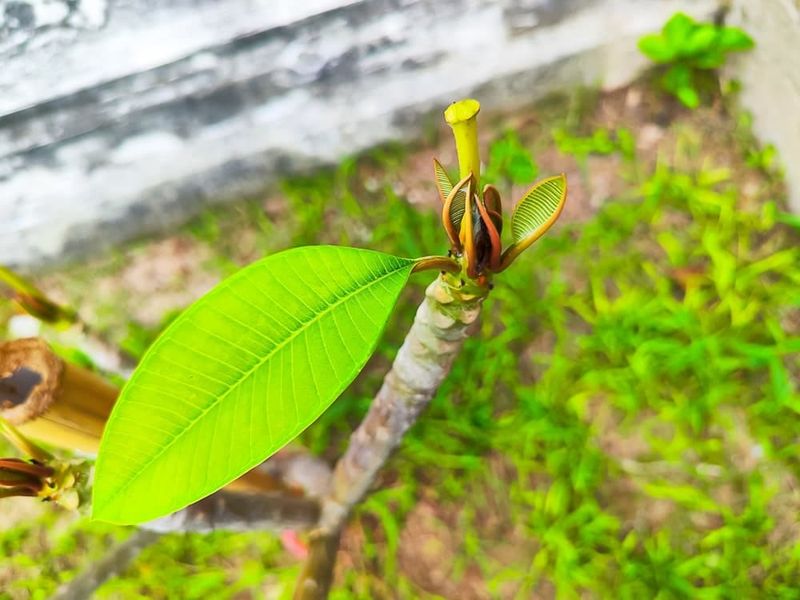
A plumeria dropping leaves in July heat can look completely bare within a week, and the instinct is often to clean it up by stripping off everything that looks damaged. That instinct is worth slowing down.
Leaves that are still partly green, even if they look rough or discolored at the edges, are still doing something useful for the plant.
Green tissue in a leaf means photosynthesis is still happening at some level. That process feeds the plant and supports stem health during stress.
Removing too many leaves too soon takes away shade for the stems below and reduces the plant’s ability to generate the energy it needs for recovery.
Focus on leaves that are completely brown, dry, and loose. Those are not contributing anything and can be removed without concern.
Leaves that hang on loosely but are still partly green should be left alone for now. Plumeria will shed stressed leaves naturally when it is ready, and that is often the cleanest signal of what the plant no longer needs.
Avoid stripping the plant clean to make it look tidy. A few rough-looking leaves are far less damaging than a bare plant struggling to rebuild in the middle of a Florida summer.
Let the plant lead, and remove only what has clearly finished its job.
7. Watch For Sunburn And Soft Stems
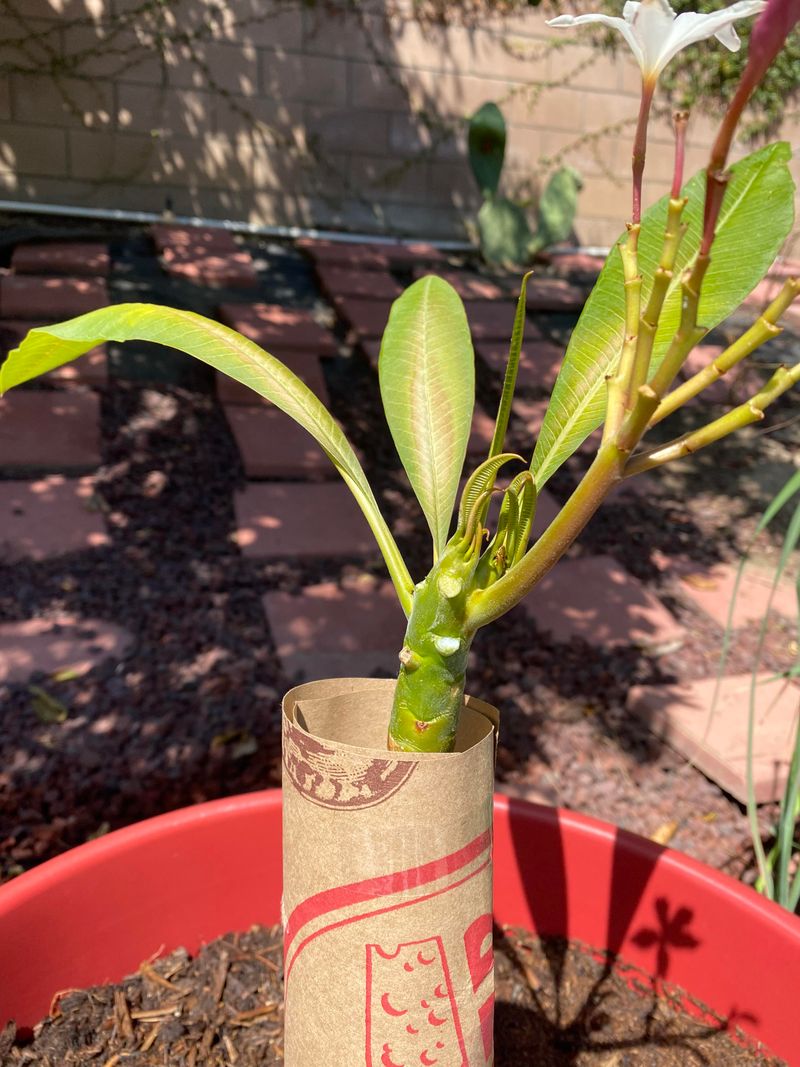
Not every mark on a plumeria stem means the same thing. Surface discoloration from direct sun exposure looks different from the soft, sunken patches that signal something more serious happening underneath.
Learning to read those differences helps you respond more accurately and avoid overreacting to cosmetic damage.
Sunburned areas on plumeria stems often appear as tan, brown, or slightly bleached patches on the side of the stem facing the sun. The tissue underneath may still feel firm.
That kind of surface damage is uncomfortable for the plant but does not always indicate deep injury. Keep the area dry and give the plant time.
Soft patches are a different matter. If a section of stem feels spongy, collapses slightly under light pressure, or shows dark internal tissue when scratched, that area needs closer attention.
Stress from extreme Florida heat combined with wet conditions can make already-weakened stems more vulnerable to secondary problems.
After a heat wave or a stretch of heavy afternoon rain, walk through your garden and check stems carefully.
If you find soft areas that are spreading or worsening, reaching out to a local extension office or an experienced plumeria grower in your area is a smart next step.
Not every problem can be self-diagnosed, and getting accurate guidance early makes a real difference.
8. Help Roots Recover Before Chasing Blooms
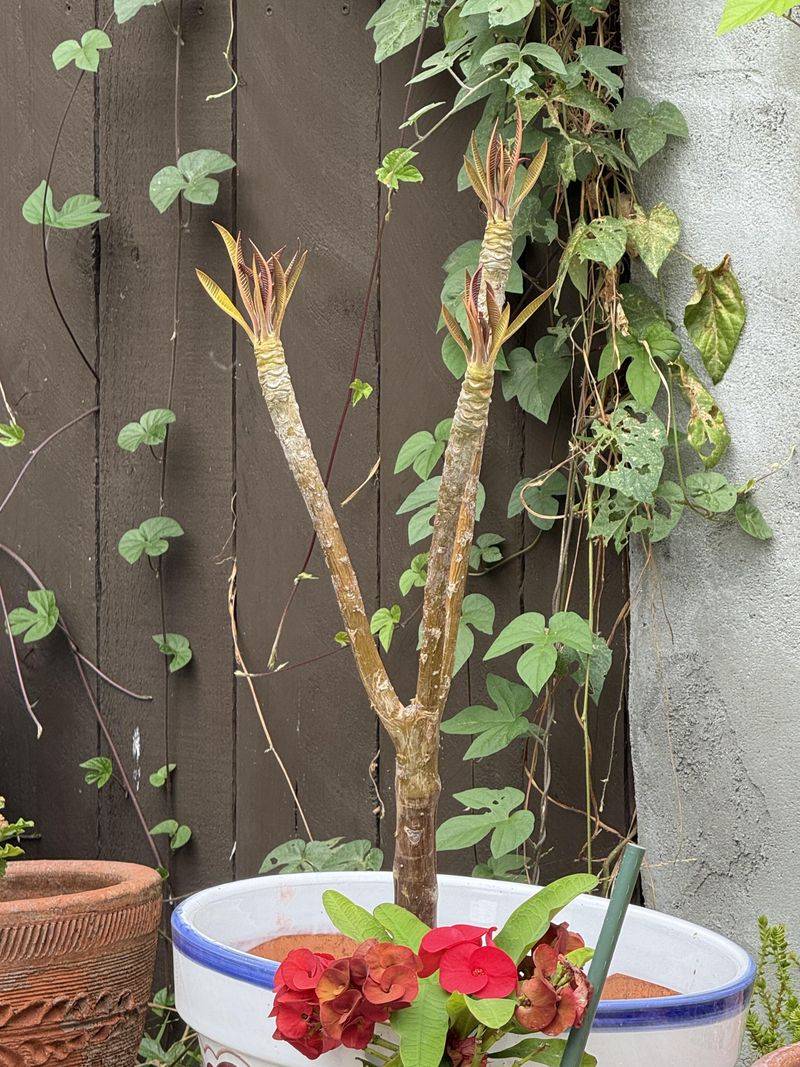
Flower buds are beautiful, but they are not the priority right now. A plumeria that has been through severe heat stress needs its energy directed toward root recovery and stem stability before it can reliably support blooms.
Chasing flowers on a struggling plant often leads to disappointment and can slow the overall recovery timeline.
Buds that formed before the heat wave may pause, drop, or fail to open fully. That is a normal response to stress, not a sign that something went permanently wrong.
The plant is making a practical decision to protect its core structure rather than spend limited energy on flowers it cannot sustain.
Focus your attention on steady moisture without sogginess, good drainage, reduced heat exposure for containers, and patience. New leaf growth emerging from the tips of firm stems is the signal you are waiting for.
That growth tells you the roots are functioning and the plant is moving in the right direction.
Adjust care gradually as recovery progresses. Avoid repeating emergency fixes back to back, since each intervention adds a layer of stress on a plant that needs stability.
Protecting roots and stems first is the most reliable path back to a healthy, blooming plumeria. Water carefully, improve drainage, and give the plant time to respond when the season is right.