The Shade Tree Some Texas Neighborhoods Are Quietly Adding For Natural Cooling
Anyone who has spent a Texas summer without enough shade in their yard knows exactly how much difference a good tree makes. The right shade tree doesn’t just look beautiful.
It genuinely changes the temperature of your outdoor space, reduces the heat load on your home, and makes your yard a place you actually want to spend time in even when the thermometer is misbehaving.
And across Texas neighborhoods, one particular shade tree is quietly gaining serious momentum. It’s not the most talked about tree at the nursery.
But homeowners and landscapers who know their trees have been recommending it with growing enthusiasm because of how effectively it delivers natural cooling while also being low maintenance, long lived, and genuinely beautiful through every season.
It provides dense, reliable shade, handles the Texas climate without complaint, and brings real ecological value to the neighborhoods lucky enough to have it. Here’s the shade tree Texas homeowners are quietly adding and exactly why it’s worth knowing about.
Meet Monterrey Oak
Not every shade tree can handle what Texas throws at it, but the Monterrey oak steps up to the challenge with confidence.
Known by its scientific name Quercus polymorpha, this tree originally comes from the mountains of northeastern Mexico and parts of Texas near the border.
That heritage alone tells you something important: it was built for heat, rocky soil, and dry spells.
Unlike some oak varieties that grow at a frustratingly slow pace, the Monterrey oak moves at a reasonable clip. Under good conditions, it can put on two to three feet of growth each year when it is young and getting regular water.
That kind of progress means homeowners do not have to wait a lifetime to enjoy meaningful shade.
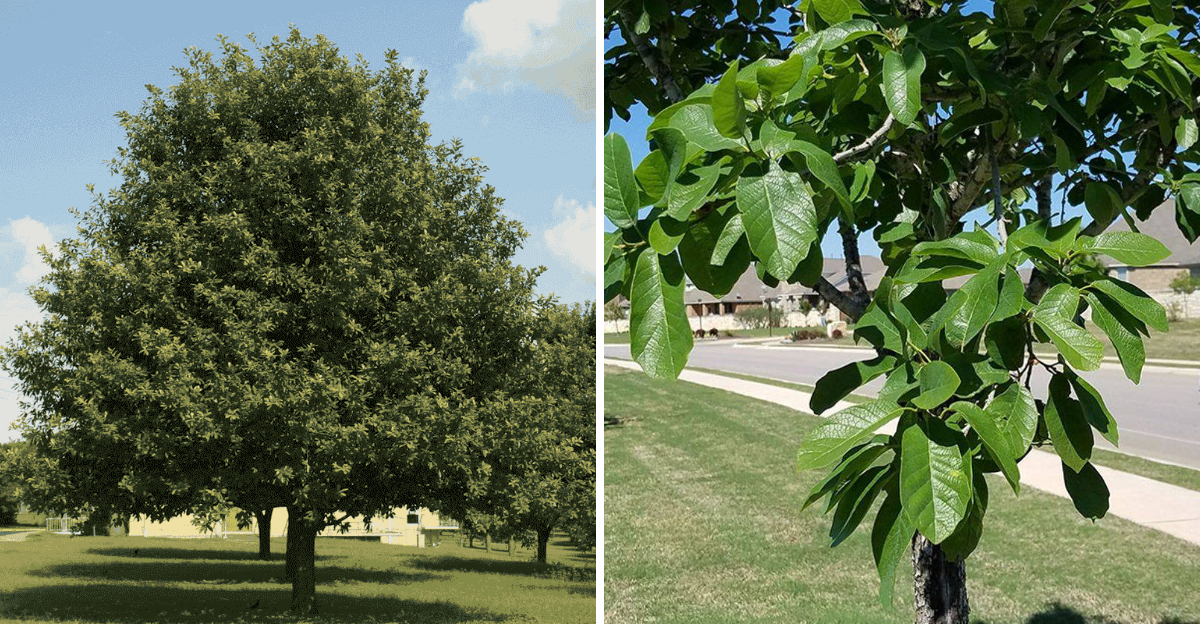
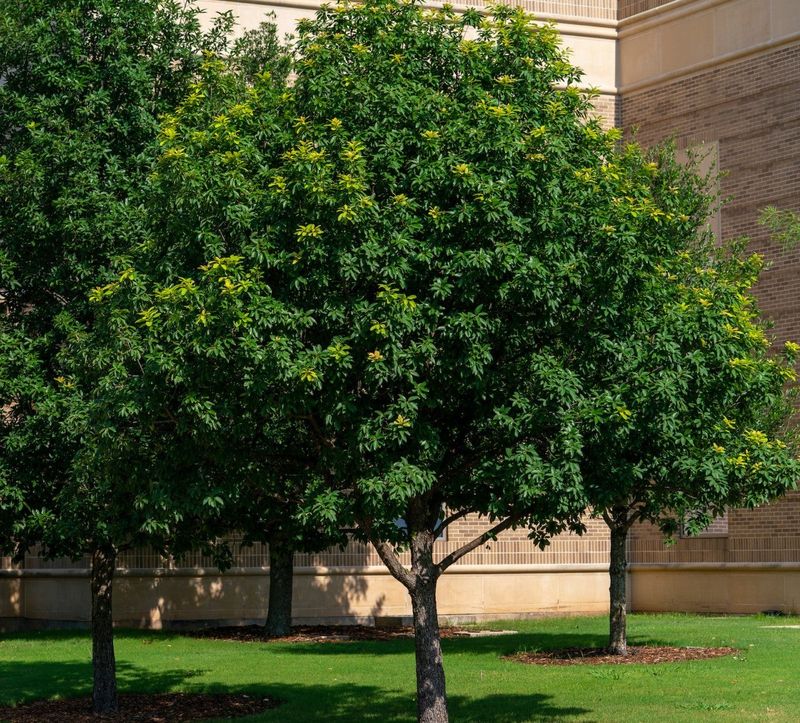
Visually, the Monterrey oak is a standout. It has a broad, rounded canopy that spreads wide rather than growing straight and narrow.
The leaves are semi-evergreen in many parts of Texas, meaning the tree holds onto its foliage well into winter before briefly dropping leaves in early spring. This gives yards a lush, full look for most of the year.
Many people choose this tree as an alternative to the live oak, which is already everywhere in Texas. The Monterrey oak offers a similar sturdy presence without feeling like the same old choice.
It fits right into residential neighborhoods, lines streets beautifully, and complements both traditional and modern home styles. For anyone looking for a tree that combines good looks with real toughness, the Monterrey oak is worth a serious look.
Why Shade Trees Matter So Much In Texas Heat
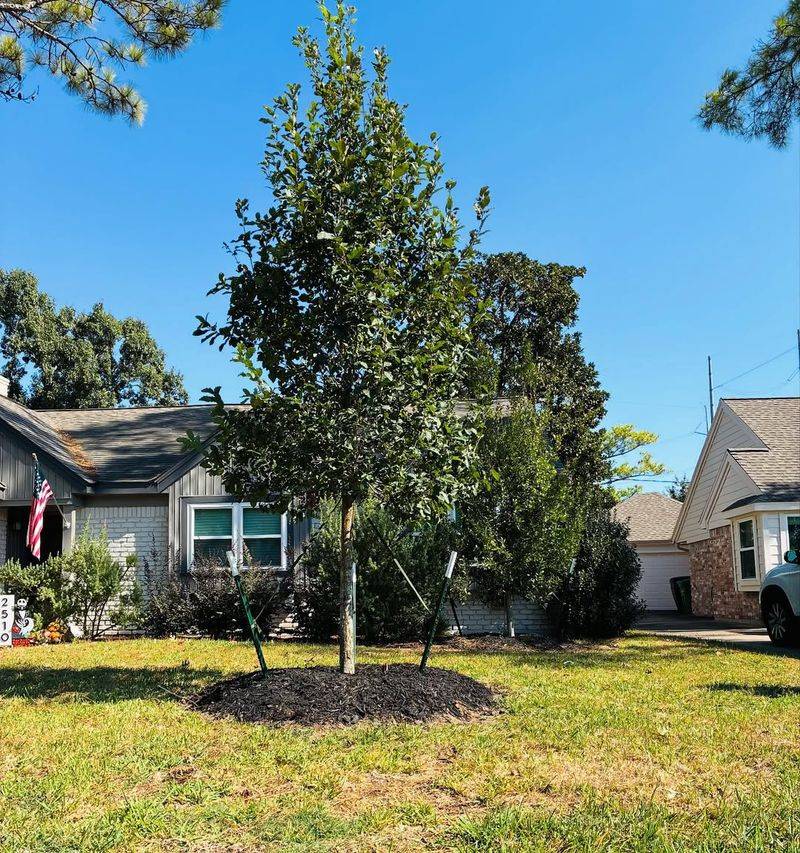
Standing in full sun on a Texas afternoon in August is genuinely uncomfortable. Pavement and concrete absorb heat all day and release it slowly, making sidewalks, driveways, and patios feel like they are radiating from below.
Shade trees interrupt that cycle in a powerful way by blocking solar radiation before it ever hits the ground.
Research from urban forestry studies shows that shaded surfaces can be 20 to 45 degrees cooler than surfaces baking in direct sunlight. That difference is enormous when you are talking about a driveway, a front porch, or even the wall of your house.
Your Texas Garden Changes Every Week. Your Plan Should Too.
Gardening in Texas changes quickly throughout the season. Every Friday you’ll receive a simple weekly plan showing exactly what to plant, prune, fertilize, harvest, and protect so you never miss the right timing.
When the sun cannot beat down on your home all day, your air conditioner does not have to work nearly as hard to keep things comfortable inside.
Shade trees also make outdoor spaces genuinely usable again. A patio that sits in full sun from noon to evening is basically off-limits during summer.
Add a tree with a wide canopy, and suddenly that same space becomes somewhere the family can actually gather, grill, or just sit outside without feeling miserable.
Beyond comfort, tree canopy helps reduce the urban heat island effect, which is the way cities and suburbs get hotter than surrounding rural areas because of all the pavement and buildings. Neighborhoods with more tree cover tend to stay measurably cooler overall.
Planting shade trees is not just good for one yard. It contributes to the comfort of an entire street or block.
In a state where summer heat is a real public health concern, trees are one of the most practical and affordable tools available to everyday homeowners.
What Makes Monterrey Oak A Strong Cooling Tree
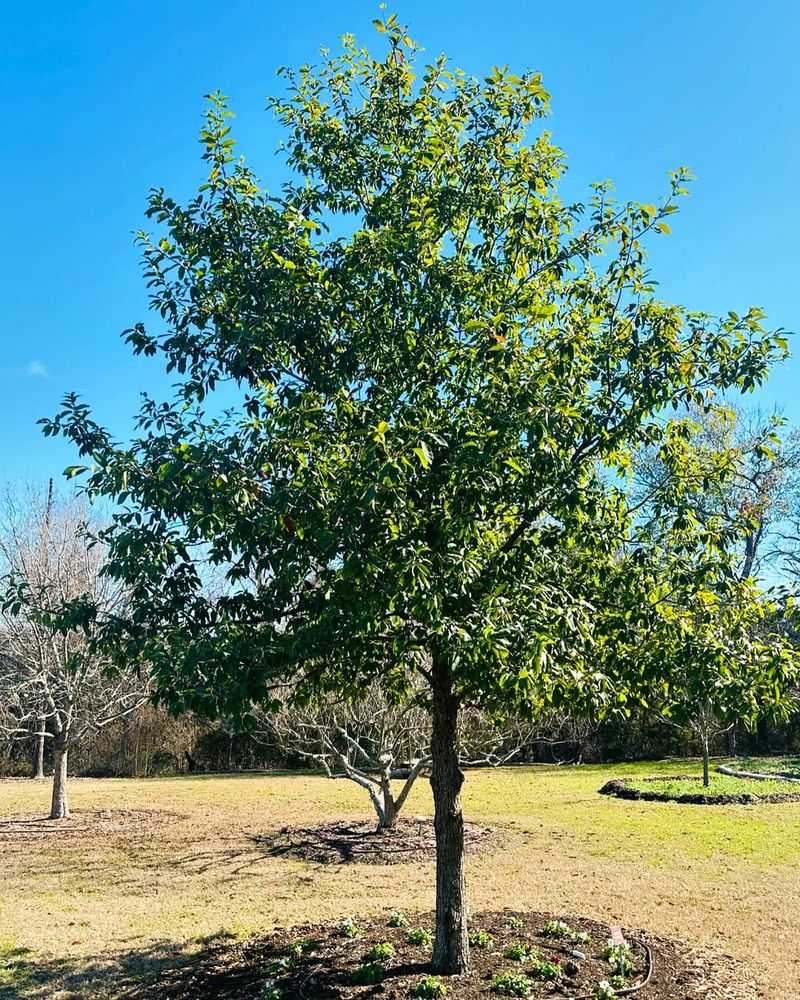
A tree’s ability to cool its surroundings comes down to two things: how wide its canopy spreads and how dense its foliage is. The Monterrey oak delivers on both counts.
Its rounded crown can spread 40 to 50 feet wide at full maturity, which is wide enough to shade a good-sized yard, a driveway, or a stretch of sidewalk with room to spare.
The leaves themselves are fairly large and grow in dense clusters. That density is key because it means sunlight has a harder time sneaking through.
A tree with sparse leaves offers dappled shade at best. The Monterrey oak creates the kind of deep, reliable shade that actually drops the temperature underneath it by several degrees, making a real difference on a 100-degree afternoon.
Another factor that sets this tree apart is its relatively fast growth rate compared to many oaks. While classic live oaks are slow and steady, the Monterrey oak reaches a useful size much sooner.
Homeowners who plant a young tree in their twenties or thirties can realistically expect meaningful shade within five to ten years, rather than waiting decades.
The semi-evergreen nature of the tree also extends its cooling season. Because it holds its leaves longer than deciduous trees, it keeps shading the yard well into fall and sometimes through mild winters.
That matters in Texas, where warm days can stretch into November. For anyone thinking about west-facing or south-facing walls that get hammered by afternoon sun, placing a Monterrey oak in the right spot can make a measurable dent in home cooling costs over time.
Why Texas Neighborhoods Like This Tree
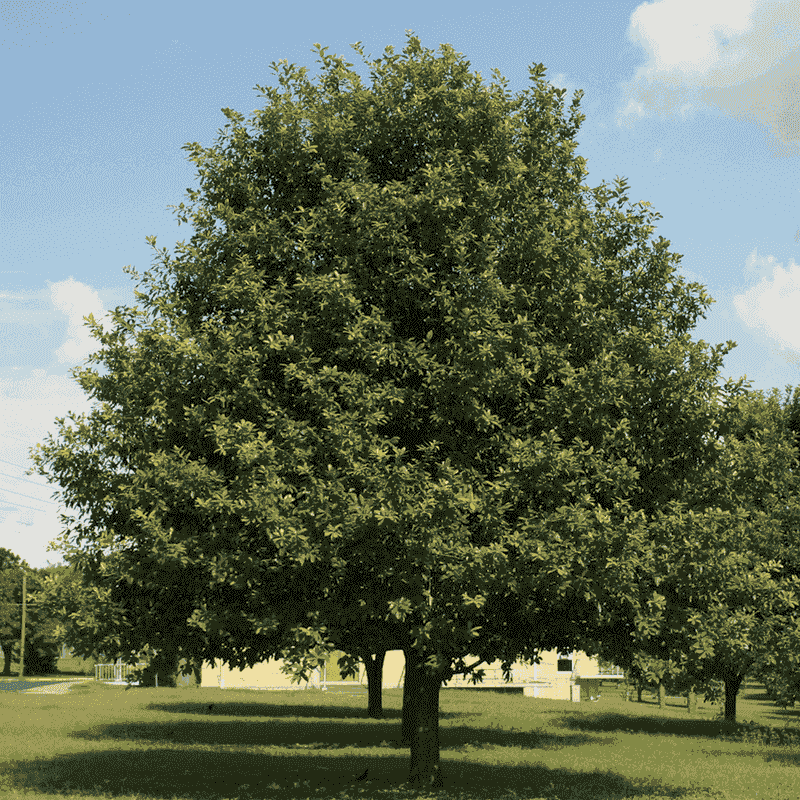
Adaptability is everything when it comes to picking a tree for a Texas yard, and the Monterrey oak has it in abundance. Texas soils are notoriously tricky.
Many parts of the state have alkaline, clay-heavy, or rocky soils that cause other trees to struggle, turn yellow, or fail to thrive.
The Monterrey oak handles all of these conditions without much fuss, which is a big reason neighborhoods across central and south Texas have started embracing it.
Drought tolerance is another major selling point. Once a Monterrey oak is established, usually after two to three years of regular watering, it becomes remarkably self-sufficient.
It can handle dry stretches that would stress out less adapted species. For homeowners who do not want to babysit a tree through every dry spell, that kind of resilience is genuinely reassuring.
From an aesthetic standpoint, the tree brings a polished, substantial look to a street without demanding constant attention.
It does not drop excessive debris, it does not produce invasive roots that crack sidewalks the way some species do, and it holds its shape well without requiring aggressive pruning.
Neighborhoods that have planted rows of Monterrey oaks along their streets report that they add curb appeal and a sense of maturity to the community.
City planners and homeowner associations in Texas have also begun recommending this tree for new developments because it fits well in both residential and commercial landscapes. It looks intentional and well-chosen rather than just functional.
For anyone who wants a tree that works hard, looks great, and does not create extra work, the Monterrey oak checks all the boxes.
How To Plant Monterrey Oak For The Best Shade
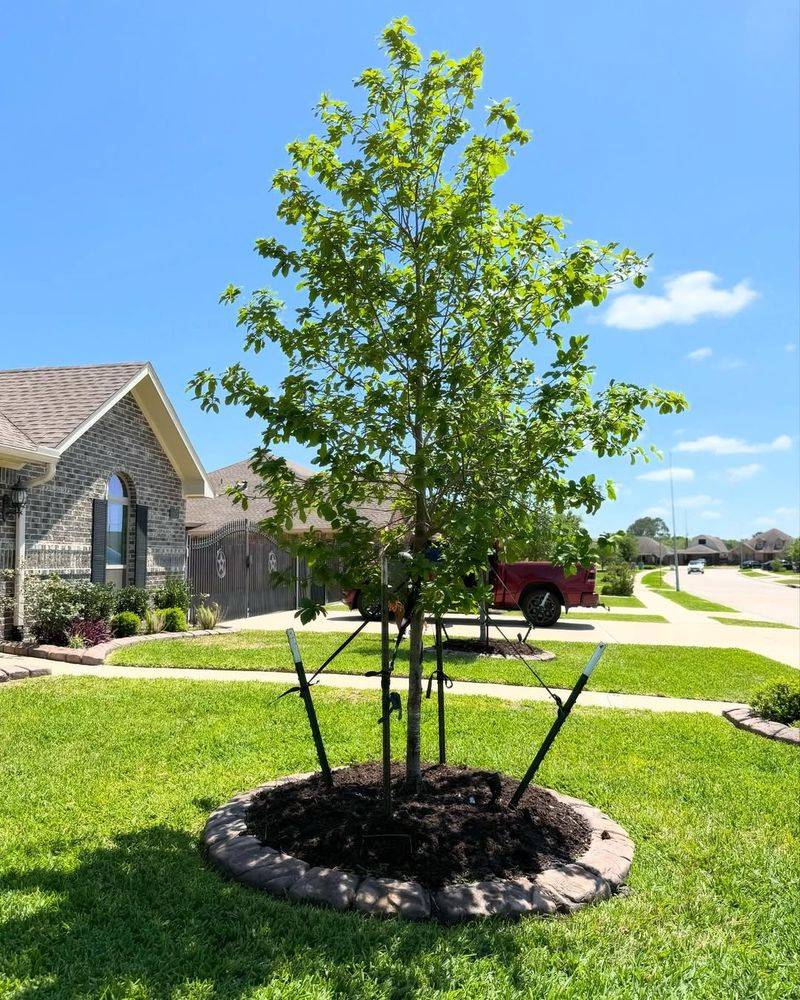
Planting a tree in the right spot makes all the difference between a tree that transforms your yard and one that never quite delivers. For maximum shade benefit, position your Monterrey oak on the west or southwest side of your home.
That is where the afternoon sun hits hardest in Texas, and a mature canopy in that location can shade your walls, windows, and roof during the hottest part of the day.
Keep the tree well away from your home’s foundation. A general rule is to plant it at least 15 to 20 feet from any structure.
The Monterrey oak grows wide, and its roots need room to spread without causing problems underground. Also check for overhead utility lines before choosing a planting spot.
A tree that grows into power lines creates safety issues and usually ends up needing heavy, unattractive pruning.
Dig your planting hole two to three times wider than the root ball but no deeper than the root ball itself. Planting too deep is one of the most common mistakes people make, and it can seriously affect a tree’s long-term health.
After planting, lay a three- to four-inch layer of mulch around the base, keeping it a few inches away from the trunk. Mulch holds moisture, moderates soil temperature, and reduces competition from grass and weeds.
Young trees need consistent watering for the first two to three years. A deep, slow watering once or twice a week during dry periods helps roots grow deep and strong.
Deep roots make for a more stable, drought-tolerant tree in the long run. Patience during these early years pays off with decades of reliable shade.
What To Know Before Adding One To Your Yard
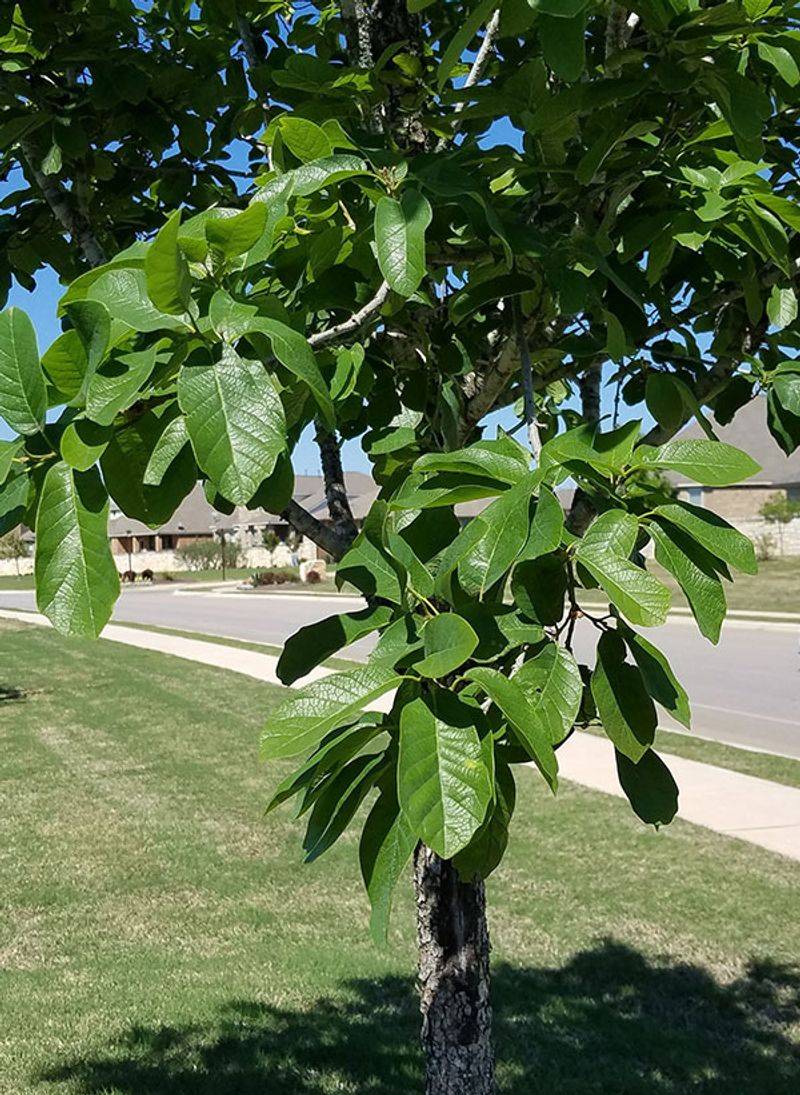
Before you head to the nursery, there are a few things worth knowing so your investment pays off. First, space is non-negotiable.
The Monterrey oak grows into a large tree, often reaching 40 to 50 feet tall and equally wide.
Planting it too close to a fence, a sidewalk, or a structure might seem fine when the tree is young, but causes real headaches as it matures. Give it room to grow into its full size without crowding.
Choosing healthy nursery stock is one of the best things you can do for long-term success. Look for a tree with a straight central trunk, no visible cracks or wounds in the bark, and a full, evenly distributed canopy.
Avoid trees that look stressed, have yellowing leaves, or show signs of root circling at the base of the container. Starting with a strong, healthy tree gives you a head start that makes a noticeable difference in the first few years.
Planting depth matters more than most people realize. The root flare, which is the spot where the trunk begins to widen at the base, should sit at or slightly above the soil surface. Burying it too deep restricts oxygen to the roots and weakens the tree over time.
Think of the Monterrey oak as a long-term investment rather than a quick fix. It will take a few years to establish and a decade or more to reach its full cooling potential.
But a well-placed, well-cared-for Monterrey oak can shade your yard, reduce your cooling bills, and improve your property’s value and comfort for generations to come. That kind of return is hard to beat.