The Texas Native Plants That Bloom At Their Absolute Peak In July Heat
July in Texas pushes most plants to their absolute limit. The heat is relentless, the sun shows no mercy, and a lot of garden color simply gives up until conditions improve.
But while ornamental favorites are wilting and fading, a select group of Texas native plants are just hitting their stride. These are plants that were built for exactly this moment.
Native Texas plants that peak in July have spent generations adapting to brutal summer conditions. Instead of struggling against the heat, they use it.
Long sunny days and intense warmth trigger some of their most spectacular blooms of the entire year, bursting with color right when most gardens desperately need it.
These natives also tend to attract pollinators at their busiest time, adding life and movement to a garden that might otherwise feel quiet during the hardest stretch of summer. Here’s what’s putting on a show in Texas gardens right now.
1. Texas Sage
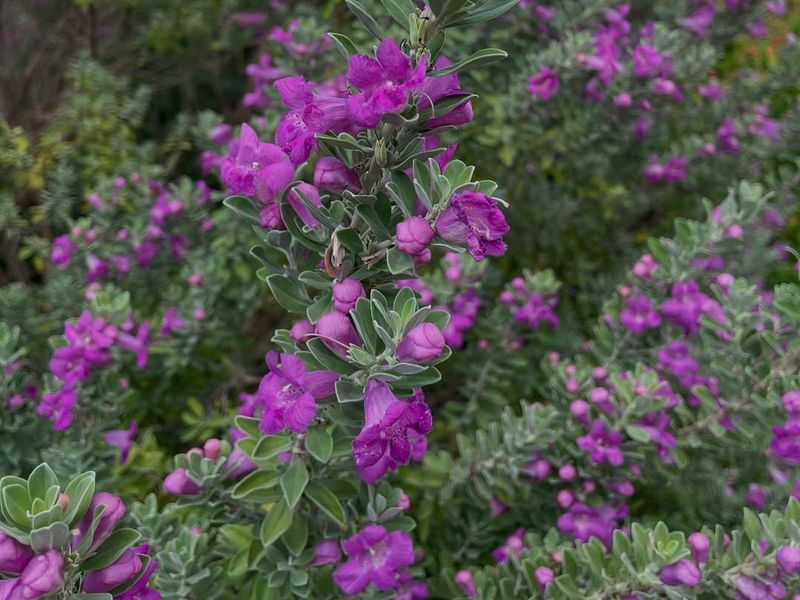
Right after a summer rainstorm rolls through, something almost magical happens in Texas yards. Texas Sage, also called Cenizo or the “barometer bush,” bursts into a cloud of purple blooms almost overnight.
Gardeners have learned to use it as a natural weather predictor because it often flowers just before or after rain, making it one of the most charming plants in the Lone Star State.
The silvery-gray foliage looks beautiful even when the plant is not blooming. It reflects sunlight in a way that gives the whole shrub a soft, almost glowing appearance.
The leaves are small and fuzzy, which helps the plant hold moisture and stay cool during extreme heat. This is a plant that was built for Texas summers, not just tolerating them but actually thriving through them.
Texas Sage grows into a rounded shrub that can reach four to eight feet tall, depending on the variety. It works beautifully as a border plant, a privacy hedge, or a standalone specimen in a xeriscape design.
Once established, it needs almost no supplemental watering. You can plant it in rocky, poor soil and it will still look great.
For best results, plant Texas Sage in full sun and well-drained soil. Avoid overwatering because it strongly prefers dry conditions.
Pruning is rarely needed, but a light trim in early spring keeps the shape tidy. Hummingbirds and native bees absolutely love the tubular purple flowers.
If you want one plant that delivers maximum July drama with minimal effort, Texas Sage is your answer.
2. Autumn Sage
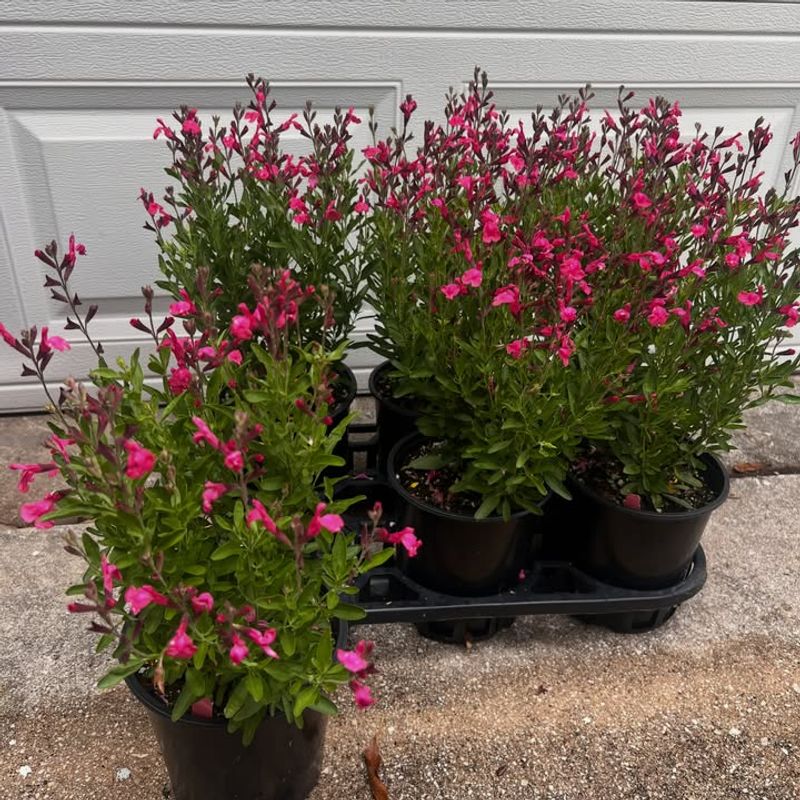
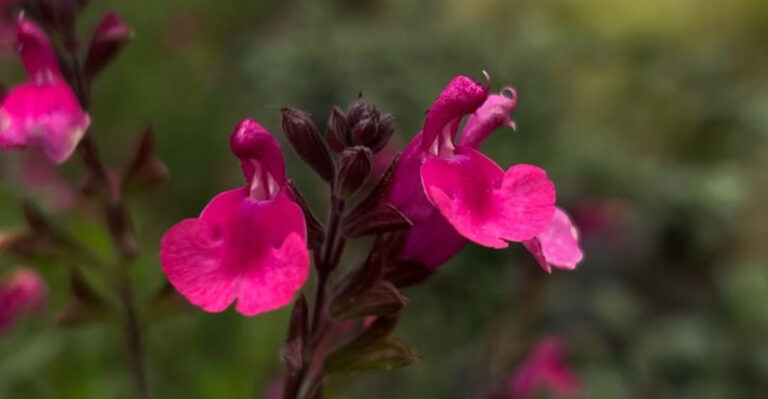
Hummingbirds have a way of finding the best plants in any garden, and Autumn Sage is always at the top of their list. Salvia greggii produces a nonstop parade of tubular flowers in shades of red, pink, coral, and white from late spring all the way through the hottest part of summer.
July is actually one of its strongest blooming months, which makes it a standout in the Texas native plant world.
Do not let the name fool you. Despite being called Autumn Sage, this plant is in full gear long before fall arrives.
Your Texas Garden Changes Every Week. Your Plan Should Too.
Gardening in Texas changes quickly throughout the season. Every Friday you’ll receive a simple weekly plan showing exactly what to plant, prune, fertilize, harvest, and protect so you never miss the right timing.
It blooms heavily in spring, takes a brief rest during the very peak of heat, and then kicks back into overdrive.
Many gardeners report their plants looking incredibly full and colorful throughout July, especially when planted in a spot with good drainage and full sun exposure.
One of the best things about Autumn Sage is how wildlife-friendly it is. Beyond hummingbirds, it draws in native bees, butterflies, and other beneficial pollinators.
Planting it near a porch or window gives you a front-row seat to all that activity. It grows about two to three feet tall and wide, making it easy to fit into almost any garden space.
Watering deeply but infrequently helps Autumn Sage build a strong root system. Once it is established, it handles drought like a champ.
Deadheading spent flowers encourages more blooms and keeps the plant looking tidy. With dozens of cultivars available, you can mix colors for a really eye-catching summer display that pollinators will visit all day long.
3. Blackfoot Daisy
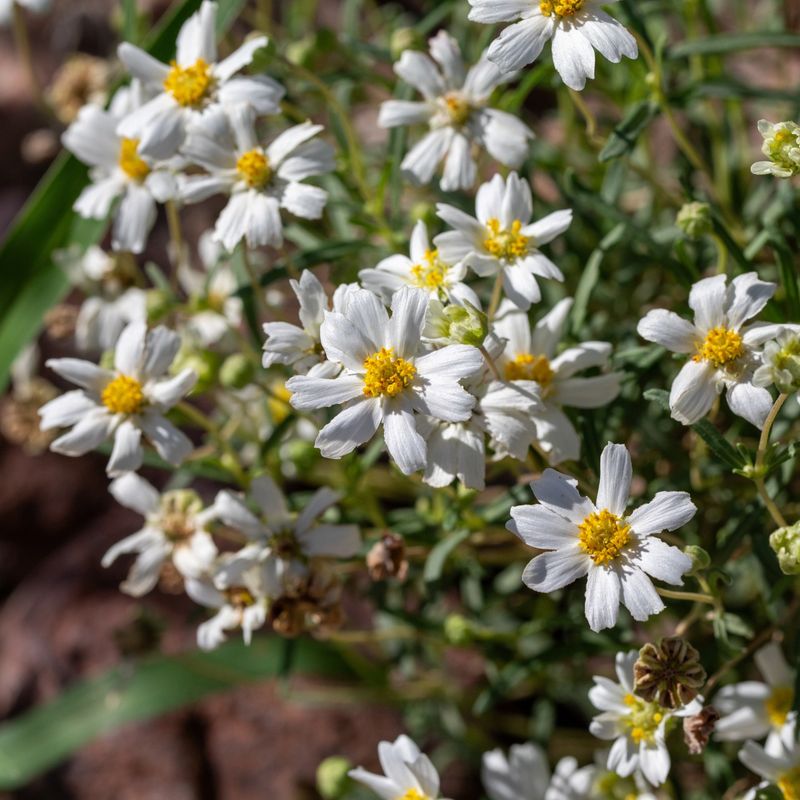
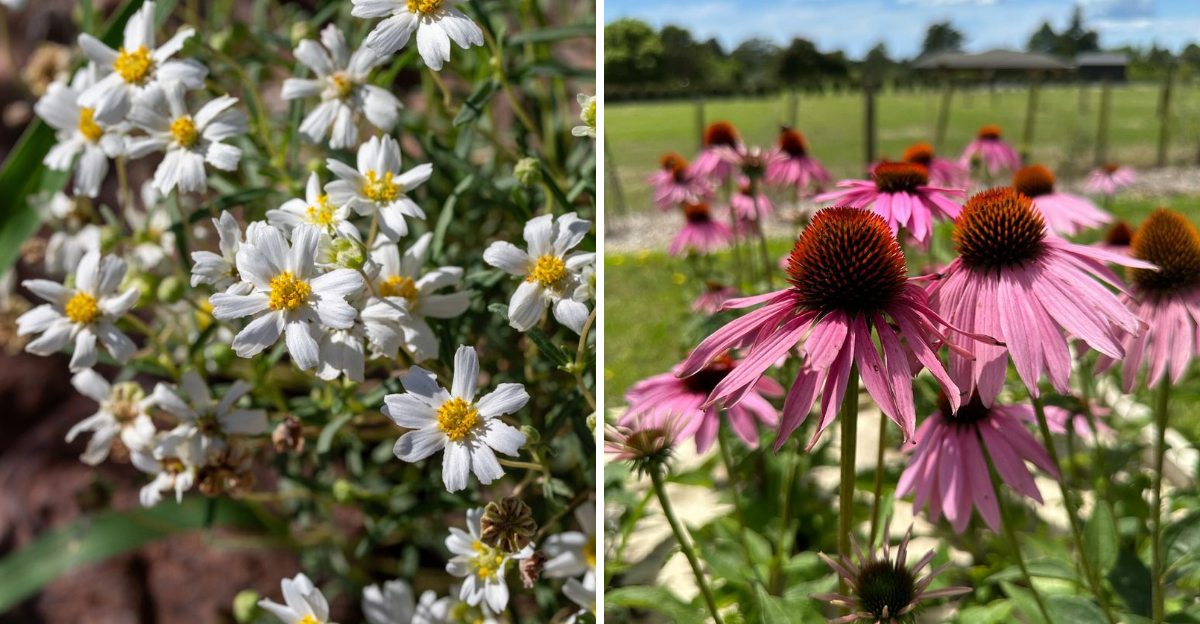
Few plants in Texas nail the combination of tough and pretty quite like the Blackfoot Daisy. Small, cheerful white flowers with sunny yellow centers cover this low-growing plant from spring through fall, and July is when it really shines.
Even when the soil is dry, the air is scorching, and other flowers have long since faded, Blackfoot Daisy keeps right on blooming without complaint.
Native to rocky limestone hills and dry prairies across Texas, this plant evolved to handle some of the harshest conditions imaginable.
It grows naturally in thin, gravelly soil with very little organic matter, which means it actually does better in poor soil than in rich, amended garden beds.
Overwatering or planting it in heavy clay soil is the fastest way to run into problems with this otherwise carefree plant.
The compact size of Blackfoot Daisy makes it incredibly versatile. It stays around six to twelve inches tall and spreads about one to two feet wide.
Rock gardens, border edges, and xeriscape designs are where it truly belongs. Mass plantings create a stunning carpet of white and yellow that looks like something from a wildflower meadow, and the honey-like fragrance it gives off on warm days is a pleasant bonus.
Plant it in full sun with fast-draining soil and water only occasionally once established. No fertilizer is needed, and in fact, too much fertilizer causes the plant to get leggy and produce fewer flowers.
A light shearing after each heavy bloom cycle encourages fresh growth. Butterflies and bees visit regularly, adding extra life to an already lively plant throughout the entire summer season.
4. Rockrose
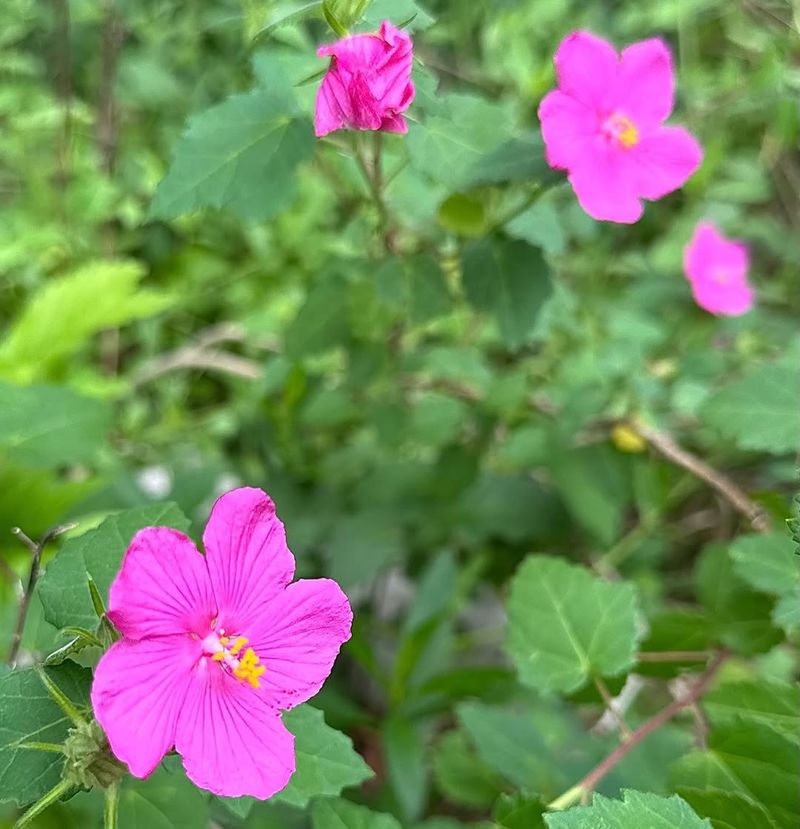
Walk past a Rockrose on a blazing July afternoon and you might do a double take. Those soft, hibiscus-like pink flowers look far too delicate to be surviving in the kind of heat that bakes the Texas Hill Country.
But Pavonia lasiopetala is tougher than it looks, and it saves its best performance for the hottest, driest part of the year.
Rockrose is a semi-woody shrub that typically grows three to five feet tall with a loose, airy form. The flowers open fresh each morning and fade by evening, but new buds replace them daily throughout the summer.
This constant renewal means the plant always looks vibrant and full of life, even during weeks without rain. The soft pink color pairs beautifully with the dusty, sun-bleached tones of a Texas summer landscape.
One underappreciated quality of Rockrose is how well it handles the difficult combination of full sun and dry, rocky soil. Most flowering shrubs struggle under those conditions, but Rockrose was practically designed for them.
It grows naturally in the limestone-heavy soils of central Texas, so it has deep roots in the region, both literally and historically.
Plant it in a sunny spot with well-drained soil, and give it some water while it gets established during its first season. After that, rainfall alone is usually enough to keep it going through summer.
Butterflies are especially fond of the flowers, and the plant provides good cover for small birds. Pruning hard in late winter encourages bushy new growth and sets the stage for a spectacular summer bloom season ahead.
5. Gregg’s Mistflower
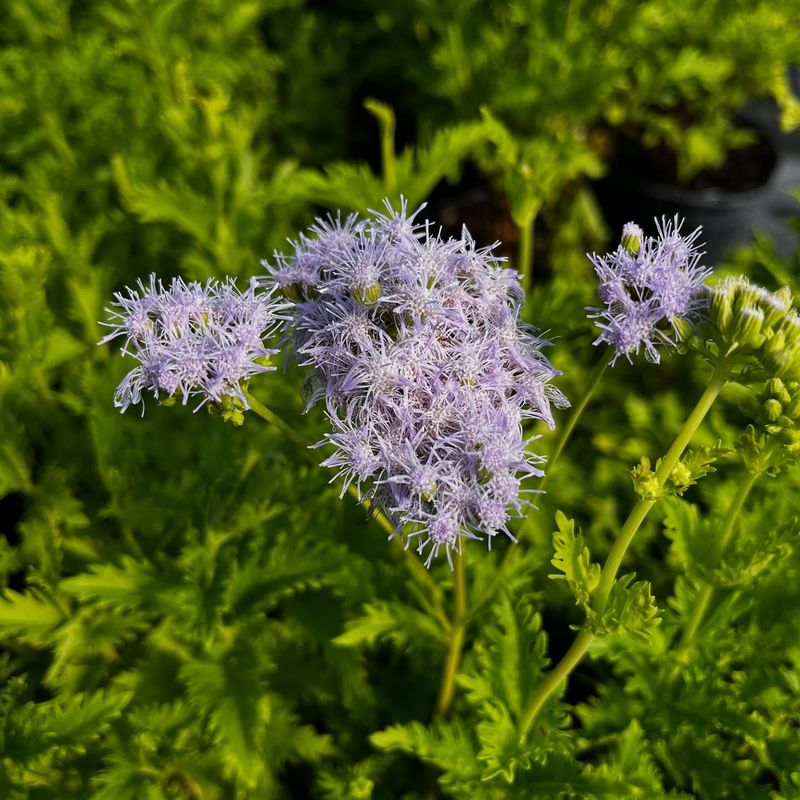
If you have ever wanted to attract a cloud of butterflies to your yard, Gregg’s Mistflower is basically a cheat code. This native Texas perennial produces clusters of soft, fluffy lavender-blue flowers that pollinators find absolutely irresistible.
During July, when many nectar sources are limited by the heat, Mistflower becomes a critical pit stop for migrating and resident butterflies alike.
The plant has a somewhat wild, sprawling look that fits naturally into informal gardens, meadow-style plantings, and naturalized areas along fences or property edges.
It grows one to three feet tall and spreads enthusiastically by underground rhizomes, which means it fills in gaps quickly and creates a lush, full appearance over time.
Some gardeners use it intentionally as a ground cover in sunny, dry areas where other plants struggle.
What makes Gregg’s Mistflower especially impressive is its resilience. It handles intense heat and extended dry periods without showing much stress.
The foliage stays green and fresh-looking even when surrounding plants are wilting. Blooming typically peaks in late summer and fall, but July often sees a strong early flush of color that gets the whole season started on a high note.
Full sun or light partial shade both work well for this plant. It prefers well-drained soil but adapts to a range of soil types found across Texas.
Once established, it rarely needs supplemental watering. Cutting it back by about half in midsummer can promote a fresh round of blooms.
Queen butterflies and Monarchs are especially drawn to the flowers, making it an essential addition to any pollinator garden in the state.
6. Mealy Blue Sage
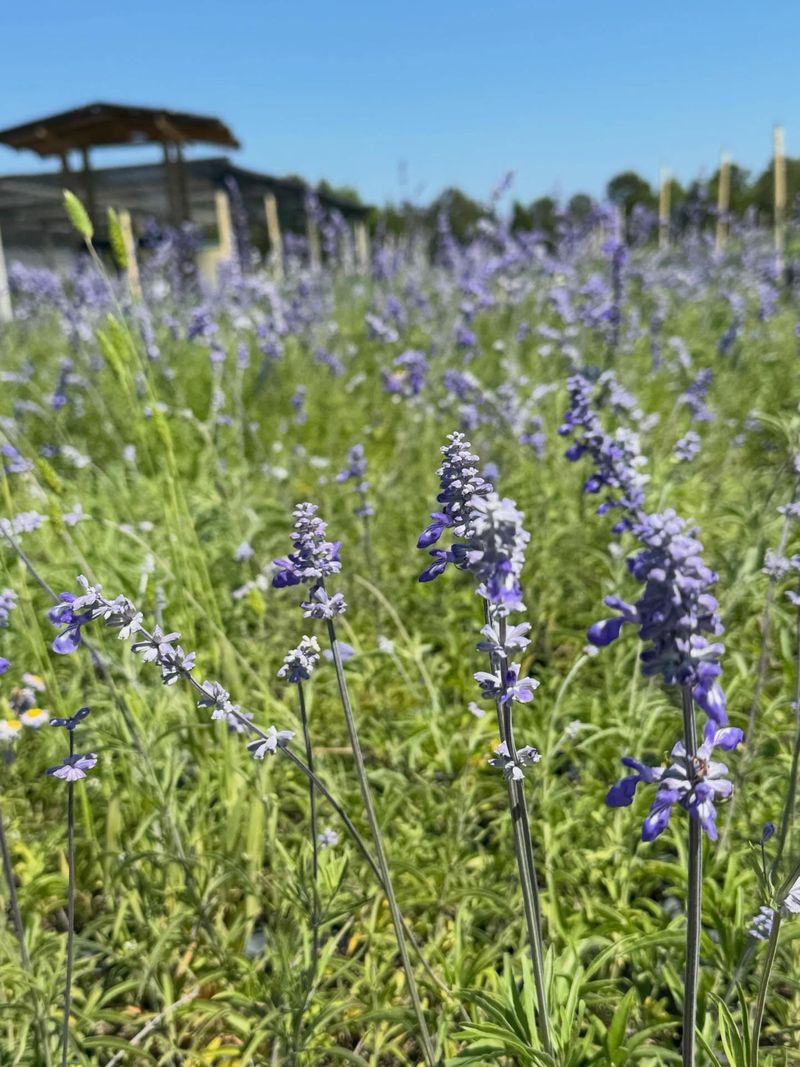
There is something undeniably eye-catching about a tall spike of deep blue flowers rising up against a bright Texas sky in the middle of July. Mealy Blue Sage delivers exactly that kind of visual punch, and it does it consistently from late spring through the first frost.
The name comes from the powdery, flour-like coating on the flower stems and calyces, which gives the plant a slightly frosted appearance up close.
Salvia farinacea is one of the most widely planted native salvias in Texas, and for good reason. It is reliable, long-blooming, and incredibly tough.
The flower spikes reach two to three feet tall and keep producing new blooms even without deadheading, though removing spent spikes does encourage faster regrowth.
The blue-violet color is rich and saturated, standing out beautifully in mixed borders or mass plantings.
Bees go absolutely wild for Mealy Blue Sage. Bumblebees, honeybees, and native solitary bees all visit frequently throughout the day.
Hummingbirds are regular visitors too, darting between the flower spikes with impressive speed. Planting several together in a sunny bed creates a buzzing, fluttering ecosystem that is genuinely fun to watch on a summer afternoon.
This sage thrives in full sun and tolerates heat, drought, and poor soil with ease. It does appreciate occasional deep watering during extended dry spells to keep blooming at its best.
Established plants are remarkably self-sufficient and rarely need fertilizing. Cutting plants back by about one-third in midsummer refreshes the foliage and triggers a fresh round of blooms that carries the plant beautifully into fall with strong color.
7. Purple Coneflower
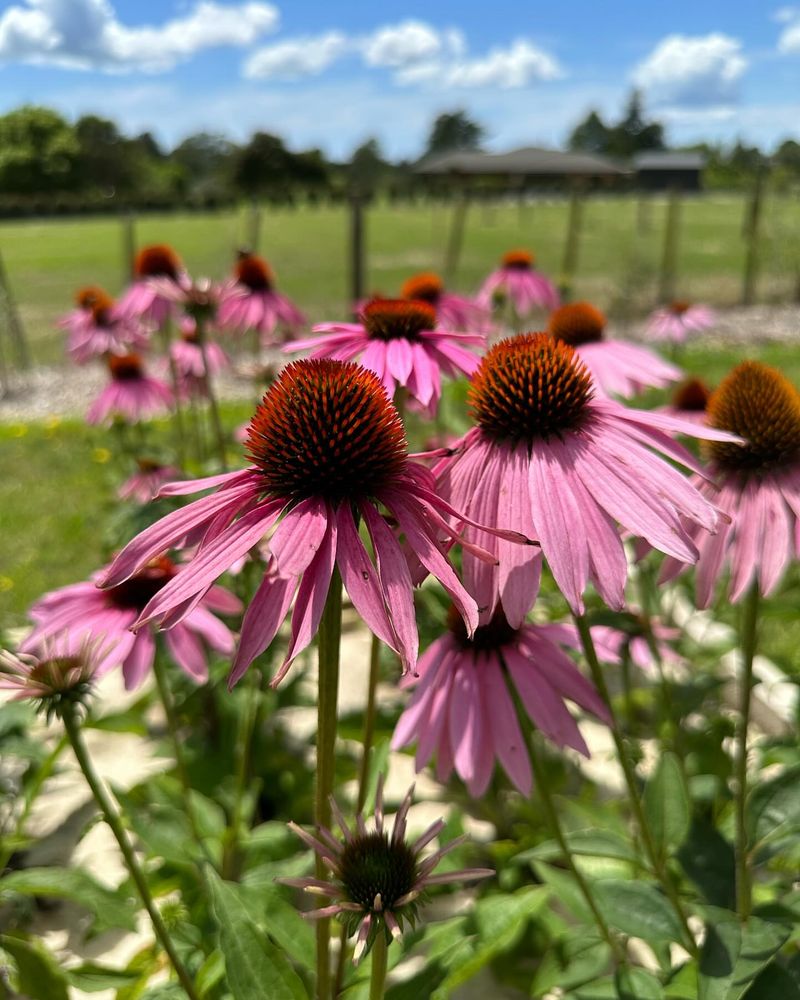
Bold, tall, and impossible to ignore, Purple Coneflower brings a kind of wildflower drama to Texas gardens that few other natives can match.
The large, daisy-like blooms feature swept-back purple-pink petals surrounding a raised, spiky orange-brown cone that gives the plant its distinctive look.
July is prime time for this plant, and a patch of coneflowers in full bloom is genuinely one of the most striking sights a Texas garden can offer.
Texas cultivars of Echinacea purpurea have been selected specifically for heat and drought tolerance, making them far better suited to the state’s intense summers than standard varieties.
They tend to have stronger root systems and maintain their color and structure even during prolonged hot spells.
Choosing a Texas-adapted cultivar over a generic nursery variety makes a real difference in long-term garden success.
The wildlife value of Purple Coneflower is hard to overstate. Bees and butterflies flock to the flowers throughout summer.
Once the petals drop and the seed heads form, goldfinches and other small birds move in to feed on the seeds. Leaving the seed heads standing through fall and winter supports local bird populations and adds interesting texture to the winter garden.
Plant coneflowers in full sun with well-drained soil for the best results. They tolerate clay soil better than many other natives, which gives them an edge in yards where drainage is a challenge.
Deep, infrequent watering builds a strong root system quickly. Dividing clumps every three to four years keeps plants vigorous and blooming heavily.
With the right care, these coneflowers become long-lived anchors in any Texas native plant garden worth admiring.