This Forgotten Texas Native Shrub Makes Backyard Borders Less Inviting To Coyotes
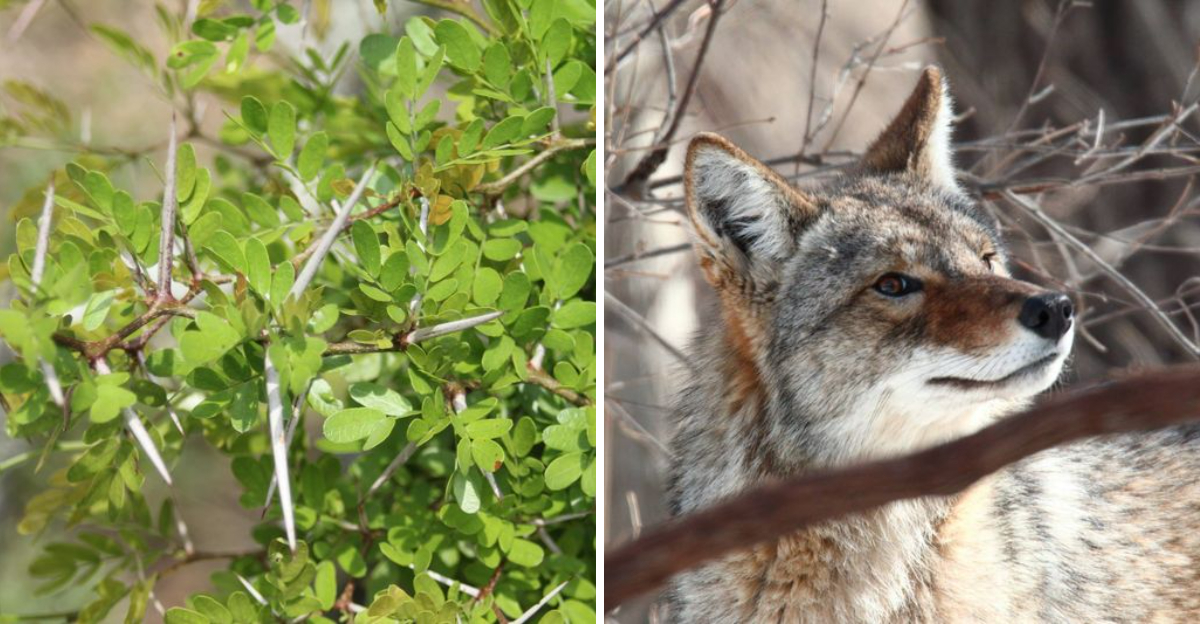
Coyotes are smart, adaptable, and increasingly common in Texas neighborhoods.
They follow the path of least resistance, slipping through yards wherever movement is easy and cover is available.
Many homeowners respond by worrying, and a few respond by researching expensive fencing options that cover the whole perimeter.
There is a simpler starting point, and it has been growing wild across Texas for thousands of years.
It’s a Texas native shrub with dense, interlocking branches lined with sharp spines that make casual movement through it genuinely uncomfortable.
It grows naturally across much of the state, handles rocky and caliche-heavy soils, and requires almost no irrigation once established.
It is not a magic solution to coyote activity. A motivated animal will always find another way in.
What a well-placed shrub border does is raise the inconvenience level along your yard’s edge, turning easy shortcuts into routes worth avoiding.
Seven things worth understanding about this overlooked Texas native before your next planting season.
Lotebush Brings The Thorny Backbone
Some plants look soft and harmless from a distance, but get close and you will quickly understand why they have survived in Texas for thousands of years.
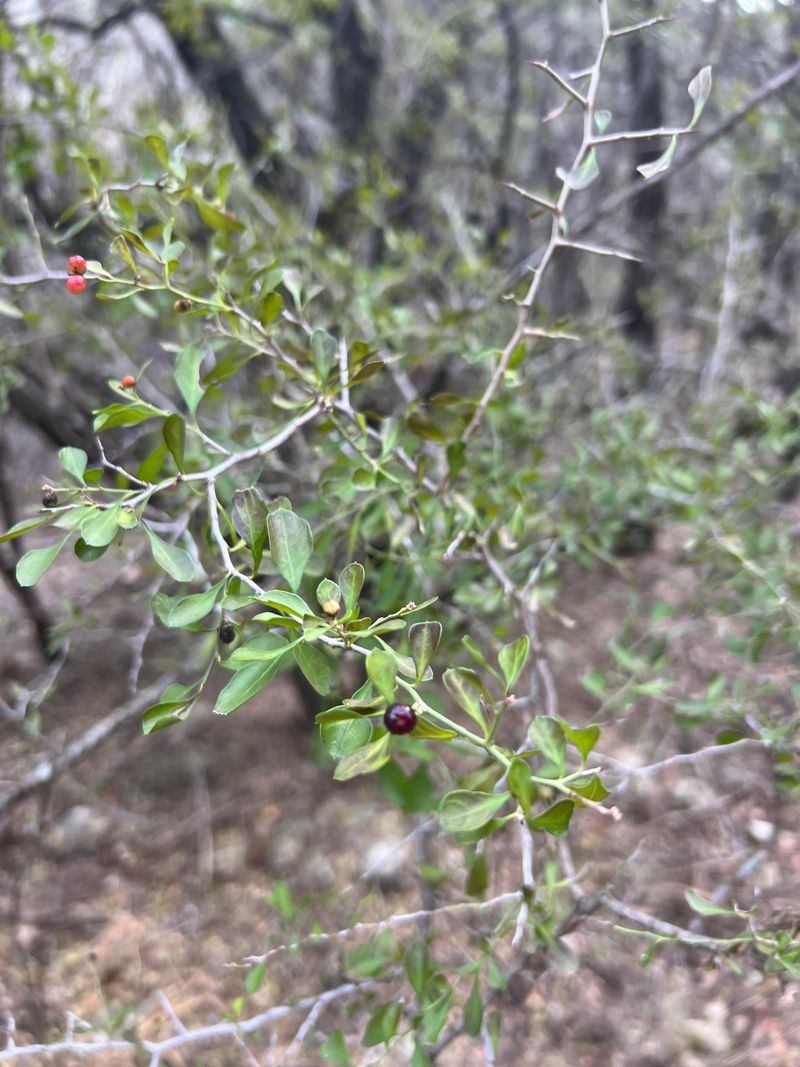
Lotebush is exactly that kind of plant. It is a native Texas shrub with a compact, tangled growth habit and stiff, sharp spines that branch off in multiple directions.
The stems interlock as the plant matures, creating a structure that is genuinely difficult to push through without discomfort.
Ziziphus obtusifolia grows naturally across central, west, and south Texas, thriving in rocky, caliche-heavy soils that would challenge most landscape plants.
Texas A&M AgriLife Extension lists it as a hardy native that requires very little care once it gets established.
It typically reaches four to eight feet in height and spreads outward in a rounded shape, making it useful as a border plant along fence lines, property edges, or natural area transitions.
The shrub produces small, blue-black fruit in late summer that wildlife find attractive, but the structure is the real story here.
Those dense, spiny branches form what landscapers sometimes call a thorny backbone for a mixed native border.
Lotebush is not a showstopper in the traditional garden sense. It is more of a workhorse.
Planted along a vulnerable border, it adds a physical layer of texture that makes casual movement through that space noticeably less appealing to animals and people looking for an easy shortcut.
Dense Branches Make Shortcuts Less Easy
A coyote moving through a neighborhood is almost always looking for the easiest route.
Open gaps in fences, low ground clearance, and unobstructed yard edges all make movement simple and low-effort.
When a border becomes dense and uncomfortable to navigate, many animals will simply reroute rather than push through it.
That is where a well-established lotebush planting earns its place.
The shrub does not form a wall in the traditional sense, but its interlocking, spiny branches create real friction along any path that runs through it.
A casual shortcut that once took seconds can become genuinely inconvenient when lotebush is in the way.
Your Texas Garden Changes Every Week. Your Plan Should Too.
Gardening in Texas changes quickly throughout the season. Every Friday you’ll receive a simple weekly plan showing exactly what to plant, prune, fertilize, harvest, and protect so you never miss the right timing.
It is worth being clear about what this means in practice.
Lotebush does not guarantee that coyotes will never enter your yard. A motivated animal will find another way in if the conditions are right.
What a dense shrub border does is reduce the casual, low-effort traffic that happens when a yard edge is wide open and easy to cross.
According to Texas Parks and Wildlife guidance, removing easy access and attractive conditions matters more than any single deterrent.
Lotebush fits into that strategy as one useful piece of a larger, layered approach to making your backyard less inviting overall.
Sharp Stems Add Real Border Texture
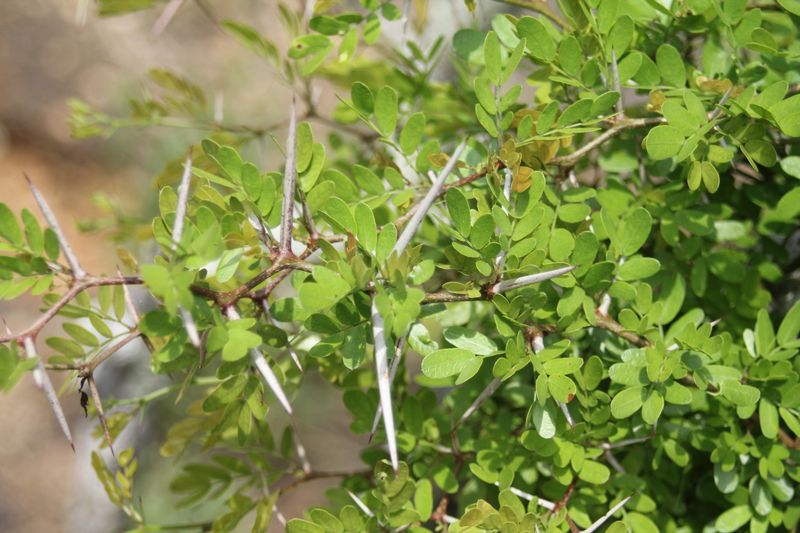
Walk along a fence line planted with lotebush and you will notice something right away.
The texture is not subtle. The stems are stiff, the spines are real, and the growth pattern does not leave many comfortable gaps to squeeze through.
That physical quality is exactly what makes lotebush a genuinely useful border plant rather than just a decorative one.
Thorny shrubs have been used in traditional landscapes around the world for centuries as living fences and boundary markers.
What is sometimes overlooked is how well native Texas species like lotebush perform this role without any irrigation, fertilizer, or special soil preparation.
The plant grows the way it evolved to grow, and that means producing dense, armed branches that make the surrounding space feel less open and less accessible.
From a design perspective, lotebush also adds a naturalistic look that blends well with other native Texas plants.
It does not look like a manicured hedge. It looks like the Texas Hill Country or the South Texas brush country, which is exactly what it is.
Birds often use the dense inner branches for nesting cover, so the thorny texture serves double duty.
It adds a real physical deterrent quality to the border while also giving the space a layered, habitat-friendly character that supports the local ecosystem in a meaningful way.
Wildlife Still Gets Cover And Food
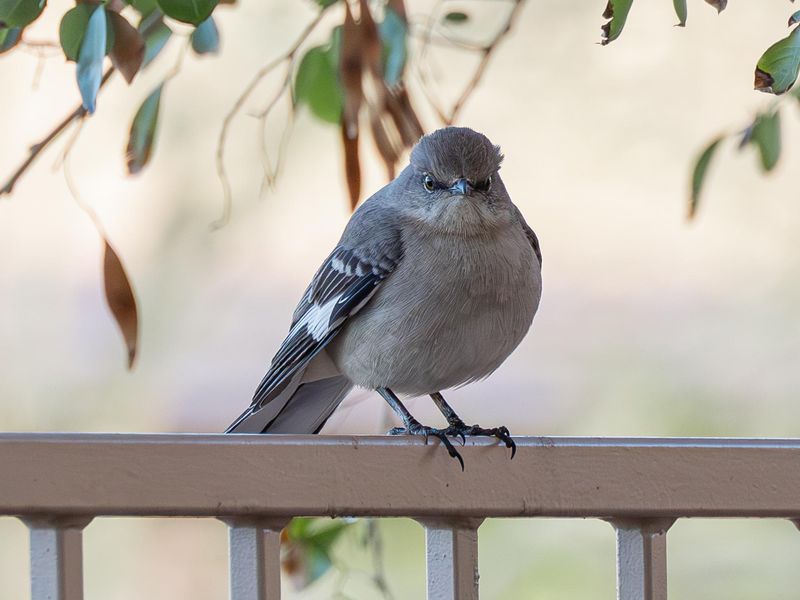
Here is something that surprises a lot of Texas gardeners: a shrub that is inconvenient for coyotes can be genuinely valuable for other wildlife at the same time.
Lotebush is not just a deterrent plant. It is a functioning piece of Texas habitat that provides real resources for birds, small mammals, and insects throughout the year.
The small blue-black fruit that lotebush produces in late summer and fall is eaten by a wide range of birds, including mockingbirds, cedar waxwings, and various thrushes passing through on migration.
The dense inner structure of the shrub creates excellent cover for nesting and roosting, protected from predators by the same spines that make the plant difficult to push through.
Texas Parks and Wildlife encourages homeowners to plant native species that support local food webs, and lotebush fits that goal well.
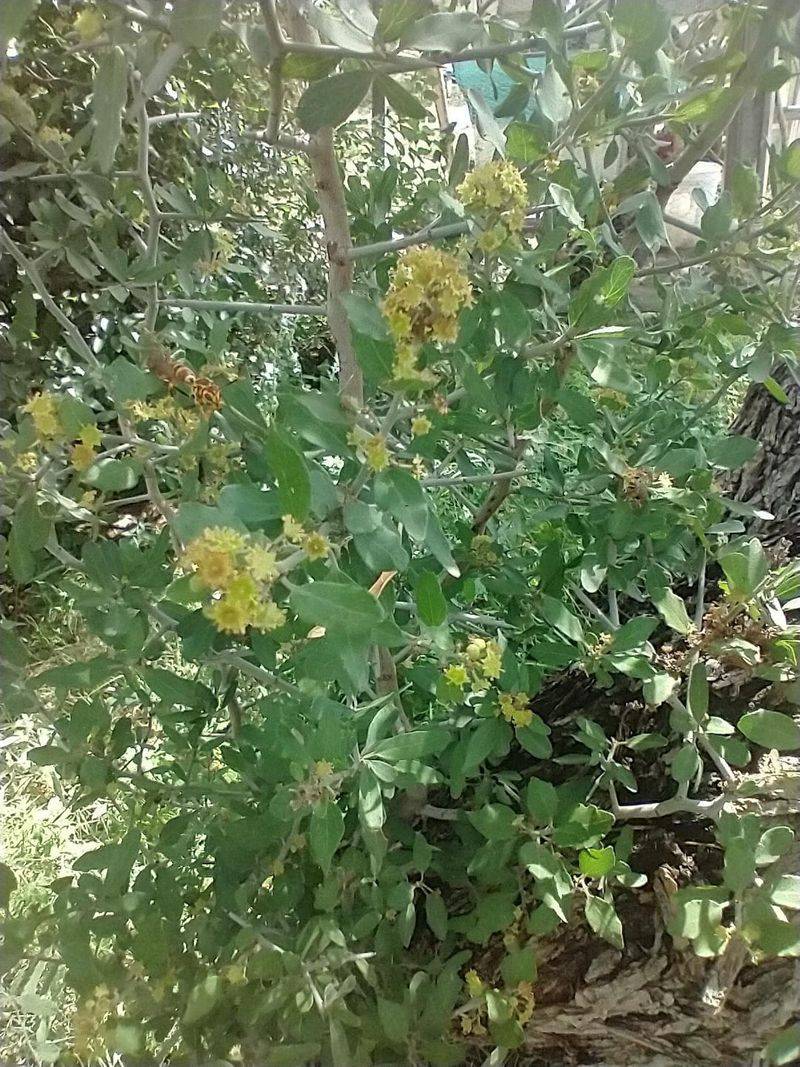
Small lizards often shelter in the base of the shrub. Pollinators visit the small flowers in spring. The plant gives back to the landscape in multiple ways beyond just its border function.
A yard that supports songbirds and small beneficial wildlife is also a yard with more natural activity and noise, which can itself make the space feel less like an easy shortcut for larger animals moving through the neighborhood at dawn or dusk.
Dry Soil Is Not A Problem

Many Texas gardeners know the frustration of planting something that looks great in the nursery and then struggles through the first summer.
Heat, drought, and hard caliche soil take out a lot of plants that were not built for the conditions. Lotebush was built for exactly those conditions, and that is one of the biggest reasons it deserves more attention as a practical landscape plant.
Native to the arid and semi-arid regions of Texas, lotebush evolved to handle long dry periods, intense summer heat, and soils with very little organic matter.
Once it gets through its first growing season with a little supplemental watering to help roots establish, it can largely take care of itself.
Texas A&M AgriLife Extension notes that many native Texas shrubs, including lotebush, are well adapted to low-input landscapes where irrigation is limited or unavailable.
This makes lotebush especially practical for backyard borders that run along sunny fence lines or property edges where irrigation systems often do not reach.
You do not need to install drip lines or haul hoses to keep it alive through August. The plant simply keeps growing.
For homeowners in central, west, or south Texas who want a functional border plant that will not demand constant attention during the hottest months, lotebush delivers reliability that most ornamental shrubs cannot match.
That low-maintenance quality makes it easier to plant a full border rather than just a few scattered specimens, which is where the real landscape value comes from.
Spacing Turns Shrubs Into A Screen
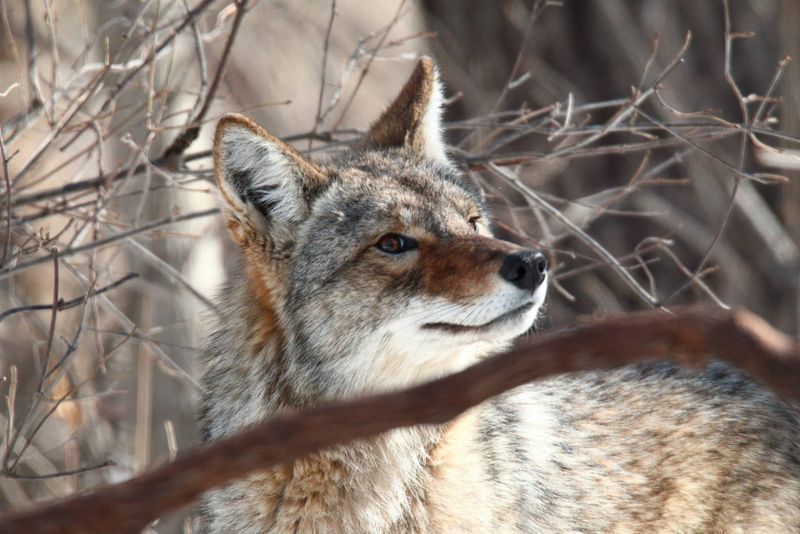
A single lotebush plant is interesting. A row of them planted at the right spacing becomes something genuinely functional.
The difference between a scattered planting and a connected border screen comes down almost entirely to how you space the shrubs when you put them in the ground.
For a border that fills in and creates real density, most native plant experts recommend planting lotebush about six to eight feet apart on center.
That spacing allows each plant room to develop its full natural spread without crowding, while still ensuring that the branches will eventually overlap and create a connected thicket along the fence line or property edge.
In the first two to three years, the gaps between plants will be visible. By year four or five, the border starts to look and function like a unified screen.
Planting in a staggered double row rather than a single straight line adds even more depth and density.
Place the front row at six-foot intervals, then offset the back row so each plant fills the gap between the two plants in front of it.
This creates a border that is two plants deep, which significantly increases the physical challenge of moving through it.
Combine lotebush with other native Texas shrubs like agarita or Texas sage for variety in height and texture.
A mixed native border looks more natural, provides more habitat value, and creates a more complex physical barrier than a single-species planting of any kind.
Pruning Keeps The Barrier Useful
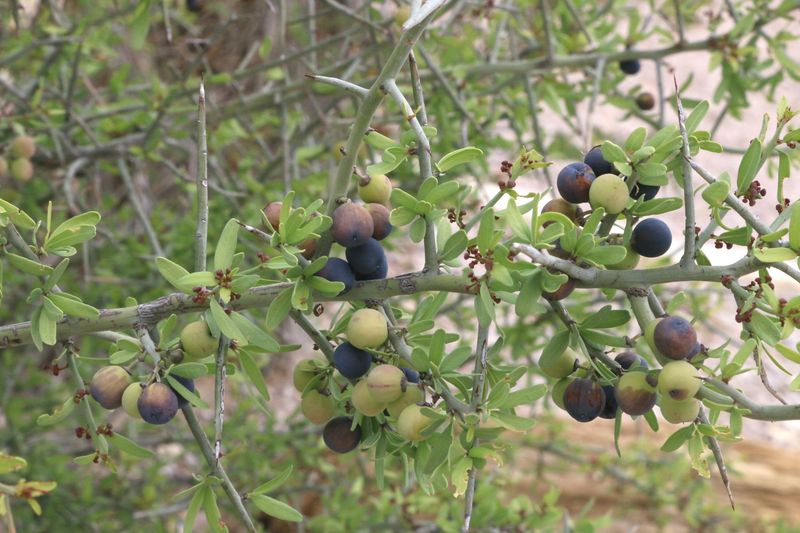
Left completely alone, lotebush will grow into a natural, somewhat irregular shape that works well in a wildlife habitat setting.
But along a backyard border where you want the plant to stay dense and functional, a little light pruning each year makes a real difference in how well the shrub performs its job.
The goal with pruning lotebush is not to shape it into a tidy hedge.
That approach would actually work against you by opening up the interior of the plant and reducing the dense, tangled structure that makes it useful.
Instead, focus on removing any long, outward-reaching canes that have grown away from the main body of the shrub and are creating open gaps in the border.
Pruning is best done in late winter before new growth begins in spring.
Wear thick leather gloves and use long-handled loppers to keep your hands away from the spines. Remove no more than one-third of the plant’s total growth in any single season.
Aggressive pruning can stress the shrub and temporarily open up the border, which is the opposite of what you want.
Light, consistent annual pruning keeps lotebush dense, healthy, and growing in a direction that maintains the border’s physical integrity year after year.
A well-maintained lotebush border actually gets more effective over time as the woody structure thickens and the inner branching becomes increasingly complex and interlocked. That improvement with age is not something you get from a fence.