This Ohio Yard Cleanup Mistake Can Wipe Out Luna Moth Cocoons Before Spring
Ohio leaf cleanup can look a little too satisfying.
The blower roars. The lawn turns neat. Brown bags line the curb like proof that you handled fall like a responsible adult.
Then comes the catch.
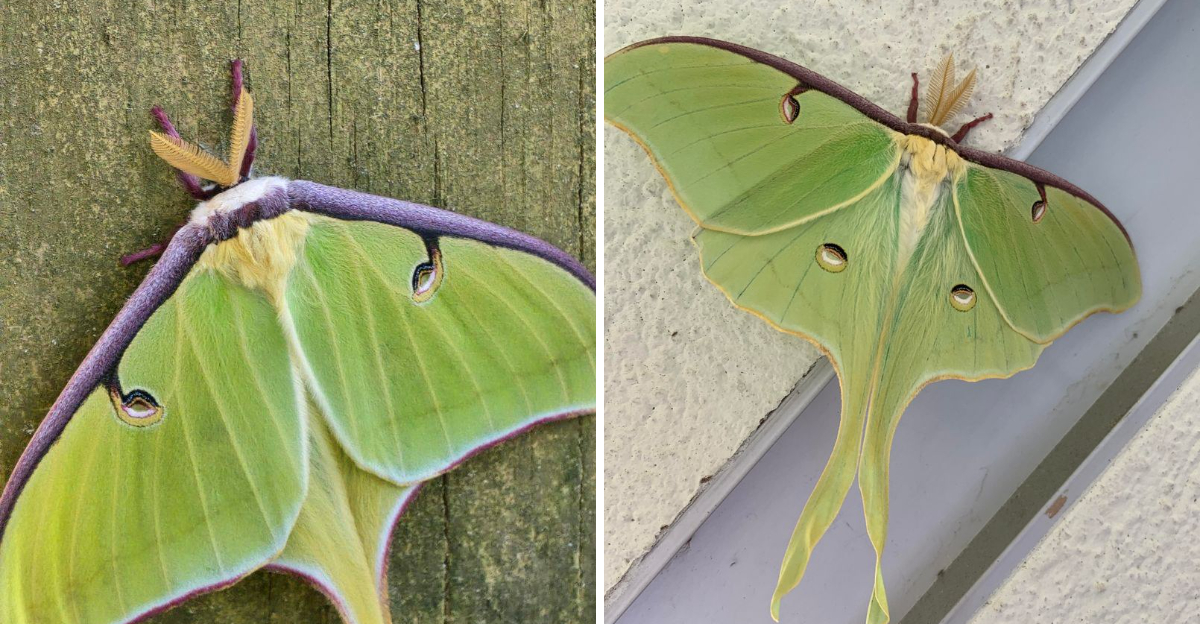
Some of those “messy” leaves may be hiding one of the most beautiful insects that ever visits an Ohio backyard.
Luna moth cocoons can sit wrapped in fallen leaves near the ground, quiet through winter, almost impossible to notice. They do not sparkle. They do not wave. They look like leaf litter because that disguise is the whole point.
One fast cleanup can remove them before spring ever gets a chance to introduce the pale green adults.
So what yard habit causes the most harm without anyone meaning to? The answer is usually not one dramatic mistake. It is the tidy routine we were all taught to admire.
Change that routine a little, and your yard can keep its clean look while leaving room for a little moonlight magic next year.
Leaf Blowers Clear Away The Nursery
That familiar roar of a leaf blower on a Saturday morning feels like progress.
Leaves fly, the lawn looks clean, and something small and irreplaceable gets pushed out of its home without anyone realizing it happened.
Luna moth cocoons are not buried deep in the soil. They rest right on top of it, camouflaged inside a single curled leaf that has fallen from a host tree.
The cocoon blends in so perfectly with the surrounding leaf litter that even a careful eye would walk right past it.
When a leaf blower sweeps across the base of a walnut, hickory, or sweetgum tree, it does not just move leaves.
It scatters cocoons into the open, sometimes launching them across pavement, into gutters, or far from any protective layer of debris.
Exposed to hard freezes, foot traffic, and drying wind, those cocoons have almost no chance of surviving until spring.
Ohio State University Extension encourages homeowners to think of leaf litter as habitat, not mess.
The layer of leaves under host trees acts as a nursery, a buffer against temperature swings, and a moisture-retaining blanket that keeps overwintering insects safe.
Skipping the blower under and around host trees costs nothing.
Leaving a rough ring of undisturbed leaves at the base of those trees is one of the easiest ways to give luna moths a fighting chance every year.
Bagged Leaves Take Cocoons With Them
Those neatly tied yard bags lined up at the curb look like a job well done.
But every autumn in Ohio, thousands of bagged leaves head to compost facilities or landfills carrying passengers that were never meant to leave the yard.
Luna moth pupae spend the entire winter inside a cocoon that is roughly the size of a thumb.
The cocoon is spun directly inside a dried leaf, which then falls naturally to the ground beneath host trees. From the outside, it looks like just another crinkled brown leaf. There is no obvious sign that anything living is inside.
Your Ohio Garden Changes Every Week. Your Plan Should Too.
Gardening in Ohio changes quickly throughout the season. Every Friday you’ll receive a simple weekly plan showing exactly what to plant, prune, fertilize, harvest, and protect so you never miss the right timing.
When homeowners rake and bag leaves from under walnut, birch, or hickory trees, those cocoons get scooped up without a second thought.
Once sealed inside a plastic bag, the pupa faces crushing pressure, lack of airflow, and a trip to a facility where emergence is impossible.
A simple habit shift makes a real difference.
Instead of bagging everything under host trees, try raking leaves into a loose pile nearby in a low-traffic corner of the yard. Leaves do not need to go to the curb to keep the lawn looking tidy.
A managed leaf pile tucked along a fence or under a shrub gives cocoons a reasonable chance of surviving until the warmth of late spring triggers emergence.
Shredding Turns Shelter Into Trouble
Mulching leaves back into the lawn sounds like the responsible, eco-friendly choice. For open turf areas, it often is.
But running a mower over leaf piles beneath host trees is a different story entirely, and the consequences for overwintering insects are immediate.
A mulching mower shreds leaves into fine fragments in seconds.
Any luna moth cocoon resting in that layer gets destroyed on the first pass. The cocoon offers no protection against spinning blades. What was a carefully constructed overwintering shelter becomes scattered debris in an instant.
The tricky part is that luna moth cocoons are nearly impossible to spot before mowing.
They do not stick out. They do not wiggle or make noise. A pupa inside a cocoon is completely still throughout the winter, conserving energy for the long wait until spring temperatures climb high enough to trigger emergence.
Ohio wildlife experts recommend treating the ground beneath host trees differently from the rest of the lawn.
Mow the open turf, shred leaves in the middle of the yard if you like, but leave the leaf layer under walnut, hickory, sweetgum, and similar trees untouched from fall through late spring.
Skipping one small section of the yard can preserve the entire local luna moth population that depends on that patch of habitat to complete its life cycle year after year.
Bare Soil Leaves Pupae Exposed
A perfectly raked yard with bare, clean soil under every tree looks sharp in late October.
But for the insects overwintering just above that soil surface, bare ground is one of the harshest environments imaginable during an Ohio winter.
Luna moth cocoons rely on surrounding leaf litter for more than just camouflage.
The layer of leaves acts as insulation, slowing down rapid temperature drops during cold snaps and reducing the intensity of hard freezes that can penetrate into the top layer of soil.
Without that buffer, cocoons are exposed to the full force of winter weather.
Ohio winters are notoriously unpredictable. A mild December can be followed by a January deep freeze. Leaves naturally moderate those swings by trapping a thin layer of warmer air close to the ground.
Bare soil has no such cushion, leaving anything resting on its surface vulnerable to temperature extremes that would otherwise be softened by a few inches of fallen leaves.
Moisture is another factor.
Exposed soil dries out faster and can crack during freeze-thaw cycles. Leaf litter holds just enough moisture to keep the immediate microclimate around a cocoon stable through the winter months.
Leaving a natural layer of leaves under host trees is not laziness. It is a deliberate choice to maintain the microhabitat that luna moths and dozens of other overwintering insects depend on.
Host Trees Need A Soft Landing
Not every tree in the Ohio yard plays the same role for wildlife.
Some trees are just trees. Others are the entire reason certain moths and butterflies can survive in your neighborhood at all. For luna moths, a short list of host trees makes all the difference.
In Ohio, luna moth caterpillars feed on the leaves of black walnut, shagbark hickory, sweetgum, white birch, and persimmon.
These are the trees where female luna moths lay their eggs in spring and summer. When caterpillars mature and spin their cocoons in late summer and fall, they drop to the ground right beneath those same host trees.
That means the leaf litter directly under a walnut or hickory tree is prime overwintering real estate.
It is not a random patch of debris. It is a carefully chosen landing zone where the cocoon will spend the next six to eight months waiting for spring.
Clearing leaves aggressively from under these specific trees has a much bigger impact than cleaning up under a maple or an ornamental pear.
Knowing which trees on your property are luna moth host trees helps you make smarter decisions about where to leave leaf litter undisturbed. A simple walk around the yard can reveal which spots deserve extra care.
Leaf Piles Belong In Quiet Corners
Here is a simple shift that takes about ten extra minutes and costs nothing.
Instead of sending all the leaves to the curb, move a portion of them into a low-traffic corner of the yard. That small act can make a real difference for luna moths and dozens of other overwintering insects.
The goal is not to create a towering compost heap.
A loose, natural-looking layer of leaves about four to six inches deep, tucked along a fence line, under a shrub, or in the back edge of the property, is all it takes. Insects do not need a manicured habitat. They need undisturbed, protected space.
Quiet corners work because they are less likely to be raked, blown, or walked through repeatedly during the winter months.
A leaf pile along a back fence stays put from November through April, giving any cocoons inside the full winter they need to complete development.
Ohio State University Extension and the Xerces Society both point to leaf litter as critical overwintering habitat for native insects.
Think of the quiet corner as a seasonal wildlife reserve inside your own yard. You are not sacrificing the look of the lawn. You are just giving nature a small, designated space to do its thing.
Spring Cleanup Should Start Later
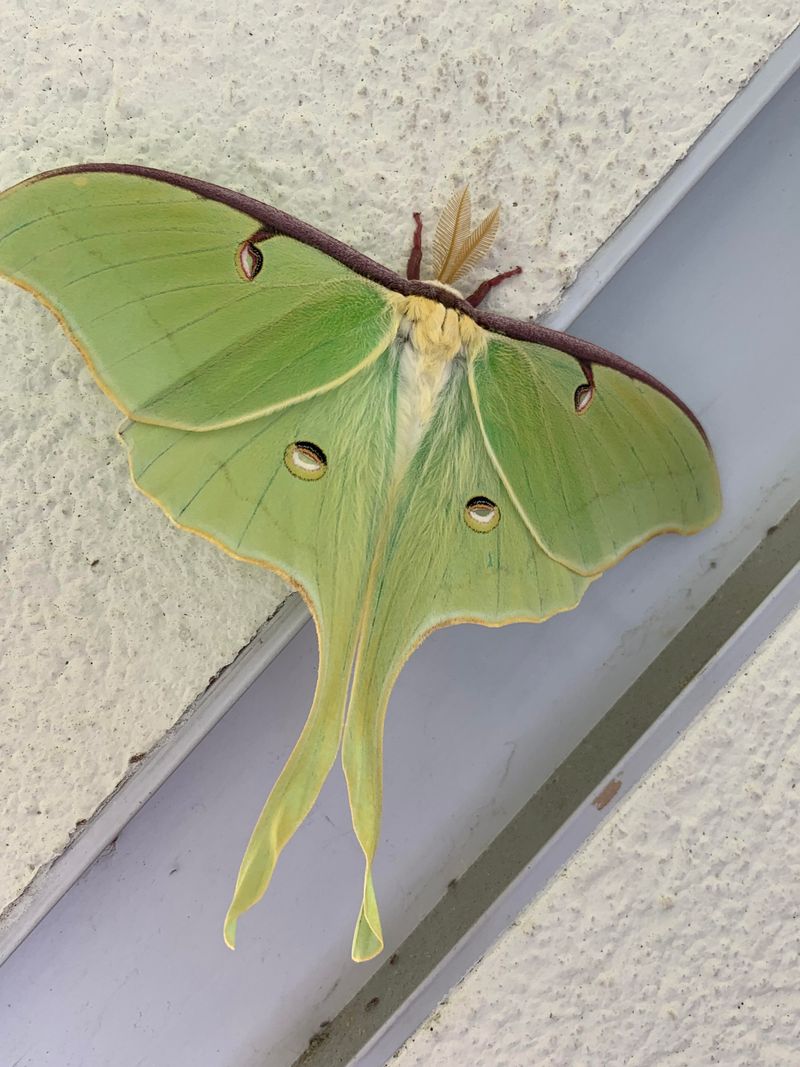
Warm days in March feel like a green light for yard work.
The itch to rake, edge, and tidy up after a long Ohio winter is completely understandable. But early spring cleanup is one of the most common ways that luna moth cocoons get removed just weeks before they would have emerged on their own.
Luna moths in Ohio typically emerge from their cocoons between late April and early June, depending on temperatures.
The pupae inside those cocoons are not ready to emerge the moment the calendar flips to spring. They need sustained warmth over several weeks before the adult moth is fully developed and ready to push through the cocoon wall.
Raking, blowing, or bagging leaves in March or early April can remove cocoons that are only weeks away from emergence.
The timing is one of the cruelest ironies of yard care. The cleanup feels timely, but it arrives just before the payoff.
A practical guideline used by many wildlife gardeners is to wait until daytime temperatures are consistently above 50 degrees Fahrenheit for at least a week before doing major leaf cleanup.
By that point, most overwintering insects that are going to emerge have already done so or are in their final stages of development.
Delaying the big spring cleanup by even three to four weeks can dramatically improve outcomes for luna moths and other native species.
Messy Edges Bring Luna Moths Back
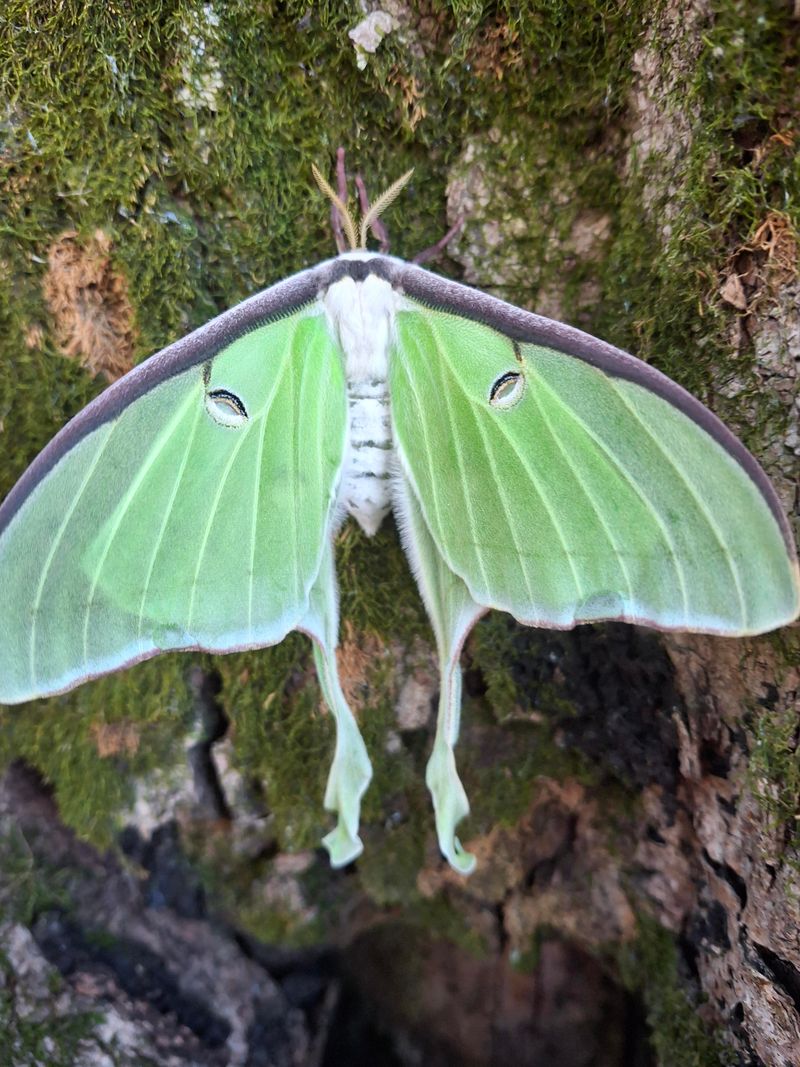
Nobody is asking you to let the yard go wild. A yard that looks completely untended is not the goal, and it is not necessary for luna moths to thrive.
What matters is creating a smart balance between the tidy spaces people enjoy and the slightly messier edges where wildlife can find a foothold.
Messy edges are not accidents. They are intentional zones where leaf litter accumulates naturally, native plants grow without heavy pruning, and the ground is not disturbed every season.
Along a back fence, around the base of host trees, or in the strip between the lawn and a wooded area, these edges serve as year-round habitat corridors.
Luna moths are drawn to yards with host trees and undisturbed ground cover.
A yard that consistently offers both will see luna moths return season after season.
One that is cleaned down to bare soil each fall will gradually stop seeing them at all, as local populations lose the habitat they need to complete their life cycle.
Creating a wildlife-friendly edge does not require a landscaping overhaul.
Plant one native shrub. Leave a strip of leaves under the walnut tree. Skip the edger along the back fence for a season. These small choices add up to something meaningful over time.
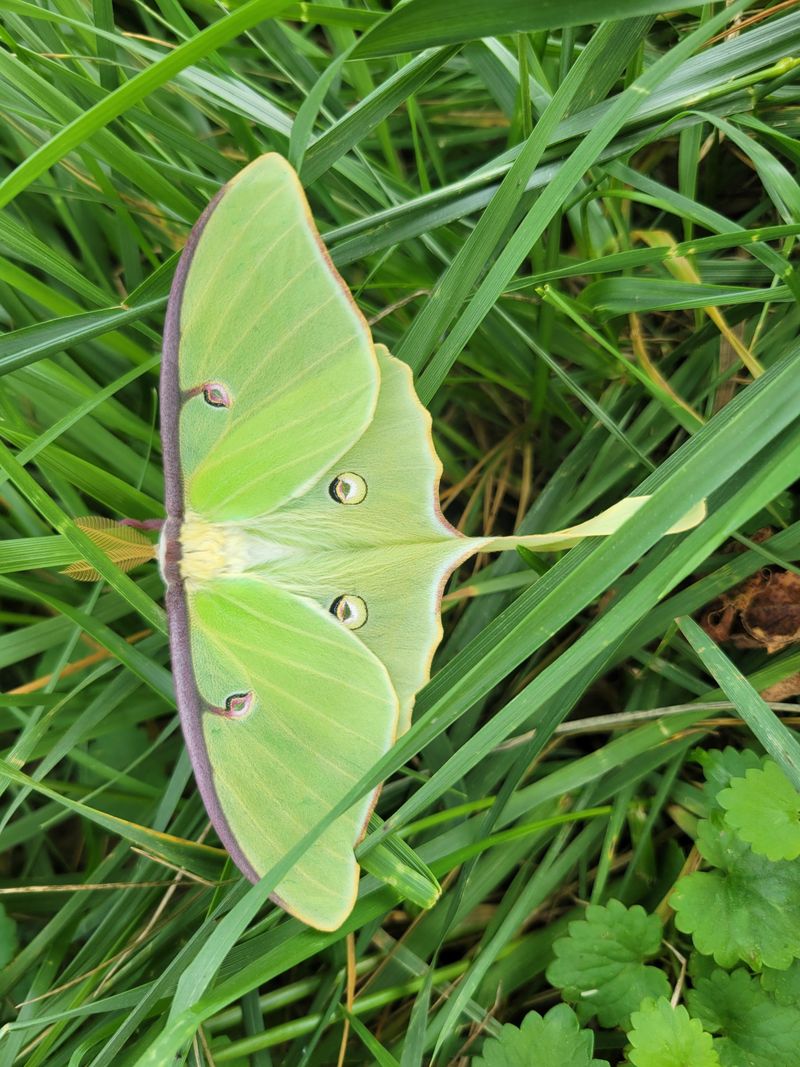
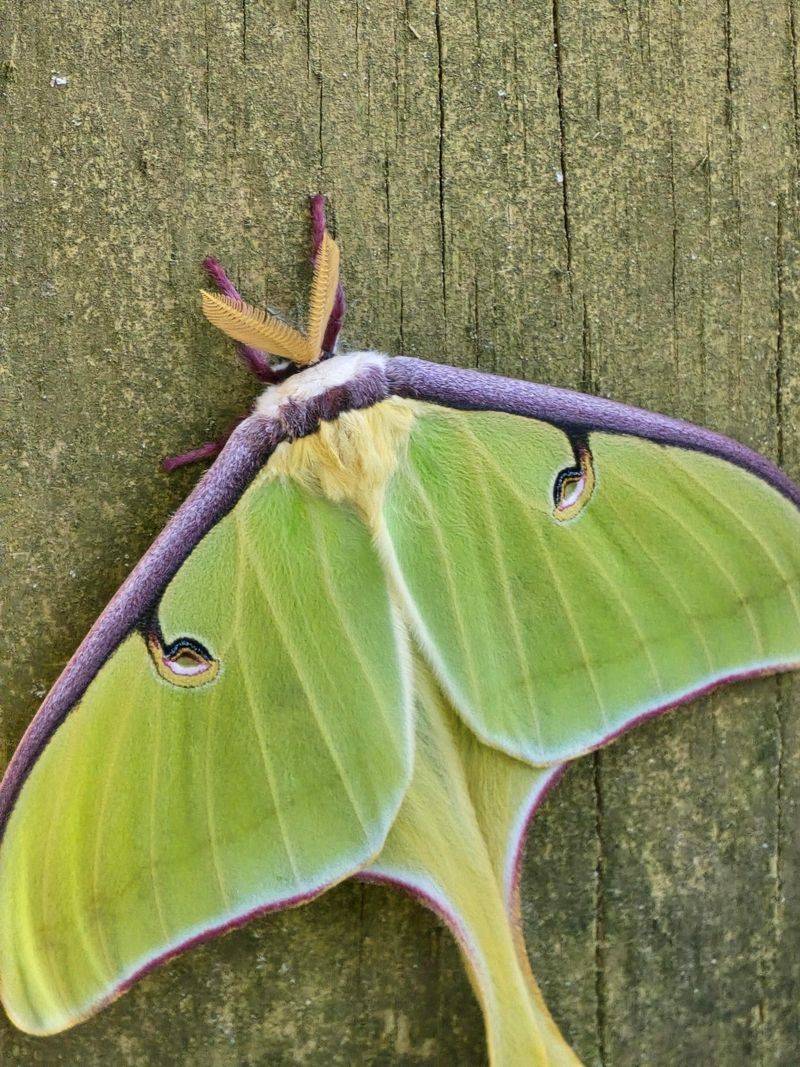
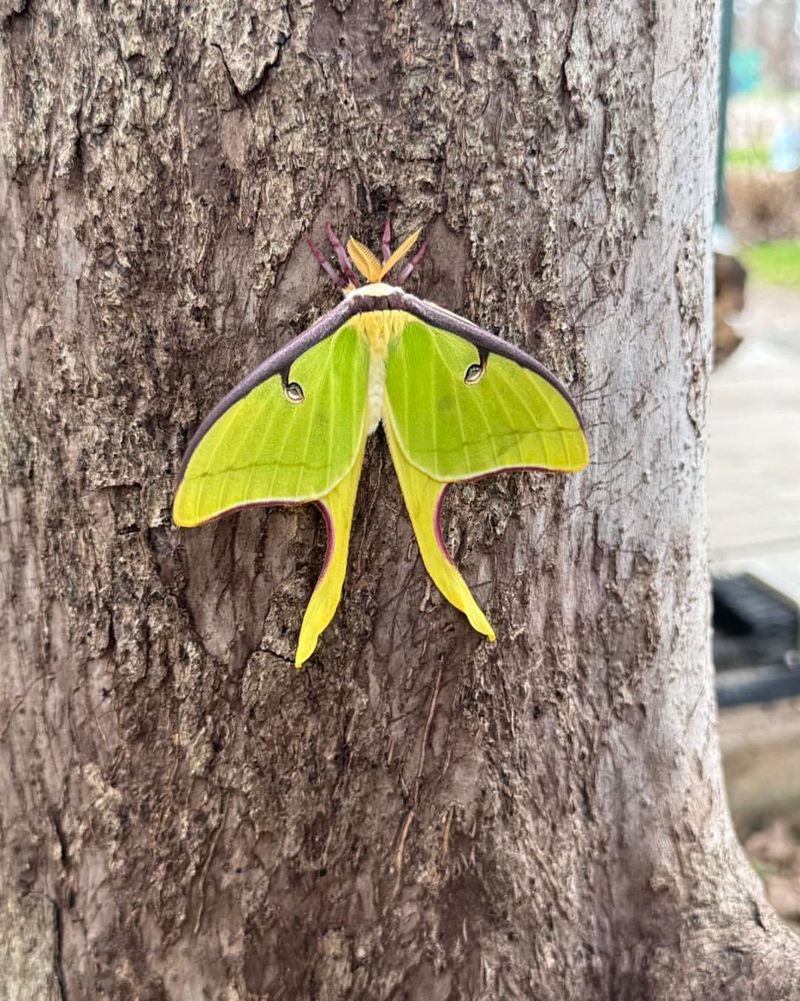
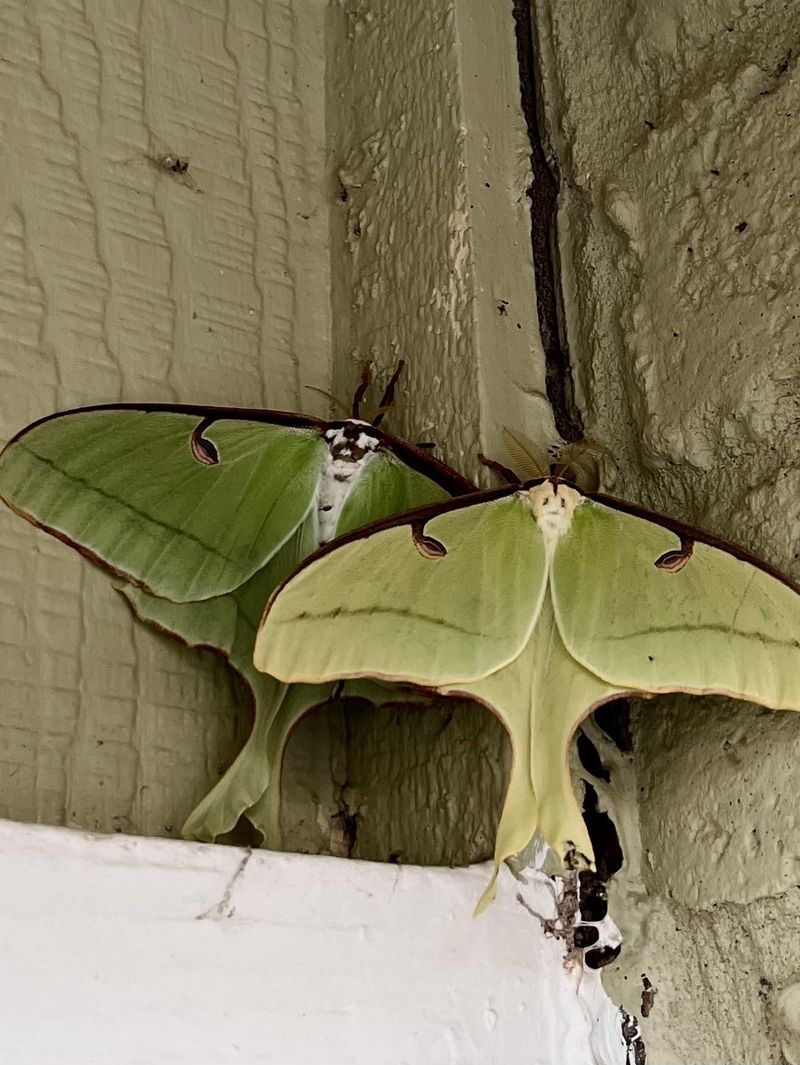
Luna moths are one of North America’s most striking native insects.
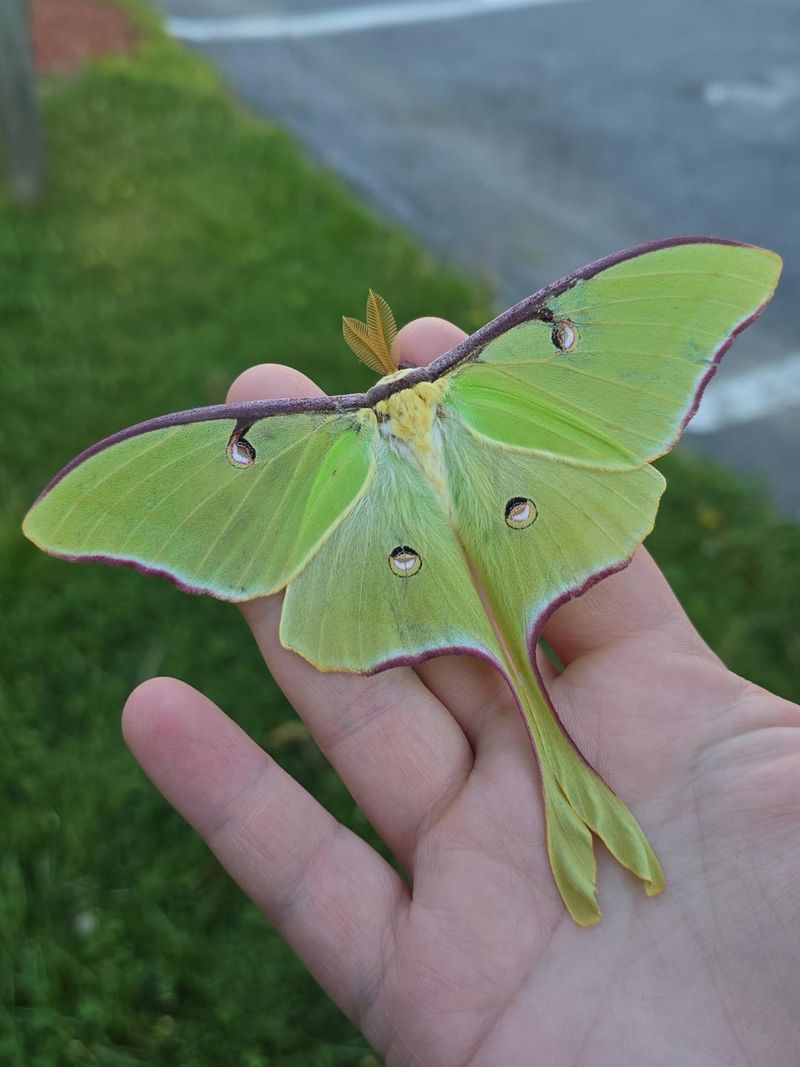
Pale green wings, long graceful tails, and a lifespan of only about a week as adults make every sighting feel like a gift. A little planned messiness at the yard’s edge is a fair trade for that kind of magic returning each spring.