Signs Your Michigan Tomatoes Need Help Before The Damage Is Done
Tomato plants in Michigan have a narrow window between showing early stress signals and reaching the point where recovery becomes genuinely difficult.
The problem is that the earliest signs are subtle enough to dismiss as normal summer variation until they are not subtle anymore.
Slight curl in the leaves during cooler morning hours, stem discoloration just above the soil line, and fruit that sets but stops sizing up are all messages the plant is sending before the situation becomes critical.
Michigan’s compressed warm season means there is limited time to recover from mid-season setbacks.
Learning to read these early signals and act on them immediately is what separates a full harvest from a season that quietly falls short of its potential.
1. Yellow Lower Leaves With Small Spots
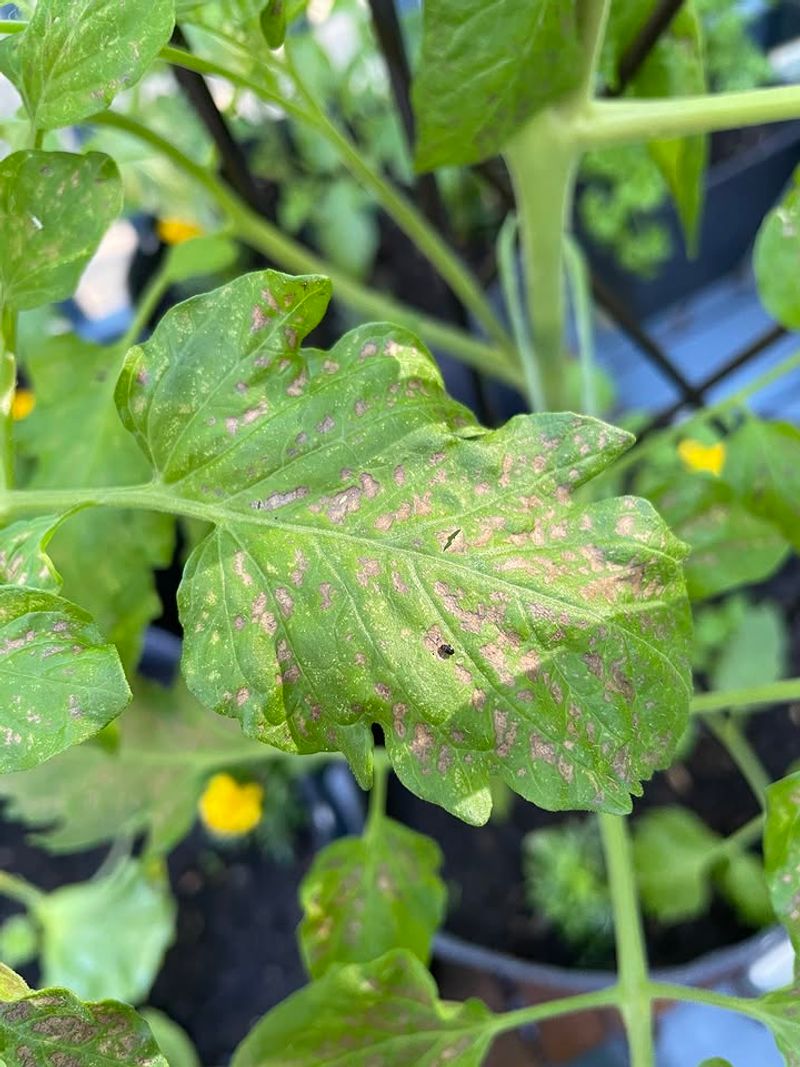
Most gardeners notice something is off when the bottom leaves of their tomato plants start turning yellow, but the small dark spots that come with it are the real red flag.
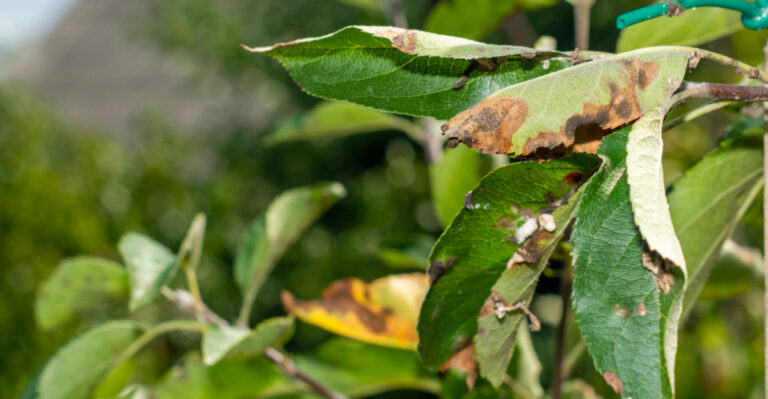
That combination, yellow leaves dotted with tiny dark specks, is a classic early sign of Septoria leaf spot.
This fungal disease is common across Michigan and tends to show up once the summer humidity kicks in.
Septoria always starts at the bottom of the plant and moves upward, which is actually helpful because it gives you time to act before the whole plant is affected.
The spots themselves are usually round, very small, and may have a lighter center with a darker border. You might spot dozens of them on a single leaf.
The good news is that catching it early makes management much more manageable. Start by removing the most badly affected lower leaves and disposing of them away from your garden, not in your compost pile.
Lay down a layer of mulch around the base of the plant to keep soil from splashing up onto leaves during rain or watering, since that splash is one of the main ways the fungus spreads.
Water at the base of the plant rather than overhead whenever possible. Drip irrigation or a soaker hose works wonderfully for this.
Also take a look at how crowded your plants are, because better airflow between plants slows fungal spread significantly. Pruning a few lower branches to open things up can make a real difference in keeping Septoria from taking over your garden.
2. Brown Spots With Ring Patterns
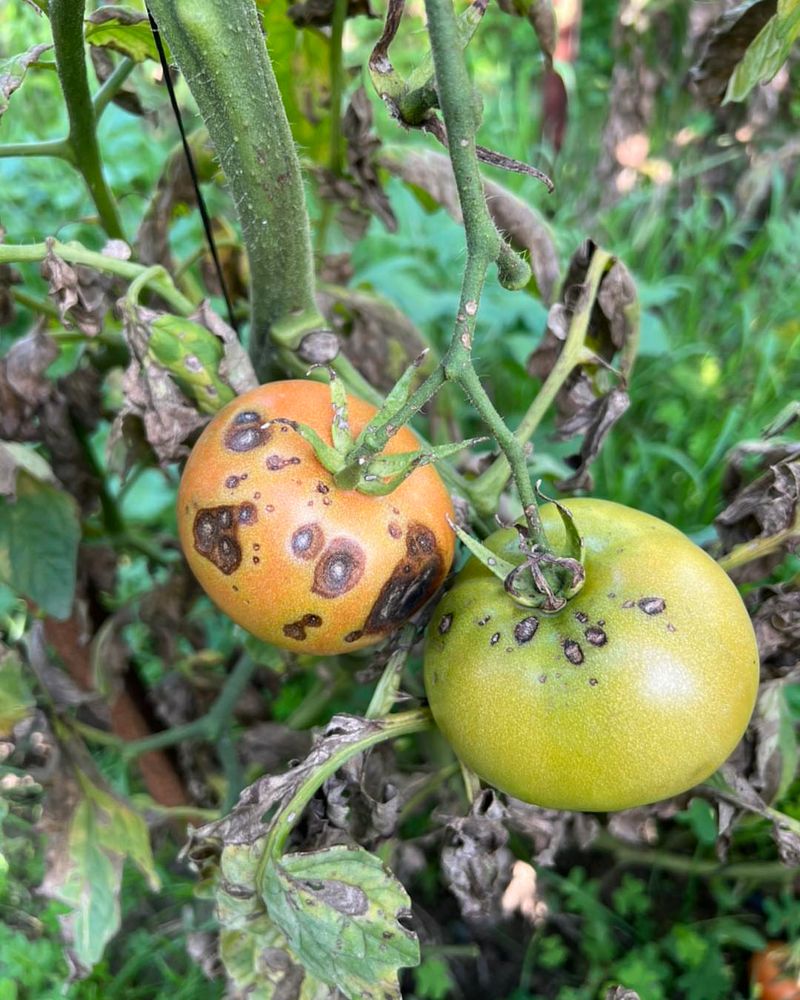
Picture a bullseye on a dart board, and you have a pretty good idea of what early blight looks like on a tomato leaf.
These brown spots with concentric ring patterns are one of the most recognizable warning signs a Michigan gardener can find, and they deserve quick attention the moment you notice them.
Early blight is caused by a fungus that thrives in warm, wet conditions, which describes a Michigan summer perfectly.
Just like Septoria, early blight starts on the older, lower leaves and gradually works its way up the plant. If you see those telltale rings appearing near the bottom first, that pattern is your cue to act right away.
Your Michigan Garden Changes Every Week. Your Plan Should Too.
Gardening in Michigan changes quickly throughout the season. Every Friday you’ll receive a simple weekly plan showing exactly what to plant, prune, fertilize, harvest, and protect so you never miss the right timing.
Leaves that are heavily affected will eventually turn yellow and drop off, which weakens the plant over time and reduces your fruit production.
Pruning is your first line of defense here. Focus on removing only the worst lower leaves so the plant is not stressed by over-pruning all at once.
Keep removed foliage out of the garden entirely. One of the sneaky ways early blight spreads is through foliage that stays in contact with the soil, so trimming branches that droop close to the ground helps cut off that route.
Spacing your plants well before the season starts matters a lot too. Crowded tomatoes trap humidity and slow drying after rain, which is exactly what this fungus loves.
Watering in the morning rather than the evening gives leaves more time to dry out before cooler night temperatures arrive, and that small habit shift can help keep your plants healthier throughout the season.
3. Black Sunken Spots On The Bottom Of Fruit
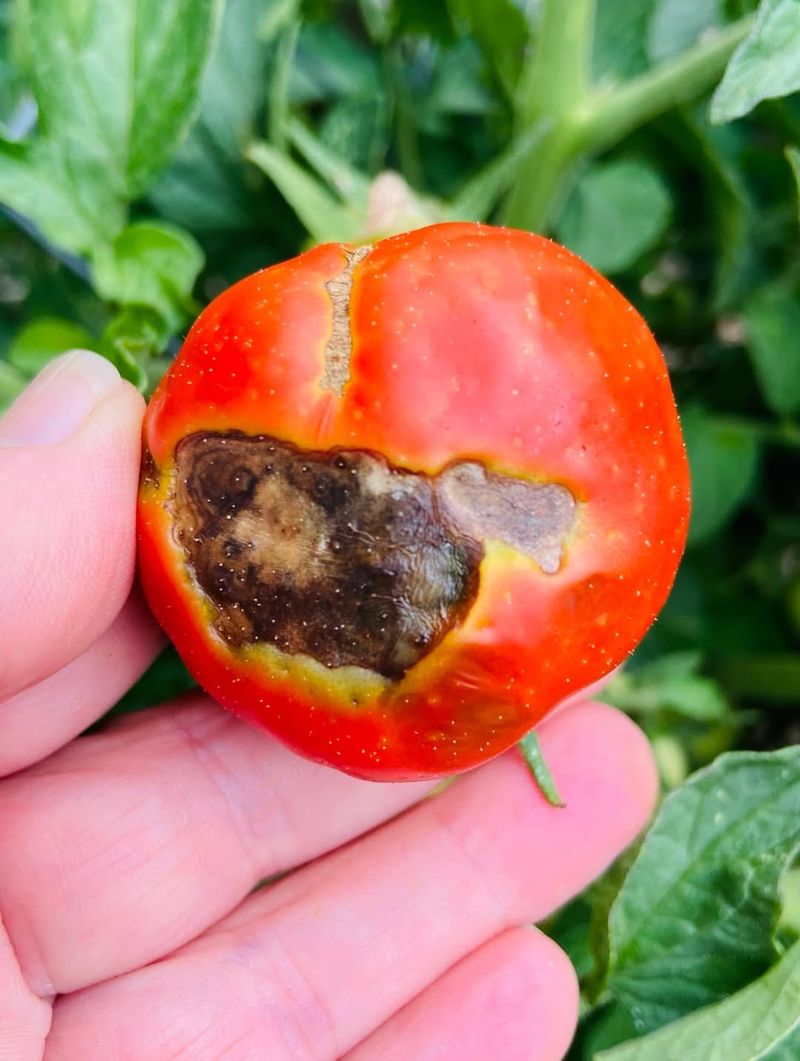
You wait all season for your tomatoes to ripen, and then you flip one over and find a dark, sunken, leathery patch spreading across the bottom. That is blossom end rot, and it is one of the most frustrating surprises a Michigan tomato grower can encounter.
The good news is that understanding what actually causes it makes it much easier to prevent going forward.
Many people assume blossom end rot means the soil is low in calcium, but that is not usually the whole story. The real issue is that the plant cannot move calcium efficiently to the developing fruit.
Calcium travels through a plant with water, so when watering is inconsistent, the plant simply cannot deliver enough calcium to the fast-growing fruit tissue at the bottom of each tomato.
Uneven watering is the main trigger here, especially in Michigan where summer can swing between dry stretches and heavy rain. Keeping soil moisture as steady as possible is the most effective thing you can do.
Deep, consistent watering helps far more than frequent shallow watering, because it encourages roots to grow deeper and draw moisture more reliably.
Mulching after the soil is already moist helps lock that moisture in between waterings. A two to three inch layer of straw or wood chip mulch works well around tomato plants and keeps the soil from drying out too fast on hot days.
Avoid pushing heavy fertilizers, especially those high in nitrogen, because rapid leafy growth can actually pull calcium away from the developing fruit and make the problem worse.
4. Big Missing Leaf Sections
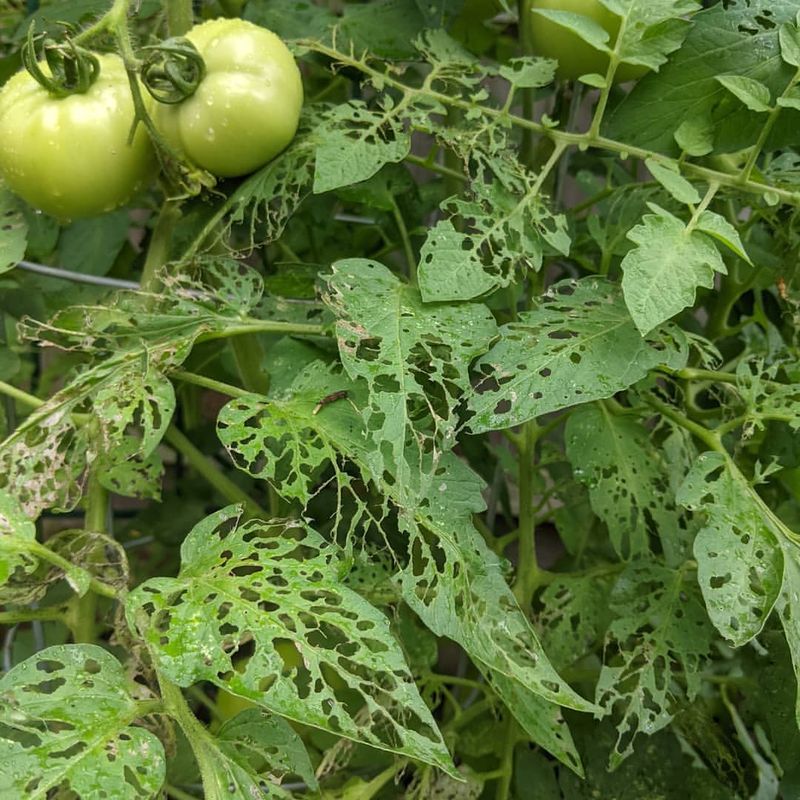
One morning you walk out to check on your tomatoes and notice whole chunks of leaves are simply gone. No ragged edges, no gradual yellowing, just large clean sections missing as if something took a serious bite.
Tomato hornworms are almost always the culprit when damage looks this dramatic, and these caterpillars can do a surprising amount of damage in a very short time.
What makes hornworms so tricky is that they are masters of camouflage. Their bright green color blends almost perfectly with stems and leaves, so many gardeners notice the missing foliage long before they ever spot the actual caterpillar.
A hornworm can be several inches long and still be nearly invisible if you are not looking carefully. Their droppings, small dark pellets on leaves below, are often the first real clue that one is hiding nearby.
The best times to search for hornworms are early morning or in the evening when light is lower and movement is easier to spot. Run your eyes slowly along every stem and the underside of larger leaves.
Once you find one, hand picking is a perfectly effective removal method. Drop them into a bucket of soapy water or relocate them far from your garden.
If you have ever noticed hornworms covered in small white rice-like attachments, leave those ones alone.
Those are braconid wasp cocoons, and the wasps inside are natural predators that will go on to help protect your garden from future hornworm populations.
Encouraging that natural balance is one of the smartest long-term moves any Michigan gardener can make in their vegetable patch.
5. Wilting During The Day But Wet Soil Below
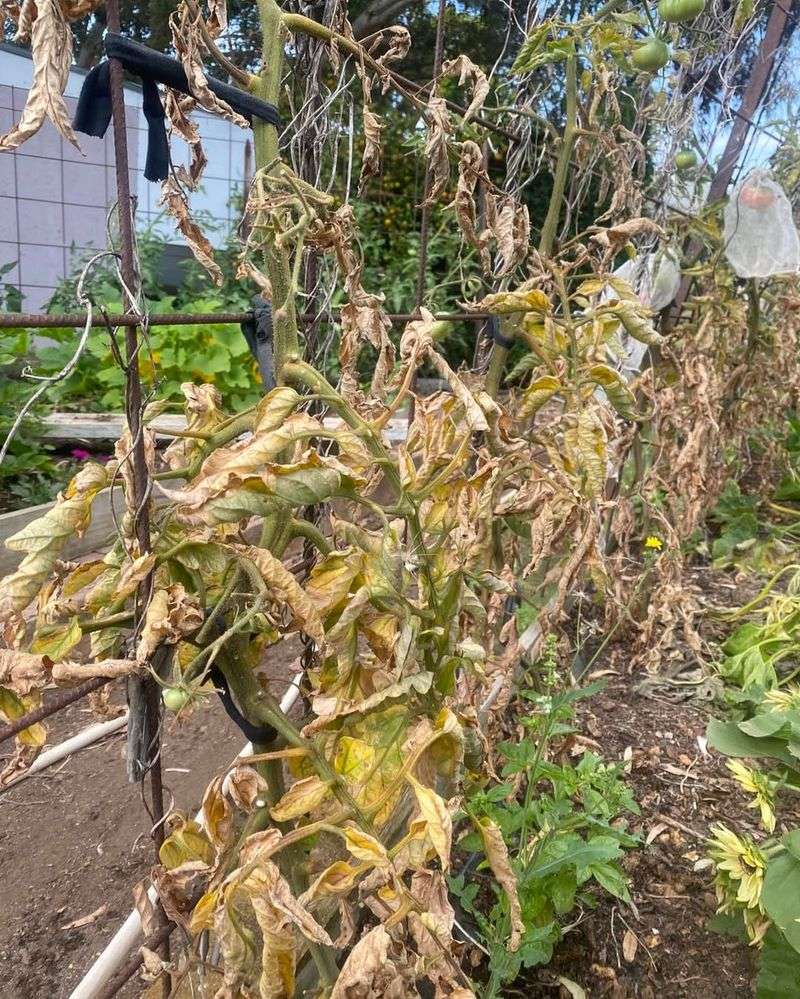
Wilting tomatoes usually send gardeners straight for the garden hose, but here is the thing: if the soil already feels wet a few inches down, adding more water is not the answer and might actually make things worse.
A tomato plant that droops despite having plenty of moisture in the soil is sending a very different kind of signal, and it is worth taking a moment to figure out what is really going on.
There are several reasons a plant might wilt even when the ground is wet. Soggy, waterlogged soil pushes oxygen out of the root zone, and roots need air just as much as they need water.
When roots sit in overly saturated soil for too long, they struggle to function properly and the plant cannot pull up the water it needs even though moisture surrounds it.
Compacted soil creates a similar problem by restricting both drainage and root movement.
In some cases, wilting with wet soil can also point to a soil-borne disease like Fusarium or Verticillium wilt, both of which affect the plant’s ability to move water through its system.
These diseases are harder to reverse once established, which is why early observation matters so much.
Before reaching for the hose, push a finger or a small tool several inches into the soil to feel the actual moisture level. If it is already wet, hold off on watering and focus on improving drainage instead.
Raised beds, amended soil with good organic matter, and avoiding overwatering from the start are the best ways to keep your tomato roots in a healthy, well-balanced environment all season long.
6. Lush Leaves But Few Tomatoes
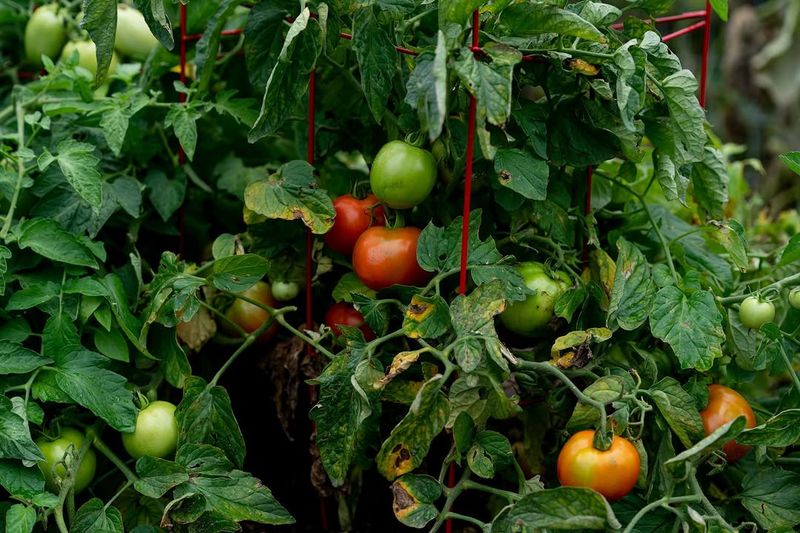
A tomato plant covered in thick, deep green leaves sounds like a success story, but when the fruit count stays stubbornly low, something is clearly out of balance.
Too much nitrogen is one of the most common reasons this happens, and it is more widespread than most gardeners realize.
Michigan State University extension specialists have pointed out that excess nitrogen pushes plants to put their energy into growing leaves and stems rather than producing fruit.
Nitrogen is essential for healthy plant growth, but it needs to be in balance with other nutrients. When there is too much of it, especially during the flowering and fruiting stage, the plant essentially stays in a vegetative growth mode.
Flowers may drop before setting fruit, or they may not appear in the numbers you would expect. The plant looks impressive from a distance, but the harvest tells a different story.
If you have been applying fertilizer regularly or used a high-nitrogen formula, try stepping back and letting the plant coast for a while. Pushing more nutrients onto a plant that already has too much is counterproductive.
A soil test from your local MSU Extension office can give you a much clearer picture of what your garden actually needs rather than guessing.
Focus instead on the basics that support fruiting: steady, consistent watering, at least six to eight hours of direct sun each day, and solid support structures so the plant can hold the weight of developing fruit.
Tomatoes also need good pollination, so making sure pollinators can access your flowers by avoiding heavy pesticide use during bloom time makes a real difference in your final fruit count.
7. Pale Plants In Containers
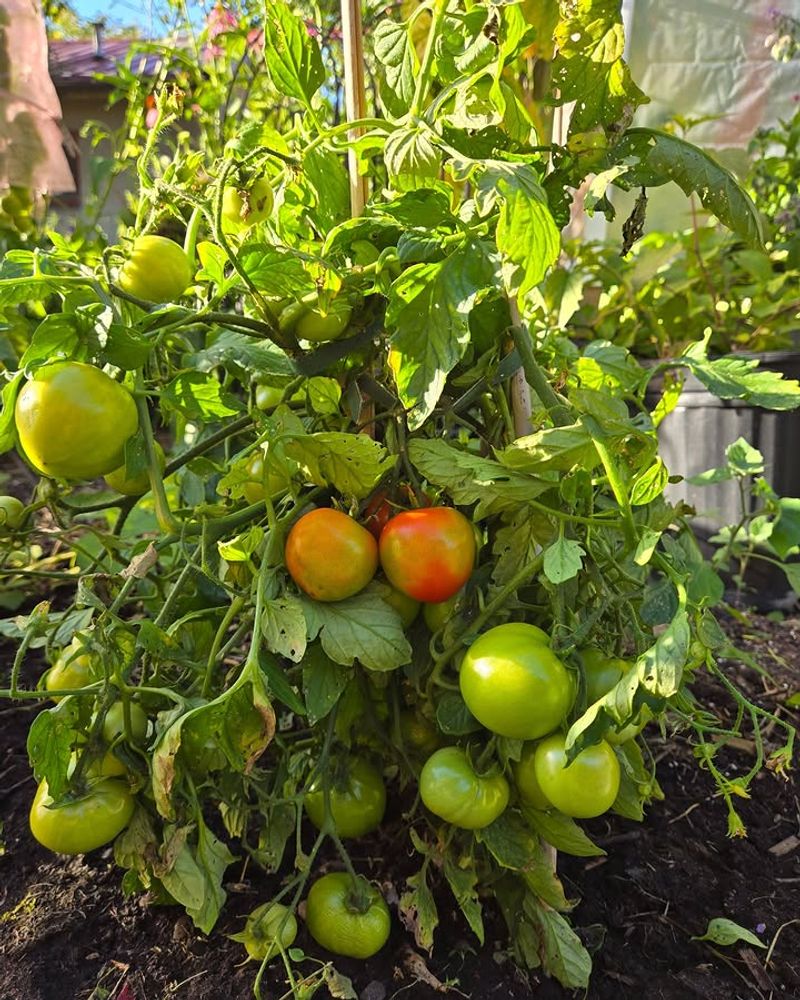
Container gardening is a fantastic option for Michigan gardeners with limited yard space, but potted tomatoes come with their own set of challenges that in-ground plants simply do not face.
One of the most common complaints from container growers is that their plants start looking pale, washed out, or just plain tired as summer heats up, and the cause is not always what you might expect.
Containers dry out much faster than garden beds, especially during Michigan’s hot July and August stretches.
A pot sitting on a sunny deck or patio can lose moisture surprisingly quickly, and tomatoes are thirsty plants that need consistent hydration to stay healthy.
But here is the tricky part: containers can also stay too wet if drainage is poor, and that leads to a completely different set of problems including root stress and nutrient lockout.
Before watering your potted tomato, always check the moisture level of the growing mix first. Push your finger a couple of inches into the soil.
If it still feels moist, wait. If it feels dry, water thoroughly until it drains out the bottom.
Check that your drainage holes are clear and not blocked by roots or debris, because good drainage is non-negotiable for healthy container tomatoes.
Feeding container tomatoes lightly and only when the plant is actively growing and showing signs of needing it keeps things balanced.
Containers flush nutrients out with each watering, so occasional feeding with a balanced fertilizer during the growing season helps, but more is not better.
Overfeeding a stressed plant causes more harm than skipping a feeding, so let the plant guide you rather than following a rigid schedule.
8. Cracking Fruit After Dry Spells
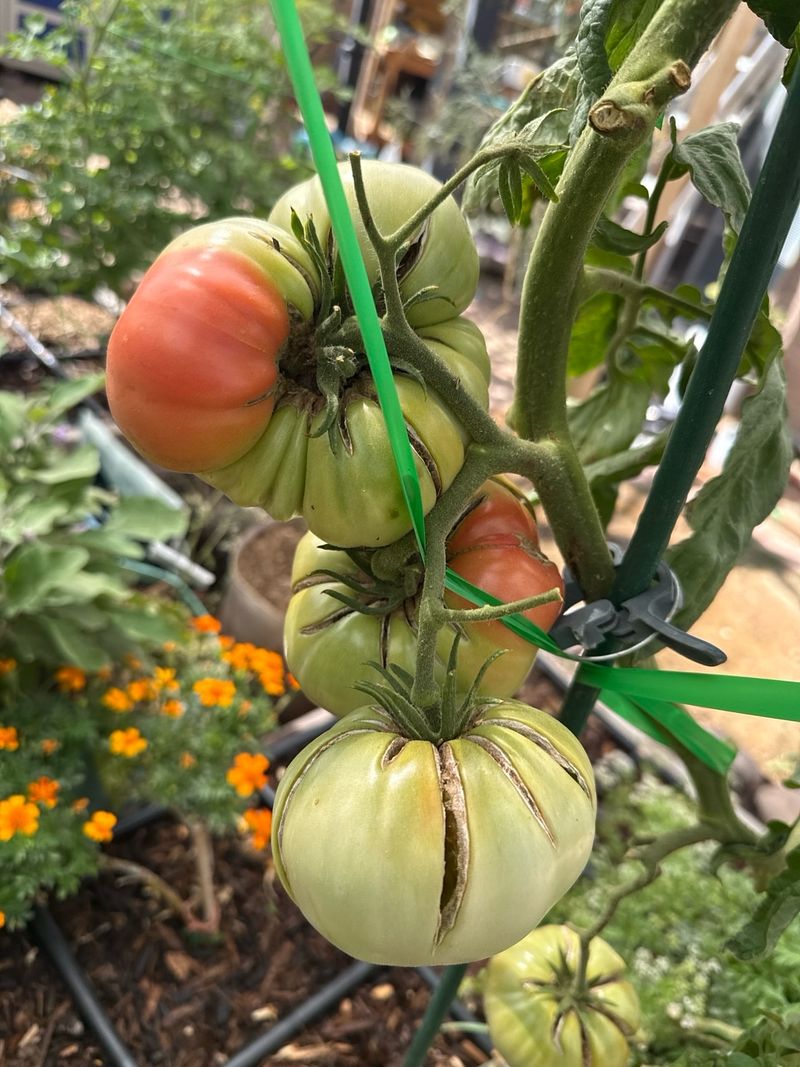
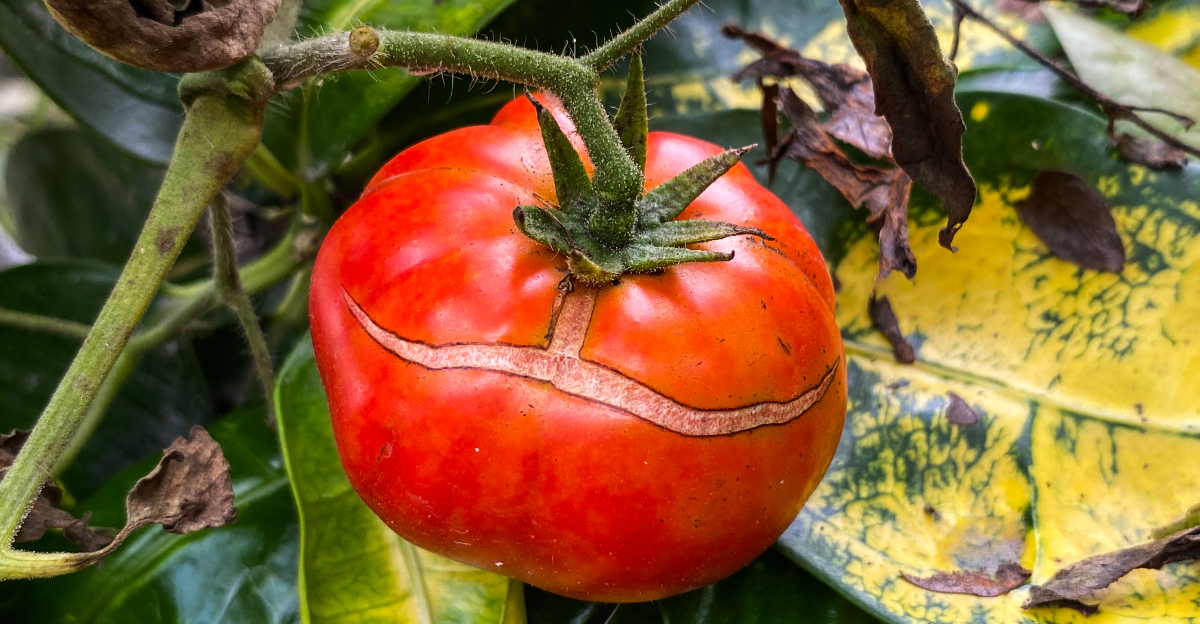
You have been waiting for those tomatoes to ripen, and just when they are almost ready, you notice the skin has split open in lines that radiate out from the stem or circle around the top.
Fruit cracking is one of those end-of-season frustrations that feels especially unfair after all the work you have put in.
The cause comes down to one thing: uneven moisture reaching the fruit at a critical moment in its development.
When a tomato plant goes through a dry stretch and then suddenly receives a heavy rain or a big watering session, the fruit absorbs water rapidly. The inside of the tomato swells faster than the skin can stretch to accommodate it, and the skin splits.
This is especially common in Michigan late summer when dry August weather sometimes gives way to heavier September rains right around harvest time.
Keeping soil moisture as consistent as possible throughout the season is the best prevention. Deep, infrequent watering trains roots to reach down for moisture rather than staying shallow, which helps the plant handle dry periods without as much stress.
A good layer of mulch, two to three inches of straw or shredded leaves, slows evaporation and buffers the soil against sudden moisture swings.
Harvesting tomatoes as soon as they are fully ripe, rather than leaving them on the vine for extra days, also reduces cracking risk. The longer a ripe tomato hangs on the plant, the more vulnerable its skin becomes to splitting after a rain.
Pick them promptly, let them finish on a countertop if needed, and enjoy the fruits of your very patient and well-earned Michigan gardening season.