This One Feature Keeps Some North Carolina Yards From Flooding
A summer thunderstorm rolls through the Piedmont, dumping two inches of rain in under an hour.
One yard turns into a shallow lake, water sheeting across the lawn and pooling against the foundation.
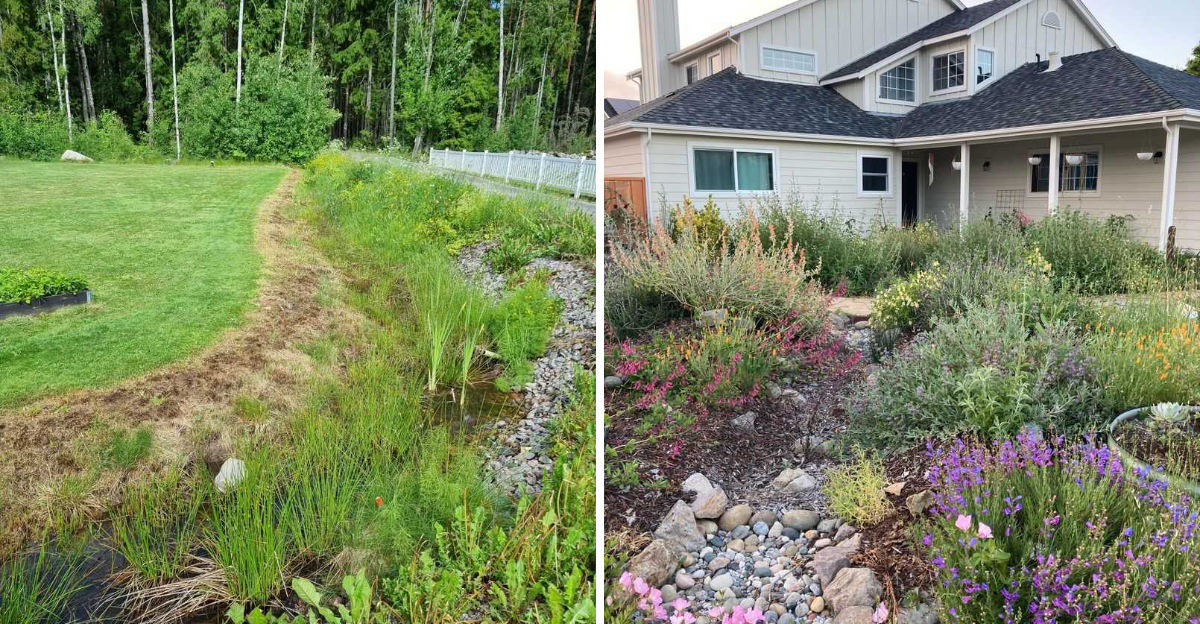
Right next door, the grass stays mostly dry, and the runoff disappears quietly into a shallow, grass-lined channel running along the property edge.
That channel has a name, and understanding it could change how your yard handles North Carolina’s heavy rains.
Across the state, homeowners deal with soggy lawns, eroded slopes, and water that seems to go everywhere except where it should.
The secret some yards have is a maintained vegetated swale, a simple but smart landscape feature that gives stormwater a safe place to go.
NC State Extension and North Carolina stormwater resources consistently point to vegetated swales as one of the most practical tools available for managing residential runoff from those relentless summer downpours.
Serious drainage problems may still need a licensed professional to assess and fix. A swale is not a cure-all.
But for many North Carolina homeowners, it is the feature that makes all the difference.
A Swale Gives Water A Path
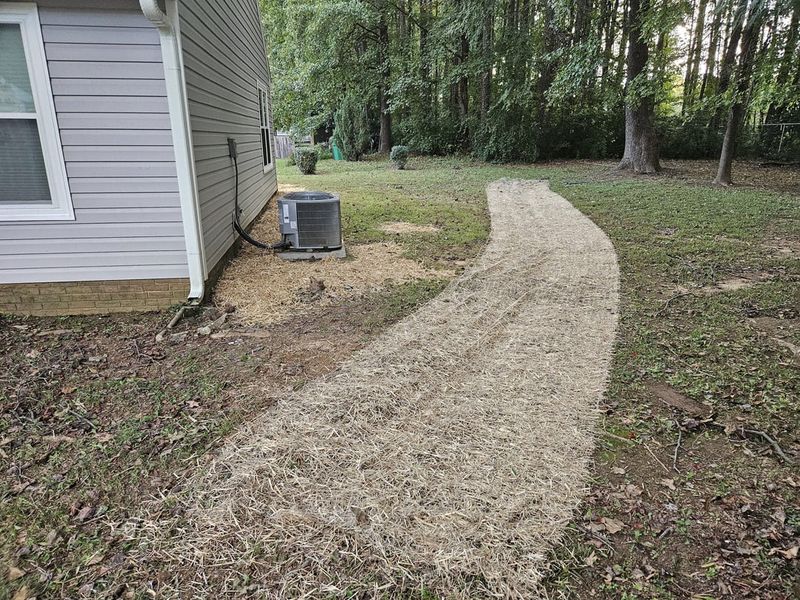
Rain hits hard in North Carolina. When a summer storm drops two inches in under an hour, your yard needs somewhere to send it.
A vegetated swale is a shallow, gently sloping channel covered in grass or native plants that guides stormwater away from your home, your lawn, and your neighbor’s property.
NC State Extension describes vegetated swales as open channels designed to convey and filter stormwater runoff while allowing some infiltration into the soil below.
The channel itself does the directing. Instead of water sheeting randomly across the yard, finding the lowest point, and pooling wherever it lands, a swale gives it a defined path with a predictable destination.
The shape matters as much as the location.
A properly built swale has gently sloping sides and a flat or slightly rounded bottom. It is wide enough to carry a meaningful volume of water without overflowing, and shallow enough that it looks like a natural part of the landscape rather than a ditch.
Many homeowners who have a functioning swale do not think about it much because it does its job quietly.
The ones who notice it are usually the neighbors standing in puddles wondering why their yard handles the same storm so differently.
Gentle Slopes Slow The Rush
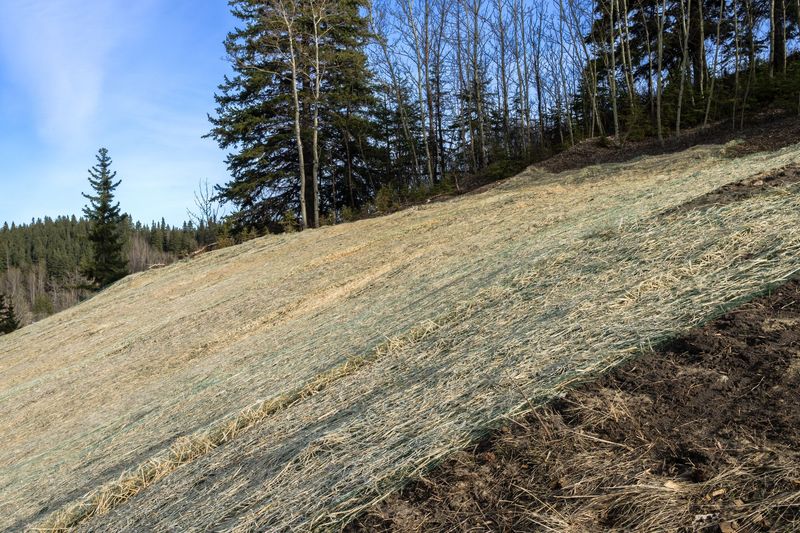
How fast water moves through a swale is almost as important as having one at all.
A channel that drops too steeply sends water rushing through like a small river, which erodes the bottom, undercuts the sides, and defeats the whole purpose of a managed flow path. The goal is controlled movement, not speed.
NC State Extension stormwater guidance recommends a longitudinal slope between one and three percent for residential vegetated swales.
That gentle grade slows the flow enough that water has time to soak into the soil along the way, reducing the total volume that reaches the end of the channel.
Your North Carolina Garden Changes Every Week. Your Plan Should Too.
Gardening in North Carolina changes quickly throughout the season. Every Friday you’ll receive a simple weekly plan showing exactly what to plant, prune, fertilize, harvest, and protect so you never miss the right timing.
Slower water also carries less sediment and does less damage to the plant cover lining the swale.
On steeper properties, check dams are sometimes used to interrupt the grade.
These are small barriers, often made from rock or compacted soil, placed across the swale at intervals to slow water between drops. They function like a series of speed bumps that keep fast-moving water from scouring the channel clean.
If your yard has significant slope and you are considering adding a swale, consulting with a grading professional or your county Cooperative Extension office before digging is a genuinely smart first step.
Getting the grade right from the beginning saves a lot of re-work later.
Dense Roots Hold The Channel
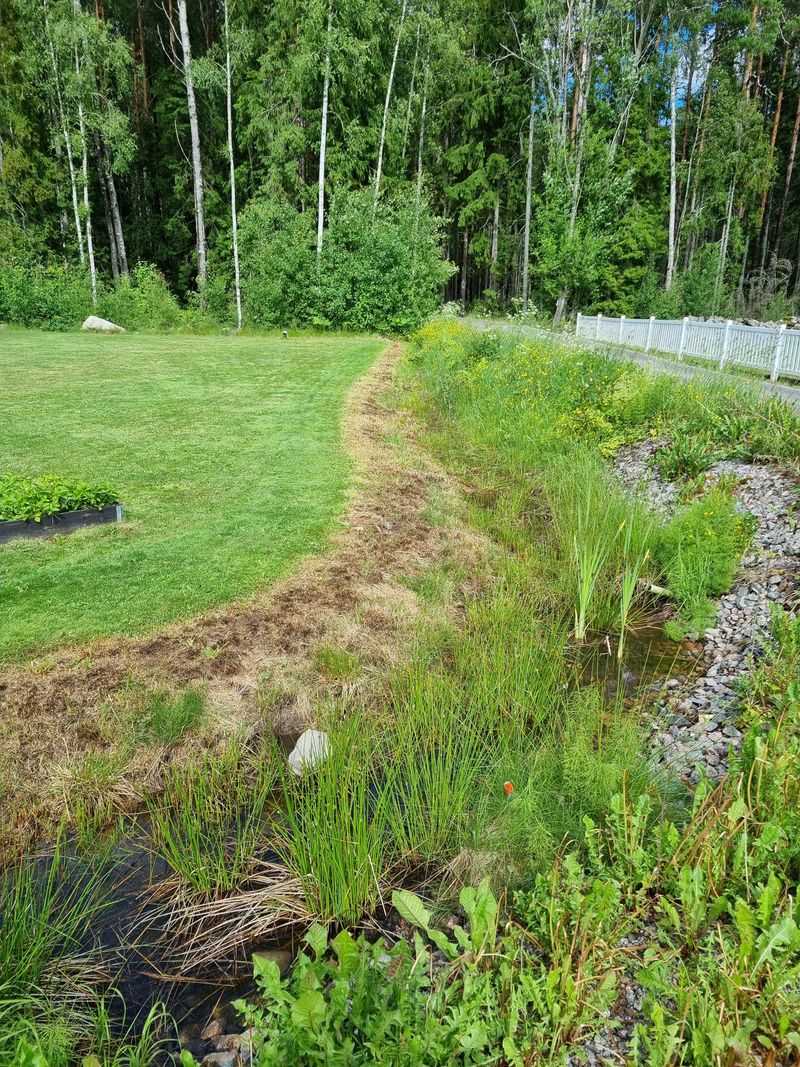
A swale without good plant cover is just a bare ditch waiting to erode.
The grass or native plants lining the channel are not decorative. They are structural. Dense root systems grip the soil tightly, resist the force of moving water, and hold the swale’s shape through even heavy storm events.
NC State Extension recommends well-established turf or native vegetation as the preferred surface for residential swales in North Carolina.
For sunny swales, tall fescue, bermudagrass, and zoysiagrass all perform well and maintain good density.
For swales that receive partial shade or are positioned in wetter areas, native options like switchgrass, river oats, or sedge species provide strong erosion resistance while also supporting local wildlife.
Bare patches in a swale are a warning sign that needs prompt attention.
Exposed soil erodes quickly under flowing water, and one unrepaired bare spot can grow into a significant channel failure within a single rainy season.
Reseeding or resodding bare areas in early fall gives plants time to establish roots before North Carolina’s heaviest rain periods arrive.
Dense, healthy plant cover also filters sediment and pollutants from runoff as water moves through.
That filtering function is part of what makes vegetated swales valuable beyond just flood prevention. A well-maintained swale is doing ecological work that a concrete channel or plastic pipe simply cannot.
Sediment Needs Regular Clearing
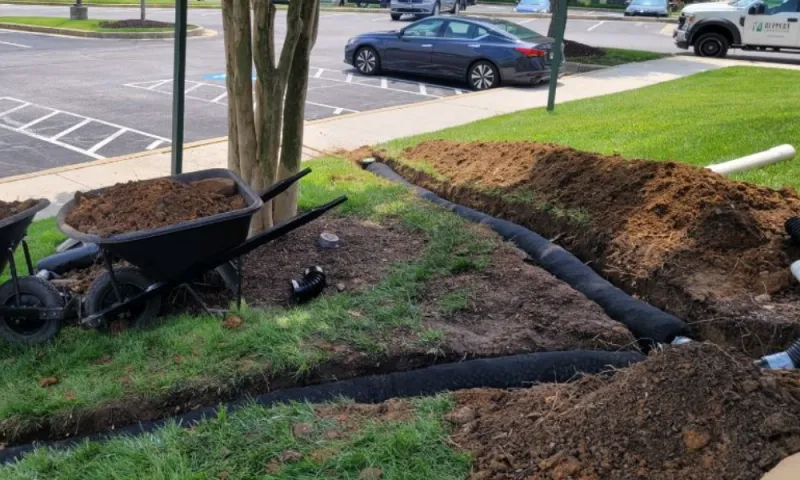
Sediment is a swale’s quiet, patient enemy.
Every time rain moves through the channel, it carries fine soil particles, organic debris, and small bits of mulch from surrounding beds.
That material settles out as water slows, and over time it builds up in the low points of the swale and gradually reduces the channel’s capacity.
NC State Extension stormwater maintenance guidance recommends inspecting vegetated swales at least twice a year and after major storm events.
Look for areas where the bottom of the channel has noticeably filled in, where flow appears to be backing up or diverting, or where sediment deposits are visible as flat, pale-colored patches against the grass.
Removing accumulated sediment before it compacts is much easier than dealing with it after it has hardened into the channel.
A flat spade or garden rake works well for light cleanouts. Heavier accumulations may need more effort, but the basic task is straightforward for most homeowners.
After clearing sediment, check for any areas where the channel lining was disturbed and reseed or replant as needed.
A clean swale flows efficiently. A silted swale eventually stops working and begins contributing to the flooding problem it was installed to prevent.
Scheduling those twice-yearly inspections on a calendar, before the spring rains and before the fall season, makes it easy to stay ahead of the buildup.
Mulch Should Stay Out Of Flow
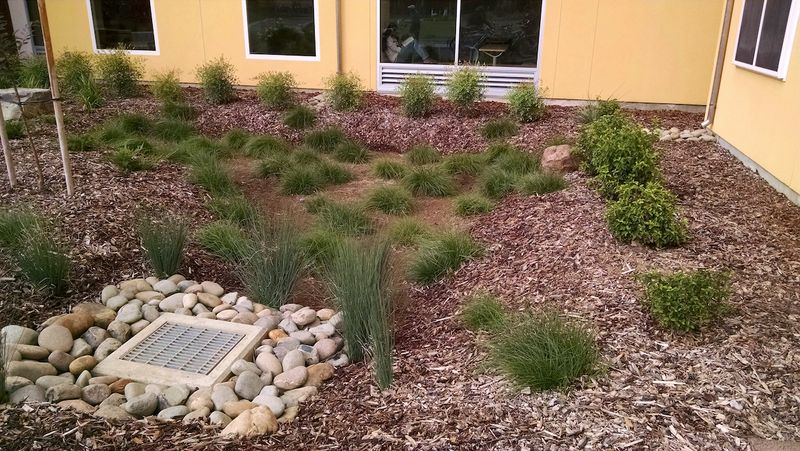
A freshly mulched garden bed looks sharp, but loose mulch and active drainage channels do not get along well.
When rain moves mulch into a swale, it clumps together, catches on plant stems, and creates small blockages that divert water out of the channel and across the lawn.
What started as a landscaping choice becomes a drainage problem within a single storm.
NC State Extension advises keeping mulched areas separated from active stormwater flow paths wherever possible.
If a planting bed is located upslope from a swale, use heavier wood chips rather than fine shredded bark, and install a small edging barrier between the bed and the channel edge.
Heavier mulch material moves less readily during rain, and a physical edge keeps it from creeping into the flow zone during heavy events.
River rock or gravel is sometimes used as an alternative ground cover along the edges of swales where mulch migration is a recurring problem.
Stone does not float, does not compact into blockages, and holds up well in areas of occasional wet conditions.
If mulch has already found its way into a swale channel, remove it during your regular sediment inspection.
Left in place, it breaks down and adds to the organic layer that gradually fills in the bottom of the channel. Small habits maintained consistently are what keep a swale functioning through North Carolina’s demanding rain seasons.
Rain Gardens Catch The Overflow
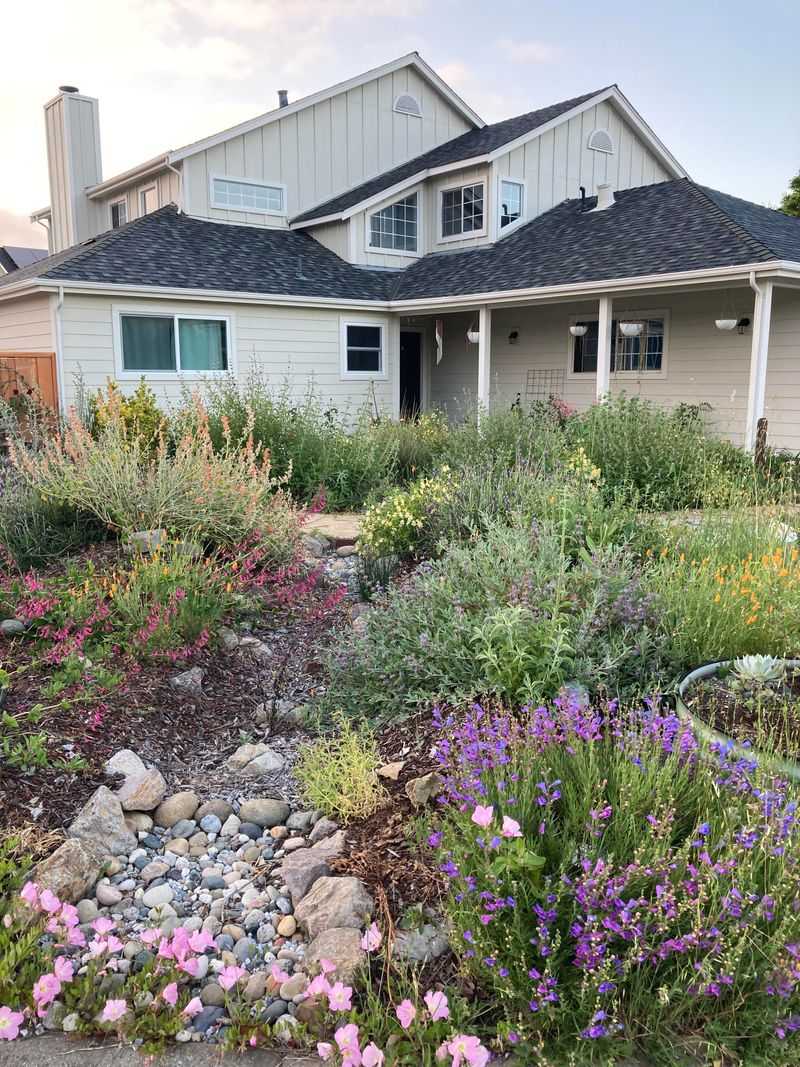
A swale does a lot of work, but it needs somewhere productive to send what it carries.
Without a good endpoint, water leaving the lower end of a swale can spread across a lawn, pool near a fence line, or find its way toward a neighbor’s property.
Pairing a swale with a rain garden at its outlet gives runoff a final destination where it can pool safely and soak in slowly.
A rain garden is a shallow, planted depression that captures stormwater and allows it to infiltrate into the soil over 24 to 48 hours.
NC State Extension offers detailed sizing guidance based on drainage area and soil type.
Their resources are specifically written for North Carolina conditions where clay-heavy soils are common and infiltration rates vary significantly across the state.
The combination of a swale and a rain garden creates a two-stage system.
The swale captures and slows the initial flow, filtering out some sediment and allowing early infiltration along the way. The rain garden at the outlet handles the remaining volume with a deeper, longer soak.
Plants in the rain garden need to tolerate both occasional flooding and periods of dryness.
Native options like native iris, swamp rose mallow, and switchgrass perform well in North Carolina rain gardens. Coneflowers and cardinal flower are popular additions that add pollinator value to what is also a functional drainage feature.