How To Keep Florida Lawn From Growing Into Garden Beds Without Constant Edging
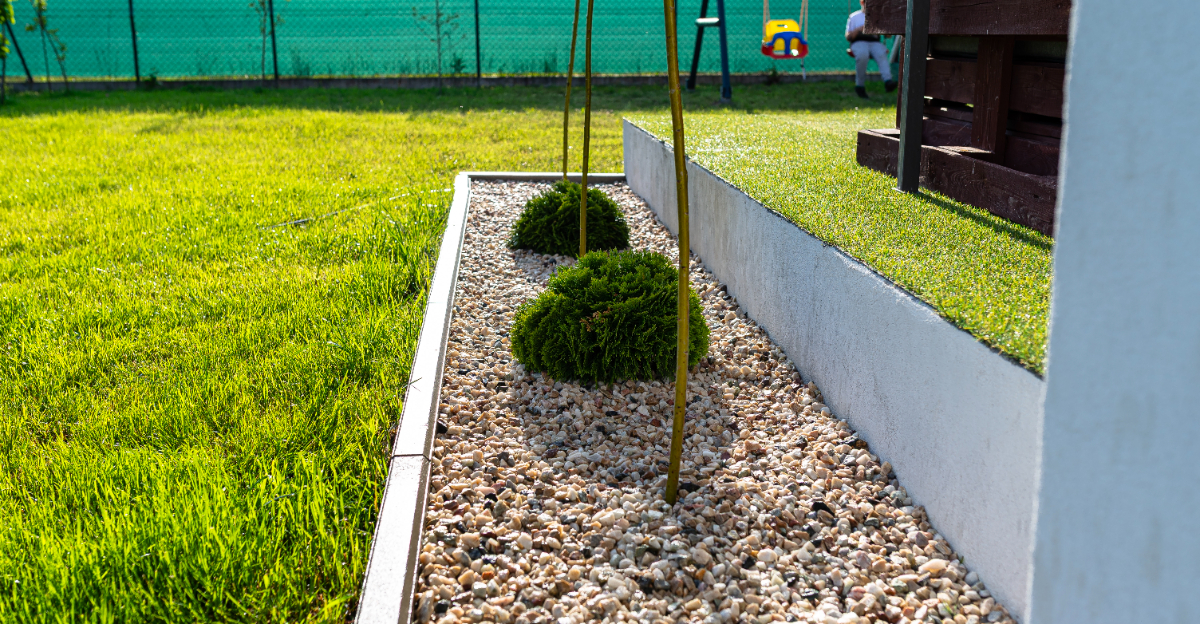
Florida lawn grass has one ambition and it pursues it without interruption. Into the garden beds, under the mulch, around the base of every plant that cannot defend itself.
Most Florida homeowners edge it back on a schedule that never quite ends, and the lawn is back where it started within two weeks every single time. Edging is a symptom response.
It handles what the grass has already done without changing anything about why it keeps happening. The result is a maintenance cycle that owns a portion of every weekend from spring through fall.
There are physical and planted solutions that interrupt that cycle at the source. Barriers that stop lateral spread before it reaches the bed.
Ground level strategies that make the transition between lawn and garden bed something the grass cannot cross as easily as it does now. A bed that holds its edge without constant intervention is not a fantasy in a Florida yard.
1. Install A Real Barrier Below The Surface
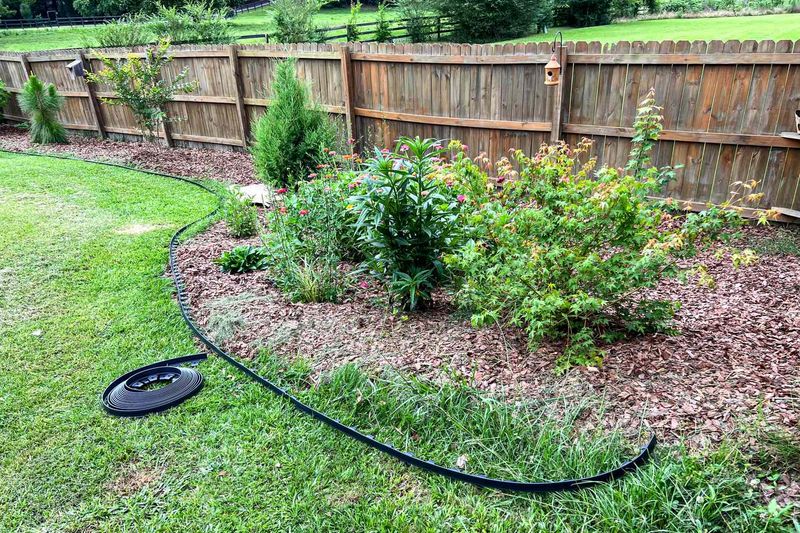
A decorative border that barely sits on top of the soil is not going to stop a determined runner. Most warm-season grasses will slide right under a shallow edge and root into your mulch before you notice.
A real barrier needs to extend several inches below the surface to interrupt that underground movement.
Materials like steel, aluminum, thick plastic, or concrete edging tend to hold their shape and stay in place far better than flimsy plastic strips. Look for edging that is rigid, weather-resistant, and rated for outdoor use in warm, wet climates.
Flexible materials can shift over time and create gaps that runners exploit quickly.
Before you start digging, locate any irrigation lines, lighting wires, or utility cables running near your bed. Call 811 to have underground utilities marked if you are unsure.
A barrier is only useful if it is installed safely and correctly.
Keep in mind that no barrier completely stops all grass movement. Bermudagrass, for example, can spread by both stolons above ground and rhizomes below, so even a solid barrier needs occasional inspection.
The goal is to reduce how often you have to edge, not to eliminate all maintenance forever.
2. Create A Mower Strip Along The Bed Edge
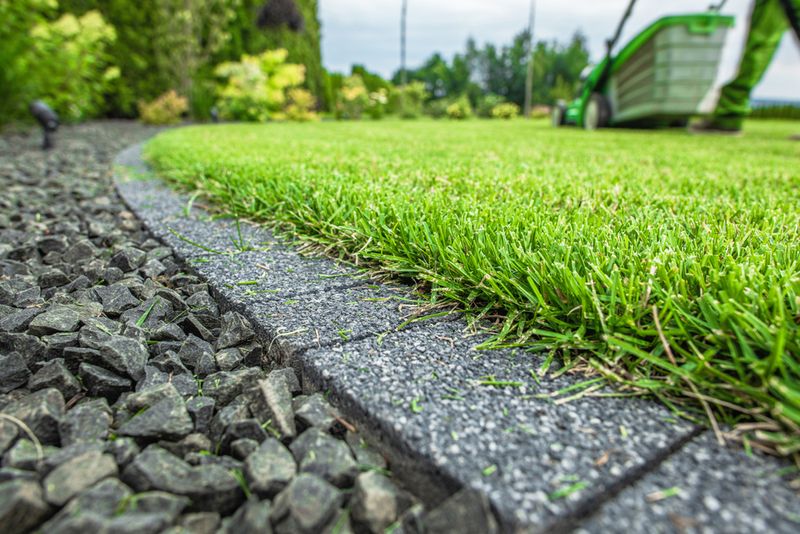
Picture mowing your yard and never needing to grab the string trimmer afterward. A mower strip makes that possible along your bed edges.
The idea is simple: lay a row of flat pavers, bricks, concrete blocks, or stone flush with the soil so your mower wheel can ride along it cleanly.
When the strip is level with the turf, the mower blade reaches the grass right at the border without leaving an untrimmed fringe. You get a clean cut without hand edging every single week.
That alone can save a meaningful amount of time during the long, fast-growing summer months.
Width matters here. A strip that is too narrow will not give your mower wheel a stable path.
Aim for a width that comfortably supports your mower tire without tipping. The surface should be stable enough to avoid wobbling or shifting during wet conditions.
Your Florida Garden Changes Every Week. Your Plan Should Too.
Gardening in Florida changes quickly throughout the season. Every Friday you’ll receive a simple weekly plan showing exactly what to plant, prune, fertilize, harvest, and protect so you never miss the right timing.
Make sure the strip does not create a low spot where water pools against your foundation or plant roots. Proper drainage keeps the border looking tidy and prevents soggy soil problems.
A well-built mower strip is one of the most practical long-term investments a Florida homeowner can make for a cleaner yard edge.
3. Cut A Clean Trench Where Grass Creeps Fast
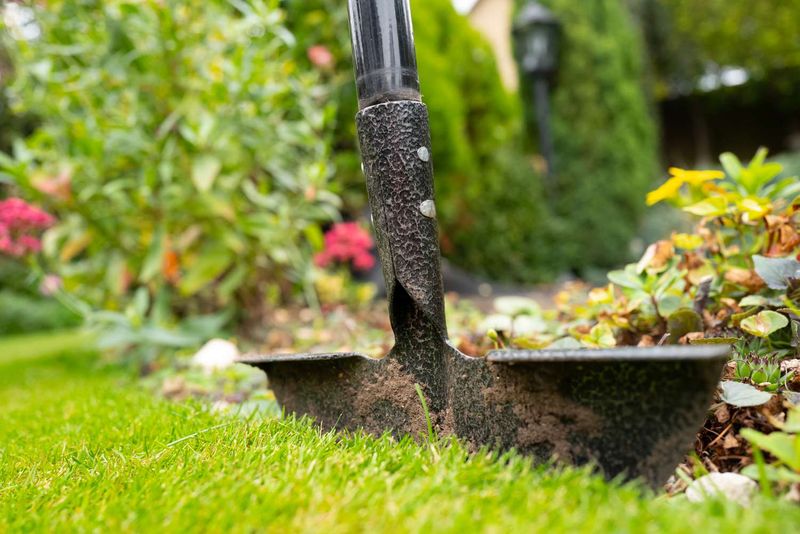
Sometimes the simplest approach works surprisingly well. A clean trench cut between the lawn and the bed creates an air gap that slows stolon movement.
It also makes stray runners much easier to spot before they anchor into the soil.
You do not need special tools for a basic trench edge. A flat spade or half-moon edger works well for cutting a straight or gently curved line.
The trench should be narrow but deep enough to interrupt the path runners would normally travel. A few inches of depth can make a real difference during active summer growth.
The honest limitation here is that trench edges need refreshing. Soil settles, mulch fills the gap, and grass starts to bridge across again.
During peak growing season, you may need to recut the trench every few weeks. That is still less work than full edging, but it is not a set-it-and-forget-it solution.
Avoid cutting near visible tree roots or areas where you know irrigation lines run shallow. A trench edge works best in open bed areas with no underground obstacles nearby.
Used alongside a physical barrier or mower strip, a trench edge adds one more layer of protection against the relentless spread of warm-season turf.
4. Keep Mulch Deep Enough To Block Runners
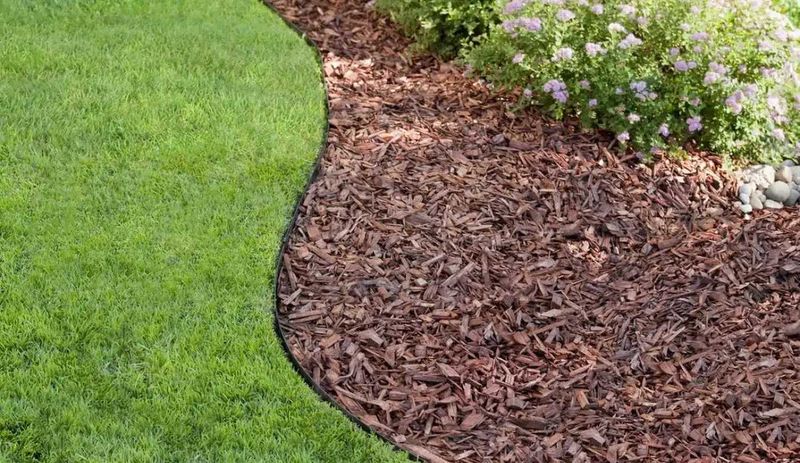
Mulch is one of the most underrated tools in a Florida homeowner’s lawn-management kit. When applied correctly, a proper layer of mulch makes it harder for grass runners to contact bare soil, which slows rooting.
It also makes any runners that do creep in much easier to see and pull before they get established.
UF/IFAS guidance generally recommends keeping mulch around 2 to 3 inches deep after settling. Fresh mulch compresses over time, so what looks like 3 inches in the spring may be closer to 1 inch by late summer.
Refreshing mulch once or twice a year keeps that protective layer working.
One important rule: never pile mulch against plant stems, tree trunks, your home’s siding, or a foundation wall. Mulch that stays wet against woody stems can cause rot and invite pests.
Keep mulch a few inches away from the base of any plant.
Mulch alone will not stop aggressive turf if there is no physical barrier or edge in place. Think of it as a supporting layer, not a standalone fix.
Combined with a good border, mulch reduces weed and grass pressure in beds and makes your overall maintenance routine noticeably lighter during the long growing season.
5. Widen Beds Where Turf Keeps Winning
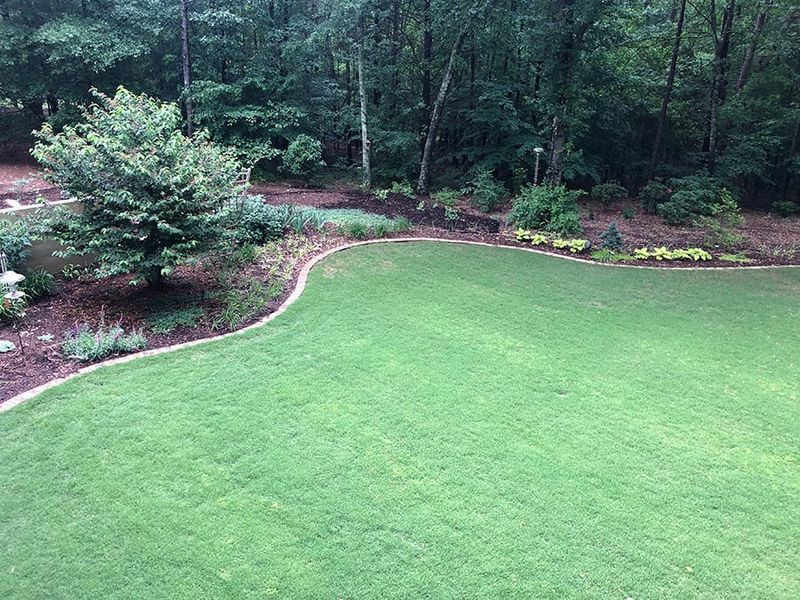
Narrow beds are a constant battle. When the lawn is only a foot away from your plants, runners reach the root zone quickly and the whole bed feels overrun within a season.
Widening problem beds is one of the most effective long-term strategies for reducing that pressure.
Sweeping curves and generous bed widths give your plants more breathing room and push the turf line farther away from stems and crowns. A wider planting zone also makes it easier to mow around the bed without scalping plants or leaving awkward fringe areas that need trimming by hand.
Foundation beds are a common trouble spot. Grass creeping along the house edge is hard to reach with a mower and easy to neglect until it is out of control.
Extending the bed outward and filling it with low-maintenance shrubs or groundcovers can turn that zone into a much easier area to manage.
Wider beds still need edging occasionally, so this is not a way to avoid all maintenance. The payoff is that you edge less often because there is more distance between turf and plants.
Converting the worst creeping zones into intentional mulched or planted areas is a smart redesign move that pays off every growing season.
6. Stop Stolons Before They Root In Mulch
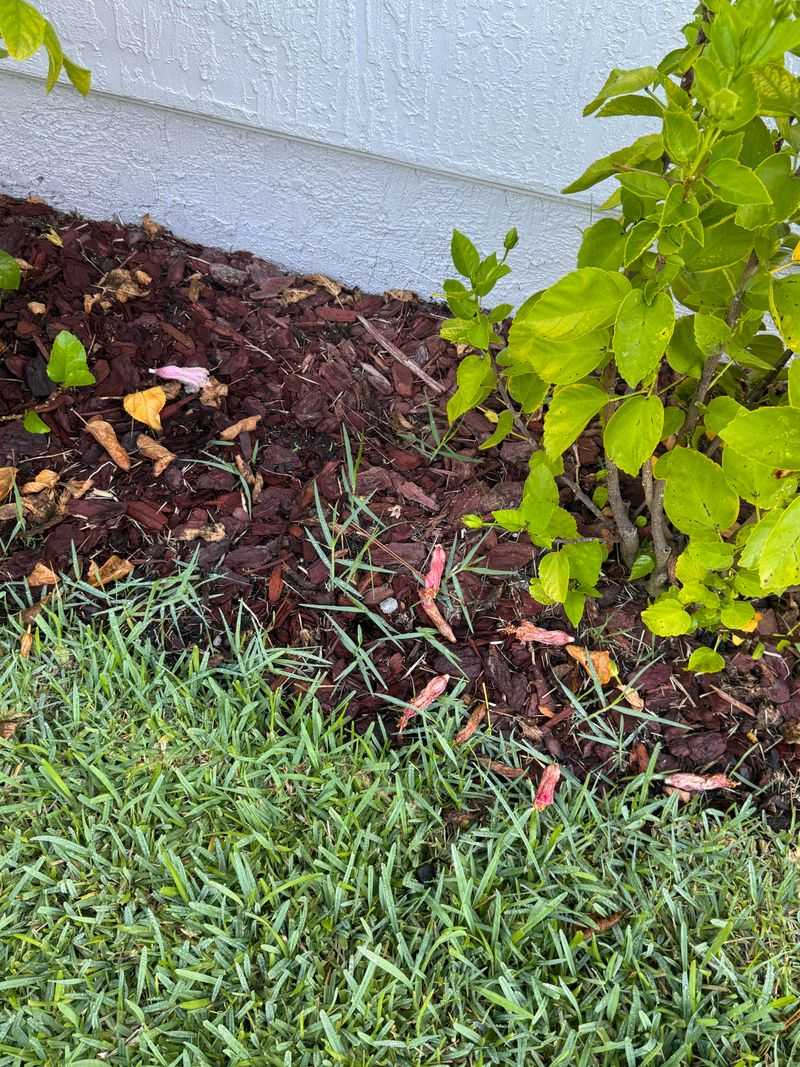
Catching runners early is genuinely one of the easiest maintenance habits you can build. Once a stolon roots at a node and establishes itself in the mulch, it takes much more effort to remove cleanly.
Pulling it out at that point risks disturbing nearby plant roots and leaving broken stem pieces that re-root on their own.
St. Augustinegrass is a good example to understand. It spreads by aboveground stolons that creep along the surface and set roots wherever a node touches moist soil or mulch.
After mowing, check the bed edges for any fresh runners that have crept over the border. A quick clip or gentle pull at that stage takes seconds.
During summer, warm-season grasses grow fast. Weekly checks along your bed edges during the peak growing months keep the situation manageable.
After a heavy rain followed by sunshine, runners can move noticeably in just a few days.
Be careful around delicate plant roots near the bed edge. Avoid yanking hard in areas where shallow roots are visible.
Use a pair of pruning snips to cut runners cleanly rather than pulling them aggressively through a crowded bed. Early removal is a habit, and like most habits, it gets easier the more consistently you do it.
7. Choose Bed Edges That Match Your Grass
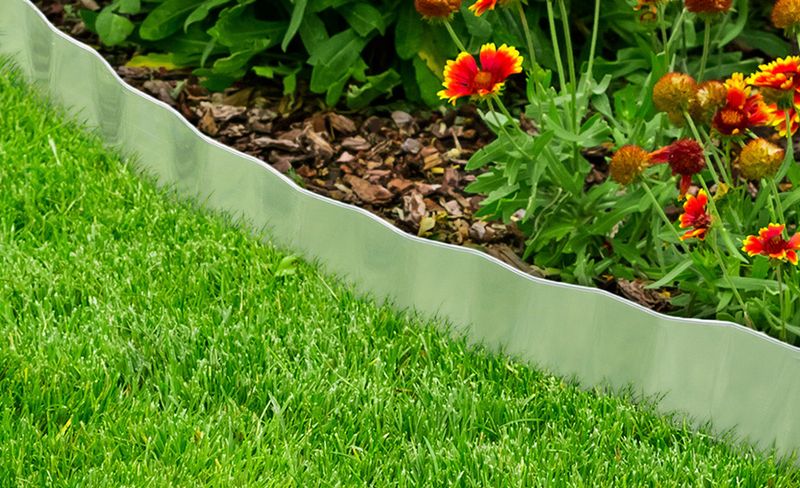
Not every lawn spreads the same way, and that matters a lot when you are choosing a border strategy. Copying what your neighbor did may not work at all if you have a different grass type or a different site.
Identifying your turf first is the smartest starting point.
Bermudagrass is one of the most aggressive spreaders found in warm-climate yards. It moves by both aboveground stolons and underground rhizomes, which means it can go around, under, and through barriers that would stop other grasses.
A deeper, more rigid barrier is usually necessary for Bermudagrass borders.
St. Augustinegrass spreads only by aboveground stolons, which makes it slightly easier to catch and remove before it roots deeply. Zoysiagrass spreads by both stolons and rhizomes but typically moves more slowly than Bermudagrass.
Bahiagrass tends to grow in clumps and spreads mainly by seed, so its encroachment pattern is different from stoloniferous grasses.
Slower spreaders may do fine with a mower strip and regular mulch. Faster, more aggressive types likely need a physical below-ground barrier combined with consistent runner removal.
Matching your solution to your specific turf type saves time, money, and frustration over the long run.
8. Design The Border So The Mower Does More Work
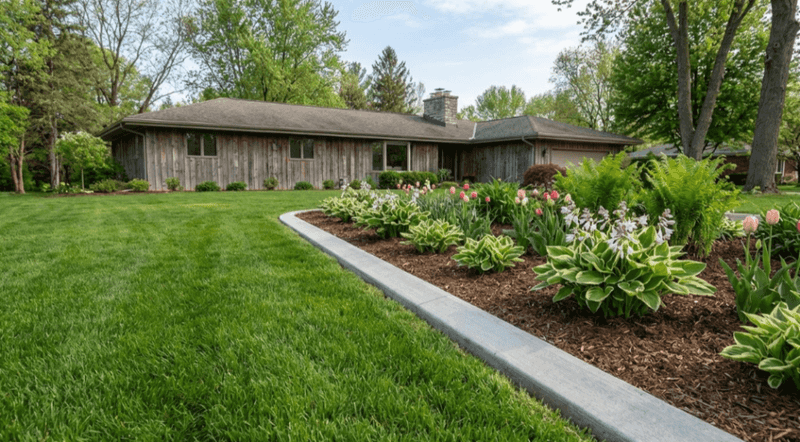
Smart layout is the secret ingredient most Florida homeowners overlook. When bed edges are designed with the mower in mind, the machine does most of the work and hand trimming becomes rare.
The mower should be able to follow the entire bed edge in one clean pass without stopping, backing up, or leaving strips of uncut grass.
Smooth, sweeping curves work far better than tight corners or complex shapes. Every sharp angle or awkward notch in a bed edge is a spot the mower cannot reach cleanly.
Those spots become permanent hand-trimming zones. Simplifying the shape of your beds eliminates those problem areas from the start.
Keep plants set back from the turf line so they do not overhang the mower path. Overhanging branches and sprawling groundcovers force you to slow down, trim carefully, and often miss the grass right at the edge.
A little clearance between plant spread and the lawn border goes a long way.
Use hard edges, mower strips, or clean trench lines where the bed meets the lawn. The easier it is for the mower wheel to follow the border, the less work you do by hand.
Combining a mower-friendly layout with physical barriers and early runner removal is the most realistic path to a tidy yard edge with far less constant edging.